WPC Board vs Plywood – Which is Better for Home Interiors?
Compare WPC board vs plywood for interior use. Understand differences in water resistance, strength, and cost, plus the ideal uses for each material.
Quick Answer
In the WPC vs plywood debate for home interiors, plywood generally suits load-bearing furniture and structural applications due to its superior strength and screw-holding, while WPC board shines in moisture-heavy areas like kitchens and bathrooms with its water resistance and lightweight nature. Neither is universally better—plywood offers better value for dry interiors, but WPC handles India's humid conditions without swelling. Final pick hinges on room use, budget, and carpenter expertise.
- Strength: Plywood wins for heavy loads and cabinets.
- Water Resistance: WPC dominates in wet areas.
- Cost: Plywood cheaper upfront (₹80–₹150/sqft), WPC pricier (₹120–₹220/sqft for 8x4 sheets).
- Weight: WPC lighter, easier for modular installs.
- Finish: Both laminate well, but WPC needs less sealing.
- Best For: Plywood in bedrooms/living; WPC in kitchens/bathrooms.
What is WPC Board?
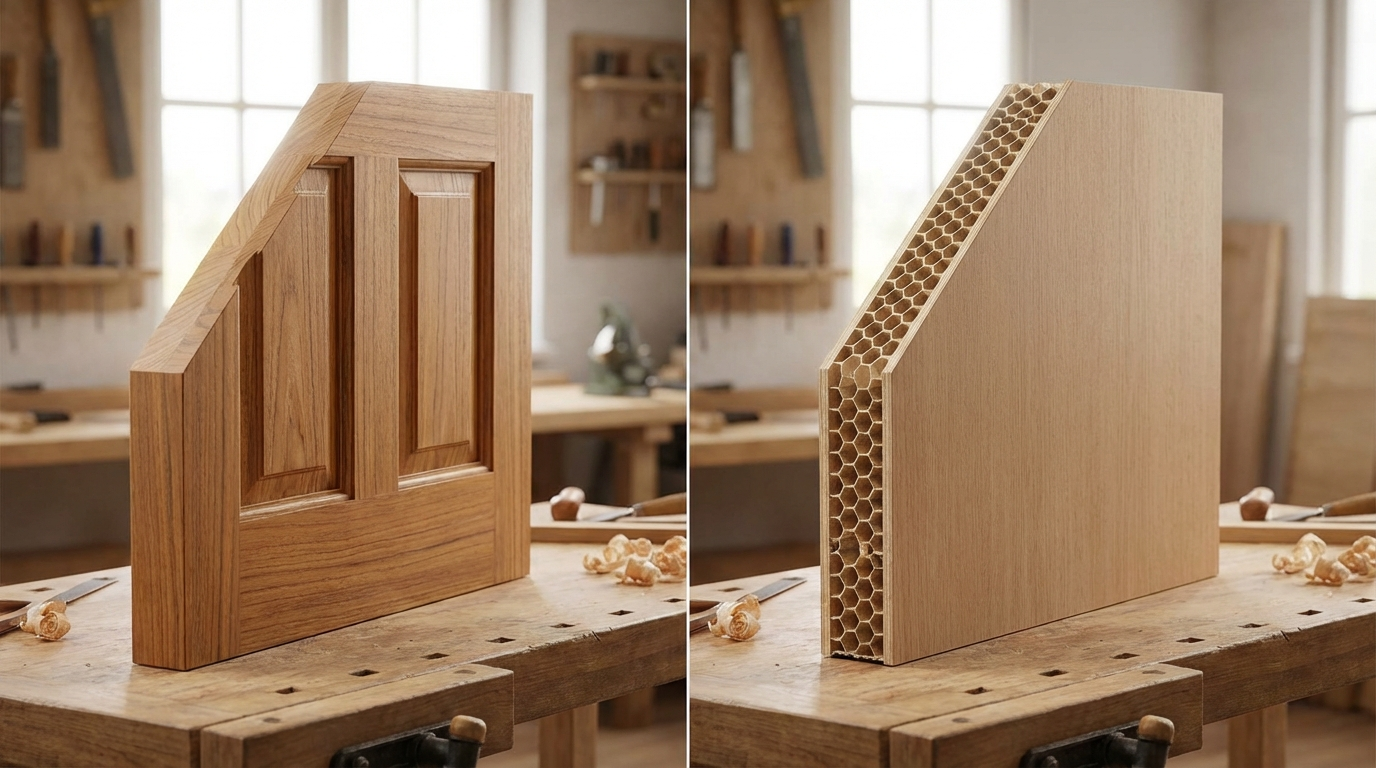
WPC, or Wood Plastic Composite board, blends wood fibers with plastic polymers and binding agents, creating a dense, uniform sheet that's extruded rather than layered like traditional wood products. This composition gives it a foam-like core with a rigid skin, making it lightweight yet rigid—typically weighing 30-50% less than equivalent plywood thicknesses. In Indian homes, WPC's appeal lies in its factory-controlled density, which resists warping from the uneven humidity swings common during monsoons in cities like Mumbai or Chennai.
Manufacturing fuses recycled wood powder (around 60-70%) with PVC or polyethylene (30-40%), heated and pressurized into sheets of 6mm to 25mm thick. Common sizes mirror plywood at 8x4 feet, but edges are seamless, eliminating the need for extra banding during cabinetry. Practical thickness naming in India often lists 16mm or 19mm, but actual measurements hover around 15.5-18.5mm due to compression—always measure at the dealer.
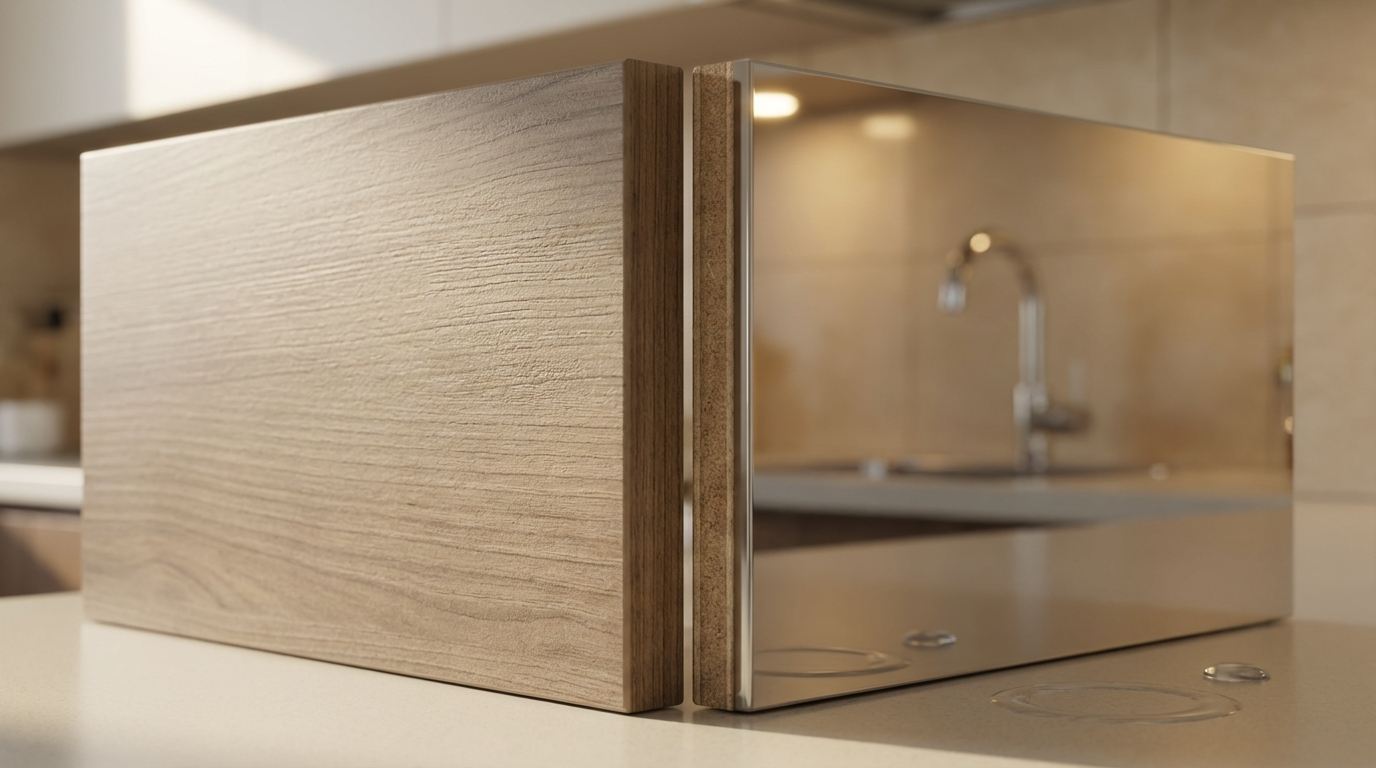
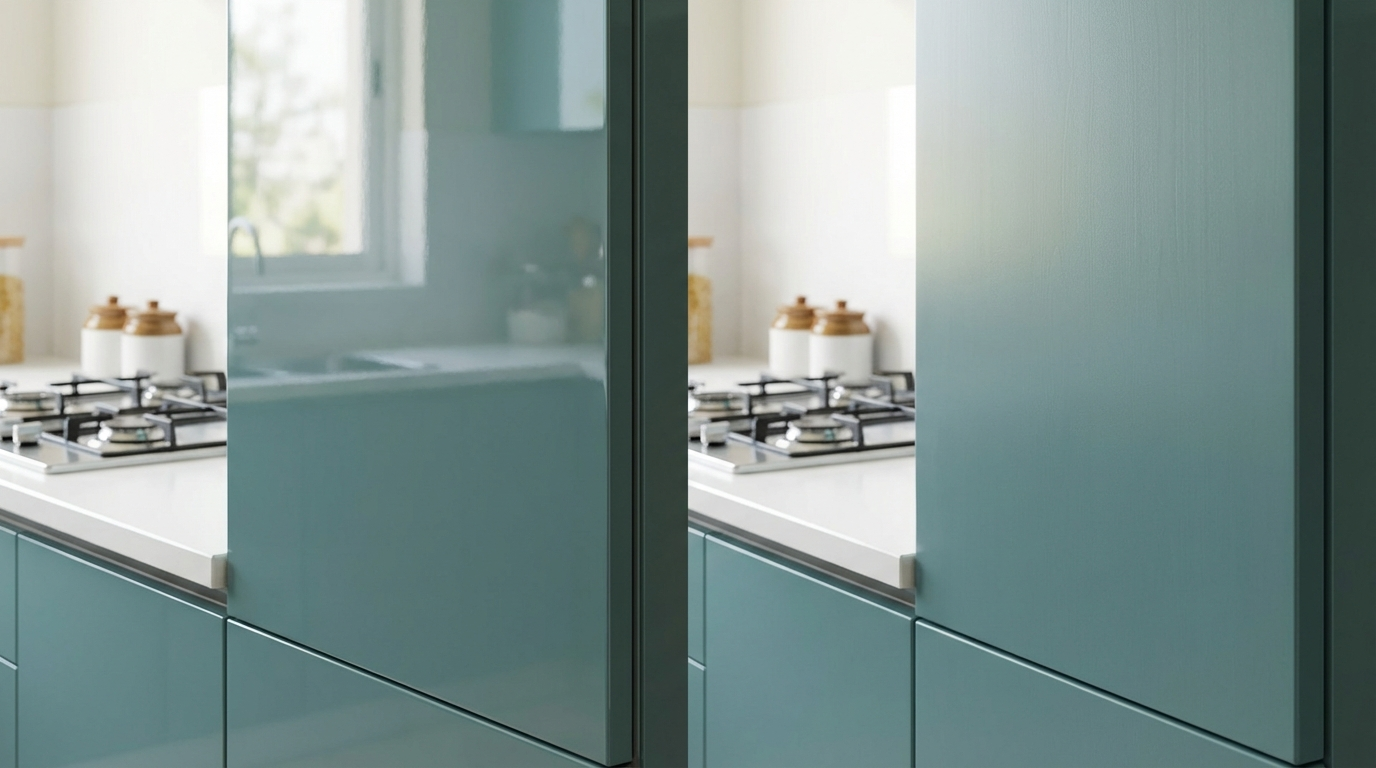
For interiors, WPC handles paints, laminates, and veneers uniformly because its surface is non-porous. In modular kitchens, where CNC machines cut precise designs, WPC's machinability reduces tool wear compared to plywood's fibrous edges that fray. However, its plastic content means it softens under extreme heat (above 80°C), a concern near gas stoves without heat shields. Why this matters in India: coastal regions like Kerala see relentless dampness; WPC's low water absorption (under 1% in tests) prevents the swelling that plagues untreated plywood, saving rework costs for carpenters.
Buyers often overlook density grades—higher-end WPC (900-1100 kg/m³) mimics plywood's feel, while budget variants (600-800 kg/m³) flex under weight. Dealers in Tier-2 cities like Jaipur push mid-range for volume, but inspect for uniform color; mottling signals poor mixing. In practical terms, a 18mm WPC sheet supports 50-80kg per running foot in shelves when edge-lipped, adequate for most wardrobes but not heavy lofts.
Edge cases include termite resistance—plastic deters pests naturally, unlike plywood needing chemical treatments. Yet, in dry Rajasthan interiors, WPC's cost premium rarely justifies over plywood unless moisture lurks.
What is Plywood?
Plywood stacks thin wood veneers (0.5-3mm) glued cross-grain under high pressure, forming strong, stable sheets from softwoods like poplar or hardwoods like eucalyptus. Indian grades range from MR (moisture-resistant) to BWR (boiling water-resistant), with thicknesses from 3mm to 25mm, commonly 18mm for furniture. The cross-layering distributes stress evenly, explaining its reliability in load-bearing roles—think kitchen cabinets holding utensils or beds with overhead storage.
Production sources timber from plantations in North India (Punjab, UP), with glue lines (5-13 layers for 18mm) determining quality. Commercial grade uses full-length plies for flatness; packing grade has knots but costs less. In dealer yards from Delhi to Bangalore, buyers negotiate based on core material—poplar cores flex less than mango, impacting screw pull-out by 20-30%. Why this matters in India: transport from mills adds 10-15% to southern prices due to GST slabs (18%) and trucking, widening city-tier gaps.
For interiors, plywood's breathable nature suits dry rooms but demands sealing in humid zones. Laminates adhere best to sanded surfaces, and CNC routing yields clean edges if the blade is sharp. Common thicknesses like "18mm" measure 17-19mm post-humidity; verify with calipers as carpenter shortcuts expose discrepancies. Structural strength shines: a 18mm sheet spans 60-90cm unsupported, holding 100kg+ per meter in modular setups.
Limitations emerge in moisture—MR grade absorbs 10-15% water, swelling 5-8% in monsoons without edge-sealing. BWR fares better (2-5% absorption) but costs more. Termites target untreated cores, necessitating preservatives that add ₹5-10/sqft. In practical Indian scenarios, budget buyers in Tier-3 towns opt for MR for wardrobes, facing delamination after 2-3 years if bathrooms adjoin. High-end IS-marked plywood (verify stamp) lasts 15+ years with proper use, but always check glue lines for voids during inspection.
WPC vs Plywood: Head-to-Head Comparison Table
This table breaks down core attributes for 8x4 ft 18mm sheets, typical for Indian interior projects. Ranges reflect Tier-1 vs Tier-3 cities, brand tiers, and grades—always get quotes from local dealers as logistics inflate southern prices by 15-20%.
| Attribute | WPC Board | Plywood |
|---|---|---|
| Water Resistance | Excellent (0.5-2% absorption); ideal for kitchens/bathrooms | Moderate (MR: 10-15%; BWR: 2-5%); needs sealing |
| Density (kg/m³) | 650-1100; lightweight | 500-750; heavier but stable |
| Screw Holding | Good with plugs; 40-60kg pull-out | Superior; 70-100kg direct |
| Weight (kg/sheet) | 25-40 | 35-55 |
| Termite Resistance | High (plastic content) | Low-moderate; needs treatment |
| Machinability (CNC) | Excellent; dustless | Good; some fraying |
| Heat Tolerance | Moderate (up to 70-80°C) | High (char resistant) |
Beyond specs, real-world use defines winners: WPC cuts installation time by 20% in modulars, easing carpenter labor in peak seasons like Diwali.
Water Resistance: Why It Matters in Indian Homes
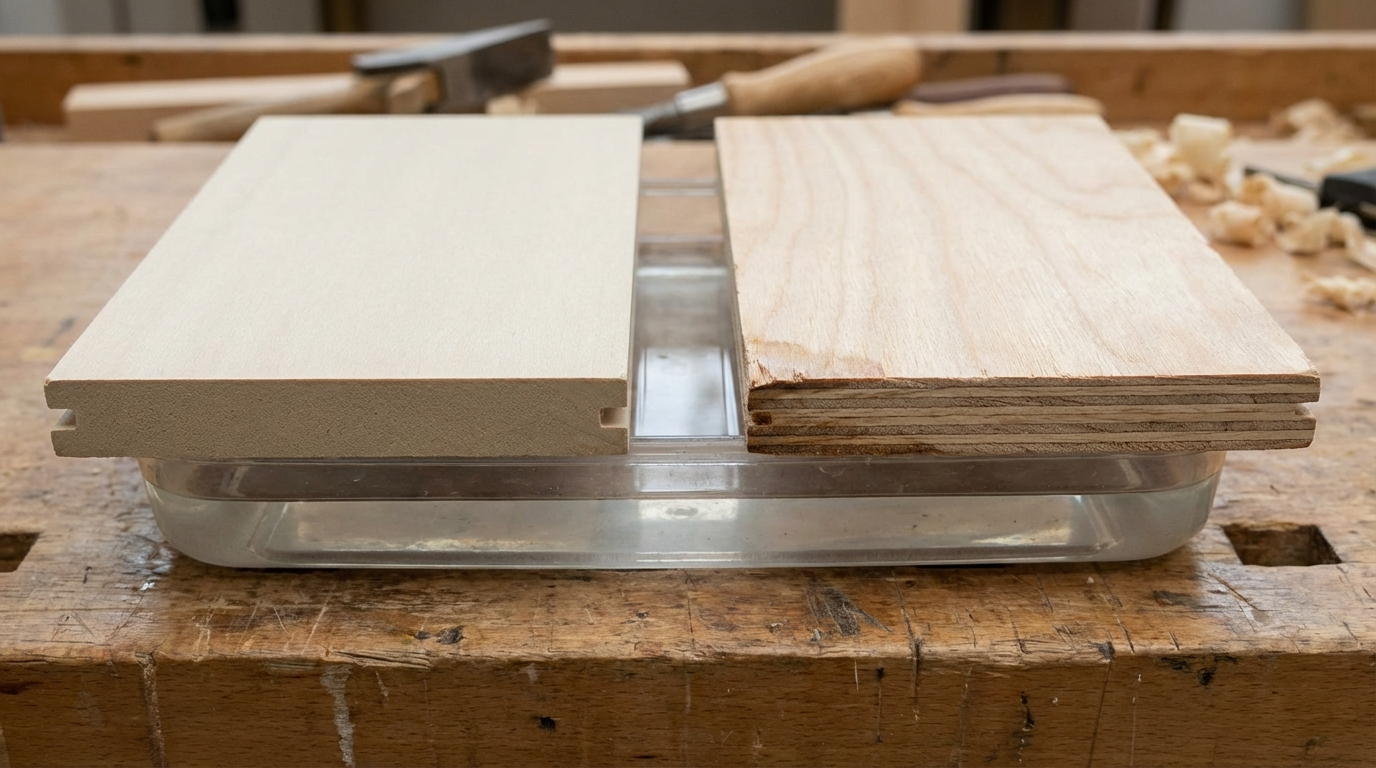
Water resistance separates WPC vs plywood starkly—WPC's polymer matrix repels moisture like plastic, absorbing under 2% even submerged, while plywood's veneers delaminate at 5-15% uptake. In India, where monsoons dump 2000mm rain in Kerala or 90% humidity in Kolkata, this gap means WPC survives spills and steam without warping, crucial for modular kitchens with daily cooking.
Plywood demands phenolic resins in BWR grades for boiling resistance, but MR variants (80% market share) fail post-wipe-downs if unsealed. Practical failure: bathroom vanities swell 10-20mm in humid Coimbatore homes, cracking laminates after 1-2 years. WPC, conversely, shrugs off coastal salt air in Goa, maintaining flatness for floating shelves. Why this matters in India: 70% interiors border wet zones—leaky roofs or poor ventilation amplify risks, hiking repair bills by ₹20,000+ per project.
Dealer logic: Push BWR plywood (₹120-180/sqft) for wet walls, but verify boil tests via stamp. WPC (₹140-220/sqft) skips prep, saving 10% on labor. Edge-seal plywood lips with putty; WPC's molded edges need none. In CNC shops, WPC routes waterproof channels seamlessly for sinks. Buyer scenario: Tier-2 families in Pune choose WPC for puja rooms near balconies, avoiding plywood's seasonal bow. Limitation: WPC scratches easier in high-traffic, needing melamine tops.
Inspection check: Submerge edge sample in water 24hrs—minimal change favors WPC; slight separation signals plywood's glue limits.
Strength and Structural Integrity
Plywood's cross-plied veneers provide unmatched tensile strength, spanning longer without sag—ideal for heavy wardrobes or loft beds. A 18mm sheet holds 100-150kg/meter shelving, outperforming WPC's 60-100kg due to plastic's lower modulus. In Indian lofts piled with monsoon storage, plywood prevents catastrophic flex.
WPC compensates with uniform density, resisting point loads via its foam-core compression, but screws pull out 20-40% easier without wood inserts. Why this matters in India: carpenters favor plywood for screw-dense cabinets (50+ per door), as WPC demands pilot holes or plugs, slowing modular CNC workflows by 15%. Poplar-core plywood from northern mills offers best value, but eucalyptus edges add rigidity for ₹10-20/sqft premium.
Durability trade-off: Plywood warps if unbalanced humidity hits 15% variance; WPC stays dimensionally stable (±1%). Real-world: Delhi earthquake zones see plywood's shear strength shine in quake tables, while WPC suits lightweight partitions. Common thickness pitfalls—19mm plywood feels sturdier than labeled 18mm WPC. Inspect: Load test sample shelf; deflection over 5mm under 50kg flags weak core.
Carpenter constraint: Overloading WPC in kids' bunk beds risks collapse; reserve plywood for structural frames. In budget homes, hybrid use—WPC panels, plywood frames—optimizes both.
Cost Breakdown for Indian Buyers
Upfront, plywood undercuts WPC: 18mm 8x4 sheets range ₹3,000-₹5,500 (₹80-₹150/sqft), varying by grade (MR low-end), city (Tier-1 +15%), and thickness. WPC starts ₹4,500-₹8,000 (₹120-₹220/sqft), higher due to extrusion tech. Lifecycle flips: WPC's no-repair needs save 20-30% over plywood's sealing/termite costs.
| Factor | Plywood Range (₹/sqft) | WPC Range (₹/sqft) | Price Driver |
|---|---|---|---|
| Basic/MR Grade | 80-110 | 120-160 | Core wood/plastic quality |
| Premium/BWR | 120-150 | 170-220 | Glue/resin type |
| Installation Add-on | 20-40 | 15-30 | Weight/labor ease |
| Maintenance (5yrs) | 10-25 | 5-15 | Sealing/repairs |
Factors shifting ranges: Northern mills cheaper for plywood (Delhi ₹90/sqft vs Bangalore ₹130); WPC uniform nationally but dealer margins hit 20% in small towns. GST (18%) + transport adds ₹10-20/sqft southwards. Why this matters in India: Diwali budgets cap at ₹2 lakh/kitchen—plywood fits dry zones, WPC justifies in humid for longevity. Negotiate bundles; carpenters overcharge 10% on cuts. Hidden cost: WPC's heat sensitivity near chimneys needs baffles (+₹5k).
Ideal Uses and Applications for Home Interiors
For bedrooms and living rooms, plywood rules wardrobes and TV units—its screw grip secures hinges flawlessly, and laminates hide grain affordably. WPC fits false ceilings and partitions, where lightness eases solo installs amid labor shortages.
Kitchens demand WPC for sinks and counters; steam resistance prevents laminate peel common in plywood after 3 years. Bathrooms favor WPC vanities—zero swelling in showers. Hybrids thrive: plywood frames with WPC shutters in modulars, balancing strength and moisture. Why this matters in India: 60% homes have open kitchens; WPC cuts monsoon callbacks. CNC dealers in Hyderabad push WPC for vanity carvings.
Edge cases: High-end villas use BWR plywood everywhere for uniformity; rentals pick budget MR plywood. Carpentry tip: Match thickness—18mm WPC pairs with 16mm plywood shelves.
How to Choose (Decision Framework)
Assess room moisture first—if over 70% RH (bath/kitchen), lean WPC. For load-heavy (cabinets/lofts), plywood. Budget under ₹100/sqft? Plywood. Factor carpenter skill—CNC favors WPC; handwork suits plywood. Indian checklist:
- Measure humidity: Hygrometer test; >65% = WPC.
- Load calc: >50kg/m = plywood.
- Budget sheet: Factor install (WPC saves 15%).
- Inspect samples: Screw test, water dip.
- Verify stamps: Boiling grade for plywood.
- When NOT to choose WPC: Heavy roofs, direct heat.
- When NOT to choose plywood: Unsealable wet walls.
Dealer visit: Compare 2-3 quotes; hybrid often wins.
Common Mistakes to Avoid
Buyers skip grade checks, grabbing MR plywood for bathrooms—delamination hits Year 2, costing ₹15k rework. Carpenters ignore edge-sealing, blaming "bad sheet." Inspection checks: Tap for hollows (voids); weigh for density; bend-test flex.
Overlooking thickness: "18mm" WPC at 16mm sags faster. Dealer upsell: Premium names hide low core. Why in India: Monsoon rushes lead to storage-warped stock. Fix: Buy fresh-milled, monsoon-proof with covers.
Trade-offs and Limitations
WPC's lightness trades screw strength—needs inserts (+time). Plywood's affordability limits moisture durability without extras. WPC scratches; plywood grains show under laminates. Heat: Plywood chars safely; WPC deforms. Finish: WPC uniform but pricey paints; plywood versatile veneers. Balance via hybrids for Indian multi-use homes.
Frequently Asked Questions
Is WPC better than plywood for Indian kitchens?
Yes, for most Indian kitchens exposed to steam and spills, WPC outperforms due to near-zero water absorption and easy cleaning, preventing the swelling that affects even BWR plywood over time. In open-plan homes common in urban apartments, WPC's stability under humidity swings saves on frequent touch-ups, though pair with plywood frames for heavy pot racks to leverage both strengths. Budgets around ₹1.5 lakh favor this hybrid, as carpenters in cities like Bangalore report 30% fewer callbacks.
Which is cheaper: WPC or plywood?
Plywood starts cheaper at ₹80-150/sqft for standard grades, making it ideal for large dry interiors, while WPC's ₹120-220/sqft reflects processing but offsets with lower maintenance. Prices vary by city—add 15% in South India—and thickness; negotiate dealer bundles to close the gap. Long-term, WPC evens out in humid zones via durability.
Can WPC hold heavy cabinets like plywood?
WPC supports moderate loads (50-80kg/meter) with proper inserts but lags plywood's 100kg+ direct hold, so reserve plywood for structural cabinets. In Indian wardrobes stuffed seasonally, reinforce WPC with metal channels—a common CNC fix that matches performance without excess weight.
Does WPC get termites like plywood?
No, WPC's plastic repels termites naturally, unlike plywood needing costly preservatives that fade. In termite-hotspots like Tamil Nadu, this slashes treatments by 50%, but ventilate to avoid trapped moisture softening the core.
Is plywood or WPC better for wardrobes?
Plywood excels for wardrobes with its screw-holding and span strength, perfect for rail-heavy Indian storage. WPC suits moisture-near ones but needs plugs; hybrids (plywood carcass, WPC doors) optimize for most homes balancing cost and care.
How to check quality of WPC vs plywood at dealer?
For plywood, tap for solid thud (no voids), check glue lines, boil-test edge. WPC: Uniform color, no air bubbles, screw-test firmness. Measure thickness; compare weights. In India, insist on fresh stock—warped plywood bows post-install.
Can I use WPC outdoors like plywood?
WPC handles semi-exposed better than MR plywood but not full weathering—UV fades plastic over years. Plywood BWR with sealant works outdoors; indoor focus both shine. For balconies, seal edges rigorously.
Which lasts longer in humid Indian climate?
WPC endures 10-15 years in high humidity without delam, outlasting MR plywood's 5-8 years untreated. BWR plywood matches with care, but WPC's low-maintenance wins for busy households in monsoon belts.
Disclaimer: This content is provided for general informational purposes based on industry practices and publicly available information. Product specifications, standards, prices, and availability may vary by manufacturer, region, and time. Readers should independently verify details with manufacturers, dealers, or qualified professionals before making purchase or construction decisions.Want Plywood Suggestions?
Share a few details and a Apple Ply specialist will suggest suitable brands and connect you to responsive dealers.