PVC Laminate vs Acrylic: Complete Comparison for Interiors
Compare PVC laminate vs acrylic finish - durability, cost, appearance & maintenance. Choose the right material for your interior project.
Quick Answer
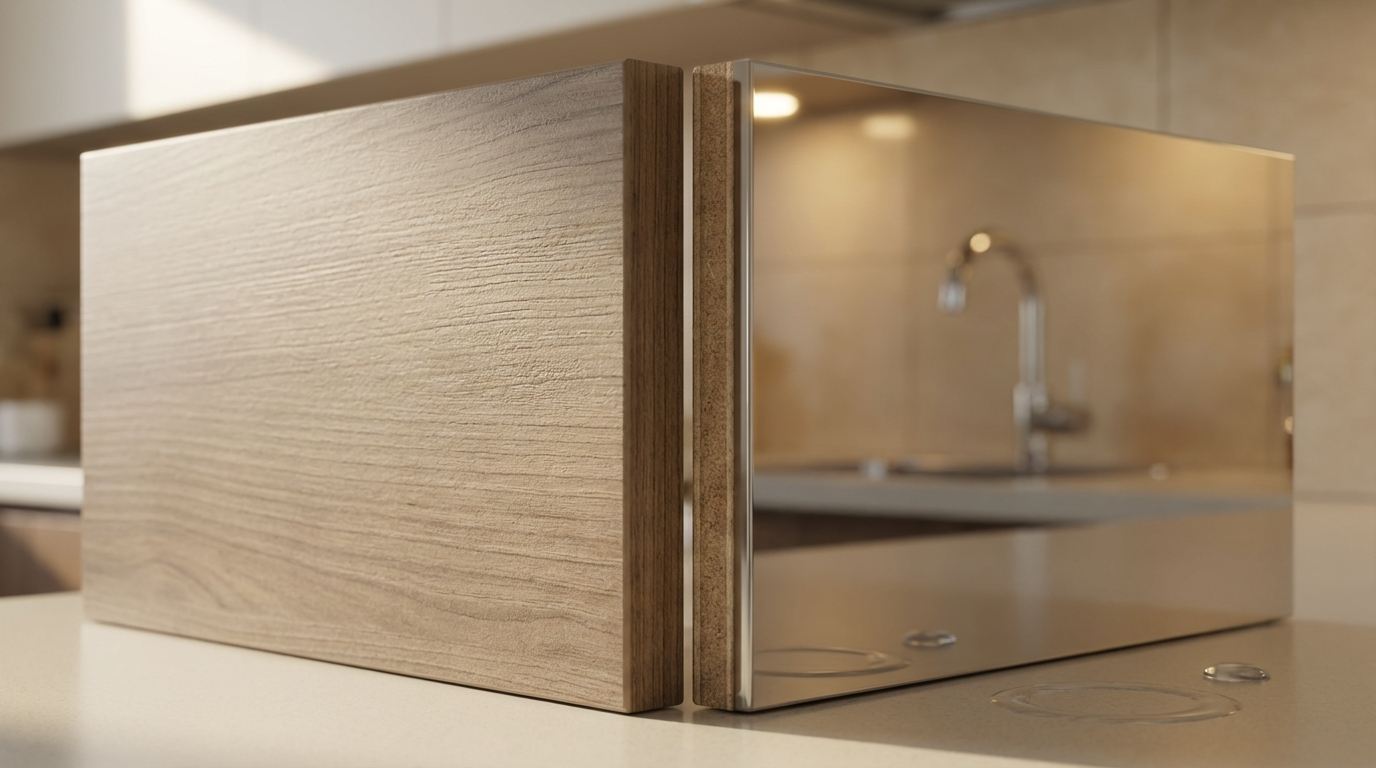
The key difference between PVC laminate and acrylic is that PVC laminate offers better durability and moisture resistance at a lower cost, while acrylic provides a superior high-gloss, premium appearance at a higher price point. PVC laminate suits budget-conscious projects and high-wear areas, whereas acrylic is ideal for luxury interiors where aesthetics take priority.
At a Glance:- PVC laminates are made from polyvinyl chloride and offer excellent moisture, heat, and termite resistance
- Acrylic laminates provide a glass-like, reflective finish that retains colour vibrancy for years
- PVC laminate costs ₹200–₹450 per sq ft; acrylic ranges from ₹400–₹900 per sq ft in India
- For Indian kitchens, PVC works better on lower cabinets; acrylic suits upper cabinets
- Both require MDF or plywood substrate—neither is structural on its own
- PVC is more forgiving of carpenter skill gaps; acrylic demands precision handling
PVC Laminate vs Acrylic: Understanding Both Materials
Before choosing between these two popular finishes for modular kitchens and wardrobes, it is essential to understand what each material actually is and how it behaves in real-world Indian home conditions.
What is PVC Laminate?
PVC laminate is a multi-layered, pre-processed sheet made from polyvinyl chloride. The manufacturing process involves pressing paper together with plastic resins under high pressure and temperature to create a composite material. The result is a thin, flexible laminate that can be applied to plywood, MDF, or particle board substrates to create finished surfaces for cabinets, wardrobes, and furniture.
PVC laminates are available in both matte and glossy finishes, with textures ranging from natural wood grain to stone patterns. Their thin density allows them to be bent without breaking—a property that makes them particularly useful for curved surfaces and edge wrapping on CNC-machined panels. In the Indian market, PVC laminates have gained significant popularity for modular kitchen applications due to their practical properties and accessible price point.
What is Acrylic Laminate?
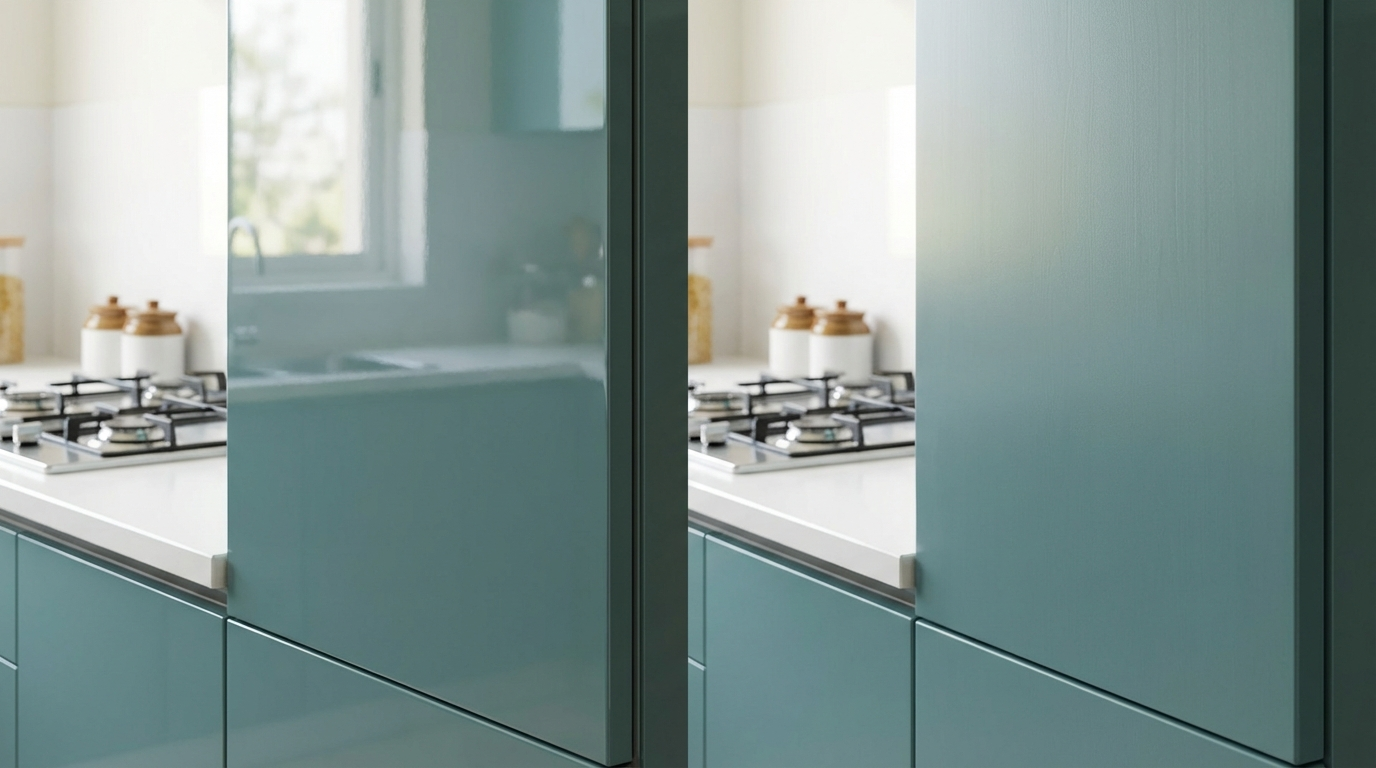
Acrylic laminate is made from polymer fibre (PMMA—polymethyl methacrylate) and shares characteristics with lacquer finishes. It is a rigid, sturdy material that provides an exceptionally sleek, glass-like shiny appearance. Acrylic sheets are typically bonded onto MDF boards and sealed with a protective layer to achieve that premium, mirror-like finish that catches light beautifully.
The hallmark of acrylic laminates is their ability to maintain colour vibrancy and glossy sheen for years without yellowing or fading. They come in a range of solid, vibrant colours—with deep wine reds, pristine whites, and bold blacks being particularly popular in contemporary Indian homes. Acrylic has become the go-to choice for homeowners seeking that designer kitchen aesthetic seen in lifestyle magazines and high-end apartment projects in metros like Mumbai, Bengaluru, and Delhi.
Types and Variants Available in India
Both PVC and acrylic laminates come in various grades and finish types. Understanding these variants helps in making the right selection for specific applications.
PVC Laminate Variants
Matte PVC Laminates: These offer a subdued, non-reflective finish that hides fingerprints and minor scratches effectively. They are practical for households with children and see heavy daily use. Matte finishes work well in traditional and transitional interior styles.
Glossy PVC Laminates: These provide a shiny surface, though not as reflective as acrylic. They offer a good middle ground for those wanting some sheen without the full mirror effect. Glossy PVC is easier to clean but shows smudges more readily.
Textured PVC Laminates: Available in wood grain, stone, and fabric patterns, these add tactile interest to surfaces. They effectively hide wear and tear and are popular for wardrobe applications across Indian homes.
High-Gloss UV PVC: A premium PVC variant with UV coating that offers enhanced shine and better scratch resistance. It bridges the gap between standard PVC and acrylic in terms of appearance.
Acrylic Laminate Variants
Solid Colour Acrylic: The most common type, available in single bold colours. These create striking visual statements and are preferred for modern, minimalist kitchen designs.
Metallic Acrylic: Contains metallic particles that create a shimmering effect. Popular for accent panels and feature elements in luxury projects.
Anti-Fingerprint Acrylic: A newer variant with special coating that reduces fingerprint visibility—addressing one of the main complaints about standard acrylic surfaces.
Comparison Table: PVC Laminate vs Acrylic
| Parameter | PVC Laminate | Acrylic Laminate | Better Choice |
|---|---|---|---|
| Appearance | Good sheen in glossy variants; variety of textures available | Mirror-like high-gloss finish; premium, sophisticated look | Acrylic for aesthetics |
| Cost (per sq ft) | ₹200–₹450 | ₹400–₹900 | PVC for budget |
| Durability | Excellent resistance to heat, moisture, and impact | Good UV and moisture resistance; scratches visible easily | PVC for durability |
| Scratch Resistance | Moderate; scratches less visible due to texture options | Scratches show prominently on glossy surface | PVC |
| Fingerprint Visibility | Low in matte; moderate in glossy | High; requires frequent cleaning | PVC |
| Flexibility | Can bend up to 90° without breaking; ideal for curved edges | Rigid; cannot be bent without cracking | PVC for curved work |
| Colour Retention | Good; may fade slightly over 5+ years | Excellent; retains vibrancy for 10+ years | Acrylic |
| Installation Complexity | DIY-friendly; forgiving of minor errors | Requires skilled handling; shows imperfections | PVC for ease |
| Termite Resistance | Inherently termite-proof | Inherently termite-proof | Equal |
| Best Application | Lower kitchen cabinets, wardrobes, office furniture | Upper kitchen cabinets, feature walls, luxury projects | Depends on use |
How to Choose Between PVC Laminate and Acrylic
Making the right choice between PVC laminate and acrylic depends on several factors specific to your project, budget, and expectations. Here is a practical decision framework for Indian homeowners and contractors.
Decision Framework
Consider Your Budget: If your total kitchen or wardrobe budget is constrained, PVC laminate delivers excellent value without compromising on essential properties. Acrylic makes sense when you have allocated premium budgets specifically for surface finishes—typically in projects where total kitchen costs exceed ₹3–4 lakh.
Evaluate Usage Patterns: High-traffic areas, homes with young children, or rental properties benefit from PVC's forgiving nature. Acrylic suits owner-occupied homes where occupants are willing to maintain surfaces carefully.
Assess Your Climate: In coastal cities like Chennai, Mumbai, or Kochi, PVC's superior moisture resistance provides peace of mind during monsoon months. Acrylic performs well too but demands better edge sealing during installation.
Consider Carpenter Skill Level: Local carpenters in Tier-2 and Tier-3 cities may be more experienced with PVC. Acrylic installation ideally requires factory-finished panels or highly skilled modular kitchen installers available primarily in metros.
Buyer Checklist
- Define total finish budget before visiting dealers
- Request physical samples of both materials in your preferred colours
- Verify substrate compatibility—both work best on moisture-resistant MDF or BWR plywood
- Ask about edge-banding options and their additional cost
- Check warranty terms offered by the brand
- Confirm installer experience with the specific material
- Request references or photos of completed projects using your chosen finish
When NOT to Choose Acrylic
Avoid acrylic laminates if your project involves tight budgets, unskilled labour, or heavy daily wear. Kitchen base units that face regular contact with pots, pans, and water splashes are better served by PVC. Similarly, avoid acrylic for children's rooms or homes with pets where scratches are inevitable. If you live in a Tier-3 city where replacement panels or matching colours may be difficult to source later, PVC's wider availability makes it the safer choice.
When NOT to Choose PVC
Skip PVC laminates if you specifically want that mirror-like, ultra-premium appearance that makes a statement. For luxury projects where clients expect a high-end finish comparable to imported European modular kitchens, standard PVC may appear underwhelming. Also avoid basic PVC if the surface will be directly adjacent to heat sources without proper shielding.
Common Mistakes to Avoid
Whether you choose PVC laminate or acrylic, certain errors can compromise the finish quality and longevity. Here are the most frequent mistakes observed in Indian installations.
Substrate Selection Errors
Using commercial plywood instead of BWR (boiling water resistant) grade or moisture-resistant MDF beneath either laminate is a recipe for disaster. In humid climates, the substrate swells, causing the laminate to bubble or peel. Always insist on appropriate substrate—the few hundred rupees saved on cheaper plywood will cost thousands in repairs.
Poor Edge Treatment
Leaving edges unsealed or using mismatched edge bands allows moisture ingress. For PVC laminates, matching PVC edge tape works well. Acrylic panels ideally require laser-edge banding or factory-finished edges for seamless results. Many carpenters in India still use cheap edge tape that peels within months—inspect edge quality before final payment.
Ignoring Expansion Gaps
Both materials expand and contract slightly with temperature changes. Installers sometimes fit panels too tightly, causing buckling during hot summers. Ensure your carpenter leaves appropriate gaps (typically 2-3mm) at joints.
Wrong Adhesive Selection
Using white glue or low-grade adhesives instead of recommended PVA or polyurethane adhesives leads to delamination. For acrylic bonding, specialized acrylic adhesives or high-quality contact cement is essential. Verify adhesive type before installation begins.
Quick Inspection Checks
- Run your hand across surfaces—feel for bubbles or uneven areas
- Check all corners and edges for proper sealing
- Open and close doors/drawers multiple times to verify no rubbing occurs
- Examine hinges and handle areas where stress concentrates
- Look at surfaces from multiple angles to spot warping or unevenness
Price Guide: PVC Laminate vs Acrylic in India
Pricing for both materials varies based on brand tier, thickness, finish quality, and city. Here is a realistic price breakdown for the Indian market in 2025–26.
PVC Laminate Pricing
| Brand Tier | Price Range (₹/sq ft) | Typical Applications | Availability |
|---|---|---|---|
| Economy/Local | ₹200–₹280 | Rental properties, basic furniture | Wide; most dealer networks |
| Mid-Range (Branded) | ₹280–₹380 | Home kitchens, wardrobes | Good; metro and Tier-2 cities |
| Premium | ₹380–₹500 | High-end residential, commercial | Limited; authorized dealers |
Acrylic Laminate Pricing
| Brand Tier | Price Range (₹/sq ft) | Typical Applications | Availability |
|---|---|---|---|
| Economy | ₹400–₹550 | Budget luxury projects | Moderate; metro-focused |
| Mid-Range (Branded) | ₹550–₹750 | Premium kitchens, showrooms | Metro and select Tier-2 |
| Premium/Imported | ₹750–₹1,200 | Luxury homes, hospitality | Limited; specialist dealers |
What Causes Price Variation?
Thickness: Standard PVC laminates range from 0.5mm to 1mm. Thicker sheets cost more but offer better durability. Acrylic panels typically come in 1mm to 1.5mm thickness.
Finish Type: High-gloss and textured finishes command premiums over standard matte in both categories.
Brand Reputation: Established brands like Greenply, Century, Merino, and similar manufacturers price higher due to quality consistency and warranty backing.
City and Transport: Prices in Mumbai, Delhi, and Bengaluru tend to be competitive due to dealer density. Remote locations incur transport costs adding ₹20–50 per sq ft.
GST Impact: Both materials attract 18% GST. Ensure quoted prices clarify whether GST is included.
Maintenance Tips for Long-Term Performance
Proper maintenance significantly extends the life and appearance of both PVC and acrylic finishes. The care requirements differ slightly between the two materials.
Maintaining PVC Laminates
PVC laminates are relatively low-maintenance. Regular cleaning with a soft cotton cloth dampened with mild liquid detergent keeps surfaces fresh. For stubborn stains, acetone can be used carefully—test on a hidden area first. Always ensure surfaces are dried after cleaning to prevent water spots, especially in glossy variants. Avoid abrasive scrubbers that can dull the finish over time.
Maintaining Acrylic Laminates
Acrylic demands more careful attention. Clean only with soft, damp microfibre cloths and mild, non-abrasive cleaners specifically designed for acrylic or plastic surfaces. Never use acetone or harsh solvents on acrylic as these chemicals can cause clouding or surface damage. Wipe away soap residue completely—build-up dulls the signature gloss. Fingerprints are the biggest daily annoyance; develop a habit of wiping high-touch areas regularly.
5-Year Durability Outlook
With proper installation and maintenance, PVC laminates typically maintain good appearance for 8–12 years in normal household use. Acrylic laminates can look pristine even after 10–15 years if handled carefully—the colour retention is exceptional. However, accumulated micro-scratches on acrylic become more visible over time, creating a dull haze effect that is difficult to reverse. PVC's textured variants hide such wear better.
Practical Combination Strategy for Indian Kitchens
Experienced interior designers and modular kitchen specialists in India frequently recommend using both materials strategically within the same kitchen. This approach maximizes value while delivering premium aesthetics where they matter most.
The Hybrid Approach
Use acrylic laminates for upper cabinets—these are above eye level, catch more light, and experience less physical contact. The reflective quality of acrylic makes kitchens appear more spacious and brightens the cooking area. Since upper cabinets are rarely touched, fingerprint issues become negligible.
Apply PVC laminates on lower cabinets, base units, and drawer fronts. These surfaces face daily handling, water splashes near sinks, heat proximity from cooking ranges, and general wear from pots and utensils. PVC's durability handles this abuse gracefully while its lower cost keeps overall budgets manageable.
Carpenter's Perspective
Most carpenters in India prefer working with PVC laminates because the material forgives minor installation imperfections. Acrylic's reflective surface magnifies every flaw—uneven substrate preparation, slight bubbling, or imperfect edge joints become glaringly obvious. Unless your project involves factory-finished modular panels or highly skilled installers, the combination approach protects against visible quality issues while still delivering that premium look on upper areas.
Frequently Asked Questions
What is the full form of PVC in PVC laminate?
PVC stands for Polyvinyl Chloride, a synthetic plastic polymer widely used in construction and interior applications. In the context of laminates, PVC refers to multi-layered sheets made by pressing paper with polyvinyl chloride resins under heat and pressure. This creates a durable, flexible material used as a decorative and protective coating on plywood, MDF, and particle board for kitchen cabinets, wardrobes, and furniture applications across Indian homes.
Which is better for kitchen cabinets: PVC laminate or acrylic?
For most Indian kitchens, a combination works best—PVC laminate for lower cabinets and acrylic for upper cabinets. PVC offers superior durability, moisture resistance, and value for high-wear base units. Acrylic provides the premium aesthetic for upper sections visible at eye level. If choosing only one material, PVC is the practical choice for its resistance to heat, water, and daily wear typical in Indian cooking environments.
Is acrylic laminate waterproof?
Yes, acrylic laminate itself is resistant to moisture and UV light, making it suitable for kitchen applications. However, the substrate beneath (typically MDF or plywood) is vulnerable to water damage if edges are not properly sealed. In humid Indian climates and coastal cities, ensure all edges receive proper treatment during installation. The laminate surface will repel water, but prolonged moisture exposure through unsealed edges leads to substrate swelling and laminate failure.
What is the price difference between PVC and acrylic laminate in India?
Acrylic laminates typically cost 80–120% more than PVC laminates. PVC laminate ranges from ₹200–₹450 per square foot depending on brand and finish, while acrylic ranges from ₹400–₹900 per square foot. For a standard 100 sq ft kitchen, this translates to a difference of ₹20,000–₹45,000 in finish costs alone. Premium brands and specialty finishes in both categories can push prices higher, especially in metro markets.
Can PVC laminate be used in bathrooms?
Yes, PVC laminate is well-suited for bathroom vanity cabinets and storage units due to its excellent moisture and water resistance. It outperforms acrylic in bathroom applications because of its inherent resistance to humidity fluctuations. Ensure the substrate is BWR-grade plywood or marine-grade material, and seal all edges properly. PVC's resistance to mould and mildew growth makes it particularly appropriate for the consistently humid bathroom environment common in Indian homes.
How to check quality of PVC laminate before buying?
Inspect the sheet for uniform thickness—uneven thickness indicates poor manufacturing. Bend a sample gently; quality PVC flexes without cracking or showing stress marks. Check the back side for proper coating and uniform colour without patches. Request test certificates for fire retardancy and chemical resistance from reputable brands. Visit dealer showrooms to compare samples across brands. Branded PVC from established manufacturers offers consistent quality and warranty support.
Does acrylic laminate scratch easily?
Yes, acrylic laminates are prone to visible scratching due to their high-gloss, reflective surface. Even minor contact with rings, keys, or abrasive materials can leave marks that catch light and remain permanently visible. This is acrylic's main drawback compared to PVC. Some premium brands offer anti-scratch coatings that improve resistance, but no acrylic surface matches PVC's ability to hide wear. Position acrylic on surfaces with minimal physical contact for best results.
Which brands offer good PVC and acrylic laminates in India?
Major plywood and laminate manufacturers in India offer both PVC and acrylic options. Look for products from established brand groups known for quality control and dealer networks. Availability varies by region—metros have the widest selection while Tier-2 and Tier-3 cities may stock limited options. Always purchase from authorized dealers to ensure genuine products with valid warranty coverage. Request physical samples before committing to large orders.
Disclaimer: This content is provided for general informational purposes based on industry practices and publicly available information. Product specifications, standards, prices, and availability may vary by manufacturer, region, and time. Readers should independently verify details with manufacturers, dealers, or qualified professionals before making purchase or construction decisions.Want Plywood Suggestions?
Share a few details and a Apple Ply specialist will suggest suitable brands and connect you to responsive dealers.