Acrylic vs PU Kitchen Cabinets: Which Finish is Better?
Acrylic vs PU kitchen finish - compare durability, cost, maintenance & appearance. Find the best finish for your modular kitchen.
Quick Answer
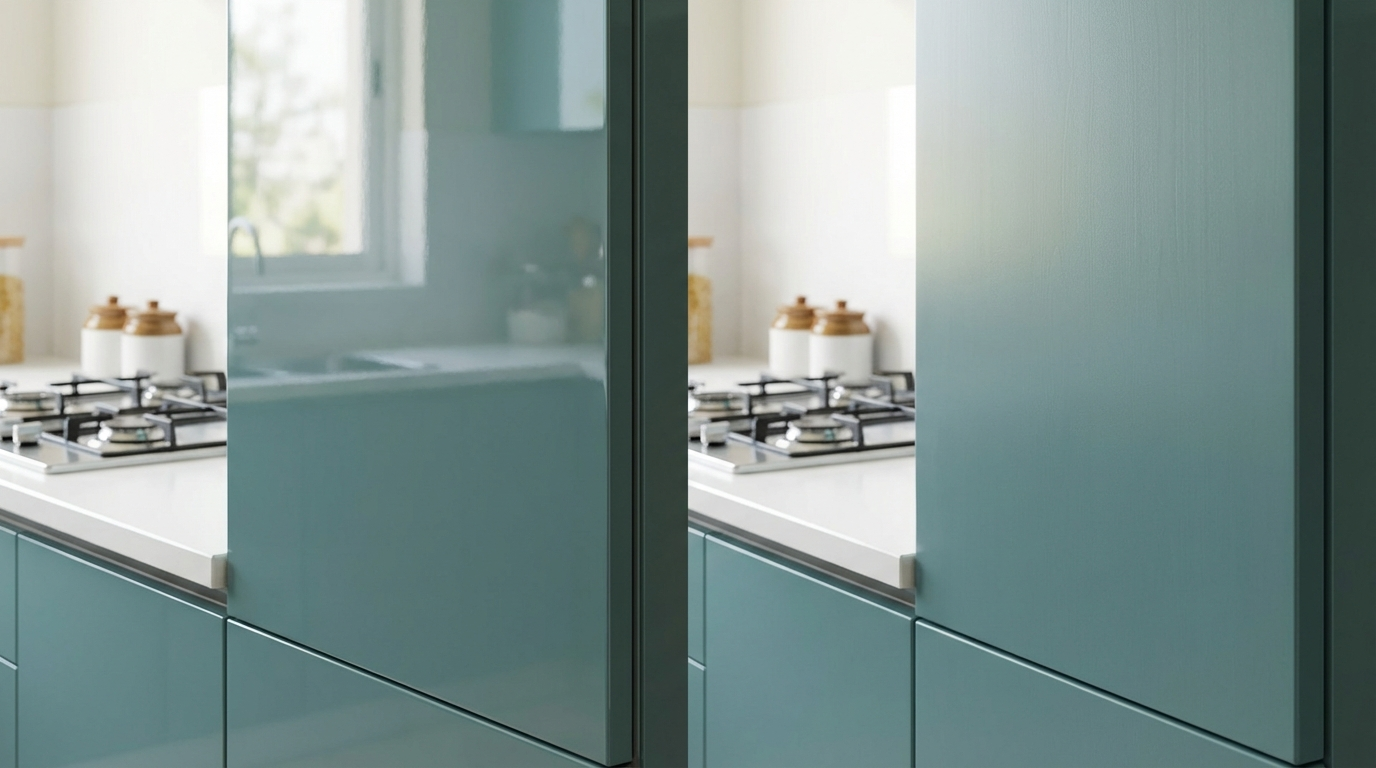
The key difference between acrylic and PU kitchen cabinets is their finish characteristics: acrylic delivers a mirror-like high-gloss appearance with superior scratch resistance, while PU (polyurethane) offers more versatile matte-to-gloss options with better repairability. For modern Indian kitchens prioritising aesthetics, acrylic excels; for those needing customisation and easier maintenance, PU proves more practical.
At a Glance:
- Acrylic provides 8-10 times higher gloss levels than standard PU finishes
- PU offers unlimited colour matching including custom RAL shades
- Acrylic costs ₹800–2,500 per sq ft; PU ranges ₹600–1,800 per sq ft in metro cities
- PU scratches can be buffed and repaired; acrylic damage often requires panel replacement
- Both perform well in Indian humidity when properly applied on moisture-resistant substrates
- Acrylic shows fingerprints more visibly, requiring frequent cleaning in high-use kitchens
Understanding Acrylic and PU Finishes for Kitchen Cabinets
When homeowners in India explore modular kitchen options, the cabinet finish conversation typically narrows down to acrylic versus PU coatings. These two premium finishes dominate the high-end segment, yet they represent fundamentally different technologies with distinct advantages suited to different kitchen environments and usage patterns.
What is Acrylic Finish?
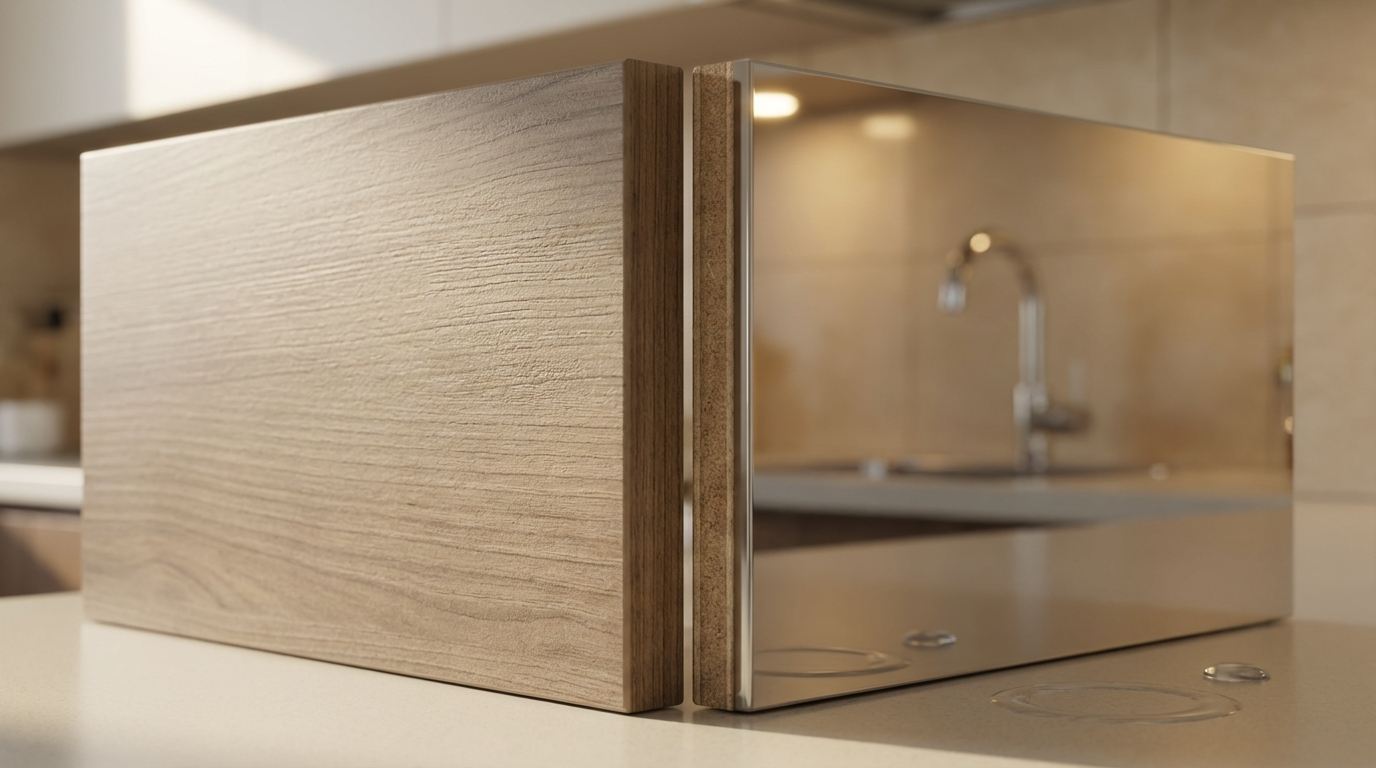
Acrylic finish involves bonding pre-manufactured PMMA (polymethyl methacrylate) sheets onto MDF or plywood substrates. These sheets, typically 1mm thick, are produced in controlled factory environments and then applied using specialised adhesives and pressure. The result is a non-porous, highly reflective surface that achieves gloss levels of 80-95 GU (gloss units), creating the signature mirror-like appearance that defines contemporary kitchen aesthetics.
In the Indian market, acrylic sheets are available from both domestic manufacturers and imported sources. The finish cannot be applied on-site—it requires factory-level equipment for proper bonding, making it exclusively a modular kitchen solution rather than a carpenter-applied option.
What is PU (Polyurethane) Finish?
PU or polyurethane finish is a spray-applied liquid coating that cures to form a hard, protective film on cabinet surfaces. Unlike acrylic, PU is applied in multiple coats—typically a primer, base coat, and topcoat—with sanding between layers. This process allows PU to achieve various sheen levels: matte (10-20 GU), satin (30-40 GU), semi-gloss (50-70 GU), and high-gloss (80+ GU).
PU application requires spray booths with controlled dust and humidity conditions. In India, quality varies significantly between factory-applied PU from established modular kitchen manufacturers and workshop-applied PU from smaller fabricators. The curing process, ambient temperature, and application skill directly impact the final durability.
Acrylic vs PU Kitchen Cabinets: Detailed Comparison
| Parameter | Acrylic Finish | PU Finish | Better Choice |
|---|---|---|---|
| Gloss Level | 80-95 GU (ultra-high gloss) | 10-85 GU (matte to high gloss) | Acrylic for gloss; PU for versatility |
| Scratch Resistance | Excellent (surface hardness 2H-3H) | Good (surface hardness 1H-2H) | Acrylic |
| Colour Options | Limited to manufacturer catalogue | Unlimited custom colour matching | PU |
| Repairability | Difficult; usually requires panel replacement | Can be sanded and recoated | PU |
| UV Resistance | Excellent; minimal yellowing | Good; may yellow without UV additives | Acrylic |
| Heat Resistance | Up to 80°C | Up to 100°C | PU |
| Moisture Resistance | Excellent (non-porous surface) | Very good (when properly sealed) | Acrylic |
| Cost (per sq ft) | ₹800–2,500 | ₹600–1,800 | PU for budget |
Appearance and Aesthetic Impact
Acrylic's primary appeal lies in its unmatched reflective quality. The factory-produced sheets deliver consistent colour depth and a glass-like surface that reflects light uniformly across the cabinet face. This makes acrylic particularly effective in smaller Indian kitchens where the reflective surfaces create an illusion of expanded space.
PU finishes offer aesthetic flexibility that acrylic cannot match. Interior designers favour PU when projects require specific colour coordination with existing interiors, custom matte finishes for contemporary European-style kitchens, or textured effects that mask fingerprints while maintaining sophistication. The satin and matte PU options have gained significant popularity in premium Bangalore and Mumbai projects where understated elegance takes precedence over high-gloss impact.
Durability in Indian Kitchen Conditions
Indian kitchens subject cabinets to unique stresses: high humidity during monsoons, oil splatter from tadka preparations, turmeric staining, and temperature fluctuations from cooking. Both finishes handle these conditions well, but with different considerations.
Acrylic's non-porous surface prevents oil penetration entirely—spills wipe off without leaving shadows or marks. However, the high-gloss surface shows fingerprints, water spots, and dust more prominently, demanding frequent cleaning to maintain appearance. In households with small children or heavy cooking activity, this maintenance requirement becomes a practical consideration.
PU finishes, particularly satin variants, disguise fingerprints and minor surface contamination better. The slightly textured microscopic surface breaks light reflection, making everyday marks less visible. However, lower-grade PU applications may allow oil penetration at microscopic pinholes, leading to permanent staining over time.
Types and Grades Available in India
Acrylic Finish Variants
High-Gloss Solid Acrylic: The premium option with PMMA sheets forming the complete cabinet door. Available from brands in the ₹2,000–2,500 per sq ft range, these deliver the highest gloss levels and colour vibrancy. Best suited for showcase kitchens where appearance is paramount.
Acrylic-Faced Panels: More common in Indian modular kitchens, these feature thinner acrylic sheets (0.8-1mm) bonded to MDF or HDF substrates. Priced between ₹800–1,500 per sq ft, they offer excellent value while delivering near-equivalent visual impact to solid acrylic at significantly lower cost.
Matte Acrylic: A newer entrant addressing the fingerprint visibility concern. These sheets undergo surface treatment to reduce gloss while retaining scratch resistance. Availability remains limited in Tier-2 and Tier-3 cities, with most stock concentrated in metro dealer networks.
PU Finish Variants
2K Polyurethane: The industry standard for quality PU finishes, involving two-component systems (resin plus hardener) that cure through chemical reaction. Delivers superior hardness and chemical resistance. Most reputable modular kitchen manufacturers use 2K PU exclusively.
1K Polyurethane: Single-component systems that cure through solvent evaporation. Less durable than 2K variants, these are often found in budget fabrication. Homeowners should specifically enquire about PU type, as the price difference between 1K and 2K work is substantial but not always transparently communicated.
PU with UV Coating: Premium PU applications include UV-cured topcoats that enhance scratch and chemical resistance. This hybrid approach bridges the durability gap between standard PU and acrylic, though at higher cost.
How to Choose Between Acrylic and PU for Your Kitchen
Selecting between these finishes requires evaluating your specific circumstances rather than following generalised recommendations. Consider these decision factors systematically:
Decision Framework
Kitchen Size and Lighting: Acrylic's reflective properties benefit compact kitchens (under 80 sq ft) by amplifying available light. In larger kitchens with abundant natural light, the high gloss can create excessive reflection that some find uncomfortable. PU's matte and satin options work better in well-lit spacious kitchens.
Cooking Intensity: Households with daily intensive Indian cooking—regular frying, tadka preparation, pressure cooking—should factor in the cleaning frequency acrylic demands. The combination of oil vapours and high gloss surfaces requires wiping after almost every cooking session to prevent filmed buildup.
Colour Requirements: If your kitchen design requires specific colour matching with walls, flooring, or existing furniture, PU offers flexibility that acrylic cannot provide. Acrylic colours are limited to what manufacturers produce; custom shades are not feasible.
Long-term Ownership: Consider whether you prefer a finish that remains pristine but may need complete panel replacement if damaged (acrylic) or one that shows wear gradually but can be restored through refinishing (PU).
Buyer Checklist
- Verify substrate quality—both finishes perform poorly on substandard MDF or plywood
- For acrylic, confirm sheet thickness (minimum 1mm for durability)
- For PU, confirm it is 2K polyurethane with minimum 3-coat application
- Request sample panels to evaluate in your kitchen's actual lighting conditions
- Check edge finishing quality—edges are the failure point for both finishes
- Confirm warranty terms specifically cover delamination and peeling
- Assess manufacturer's service network in your city for future repairs
When NOT to Choose Acrylic
Avoid acrylic if your kitchen receives direct sunlight for extended periods on cabinet surfaces—while UV resistant, prolonged exposure accelerates minor colour shifts. Similarly, if your household includes very young children who will frequently touch cabinet surfaces, the constant fingerprint visibility may prove frustrating despite the finish's inherent durability.
When NOT to Choose PU
Avoid PU in coastal areas unless working with established manufacturers using marine-grade formulations. Standard PU in high-humidity coastal environments like Chennai, Mumbai's seafacing areas, or Kerala can develop micro-blistering within 3-4 years. Additionally, avoid PU from fabricators without proper spray booth facilities—dust contamination during application creates permanent surface defects.
Common Mistakes to Avoid
Both acrylic and PU cabinet projects frequently fail due to preventable errors during selection, installation, or maintenance. Understanding these failure patterns helps you make informed decisions and ask the right questions during purchase.
Substrate Quality Neglect
The most common mistake is focusing entirely on the finish while ignoring what lies beneath. Premium acrylic or PU applied on standard commercial-grade MDF will fail within 2-3 years through swelling, especially around hinge points and near sinks. Insist on BWR (boiling water resistant) MDF or marine-grade plywood for any moisture-exposed cabinets. In monsoon-prone regions, this becomes non-negotiable regardless of finish choice.
Edge Banding Shortcuts
Edges are where moisture infiltration begins. For acrylic cabinets, laser-edge banding creates seamless joins that prevent water entry. Many fabricators substitute cheaper PVC edge bands to reduce costs—these separate over time, allowing moisture to reach the substrate. For PU cabinets, ensure edges receive equal coating attention as faces; uncoated or under-coated edges are the first failure point.
Colour Matching Assumptions
Homeowners often assume they can match acrylic panel colours across different purchase batches. Due to manufacturing variations, even the same colour code can show visible differences between batches. Order all panels for your kitchen in a single batch, with 10-15% extra for future replacements. This particularly applies to white and light colours where variations are most apparent.
Cleaning Product Damage
Using abrasive cleaners, steel wool, or harsh chemical degreasers destroys both finishes. Acrylic develops microscopic scratches that dull the gloss; PU coating chemically degrades, becoming cloudy or tacky. Use only mild soap solutions or manufacturer-recommended cleaners. Many warranty claims fail because damage traces back to inappropriate cleaning products.
Quick Inspection Checks
- Run your palm across acrylic surfaces—any texture or bumps indicate substrate defects showing through
- Check PU coating thickness at edges using a fingernail; thin coating chips easily
- Examine corner joints closely; gaps indicate poor fabrication that moisture will exploit
- Request the manufacturer's technical data sheet for the specific acrylic or PU system used
- Verify hinge mounting areas have reinforced substrate to prevent screw pullout
Price Guide: Acrylic vs PU Kitchen Cabinet Costs in India
Cabinet finish pricing varies significantly based on multiple factors. These ranges reflect 2025-26 market conditions in metro cities; Tier-2 cities may see 10-15% lower rates while Tier-3 locations often face availability premiums.
| Finish Type | Grade | Price Range (₹/sq ft) | Includes |
|---|---|---|---|
| Acrylic (Standard) | Domestic sheets on MDF | ₹800–1,200 | Basic edge banding, standard colours |
| Acrylic (Premium) | Imported sheets on BWR MDF | ₹1,400–2,000 | Laser edge, extended colour range |
| Acrylic (Ultra-Premium) | Solid acrylic doors | ₹2,200–2,800 | Seamless construction, premium brands |
| PU (Standard) | 1K PU on MDF | ₹600–900 | Basic spray application, limited colours |
| PU (Premium) | 2K PU on BWR substrate | ₹1,000–1,500 | Custom colours, controlled application |
| PU (Ultra-Premium) | 2K PU + UV coat | ₹1,600–2,000 | Superior hardness, warranty coverage |
What Drives Price Variation?
Substrate Quality: Moving from standard MDF to BWR MDF adds ₹80-120 per sq ft. Marine plywood substrates push costs higher still but offer superior moisture resistance essential for under-sink cabinets.
Colour Selection: Standard whites and neutrals cost less than deep colours or metallics in both finishes. Custom PU colour matching adds ₹100-200 per sq ft for sample development and small-batch mixing.
Edge Treatment: Laser-edge banding for acrylic adds ₹50-80 per running foot compared to standard PVC banding. This premium is worth paying for moisture protection and seamless aesthetics.
Brand and Warranty: Established modular kitchen brands charge 30-50% premiums over local fabricators but provide installation warranties, after-sales service networks, and quality consistency that smaller operations cannot match. For finishes where failure means complete panel replacement, this warranty coverage has tangible value.
Regional Considerations Across India
India's diverse climate conditions create distinct performance expectations for kitchen cabinet finishes in different regions.
Coastal and High-Humidity Zones
Mumbai, Chennai, Kolkata, Kochi, and coastal Karnataka experience sustained high humidity that tests both finishes. Acrylic's non-porous surface provides an inherent advantage here—the sheet acts as a moisture barrier protecting the substrate beneath. PU requires specific marine-grade formulations with anti-fungal additives; standard PU risks developing mould beneath the coating in these environments.
For coastal installations, prioritise BWR or marine-grade substrates regardless of finish choice. The additional ₹150-200 per sq ft for superior substrates prevents the complete cabinet failure that moisture infiltration causes within 3-4 years in standard-substrate installations.
Hot and Dry Regions
Rajasthan, Gujarat interiors, and parts of Telangana face extreme summer temperatures with low humidity. Both finishes handle dry heat well, but thermal cycling—repeated expansion and contraction—can stress adhesive bonds in acrylic panels over time. Quality adhesive systems and allowing adequate curing time during installation mitigate this risk.
Moderate Climate Zones
Bangalore, Pune, and hill stations offer ideal conditions for both finishes. With moderate humidity and temperature, the substrate quality and application standards become the primary performance determinants rather than environmental stress factors.
5-Year Durability Outlook
Understanding how these finishes age helps set realistic expectations and informs maintenance approaches.
Acrylic Year 1-2: Minimal change with proper maintenance. Micro-scratches may develop on heavily used surfaces but remain invisible from normal viewing distance. Gloss retention stays above 90% of original levels.
Acrylic Year 3-5: Some gloss reduction (typically 80-85% of original) becomes noticeable when compared to new samples. Accumulated micro-scratches create subtle haziness under direct light. Edge joints may show slight separation if not laser-bonded. Overall appearance remains excellent for well-maintained installations.
PU Year 1-2: High-gloss PU may show visible wear tracks in high-contact areas. Matte and satin finishes maintain original appearance better due to inherent texture masking minor wear. Properly cured 2K PU shows no chemical degradation.
PU Year 3-5: Refinishing consideration arises for heavily used high-gloss PU surfaces. Satin finishes typically maintain acceptable appearance throughout. Lower-grade PU may develop yellowing, particularly white and light colours without UV protection. Quality 2K PU with UV additives shows minimal degradation.
Frequently Asked Questions
What is the full form of PU in kitchen cabinets?
PU stands for Polyurethane, a versatile synthetic coating applied as a liquid that cures to form a hard, protective film on cabinet surfaces. In the context of modular kitchens, PU specifically refers to the spray-applied finish rather than polyurethane foam materials used in other industries. Quality kitchen applications use 2K (two-component) polyurethane systems that deliver superior hardness and durability compared to single-component alternatives.
Which is better for Indian kitchens: acrylic or PU finish?
Neither is universally better; the choice depends on your priorities. Acrylic suits homeowners wanting maximum gloss, excellent moisture resistance, and are willing to maintain the high-shine surface through regular cleaning. PU suits those preferring matte or satin aesthetics, custom colour matching, and the option to refinish if damaged. For heavy Indian cooking with daily oil splatter, PU's ability to hide fingerprints may prove more practical despite acrylic's easier wipe-clean surface.
How much does acrylic kitchen cabinet cost in India?
Acrylic kitchen cabinets typically range from ₹800 to ₹2,500 per square foot in metro cities, depending on sheet quality, substrate grade, and edge finishing. A complete modular kitchen with acrylic finish (80-100 sq ft cabinet surface area) costs approximately ₹1.8 to ₹4 lakhs for the cabinetry alone, excluding countertops, appliances, and accessories. Imported premium acrylic sheets on marine-grade substrates command the higher end of this range.
Can scratches on acrylic cabinets be repaired?
Minor surface scratches on acrylic can sometimes be reduced using specialised acrylic polishing compounds, but deep scratches that penetrate the sheet cannot be effectively repaired without visible evidence. Unlike PU, acrylic cannot be sanded and refinished—significant damage typically requires complete panel replacement. This is why ordering extra panels (10-15%) during initial installation is advisable for future colour-matched replacements.
Is PU finish waterproof for kitchen use?
Quality 2K PU finish is highly water-resistant but not completely waterproof. The coating prevents surface water damage effectively, but prolonged water exposure at unsealed edges, hinge points, or coating defects allows moisture to reach the substrate, causing swelling and delamination. For areas with constant water contact like under-sink cabinets, combining PU finish with BWR-grade or marine-grade substrates provides adequate moisture protection for typical kitchen use.
How to check quality of PU finish in modular kitchen?
Examine the coating uniformity under natural light at a low angle—quality PU shows no orange-peel texture, dust particles, or runs. Press your fingernail firmly against an inconspicuous edge; properly cured 2K PU resists marking while inferior finishes dent or scratch easily. Request the technical data sheet specifying the PU system used, and confirm minimum 3-coat application. Reputable manufacturers provide coating thickness guarantees (typically 120-150 microns minimum).
Does acrylic kitchen cabinet turn yellow over time?
Quality acrylic sheets are inherently UV-resistant and maintain colour stability better than most alternatives. Yellowing in acrylic installations typically indicates either poor-quality sheets without adequate UV stabilisers or adhesive yellowing showing through light-coloured sheets. Premium acrylic from established manufacturers includes UV-blocking additives that prevent yellowing for 8-10 years under normal indoor conditions. Direct prolonged sunlight exposure may eventually cause subtle colour shifts.
Which finish is best for modular kitchen in humid areas?
Acrylic holds an advantage in high-humidity environments like coastal cities due to its completely non-porous surface that prevents moisture penetration. However, this advantage only applies when combined with appropriate substrates—BWR MDF or marine plywood. PU can perform equally well in humid conditions when using marine-grade formulations with anti-fungal additives, but requires more careful specification. Both finishes require sealed edges to prevent moisture infiltration at vulnerable points.
Disclaimer: This content is provided for general informational purposes based on industry practices and publicly available information. Product specifications, standards, prices, and availability may vary by manufacturer, region, and time. Readers should independently verify details with manufacturers, dealers, or qualified professionals before making purchase or construction decisions.Want Plywood Suggestions?
Share a few details and a Apple Ply specialist will suggest suitable brands and connect you to responsive dealers.