Wooden Doors vs Flush Doors: Complete Comparison Guide
Compare wooden doors vs flush doors - cost, durability, maintenance & aesthetics. Find the perfect door type for your home.
Quick Answer
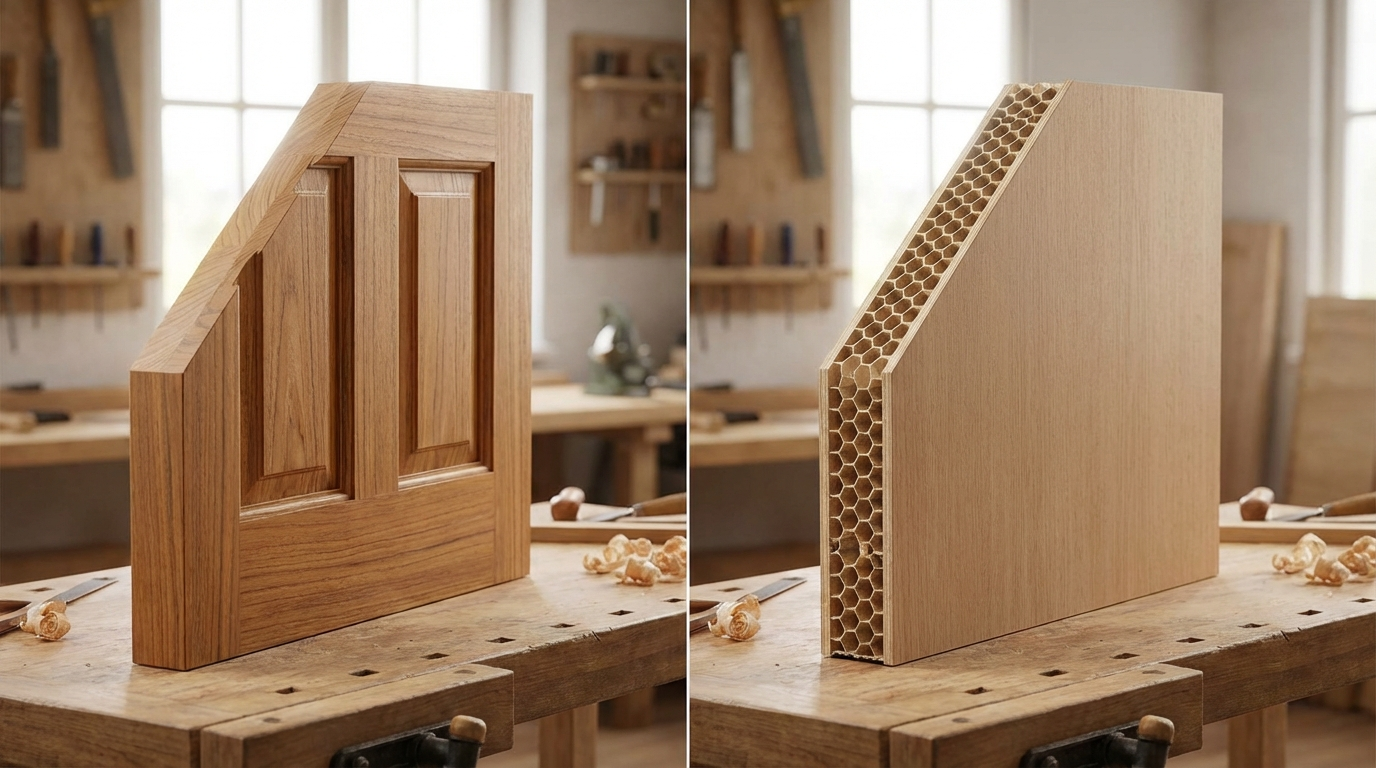
The key difference between wooden doors and flush doors lies in their construction—wooden doors are made entirely from solid timber with traditional joinery, while flush doors feature a lightweight core sandwiched between engineered wood sheets. Wooden doors offer superior aesthetics and durability but cost significantly more, whereas flush doors provide affordability, moisture resistance, and easier maintenance, making them the preferred choice for most Indian homes in 2026.
At a Glance: Key Takeaways
- Cost: Flush doors typically cost ₹3,000–₹12,000 per piece; solid wooden doors range from ₹9,000–₹25,000+ depending on timber species
- Durability: Well-maintained wooden doors last 30–50 years; quality flush doors last 15–25 years
- Maintenance: Wooden doors require regular polishing and termite treatment; flush doors need minimal upkeep
- Best for Modern Homes: Flush doors suit contemporary, minimalist interiors with their clean lines
- Best for Traditional Homes: Solid wooden doors complement heritage properties and luxury residences
- Humidity Resistance: BWP-grade flush doors outperform wooden doors in coastal and humid regions
Understanding Wooden Doors and Flush Doors
Before comparing wooden doors vs flush doors, understanding what each type actually comprises helps make an informed decision. Both serve the same purpose but differ fundamentally in construction, materials, and performance characteristics.
What Are Wooden Doors?
Wooden doors, also called solid wood doors or panel doors, are constructed entirely from natural timber. The traditional construction involves vertical members called stiles and horizontal members called rails, joined together using time-tested carpentry techniques like mortise and tenon joints. The spaces created between these frame members accommodate solid wood panels, creating the classic panelled appearance seen in heritage homes.
Common timber species used in India include teak, sal, sheesham, mahogany, and deodar. Teak remains the gold standard due to its natural oils that resist termites and moisture, though its premium pricing puts it beyond many budgets. The door's weight—typically 25–40 kg for a standard 7×3 feet door—indicates the substantial material used and contributes to its sound insulation properties.
What Are Flush Doors?
Flush doors feature a completely different construction philosophy. Instead of solid timber throughout, they use an engineered approach with a lightweight internal frame made from softwood battens or particleboard. This core gets sandwiched between two flat sheets of plywood, MDF, or blockboard, creating the characteristic smooth, flat surfaces on both sides.
The term "flush" refers to the door's perfectly flat surface without any raised or recessed panels. These doors can be finished with laminates, veneers, or paint to achieve various aesthetic effects. The engineering allows for consistent quality, reduced weight (typically 15–25 kg), and better dimensional stability compared to solid timber.
Why This Distinction Matters in India
India's diverse climate—from humid coastal regions to dry interiors—significantly impacts door performance. Solid wooden doors, while beautiful, can warp or crack when exposed to extreme humidity variations during monsoons. The timber expands and contracts with moisture changes, potentially causing doors to stick in frames or develop gaps. Flush doors with BWP (Boiling Water Proof) grade cores handle these fluctuations better, making them practically more suitable for many Indian homes despite their simpler construction.
Types of Wooden Doors and Flush Doors Available
Both door categories offer multiple variants suited to different applications, budgets, and aesthetic preferences. Understanding these types helps match the right product to specific requirements.
Wooden Door Types
Panel Doors: The most common type featuring multiple panels (2, 4, 6, or 8 panels) within the frame. More panels typically indicate higher craftsmanship and cost. Four-panel designs remain popular for main entrances.
Battened and Ledged Doors: Simpler construction using vertical boards held together by horizontal ledges. Often used for back doors, service areas, or rustic applications where economy matters more than aesthetics.
Louvered Doors: Feature angled wooden slats allowing ventilation while maintaining privacy. Ideal for bathroom doors, cupboard doors, or tropical climates requiring air circulation.
Glazed Wooden Doors: Combine solid wood frames with glass panels for areas needing natural light transmission. Common in drawing rooms or as French door configurations.
Flush Door Types
Hollow Core Flush Doors: The most economical option with a cardboard honeycomb or ladder core. Lightweight and suitable for interior doors where sound insulation isn't critical. Priced between ₹2,500–₹5,000 per piece in most markets.
Solid Core Flush Doors: Feature dense particleboard, blockboard, or timber batten cores providing better sound insulation and durability. Recommended for bedrooms and offices. Price range: ₹5,000–₹10,000.
Commercial Grade Flush Doors: Built to IS 2202 specifications with enhanced structural properties for high-traffic commercial applications.
Fire-Rated Flush Doors: Incorporate fire-resistant materials meeting specific fire rating requirements. Essential for commercial buildings, hospitals, and high-rises per building codes.
Laminated Flush Doors: Factory-finished with decorative laminates eliminating on-site finishing. Available in wood-grain patterns that mimic solid timber appearance at lower cost.
Wooden Doors vs Flush Doors: Comprehensive Comparison Table
This detailed comparison covers all critical parameters that influence the buying decision for Indian homeowners. The table accounts for typical market conditions across metro and Tier-2 cities.
| Parameter | Wooden Doors (Solid) | Flush Doors | Winner |
|---|---|---|---|
| Construction | Natural timber throughout with traditional joinery | Engineered core with plywood/MDF facing | Depends on preference |
| Weight (7×3 ft) | 25–40 kg | 15–25 kg | Flush Doors (easier handling) |
| Price Range | ₹9,000–₹25,000+ per piece | ₹3,000–₹12,000 per piece | Flush Doors |
| Lifespan | 30–50 years with proper care | 15–25 years | Wooden Doors |
| Termite Resistance | Requires regular treatment (except teak) | Treated cores offer better resistance | Flush Doors |
| Moisture Resistance | Prone to warping in humid conditions | BWP grades handle humidity well | Flush Doors |
| Sound Insulation | Excellent natural insulation | Moderate (solid core better than hollow) | Wooden Doors |
| Aesthetic Appeal | Natural grain, classic elegance | Modern, minimalist, versatile finishes | Wooden Doors (traditional); Flush Doors (contemporary) |
| Maintenance | Regular polishing, termite treatment required | Occasional cleaning, minimal upkeep | Flush Doors |
| Installation | Skilled carpenter needed, heavier to install | Standard installation, lighter handling | Flush Doors |
| Customization | Highly customizable with carvings and designs | Limited to surface finishes and laminates | Wooden Doors |
| Resale/Heritage Value | Adds to property value, especially antique pieces | Considered standard, no premium value | Wooden Doors |
How to Choose Between Wooden Doors and Flush Doors
Selecting the right door type requires evaluating multiple factors specific to your situation. This decision framework helps navigate the wooden doors vs flush doors choice systematically.
Budget Considerations
For a typical 3BHK home requiring 8–10 doors, choosing flush doors over wooden doors can save ₹50,000–₹1,50,000 on doors alone. However, if budget permits premium choices for high-visibility areas like the main entrance, a hybrid approach works well—solid wooden door for the main entrance with flush doors for interiors.
Location and Climate Assessment
Coastal cities like Mumbai, Chennai, Kochi, and Vishakhapatnam experience high humidity that challenges solid wooden doors. In such locations, BWP-grade flush doors perform more reliably over time. Conversely, in drier regions like Rajasthan or interior Maharashtra, wooden doors face fewer climate-related issues and can be considered more readily.
Aesthetic Requirements
Traditional or colonial-style homes demand the character that only solid wooden doors provide. The grain patterns, patina development, and carving possibilities cannot be replicated by flush doors. For contemporary apartments or modern villas with minimalist interiors, flush doors with quality laminates or veneer finishes integrate seamlessly.
Buyer's Checklist
- Determine your total door count and allocate budget accordingly
- Assess humidity levels in your city and specific home location
- Match door style to your home's overall design language
- Consider long-term maintenance capability and willingness
- Evaluate termite prevalence in your area
- Check carpenter availability and skill level for wooden door installation
- Compare quotes from multiple dealers including installation costs
When NOT to Choose Solid Wooden Doors
Avoid solid wooden doors in these scenarios: bathrooms or areas with constant moisture exposure; rental properties where investment recovery is uncertain; coastal homes without climate control; tight budgets where compromising on timber quality would be necessary; or when local carpentry skills are unreliable. Low-quality wooden doors perform worse than good flush doors, so if budget constraints prevent purchasing quality timber, flush doors represent the smarter choice.
When NOT to Choose Flush Doors
Skip flush doors for: main entrances of luxury or heritage homes where first impressions matter; properties where long-term value appreciation is priority; situations requiring intricate carved designs; areas needing maximum sound insulation like recording studios; or when the distinctive character of natural wood is non-negotiable for the aesthetic vision.
Common Mistakes When Buying Doors in India
Both first-time homeowners and experienced buyers fall into predictable traps when purchasing doors. Avoiding these mistakes can save significant money and frustration.
Mistake 1: Judging Wooden Doors by Surface Alone
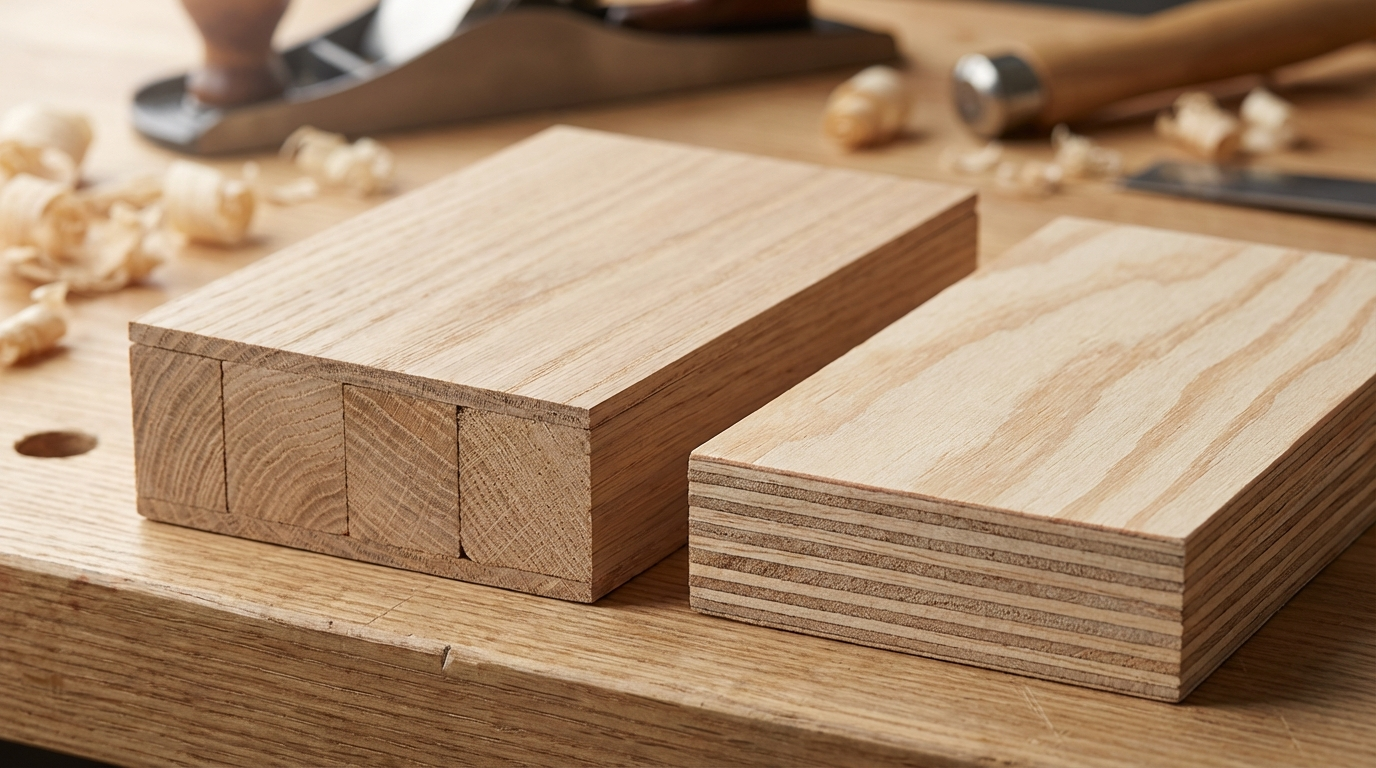
Many dealers sell inferior timber with teak veneer facing, misrepresenting them as solid teak doors. The price difference between genuine teak and veneered alternatives can be ₹8,000–₹12,000 per door. Always check the door's core by examining edges or asking for cross-section samples. Genuine solid wood shows consistent grain throughout, while veneered products reveal the substrate at edges.
Mistake 2: Ignoring ISI Marking on Flush Doors
Quality flush doors carry ISI certification with IS 2202 marking indicating compliance with structural standards. Uncertified doors may use substandard cores that fail prematurely. The ISI mark should be permanently stamped or printed on the door—stick-on labels can be faked.
Mistake 3: Selecting Wrong Grade for Application
Using MR (Moisture Resistant) grade flush doors in bathrooms instead of BWP grade leads to swelling and delamination within 2–3 years. Similarly, using interior-grade wooden doors for external applications without proper treatment causes rapid deterioration.
Mistake 4: Overlooking Frame Quality
A premium door installed in a poor-quality frame fails to perform. Buyers focus entirely on door selection while accepting substandard frames that warp, rot, or provide inadequate support. Frame timber quality should match door quality.
Mistake 5: Inadequate Acclimatization
Wooden doors need 2–3 weeks to acclimatize to local humidity before installation. Installing immediately after delivery causes warping as the timber adjusts. Flush doors require less acclimatization but benefit from 3–5 days storage at installation location.
Quick Inspection Checks
- Tap Test: Hollow flush doors sound distinctly different from solid core—tap multiple points to verify consistency
- Weight Check: Lift the door; suspiciously light wooden doors may have hollow sections or inferior timber
- Moisture Meter: Timber should read 8–12% moisture content; higher indicates improper seasoning
- Straightness: Sight along the door edge; any bowing indicates warping tendency
- Surface Finish: Run hand across flush door surface—ripples indicate poor pressing or delamination starting
Price Guide: Wooden Doors vs Flush Doors in India 2026
Door prices vary significantly based on material quality, brand reputation, city location, and finish requirements. These ranges reflect typical dealer prices in metro and Tier-2 cities.
Wooden Door Pricing
| Timber Type | Price Range (per piece, 7×3 ft) | Notes |
|---|---|---|
| Teak (Burma/African) | ₹18,000–₹35,000 | Premium choice, best durability |
| Teak (Indian Plantation) | ₹12,000–₹22,000 | Good alternative to imported teak |
| Sal Wood | ₹9,000–₹15,000 | Dense, durable, requires seasoning |
| Sheesham | ₹10,000–₹18,000 | Attractive grain, good hardness |
| Deodar/Pine | ₹6,000–₹12,000 | Softwood, interior use only |
Flush Door Pricing
| Flush Door Type | Price Range (per piece, 7×3 ft) | Best Application |
|---|---|---|
| Hollow Core (Commercial) | ₹2,500–₹4,500 | Offices, budget interiors |
| Hollow Core (Branded) | ₹4,000–₹6,500 | Standard interior doors |
| Solid Core (MR Grade) | ₹5,500–₹8,500 | Bedrooms, living areas |
| Solid Core (BWP Grade) | ₹7,000–₹12,000 | Bathrooms, coastal areas |
| Pre-Laminated | ₹6,500–₹11,000 | Ready-to-install, no finishing needed |
What Causes Price Variation
Brand Premium: Established brands like Century, Greenply, and Kitply command 15–25% premium over local manufacturers for equivalent specifications, justified by quality consistency and warranty support.
Thickness Variations: Standard 30mm thickness costs less than 32mm or 35mm options. Trade sizing confusion exists—nominal 32mm doors often measure 30mm actual.
City Location: Metro city prices run 10–20% higher than Tier-2 cities due to higher dealer overheads. However, availability and variety are better in metros.
Finish Requirements: Raw flush doors need on-site finishing adding ₹1,500–₹3,000 per door for polish or paint. Pre-laminated doors save this cost but offer limited finish options.
GST Impact: Doors attract 18% GST. Unorganized local carpenters may offer wooden doors without GST documentation at lower apparent prices, but this creates warranty and quality verification challenges.
Carpenter's Perspective: Ground Realities in India
Understanding how carpenters and contractors view these door types provides practical insights beyond specifications and pricing.
Installation Preferences
Most carpenters prefer working with flush doors due to standardized dimensions, lighter weight, and faster installation. A skilled carpenter installs 4–5 flush doors per day versus 2–3 wooden panel doors. This directly impacts labour costs—wooden door installation typically costs ₹800–₹1,500 per door compared to ₹400–₹700 for flush doors.
Skill Availability Challenge
Traditional carpentry skills for crafting and installing solid wooden doors are declining in urban India. Younger carpenters trained primarily on modular furniture and flush door installations may lack expertise for proper wooden door fitting. In Tier-2 and Tier-3 cities, finding experienced wooden door craftsmen becomes increasingly difficult. This skill gap makes flush doors the practical default choice in many locations.
On-Site Adjustments
Flush doors can be trimmed slightly (up to 10mm) to fit non-standard frames without compromising integrity. Wooden panel doors require more careful adjustment and cannot be trimmed without affecting structural joints. This flexibility makes flush doors forgiving of minor measurement errors common in Indian construction.
Hardware Compatibility
Modern hardware including concealed hinges, magnetic locks, and automatic door closers integrate better with flush doors' uniform core. Wooden doors require more careful hardware placement to avoid weak points, and some contemporary hardware designs simply don't suit traditional panel aesthetics.
Regional Considerations Across India
India's geographic and climatic diversity demands region-specific door selection strategies.
Coastal Regions (Mumbai, Chennai, Kochi, Goa, Kolkata)
High humidity and salt air make BWP-grade flush doors the recommended choice. Solid wooden doors require extensive treatment and still face accelerated aging. If wooden doors are necessary for aesthetic reasons, teak with marine-grade finishing offers the best protection, though at significant premium.
Northern Plains (Delhi NCR, Lucknow, Jaipur)
Extreme temperature variations between summer and winter stress both door types. Wooden doors may develop cracks if not properly seasoned. Quality flush doors with proper installation perform reliably. The dry climate reduces moisture-related concerns, making wooden doors viable where budgets permit.
Southern Peninsular (Bangalore, Hyderabad)
Moderate climate suits both door types well. The choice becomes primarily aesthetic and budgetary rather than climate-driven. Both wooden doors and flush doors perform adequately with standard care.
Termite-Prone Zones
Eastern India and parts of South India face severe termite pressure. Flush doors with properly treated cores and sealed edges resist termite damage better than improperly treated wooden doors. If choosing wooden doors in these areas, invest in quality timber and ensure proper chemical treatment during and after installation.
Frequently Asked Questions
What is the full form of BWP in flush doors?
BWP stands for Boiling Water Proof, indicating the door's adhesive can withstand prolonged exposure to boiling water without delamination. BWP-grade flush doors use phenol formaldehyde resin adhesives that maintain bond integrity under high moisture and temperature conditions. This grade is essential for bathroom doors, kitchen doors, and installations in humid coastal regions. The BWP rating applies to the bonding quality, not waterproofing of the door material itself—the core still absorbs water over time, but joints remain intact.
Which is better: wooden doors or flush doors for main entrance?
For main entrances, solid wooden doors generally offer better security, aesthetic impact, and property value enhancement. The substantial weight, thickness, and traditional craftsmanship of wooden doors create strong first impressions suitable for home entrances. However, high-quality solid-core flush doors with premium veneer or laminate finishes serve adequately for modern homes prioritizing contemporary aesthetics. The deciding factors should be architectural style, budget, and local climate—flush doors work better in highly humid coastal areas even for main entrances.
Are flush doors good for bathroom use?
Yes, but only BWP-grade flush doors should be used in bathrooms. Standard MR (Moisture Resistant) grade flush doors will swell, delaminate, and fail within 2–4 years under bathroom conditions. BWP-grade doors with properly sealed edges handle bathroom humidity effectively for 10–15 years. Additional precautions include maintaining 10mm gap at the bottom to prevent water contact, ensuring adequate bathroom ventilation, and promptly wiping any water splashes on door surfaces. Solid wooden doors are generally not recommended for bathrooms unless using expensive marine-treated teak.
What is the price difference between wooden doors and flush doors in India?
Wooden doors typically cost 2–3 times more than equivalent-sized flush doors. A standard 7×3 feet solid teak wooden door ranges from ₹15,000–₹30,000, while quality branded flush doors cost ₹4,000–₹10,000. This difference multiplies significantly when furnishing an entire home—a 10-door home saves ₹80,000–₹1,50,000 by choosing flush doors over wooden alternatives. However, comparing lowest-grade flush doors with premium wooden doors exaggerates the difference; quality-matched comparisons show 50–100% premium for wooden doors.
How to check quality of wooden doors before buying?
Examine grain consistency—quality wooden doors show uniform grain patterns without knots or filled holes. Check moisture content using a moisture meter (should read 8–12%). Inspect joints carefully—gaps or visible adhesive indicate poor craftsmanship. Tap the door at multiple points; inconsistent sounds suggest hollow sections or different wood densities. Verify timber species by examining exposed edges and comparing weight (teak is heavier than most alternatives). Ask for timber source documentation and seasoning period details. Reputable dealers provide quality certificates for genuine hardwood doors.
How long do flush doors last compared to wooden doors?
Quality flush doors from reputed manufacturers last 15–25 years under normal conditions, while well-maintained solid wooden doors survive 30–50 years or more. The longevity difference stems from material nature—engineered products have finite lifespans regardless of maintenance, while solid timber can be refinished repeatedly. However, poorly maintained wooden doors fail faster than well-cared flush doors. The practical comparison depends heavily on usage intensity, environmental conditions, and maintenance commitment. In humid climates, BWP flush doors often outlast untreated wooden doors.
Can flush doors be repaired if damaged?
Surface damage like scratches and dents on flush doors can be repaired using wood filler and refinishing. However, structural damage—particularly core damage from water exposure or impact—often proves irreparable, requiring complete door replacement. Delamination (facing peeling from core) cannot be effectively reversed once started. Wooden doors offer better repairability; even significant damage can be fixed by skilled carpenters through patching, filling, and refinishing. For households with children or pets likely to cause door damage, wooden doors' superior repairability provides practical advantage despite higher initial cost.
Which door type provides better sound insulation?
Solid wooden doors provide superior sound insulation due to their mass and density—sound transmission reduces proportionally with door weight. Panel construction with proper sealing blocks noise effectively between rooms. Among flush doors, solid-core variants offer moderate insulation, while hollow-core doors provide minimal sound blocking. For bedrooms, home offices, or areas requiring privacy, solid wooden doors or high-density solid-core flush doors (preferably 35mm thickness) are recommended. The door-frame seal quality often matters more than door material—even the best door leaks sound through gaps around edges.
Disclaimer: This content is provided for general informational purposes based on industry practices and publicly available information. Product specifications, standards, prices, and availability may vary by manufacturer, region, and time. Readers should independently verify details with manufacturers, dealers, or qualified professionals before making purchase or construction decisions.Want Plywood Suggestions?
Share a few details and a Apple Ply specialist will suggest suitable brands and connect you to responsive dealers.