WPC Board: Complete Guide to Wood Plastic Composite for Interiors
Everything about WPC (Wood Plastic Composite) boards - properties, price, uses & top brands. Best WPC sheet guide for furniture & interiors.
Quick Answer
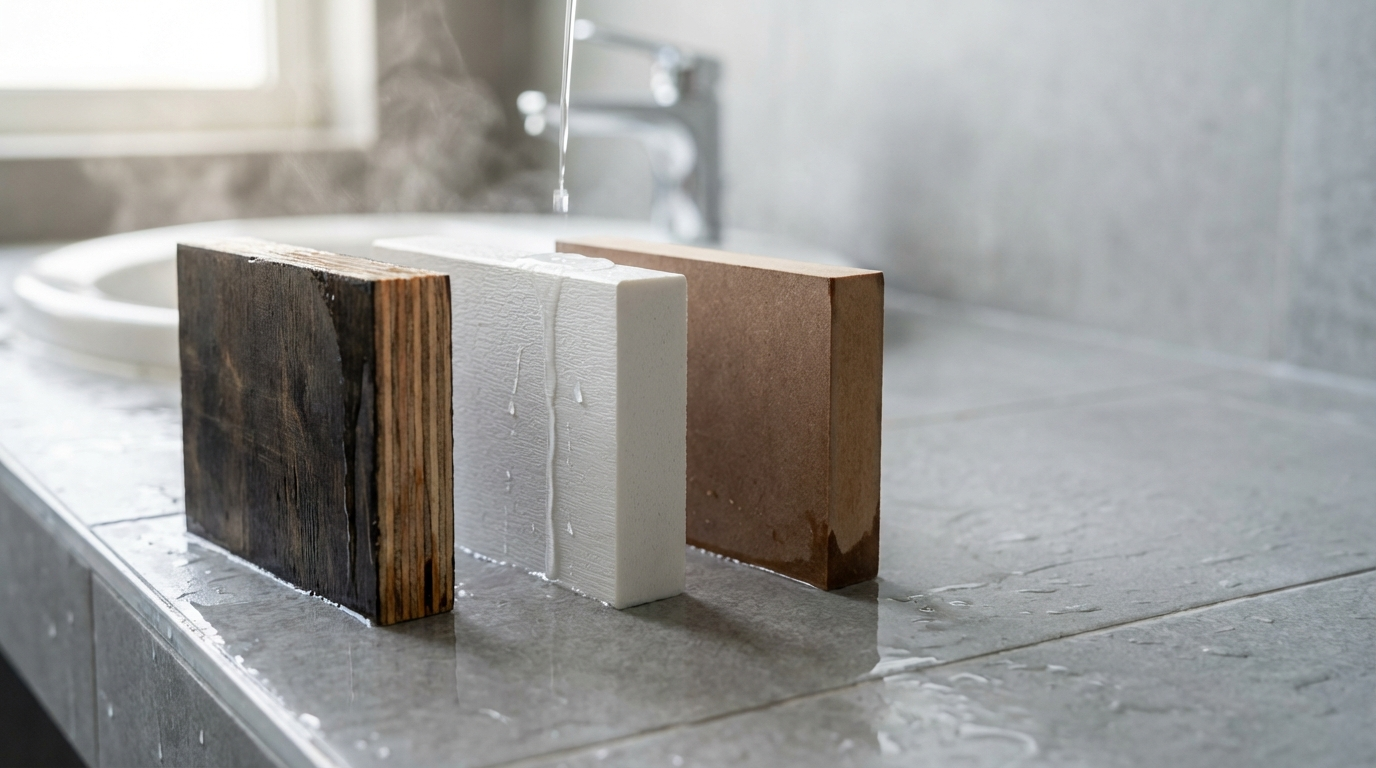
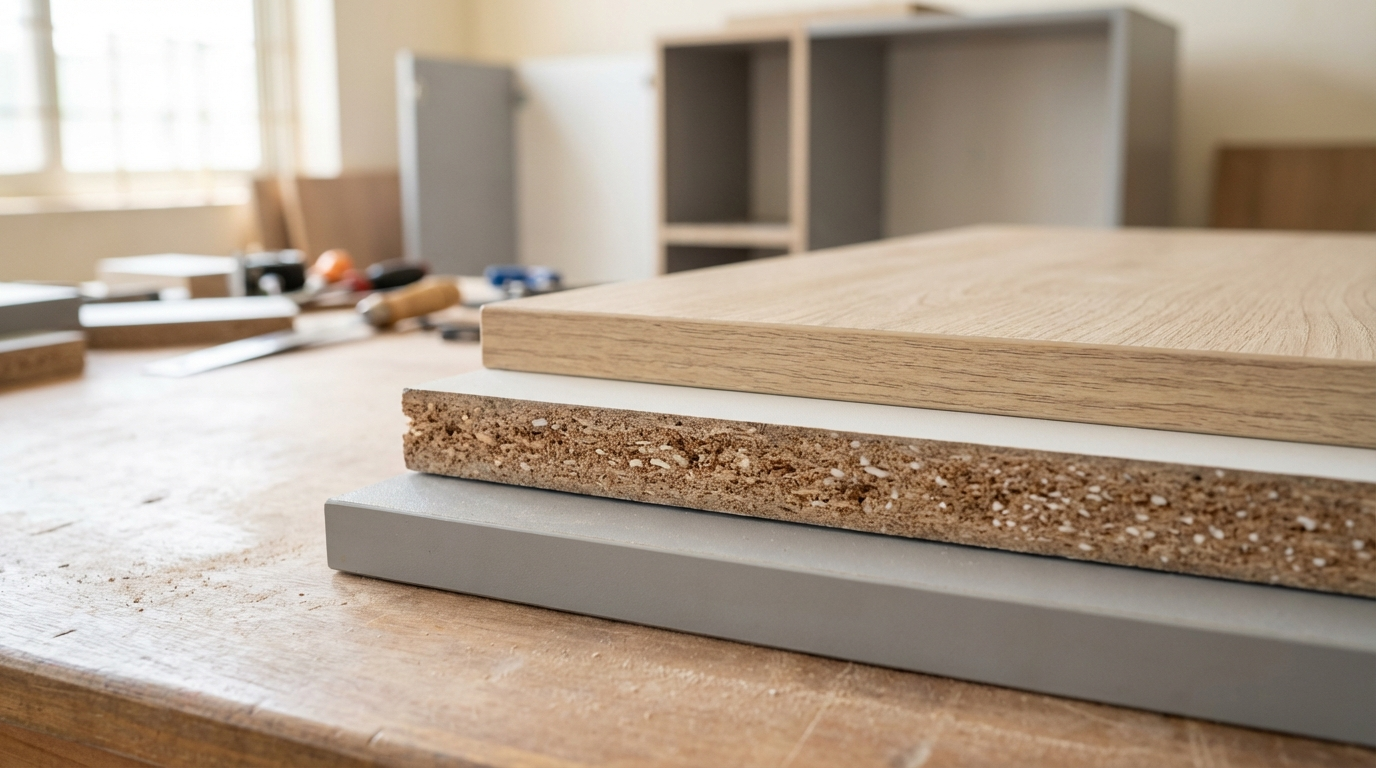
WPC board, or Wood Plastic Composite board, is an engineered material combining wood fiber (typically 15-30%) with thermoplastic polymers (70-75%) and chemical additives. In practical Indian market terms, WPC sheets have become popular alternatives to plywood and MDF for moisture-prone areas like modular kitchens, bathrooms, and balcony furniture due to their inherent water resistance and termite-proof properties.
At a Glance
- Full Form: Wood Plastic Composite
- Primary Benefit: 100% waterproof and termite-resistant without chemical treatment
- Standard Size: 8 feet × 4 feet (2440mm × 1220mm)
- Common Thicknesses: 8mm, 12mm, 15mm, 17mm, 18mm, and 25mm
- Price Range: ₹45–₹120 per sq ft depending on thickness, density, and brand
- Best Applications: Kitchen cabinets, bathroom vanities, outdoor furniture, and high-humidity areas
WPC Board Explained: Understanding Wood Plastic Composite
Wood Plastic Composite represents a significant advancement in engineered wood technology, specifically designed to address the limitations of traditional plywood and MDF in moisture-prone environments. The material emerged as a practical solution for Indian homeowners who struggled with swelling cabinets during monsoons and termite damage in humid coastal regions.
Composition and Manufacturing Process
The typical WPC board composition in the Indian market follows a specific formulation. Virgin or recycled polymer (usually PVC, HDPE, or PP) constitutes approximately 70-75% of the material, providing the waterproof matrix. Wood powder or sawdust accounts for 15-20%, contributing to the wood-like texture and workability. The remaining 10-15% comprises additives including foaming agents, stabilizers, colorants, and binding compounds that enhance durability and UV resistance.
Manufacturing involves heating these components to temperatures above the plastic's melting point, typically 160-200°C, then extruding or molding the mixture into flat sheets. This process creates a homogeneous material with consistent density throughout—unlike plywood where core quality can vary significantly. The high cellulose content from wood fibers allows WPC to be machined similarly to natural wood, accepting screws, nails, and CNC routing.
Why WPC Matters for Indian Interiors
In the Indian context, WPC addresses three critical pain points. First, monsoon humidity causes traditional plywood (even BWR grade) to swell at edges over time, particularly in kitchen sink areas and bathroom vanities. WPC's plastic matrix prevents water absorption entirely. Second, termite and borer infestations remain prevalent across most Indian regions, requiring expensive chemical treatments for wood products. WPC offers inherent resistance without additional treatment. Third, the material supports the modular furniture industry's need for consistent, machinable substrates that perform reliably across diverse climate zones from coastal Mumbai to dry Rajasthan.
Types of WPC Boards Available in India
WPC boards in the Indian market are categorized primarily by density, which directly affects strength, screw-holding capacity, and pricing. Understanding these variants helps buyers select the appropriate grade for their specific application.
Low-Density WPC (LD-WPC)
Low-density WPC typically ranges from 400-500 kg/m³. This lighter variant costs less and works well for non-structural applications like decorative wall paneling, false ceiling components, and light-duty shelving. However, screw-holding capacity is compromised, making it unsuitable for kitchen cabinet construction where hinges bear repeated stress. In practical terms, LD-WPC serves budget projects where moisture resistance matters more than structural strength.
Medium-Density WPC (MD-WPC)
Medium-density variants fall between 550-650 kg/m³ and represent the most commonly available grade in Indian hardware markets. This category balances cost with adequate structural performance for most furniture applications. Kitchen cabinets, wardrobe carcasses, and bathroom vanities commonly use MD-WPC. The screw-holding capacity approaches that of commercial-grade plywood, though pre-drilling remains advisable for edge applications.
High-Density WPC (HD-WPC)
High-density WPC exceeds 700 kg/m³, with premium variants reaching 800 kg/m³. This category commands significantly higher prices but delivers superior screw retention, impact resistance, and longevity. HD-WPC suits demanding applications including commercial furniture, outdoor decking, and areas subject to heavy use. The additional weight (approximately 30-40% heavier than equivalent plywood) requires consideration during installation.
Foam Board vs Solid Core WPC
Indian manufacturers offer both foamed and solid-core variants. Foamed WPC contains microscopic air pockets created during manufacturing, reducing weight and cost but also structural strength. Solid-core WPC uses denser formulations without foaming agents, providing better performance at higher price points. When purchasing, verify whether the quoted product uses foam or solid-core construction, as this significantly impacts durability.
WPC Board Comparison with Other Interior Materials
| Parameter | WPC Board | BWR Plywood | MDF | HDHMR |
|---|---|---|---|---|
| Water Resistance | 100% Waterproof | Resistant (not proof) | Poor | Good (treated) |
| Termite Resistance | Inherent (no treatment) | Requires treatment | Requires treatment | Inherent |
| Screw Holding | Moderate to Good | Excellent | Poor on edges | Good |
| CNC Machining | Good (slower feeds) | Excellent | Excellent | Excellent |
| Weight (18mm) | Heavy (10-12 kg/sq m) | Medium (8-9 kg/sq m) | Medium (8-10 kg/sq m) | Heavy (9-11 kg/sq m) |
| Price Range (₹/sq ft) | ₹55-₹95 | ₹45-₹85 | ₹28-₹45 | ₹55-₹80 |
| Edge Banding | Requires special adhesive | Standard process | Standard process | Standard process |
| Best Application | Wet areas, outdoor | General furniture | Wardrobes, dry areas | Modular kitchens |
Understanding the Trade-offs
While WPC excels in moisture resistance, buyers should understand its limitations. The material's plastic content makes it heavier than equivalent plywood, increasing transportation costs and requiring sturdier mounting hardware. Edge banding adhesion differs from wood-based panels, requiring PUR (Polyurethane Reactive) adhesives rather than standard EVA hotmelt for reliable bonding. Additionally, WPC expands and contracts with temperature changes more than plywood does with humidity changes—a consideration for outdoor applications in extreme climates.
How to Choose the Right WPC Board for Your Project
Selecting appropriate WPC involves evaluating your specific requirements against the material's characteristics. This decision framework helps match product specifications to practical needs.
Application-Based Selection Criteria
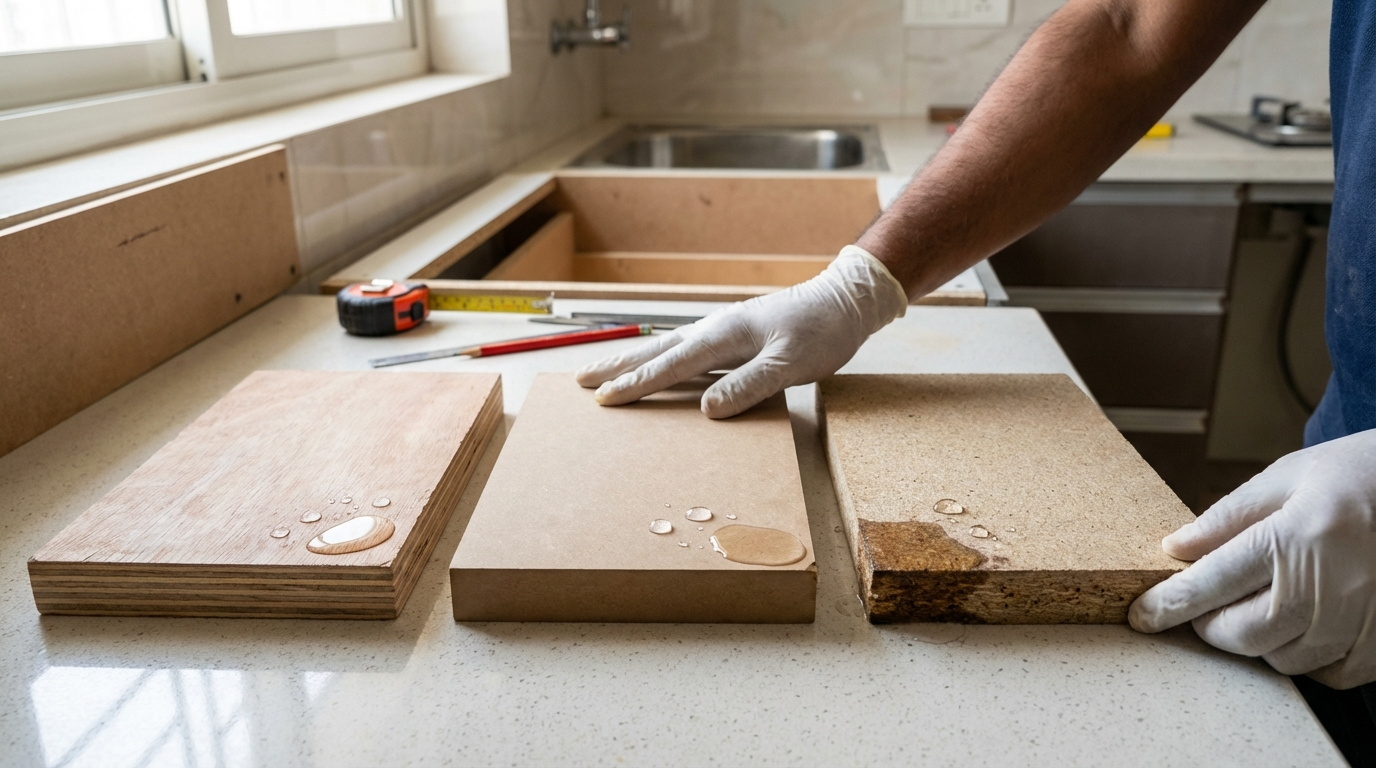
For kitchen cabinet carcasses, prioritize medium or high-density WPC (600+ kg/m³) in 18mm thickness. The sink cabinet area particularly benefits from WPC's waterproof nature, as this zone experiences the most moisture exposure. For wardrobe internals in non-bathroom-attached bedrooms, WPC may represent over-specification—BWR plywood or HDHMR could deliver adequate performance at lower cost.
Bathroom vanity construction represents WPC's strongest use case. Direct water splashing, high humidity, and cleaning chemical exposure make traditional materials problematic. Here, WPC's complete moisture impermeability justifies the premium pricing. Similarly, balcony furniture and outdoor applications benefit from WPC's weathering resistance, though UV-stabilized grades specifically rated for exterior use should be selected.
Buyer's Checklist for WPC Purchase
- Verify density specification: Request the density rating (kg/m³) rather than accepting vague "high-density" claims
- Check polymer type: PVC-based WPC offers better fire resistance than HDPE variants
- Confirm thickness tolerance: 18mm boards should measure 17.5-18.5mm; significant variation indicates quality issues
- Assess surface finish: Ensure laminate or veneer adhesion compatibility if finish application is planned
- Request test certificates: Reputable manufacturers provide density, water absorption, and fire rating documentation
- Evaluate color consistency: Check multiple sheets from the same batch for uniform coloration
- Consider edge quality: Examine sheet edges for voids, delamination, or density variations
When NOT to Choose WPC
WPC represents poor value when used for dry-area furniture like living room entertainment units, study tables, or bedroom wardrobes without bathroom exposure. In these applications, quality plywood or HDHMR delivers equivalent performance at lower cost. Additionally, extremely large unsupported spans (beyond 600mm) should avoid WPC due to creep—gradual sagging under sustained load—which occurs more readily in plastic-matrix materials than in plywood.
For projects requiring extensive CNC machining with intricate detail work, MDF or high-quality plywood may prove more workable. WPC's plastic content generates heat during routing, requiring slower feed rates and more frequent bit changes. Cost-sensitive projects with minimal moisture exposure simply don't need WPC's premium pricing.
Common Mistakes to Avoid When Buying WPC Boards
The WPC market in India includes products of varying quality, and uninformed purchases frequently result in disappointing performance. Understanding common pitfalls helps buyers avoid costly mistakes.
Mistake 1: Ignoring Density Specifications
Many buyers purchase WPC based solely on brand name or dealer recommendation without verifying density. A 15mm "WPC board" at 450 kg/m³ density will underperform significantly compared to a 550 kg/m³ variant of the same thickness. Always request specific density figures and compare across options before purchasing.
Mistake 2: Using Standard Edge Banding Processes
Carpenters experienced with plywood and MDF often apply standard EVA hotmelt edge banding to WPC, resulting in poor adhesion and peeling within months. WPC's plastic surface requires PUR adhesives or mechanical edge banding solutions. Discussing this requirement with your carpenter before project commencement prevents rework.
Mistake 3: Overlooking Thermal Expansion
Unlike plywood that responds primarily to humidity, WPC expands with temperature increases. Installing WPC panels in direct sunlight areas (balconies, sun-facing windows) without expansion gaps causes buckling and warping. Allow 2-3mm clearance per meter of panel length in temperature-variable environments.
Mistake 4: Assuming All WPC is Outdoor-Rated
Standard interior-grade WPC lacks UV stabilizers and weather-resistant additives. Using interior WPC for outdoor decking, garden furniture, or external cladding leads to color fading, surface chalking, and accelerated degradation. Specifically request exterior-grade WPC with documented UV resistance for outdoor applications.
Quick Inspection Checks
- Weight test: Lift the sheet—quality WPC feels noticeably heavy; unusually light boards indicate excessive foaming or low density
- Edge examination: Check cut edges for uniform color and absence of voids or layering
- Flex test: Slight flexibility is normal; excessive bendability suggests low density
- Surface scratch: Quality WPC resists light scratching; easy marking indicates poor surface hardness
- Smell check: Strong chemical odors suggest inadequate curing or low-quality additives
WPC Board Price Guide for India (2025-2026)
WPC pricing in India varies significantly based on density, thickness, brand positioning, and regional availability. The following ranges represent typical market pricing for standard 8×4 feet sheets in metro and Tier-1 cities.
| Thickness | Low Density (₹/sq ft) | Medium Density (₹/sq ft) | High Density (₹/sq ft) |
|---|---|---|---|
| 8mm | ₹35-₹45 | ₹48-₹58 | ₹62-₹75 |
| 12mm | ₹45-₹55 | ₹58-₹70 | ₹75-₹90 |
| 15mm | ₹52-₹62 | ₹65-₹78 | ₹82-₹98 |
| 18mm | ₹58-₹70 | ₹72-₹88 | ₹92-₹115 |
| 25mm | ₹75-₹88 | ₹90-₹108 | ₹112-₹135 |
Factors Affecting WPC Pricing
Polymer quality: Virgin polymer costs 40-60% more than recycled variants, directly impacting finished board pricing. Premium brands typically use higher virgin polymer ratios.
Regional availability: WPC manufacturing concentrates in Gujarat, Maharashtra, and South India. Dealers in North and Northeast India add ₹8-15/sq ft for transportation, making local alternatives potentially more economical.
Brand premium: Established brands command 15-25% premiums over regional manufacturers, justified partly by consistency and warranty support but also by marketing costs. Evaluate whether the brand premium translates to measurable quality differences.
Thickness calibration: Precisely calibrated sheets (±0.3mm tolerance) cost more than loosely specified variants. For modular furniture requiring tight fits, premium for calibration proves worthwhile.
GST impact: WPC boards attract 18% GST. Always confirm whether quoted prices include or exclude GST to enable accurate comparison across dealers.
Budget vs Premium: Making the Right Choice
For kitchen sink cabinets and bathroom vanities—areas with guaranteed moisture exposure—investing in medium or high-density WPC delivers long-term value. The additional ₹15-25/sq ft for quality grades prevents replacement costs within 3-5 years. Conversely, for semi-protected areas like covered balconies or utility rooms, budget-grade WPC provides adequate moisture resistance at accessible pricing. Match quality investment to actual exposure levels rather than blanket-upgrading all applications.
WPC Board Applications and Best Uses
WPC's unique properties make it ideal for specific applications while being over-engineered for others. Understanding optimal use cases helps maximize value from this material.
Kitchen Applications
Modular kitchen carcasses represent WPC's primary application in Indian residential projects. The under-sink cabinet particularly benefits, as this area experiences water splashing, pipe condensation, and cleaning chemical exposure. Island counters, breakfast bars, and kitchen trolleys also suit WPC construction. However, for upper cabinets with minimal moisture exposure, the weight penalty of WPC creates unnecessary load on wall mounting systems—consider lighter alternatives for these components.
Bathroom and Wet Area Use
Bathroom vanities, mirror cabinets, and storage units exploit WPC's complete waterproofing. Unlike marine plywood that resists but eventually absorbs moisture, WPC maintains dimensional stability indefinitely under water exposure. Utility areas housing washing machines, water purifiers, and overhead tanks similarly benefit from WPC construction.
Outdoor and Semi-Outdoor Applications
Balcony furniture, terrace seating, garden benches, and poolside cabanas represent growing WPC applications in urban Indian homes. Exterior-grade WPC with UV stabilizers withstands monsoon exposure and intense sun without the maintenance demands of treated wood. Ensure the selected grade specifically mentions outdoor suitability rather than assuming all WPC tolerates exterior conditions.
Commercial and Retail Applications
Retail fixtures, restaurant furniture, and commercial washroom partitions increasingly specify WPC for reduced maintenance requirements. High-traffic areas benefit from WPC's resistance to cleaning chemicals and moisture from frequent cleaning cycles. Healthcare facilities and food service establishments particularly value the hygienic, non-porous surface characteristics.
Carpenter's Perspective on Working with WPC
WPC presents different working characteristics than traditional plywood, requiring adjusted techniques for optimal results. Understanding these practical considerations helps ensure successful project execution.
Machining Considerations
WPC's plastic content generates heat during cutting and routing. Carbide-tipped blades perform adequately, but TCT (Tungsten Carbide Tipped) tooling lasts significantly longer. Reduce feed rates by 15-20% compared to plywood settings to prevent heat buildup and melting at cut edges. For CNC machining, use coolant or compressed air to manage temperature.
Joining and Assembly
Pre-drilling proves essential for screw applications in WPC. Unlike plywood where screws cut their own path through wood fibers, WPC's dense matrix splits under direct screw insertion. Pilot holes at 70% of screw diameter prevent edge cracking. For critical joints, consider combination of screws and construction adhesive.
Cam-lock fittings commonly used in modular furniture require careful installation in WPC. The material's hardness demands precise boring, and excessive cam tension can crack surrounding material. Experienced modular furniture carpenters adjust installation pressure for WPC assemblies.
Finishing and Lamination
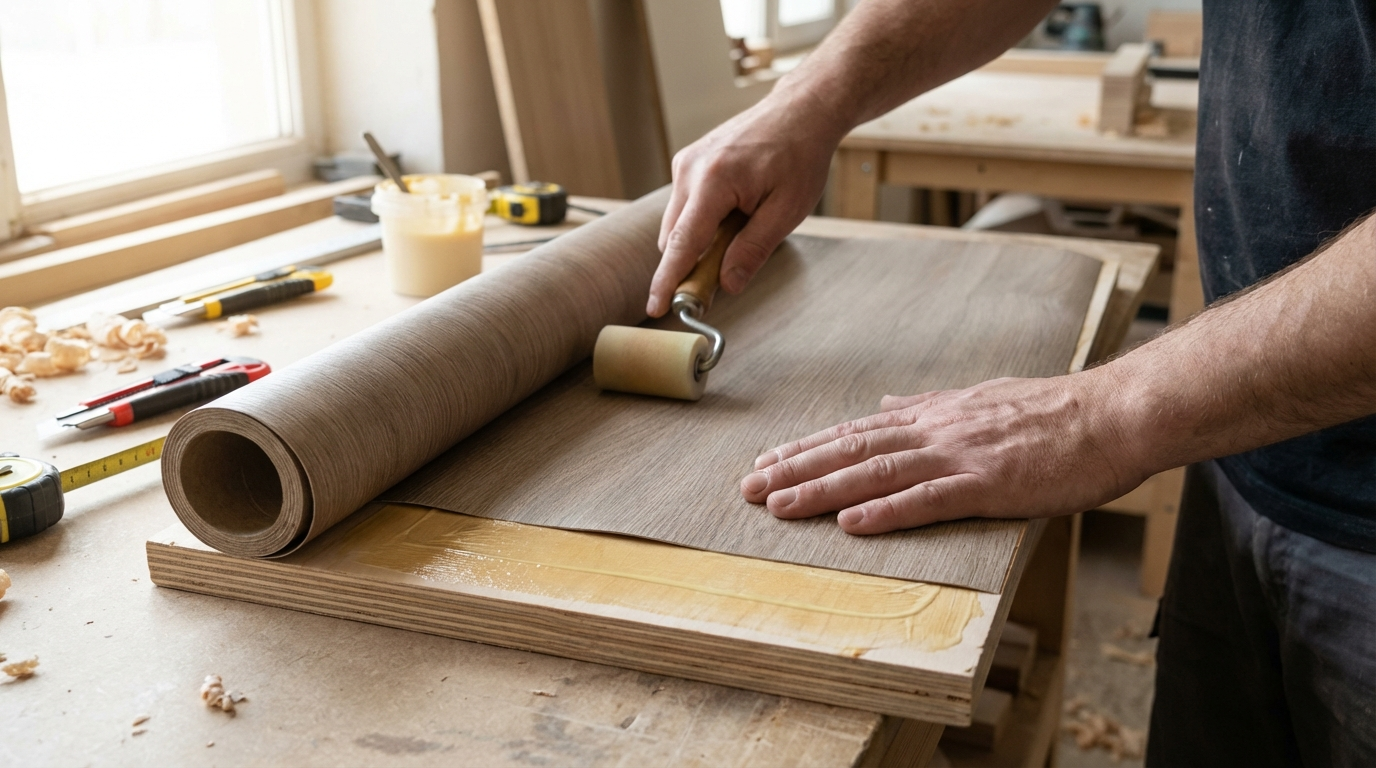
WPC accepts laminate and veneer finishes but requires appropriate adhesive selection. PUR (Polyurethane Reactive) adhesives provide reliable bonding to WPC's plastic-rich surface. Standard contact adhesives and water-based glues underperform on WPC surfaces. Post-forming (bending laminated WPC) is not recommended due to the material's limited flexibility compared to MDF.
Frequently Asked Questions
What is the full form of WPC board?
WPC stands for Wood Plastic Composite. The material combines wood fiber or wood flour (typically 15-30% by weight) with thermoplastic polymers like PVC, HDPE, or PP (70-75%), plus chemical additives (10-15%) including stabilizers, foaming agents, and colorants. This composition creates a hybrid material offering wood's workability with plastic's moisture resistance. In India, WPC is also sometimes called plastic wood board or composite board in dealer terminology.
Which is better: WPC board or plywood?
The better choice depends entirely on application. WPC outperforms plywood in wet areas—kitchen sink cabinets, bathroom vanities, and outdoor furniture—where its complete waterproofing and termite resistance justify higher costs. However, for general furniture, wardrobes, and dry-area applications, quality BWR plywood offers equivalent durability at lower cost with better screw-holding strength. Plywood also provides superior performance for large unsupported spans where WPC may exhibit creep over time.
Is WPC board good for kitchen cabinets?
WPC is excellent for kitchen cabinet carcasses, particularly for under-sink units, base cabinets, and areas near dishwashers or water purifiers. Its complete waterproofing prevents the swelling and delamination common with plywood in moisture-prone kitchen zones. However, ensure medium or high-density WPC (600+ kg/m³) for adequate screw-holding strength with hinges and drawer slides. Upper cabinets with minimal moisture exposure may not require WPC's premium pricing.
What is the price of WPC board in India?
WPC board prices in India typically range from ₹45-₹120 per square foot, varying by thickness, density grade, and brand. An 18mm medium-density WPC sheet (8×4 feet) commonly costs ₹2,300-₹2,800 excluding GST in metro cities. Prices increase ₹8-15/sq ft in regions distant from manufacturing hubs in Gujarat and Maharashtra. Always verify whether quoted prices include 18% GST and confirm density specifications rather than accepting generic "WPC" pricing.
Can WPC board be used in bathrooms?
WPC is ideal for bathroom applications including vanity units, storage cabinets, mirror frames, and wall paneling. Unlike plywood or MDF that absorb moisture and eventually deteriorate, WPC maintains complete dimensional stability under continuous humidity exposure. For bathroom floor contact applications, ensure adequate ventilation behind units to prevent condensation accumulation. WPC's non-porous surface also resists mold growth common in bathroom environments with poor ventilation.
How to check WPC board quality before buying?
Quality verification involves multiple checks. First, verify density specification—request kg/m³ rating and compare across options. Lift the sheet to assess weight; unusually light boards indicate excessive foaming. Examine cut edges for uniform color without voids or layers. Perform a light scratch test—quality WPC resists surface marking. Check for chemical odors indicating poor curing. Request manufacturer test certificates for water absorption, density, and fire ratings. Finally, compare sheets from the same batch for color consistency.
Does WPC board require termite treatment?
No, WPC board does not require termite treatment. The high plastic content (70-75%) makes the material inherently unpalatable to termites, borers, and other wood-destroying organisms. Unlike plywood or solid wood that require chemical treatment for termite protection, WPC provides permanent resistance without additional cost or maintenance. This characteristic makes WPC particularly valuable in India where termite infestation affects most regions, especially ground-floor applications and areas with soil contact.
What is the lifespan of WPC furniture?
Quality WPC furniture typically delivers 15-20+ years of service life under normal usage conditions. The material doesn't absorb moisture, eliminating swelling-related failures common with plywood. Termite and borer immunity prevents biological degradation. However, actual lifespan depends on density grade, installation quality, and usage patterns. Exterior WPC without UV stabilizers may show surface degradation within 5-7 years. Hardware quality (hinges, slides, handles) often limits furniture lifespan before the WPC substrate fails.
Disclaimer: This content is provided for general informational purposes based on industry practices and publicly available information. Product specifications, standards, prices, and availability may vary by manufacturer, region, and time. Readers should independently verify details with manufacturers, dealers, or qualified professionals before making purchase or construction decisions.Want Plywood Suggestions?
Share a few details and a Apple Ply specialist will suggest suitable brands and connect you to responsive dealers.