Waterproof Board for Interiors: Complete Options Guide
Complete guide to waterproof boards for interiors. Compare BWP plywood, WPC, HDHMR & other options for kitchens and bathrooms.
Quick Answer
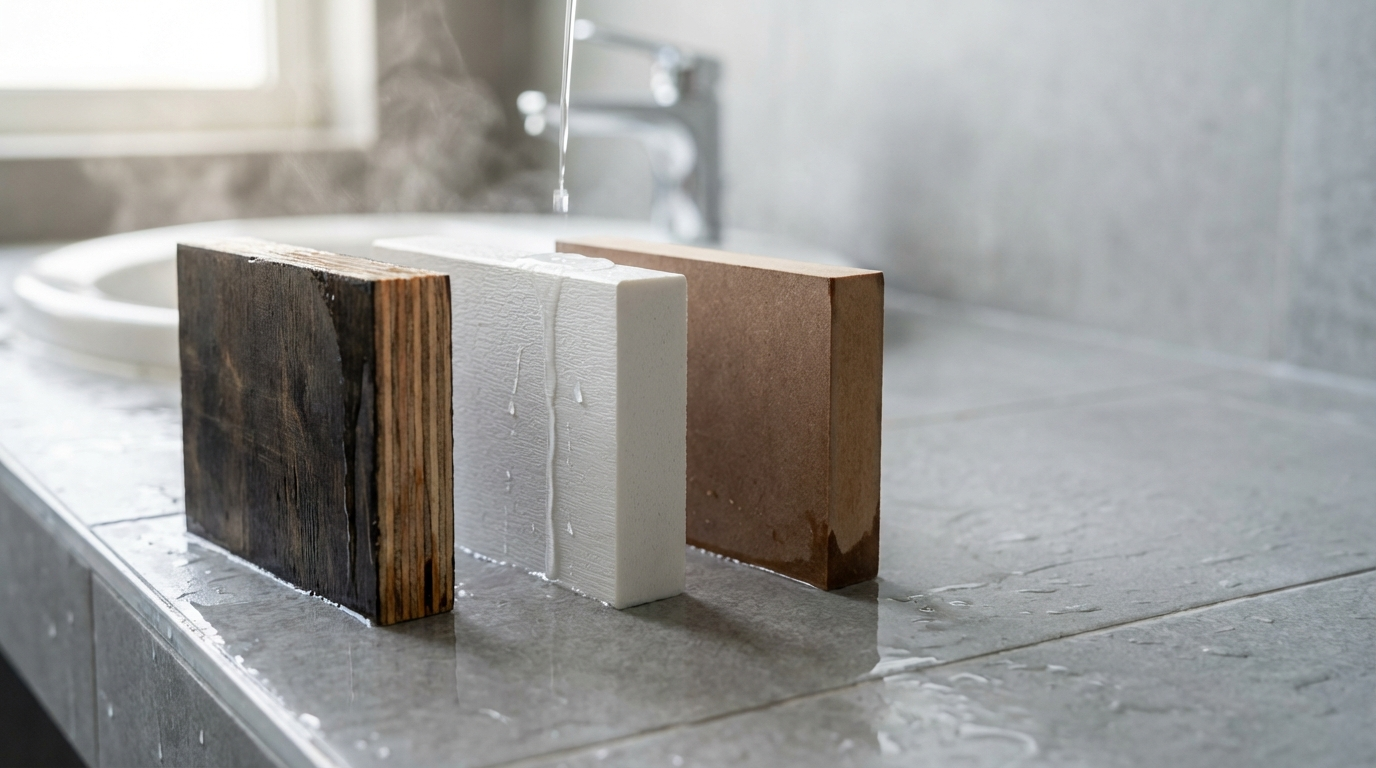
Waterproof board for interiors refers to engineered panel materials designed to resist moisture damage in kitchens, bathrooms, and humid spaces. The primary options available in India include BWP plywood, HDHMR, WPC boards, and marine plywood—each offering different levels of water resistance, machinability, and cost-effectiveness depending on your specific application requirements.
At a Glance:
- BWP plywood remains the most versatile waterproof board for modular kitchens and bathroom cabinetry
- HDHMR offers superior CNC machining and consistent density but isn't fully waterproof without treatment
- WPC boards provide genuine waterproofing with termite resistance but at higher cost
- Marine plywood delivers maximum water resistance for extreme exposure areas
- BWR plywood works for semi-wet areas but fails under continuous water contact
- Price ranges from ₹45-180 per sq ft depending on material type and grade
Waterproof Board for Interiors Explained
In practical Indian market terms, waterproof board refers to any engineered panel that can handle moisture exposure without swelling, warping, or delaminating. This distinction matters critically in Indian homes where humidity levels routinely exceed 70% during monsoons, and kitchen-bathroom environments face daily water splashes.
The confusion in the market arises because "waterproof" gets applied loosely. True waterproofing means the board can withstand continuous water contact—standing water, repeated splashes, or prolonged humidity—without structural degradation. Many boards marketed as waterproof are actually only moisture-resistant, meaning they handle humidity and occasional dampness but will fail under sustained water exposure.
How Water Damages Interior Boards
Understanding failure mechanisms helps you select the right material. Wood-based panels absorb water through two pathways: edge absorption and surface penetration. Edges remain most vulnerable because the layered construction exposes more surface area to moisture ingress. Once water enters, it causes internal swelling that breaks the adhesive bonds between layers, leading to delamination and eventual structural failure.
In Indian conditions, this process accelerates significantly. Coastal cities face salt-laden humid air that corrodes faster than inland dry regions. Kitchen sink areas experience daily splashing that penetrates unsealed edges. Bathroom cabinets face steam exposure that condenses inside closed spaces. Each scenario demands specific waterproofing capability.
The Role of Adhesive Systems
What truly determines waterproof performance is the adhesive used during manufacturing. Urea-formaldehyde (UF) resins in MR-grade boards offer basic moisture resistance but break down when boiled or continuously wet. Phenol-formaldehyde (PF) resins in BWR and BWP grades withstand boiling water for extended periods. The IS 710 standard specifically tests BWP plywood's ability to survive boiling water immersion—a standardized verification of waterproof capability.
Types of Waterproof Boards Available in India
The Indian market offers five primary categories of waterproof or moisture-resistant boards, each with distinct characteristics suited to different applications and budgets.
BWP Plywood (Boiling Water Proof)
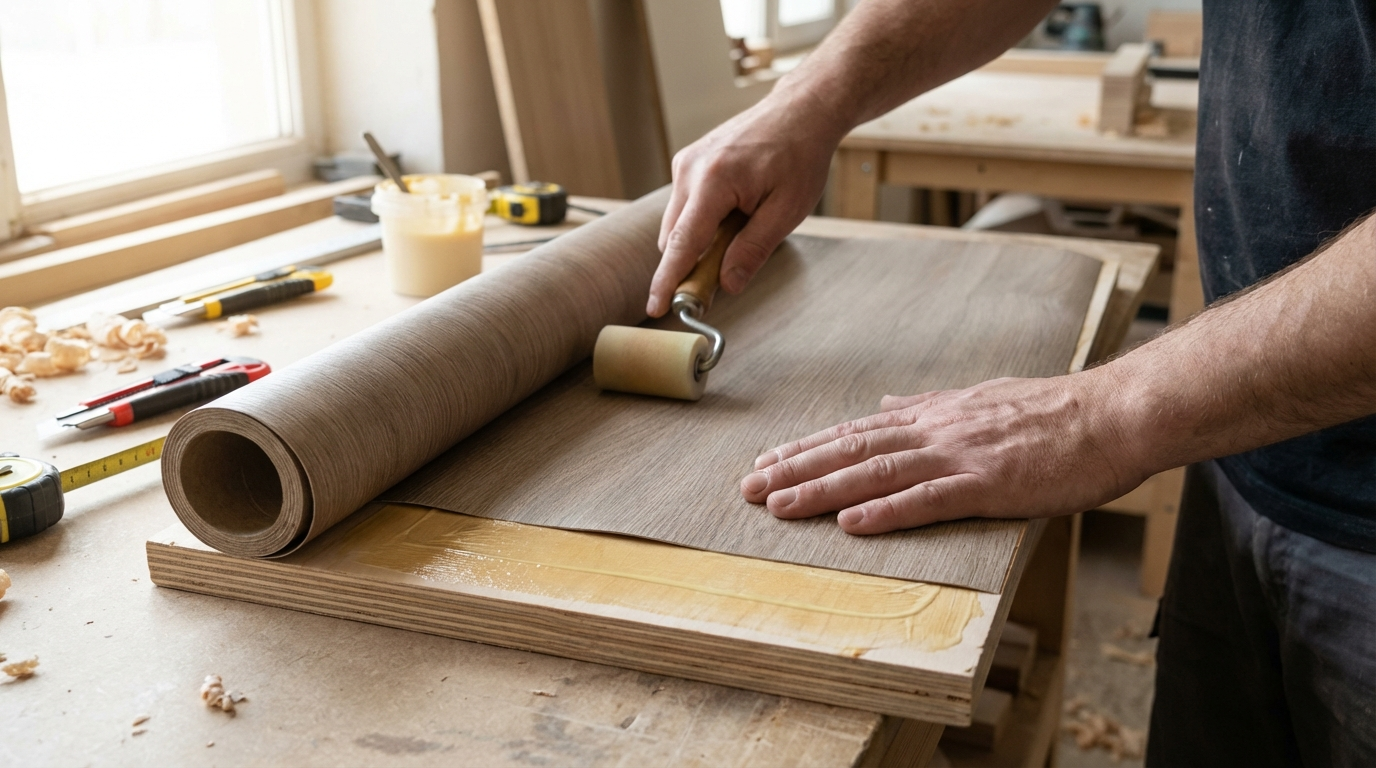
BWP plywood, manufactured to IS 710 standards, represents the benchmark for waterproof wood-based panels in India. It uses high-quality phenolic resin that withstands continuous water exposure without delamination. Commonly used for kitchen cabinets, bathroom vanities, and outdoor furniture, BWP plywood offers genuine waterproofing rather than mere moisture resistance. The material accepts screws well, bonds effectively with adhesives, and finishes cleanly—making it carpenter-friendly for traditional furniture construction.
Marine Plywood
Marine plywood sits at the premium end, originally developed for boat-building applications requiring complete waterproofing. It uses the highest-grade veneers with minimal voids and superior phenolic bonding. While overkill for typical interior applications, marine plywood makes sense for ground-floor homes in flood-prone areas or completely outdoor installations. The price premium of 40-60% over standard BWP plywood limits its adoption to specific high-risk situations.
HDHMR (High Density High Moisture Resistant)
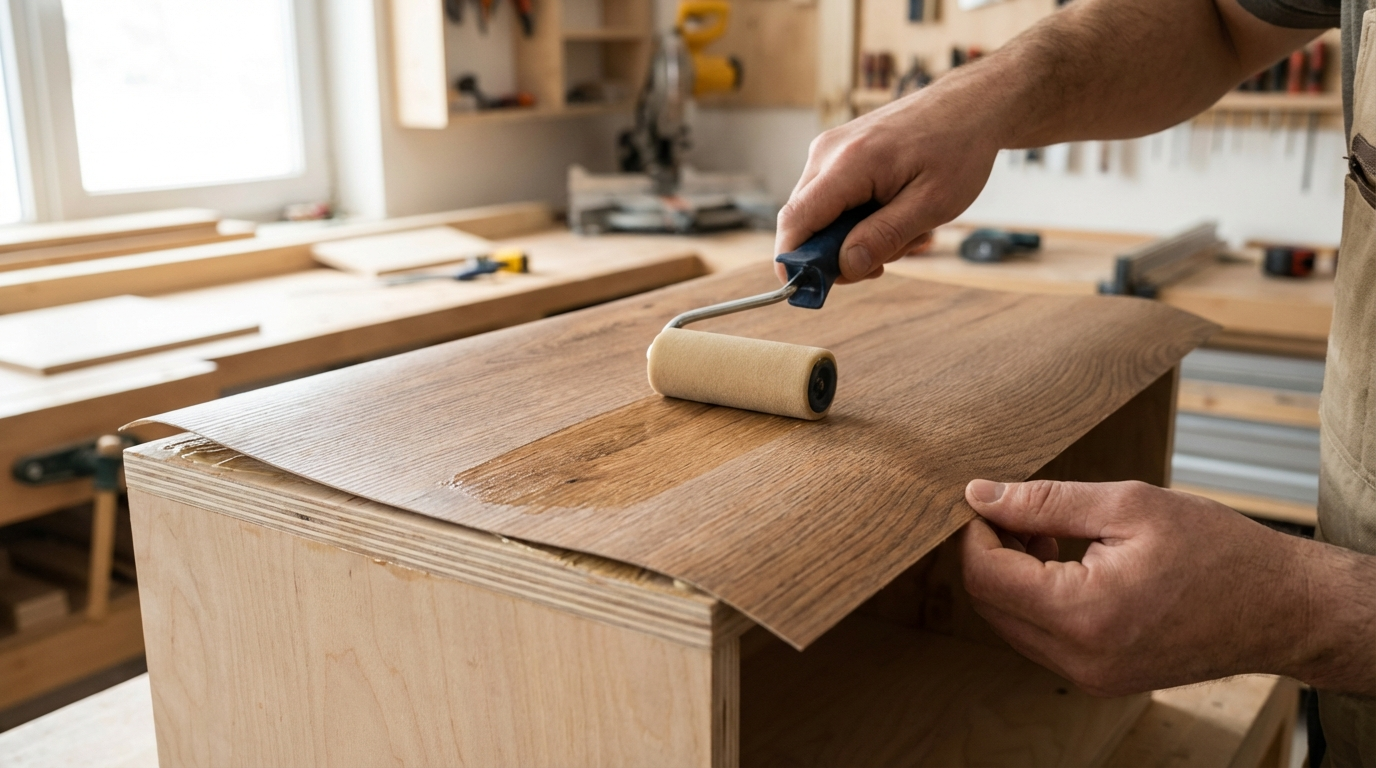
HDHMR boards have gained significant popularity for modular kitchen manufacturing due to their exceptional machining properties. The homogeneous density allows clean CNC routing, precise drilling, and smooth laminate application. However, HDHMR isn't truly waterproof—it's moisture-resistant. Without proper edge-banding and surface sealing, prolonged water exposure will cause swelling. HDHMR works excellently for kitchen shutters where water contact remains minimal, but isn't ideal for sink base units or bathroom applications.
WPC Boards (Wood Plastic Composite)
WPC boards combine wood fibres with polymer resins to create genuinely waterproof panels that won't swell even with direct water contact. They offer inherent termite resistance—a significant advantage in termite-prone Indian regions. The material machines reasonably well and holds screws adequately. However, WPC boards cost substantially more than plywood alternatives and feel different underfoot or to touch, which some buyers find less premium despite the superior water resistance.
BWR Plywood (Boiling Water Resistant)
BWR plywood occupies the middle ground between MR commercial plywood and BWP waterproof plywood. It resists moisture and handles occasional water exposure but isn't designed for continuous wet conditions. BWR works adequately for kitchen wall units, pantry storage, and areas with indirect moisture exposure. Many budget-conscious buyers use BWR for entire kitchens, which works in dry climates but often fails within 3-5 years in humid coastal cities.
Comparison Table: Waterproof Board Options
| Board Type | Water Resistance Level | Price Range (₹/sq ft) | CNC Machinability | Best For | Key Limitation |
|---|---|---|---|---|---|
| BWP Plywood (IS 710) | Fully Waterproof | ₹85-140 | Good | Kitchen carcass, bathroom cabinets | Core voids in lower grades |
| Marine Plywood | Maximum Waterproof | ₹120-180 | Good | Extreme moisture areas, outdoor | High cost, often overkill |
| HDHMR | Moisture Resistant | ₹70-110 | Excellent | Kitchen shutters, modular furniture | Not waterproof, needs edge sealing |
| WPC Board | Fully Waterproof | ₹100-160 | Moderate | Bathroom cabinets, wet areas | Higher cost, different feel |
| BWR Plywood | Semi-Waterproof | ₹55-85 | Good | Kitchen wall units, pantry | Fails under continuous water exposure |
| MR Plywood | Moisture Resistant Only | ₹45-70 | Good | Dry interiors only | Unsuitable for any wet areas |
How to Choose the Right Waterproof Board
Selecting appropriate waterproof board requires matching material capabilities with your specific application demands. The following decision framework helps navigate this choice systematically.
Assess Your Moisture Exposure Level
Categorize your application into three exposure levels. High exposure includes sink base units, bathroom vanity cabinets, and ground-floor storage in flood-prone areas—these need BWP plywood, marine plywood, or WPC. Medium exposure covers kitchen wall units, upper cabinets, and semi-covered balcony furniture—BWR plywood often suffices here. Low exposure means humidity without water contact, where even MR plywood performs adequately.
Consider Your Manufacturing Method
If you're using CNC machinery for modular furniture production, HDHMR delivers superior results due to its homogeneous density. Traditional carpenter-built furniture works better with plywood because carpenters understand its behaviour—screw holding, edge treatment, and joining techniques. This manufacturing consideration often outweighs pure waterproofing capability.
Buyer Selection Checklist
- Identify specific water exposure points (sink areas, steam zones, splash regions)
- Verify ISI marking for BWP/BWR claims—check the actual stamp on sheets
- Compare thickness consistently—18mm HDHMR versus 18mm BWP plywood, not mismatched thicknesses
- Factor in edge-banding costs for HDHMR applications
- Consider regional humidity—coastal cities demand higher water resistance
- Evaluate carpenter familiarity with your chosen material
- Calculate total cost including finishing and installation
When NOT to Choose Each Material
Don't choose BWP plywood if your project involves extensive CNC machining with complex router profiles—HDHMR handles this better. Don't choose HDHMR for sink base units or any area with potential standing water. Don't choose WPC if budget constraints exist and exposure remains moderate. Don't choose BWR for Mumbai, Chennai, or Kolkata kitchens where humidity stays high year-round.
Common Mistakes to Avoid
Years of observing installation failures reveal consistent patterns of buyer and carpenter mistakes that lead to premature board deterioration.
Mistake 1: Ignoring Edge Sealing
Most water damage enters through unsealed edges, not laminated surfaces. Carpenters frequently leave bottom edges of base units exposed, assuming flooring will protect them. Within two years, these edges swell from mopping water and cleaning splashes. Every edge requires sealing—edge-banding for HDHMR, and paint or laminate wrap for plywood.
Mistake 2: Using BWR Where BWP is Needed
The price difference between BWR and BWP plywood—typically ₹20-35 per sq ft—tempts many buyers toward BWR for entire kitchen installations. This false economy fails specifically at sink base units and areas near gas stove water outlets. The cost of replacing swollen base units exceeds the initial savings multiple times over.
Mistake 3: Assuming All HDHMR is Equal
HDHMR quality varies dramatically across manufacturers. Lower-grade HDHMR has lower density, higher moisture absorption, and poorer screw-holding capacity. Always verify the actual density rating—quality HDHMR should exceed 850 kg/m³. Knock testing reveals density differences: denser boards produce sharper, higher-pitched sounds.
Mistake 4: Overlooking Ventilation Design
Waterproof board selection cannot compensate for poor cabinet ventilation design. Enclosed sink base units trap humid air, accelerating deterioration even in BWP plywood. Incorporate ventilation slots, avoid fully closed plinths, and ensure air circulation around potential moisture sources.
Quick Inspection Checks
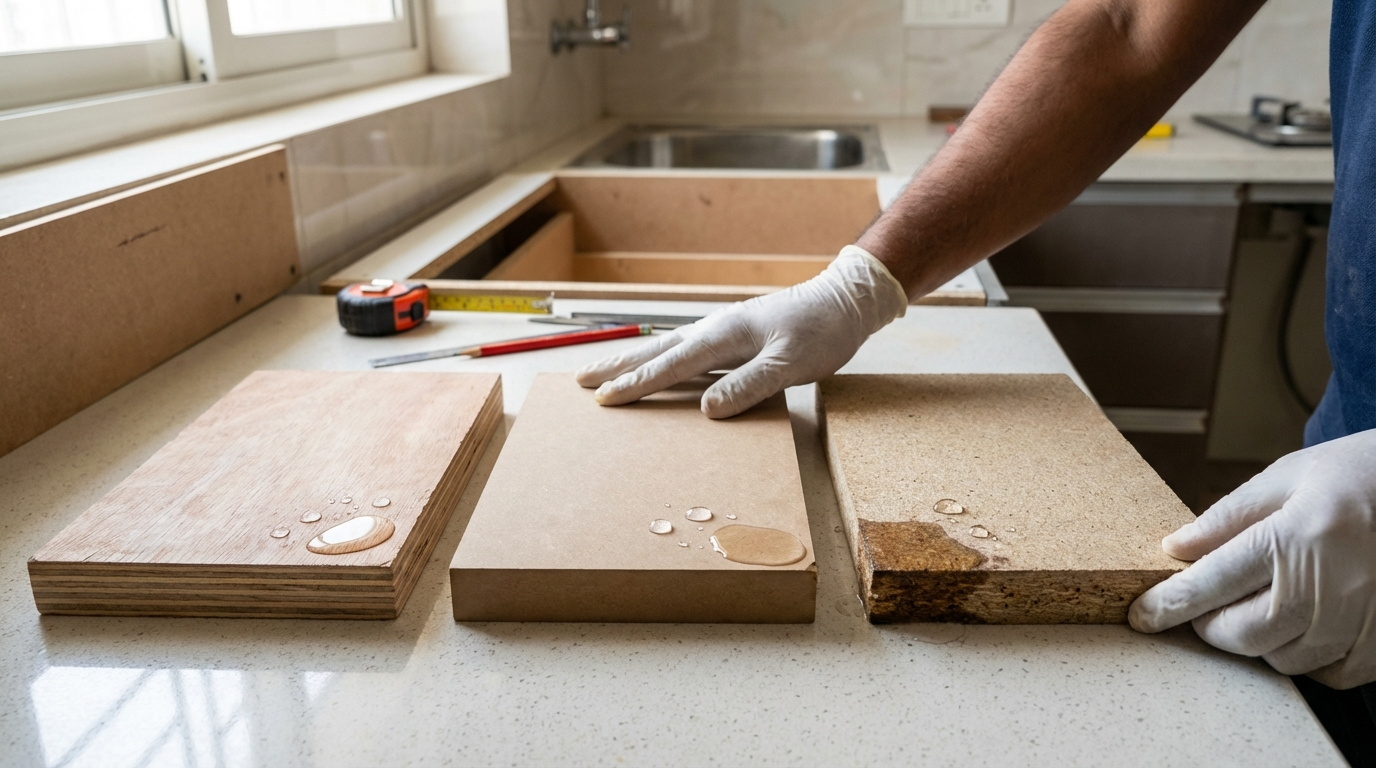
- Edge absorption test: Place a few drops of water on cut edge—quality BWP shows minimal absorption after 30 seconds
- Layer inspection: Check cut edges for voids, gaps, or inconsistent layer thickness
- Weight comparison: Heavier sheets within the same grade typically indicate better core density
- Surface flatness: Lay sheet on flat floor and check for warping or undulations
- ISI stamp verification: Confirm IS 710 marking for BWP claims, IS 303 for BWR
Price Guide for Waterproof Boards in India
Pricing varies significantly based on brand tier, city location, thickness, and current raw material costs. The following ranges represent typical 2024-25 retail pricing for 18-19mm thickness from established brands in metro cities.
BWP Plywood Pricing
Entry-level BWP plywood from regional manufacturers ranges from ₹85-100 per sq ft. Mid-tier brands like Kitply, Austin, and Archid price between ₹100-125 per sq ft. Premium manufacturers including Greenply, Century, and SRG command ₹125-145 per sq ft. These prices assume standard 8×4 feet sheets in metropolitan areas—Tier-2 cities may see 5-12% higher prices due to transport costs.
HDHMR Pricing
HDHMR pricing starts around ₹70 per sq ft for basic imported boards and reaches ₹110 per sq ft for premium domestic brands with established quality records. The sweet spot for most kitchen applications falls in the ₹85-95 range, offering reasonable quality without excessive cost. Remember to add edge-banding costs—approximately ₹15-25 per running foot for quality PVC banding.
What Causes Price Variation
Core quality drives most price differences. Premium BWP plywood uses consistent hardwood cores without voids, requiring better timber and more rigorous quality control. Adhesive quality affects both price and performance—cheaper phenolic alternatives exist but compromise long-term water resistance. Brand warranty backing adds cost but provides replacement assurance. Finally, certification compliance (ISI marking, E1 emission standards) requires testing and quality systems that budget manufacturers avoid.
Regional Price Considerations
Kerala and Tamil Nadu typically offer lower plywood prices due to proximity to manufacturing clusters. Delhi-NCR and Mumbai see moderate pricing with good availability. Northeast India faces premium pricing (15-25% higher) due to transport distances. Coastal areas warrant investment in higher water-resistance grades despite the cost premium—the humid environment accelerates failure of marginal materials.
Application-Specific Recommendations
Different areas within homes demand different waterproof board solutions based on actual moisture exposure patterns.
Kitchen Base Units and Sink Area
This represents the highest-stress application for waterproof boards in typical Indian homes. BWP plywood remains the preferred choice due to genuine waterproofing, carpenter familiarity, and proven long-term performance. Marine plywood offers marginal improvement at significantly higher cost—usually unnecessary unless flood risk exists. WPC provides an alternative where termite concerns dominate. HDHMR should be avoided for base units regardless of edge-banding quality.
Kitchen Wall Units and Tall Units
Upper cabinets face steam exposure but rarely direct water contact. BWR plywood adequately handles this environment at lower cost than BWP. HDHMR works excellently for shutter fabrication due to superior CNC finishing. The combination of BWR carcass with HDHMR shutters offers cost-effective performance for modular kitchens.
Bathroom Vanity and Storage
Bathroom environments present continuous humidity challenges beyond kitchen conditions. BWP plywood remains standard, but WPC boards increasingly make sense for premium installations. Marine plywood works for shower-adjacent cabinetry. Critical attention to edge sealing and ventilation determines longevity more than material selection alone.
Utility Areas and Balconies
Semi-outdoor applications like covered balconies and utility rooms need marine plywood or WPC for furniture elements. BWP plywood performs adequately in covered balconies but may show edge deterioration within 5-7 years. Exterior-grade plywood with proper finishing extends this timeline. Fully outdoor applications exceed the scope of interior waterproof boards—different construction approaches apply.
Carpenter's Perspective on Waterproof Boards
Material selection affects execution quality, and experienced carpenters offer valuable insights often overlooked in specification decisions.
Plywood remains universally familiar to Indian carpenters. Screw placement, edge treatments, joining methods, and finishing techniques translate directly from standard furniture construction. BWP plywood behaves identically to MR plywood during fabrication—only the adhesive system differs internally.
HDHMR requires technique adaptation. Screws need pilot holes to prevent cracking. Edge-banding becomes mandatory rather than optional. Minifix and confirmat fittings work better than traditional wood screws. Carpenters without modular kitchen experience often struggle with HDHMR initially, potentially compromising quality on early projects.
WPC boards present the steepest learning curve. The material cuts and drills differently than wood-based panels. Specialized fittings designed for WPC perform better than standard hardware. Adhesive selection requires attention—not all wood adhesives bond effectively to polymer-composite surfaces.
When evaluating contractor quotes, consider whether their team has successfully executed projects using your specified material. A skilled carpenter unfamiliar with HDHMR may deliver worse results than the same carpenter using familiar BWP plywood, despite HDHMR's theoretical advantages.
Frequently Asked Questions
What is the full form of BWP plywood?
BWP stands for Boiling Water Proof plywood, indicating the material's ability to withstand prolonged boiling water immersion without delamination. This designation corresponds to IS 710 standards set by the Bureau of Indian Standards. The testing protocol involves immersing plywood samples in boiling water for extended periods to verify adhesive bond integrity. BWP plywood uses phenol-formaldehyde resin that maintains strength under continuous water exposure, distinguishing it from BWR (Boiling Water Resistant) plywood which handles only intermittent moisture contact.
Which is better BWP plywood or HDHMR for kitchen?
For kitchen base units and sink areas, BWP plywood outperforms HDHMR due to genuine waterproofing versus moisture resistance. For kitchen shutters and upper cabinets, HDHMR offers superior CNC machinability and consistent finishing. The practical approach combines both materials—BWP plywood for carcass construction where water exposure occurs, and HDHMR for shutters where machining quality matters more. This hybrid approach balances waterproofing needs with manufacturing excellence while optimizing overall cost.
Is HDHMR waterproof for bathroom use?
HDHMR is moisture-resistant, not waterproof, making it unsuitable for direct bathroom applications. While quality HDHMR handles humidity better than MDF or particle board, continuous water exposure causes edge swelling and eventual structural failure. Bathroom vanities, storage units near showers, and cabinets below sinks require BWP plywood or WPC boards. If HDHMR must be used in bathroom-adjacent areas, ensure complete edge-banding, laminate all surfaces including backs, and maintain ventilation to minimize moisture accumulation.
What is the price of waterproof plywood in India?
Waterproof BWP plywood in India typically ranges from ₹85-145 per square foot for 18-19mm thickness depending on brand tier and city. Entry-level regional brands start around ₹85 per sq ft, while premium national brands reach ₹145 per sq ft. Marine plywood commands ₹120-180 per sq ft. These prices reflect metropolitan retail rates—Tier-2 cities may see 5-15% higher prices due to transport. Always compare equivalent grades and thicknesses, as dealers sometimes quote different specifications to appear competitive.
How to check waterproof plywood quality before buying?
Verify ISI marking first—genuine BWP plywood carries IS 710 certification stamp on each sheet. Examine cut edges for core consistency, checking for voids, gaps, or irregular layer thickness that indicate manufacturing defects. Perform a simple water drop test on cut edges: quality BWP shows minimal absorption after 30 seconds while inferior products absorb quickly. Compare weight between similar sheets—denser boards typically indicate better core quality. Request the manufacturer's test certificates and verify warranty terms specifically covering water damage claims.
Can MR plywood be used in kitchen?
MR (Moisture Resistant) plywood should not be used in kitchen applications due to inadequate water resistance. MR plywood uses urea-formaldehyde adhesive that handles ambient humidity but fails under water splashes, steam exposure, and cleaning moisture common in kitchens. Even in upper cabinets away from direct water contact, Indian kitchen humidity levels during monsoons can compromise MR plywood over time. The cost savings compared to BWR or BWP plywood don't justify the premature failure risk—use minimum BWR grade for any kitchen application.
What is the difference between marine plywood and BWP plywood?
Both marine plywood and BWP plywood offer waterproof performance, but marine plywood uses higher-grade veneers with minimal voids and superior phenolic bonding for extreme water exposure applications. Marine plywood was originally developed for boat construction requiring complete waterproofing under continuous submersion. BWP plywood adequately handles typical interior applications including kitchens and bathrooms. The 40-60% price premium for marine plywood makes sense only for flood-prone ground floors, fully outdoor installations, or exceptional humidity conditions beyond normal interior environments.
Is WPC board better than plywood for modular kitchen?
WPC boards offer superior waterproofing and termite resistance compared to plywood, making them theoretically better for wet areas. However, plywood remains preferred for most Indian modular kitchens due to lower cost, established carpenter familiarity, and proven long-term performance. WPC costs 30-50% more than equivalent BWP plywood and requires specialized fabrication techniques many Indian carpenters haven't mastered. Choose WPC for high-termite-risk areas, premium bathroom installations, or situations where budget permits the quality upgrade—otherwise, properly specified BWP plywood delivers reliable performance.
Disclaimer: This content is provided for general informational purposes based on industry practices and publicly available information. Product specifications, standards, prices, and availability may vary by manufacturer, region, and time. Readers should independently verify details with manufacturers, dealers, or qualified professionals before making purchase or construction decisions.Want Plywood Suggestions?
Share a few details and a Apple Ply specialist will suggest suitable brands and connect you to responsive dealers.