Wood Laminate Sheets: Types, Price & Application Guide
Comprehensive guide to wood laminate sheets. Compare natural veneer vs laminate, prices & application methods for furniture surfaces.
Quick Answer
Wood laminate sheets are decorative surface materials made by pressing layers of paper, resin, and printed design film together under heat and pressure. Laminate is the most commonly used finishing layer for MDF, plywood, particleboard, wooden furniture, wall panels and flooring options. In India, these sheets are popularly called "sunmica" regardless of actual brand. Prices typically range from ₹400 to ₹2,500 per 8×4 sheet depending on type, thickness, and brand tier.
At a Glance
- Standard laminate sheets are available in approximately 8 feet by 4 feet size
- Regular laminates have a maximum thickness of 1.5 mm, while compact laminates can reach up to 30 mm
- High-pressure laminates (HPL) are more durable and suitable for high-traffic areas, while low-pressure laminates (LPL) may be less durable but more economical
- Laminates are fairly durable, scratch resistant, and more resistant to wear, moisture, and heat compared to veneer and solid wood products
- Laminate cost per square foot lies between ₹56.25 to ₹350 depending on type
- Suitable for modular kitchens, wardrobes, office furniture, wall panels, and flooring
Wood Laminate Sheets Explained
Laminate is essentially a composite artificial material made by pressing together thin layers of flat paper and resins. The upper layer is often printed with a decorative pattern or colour. This manufacturing process creates a durable, water-resistant, and aesthetically versatile surface material that has become a staple in Indian interiors.
How Laminates Are Made
According to standard manufacturing principles, high-pressure laminates are molded and cured at pressures not lower than 1,000 psi (70 kg/cm²) and more commonly in the range of 1,200 to 2,000 psi. HPL is made of resin impregnated cellulose layers, which are consolidated under heat and high pressure.
HPL consists of more than 60 to 70% Kraft paper, with the remaining 30 to 40% a combination of phenol-formaldehyde resin for the core layers mostly, and melamine-formaldehyde resin for the surface layer. The layers typically include:
- Core layer: Multiple sheets of Kraft paper saturated with phenolic resin
- Decorative layer: Printed paper with wood grain, solid color, or pattern design
- Overlay layer: Overlay paper serves to improve abrasion, scratch and heat-resistance
- Backer layer: Provides balance and prevents warping
Why "Sunmica" in India?
Sunmica is a popular brand of laminates. So popular, that contractors and vendors refer to laminates in general as sunmica or mica. Sunmica originally belonged to Bombay Burmah Trading Corporation Limited. However, AICA Laminates India Pvt Ltd later took over its ownership. Sunmica became so popular that people started using the term 'sunmica' to talk about laminates in general, no matter the company. This brand recall is so strong that even carpenters in Tier-2 and Tier-3 cities use "sunmica" as a generic term for all decorative laminates.
Types of Wood Laminate Sheets
Understanding laminate types is crucial for making the right selection based on your application requirements, budget, and desired aesthetics.
High-Pressure Laminate (HPL)
HPL, particularly high-pressure laminates, are significantly more durable than standard options. HPL can withstand high levels of stress, making it suitable for industrial use, office furniture, and other demanding environments. Laminates can also be engineered with additional properties such as impact resistance, UV protection, and moisture resistance.
High Pressure Laminates are frequently utilized in locations with high traffic like doors, and kitchen countertops due to their reputation for toughness.
Low-Pressure Laminate (LPL)
Low-pressure laminate is defined as plastic laminate molded and cured at pressures in general of 400 pounds per square inch. Laminates also come in a range of prices, depending on factors like thickness, brand, and design. High-pressure laminates are often more durable and can be costlier, while low-pressure laminates tend to be more budget-friendly.
PVC Laminates
PVC laminates are multi-layered, pre-processed laminates made up of polyvinyl chloride. The process involves pressing paper together with plastic resins under high pressure and temperature to obtain a composite material. They are available in both matte and glossy finishes that can be applied to curved surfaces as they can be bent without breaking.
PVC laminates are resistant to corrosion, termites, heat and water, which makes them ideal for kitchen cabinets and counters.
Acrylic Laminates
An Acrylic laminate sheet is a polymer fibre sheet similar to lacquer. It is a sturdy material that has a sleek and shiny appearance that can be pasted onto an MDF board and sealed with a layer of protection to give a premium look that can last for years. It comes in a range of bright colours that can enhance the appearance of your interiors instantly.
Compact Laminates
Regular laminates are substantially thinner, with a maximum thickness of 1.5 mm. Compact laminates, on the other hand, have a maximum thickness of 30 mm. Designers use regular laminate sheets for stability and strength, whereas compact laminate sheets are also antibacterial, abrasion-free, water and fire-resistant.
Wood Laminate vs Natural Veneer: Comparison Table
One of the most common decisions Indian buyers face is choosing between decorative laminates and natural wood veneer. Both serve as surface finishes but differ significantly in composition, durability, and maintenance requirements.
| Parameter | Wood Laminate | Natural Veneer | Best For |
|---|---|---|---|
| Composition | Synthetic finish made by layering thin sheets of paper or fabric with resin or plastic material | Made of a thin layer of real wood glued to a substrate | Laminate for budget; Veneer for authenticity |
| Durability | Known for durability and reliability. Typically durable and can resist scratches and stains | Not as durable as laminates. May require maintenance and care as more prone to scratches | Laminate for high-use areas |
| Appearance | Factory-made finishes with wood-like texture. Grain pattern is usually repetitive | Real wooden texture. Each veneer can be distinctive, adding a unique and rich feel to furniture | Veneer for luxury interiors |
| Moisture Resistance | Owing to weather and fire resistant properties, laminates are deemed as the right choice for kitchen cabinets, laundry rooms, bathroom cupboards | Should not be used in high humidity areas such as bathrooms as they can get damaged by moisture | Laminate for kitchens/bathrooms |
| Maintenance | Since laminates have a coating over them, they can be simply cleaned with a wipe cloth | Veneers need to be polished time and again to maintain their gentle glow and shine | Laminate for low maintenance |
| Repairability | If they get damaged once, they can't be repaired and need to be replaced | In case of any superficial damage, such as scratches, it can be sanded and refinished like original wood | Veneer for long-term restoration |
| Price Range (₹/sq ft) | ₹15–₹120 (standard to premium HPL) | ₹150–₹600 (depending on wood species) | Laminate for budget projects |
| Eco-Friendliness | Laminates are not environmentally friendly and are known to emit VOCs. Plastic and resins are synthetic materials | Veneer is a more eco-friendly option. Veneers are made from peeling a tree log, where smaller pieces are reused ensuring minimum wastage | Veneer for eco-conscious buyers |
Laminate Finishes and Textures
The most common types of laminate finishes are matte, smooth, medium to high gloss laminate finishes. Implementation of furniture and wall panel ideas often use textured laminates, which replicate the tactile feel of natural materials. Popularly used textures include handscraped, rustic wood, metallic and leather finishes.
Common Finish Types
- Matte Finish: Non-reflective surface ideal for contemporary interiors; hides fingerprints well
- Glossy Finish: Highly reflective; makes spaces appear larger but shows smudges easily
- Textured/Embossed: Mimics natural wood grain feel; popular for furniture and wardrobes
- Suede Finish: Soft touch with subtle sheen; premium appearance
- Metallic: Industrial or modern look; commonly used in commercial interiors
Popular Wood Grain Patterns
Laminates with natural wood patterns accurately replicate the complex patterns and grains of genuine wood. The variations include oak, walnut, maple, and cherry, and each texture has unique qualities.
Raw wood textures like zebrawood, ebony, and rosewood offer rich colors and unique patterns. Zebrawood adds a bold, creative flair. Deep, dark tones and fine grains make Ebony a striking material ideal for luxurious, contemporary decor. Rosewood brings a touch of exotic elegance with rich reddish-brown hues.
How to Choose the Right Wood Laminate Sheet
Selecting the appropriate laminate requires considering multiple factors including application area, traffic exposure, aesthetic preferences, and budget constraints.
Application-Based Selection
Laminate is ideal for countertops, flooring, furniture, and wall panels. Laminate excels in high-traffic areas or environments where durability and easy maintenance are more important than the authentic appearance of natural materials.
PVC laminates are more suitable for the lower half of a modular kitchen that sees regular handling, whereas acrylic is ideal for the upper cabinets. This elevates the look of the kitchen while bringing down your cost considerably.
Buyer's Checklist
- Check thickness: Standard decorative laminates come in 0.8mm and 1mm; verify actual measurement against stated specifications
- Test flexibility: PVC laminate sheet is thin and flexible and can be bent without breaking, making it ideal for curved designs and eliminating the need for edge bands
- Verify brand authenticity: Purchase from authorized dealers; counterfeit laminates are common in Tier-2 markets
- Match grain direction: For large furniture pieces, ensure all sheets have consistent grain orientation
- Consider edge-banding requirements: Factor in cost of matching edge-bands for exposed edges
- Check for fire-retardant grades: Essential for kitchen applications and commercial spaces
- Inspect surface for defects: Look for bubbles, scratches, or color inconsistencies before purchase
When NOT to Choose Laminates
- Exterior applications: Standard laminates lack UV resistance for outdoor use; specialized exterior-grade HPL is required
- Direct heat exposure: Placing hot utensils directly on laminate surfaces causes permanent damage
- Heritage or luxury projects: Veneer is best suited for luxury furniture, custom cabinetry, and high-end interiors where authentic look and feel of real wood is desired
- Surfaces requiring frequent refinishing: Unlike veneer, laminate cannot be sanded and re-polished
Price Guide for Wood Laminate Sheets in India
Laminate pricing in India varies significantly based on type, brand tier, thickness, finish, and purchase location. Metro cities typically have competitive pricing due to dealer density, while Tier-2 and Tier-3 cities may see 10-20% markup due to transport costs.
| Laminate Type | Thickness | Price Range (₹ per 8×4 sheet) | Price per Sq Ft (₹) |
|---|---|---|---|
| Economy HPL | 0.7-0.8mm | ₹342 - ₹418 | ₹10-₹15 |
| Standard HPL (Matte) | 0.8mm | ₹387 - ₹473 (white plain) | ₹15-₹25 |
| Premium HPL (Textured) | 1.0mm | ₹750-₹1,200 | ₹25-₹40 |
| PVC Laminate (Standard) | 1.0-1.25mm | ₹1,440 - ₹1,760 | ₹45-₹55 |
| PVC Laminate (Premium) | 1.25mm | ₹1,980 - ₹2,420 | ₹60-₹75 |
| Acrylic Laminate | 1.0mm | Around ₹1,500 onwards | ₹80-₹150 |
| Compact Laminate | 6mm-12mm | ₹3,500-₹8,000 | ₹110-₹250 |
Factors Affecting Price
- Brand tier: Premium brands like Greenlam, Merino, Century command 30-50% premium over economy brands
- Thickness: 1mm sheets cost 15-25% more than 0.8mm variants
- Finish type: High-gloss and synchronized texture finishes are priced higher than plain matte
- Design complexity: Digital prints and exotic wood grain patterns cost more than solid colors
- GST: Standard 18% GST applies; ensure invoiced prices include tax
- Quantity: Bulk purchases (50+ sheets) can secure 5-10% dealer discounts
Common Mistakes to Avoid
Both homeowners and carpenters frequently make errors that lead to premature laminate failure, aesthetic mismatches, or budget overruns.
Selection Mistakes
- Ignoring substrate quality: Applying expensive laminate on poor-quality plywood or MDF leads to early delamination; always match laminate grade with substrate quality
- Choosing low-thickness for high-use areas: 0.7mm laminates on kitchen counters or study tables wear out quickly; use minimum 1mm for horizontal surfaces
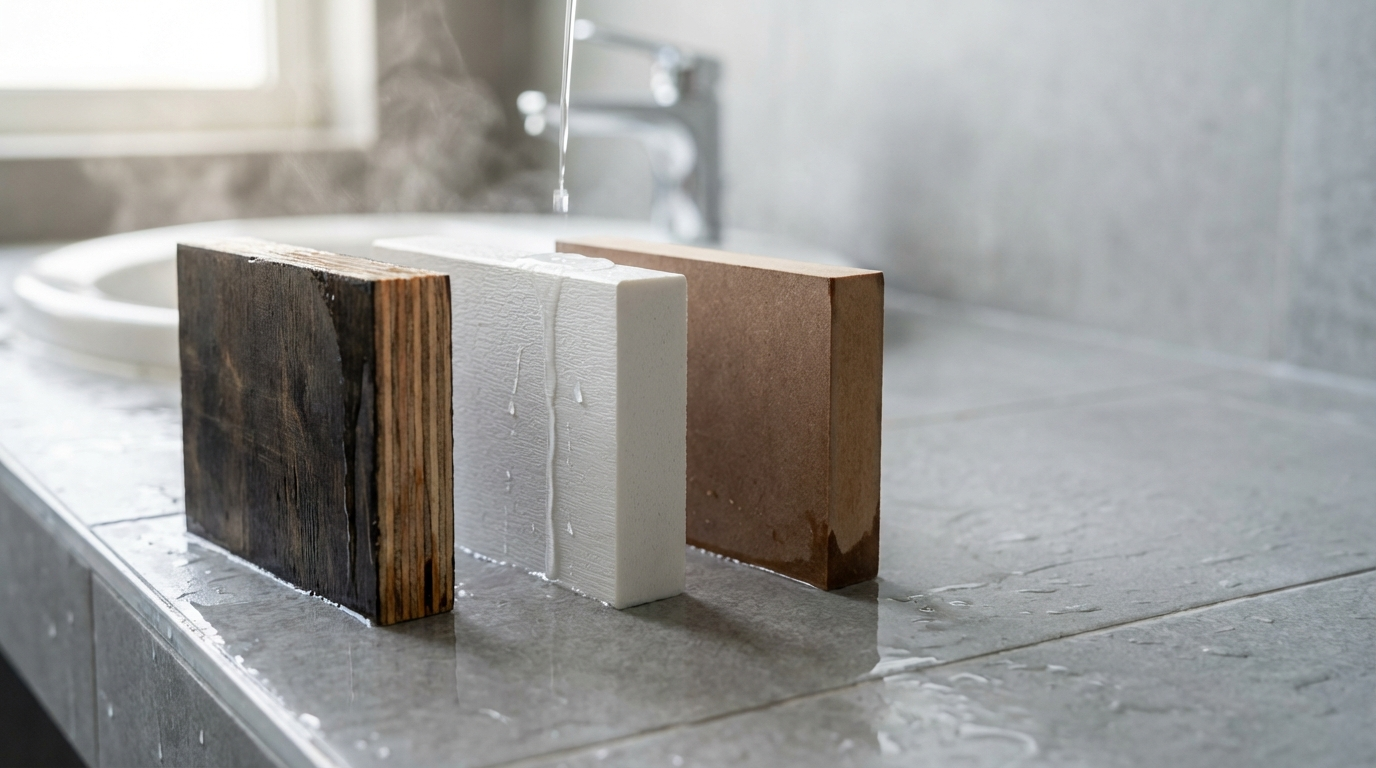
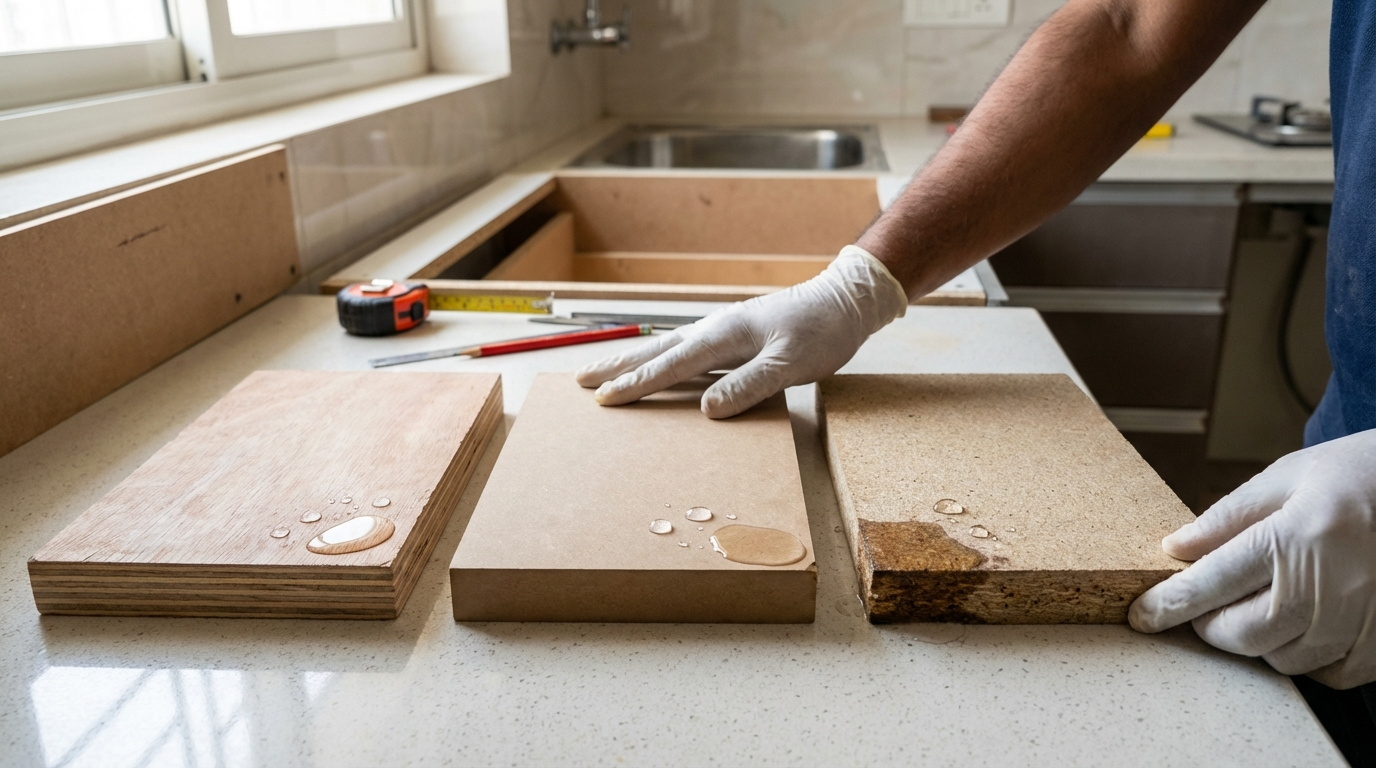
- Overlooking moisture zones: Standard laminates in bathroom vanities or kitchen sink areas will swell at edges; specify moisture-resistant or marine-grade substrates
Application Mistakes
- Poor adhesive selection: Using fevicol instead of proper contact adhesive causes bubbling and peeling
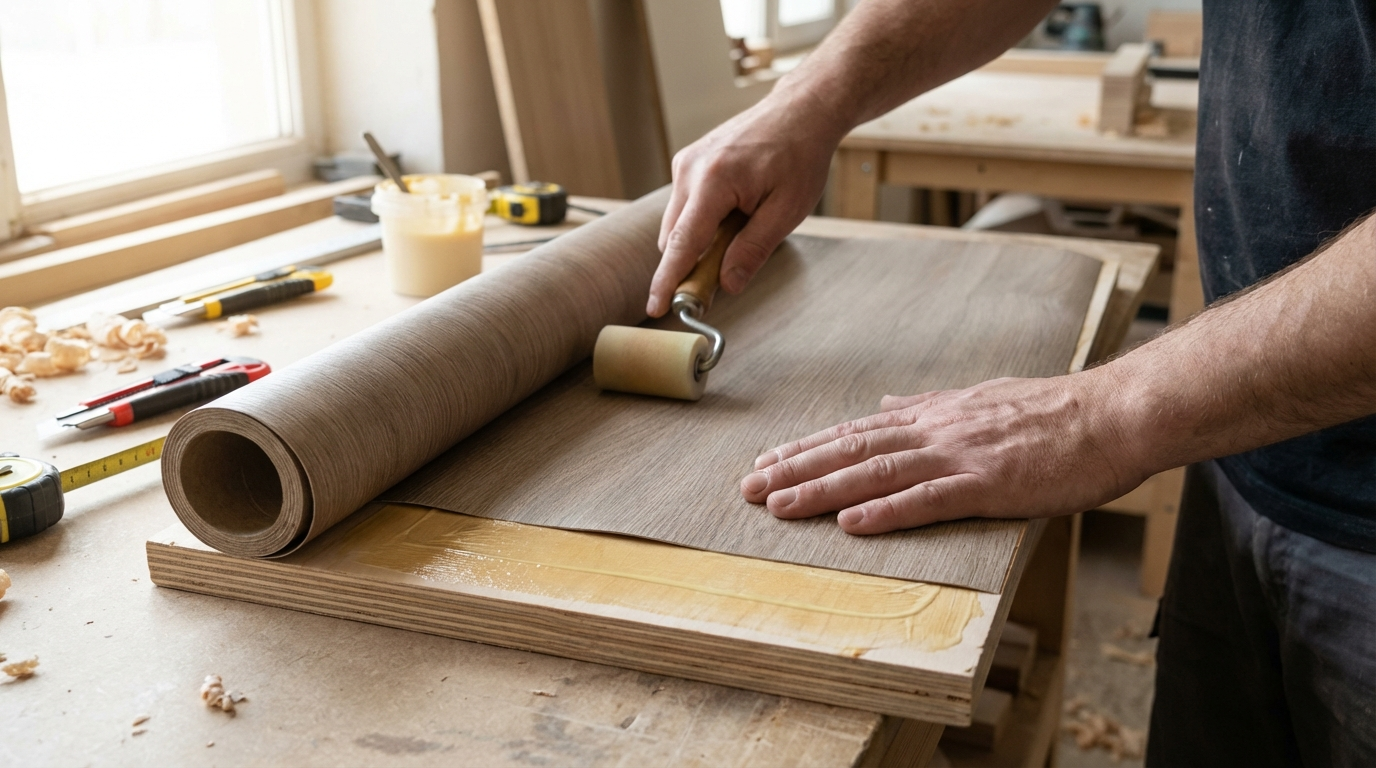
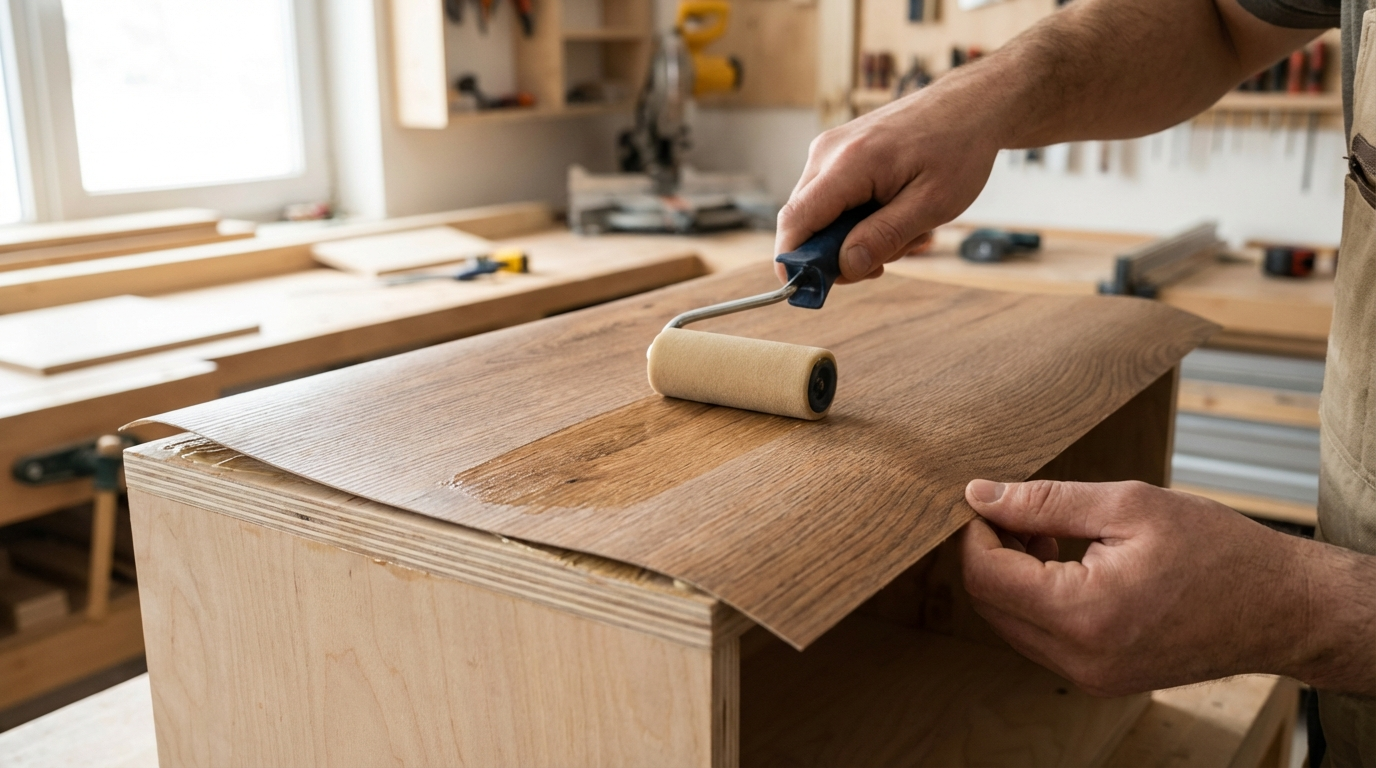
- Insufficient pressure during pasting: Air pockets form when carpenters skip proper rolling; insist on J-roller usage
- Ignoring edge-banding: Exposed plywood edges absorb moisture and swell; always specify matching edge-bands
- Wrong grain direction: Mismatched grain orientation across adjacent panels creates visual discontinuity
Quick Inspection Checks
- Scratch test: Run fingernail across surface; premium laminates resist light scratching
- Thickness verification: Use digital caliper to verify stated thickness matches actual measurement
- Colour consistency: Compare multiple sheets from same lot under daylight for batch consistency
- Back surface check: Properly textured back surface ensures better adhesive grip
- Edge inspection: Look for chipping or delamination at sheet edges indicating manufacturing defects
Application Methods for Wood Laminate Sheets
Proper laminate application requires attention to substrate preparation, adhesive selection, and finishing techniques. In Indian conditions, humidity and temperature variations demand additional precautions.
Substrate Preparation
- Surface must be clean, dry, and free from dust, grease, or old adhesive residue
- Plywood or MDF surface should be sanded with 120-grit paper for proper adhesive grip
- Moisture content of substrate should be below 12% to prevent future warping
- Fill any voids or defects with wood filler and sand smooth before lamination
Adhesive Application
- Contact adhesive (rubber-based) is standard for decorative laminates; apply on both surfaces
- Allow proper tack time (typically 15-20 minutes depending on temperature and humidity)
- PVA-based adhesives are not suitable for laminate work
- For PVC laminates, specialized PVC adhesive may be required for better bonding
Edge Treatment Options
- Matching laminate edge-banding: 22mm or 42mm strips applied with edge-banding machine or hand iron
- PVC edge-bands: More economical; available in matching colors
- Aluminum edge profiles: For modern or commercial applications
- Postforming: The application of heat and restraint allows postforming HPL to form around curved edges. Maximum thickness is around 0.97 mm.
Monsoon Considerations for India
- Avoid lamination work during peak monsoon if workshop lacks humidity control
- Store laminate sheets flat in dry area for 48 hours before use to acclimatize
- Coastal cities require extra attention to edge sealing to prevent moisture ingress
- Consider marine-grade plywood substrate for high-humidity installations
PVC vs Acrylic Laminate: Detailed Comparison
For modular kitchens and wardrobes, the PVC vs acrylic laminate decision is particularly important. Understanding their differences helps optimize both cost and aesthetics.
| Parameter | PVC Laminate | Acrylic Laminate |
|---|---|---|
| Appearance | Available in finishes such as matte, textured, glossy and high gloss | Highly reflective with a mirror-like sheen that brings super-glossy, high-end look |
| Durability | More durable and resistant. Have properties like UV light, moisture and heat resistance and can be treated for antibacterial properties | Water-proof and fairly resistant to heat. Can be more prone to showing scratches and scuffs |
| Flexibility | Flexible laminate sheets that can be bent around edges up to 90 degrees, eliminating the need for edge bands | Rigid; cannot be bent around curves |
| Price | Budget option while also providing a wide variety of options | On the high-end due to quality finish and premium appearance |
| Color Retention | Colors won't stay vibrant for long. After a few years, they will start to look dull | Major advantage is that they retain their brightness and colour over the years |
| Fingerprints | Less visible on textured/matte finishes | Handprints are visible on these finishes and require regular cleaning |
| Best Application | Lower cabinets that see more usage, spills | Glossy finish for top cabinets to reflect lighting |
Frequently Asked Questions
What is the full form of HPL and LPL in laminates?
HPL stands for High-Pressure Laminate and LPL stands for Low-Pressure Laminate. High-pressure laminates are molded and cured at pressures not lower than 1,000 psi (70 kg/cm²) and more commonly in the range of 1,200 to 2,000 psi. Low-pressure laminate is molded and cured at pressures in general of 400 pounds per square inch. HPL is thicker, more durable, and suitable for demanding applications like countertops and high-traffic furniture. LPL is commonly used for vertical surfaces and economy-segment furniture where extreme durability is not required.
Which is better for kitchen cabinets: laminate or veneer?
Since they are durable, laminates are the better choice for kitchen cabinets. Owing to weather and fire resistant properties, laminates are deemed as the right choice for making kitchen cabinets, laundry rooms, bathroom cupboards. Laminates have scratch-resistant properties that make them ideal for high traffic spaces. Veneer, while more luxurious in appearance, requires regular maintenance and is susceptible to moisture damage in humid kitchen environments typical across India, especially during monsoons.
What is the difference between sunmica and laminate?
While Sunmica is often used interchangeably with decorative laminates, laminates encompass a broader category of surfacing materials. The choice between them depends on factors like desired aesthetics, budget, and the specific application. Sunmica is one of the popular brands of laminates, while laminates is a broader term for the multilayer composite material bonded together. In practical terms, when Indian carpenters or dealers refer to "sunmica," they typically mean decorative laminate sheets regardless of actual brand.
How to check laminate sheet quality before buying?
Start by verifying thickness with a caliper – stated 1mm should measure close to 0.95-1.0mm. Good quality laminates are fairly durable and scratch resistant, more resistant to wear and tear, moisture, and heat. Perform a fingernail scratch test on the surface; quality laminates resist light scratching. Check colour consistency across multiple sheets under natural daylight. Inspect edges for chips or delamination. Verify brand authentication marks and purchase only from authorized dealers to avoid counterfeit products common in smaller markets.
What is the average laminate sheet price in India?
Laminate cost per square foot lies between ₹56.25 per sq.ft (high gloss laminate sheets) to ₹350 per sq.ft (PVC laminate cost). Standard 8×4 feet HPL sheets from economy brands start around ₹350-450, while premium brands like Greenlam, Merino, or Century range from ₹750-1,500 per sheet. On average, acrylic finish is available at around ₹1,500, whereas laminate finish is available at around ₹800. Prices vary by 10-15% between metro and Tier-2 cities due to transport costs.
Is laminate good for bathroom and wet areas?
Owing to weather and fire resistant properties, laminates are deemed as the right choice for making kitchen cabinets, laundry rooms, bathroom cupboards. However, standard laminates require proper edge sealing and moisture-resistant substrate (marine plywood or HDHMR) for bathroom applications. The edges are most vulnerable – water ingress at unsealed edges causes swelling and delamination. For bathroom vanities, compact laminates with integrated moisture resistance are preferable, though costlier.
Which is more expensive: PVC laminate or acrylic laminate?
While acrylic laminates offer a high-end look, PVC laminates are the more economical option. They come in a variety of colours and textures, with added advantage of higher durability. However, if budget is not a concern, nothing speaks class like acrylic laminates. Acrylic laminate price is on the high-end due to their quality finish and premium appearance. PVC laminate price is a budget option while also providing a wide variety of options. Typically, acrylic costs 40-60% more than comparable PVC finishes.
How long do laminate sheets last on furniture?
Quality laminate sheets on well-maintained furniture typically last 10-15 years under normal use. Durability depends on substrate quality, adhesive application, edge treatment, and usage patterns. Kitchen cabinets may show wear earlier due to heat, moisture, and frequent cleaning. Veneer can fade or warp with time; laminates hold up better in all seasons. However, unlike veneer, if laminates get damaged once, they can't be repaired and need to be replaced. Protecting surfaces from direct heat, sharp objects, and excessive moisture extends laminate lifespan significantly.
Disclaimer: This content is provided for general informational purposes based on industry practices and publicly available information. Product specifications, standards, prices, and availability may vary by manufacturer, region, and time. Readers should independently verify details with manufacturers, dealers, or qualified professionals before making purchase or construction decisions.Want Plywood Suggestions?
Share a few details and a Apple Ply specialist will suggest suitable brands and connect you to responsive dealers.