Veneer Groove Door Designs: Modern Door Ideas for Your Home
Explore stunning veneer groove door designs for modern homes. Get inspiration from latest door patterns, styles & installation tips.
Quick Answer
Veneer groove door designs combine real wood aesthetics with modern groove patterns to create visually striking interior doors for Indian homes. These doors feature linear or geometric grooves cut into natural wood veneer surfaces, offering contemporary appeal at a fraction of solid wood costs. They work exceptionally well for main entrances, bedrooms, and living areas where design impact matters.
At a Glance
- Veneer groove doors use 0.4mm to 1mm natural wood veneer bonded to engineered cores with CNC-routed groove patterns
- Price range in India: ₹180 to ₹650 per sq ft depending on veneer species, core quality, and groove complexity
- Best applications: main doors, bedroom doors, wardrobe shutters, and partition panels
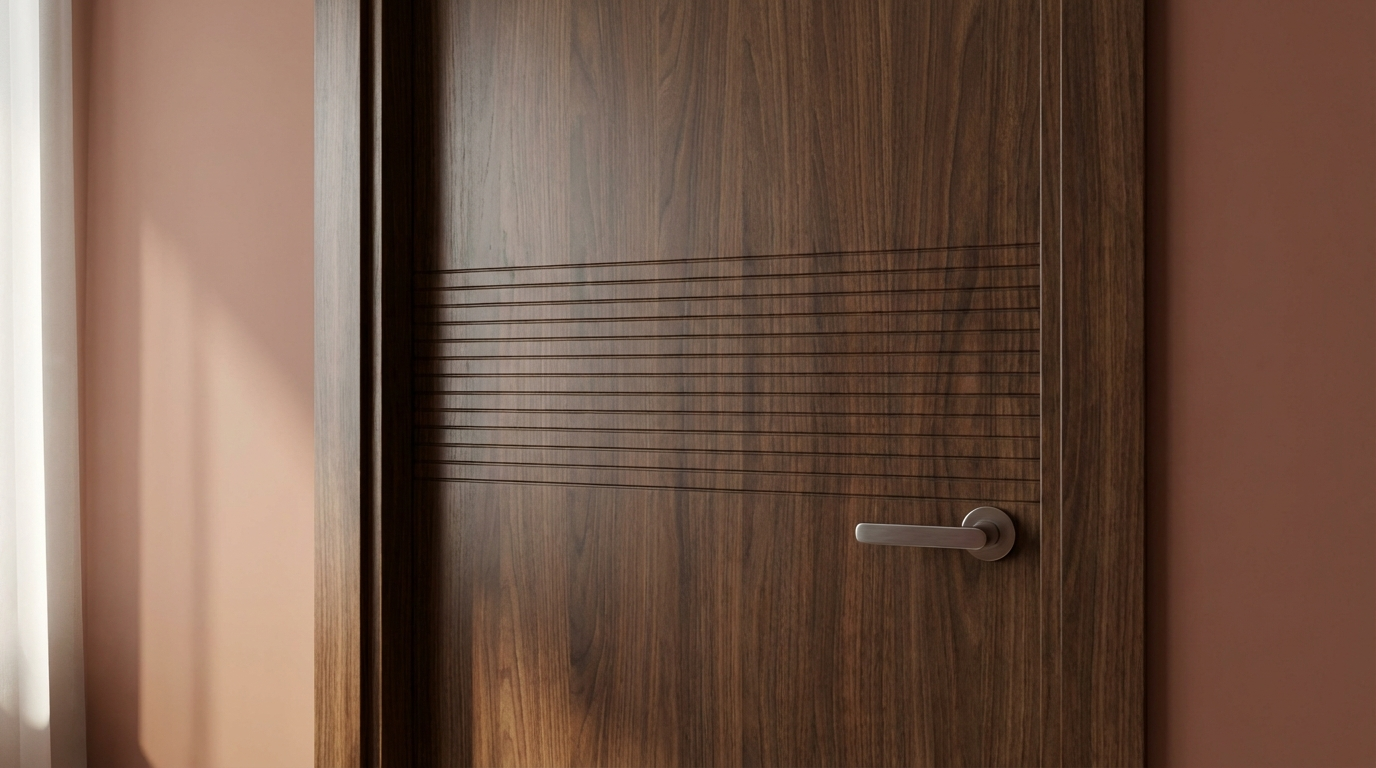
- Popular groove patterns: vertical lines, horizontal bands, geometric shapes, and asymmetric contemporary designs
- Core options: block board, MDF, particle board, or flush door cores—each with distinct stability characteristics
- Requires skilled carpenter for installation; poor edge finishing ruins the premium appearance
Understanding Veneer Groove Door Designs
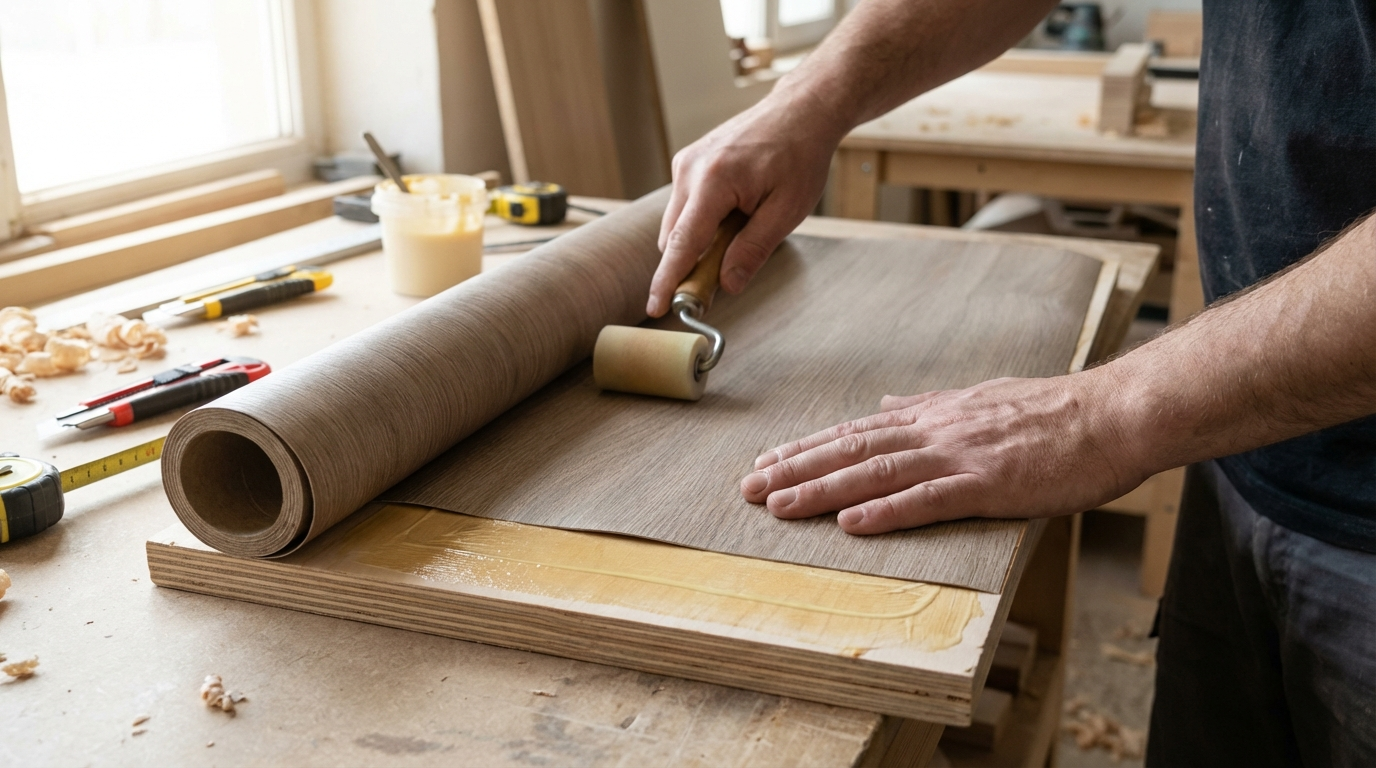
Veneer groove doors represent a practical evolution in interior door design that addresses both aesthetic demands and budget constraints common in Indian homes. The concept is straightforward: a thin slice of natural wood (veneer) is bonded to a stable engineered core, and then groove patterns are machined into the surface to create visual depth and contemporary appeal.
The veneer itself comes from actual hardwood species—teak, walnut, ash, oak, or indigenous varieties like sheesham and rosewood. This 0.4mm to 1mm thick wood layer retains the natural grain, colour variation, and tactile warmth that distinguishes real wood from laminates or printed surfaces. Unlike solid wood doors that can cost upwards of ₹25,000 per shutter, veneer groove doors deliver similar visual impact at significantly lower price points.
How Groove Patterns Are Created
Modern veneer groove doors rely heavily on CNC (Computer Numerical Control) machining for precision routing. The groove patterns are programmed digitally and cut with router bits that remove material to specific depths—typically 3mm to 8mm depending on the core thickness and design intent. This precision ensures consistent groove width, depth, and spacing across the entire door surface.
In India's modular furniture industry, most manufacturers use 3-axis or 5-axis CNC routers capable of creating everything from simple linear grooves to complex geometric patterns. The quality of the final result depends significantly on the router bit sharpness, feed rate settings, and the stability of the veneer-core bond. Poorly bonded veneer can chip or lift during routing, creating an uneven finish that's difficult to repair.
Why Indian Homeowners Choose Veneer Groove Doors
The appeal in Indian markets stems from a specific combination of factors. First, the real wood appearance satisfies the cultural preference for natural materials without the warping and maintenance issues associated with solid wood in humid climates. Second, groove patterns add a contemporary designer element that elevates interiors beyond standard flush doors. Third, the price-to-aesthetics ratio makes sense for budget-conscious buyers who refuse to compromise on visual quality.
Types of Veneer Groove Door Patterns
Groove patterns on veneer doors range from minimalist single-line designs to elaborate multi-directional compositions. Understanding these categories helps in selecting patterns that complement your interior style and architectural context.
Vertical Groove Designs
Vertical grooves create the illusion of height, making rooms appear taller. These patterns typically feature parallel lines running from top to bottom, with spacing variations ranging from 50mm apart (tight lines) to 200mm apart (wide panels). The classic 3-line vertical design remains popular for bedroom doors, while 5-line or 7-line patterns work well on wider main entrance doors. Vertical grooves also hide minor surface imperfections better than horizontal alternatives.
Horizontal Groove Patterns
Horizontal grooves emphasise width and create a more grounded, contemporary aesthetic. These work particularly well in rooms with high ceilings where you want to balance proportions. Common configurations include centre-band designs (grooves concentrated in the middle third) and full-height horizontal lines. However, horizontal grooves collect dust more readily and may require more frequent cleaning in dusty Indian environments.
Geometric and Contemporary Patterns
Modern CNC capabilities enable complex geometric patterns—hexagons, diamonds, interlocking rectangles, and asymmetric abstract designs. These statement pieces work best as focal points in living rooms or as feature walls. The complexity adds to cost, with intricate geometric patterns commanding 40% to 60% premium over simple linear designs. Metro cities like Mumbai, Bangalore, and Delhi see higher demand for these contemporary patterns compared to Tier-2 and Tier-3 markets.
Mixed Direction Designs
Combining vertical and horizontal grooves creates panel-like effects without actual raised panels. The intersection points require precise machining to appear clean rather than cluttered. These designs offer visual complexity while maintaining the flat, sleek profile that distinguishes groove doors from traditional panelled alternatives.
Veneer Groove Door Designs: Comparison of Popular Options
| Groove Pattern Type | Visual Effect | Price Range (₹/sq ft) | Complexity Level | Best Application | Maintenance Consideration |
|---|---|---|---|---|---|
| Single Vertical Line | Minimalist, elongating | 180–280 | Simple | Bathroom doors, wardrobes | Low dust accumulation |
| Multi-Line Vertical | Classic contemporary | 220–350 | Moderate | Bedrooms, study rooms | Easy to clean |
| Horizontal Bands | Wide, grounded | 250–380 | Moderate | Main entrance, living areas | Requires regular dusting |
| Grid/Checker Pattern | Structured, formal | 320–450 | High | Office cabins, formal spaces | Groove intersections need attention |
| Asymmetric Geometric | Bold, artistic | 400–550 | Very High | Feature walls, luxury interiors | Difficult to touch up |
| V-Groove (Angled) | Shadow play, depth | 280–400 | Moderate-High | Wardrobe shutters, sliding doors | Dust settles in angles |
| Coffered/Panel Effect | Traditional with modern twist | 350–500 | High | Main doors, living room partitions | Requires skilled finishing |
How to Choose the Right Veneer Groove Door
Selecting veneer groove doors involves balancing aesthetic preferences with practical considerations specific to Indian conditions. The wrong choice can result in premature damage, mismatched interiors, or unnecessary expense.
Core Material Selection
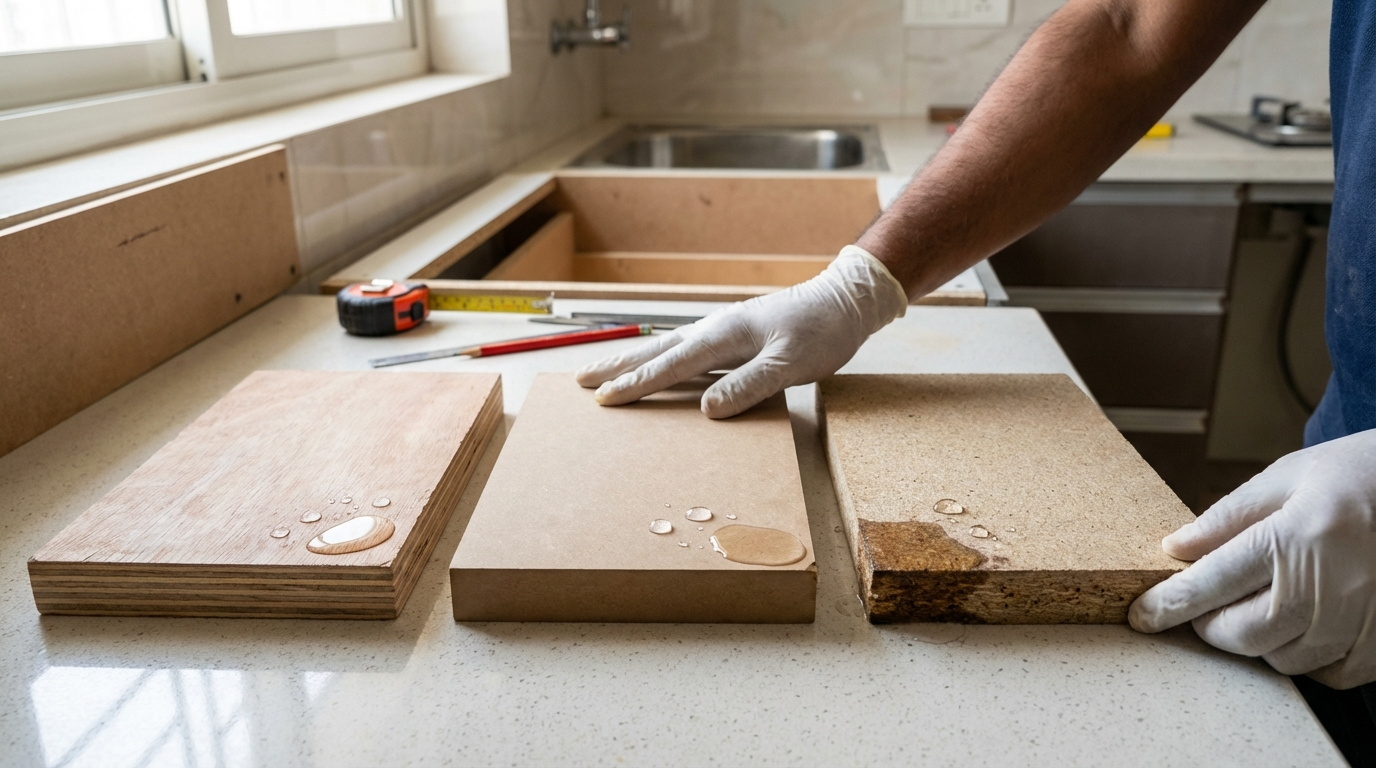
The core determines structural stability, screw-holding capacity, and long-term performance. Block board cores (with solid wood strips) offer the best screw holding for heavy-duty hinges but cost more. MDF cores provide excellent machining surfaces for intricate groove patterns but perform poorly in high-moisture areas. Particle board cores reduce cost but compromise durability significantly. For main entrance doors, always specify block board or commercial-grade plywood cores; MDF works fine for bedroom and wardrobe applications.
Veneer Species and Grade
Veneer species affects both appearance and durability. Teak and walnut command premium prices but resist moisture better than ash or oak. For coastal cities like Chennai, Mumbai, or Kochi, specify marine-grade adhesives and moisture-resistant veneers. The veneer grade also matters—"A" grade sheets have consistent colour and minimal defects, while "B" and "C" grades show more variation. Always examine actual veneer samples rather than catalogue photos.
Buyer Checklist for Veneer Groove Doors
- Verify core material specification in writing—don't accept verbal assurances
- Check veneer thickness (minimum 0.5mm for durability, 0.8mm+ for premium doors)
- Examine groove depth consistency across a sample piece
- Confirm adhesive type (urea formaldehyde for dry areas, phenolic for humid environments)
- Request edge-banding samples that match the veneer colour
- Ask about warranty terms specific to delamination and groove chipping
- Ensure the manufacturer uses CNC routing, not manual routing for complex patterns
When NOT to Choose Veneer Groove Doors
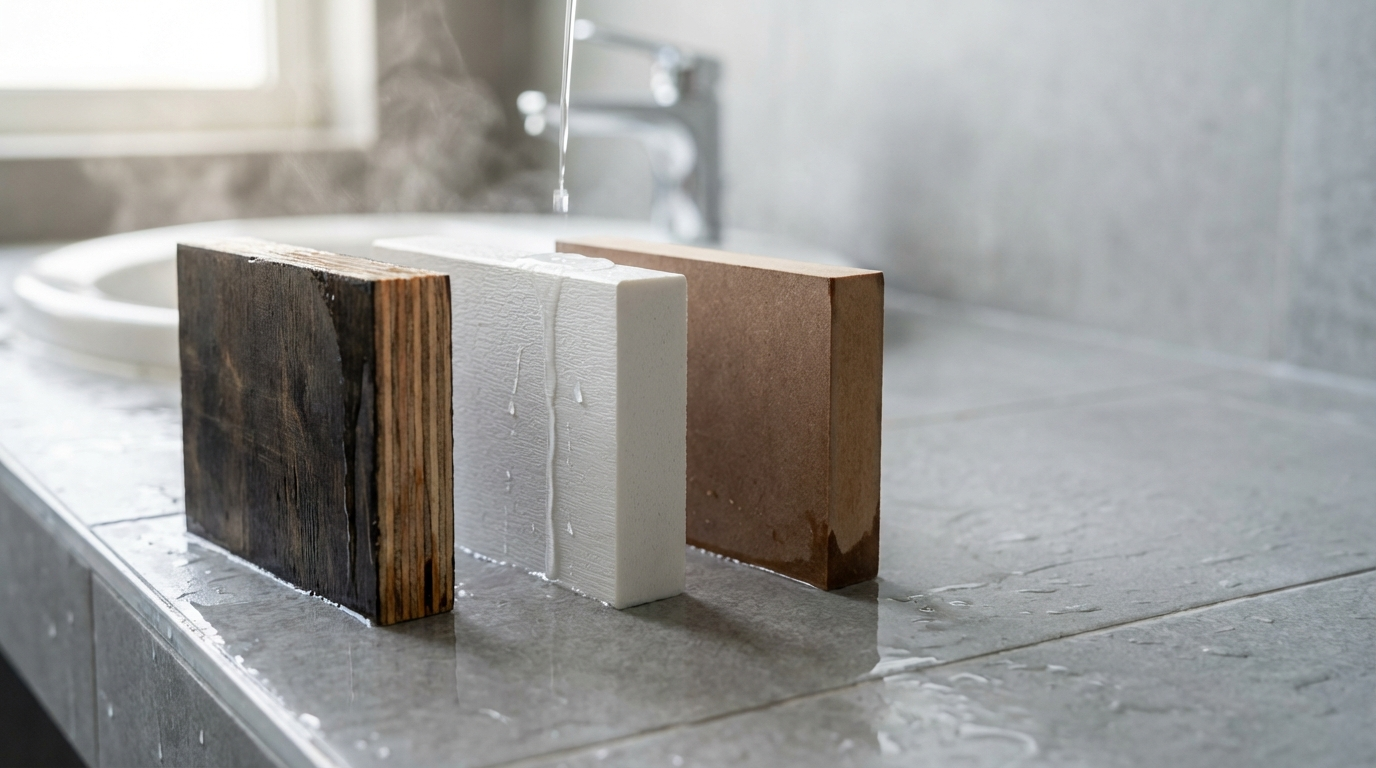
Veneer groove doors are unsuitable for bathrooms or kitchens where direct water exposure is likely—even marine-grade adhesives cannot protect against persistent moisture. They're also poor choices for exterior applications or areas with extreme temperature fluctuations. If your budget forces compromise on core quality, plain flush doors with good laminate may outperform cheap veneer groove options. Additionally, if your home lacks controlled humidity (no air conditioning in humid regions), solid wood or WPC doors may prove more durable despite higher upfront costs.
Common Mistakes to Avoid with Veneer Groove Doors
Understanding typical failures helps prevent expensive mistakes. Most veneer groove door problems stem from specification errors, installation shortcuts, or environmental mismatches.
Ignoring Core Quality for Price Savings
The most common mistake is accepting particle board cores to reduce costs. While the veneer surface looks identical initially, particle board swells irreversibly when exposed to moisture. In Indian conditions—especially during monsoon or in non-AC rooms—this leads to warped doors, failed hinges, and cracked veneers within 2-3 years. The ₹50-80 per sq ft savings on particle board versus block board rarely justifies the replacement cost.
Inadequate Edge Protection
Grooves cut into veneer surfaces expose the core material at their base. If these exposed areas and door edges aren't properly sealed, moisture penetrates the core. Many buyers focus on face veneer quality while ignoring edge-banding. Always specify PVC or ABS edge-banding with glue-line coverage of at least 0.8mm thickness. Veneer edge-banding matches aesthetics better but offers less moisture protection than synthetic alternatives.
Mismatched Hardware Weight
Heavy brass handles or oversized hinges can pull through particle board or low-grade MDF cores. The screw-holding capacity differs dramatically between core materials. Specify hardware requirements to your door supplier before finalising core material—premium decorative handles often require block board cores or metal inserts.
Quick Inspection Checks
- Run your fingernail along groove edges—rough or lifting veneer indicates poor machining or bonding
- Tap the door surface at different points—hollow sounds suggest voids in the core
- Check groove depth consistency with a depth gauge or ruler at multiple points
- Examine edge-banding adhesion by pressing firmly—gaps indicate poor application
- Look for colour variation under different lighting angles to assess veneer consistency
Installation Errors That Damage Doors
Carpenter skill dependency is high with veneer groove doors. Incorrect hinge placement (especially too close to groove lines) causes splitting. Over-tightening hardware compresses soft cores. Improper door fitting with excessive gaps allows moisture entry. Always engage carpenters experienced with veneer work, and supervise critical installation steps personally.
Price Guide for Veneer Groove Doors in India
Pricing for veneer groove doors varies significantly based on multiple factors. Understanding these variables helps set realistic budgets and negotiate effectively with suppliers.
Price Breakdown by Component
| Component | Budget Range | Mid-Range | Premium Range | What Drives the Difference |
|---|---|---|---|---|
| Core Material | ₹45–60/sq ft | ₹80–120/sq ft | ₹150–200/sq ft | Particle board vs plywood vs block board |
| Veneer Layer | ₹50–80/sq ft | ₹100–180/sq ft | ₹220–350/sq ft | Species, grade, thickness, origin |
| CNC Grooving | ₹30–50/sq ft | ₹60–100/sq ft | ₹120–180/sq ft | Pattern complexity, groove depth |
| Finishing (Polish/PU) | ₹40–60/sq ft | ₹80–120/sq ft | ₹150–250/sq ft | NC lacquer vs PU vs Italian finishes |
| Edge Banding | ₹15–25/running ft | ₹30–50/running ft | ₹60–100/running ft | PVC thickness, veneer matching |
Total Door Cost Estimates
For a standard 7 ft × 3 ft (21 sq ft) bedroom door with moderate groove complexity:
- Budget option: ₹4,200–5,500 (particle board core, common veneer, NC finish)
- Mid-range option: ₹7,500–10,000 (plywood core, quality veneer, PU finish)
- Premium option: ₹14,000–18,000 (block board core, imported veneer, Italian PU finish)
Regional Price Variations
Metro cities typically see 15-25% higher prices due to real estate costs, labour rates, and brand presence. Tier-2 cities like Jaipur, Lucknow, or Coimbatore offer competitive rates from local manufacturers. However, quality consistency varies significantly outside organised manufacturing hubs. GST at 18% applies to doors, and transport costs add ₹10-30 per sq ft for inter-state deliveries. Always get landed cost quotes inclusive of all taxes and delivery.
Carpenter's Perspective on Veneer Groove Doors
Experienced carpenters offer insights that manufacturer specifications often omit. Their practical knowledge addresses real-world installation challenges and maintenance realities.
Installation Considerations
Veneer groove doors require more careful handling than solid wood or laminated alternatives. The grooves create stress concentration points that can crack if the door is dropped or forced. Hinge positioning must avoid groove lines—drilling into grooves compromises both structural integrity and appearance. Most carpenters recommend 100mm clearance between hinge screws and the nearest groove edge.
Door frame preparation matters significantly. Uneven frames cause binding, and forcing fit damages veneer edges. Professional carpenters prefer to size doors 2-3mm smaller than frame openings, then use weather stripping to close gaps rather than planing veneer surfaces.
Long-Term Maintenance Advice
Regular dusting with microfiber cloths prevents grime accumulation in grooves. Avoid water-based cleaning solutions that can penetrate groove base areas. For PU-finished surfaces, annual polish application maintains sheen and adds protective layers. Address any edge-banding separation immediately—moisture entry through compromised edges causes rapid core deterioration.
What Carpenters Check Before Accepting Door Installation
- Core material verification by examining an edge section
- Veneer adhesion quality through visual inspection of edges and corners
- Groove consistency and depth using simple measurement tools
- Surface flatness using a straight edge across the door face
- Hardware compatibility with specified core material
Frequently Asked Questions
What is the difference between veneer and laminate groove doors?
Veneer groove doors use thin slices of real wood bonded to engineered cores, retaining natural grain patterns and tactile warmth. Laminate groove doors use printed decorative paper or plastic sheets that simulate wood appearance but lack authentic texture. Veneer can be sanded and refinished if damaged; laminate cannot. Veneer costs 30-50% more than equivalent laminate options but offers superior aesthetics and higher resale value. For premium applications like main doors and living areas, veneer delivers noticeably better visual impact under natural lighting.
Are veneer groove doors suitable for Indian humidity and monsoon conditions?
Veneer groove doors perform well in Indian conditions when specified correctly. Use block board or marine plywood cores with phenolic adhesives for humid climates. Ensure proper edge sealing and avoid installation in bathrooms or areas with direct water exposure. In coastal cities like Mumbai or Chennai, marine-grade specifications are essential. Air-conditioned rooms reduce moisture stress significantly. Standard inland installations with proper specifications typically last 10-15 years without major issues.
Which veneer type is best for main door designs in India?
Teak veneer remains the preferred choice for main doors due to its natural durability, resistance to moisture fluctuations, and prestigious appearance. Walnut offers a contemporary alternative with rich dark tones. For budget-conscious buyers, engineered teak veneer (reconstituted from faster-growing species) provides similar aesthetics at lower cost. Always specify minimum 0.8mm veneer thickness for main doors to ensure durability. Avoid ash or oak veneers for main doors in humid regions—they're better suited to interior bedroom applications.
How much do veneer groove doors cost in India per square foot?
Veneer groove door prices in India range from ₹180 to ₹650 per square foot depending on core material, veneer species, groove complexity, and finish quality. Budget options with particle board cores and common veneers start around ₹180-250 per sq ft. Mid-range doors with plywood cores and quality teak or walnut veneers fall between ₹300-450 per sq ft. Premium options with block board cores, imported veneers, and Italian PU finishes reach ₹500-650 per sq ft. These prices exclude hardware and installation.
Can veneer groove doors be customised for wardrobe shutters?
Veneer groove doors work excellently for wardrobe shutters and are increasingly popular in modular wardrobe designs. The flat profile with groove patterns complements contemporary bedroom aesthetics while providing the warmth of natural wood. For sliding wardrobes, ensure adequate track and roller quality to handle door weight. Vertical groove patterns are preferred for tall wardrobe shutters as they emphasise height. CNC manufacturers can produce matching groove patterns across multiple shutter panels for a cohesive appearance.
How to check quality of veneer groove doors before purchasing?
Quality inspection should cover multiple aspects: examine veneer adhesion by pressing edges and checking for lifting or gaps; run fingers along groove edges to detect roughness or chipping; tap the door surface at various points to identify hollow sections indicating core voids; verify groove depth consistency using a ruler at multiple locations; check edge-banding adhesion by pressing firmly along all edges; and inspect under different lighting angles to assess colour consistency. Request material certificates specifying core type, veneer grade, and adhesive standards.
What groove pattern works best for small bedroom doors?
Vertical groove patterns work best for small bedroom doors as they create an illusion of height and make compact spaces feel more open. Simple 3-line or 5-line vertical designs avoid visual clutter while adding contemporary character. Avoid complex geometric patterns or busy horizontal designs that can overwhelm small rooms. Light-coloured veneers (ash, light oak, or whitewashed teak) combined with vertical grooves maximise the sense of space. Keep groove depth moderate (4-5mm) to prevent excessive shadow lines in limited lighting conditions.
Is PU finish or lacquer finish better for veneer groove doors?
PU (polyurethane) finish offers superior durability, scratch resistance, and moisture protection compared to NC (nitrocellulose) lacquer finish. PU creates a harder surface film that withstands daily wear better, making it ideal for main doors and high-traffic areas. Lacquer finish costs less and provides adequate protection for bedroom doors or wardrobes with minimal contact exposure. For grooved surfaces specifically, PU finish fills minor imperfections better and creates smoother groove bases. Italian PU finishes offer the highest quality but cost 40-60% more than domestic alternatives.
Disclaimer: This content is provided for general informational purposes based on industry practices and publicly available information. Product specifications, standards, prices, and availability may vary by manufacturer, region, and time. Readers should independently verify details with manufacturers, dealers, or qualified professionals before making purchase or construction decisions.Want Plywood Suggestions?
Share a few details and a Apple Ply specialist will suggest suitable brands and connect you to responsive dealers.