Best Plywood for Doors – Interior & Exterior Door Material Guide
Learn which plywood or board is best for making doors. We cover interior vs exterior doors and discuss if you should use MR plywood, BWP marine ply, or blockboard.
Quick Answer
In practical terms, the best plywood for doors depends on location: MR grade plywood or blockboard suits most interior doors due to balanced cost and stability in dry conditions, while BWP marine plywood is essential for exterior doors to withstand rain and humidity. Avoid using moisture-resistant grades outdoors without waterproofing layers, as swelling leads to warping. Blockboard offers superior screw-holding for heavy doors, but check core alignment at dealers.
- Interior doors: MR plywood (12-18mm) or blockboard – economical, smooth finish.
- Exterior doors: BWP marine plywood (18-25mm) – boil-proof glue resists delamination.
- Key check: Verify BIS stamp for grade; test edges for voids.
- Price range: Rs. 70-120/sq ft for interior grades (tier-2 cities, mid-brands); Rs. 140-250/sq ft for BWP.
- Pro tip: Pair with PU polish for longevity in humid Indian homes.
- Not ideal: Softwood core ply for high-traffic doors – poor holding power.
How to Choose the Best Plywood for Doors: Decision Framework
Selecting plywood for doors starts with assessing exposure: interior doors face controlled humidity from AC rooms or kitchens, while exterior ones battle monsoons and direct sun. Begin by measuring door size – standard 32x78 inches needs 18mm thickness for rigidity without sagging. Factor in usage: flush doors for bedrooms prioritize smooth veneers, while panel doors for entrances demand strong frames.
Core material drives 70% of performance. Solid hardwood cores in blockboard excel in screw-holding for hinges, ideal for modular homes where carpenters reuse fittings. Plywood's layered veneers offer uniformity but vary by glue: MR (moisture-resistant) handles bathroom steam briefly, BWR (boiling water-resistant) suits semi-exterior, and BWP (boiling water-proof) survives immersion – critical for coastal Kerala homes.
Thickness matters: 12mm for lightweight interiors, 18-25mm for exteriors to prevent bowing under wind. Finish type influences aesthetics – teak veneer hides minor defects but adds Rs. 20-40/sq ft. In India, dealer stocks mix imported poplar cores (lightweight, cheaper) with local eucalyptus (denser, termite-prone without treatment).
Decision Checklist:
- Exposure level: Dry interior (MR/blockboard) vs wet exterior (BWP).
- Load: Heavy hinges? Choose blockboard or 19mm+ ply.
- Budget: Rs. 5,000-12,000 per door leaf (material only, Delhi rates).
- Verify: Press edges for delams; tap for hollow sounds; check glue lines.
- Carpenter input: CNC-cut? Uniform ply; handmade? Blockboard forgives.
When NOT to choose this: Skip MR for main entrances – monsoon swelling cracks polish in 6-12 months. Avoid thin 6mm ply for doors; it warps under humidity swings common in Pune apartments. If termite history, demand H3 borate-treated boards, not untreated softwood.
This framework saves rework costs, which hit Rs. 2,000-5,000 per door in urban India.
Best Plywood for Interior Doors
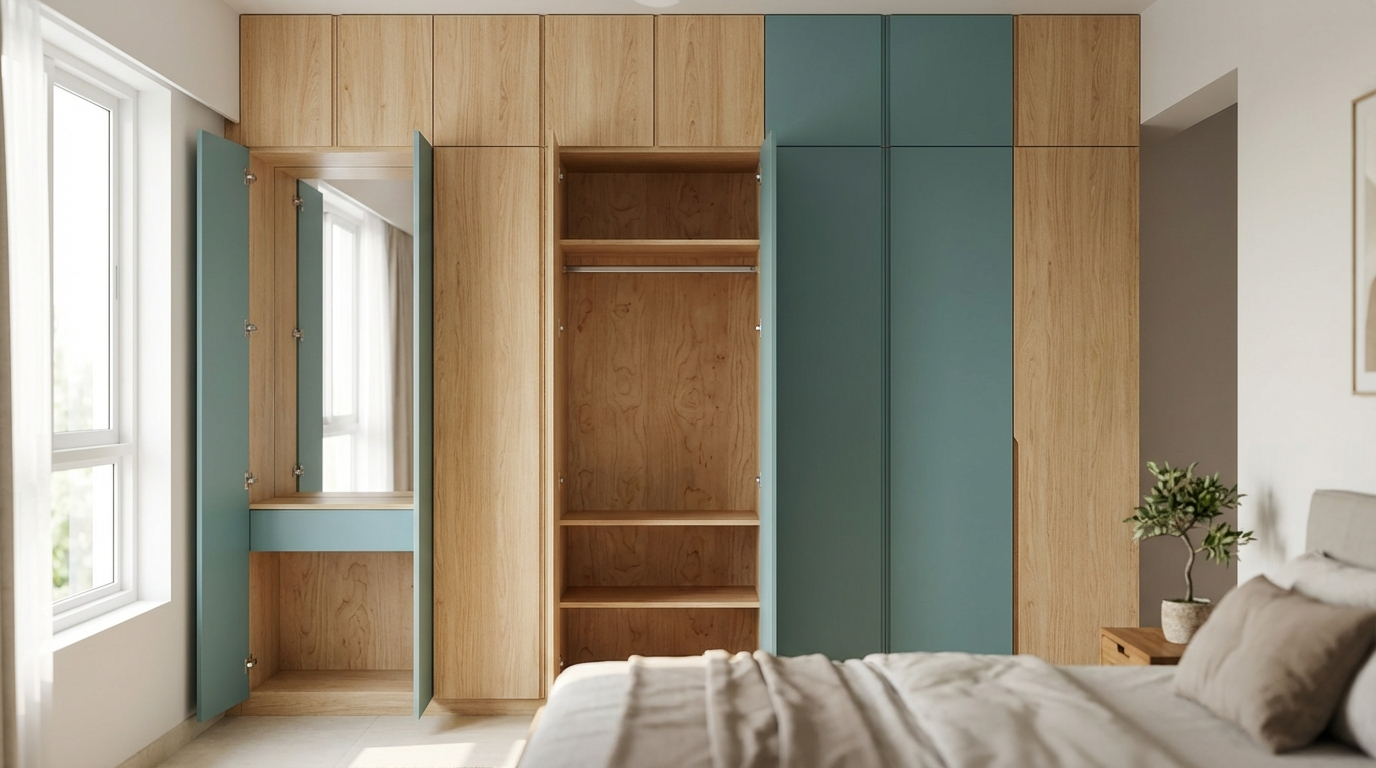
Interior doors in Indian homes – bedrooms, bathrooms, wardrobes – rarely face standing water, making MR grade plywood the go-to for 80% of installations. Its urea-formaldehyde glue resists humidity up to 25-30% (typical Mumbai summers), preventing minor swelling if edges are sealed. At 12-18mm, it cuts cleanly for flush designs, accepting laminates or veneers without telegraphing core defects.
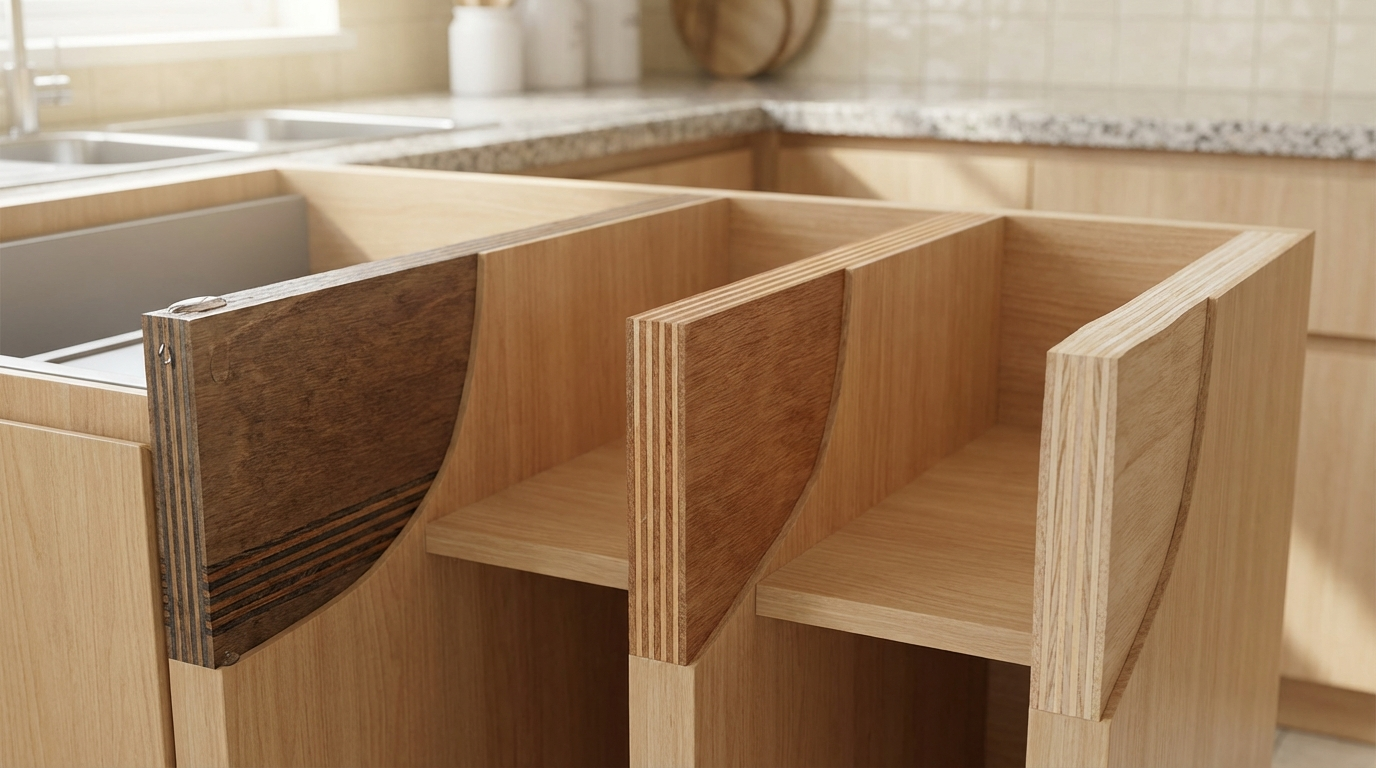
Blockboard edges out plywood here for stability. Strips of softwood or hardwood (pine/eucalyptus) glued into a slab provide exceptional screw pull-out resistance – vital for repeated hinge adjustments in rented flats. In Delhi-NCR, carpenters prefer 18mm blockboard for wardrobe shutters, as it holds 3x more torque than veneer-core ply before stripping.
Why MR over BWR indoors? Cost savings: BWR's phenolic glue adds 30-50% premium without proportional benefits in dry zones. Poplar-core MR from northern mills stays flat in AC environments, unlike denser gurjan cores that expand more in humidity shifts.
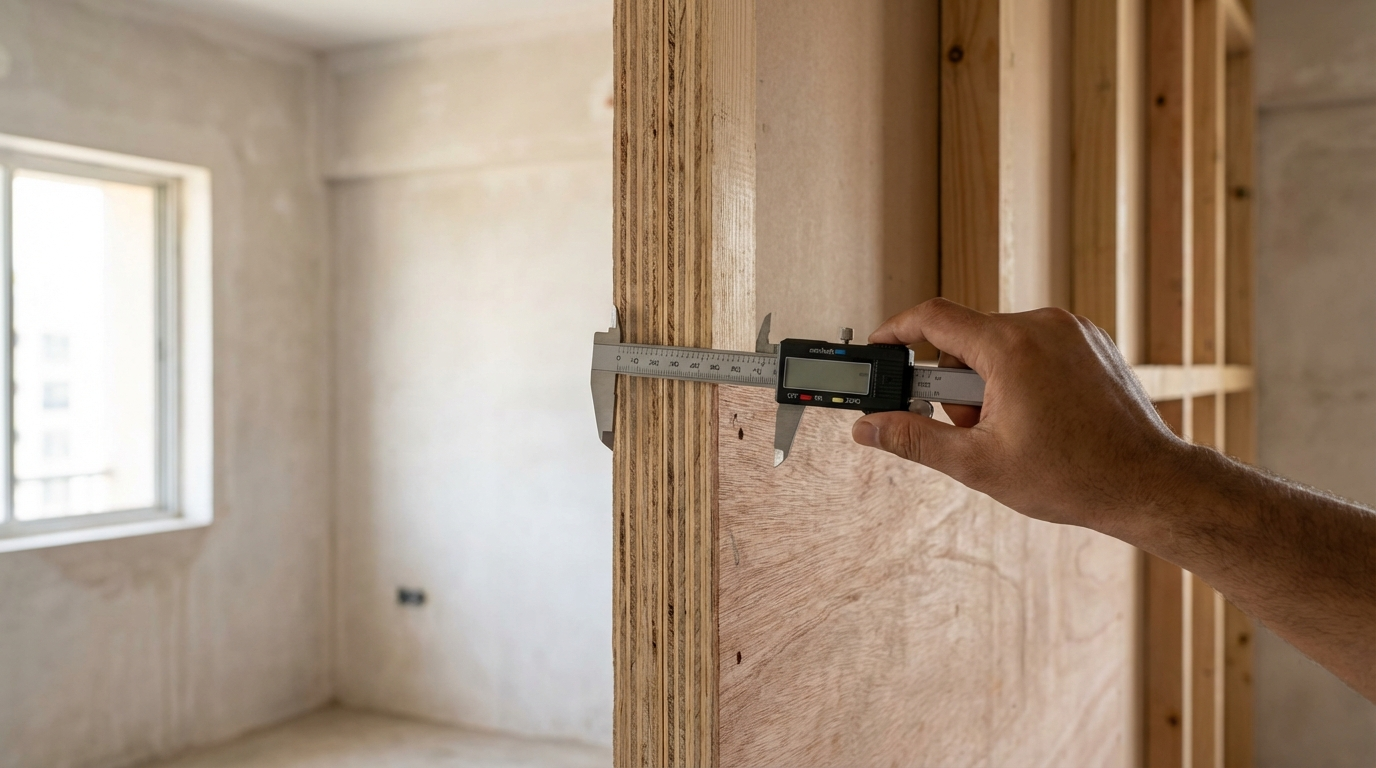
Practical scenarios: In 2BHK apartments, pair 12mm MR with PVC membrane for moisture-prone bathrooms – steam condenses but doesn't delaminate if polished. For kids' rooms, blockboard's solidity reduces denting from play. Thickness naming varies: dealers quote "18mm" but measure 17-19mm; always caliper-check.
Edge sealing is non-negotiable: unsealed MR absorbs moisture from floor mopping, leading to edge lifting in 1-2 years. Use 2-3 putty coats + PU finish. In South India, where ambient RH hits 70%, opt for pre-laminated MR to skip on-site polishing hassles.
Limitations show in high-traffic: repeated slamming fatigues MR glue, causing face veneer bubbles. Solution: Reinforce with lipping strips. Overall, interior choices balance at Rs. 70-110/sq ft, making doors under Rs. 6,000 feasible for tier-2 budgets.
Best Plywood for Exterior Doors
Exterior doors demand BWP marine plywood, engineered with phenolic glue that survives 72-hour boils – translating to monsoon-proofing in Chennai or Ahmedabad rains. At 18-25mm, it resists wind loads on balcony sliders, where thinner boards bow 5-10mm under 50km/h gusts. Hardwood cores (gurjan/seaweed) add density for security against forced entry.
Unlike interiors, exteriors face UV degradation and termite trails from soil contact. BWP's cross-bands minimize warping; a 25mm panel deflects <2mm under load vs 8mm for MR. In coastal Gujarat, salt-laden air accelerates corrosion, so pair with stainless hinges and epoxy primers.
Blockboard falters here: strip cores delaminate under cycles of wet-dry, common in Kolkata monsoons. Instead, full marine ply with void-free stamps holds frames rigidly. Carpenters in Bangalore favor 19mm BWP for main gates, lipped with 2-inch teak for aesthetics and protection.
Thickness escalates costs: 25mm for storm-prone areas prevents rattling. Why not solid wood? Plywood's uniformity avoids twisting, and at half the price (Rs. 10,000 vs 25,000 per door), it's practical for villas.
Installation tweaks: Elevate sills 150mm off ground; apply 3-4 PU coats. In tier-1 cities, CNC shops pre-machine BWP for precision fits, reducing site errors. Neglect this, and delamination starts at corners within 2 seasons, costing Rs. 8,000+ rework.
Hybrid option: BWR for semi-exposed verandas, but upgrade to BWP if rain splashes directly – glue hydrolysis differentiates longevity by 5-7 years.
Plywood Types Comparison Table for Doors
Use this table to compare core options side-by-side. Prices reflect 18mm thickness, mid-tier brands, tier-2 city dealers (add 10-20% for metros, GST inclusive). Variations stem from core wood (poplar cheaper, gurjan premium), glue purity, and face quality.
| Board Type | Best Use | Moisture Resistance | Screw Holding | Price Range (Rs./sq ft) | India Suitability |
|---|---|---|---|---|---|
| MR Plywood | Interior flush/panel doors | Moderate (up to 25% RH) | Good | 70-110 | Dry interiors; seal edges |
| BWR Plywood | Semi-exterior, kitchens | High (short boils) | Good | 100-160 | Verandas; not direct rain |
| BWP Marine Plywood | Exterior main doors | Excellent (72hr boil) | Excellent | 140-250 | Monsoon/coastal; must-lip |
| Blockboard | Interior heavy doors | Low-moderate | Superior | 80-130 | Wardrobes; avoid outdoors |
Table insights: BWP justifies premium for exteriors due to 10x glue strength; blockboard wins interiors on torque (200kg vs 100kg pull-out). Always factor transport: +Rs. 5-10/sq ft from mills to suburbs.
Why This Matters in India: Humidity and Regional Factors
India's climate diversity flips generic advice: Mumbai's 80% RH swells MR doors 2-3% in monsoons, cracking veneers unless BWP-upgraded. Coastal Tamil Nadu demands marine grades from day one – salt accelerates glue breakdown, turning Rs. 15,000 doors to scrap in 3 years.
Inland Delhi sees dry winters but humid summers from coolers; blockboard stabilizes here without premium glues. South India's termite belts (Kerala plantations) require IS:1659 treated boards – untreated eucalyptus cores fail in 18 months. Dealer practices amplify issues: tier-3 stocks mix grades; insist on stamps.
Modular trends: CNC firms in Bangalore push uniform BWP for factory-fit doors, cutting carpenter errors by 40%. GST hikes (18%) and fuel logistics add Rs. 10-20/sq ft from Gujarat mills to East. Monsoon-proofing saves Rs. 20,000/home in replacements.
Buyer edge: Visit during rains; reject damp-stored sheets. Regional tweaks make "best" local: BWP everywhere wet, MR/blockboard dry interiors.
Common Mistakes to Avoid When Buying Plywood for Doors
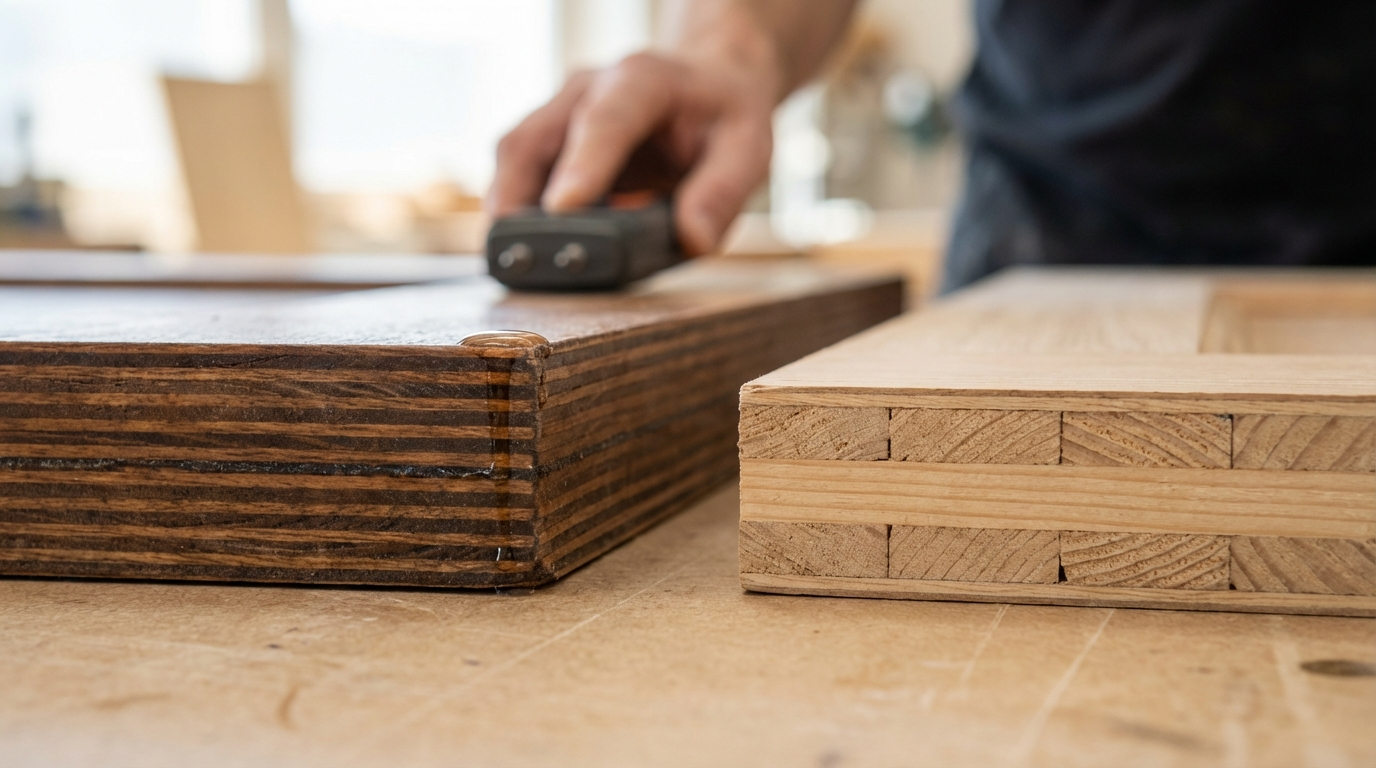
Top error: Picking MR for exterior based on dealer discounts – it delaminates in first monsoon, costing double rework. Buyers ignore core: finger-jointed strips in cheap blockboard separate under hinges, unlike solid sawn wood.
Carpenter pitfalls: Undersizing thickness (16mm as "18mm") warps under humidity; skimping lipping exposes edges. Dealers palm off BWR as BWP – check boil test markings physically.
Quick Inspection Checks:
- Tap test: Uniform thud, no hollows.
- Edge press: No separation; glue lines tight.
- Weight: Heavier = denser core.
- Stamp: IS:303 MR, IS:710 BWP; verify font.
- Moisture meter: <12% ideal.
In dealer yards, reject warped stacks – stored flat? Avoid "sale" rejects with hidden defects. These skips cause 60% of complaints in Indian forums.
Trade-offs and Limitations of Door Plywood Choices
Durability vs cost: BWP lasts 15-20 years outdoors but triples interior budgets unnecessarily. MR saves 40% but limits to indoors – trade-off favors zoning rooms wisely.
Moisture vs finish: Waterproof glues yellow under UV; veneered BWP needs frequent repolish (Rs. 1,500/door yearly). Blockboard's texture suits paint but dents easier than ply.
Screw-holding vs weight: Blockboard grips best but weighs 25kg/sheet vs 18kg ply – strain for upstairs installs sans lifts. Finish trade: Laminates hide ply defects but peel in steam; veneers showcase grain at premium.
Edge cases: High-rise winds demand 25mm+; termite zones add treatment cost (+20%). CNC limits blockboard's irregularity. Limitations surface in hybrids: MR-block combos work but glue mismatch fails.
Balance via layers: PU + lipping mitigates most, extending life 5 years across grades.
Frequently Asked Questions
Is blockboard better than plywood for interior doors?
Blockboard often outperforms plywood for interior doors in screw-holding strength, making it ideal for heavy hinges or modular wardrobes where fittings shift often. Its strip core provides rigidity without veneers telegraphing through paint, common in Indian apartments. However, quality varies – cheap versions with finger-joints delaminate faster than uniform plywood. Choose blockboard if carpenters handle torque-heavy installs; otherwise, MR plywood suffices for flush designs at similar cost. In humid Pune, seal both equally to avoid edge issues.
Can I use MR plywood for exterior doors?
MR plywood works poorly for exterior doors, as its glue breaks down in direct rain, causing swelling and warping within 6-12 months – a frequent failure in monsoon-heavy regions like Odisha. Reserve it for interiors; upgrade to BWP for outsides. If budget-constrained, BWR offers a middle ground for covered porches, but always lip edges and polish thickly. Indian dealers push MR everywhere; verify use-case yourself to dodge replacements.
What thickness of plywood is best for doors?
18mm is standard for most doors, balancing weight and strength – 12mm for light interiors, 25mm for exterior mains against wind. Thinner risks sagging; thicker adds unneeded cost (Rs. 30/sq ft extra). In India, "19mm" often measures 18-19mm nominally; caliper-check at purchase. Carpenters in Chennai favor 19mm BWP for gates, as it holds frames without reinforcement in humid swings.
Is BWP marine plywood worth the extra cost for doors?
BWP marine plywood justifies its 50-100% premium for exterior doors through superior glue that resists boiling water, preventing delamination in Kerala rains or Mumbai humidity. Indoors, it's overkill – save for blockboard. Long-term, it cuts maintenance by 70%, vital in coastal homes where MR fails yearly. Factor regional logistics: pricier in East due to transport, but dealer verification ensures value.
How to check plywood quality for doors at the dealer?
Inspect visually first: straight edges, no knots/telegraphing; tap for solid sound sans hollows. Press core for voids; check stamps for IS grades (303 MR, 710 BWP). Moisture under 12%; weight test for density. In Indian yards, reject damp stacks – common post-monsoon. Bring carpenter for load bend test. These steps filter 30% subpar stock, saving rework.
Should I use plywood or solid wood for doors?
Plywood trumps solid wood for doors in stability – no twisting from grain, uniform screw-holding, and half the price (Rs. 100 vs 200/sq ft). Solid teak suits premium villas but warps in humidity without kiln-drying. Plywood's layers handle India's RH swings better, especially BWP exteriors. Trade: less "natural" feel, but laminates mimic it. For budgets under Rs. 15,000/door, plywood wins.
What finish is best for plywood doors in India?
PU polish (3-4 coats) protects plywood doors best against humidity and scratches, lasting 5-7 years in interiors – essential for MR grades. Exteriors need epoxy primer + PU for UV/moisture. Laminates suit moisture zones like kitchens; veneers for aesthetics but chip easier. In Delhi dust, semi-gloss PU hides fingerprints. Avoid water-based indoors; they yellow fast. Cost: Rs. 20-40/sq ft extra, but extends life double.
Disclaimer: This content is provided for general informational purposes based on industry practices and publicly available information. Product specifications, standards, prices, and availability may vary by manufacturer, region, and time. Readers should independently verify details with manufacturers, dealers, or qualified professionals before making purchase or construction decisions.Want Plywood Suggestions?
Share a few details and a Apple Ply specialist will suggest suitable brands and connect you to responsive dealers.