How to Spot Fake vs Original Plywood (Ensure Genuine Brands)
Worried about fake plywood? Learn how to spot genuine branded plywood by checking brand stamps, ISI marks, build quality, and more.
Understanding Genuine Plywood: Key Signs to Look For Right Away
In the Indian plywood market, spotting genuine branded plywood boils down to a few straightforward checks you can do on-site at the dealer or supplier yard. Start by examining the brand stamp and ISI certification mark clearly embossed on the surface or edges—these should be sharp, legible, and consistent across all sheets, not faded or handwritten. Genuine sheets from brands like Apple Ply or Greenply carry these as standard, indicating compliance with Bureau of Indian Standards for strength and safety.
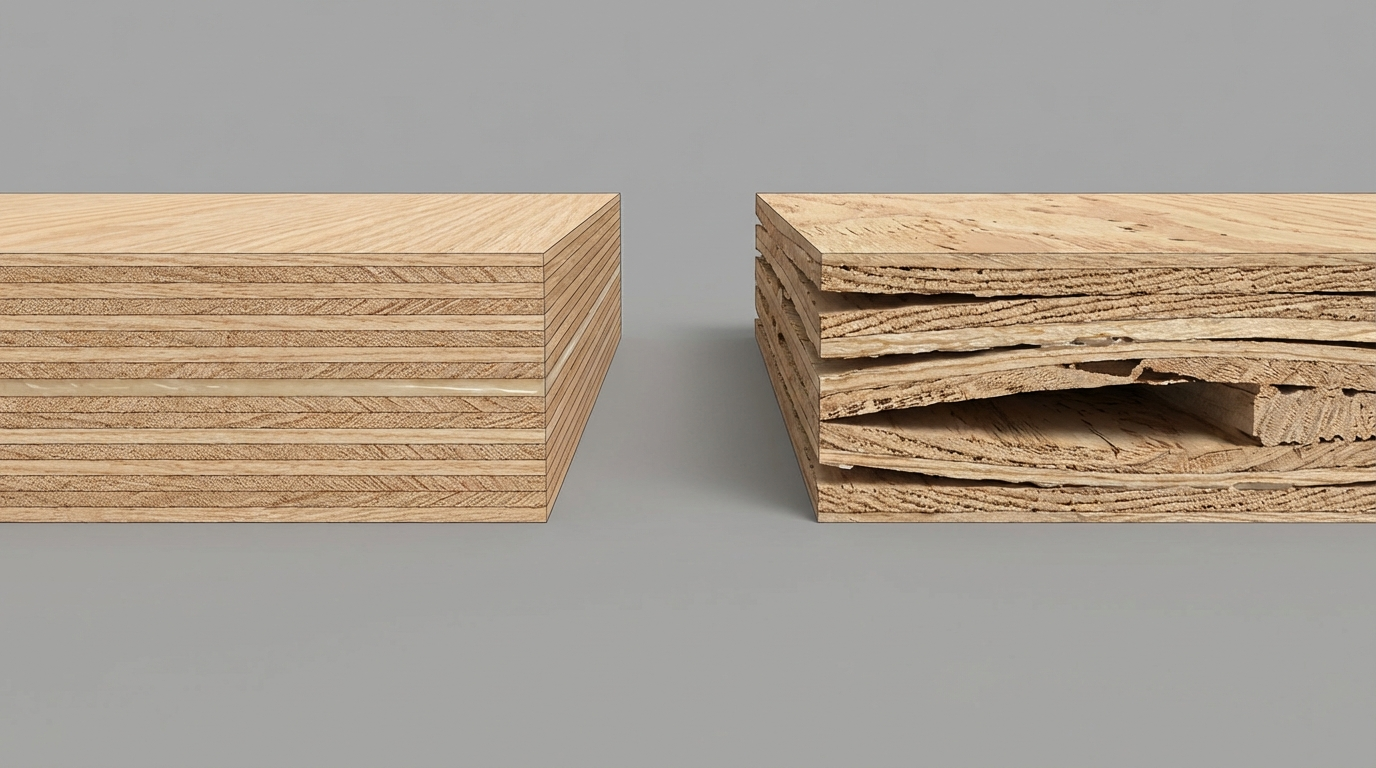
Next, run your hand over the surface: original plywood feels uniformly sanded, smooth without pits or rough patches, reflecting quality manufacturing control. Weigh a sample—authentic MR or BWR grade feels heavier due to denser hardwood core, while fakes often use light poplar or recycled waste. Cut a small edge if possible; real plywood reveals tight glue lines with no voids or delamination, and the wood grain aligns properly without filler patches.
Why prioritize these? In India’s bustling wholesale markets from Delhi to Kochi, fakes flood in during peak construction seasons, mimicking packaging but failing under basic scrutiny. A quick smell test helps too—genuine emits a mild wood aroma, not chemical stench from cheap adhesives. Perform these within minutes at purchase to avoid post-installation headaches like warping in humid kitchens.
For South Indian buyers, especially in modular kitchen setups, insist on verifying these on every sheet before loading. Coastal areas like Chennai face salt-laden air accelerating fake plywood decay, so these checks prevent costly replacements. Dealers might rush you, but pause—genuine quality justifies the extra moment, ensuring your investment lasts 15-20 years versus fakes crumbling in 2-3.
Real-world scenario: A Bangalore homeowner skipped the stamp check, bought discounted "branded" sheets, and watched cabinets swell during first monsoon. Logical reasoning: Manufacturers embed markings during pressing for traceability; absence signals backyard operations cutting corners on glue and preservatives.
Quick Checklist for Immediate Verification
- ISI mark (IS 303 for MR, IS 710 for BWR): Crisp, not stickers.
- Brand logo: Uniform font, depth-embossed.
- Surface: Sanded evenly, no glue squeeze-out.
- Edges: Straight, sealed properly.
Master these basics, and you’ve answered 80% of the authenticity puzzle upfront.
Decoding Physical Markings: Stamps, Logos, and Certifications Explained
Physical markings serve as the first line of defense against counterfeits, designed by manufacturers to withstand handling and basic wear. On genuine plywood, the brand name appears prominently on the face and at least two edges, etched during the hot-pressing stage for permanence. Look for consistency: every sheet in a bundle matches exactly in font size, spacing, and depth—fakes often vary slightly due to manual stamping.
ISI marks, mandatory for commercial grades, specify the standard like IS 1658 for particleboard or IS 303 for softwood plywood. These aren’t painted on; they’re pressed in, resisting smudging. In India, where enforcement varies by region, genuine producers over-mark for visibility, while fakes slap on stickers that peel under thumb pressure.
Batch numbers and manufacturing dates provide traceability—originals list plant code, month/year, and thickness (e.g., 18mm). This matters for warranties, as brands track batches for quality control. Absent or mismatched? Walk away.
In dealer-driven South India markets like Coimbatore’s plywood hubs, savvy buyers cross-check markings against the invoice. Monsoon humidity warps fake stamps quickly, exposing them during storage. Logical edge: Pressed markings survive stacking and transport; printed ones don’t, revealing shortcuts.
Expand to packaging: Genuine bundles wrap in branded polythene with QR-like codes (not scannable fakes) and stack neatly. A Mumbai contractor once rejected a load because edge stamps faded unevenly—post-inspection confirmed subpar glue. For CNC-cut modular furniture in Hyderabad, precise markings ensure compatibility; fakes derail automated routing.
Why this depth? Indian buyers face 20-30% fake infiltration per industry estimates from experience—markings filter most out efficiently.
Marking Red Flags to Avoid
- Handwritten or ink-jet prints.
- Mismatched stamps across sheets.
- No batch/date codes.
- Stickers over wood.
Assessing Build Quality: From Surface Finish to Core Strength
Build quality reveals manufacturing rigor absent in fakes. Genuine plywood starts with selected hardwood plies—teak, sal, or gurjan—laid symmetrically for balanced strength. Tap the surface: a solid, resonant thud indicates dense core; hollow echoes signal voids from poor gluing.
Examine cross-sections: Originals show even ply thickness (1.5-2mm each), tight glue lines under 0.2mm, no air pockets. Fakes overload cheap veneers, causing telegraphing—bumps mirroring inner flaws. Sanding quality shines here: machine-sanded originals are butter-smooth; hand-sanded fakes gritty.
Edges tell tales—straight, sealed with resin to block moisture ingress. In India’s variable climates, this prevents edge swelling. Flexibility test: Bend gently; genuine resists cracking, fakes splinter.
South India’s coastal exposure amplifies issues—Chennai kitchens demand sealed edges against brine air. Modular wardrobes via CNC need flawless flats; fakes bow under router bits. A Kerala dealer insight: Weigh sheets—genuine 18mm MR hits 35-40kg; lighter fakes use rice straw fillers.
Failure case: Pune villa flooring buckled after rains because fake cores delaminated—genuine would flex uniformly. Trade-off: Premium build costs more upfront but saves 50% on repairs.
Logical why: Automated lines ensure ply alignment; manual fakes can’t match precision.
Hands-On Quality Tests
- Tap test for density.
- Edge inspection for sealing.
- Flex for integrity.
- Scratch test—surface resists nails.
Testing Moisture Resistance: Critical for Indian Homes
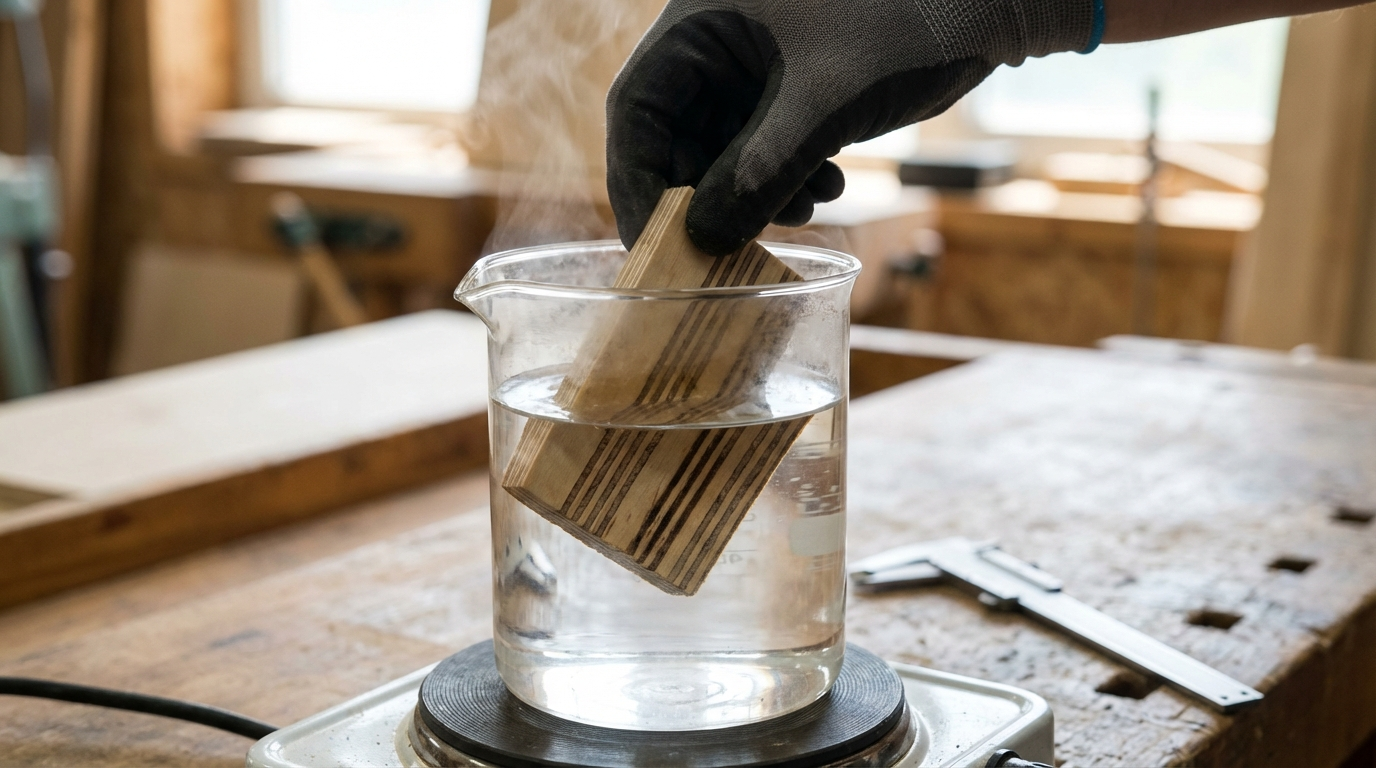
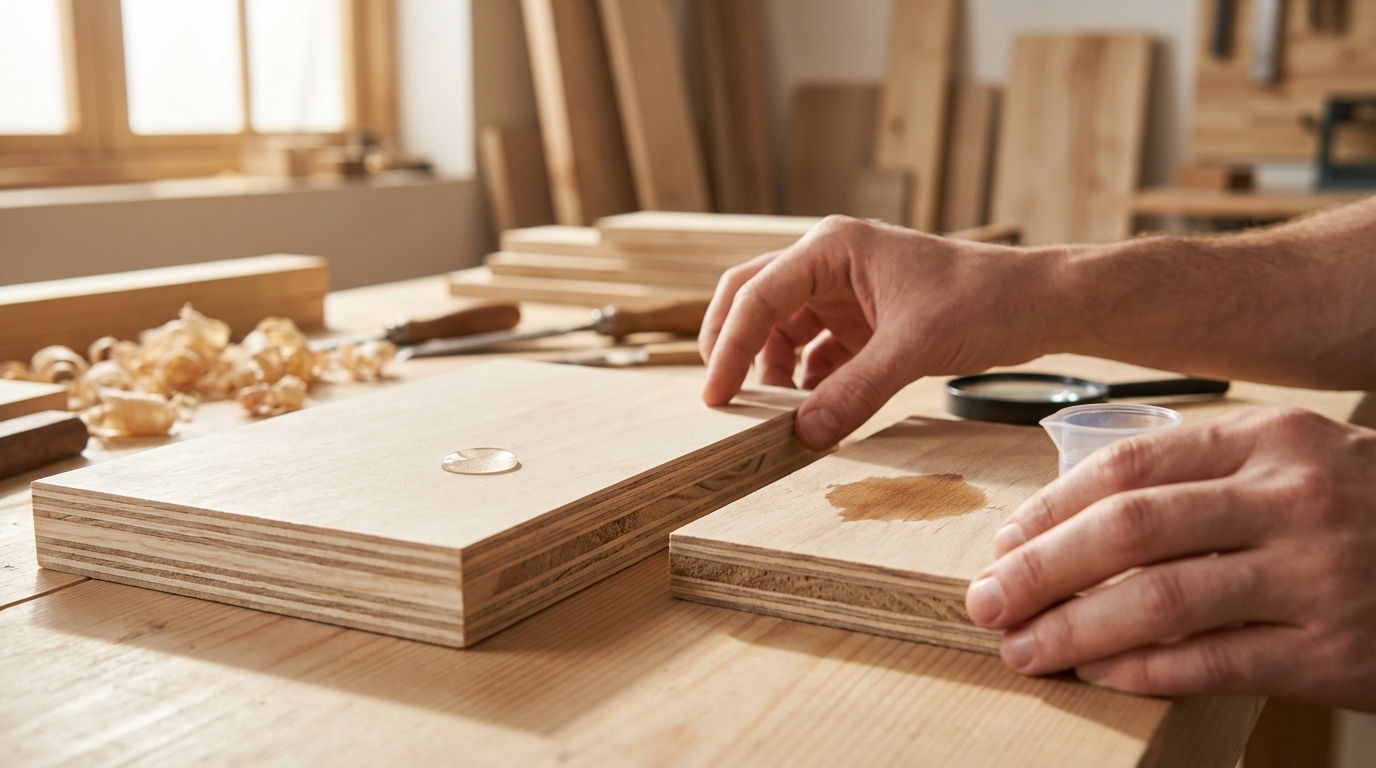
Moisture resistance separates weekend warriors from long-term performers, especially in humid India. Genuine MR (Moisture Resistant) grade absorbs under 12% water in 24-hour boil tests internally; BWR (Boiling Water Resistant) under 8%. Simulate at site: Dampen edge with wet cloth for 30 minutes—originals show no swelling or color change; fakes darken and bloat.
Glue type matters: Phenol-formaldehyde in originals bonds permanently even wet; urea-formaldehyde in fakes hydrolyzes. Check by prying a corner sample—genuine holds; fake separates cleanly.
In South India’s monsoons, Kochi homes flood basements—moisture-proof plywood survives submersion. Coastal Vizag modular kitchens face steam; genuine resists delam. Carpenter tip: Spray water on face; originals bead up from surface treatment.
Why India-specific? 70% homes lack dehumidifiers; fakes warp cabinets in months. A Hyderabad flat redo cost triple after fake shelves sagged in rains—genuine endures.
Edge case: Overkill BWR for dry bedrooms wastes money; match to use. Logical: Resins dictate performance; cheap ones fail chemistry basics.
DIY Moisture Checks
- Wet cloth edge test.
- Boil scrap (if allowed).
- Humidity exposure overnight.
These confirm lab-grade resistance practically.
Why Spotting Fakes Matters Deeply in the Indian Market
India’s plywood scene blends booming demand with rampant counterfeiting, driven by 15-20% price gaps. Genuine brands invest in R&D for termite-proofing and fire retardancy; fakes recycle scrap, risking health from formaldehyde off-gassing. In unorganized sectors supplying 60% market, buyers pay premium for peace.
Construction boom—apartments, villas—amplifies stakes: Fake partitions collapse under load, violating building codes. Health angle: VOC emissions trigger allergies in sealed AC homes.
South India context: Monsoon fury in Kerala demands BWR; coastal corrosion in Mumbai erodes fakes fast. Dealer networks in Tamil Nadu push volumes over quality—insist on tests. Modular kitchens exploding in Bengaluru need CNC-grade flats; fakes splinter bits.
Failure narrative: Chennai family’s wardrobes molded post-cyclone—fake glue dissolved. Economic why: Genuine lasts 20 years, ROI triples; fakes yearly fixes drain budgets.
Bigger picture: Supporting ethical mills sustains jobs, reduces deforestation via certified sourcing. Buyer power shifts market—demand genuine, fakes fade.
Trade insight: Prices fluctuate 10-15% seasonally; anomalies signal fakes.
Regional Hotspots for Counterfeits
- North: Delhi wholesale yards.
- West: Gujarat mills.
- South: Kerala backyards.
- East: Kolkata imports.
Common Mistakes Buyers and Carpenters Overlook
Even pros falter: Top error—trusting packaging alone. Flashy duplicates fool 40% first-timers; rip open, check innards. Dealers quote "same as branded" sans proof—demand samples.
Carpenters cut corners: Installing sans moisture test, assuming site conditions mild. In humid Pune, untreated fakes balloon joints. Ignoring thickness variance—fakes taper 16mm to 14mm, ruining flush fits.
Buyers chase discounts over 20%; genuine dips rarely exceed 10%. South India pitfall: Monsoon buys without sealing checks—edges drink water. CNC shops load fakes, dulling tools prematurely.
Narrative: Coimbatore modular firm lost client trust after fake cabinets warped; switched to verified, business boomed. Logical avoid: Pre-purchase audit beats post-regret.
Another: Over-relying verbal warranties—get stamped invoices. Fails cascade: Termite infestation from untreated cores in Goa villas.
Avoidable Pitfalls List
| Mistake | Consequence | Fix |
|---|---|---|
| Packaging trust | Internal fakes | Inspect sheets |
| Deep discounts | Quality compromise | Verify price norms |
| No moisture test | Warping | Site damp test |
| Thickness ignore | Fit issues | Calipers check |
Trade-Offs, Limitations, and When to Walk Away
No plywood is perfect—genuine costs 20-40% more, straining tight budgets. MR suits interiors; BWR overkill for bedrooms hikes expense without gain. Limitations: Even originals dent under heavy impacts; pair with laminates.
Edge cases: Humid basements need marine ply, pricier still. Fakes tempt for sheds—don’t; fire risk high. Walk away if: Stamps missing, weight off 10%, dealer dodges tests, or no invoice.
South India: Monsoon modulars demand BWR despite premium; coastal skips cheapos. Trade-off: Stockpiling genuine risks storage warp sans cover.
Carpenter view: Fakes machine faster initially but fail finishing. Decision: Lifetime cost trumps upfront—genuine pays back.
Narrative: Vizag builder cheaped out on partitions; monsoon redo cost double. When not: Temporary sites okay low-grade, but homes no.
Step-by-Step Decision Framework for Confident Purchases
Framework streamlines choices: Step 1—Define need (kitchen? BWR; wardrobes? MR). Step 2—Budget genuine range (Rs 70-120/sqft). Step 3—Shortlist dealers with history. Step 4—Site visit: Markings, quality, moisture tests. Step 5—Sample cut/install test. Step 6—Invoice with details. Step 7—Post-buy monitor.
Table distills:
| Feature | Genuine Signs | Fake Warnings | Action |
|---|---|---|---|
| Markings | Embossed, uniform | Printed, vary | Reject if off |
| Weight/Feel | Heavy, solid | Light, hollow | Weigh sample |
| Moisture | Resists swell | Absorbs fast | Wet test |
| Price | Market norm | Too low | Compare |
| Dealer | Allows checks | Rushes | Walk |
Apply sequentially for 95% accuracy. South India tweak: Add termite probe. Builds buyer confidence logically.
Frequently Asked Questions on Spotting Plywood Authenticity
Can I spot fakes just by looking at the price? Price flags issues but isn’t sole—genuine promotions dip 10-15%, deeper screams fake. Cross with physical checks; cheap fillers mimic briefly but fail durability. Indian markets volatile; benchmark local norms.
What if the dealer won’t let me test moisture on-site? Red flag—genuine suppliers welcome scrutiny. Buy sample sheet home, test fully; refusal means hiding flaws. South India dealers competitive; shop alternatives.
Do all branded plywood have ISI marks? Legit commercial ones must; absence voids claims. Verify crispness—fakes fake it poorly. For modular CNC, certified ensures machinability.
How does humidity affect fake detection in monsoons? Accelerates reveals—fakes swell visibly while stored. Insist pre-buy exposure test; coastal South needs extra vigilance.
Is thicker plywood always better or genuine? No—18mm standard; fakes pad unevenly. Measure multiple spots; consistency key.
What about imported plywood—easier to fake? Yes, lacks local stamps; demand Indian standards compliance. Prefer domestic for traceability.
Can carpenters certify authenticity? Experienced ones spot via cut quality, but verify yourself—avoids collusion.
How long do genuine sheets last in Indian kitchens? 15-25 years with care; match grade to steam exposure.
Disclaimer: This content is provided for general informational purposes based on industry practices and publicly available information. Product specifications, standards, prices, and availability may vary by manufacturer, region, and time. Readers should independently verify details with manufacturers, dealers, or qualified professionals before making purchase or construction decisions.Want Plywood Suggestions?
Share a few details and a Apple Ply specialist will suggest suitable brands and connect you to responsive dealers.