How to Identify Genuine BWP Plywood: Complete Verification Guide
Learn to identify genuine BWP plywood - check IS 710 marks, perform water tests & verify certification. Protect yourself from fake products.
Quick Answer
To identify genuine BWP plywood, verify the IS 710 certification mark stamped directly on the sheet, check the manufacturer's CML (Certificate of Marking License) number on the BIS website, and perform a boiling water test where authentic BWP plywood withstands 72+ hours without delamination. Always inspect core quality, edge construction, and demand test certificates from dealers.
At a Glance: Key Verification Steps
- ISI Mark Check: Look for IS 710 stamp printed directly on the plywood surface, not just on packaging
- CML Verification: Cross-check the seven-digit manufacturer code on the official BIS website
- Boiling Water Test: Genuine BWP survives 72+ hours in boiling water without layer separation
- Phenolic Resin Indicator: Authentic BWP uses phenol-formaldehyde glue with minimal chemical odour
- Core Inspection: Gap-free, uniformly coloured hardwood veneers visible at edges
- Weight Test: Genuine BWP feels noticeably heavier due to high-density hardwood construction
Understanding BWP Plywood and Why Verification Matters
BWP stands for Boiling Water Proof plywood—the highest grade of waterproof plywood available in the Indian market. This grade is specifically engineered to withstand prolonged water exposure, making it essential for kitchens, bathrooms, outdoor applications, and coastal regions where humidity levels remain consistently high throughout the year.
The critical distinction between BWP and lower grades like BWR (Boiling Water Resistant) lies in the adhesive technology and manufacturing standards. Genuine BWP plywood is bonded with phenol-formaldehyde resin, which creates a permanent waterproof bond between veneer layers. This resin can withstand complete water immersion indefinitely, unlike the melamine-urea formaldehyde used in BWR grades that offers only moderate moisture resistance.
In the Indian market, counterfeit and mislabelled plywood is a growing concern. Some manufacturers pass off BWR or even commercial-grade plywood as BWP by simply changing labels. The consequences of using fake BWP plywood are severe—delamination within months, warping during monsoon seasons, fungal growth in humid areas, and complete structural failure in wet zones like under-sink cabinets.
Why the Indian Market Requires Extra Vigilance
India's dealer-driven plywood market creates unique verification challenges. Many buyers rely entirely on carpenter recommendations or dealer claims without independent verification. In Tier-2 and Tier-3 cities, access to certified products is limited, and local dealers may unknowingly stock counterfeit products. Additionally, the price difference between genuine BWP and fake alternatives can be 30-50%, creating strong incentives for unscrupulous suppliers to mislabel products. Understanding verification methods protects both your investment and the longevity of your furniture.
How to Identify Genuine BWP Plywood: The IS 710 Certification Check
The Bureau of Indian Standards (BIS) certification is your first and most reliable defence against fake BWP plywood. IS 710 is the specific Indian standard that governs marine-grade or boiling water proof plywood manufacturing. Any plywood claiming BWP status must comply with this standard.
What to Look for on the Plywood Sheet
Genuine BWP plywood carries certification marks stamped directly onto the sheet surface, not merely printed on outer packaging. The key elements to verify include the ISI mark (a triangular logo), the standard number IS 710, the manufacturer's name and logo, and a seven-digit CML (Certificate of Marking License) number unique to each manufacturer.
The CML number is particularly important for verification. This number can be cross-checked on the official BIS website to confirm whether the manufacturer holds a valid license to produce IS 710 certified plywood. If a dealer cannot show you the CML number or if the number doesn't verify online, treat the product with suspicion.
Red Flags in Certification Marks
Counterfeiters have become sophisticated, but certain indicators reveal fake certification. Watch for blurry or poorly printed ISI marks, certification stamps only on packaging but absent from the sheet itself, missing or incomplete manufacturer details, and CML numbers that don't match BIS records. Some fake products display "ISI 303" (the BWR standard) while claiming BWP performance—this is a clear indication of mislabelling.
Physical Verification Tests You Can Perform
Beyond certification checks, several physical tests help verify BWP authenticity. These tests examine the actual construction and material quality of the plywood, providing practical verification methods you can perform at the dealer's showroom or your site.
The Boiling Water Test
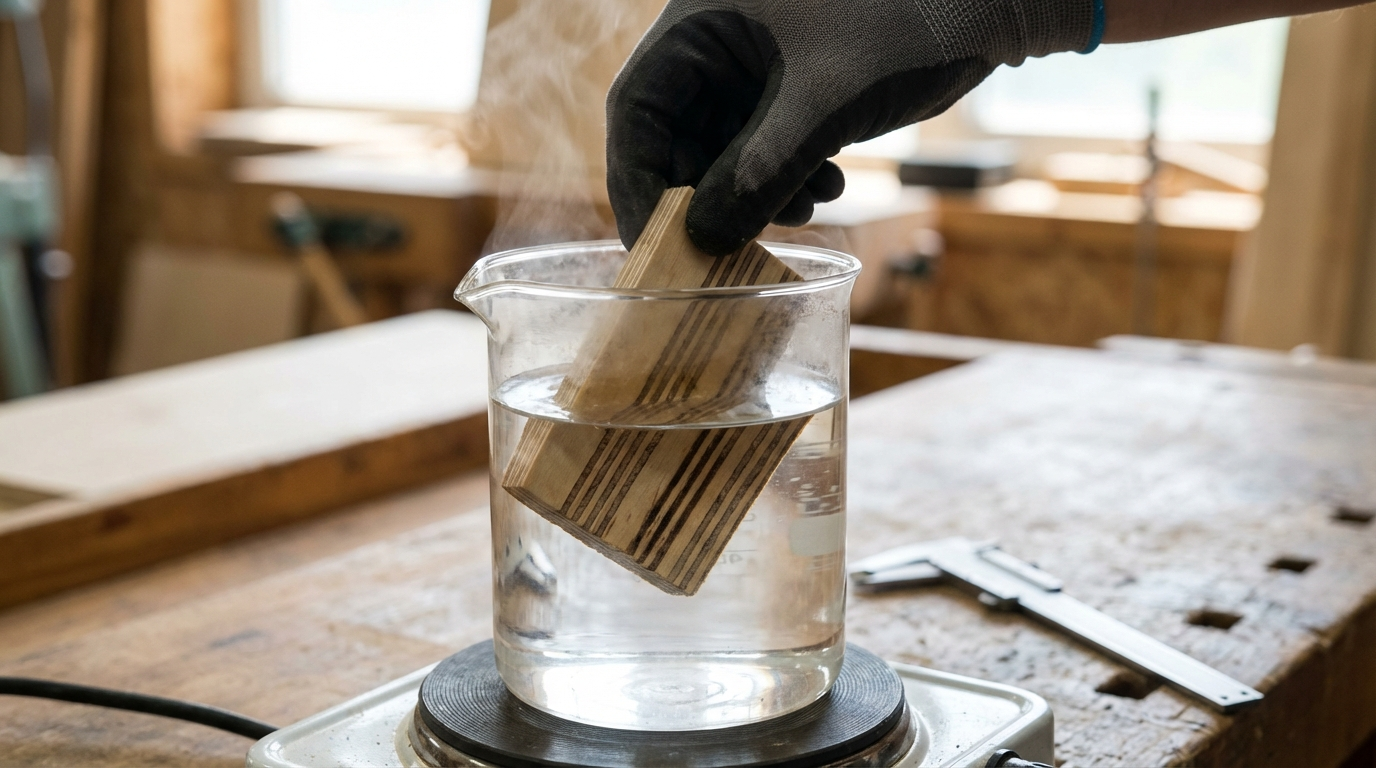
The definitive test for BWP plywood is the boiling water immersion test. To perform this test, cut a small sample (approximately 6 inches square) from the plywood sheet. Submerge this sample in boiling water and maintain the boil continuously for at least 72 hours. Genuine BWP plywood will show no delamination, layer separation, or structural weakening after this period. Any peeling of layers, swelling, or softening indicates the plywood is not true BWP grade.
While most buyers cannot perform a full 72-hour test before purchase, even an 8-hour boiling test at home can help verify claims. BWR plywood typically shows stress or early delamination within 6-8 hours, while genuine BWP remains completely stable.
Weight and Density Assessment
Authentic BWP plywood uses high-density hardwood veneers throughout its construction, making it noticeably heavier than lower-grade alternatives. When comparing sheets of identical thickness, genuine BWP should feel substantially heavier. Lightweight plywood often indicates the use of inferior softwood cores or recycled materials that cannot provide true waterproofing.
Edge Inspection Method
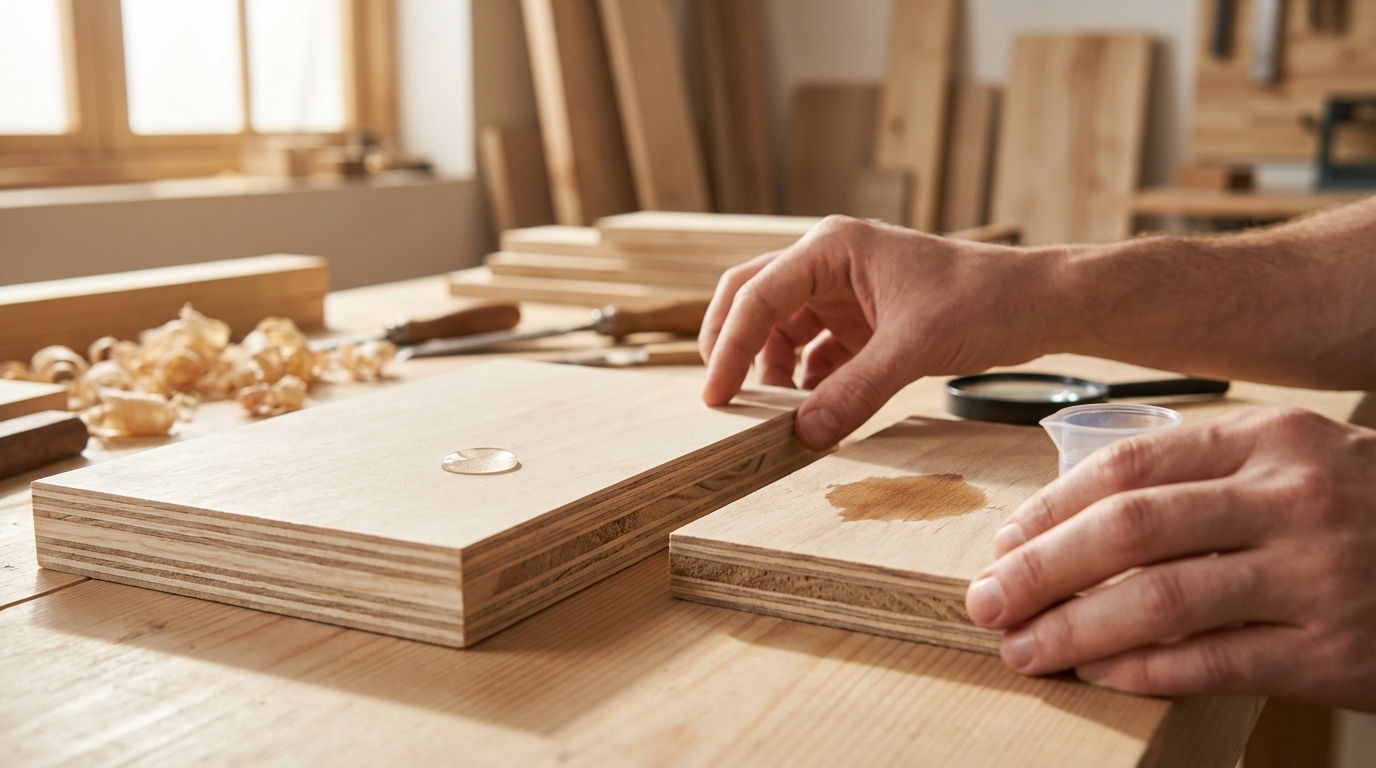
Examine the cut edges of the plywood carefully. Quality BWP plywood displays tightly packed veneer layers with no visible gaps, voids, or hollow spaces between layers. The veneer colouring should be uniform, indicating consistent hardwood species throughout. Irregular colouring, visible gaps, or loosely bonded layers suggest poor manufacturing that will fail under water exposure.
The Smell Test
While unconventional, the odour of plywood provides useful information. High-quality BWP plywood uses phenol-formaldehyde resin, which has a relatively mild smell. Strongly chemical or pungent odours often indicate cheaper urea-formaldehyde adhesives used in non-waterproof grades. This test is particularly useful when comparing different products side by side.
BWP Plywood Verification: Comparison with Other Grades
| Feature | BWP (IS 710) | BWR (IS 303) | MR/Commercial | Fake "BWP" |
|---|---|---|---|---|
| Adhesive Type | Phenol-Formaldehyde | Melamine-Urea Formaldehyde | Urea-Formaldehyde | Usually UF/MUF |
| Boiling Water Resistance | 72+ hours | Up to 8 hours | 2-3 hours maximum | Fails within hours |
| ISI Standard | IS 710 | IS 303 | IS 303 or none | Fake/Missing marks |
| CML Verification | Verifiable online | Verifiable online | May or may not have | Unverifiable |
| Core Quality | Premium hardwood | Good hardwood | Mixed/Softwood | Inferior materials |
| Weight (18mm sheet) | Heavy (35-40 kg) | Medium-Heavy | Light-Medium | Usually light |
| Price Range (₹/sq ft) | ₹130-180 | ₹95-130 | ₹55-90 | ₹80-120 (deceptive) |
| Best For | Wet areas, marine use | Kitchens, humid rooms | Dry interiors only | Nothing—avoid |
How to Choose Authentic BWP Plywood: Buyer's Checklist
Purchasing genuine BWP plywood requires systematic verification at multiple stages. Following this checklist ensures you avoid counterfeit products and get the performance you're paying for.
Pre-Purchase Verification Steps
- Demand the actual sheet inspection: Never purchase based on samples alone—verify marks on the exact sheets you're buying
- Verify CML number online: Use the BIS website to confirm manufacturer registration before payment
- Request test certificates: Reputable manufacturers provide test reports showing moisture resistance and bonding strength
- Compare weight across brands: Lift sheets from different manufacturers—significantly lighter options are suspect
- Check edge construction: Examine cut edges for gaps, voids, and veneer quality before finalising
- Ask for warranty documentation: Genuine brands offer written warranties with clear terms
- Photograph certification marks: Document ISI stamps and CML numbers for future reference
When NOT to Choose Budget BWP Options
Avoid suspiciously cheap "BWP" plywood that sells at prices closer to BWR ranges. In metro cities, genuine BWP plywood from reputable manufacturers typically costs ₹130-180 per square foot for 18mm thickness. Products priced significantly below this range almost certainly use inferior adhesives or core materials that will fail the waterproofing test.
Similarly, avoid purchasing from dealers who cannot provide verifiable manufacturer information or who discourage you from inspecting sheets closely. Legitimate dealers welcome verification because it builds trust. Resistance to inspection is a warning sign of counterfeit products.
Common Mistakes When Buying BWP Plywood
Even informed buyers make errors when purchasing BWP plywood. Understanding these common mistakes helps you avoid costly failures in your furniture and interiors.
Mistake 1: Trusting Packaging Over Sheet Marks
Many buyers verify the ISI mark on outer packaging and assume the sheets inside are certified. Counterfeiters exploit this by wrapping uncertified plywood in branded packaging. Always verify certification stamps on the actual plywood surface before accepting delivery.
Mistake 2: Relying Solely on Dealer Claims
In India's dealer-driven market, buyers often trust verbal assurances without verification. Statements like "This is the same material used by XYZ brand" or "This is factory-fresh BWP" mean nothing without documentary evidence. Demand written invoices specifying IS 710 grade and CML numbers.
Mistake 3: Ignoring Core Quality During Price Negotiation
Aggressive price negotiation sometimes leads dealers to substitute lower-quality products while maintaining BWP claims. If a dealer suddenly offers significant discounts after negotiation, verify that you're still receiving the same certified product you initially inspected.
Mistake 4: Skipping the Sample Test
Many buyers skip the boiling water test because it requires time and effort. However, testing even one sample from your purchased lot can reveal problems before furniture fabrication begins. A failed test at this stage costs far less than replacing delaminated kitchen cabinets later.
Quick Inspection Checks at Delivery
- Verify ISI 710 stamp presence on every sheet, not just top sheets in the stack
- Check for uniform thickness across all sheets using a calliper
- Inspect edges for gaps or voids that indicate poor manufacturing
- Confirm sheet dimensions match your order specifications
- Photograph any questionable marks for dispute resolution
Price Guide: Genuine BWP Plywood Costs in India
Understanding legitimate price ranges helps identify potentially fake products. Genuine BWP plywood commands premium pricing due to its superior adhesive technology and hardwood construction.
Typical Price Ranges by Thickness and Grade
| Thickness | Economy Brand (₹/sq ft) | Mid-Range Brand (₹/sq ft) | Premium Brand (₹/sq ft) | Common Applications |
|---|---|---|---|---|
| 6mm BWP | ₹50-65 | ₹65-80 | ₹80-100 | Drawer bottoms, backing |
| 12mm BWP | ₹90-110 | ₹110-130 | ₹130-155 | Shelving, partitions |
| 18mm/19mm BWP | ₹130-150 | ₹150-170 | ₹170-200 | Cabinets, carcasses |
| 25mm BWP | ₹170-200 | ₹200-230 | ₹230-270 | Structural, heavy-duty |
Note: Prices reflect metro city rates for 2024-25. Tier-2/Tier-3 cities may see 10-15% variation due to transport costs. GST at 18% applies additionally.
Factors Affecting BWP Plywood Pricing
Price variations in genuine BWP plywood stem from several factors. Core wood species significantly impact cost—gurjan and other premium hardwoods command higher prices than mixed hardwood cores. Calibrated plywood (precisely machined for uniform thickness) costs more but provides superior results for modular kitchen applications and CNC machining.
Brand reputation also influences pricing. Established manufacturers with consistent quality records price their products higher than newer entrants. This premium often reflects better quality control, more reliable certification, and stronger warranty support—factors worth considering beyond the initial cost.
Regional Considerations for BWP Plywood Verification
India's diverse climate zones create varying requirements for BWP plywood verification and selection. Understanding regional factors helps you make appropriate choices for your specific location.
Coastal and High-Humidity Regions
In coastal cities like Mumbai, Chennai, Kochi, and Kolkata, humidity levels remain elevated throughout the year, not just during monsoons. Here, genuine BWP plywood is essential even for applications that might use BWR elsewhere. The salt-laden air accelerates adhesive degradation in non-waterproof grades, making verification especially critical. Buyers in these regions should prioritise premium brands with stronger termite and borer treatments alongside waterproofing.
Monsoon-Prone Inland Areas
Cities experiencing intense monsoon seasons (Pune, Bangalore, Hyderabad) face periodic high-humidity challenges. For kitchen and bathroom applications, BWP remains the recommended choice. However, for general furniture in well-ventilated rooms, properly verified BWR may suffice, offering cost savings without significant risk.
Dry Climate Zones
In drier regions like Rajasthan and parts of Gujarat, the primary concern shifts from moisture to termite protection. While BWP plywood offers both waterproofing and typically superior termite treatment, buyers should explicitly verify borer-proof certification. Some manufacturers offer enhanced termite treatments as optional upgrades worth considering in these regions.
Carpenter's Perspective on BWP Plywood Verification
Experienced carpenters develop practical methods for identifying genuine BWP plywood through years of working with different materials. Their insights complement formal verification methods.
Workshop Indicators of Quality
Carpenters report that genuine BWP plywood behaves differently during cutting and finishing. Quality BWP produces clean cuts without excessive splintering, indicating strong inter-layer bonding. The sawdust has a characteristic reddish-brown colour from phenolic resin, unlike the lighter dust from urea-formaldehyde bonded sheets.
Screw holding capacity also differs noticeably. Genuine BWP with dense hardwood cores holds screws firmly without requiring plugging or reinforcement. Inferior products often show weak screw retention, requiring additional hardware that increases fabrication time and cost.
Long-Term Performance Observations
Carpenters who revisit their work for maintenance report significant durability differences between verified BWP and suspect products. Genuine BWP kitchen cabinets typically show minimal degradation even after 8-10 years in active use. Fake "BWP" often develops visible edge swelling within 2-3 monsoon seasons, particularly around sink areas and near cooking zones where steam exposure is high.
Frequently Asked Questions
What is the full form of BWP plywood?
BWP stands for Boiling Water Proof plywood. This designation indicates the plywood can withstand prolonged immersion in boiling water—specifically 72 hours or more—without delamination or structural failure. The waterproofing is achieved through phenol-formaldehyde resin bonding, which creates permanent waterproof joints between veneer layers. BWP is the highest waterproofing grade available in Indian plywood standards.
How do I verify IS 710 certification on plywood?
To verify IS 710 certification, first locate the ISI mark and CML (Certificate of Marking License) number stamped on the plywood sheet surface—not just on packaging. The CML number is a seven-digit code unique to each manufacturer. Visit the Bureau of Indian Standards website and use their license verification tool to confirm this number is valid and currently active. Also verify the manufacturer name matches what appears on the plywood.
Which is better BWP or BWR plywood for kitchen?
BWP plywood is better for kitchen applications, especially in areas exposed to water like under-sink cabinets, near dishwashers, and around cooking zones where steam exposure is common. BWR (Boiling Water Resistant) can handle moderate humidity but degrades with continuous water exposure. For complete kitchen builds in humid Indian climates, BWP provides longer-lasting protection despite higher initial costs, typically preventing replacement within 10-15 years.
How to perform boiling water test on plywood at home?
Cut a 6-inch square sample from the plywood sheet you wish to test. Place it in a large pot of water and bring to a rolling boil. Maintain the boil continuously for 72 hours, adding water as needed to keep the sample submerged. After 72 hours, remove and examine for layer separation, swelling, or softening. Genuine BWP shows no delamination. Even a shorter 8-hour test reveals most fake products.
What is the price of genuine BWP plywood in India?
Genuine BWP plywood prices typically range from ₹130-200 per square foot for 18mm/19mm thickness in metro cities, depending on brand tier and core quality. Premium brands with calibrated thickness command ₹170-200, while economy options start around ₹130-150. Prices in Tier-2/Tier-3 cities may vary by 10-15% due to transport costs. Products priced significantly below these ranges warrant careful verification.
Why is my BWP plywood delaminating despite certification?
Delamination in supposedly certified BWP plywood usually indicates counterfeit products with fake certification marks. However, genuine BWP can also fail if edge sealing is inadequate, allowing water penetration from exposed edges. Verify your product's CML number online first. If certification is valid, the issue likely stems from improper edge banding or unsealed cut edges during installation—ensure all exposed edges receive proper treatment.
Can BWP plywood be used for outdoor furniture?
Yes, BWP plywood can be used for outdoor furniture, but requires proper finishing and maintenance. While the adhesive bonds are waterproof, the wood veneers themselves require protection from direct sunlight and prolonged rain exposure. Apply marine-grade exterior finishes, seal all edges thoroughly, and plan for periodic refinishing every 2-3 years. For fully exposed outdoor applications, consider marine plywood with additional preservative treatments.
How to check if dealer is selling fake BWP plywood?
Verify authenticity by inspecting certification marks on actual sheets rather than samples, confirming CML numbers on the BIS website, comparing weight against known genuine products, and requesting written invoices specifying IS 710 grade. Be suspicious of prices significantly below market rates, resistance to sheet inspection, certification marks only on packaging, and inability to provide manufacturer documentation. Legitimate dealers welcome verification processes.
Disclaimer: This content is provided for general informational purposes based on industry practices and publicly available information. Product specifications, standards, prices, and availability may vary by manufacturer, region, and time. Readers should independently verify details with manufacturers, dealers, or qualified professionals before making purchase or construction decisions.Want Plywood Suggestions?
Share a few details and a Apple Ply specialist will suggest suitable brands and connect you to responsive dealers.