Plywood Craft Ideas: Creative Uses for Leftover Pieces
Creative ways to use leftover plywood pieces. DIY project ideas from home decor to furniture with step-by-step instructions.
Quick Answer
Leftover plywood pieces from furniture or interior projects make excellent raw material for creative DIY crafts—from wall shelves and plant stands to desk organizers, serving trays, and decorative home accents. With basic tools and finishing materials commonly available at Indian hardware stores, these scrap pieces can become functional items or thoughtful handmade gifts rather than ending up as waste.
At a Glance
- Plywood offcuts of 6mm to 12mm thickness work best for most craft projects
- Basic tools needed: jigsaw, sandpaper, wood glue, and paint or laminate
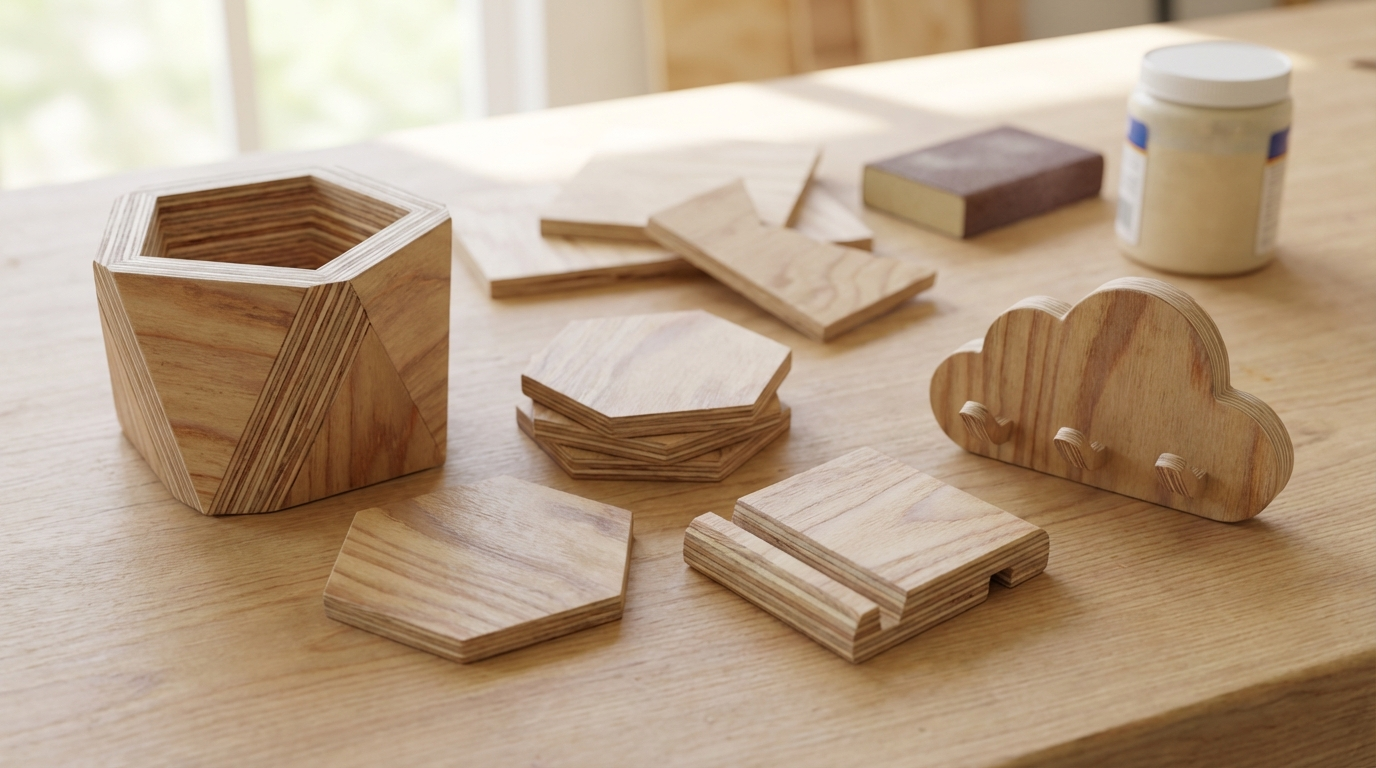
- Popular projects include floating shelves, picture frames, key holders, and children's toys
- MR-grade plywood suits indoor crafts; BWR-grade needed for planters or outdoor items
- Cost-effective upcycling—crafts typically require ₹50–200 in additional materials
- Ideal weekend activity with minimal carpentry skills required
Understanding Plywood Craft Ideas for Leftover Pieces
Every furniture project, whether a modular kitchen installation or a simple wardrobe, generates plywood offcuts. In Indian households, these remnants often accumulate in storerooms or get discarded. However, understanding how to repurpose these pieces transforms waste into value—a practice that makes both economic and environmental sense.
The key to successful plywood crafting lies in matching your available piece sizes and thicknesses with appropriate project types. A 12mm offcut from a wardrobe back panel suits different applications than an 18mm piece left over from a bed frame. Similarly, the grade of plywood you have determines what you can realistically create. MR (Moisture Resistant) grade pieces work perfectly for indoor decorative items, while BWR (Boiling Water Resistant) or Marine-grade offcuts can handle items exposed to occasional water contact like bathroom shelves or outdoor planters.
Why Plywood Works Better Than Solid Wood for Crafts
For craft purposes, plywood offers distinct advantages over solid timber scraps. The cross-laminated construction provides dimensional stability, meaning your finished craft item won't warp as dramatically with humidity changes—a significant concern in Indian conditions. Plywood also cuts cleaner with basic tools, doesn't split along grain lines, and accepts paint, veneer, and laminate finishes uniformly. These properties make it forgiving for beginners while offering enough versatility for intricate projects.
Assessing Your Leftover Pieces
Before starting any project, sort your plywood scraps by thickness, grade (check the stamp or recall from original purchase), and condition. Pieces with delaminated edges, water damage stains, or extensive termite exposure should be avoided. Small surface scratches or marks can often be sanded out or covered with paint. Measure each usable piece and create a simple inventory—this helps you match available material to suitable projects rather than forcing mismatched combinations.
Types of DIY Projects by Plywood Thickness
Matching your available plywood thickness to the right project type ensures structural integrity and professional-looking results. Indian market plywood typically comes in standard thicknesses, and understanding which thickness suits which craft application prevents disappointment.
4mm to 6mm Thin Plywood Projects
These thinner sheets, often salvaged from wardrobe backs or drawer bottoms, suit lightweight decorative items. Consider creating wall art pieces with cutout patterns, backing boards for photo collages, template stencils for rangoli or wall painting, or dividers for drawer organizers. The thin profile allows easy cutting with hand tools or a basic jigsaw, though the material doesn't support significant weight-bearing applications.
9mm to 12mm Medium Thickness Applications
This versatile range handles most craft projects effectively. You can create floating wall shelves (with proper wall mounting hardware), small storage boxes, desk organizers, picture frames with depth, serving trays, magazine holders, and mobile phone/tablet stands. These pieces offer enough structural strength for functional items while remaining manageable to cut and shape with basic home tools.
15mm to 19mm Thick Plywood Uses
Heavier offcuts from furniture carcass construction work well for substantial craft items. Build sturdy step stools for children, plant stands that hold terracotta pots, bedside tables, small bookshelves, pet feeding stations, or shoe racks. These thicker pieces handle weight and daily use but require more robust cutting tools—a circular saw or table saw produces cleaner cuts than a jigsaw on this thickness.
Comparison: Plywood Craft Projects by Difficulty and Cost
| Project Type | Plywood Thickness | Skill Level | Additional Materials Cost | Time Required | Best For |
|---|---|---|---|---|---|
| Wall-mounted key holder | 9mm–12mm | Beginner | ₹50–100 | 1–2 hours | First-time crafters |
| Desk organizer/pen stand | 6mm–9mm | Beginner | ₹80–150 | 2–3 hours | Office/study use |
| Floating shelf (small) | 12mm–15mm | Intermediate | ₹150–250 | 3–4 hours | Display items under 3kg |
| Serving tray | 9mm–12mm | Intermediate | ₹200–350 | 4–5 hours | Kitchen/gifting |
| Plant stand (tiered) | 15mm–18mm | Intermediate | ₹250–400 | 5–6 hours | Balcony/living room |
| Children's step stool | 18mm–19mm | Intermediate-Advanced | ₹200–350 | 4–6 hours | Kids' furniture |
| Bedside table | 18mm–19mm | Advanced | ₹400–700 | 8–12 hours | Bedroom furniture |
| Wall-mounted bookshelf | 15mm–18mm | Advanced | ₹500–900 | 10–15 hours | Study/living room |
Step-by-Step Instructions for Popular Plywood Crafts
These detailed instructions cover projects suited to the Indian home workshop, using tools commonly available and techniques manageable without professional training. Each project includes specific considerations for our climate and material availability.
Project 1: Multi-Purpose Desk Organizer
Materials needed: 6mm or 9mm plywood pieces (total approximately 1.5 sq ft), wood glue, sandpaper (120 and 220 grit), primer, acrylic paint or laminate offcuts.
Cutting plan: Base piece (200mm × 150mm), two side panels (150mm × 100mm), one back panel (200mm × 100mm), two internal dividers (75mm × 80mm). Adjust dimensions based on your available offcut sizes.
Assembly steps: Sand all pieces smooth, starting with 120 grit and finishing with 220 grit. Apply wood glue to joining edges and assemble the box structure, using masking tape to hold pieces while drying. Insert dividers after the main box has cured (minimum 4 hours in dry conditions, longer during monsoon). Apply primer once assembled, then two coats of paint or paste laminate strips on visible surfaces. Add rubber feet to prevent scratching desk surfaces.
Project 2: Decorative Floating Shelf
Materials needed: 12mm plywood piece (minimum 400mm × 150mm), concealed shelf brackets, wall plugs suitable for your wall type (concrete/brick common in India), sandpaper, wood sealer, paint or veneer.
Construction approach: Cut the shelf to desired length—ensure clean, perpendicular cuts at each end. Sand thoroughly, rounding edges slightly for safety and aesthetics. For humid areas like coastal cities, apply a wood sealer before painting to prevent moisture absorption. Install concealed brackets ensuring proper wall plug depth—Indian brick walls require different treatment than RCC walls. Mark and drill shelf underside to accept bracket arms. Apply finish of choice and mount.
Project 3: Geometric Wall Art
Materials needed: 4mm or 6mm plywood (approximately 1 sq ft), jigsaw, drill with small bit, sandpaper, primer, multiple acrylic paint colors.
Design and execution: Sketch geometric patterns on plywood—hexagons, triangles, or abstract shapes work well. Cut individual pieces using a jigsaw, drilling entry holes for internal cuts. Sand all edges and surfaces. Prime and paint each piece in complementary colors. Arrange on a backing board or mount directly to wall in desired pattern using small nails or adhesive strips. This project particularly suits thin plywood remnants unsuitable for structural applications.
How to Choose the Right Project for Your Leftover Pieces
Selecting appropriate craft projects requires honest assessment of your available materials, tools, skills, and intended use. A systematic approach prevents wasted effort and disappointing results.
Decision Framework for Project Selection
Start by measuring your largest intact piece—this determines maximum project size without joining. Joining smaller pieces requires woodworking skills and proper techniques; beginners should focus on single-piece projects or simple box constructions. Consider where the finished item will be used: bathroom items need BWR-grade plywood, kitchen items require food-safe finishes, and children's items demand rounded edges and non-toxic paints.
Buyer Checklist for Craft Materials
- Verify plywood grade matches intended application (MR for indoor, BWR for moisture-prone areas)
- Check for delamination by examining edges—separating layers indicate compromised material
- Ensure sufficient quantity before starting—running short mid-project creates matching challenges
- Purchase quality wood glue (Fevicol SH or equivalent)—weak joints doom craft projects
- Invest in proper sandpaper grits (80, 120, 220 minimum) for professional finishes
- Select appropriate finish based on use—food-grade for serving items, water-resistant for planters
- Confirm you have essential tools before starting: measuring tape, square, jigsaw or hand saw, drill
When NOT to Attempt Plywood Crafts
Avoid using plywood remnants that show visible termite damage channels, black mold staining, extensive water damage warping, or delamination beyond edge areas. Pieces with strong chemical odors from low-quality adhesives shouldn't be used for indoor items, particularly in children's rooms or kitchens. If your only available tools are basic hand tools, skip projects requiring precise angle cuts or complex joinery. Similarly, if you lack patience for proper sanding and finishing, the final result will appear amateurish regardless of construction quality.
Common Mistakes to Avoid in Plywood Crafts
Learning from typical errors saves materials, time, and frustration. These mistakes appear repeatedly among DIY enthusiasts and even some carpenters attempting craft projects.
Material Selection Errors
Using the wrong grade for the application: Commercial-grade plywood used for items in humid spaces will delaminate within months. Always match grade to exposure conditions—this matters more for crafts than furniture because craft items often lack the protective enclosure of built-in furniture.
Ignoring thickness suitability: A 6mm plywood shelf will sag under book weight; conversely, 18mm material for a picture frame creates unnecessary bulk and cutting difficulty. Match thickness to structural requirements, not just availability.
Construction and Finishing Mistakes
Skipping proper sanding: Painted plywood reveals every scratch and imperfection. Rushing through sanding stages or skipping grits (jumping from 80 to 220) leaves visible marks under paint. Sand patiently, progressing through grits systematically.
Inadequate glue curing time: Indian humidity levels, especially during monsoon, extend adhesive curing times significantly. Forcing assembly or moving pieces too soon weakens joints permanently. Allow double the manufacturer's stated time during rainy season.
Poor paint preparation: Applying paint directly to plywood without primer results in uneven absorption and blotchy finishes. Always prime first, and consider wood conditioner for staining projects.
Quick Inspection Checks
- Flex test: Gently flex thin pieces—crackling sounds indicate internal delamination
- Edge examination: Run finger along edges checking for layer separation
- Smell test: Strong chemical odors suggest formaldehyde-heavy adhesives unsuitable for indoor use
- Weight comparison: Unusually light pieces for their size may have voids or low-density cores
- Surface flatness: Sight along the surface checking for warping—minor warps worsen after cutting
Cost Guide for Plywood Craft Projects
While leftover plywood itself costs nothing, every craft project requires additional materials. Understanding these costs helps plan projects within budget and avoid surprises.
Essential Consumables and Their Price Ranges
Basic finishing supplies form the bulk of craft project expenses. Wood glue (Fevicol SH or similar) costs ₹80–150 for 250gm, sufficient for multiple small projects. Sandpaper sheets run ₹15–30 each depending on brand and grit—budget for at least 3–4 sheets per project across different grits. Primer costs ₹200–400 per liter, and acrylic paints range from ₹100–300 per 250ml depending on brand quality. Hardware like brackets, hinges, and knobs varies widely: basic shelving brackets cost ₹50–150 per pair while decorative knobs run ₹30–100 each.
Tool Investment Considerations
If you lack basic tools, initial investment increases substantially. A decent jigsaw costs ₹2,000–5,000 and handles most craft cutting needs. Electric drills start around ₹1,500 for basic models suitable for occasional use. However, these are one-time investments usable across many projects. Alternatively, local carpenters often provide cutting services for ₹50–100 per project if you supply materials and measurements—useful for those without tools or workspace.
Regional Price Variations
Material costs vary between metro cities and smaller towns. Hardware stores in Mumbai or Delhi typically charge 10–15% more than Tier-2 city shops, though selection is broader. Online purchases offer competitive pricing but shipping adds cost—calculate total landed price before ordering. Building material markets (like Mangolpuri in Delhi or Lamington Road in Mumbai) offer wholesale rates even for small quantities if you're willing to navigate busy markets.
Carpenter's Perspective on DIY Plywood Crafts
Professional carpenters approach plywood differently than DIY enthusiasts, and understanding their methods improves your results significantly.
Edge Treatment Techniques
Exposed plywood edges reveal the layered construction and absorb moisture readily. Carpenters address this through edge banding (applying thin veneer strips), solid wood lipping (gluing hardwood strips to edges), or multiple coats of paint building up edge coverage. For craft projects, simple paint buildup often suffices—apply 3–4 coats of primer and paint specifically to edges, sanding lightly between coats. This seals the porous edge structure and creates acceptable appearance for home use items.
Joinery Methods for Small Projects
Professional furniture uses dowels, biscuits, and complex joints, but craft projects succeed with simpler methods. Butt joints reinforced with wood glue and small screws or brads work adequately for decorative items. Corner blocks (small triangular pieces glued inside corners) strengthen box constructions significantly. For visible joints, rabbets (step cuts) can be achieved with multiple jigsaw passes if you lack a router. Always pre-drill screw holes to prevent plywood splitting.
Regional Considerations for Plywood Crafts in India
India's diverse climate zones demand different approaches to plywood crafting and finished item care. What works in Rajasthan fails in Kerala, and coastal city residents face unique challenges.
Humid and Coastal Regions
In cities like Mumbai, Chennai, Kolkata, and Kochi, humidity levels routinely exceed 70% for months. Craft items require thorough sealing—any exposed plywood surface absorbs moisture, swells, and eventually delaminates. Use marine-grade or BWR plywood for items anywhere near windows, balconies, or bathrooms. Apply multiple coats of polyurethane or exterior-grade paint to all surfaces including undersides and backs. Avoid MR-grade plywood for any item that might encounter occasional water contact.
Dry and Inland Areas
Delhi, Jaipur, and other inland cities experience extreme seasonal variation—very dry winters followed by monsoon humidity. This cycling stresses plywood joints as material expands and contracts. Allow seasonal movement by avoiding overly rigid constructions. Conversely, termite risk runs high in these regions; inspect stored plywood scraps regularly and consider treating finished items with termite-resistant coatings, especially for items placed on floors or against walls.
Frequently Asked Questions
What is the best plywood thickness for DIY craft projects?
For most home craft projects, 9mm to 12mm plywood offers the ideal balance between workability and structural strength. This thickness cuts cleanly with basic tools like jigsaws, accepts screws and nails without splitting, and handles moderate weight-bearing applications like shelves and organizers. Thinner 4–6mm works for backing boards and decorative cutouts, while 15–18mm suits functional furniture items like step stools. Choose based on your specific project's structural requirements rather than using whatever thickness happens to be available.
Can MR-grade plywood be used for bathroom craft items?
MR (Moisture Resistant) grade plywood should not be used for bathroom applications. Despite the name suggesting moisture protection, MR grade only resists occasional humidity—it cannot handle direct water exposure or sustained high-humidity environments like bathrooms. For bathroom shelves, storage units, or any moisture-prone location, use BWR (Boiling Water Resistant) or Marine-grade plywood exclusively. Even with BWR grade, seal all surfaces thoroughly with waterproof paint or polyurethane, paying special attention to edges and undersides where moisture typically enters.
How do I prevent plywood craft items from warping in monsoon?
Warping occurs when one side of plywood absorbs more moisture than the other, causing uneven expansion. Prevent this by sealing all surfaces equally—many people paint only visible sides, leaving backs and undersides exposed. Apply primer and finish coats to every surface including internal faces. Store finished items away from walls (which transmit moisture) and avoid placing them directly on floors. During peak monsoon, run dehumidifiers in rooms containing wooden items. For severe humidity, apply an additional polyurethane clear coat for enhanced moisture barrier.
What tools are essential for beginner plywood crafts?
Essential beginner tools include a jigsaw for curved and straight cuts, an electric drill for pilot holes and hardware installation, a measuring tape, combination square for marking right angles, and a sanding block with assorted grit papers (120, 180, 220 minimum). Add clamps for holding pieces during glue-up and a good quality brush for applying finish. You can accomplish most beginner projects with these tools costing approximately ₹5,000–8,000 total. Hand saws can substitute for jigsaws initially, though cuts will be slower and less precise.
Is it safe to use leftover plywood for children's toys and furniture?
Safety depends on the plywood type and finish materials used. Check that your plywood carries E0 or E1 formaldehyde emission classification—older or commercial-grade sheets may release harmful fumes. Thoroughly sand all edges to eliminate splinter risks, rounding corners and edges where small hands will contact. Use only child-safe, non-toxic paints and finishes certified for nursery use. Avoid thin plywood that might crack under rough handling, creating sharp edges. For items children will mouth, like teething toys, solid food-grade hardwood is safer than any plywood.
How do I achieve smooth paint finish on plywood crafts?
Professional-looking paint finishes require systematic surface preparation. Sand the plywood surface progressively through 120, 180, and 220 grits, wiping dust between grits with a damp cloth. Apply wood primer designed for plywood—this seals the surface and prevents uneven paint absorption. Once primer dries, sand lightly with 320 grit to remove raised grain. Apply thin paint coats rather than thick ones, allowing complete drying between coats. Three thin coats produce better results than one thick coat. For ultimate smoothness, sand lightly between paint coats with 400 grit.
What is the cheapest way to finish plywood craft edges?
Budget edge finishing options include paint buildup, wood filler, and iron-on edge tape. For painted projects, apply multiple thick primer coats to edges, sanding between coats to fill the layered structure gradually. Wood filler applied to edges, sanded smooth after drying, creates paintable surfaces. Iron-on PVC or melamine edge tape costs approximately ₹10–20 per meter and applies with a household iron—the most economical option for clean, factory-like edges. For stained or natural finishes, thin solid wood strips glued to edges provide the best appearance but require more skill.
Can I join small plywood pieces to make larger craft items?
Joining small pieces is possible but requires proper technique for strong, invisible joints. Use wood glue along joining edges and clamp firmly while drying—glue-only joints surprisingly strong when done correctly. For additional strength, add biscuits, dowels, or splines in the joint if you have appropriate tools. Back the joint with a plywood strip glued across the seam on the non-visible side. Always join pieces of identical thickness and ensure edges are perfectly straight—run edges over sandpaper laid on a flat surface to true them before joining. Accept that joined pieces show some visible seam regardless of technique.
Disclaimer: This content is provided for general informational purposes based on industry practices and publicly available information. Product specifications, standards, prices, and availability may vary by manufacturer, region, and time. Readers should independently verify details with manufacturers, dealers, or qualified professionals before making purchase or construction decisions.Want Plywood Suggestions?
Share a few details and a Apple Ply specialist will suggest suitable brands and connect you to responsive dealers.