PVC vs Plywood for Kitchen Cabinets – Pros & Cons of Each
Compare PVC vs plywood for kitchen cabinets on durability, water resistance, cost, and finish to decide the best material for your kitchen space.
Quick Answer
In the debate of PVC vs plywood for kitchen cabinets, plywood generally wins for long-term structural strength and customization in typical Indian homes, especially where heavy utensils and frequent adjustments are common. PVC excels in moisture-heavy zones like coastal areas or during monsoons due to its seamless waterproofing and low maintenance. The best choice hinges on your kitchen's humidity levels, budget constraints, and whether you prefer modular speed or carpenter-made durability. Opt for BWR-grade plywood in humid interiors or PVC-wrapped boards for budget modular setups.
- Plywood pros: Superior screw-holding, impact resistance, and natural wood feel; ideal for heavy-duty Indian kitchens.
- Plywood cons: Needs waterproof glue and sealing to combat moisture; higher upfront cost.
- PVC pros: Fully waterproof, termite-resistant, glossy finishes that wipe clean from oil stains.
- PVC cons: Weaker core strength, prone to edge peeling over time with rough use.
- Typical Indian verdict: Plywood for middle-class custom kitchens (Rs 350-650/sqft); PVC for rentals or quick mods (Rs 200-450/sqft).
What is PVC for Kitchen Cabinets?
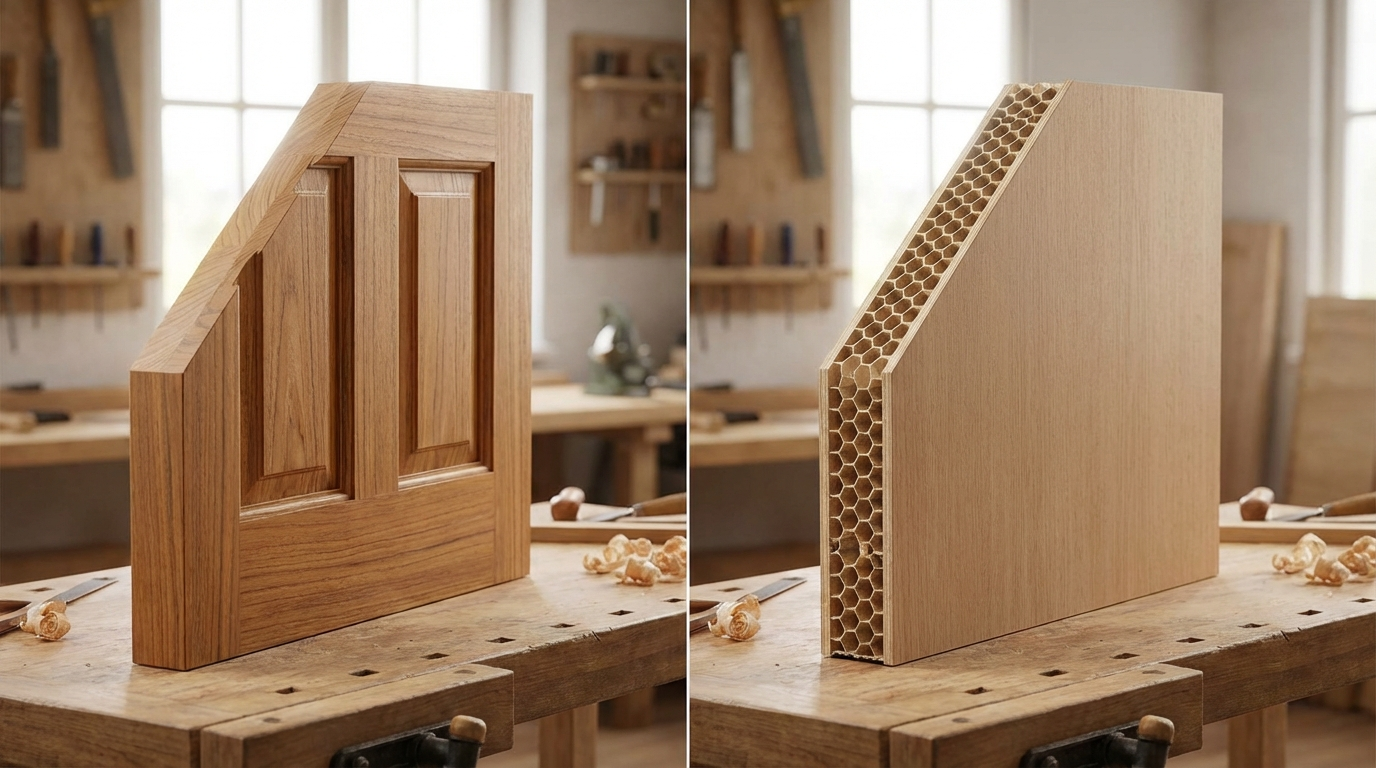
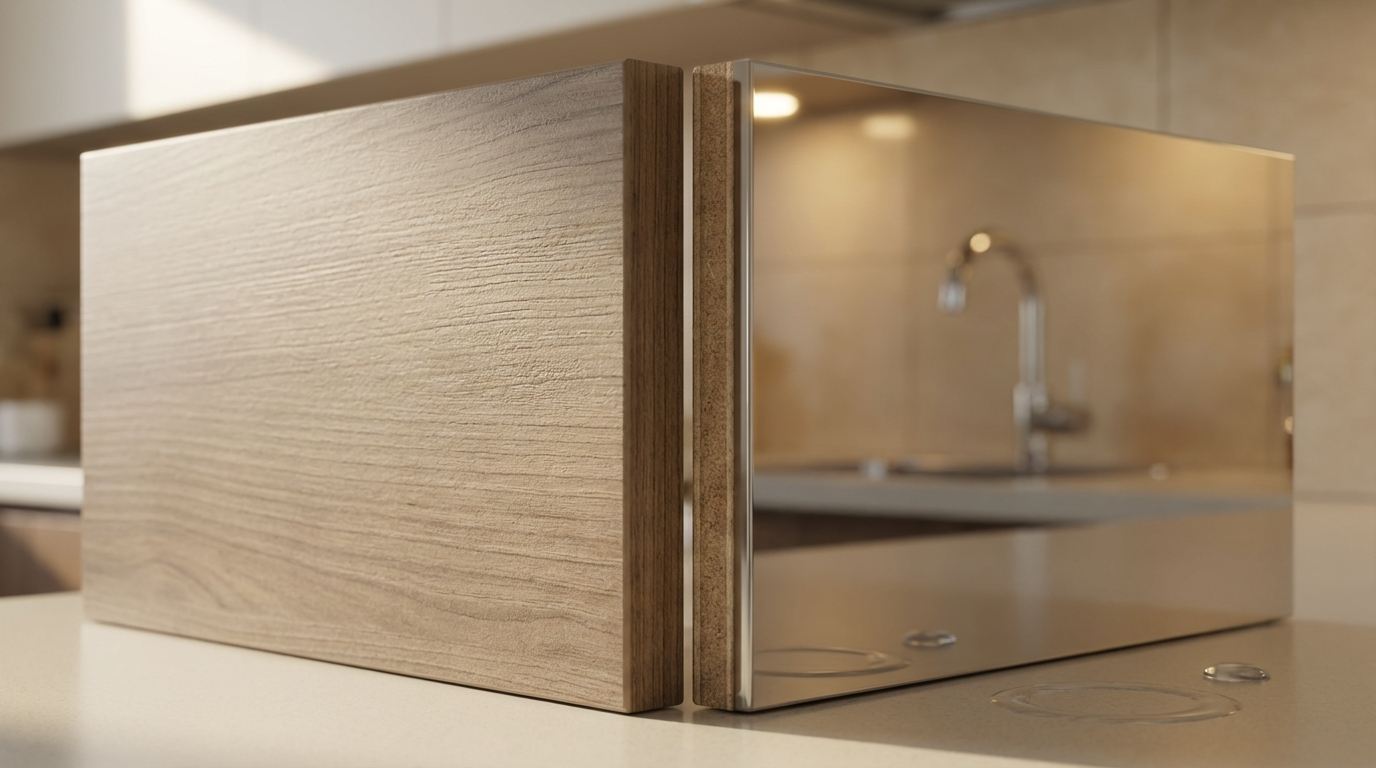
PVC, or polyvinyl chloride boards, refers to rigid or flexible sheets used as cabinet surfaces, often wrapped over a particleboard or MDF core in Indian modular kitchens. These come in thicknesses like 8mm to 18mm, with vacuum-pressed foil for a high-gloss or matte finish. In practical terms, PVC cabinets arrive pre-fabricated from factories, assembled on-site by technicians, making them popular in urban apartments where space and time are tight.
The appeal lies in its factory-controlled uniformity—no visible joints on shutters, which suits modern slab-style designs. Thickness variations matter: 16-18mm for carcasses handles basic loads, but thinner 5-8mm shutters flex under weight. In India, PVC's rigid versions resist warping better than foils, though heat from gas stoves can soften low-grade wraps. Glue quality binds the PVC layer to the core; cheap urea-formaldehyde versions delaminate in steam-heavy cooking zones.
Customization is limited to color and texture choices from catalogs, with CNC-cut precision ensuring fit. For coastal cities like Mumbai or Chennai, PVC's non-porous nature prevents swelling from salt-laden humidity. However, repeated slamming or heavy pots test the core's density—low-density particleboard crumbles faster than plywood equivalents. Indian buyers often overlook core specs, leading to sagging shelves after 2-3 years. Always probe the carcass material during dealer visits; solid PVC edges out wrapped versions for longevity but costs 20-30% more.
Edge banding seals exposed sides, but poor application chips in high-traffic kitchens. Maintenance is straightforward—wipe with damp cloth, no polishing needed. In budget scenarios, PVC fills the gap between laminates and acrylics, offering a premium look at mid-range prices. Trade-off: while visually sleek, it lacks plywood's repairability if damaged.
What is Plywood for Kitchen Cabinets?
Plywood for kitchen cabinets consists of thin veneers glued cross-grain under pressure, forming strong 18mm sheets for carcasses and 6-12mm for shutters. In India, grades like MR (moisture-resistant), BWR (boiling water-resistant), and BWP (boiling water-proof) dictate performance—BWR suits most kitchens, resisting steam but not immersion. Custom carpenters source from local dealers, cutting and assembling on-site for perfect fits in awkward Indian kitchen layouts.
Strength stems from layered construction: multiple plies distribute loads evenly, holding screws 3-4 times better than particle cores. This matters for modular shelves loaded with pressure cookers or grinders. Finishes include laminates, veneers, or paint, allowing rustic teak looks or glossy moderns. Thickness standardization hovers at 17.5-19mm marketed as "18mm," varying by brand tier—commercial grades use poplar cores for affordability, hardwood for premium.
Moisture handling requires edge sealing with putty and waterproof glue like PU; unsealed plywood absorbs spills, swelling in monsoons. Termites target untreated softwood cores, so phenyl-treated or marine grades prevent this in ground-floor homes. Customization shines: carpenters match existing furniture or add intricate moldings. In Tier-2 cities like Jaipur or Lucknow, plywood dominates due to skilled labor and dealer networks supplying verified sheets.
Installation flexibility suits retrofits—adjust for uneven walls common in older buildings. Heat resistance is decent up to 80-90°C, but direct flame needs metal guards. Over time, plywood ages gracefully with polishing, unlike PVC's irreversible dents. Drawback: dust from cutting irritates, and weight demands sturdy hinges. For longevity, pair with SS hardware; iron fittings rust in humid belts.
PVC vs Plywood for Kitchen Cabinets: Head-to-Head Comparison Table
This table breaks down PVC vs plywood for kitchen cabinets across key factors relevant to Indian buyers. Ratings use a 1-10 scale based on typical market grades (BWR plywood vs rigid PVC on particle core), with explanations below.
| Factor | PVC | Plywood | Winner & Why (India Context) |
|---|---|---|---|
| Durability/Strength | 6/10 (Core-dependent; dents easily) | 9/10 (Multi-ply strength) | Plywood: Better for heavy loads like mixers. |
| Water Resistance | 9/10 (Seamless surface) | 7/10 (With sealing; BWR grade) | PVC: Monsoon-proof without swelling. |
| Cost per Sqft (Installed) | Rs 200-450 | Rs 350-700 | PVC: Budget-friendly for Tier-2/3 cities. |
| Aesthetics/Finish | 8/10 (Glossy, uniform) | 8/10 (Customizable textures) | Tie: PVC modern, plywood traditional. |
| Maintenance | 9/10 (Wipe-clean) | 6/10 (Needs polishing) | PVC: Ideal for busy households. |
| Screw-Holding/Termite | 5/10 (Weak core) | 8/10 (Strong plies; treatable) | Plywood: Adjustable shelves last longer. |
| Installation Time | 1-2 days (Modular) | 5-10 days (Custom) | PVC: Quick for new apartments. |
Table notes: Costs assume 10x10ft L-shaped kitchen, Tier-1 city averages, including basic hardware. Plywood ranges higher due to labor variability; PVC lower for factory mods. Adjust +20% for coastal logistics, -15% in plywood hubs like Punjab.
Durability and Structural Strength
Durability defines PVC vs plywood for kitchen cabinets, where plywood's layered plies outperform PVC's wrapped cores under daily abuse. Plywood's cross-grain setup resists bending—18mm BWR sheets support 50-70kg shelves without sagging, crucial for dalda tins or flour stacks in Indian pantries. PVC, reliant on 16-18mm particleboard, compresses under similar loads, leading to loose hinges after 18-24 months.
Impact resistance favors plywood: dropped utensils dent PVC foil, cracking the core, while plywood absorbs shocks. Screw-holding is plywood's edge—pilot holes grip 10-15mm deep, allowing shelf repositioning; PVC pulls out after 2-3 tries. In multi-gen homes, where kids climb counters, plywood's rigidity prevents failures.
Heat tolerance: Plywood chars slowly near stoves; PVC warps above 70°C if low-grade foil used. Termites bypass PVC naturally but chew untreated plywood cores—opt for IS-marked sheets with visible treatment stamps. Longevity: Quality plywood lasts 15-20 years with care, PVC 8-12 years before peeling.
Indian scenario: In Delhi's dry heat, plywood thrives; Hyderabad humidity demands sealed edges. Carpenter tip: Test flex by pressing center—minimal bow means good quality. Avoid commercial MR plywood for cabinets; BWR minimum prevents delam. Weight adds stability but hikes transport costs in hilly areas.
Water Resistance and Humidity Performance
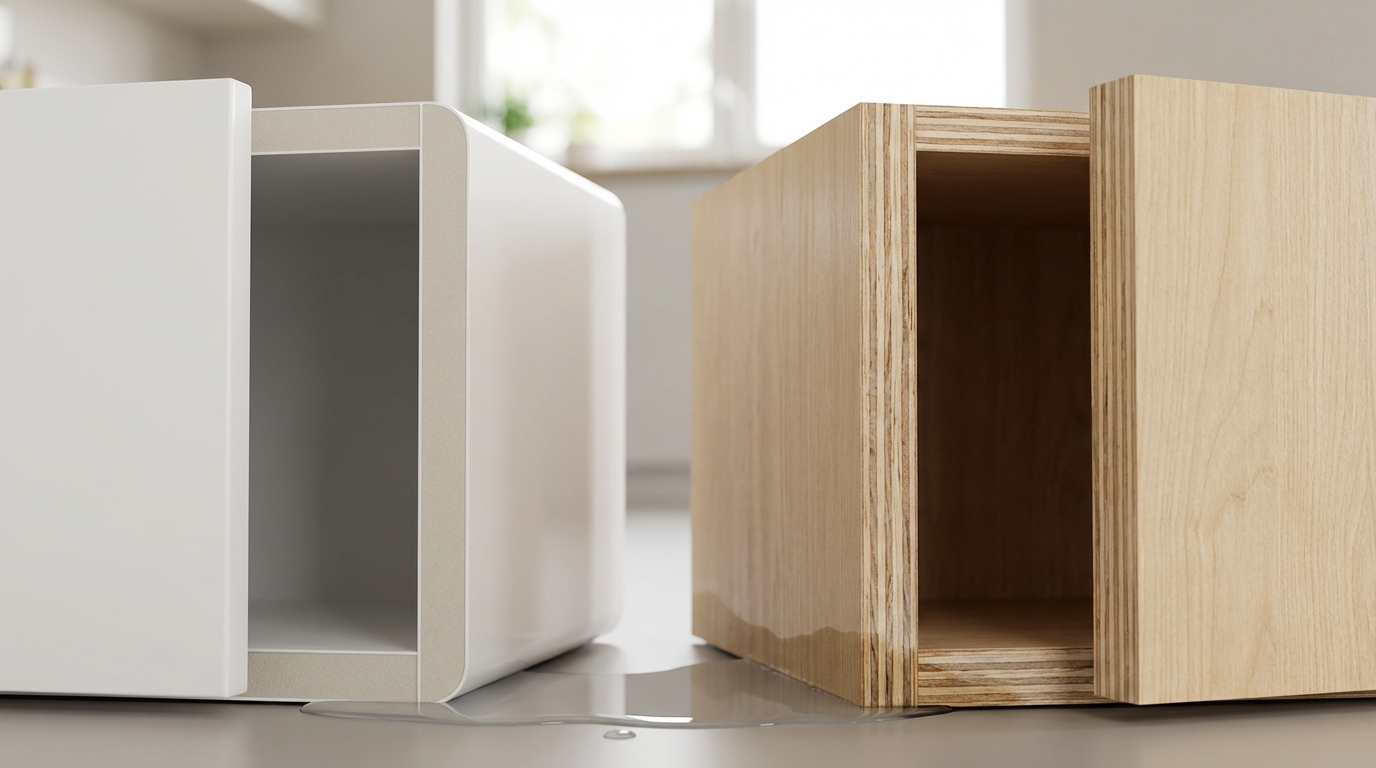
Water resistance tips PVC ahead in PVC vs plywood for kitchen cabinets, especially in moisture-laden Indian kitchens. PVC's non-porous surface repels spills, steam, and splashes—no absorption, no swelling even after wiping masala water. Ideal for sink-adjacent shutters or coastal Goa homes where 80%+ humidity persists year-round.
Plywood fights back with grades: MR handles occasional wet but puffs in monsoons; BWR resists boiling tests, suitable for 70% kitchens if edges sealed with melamine polish. BWP marine grade for extreme wet zones costs 40% more. Glue matters—PF resins outperform urea in steam.
Real failures: Unsealed plywood warps 5-10% in Kerala rains, doors misaligning; PVC edges chip but core stays flat. Condensation under sinks rots plywood bottoms unless elevated. Ventilation gaps help both, but PVC needs none.
Monsoon logic: PVC for rentals (no sealing hassle); plywood for owned homes (invest in quality). Inspection: Splash water on sample—plywood darkens temporarily but dries flat if good. PVC stays unchanged. Pair plywood with SS drains to minimize exposure.
Cost Analysis: PVC vs Plywood Prices in India
Cost swings PVC vs plywood for kitchen cabinets based on city tier, grade, and scope. PVC modular setups run Rs 200-450 per sqft of shutter area (installed), lower in Tier-3 due to factory proximity. Plywood custom builds hit Rs 350-700/sqft, spiking in metros from carpenter rates (Rs 100-200/sqft labor).
| Component | PVC Range (Rs/sqft) | Plywood Range (Rs/sqft) | Factors Affecting Price |
|---|---|---|---|
| Base Material (18mm) | 80-150 | 120-300 | Grade (commercial vs BWP), wood type (poplar vs hardwood) |
| Finish/Shutters | 50-120 | 80-200 | Gloss level, laminate quality, thickness |
| Hardware/Accessories | 40-100 | 50-150 | SS vs soft-close, number of drawers |
| Labor/Install (L-shape 10ft) | 30,000-60,000 total | 40,000-90,000 total | Custom cuts, travel, GST 18% |
| Total 10x8ft Kitchen | 1.5-3.5 lakh | 2.5-5.5 lakh | Tier-1 +20%, accessories extra |
Ranges assume standard modular vs semi-custom; add 15-25% for islands or tall units. Dealer markups vary—bargain in wholesale markets. PVC saves on labor (factory-ready); plywood justifies via longevity. Budget buyers pick PVC; value-seekers plywood. Factor transport: plywood sheets bulky, PVC compact. GST-inclusive, but verify bills. Edge case: Renovations favor plywood matching.
Aesthetics, Maintenance, and Customization
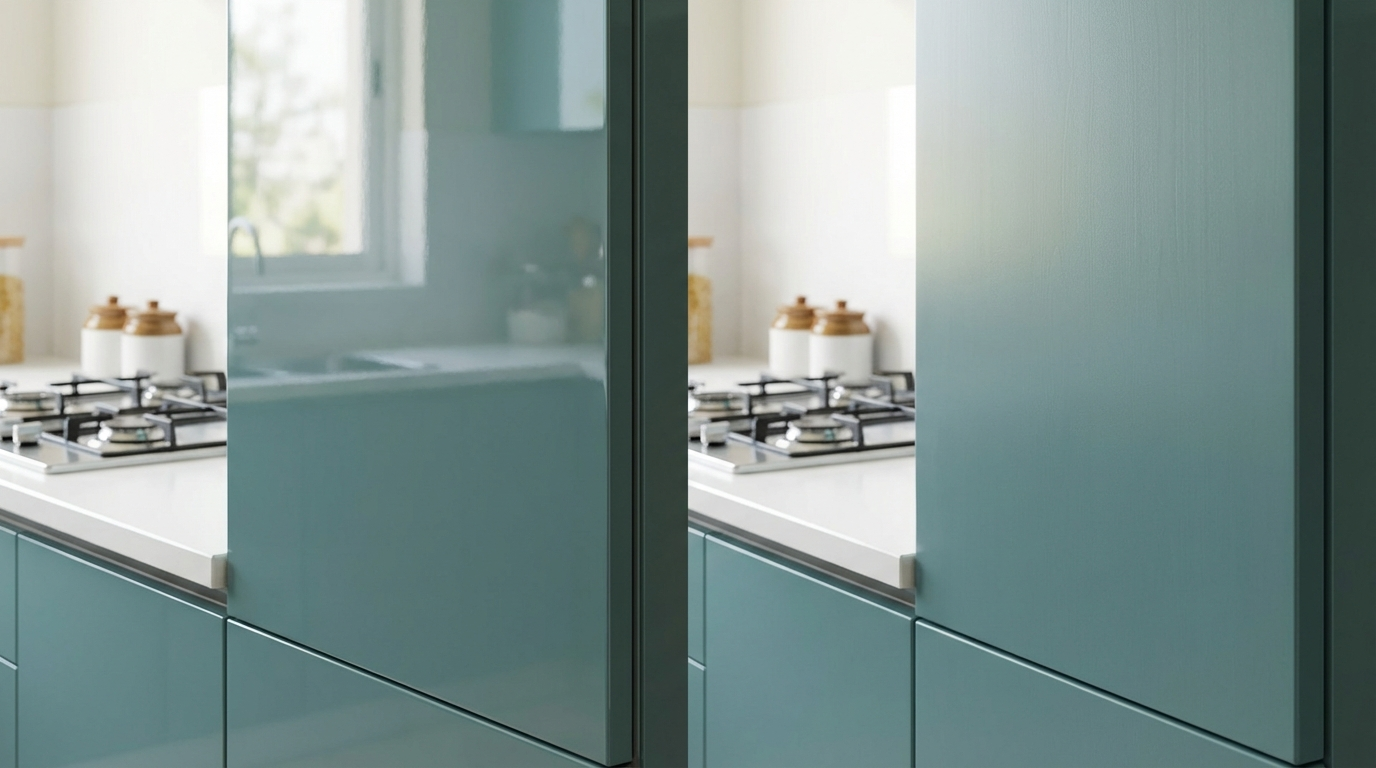
Aesthetics split PVC vs plywood for kitchen cabinets—PVC delivers factory gloss mimicking acrylic at lower cost, hiding core imperfections for sleek slab doors. Plywood offers textured veneers or laminates matching teak or oak, blending with Indian living rooms. Customization: Plywood carpenters craft arched shutters or finger pulls; PVC sticks to straight CNC cuts.
Maintenance: PVC wipes grease-free—no polishing, resists scratches superficially. Plywood needs annual teak oil or melamine touch-ups, but stains from turmeric wipe if sealed. Fingerprints show less on matte plywood vs high-gloss PVC.
In metros, PVC's uniformity suits open-plan kitchens; villages prefer plywood's warmth. Fading: PVC colors hold 5-7 years; plywood veneers 10+ with UV protection. Repairs: Dent plywood filler easily; PVC requires panel replacement. Indian masala cooking dulls finishes—PVC easier clean.
How to Choose: Decision Framework for Indian Kitchens
Choosing PVC vs plywood for kitchen cabinets starts with assessing your space: measure humidity (coastal= PVC), load (heavy=plywood), budget (under 3L=PVC). Framework: Prioritize moisture over strength for wet zones; strength for dry. Checklist for confident picks:
- Humidity test: High (70%+)? PVC or BWP plywood.
- Budget: Under Rs 3L total? PVC modular.
- Use: Daily heavy cooking? Plywood carcasses.
- Style: Modern slab? PVC. Traditional? Plywood laminate.
- Timeline: Under 1 week? PVC factory.
- Longevity goal: 10+ years? Invest in BWR plywood.
When NOT to choose PVC: Heavy utensil storage or frequent remodels—core fails. Skip plywood if unskilled carpenter or no sealing plan. Visit 2-3 dealers, knock for solidity, check stamp grades. Modular showrooms demo PVC; local yards stock plywood. Factor carpenter skill—good ones elevate plywood value.
Common Mistakes Indian Buyers Make
Top pitfalls in PVC vs plywood for kitchen cabinets include ignoring core quality—buyers grab shiny PVC without probing particleboard density, leading to shelf collapses. For plywood, settling for MR grade in steam zones causes bubbling. Dealers push cheap imports; verify Indian-made stamps for consistency.
Carpenter errors: Skipping plywood edge sealing or using iron screws that rust. PVC installers overtighten hinges, cracking edges. Buyers skip measurements, buying standard PVC for odd walls—gaps invite moisture. Overlooking hardware: Plastic glides fail fast vs SS.
Inspection checks: Weigh sample sheets (heavier= denser); flex test; water splash. Ask for cut carcass view in PVC. Common failure: 1-year warranty voids from poor install. In Tier-2, haggle 10-15% but test references. Avoid "budget" quotes hiding thin sheets.
Trade-offs and Limitations
Every choice in PVC vs plywood for kitchen cabinets involves trade-offs: PVC's moisture win sacrifices strength—shelves bow under 30kg, unsuitable for grinder-heavy homes. Plywood's durability demands upkeep, absorbing odors if unsealed. Cost vs life: PVC cheaper short-term but replacements add up; plywood upfront but 2x lifespan.
Finish trade: PVC glossy fades; plywood matte scuffs. Heat: Both limit near stoves. Weight: Plywood stable but hard to move in small flats. Limitations: PVC non-repairable dents; plywood termite risk untreated. Edge case: Rentals=PVC disposable; permanent=plywood invest. Balance with hybrids like PVC-faced plywood.
Why This Matters in Indian Kitchens
In India, PVC vs plywood for kitchen cabinets impacts daily life amid monsoons, masala steam, and 24/7 use. High humidity (Bombay 80%) swells cheap plywood, misaligning doors; PVC thrives here, cutting repair calls. Modular PVC suits urban nuclear families with CNC precision, bypassing carpenter delays in labor-short cities.
Dealer-driven buys amplify choices: Wholesale hubs like Yamunanagar favor plywood variety; modular chains push PVC uniformity. GST and transport hike plywood 15% in South; PVC packs flat. Coastal exposure accelerates plywood rot without BWP; inland dry air lets commercial suffice. Busy households value PVC wipe-clean over plywood polish time. Ultimately, wrong pick means 2-5 year failures, wasted lakhs.
Frequently Asked Questions
Which is better for Indian modular kitchens: PVC or plywood?
For Indian modular kitchens, PVC often edges out due to factory waterproofing and quick installs fitting apartment handovers. It handles steam from idlis or curries without swelling, with glossy finishes matching slab aesthetics. However, if your modular needs heavy customization or adjustable shelves, plywood carcasses provide better support. In humid metros like Bangalore, PVC's seamlessness prevents moisture ingress better than standard modular plywood, but verify core density. Budget modulars under Rs 2.5L lean PVC; premium over Rs 4L use plywood frames with PVC faces for hybrid strength.
Is PVC completely waterproof for kitchen sinks?
PVC boards are highly water-resistant for kitchen sinks, repelling constant splashes and condensation without core absorption, unlike unsealed plywood. Rigid PVC outperforms foil wraps, lasting 10+ years near sinks in Chennai homes. Limitations: Edge chips from scrubbing expose core if particleboard-based. Seal joints with silicone during install. In practice, pair with SS sinks and backsplashes; avoid direct hose exposure. Indian buyers confirm by splash-testing showroom samples—no darkening means reliable.
How long do PVC kitchen cabinets last in India?
PVC kitchen cabinets typically last 8-12 years in Indian conditions, depending on grade and use—rigid over particleboard endures better than foil on MDF. Heavy slamming shortens to 5-7 years; coastal humidity preserves surface but stresses hinges. Maintenance like gentle cleaning extends life. Compared to plywood's 15-20 years, PVC suits shorter stays like rentals. Failures stem from low-density cores; inspect by knocking for solid thud.
Can plywood be used for modular kitchen cabinets?
Yes, plywood works excellently for modular kitchen cabinets, especially BWR 18mm for carcasses offering screw-grip for add-ons like spice racks. Factories CNC-cut for precision, combining modularity with strength absent in pure PVC. Costlier than PVC but justifies in high-use homes. Seal edges religiously for humidity; popular in hybrid mods where plywood base gets PVC foil. Indian modular brands offer this for Rs 400-600/sqft.
What thickness is best for kitchen cabinet plywood?
For kitchen cabinet plywood, 18mm (actual 17-19mm) is standard for carcasses in India, balancing strength and weight for shelves up to 50kg. Shutters use 8-12mm to save cost without flexing. Thinner 12mm suits uppers; marine BWP for lowers. Variations arise from glue lines—fewer plies mean weaker. Check caliper at dealers; pair with 35mm hinges. Avoid under 16mm for bases.
Does PVC get damaged by heat from gas stoves?
PVC can soften or blister from direct gas stove heat above 70-80°C, especially thin foils—keep 30cm gap with metal guards. Rigid PVC tolerates better, but prolonged exposure warps in intense Indian tadka sessions. Plywood chars slowly but needs heat shields too. Ventilation and SS chimneys mitigate; showroom demos simulate heat. In practice, position cabinets away or use glass splashbacks.
Is plywood prone to termites in kitchen cabinets?
Plywood risks termites if softwood cores untreated, common in ground-floor Indian kitchens with damp floors. BWR grades with phenyl or borate treatments resist well; check visible stamps. PVC is inherently termite-proof. Elevate cabinets 15cm, use silica gel packs. Infestations hit untreated commercial plywood in 2-3 years—inspect annually for frass. Marine BWP minimizes risks naturally.
Which is cheaper to maintain: PVC or plywood cabinets?
PVC is cheaper to maintain long-term, needing only soap-water wipes—no polishing or sealing like plywood. Annual costs near zero vs plywood's Rs 500-1000 for teak oil. Repairs favor plywood (local filler); PVC dents need shop fixes. In oil-stained kitchens, PVC saves time for working families. Factor initial sealing for plywood to equalize.
Disclaimer: This content is provided for general informational purposes based on industry practices and publicly available information. Product specifications, standards, prices, and availability may vary by manufacturer, region, and time. Readers should independently verify details with manufacturers, dealers, or qualified professionals before making purchase or construction decisions.Want Plywood Suggestions?
Share a few details and a Apple Ply specialist will suggest suitable brands and connect you to responsive dealers.