PVC Kitchen Cabinets: Pros and Cons You Must Know
Know the advantages and disadvantages of PVC kitchen cabinets before buying. Complete analysis of PVC board durability, maintenance & cost.
Quick Answer
PVC kitchen cabinets are made from polyvinyl chloride boards that offer waterproof, termite-proof, and budget-friendly storage solutions for Indian kitchens. They work exceptionally well in humid conditions but have limitations in heat resistance and long-term durability compared to plywood alternatives.
At a Glance:
- 100% waterproof and moisture-resistant—ideal for Indian monsoon conditions
- Completely termite-proof, unlike wood-based alternatives
- Lower cost than marine plywood or BWR-grade options
- Available in foam board and hollow board variants
- Limited heat resistance—keep away from gas stoves and chimneys
- Best suited for base cabinets, utility areas, and rental properties
What Are PVC Kitchen Cabinets? Understanding the Material
PVC stands for Polyvinyl Chloride, a synthetic plastic polymer that has found widespread use in construction, plumbing, and now kitchen cabinetry. In the context of modular kitchens, PVC boards are rigid sheets manufactured by compressing polyvinyl chloride with stabilizers and processing aids under controlled temperature and pressure conditions.
Unlike traditional plywood or MDF that uses wood fibres as the base material, PVC boards are entirely synthetic. This fundamental difference gives them unique properties that matter significantly in Indian kitchen environments. The material does not absorb water at any level, making it fundamentally different from wood-based engineered boards that rely on water-resistant adhesives.
In Indian markets, PVC kitchen cabinet boards typically arrive in standard sheet sizes similar to plywood—8×4 feet being the most common trade size. Thicknesses range from 5mm for back panels to 18mm for structural components like cabinet sides and shelves. The boards come with factory-finished surfaces in various colours and textures, eliminating the need for additional lamination in most cases.
How PVC Boards Differ from PVC Laminates
Many buyers confuse PVC boards with PVC laminates, creating specification errors during purchases. PVC boards are the entire structural sheet used to construct cabinet carcasses and sometimes shutters. PVC laminates, on the other hand, are thin decorative films applied over MDF or plywood substrates to create membrane-finish doors. When dealers mention "PVC kitchen," always clarify whether they mean full PVC board construction or laminate-finished shutters on a different core material.
Types of PVC Boards for Kitchen Cabinets
The Indian market primarily offers two distinct types of PVC boards for kitchen applications. Understanding their structural differences helps in making appropriate choices for different cabinet components.
PVC Foam Boards
Foam boards feature a solid, closed-cell structure throughout their thickness. The manufacturing process creates microscopic air pockets within the material, giving it a slightly lower density than solid plastic while maintaining rigidity. These boards typically weigh less than equivalent plywood sheets, making handling and installation easier.
Foam boards offer better screw-holding capacity compared to hollow variants. They can be machined, drilled, and edge-banded using standard woodworking equipment, which matters significantly in Indian carpentry workshops that may not have specialized PVC tooling. For kitchen applications, foam boards work well for cabinet carcasses, drawer sides, and internal shelving where structural integrity matters.
PVC Hollow Boards
Hollow boards feature a cellular internal structure with air chambers running through the sheet. This design makes them significantly lighter and more economical than foam boards. However, the hollow construction limits their load-bearing capacity and screw retention.
In kitchen contexts, hollow PVC boards work adequately for back panels, light partition walls, and areas where weight savings matter more than structural strength. They are not recommended for shelf construction where heavy vessels, pressure cookers, or appliances will be stored. The hollow chambers can also trap moisture if edges are not properly sealed, creating potential issues in high-humidity coastal regions.
Advantages of PVC Kitchen Cabinets
The benefits of PVC boards address several pain points that Indian homeowners face with traditional wood-based kitchen cabinetry. These advantages explain why PVC has gained traction, particularly in humid regions and budget-conscious projects.
Complete Waterproof Performance
Unlike BWR plywood that uses water-resistant adhesives, PVC boards are inherently non-absorbent. The plastic material itself cannot absorb water regardless of exposure duration. This makes PVC cabinets particularly valuable under sinks, near dishwashers, and in areas prone to water splashes. During monsoon months when humidity levels in coastal cities like Mumbai, Chennai, or Kochi can exceed 85%, PVC cabinets do not swell, warp, or delaminate.
Termite and Borer Immunity
Wood-boring insects pose a significant threat to kitchen cabinets across most Indian regions. PVC offers complete immunity since the material provides no nutritional value or habitat for termites, borers, or other wood-damaging pests. Homeowners in termite-prone areas save on periodic anti-termite treatments that wood-based cabinets require.
Low Maintenance Requirements
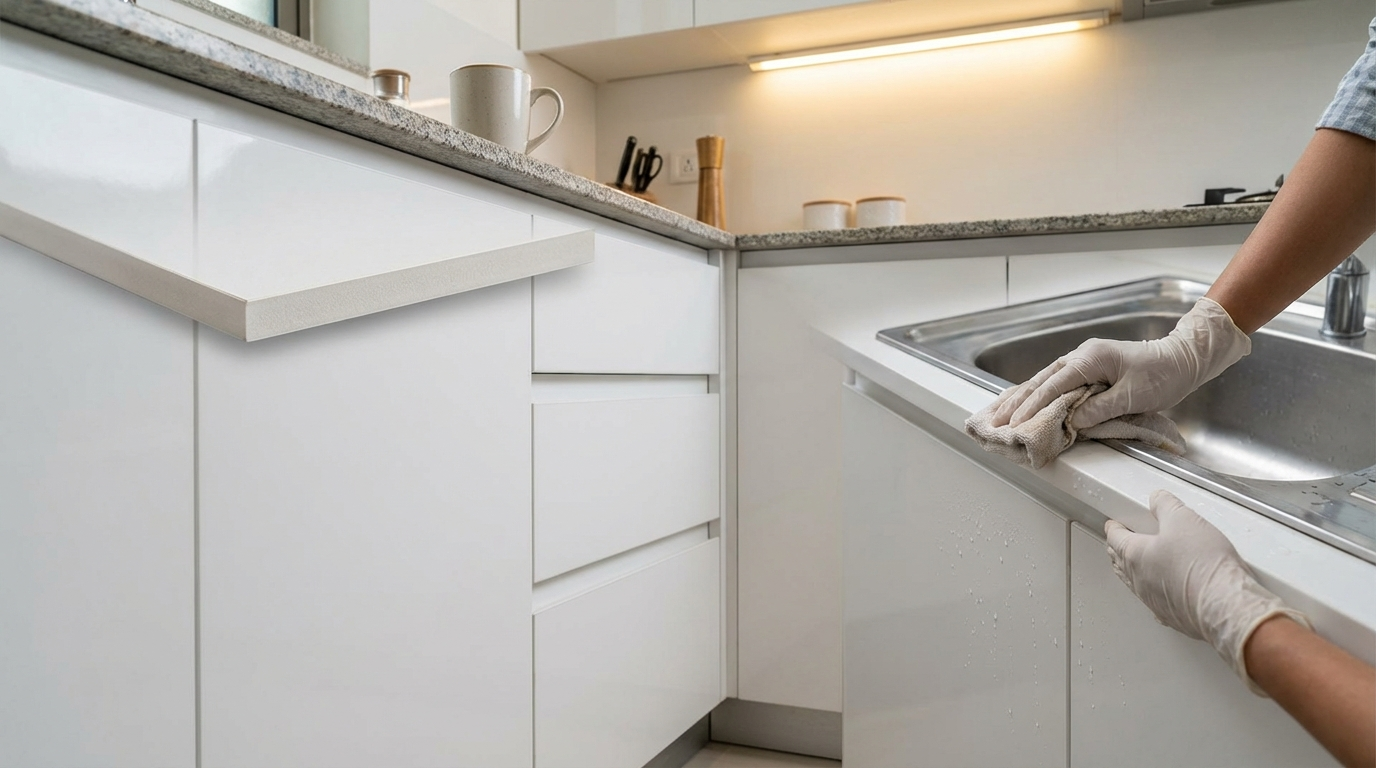
PVC surfaces clean easily with damp cloth and mild detergent. The non-porous surface does not harbour bacteria, stains, or cooking odours the way porous wood materials can. Oil splatters, turmeric stains, and other common kitchen residues wipe off without leaving permanent marks on quality PVC boards.
Budget-Friendly Installation
PVC boards typically cost less than marine plywood or high-grade BWR alternatives. The factory-finished surfaces eliminate lamination costs. Lighter weight reduces transportation expenses and makes installation faster—translating to lower carpenter labour charges in many cases.
Disadvantages of PVC Kitchen Cabinets
Honest evaluation of PVC limitations helps buyers make informed decisions. These drawbacks matter significantly in certain kitchen configurations and usage patterns common in Indian households.
Poor Heat Resistance
PVC begins softening at temperatures around 60-70°C, which is considerably lower than temperatures near active cooking zones. Cabinet shutters or panels positioned close to gas burners, tandoors, or chimneys risk warping and deformation over time. Indian cooking styles involving high-heat methods create more thermal stress than Western cooking patterns, making this limitation particularly relevant.
Lower Structural Strength
Even quality foam boards cannot match the structural rigidity of equivalent-thickness plywood. Heavy steel utensils, pressure cookers, and kitchen appliances common in Indian kitchens can cause shelving to sag over extended periods. This issue intensifies with hollow boards, which are unsuitable for load-bearing applications.
Limited Repair Options
Scratches, dents, or surface damage on PVC cannot be repaired through sanding or refinishing as with wood-based materials. Deep scratches expose the board's internal structure and remain permanent. Impact damage that cracks the board requires complete panel replacement rather than localized repair.
Hardware Compatibility Issues
Standard wood screws do not hold effectively in PVC material over time. Repeated opening and closing of doors and drawers can loosen hinges and handles faster than in plywood constructions. Quality installations require specialized PVC-compatible hardware or reinforcement techniques that add complexity and cost.
Aesthetic Limitations
Despite improvements in surface finishes, PVC boards cannot replicate the warmth and texture of real wood veneers or high-pressure laminates convincingly. The plastic appearance becomes apparent on close inspection, which matters in premium kitchen designs where visual appeal is prioritized.
PVC vs Other Kitchen Cabinet Materials: Comparison Table
Understanding how PVC stacks up against alternative materials helps identify the right choice for specific requirements and budgets.
| Parameter | PVC Foam Board | BWR Plywood | Marine Plywood | HDHMR Board |
|---|---|---|---|---|
| Water Resistance | 100% waterproof | Water-resistant (adhesive dependent) | High water resistance | Moisture-resistant only |
| Termite Resistance | Complete immunity | Requires treatment | Requires treatment | Good resistance |
| Heat Tolerance | Low (softens at 60-70°C) | Moderate | Moderate | Moderate |
| Screw-Holding | Fair (needs reinforcement) | Excellent | Excellent | Good |
| Weight (18mm sheet) | Light | Heavy | Heavy | Medium-Heavy |
| Price Range (₹/sq ft) | ₹35–55 | ₹55–85 | ₹90–140 | ₹45–70 |
| Ideal Application | Wet areas, rental homes | All-purpose kitchen use | High-moisture exposure | Shutter cores, dry areas |
| Expected Lifespan | 5–8 years | 10–15 years | 15–20 years | 8–12 years |
How to Choose PVC Cabinets: Decision Framework
Making the right choice requires evaluating your specific kitchen environment, usage patterns, and budget constraints against PVC's strengths and limitations.
When PVC Makes Sense
PVC cabinets deliver optimal value in specific scenarios. Rental properties benefit from the lower upfront cost when long-term durability is less critical. Utility areas like washing zones, under-sink storage, and balcony kitchens in apartments face heavy moisture exposure where PVC's waterproof nature provides genuine advantages. Budget-constrained projects in humid regions get functional, maintenance-free cabinets without the premium of marine plywood.
Buyer Checklist for PVC Kitchen Cabinets
- Verify foam board construction—reject hollow boards for structural components
- Check board thickness: minimum 12mm for shelves, 18mm for cabinet sides
- Examine surface finish quality and colour consistency across sheets
- Confirm heat-resistant zones are planned with alternative materials near cooking areas
- Ask about hardware—ensure PVC-compatible hinges and mounting systems
- Request sample pieces to test screw-holding and edge quality
- Verify edge-banding method and material compatibility
When NOT to Choose PVC Cabinets
Avoid PVC for cabinets positioned directly beside gas stoves or above cooking hobs where heat exposure is unavoidable. Premium kitchen designs requiring sophisticated wood-grain textures or high-gloss acrylic finishes will look compromised with PVC construction. Heavy-storage requirements involving steel utensils, large mixer-grinders, or bulk provisions demand stronger materials. Long-term homeowners expecting 15+ year cabinet lifespans should invest in quality plywood instead.
Common Mistakes to Avoid with PVC Kitchen Cabinets
Understanding typical errors helps buyers and carpenters avoid costly failures and disappointments with PVC cabinet installations.
Using Hollow Boards for Load-Bearing Shelves
Budget-focused dealers sometimes supply hollow PVC boards for entire kitchen constructions. While acceptable for back panels, hollow boards fail rapidly as shelving when loaded with heavy Indian cookware. Sagging begins within months, and the damage is irreversible. Always specify foam board construction for any weight-bearing component.
Ignoring Heat Proximity
Installing PVC cabinet shutters or panels within 30cm of gas burner flames invites warping and deformation. Some installations position PVC panels behind chimneys where heat radiation causes gradual damage. Plan kitchen layouts to keep PVC components away from all heat sources, or use hybrid construction with plywood near cooking zones.
Using Standard Wood Screws
Carpenters accustomed to plywood often use regular wood screws that lack proper holding power in PVC material. Door hinges loosen within months of normal use. Insist on PVC-specific fasteners or request pilot drilling and reinforcement plates at hinge points.
Neglecting Edge Sealing
While PVC surfaces are waterproof, cut edges expose the internal foam structure that can absorb some moisture over time. Unsealed edges in hollow boards allow water penetration into internal chambers. Proper edge-banding or sealing of all exposed edges is essential, particularly in coastal and high-humidity environments.
Quick Inspection Checks
- Press firmly on foam boards—quality material should not flex or dent easily
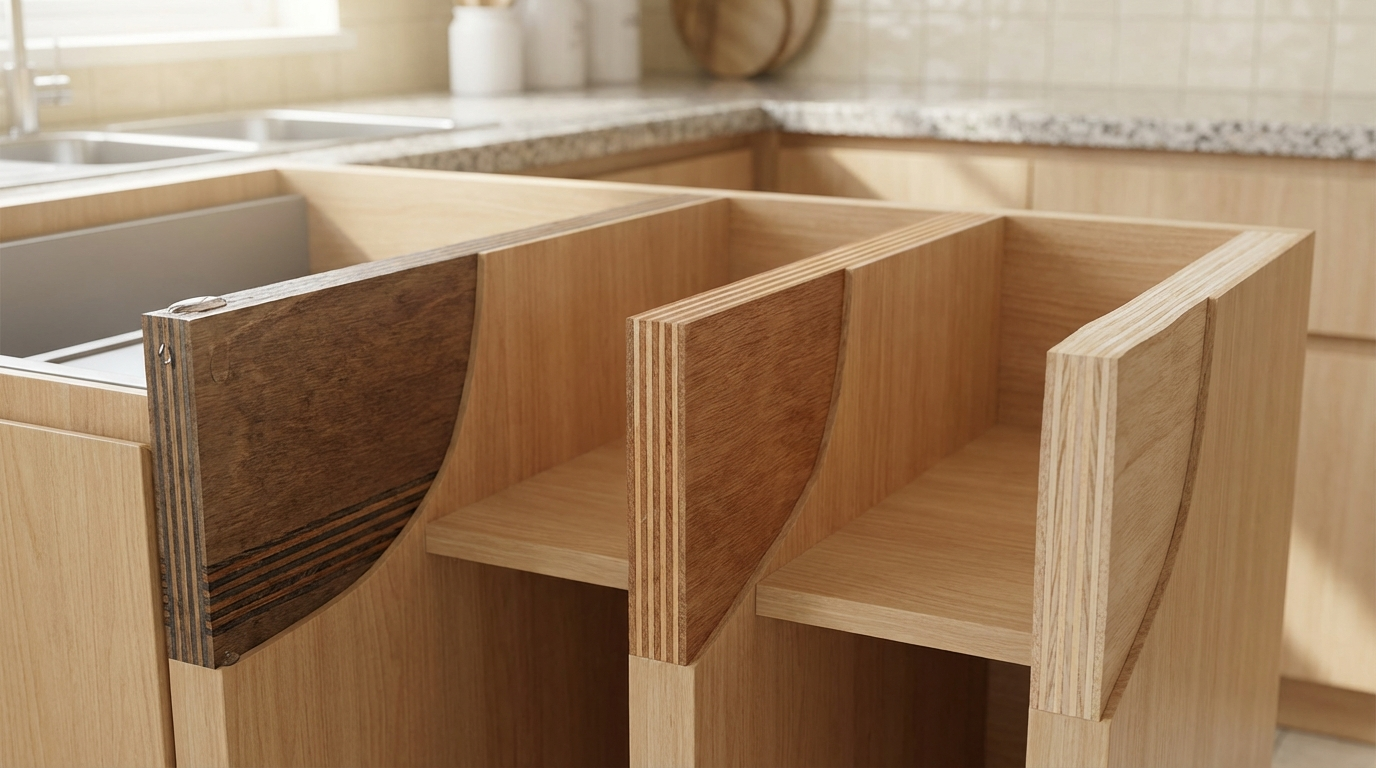
- Check edge cuts for consistent density without visible voids or irregularities
- Examine surface finish under angled light for scratches or texture inconsistencies
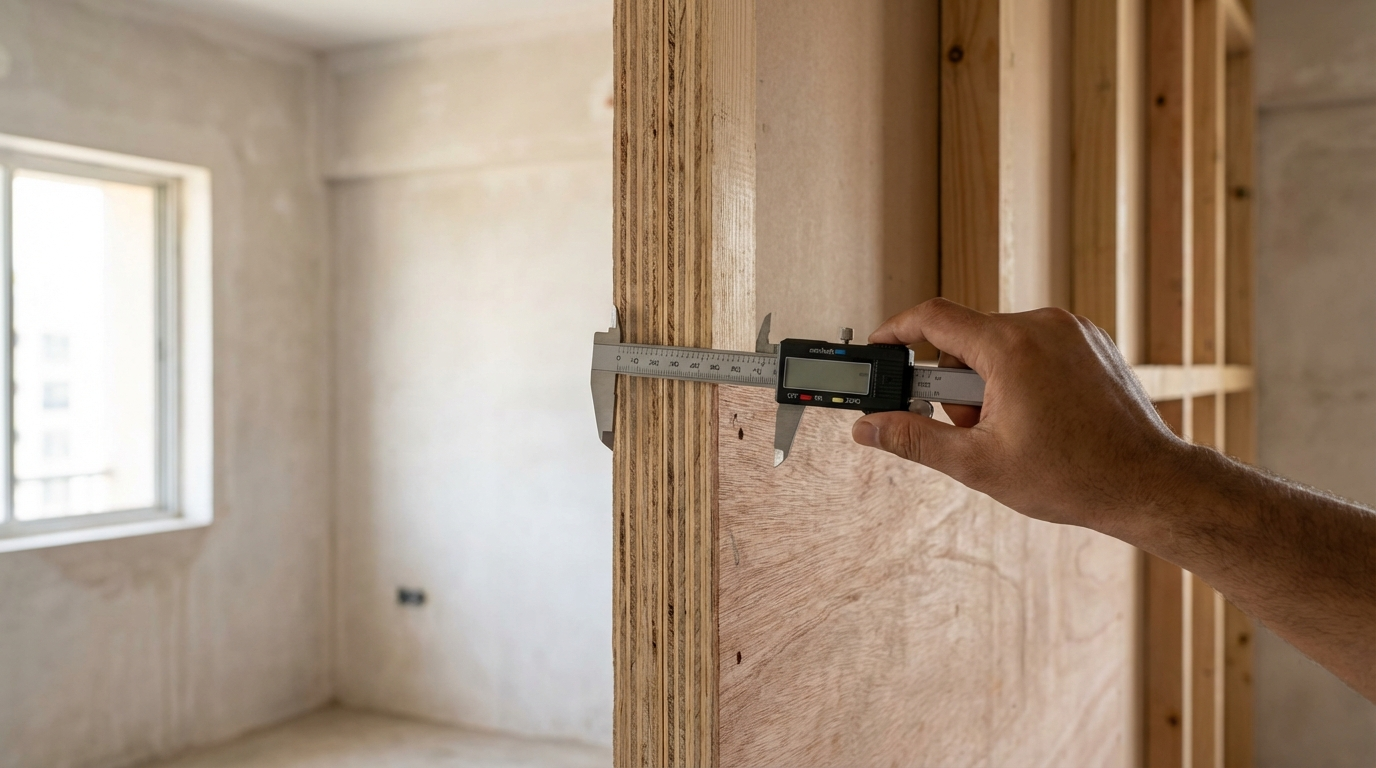
- Verify sheet thickness with calipers—18mm boards sometimes measure 16-17mm
- Test a sample piece with a screw to assess holding capacity before full installation
PVC Kitchen Cabinet Price Guide for India
Pricing for PVC kitchen cabinets varies based on board type, thickness, surface finish quality, and regional market factors. The following ranges provide realistic budgeting guidance for Indian buyers.
| Component | Budget Range (₹/sq ft) | Mid-Range (₹/sq ft) | Premium Range (₹/sq ft) |
|---|---|---|---|
| PVC Foam Board (18mm) | ₹35–42 | ₹45–55 | ₹58–70 |
| PVC Hollow Board (18mm) | ₹22–28 | ₹30–38 | ₹40–48 |
| Complete Modular Kitchen (per sq ft) | ₹800–1,100 | ₹1,200–1,600 | ₹1,800–2,400 |
| Labour & Fabrication | ₹150–200 | ₹220–300 | ₹320–450 |
Price Assumptions: Rates reflect Tier-1 city markets (Delhi NCR, Mumbai, Bangalore, Chennai) as of 2025-26. Tier-2 and Tier-3 cities may see 10-20% variation based on dealer networks and transport costs. GST at applicable rates adds to final pricing. Branded PVC boards command premiums over unbranded alternatives.
What Drives Price Variation
Board density significantly impacts pricing—higher-density foam boards cost more but offer better performance. Surface finish quality varies from basic solid colours to textured wood-grain patterns, with premium finishes adding 15-25% to material costs. Brand reputation matters, as established manufacturers provide consistency that local fabricators may not match. Transportation costs from manufacturing hubs to distant cities add to delivered prices, particularly for bulk orders required in full kitchen installations.
Regional Considerations: Coastal vs Inland Performance
India's diverse climate zones create varying demands on kitchen cabinet materials. PVC's suitability differs across regions based on humidity levels, temperature ranges, and local usage patterns.
Coastal and High-Humidity Regions
Cities like Mumbai, Chennai, Kochi, Kolkata, and Goa experience prolonged high humidity exceeding 70-80% for significant portions of the year. PVC's waterproof nature provides genuine advantages here, as wood-based alternatives face constant moisture stress. However, the combination of humidity and heat near cooking zones can accelerate PVC softening. Hybrid installations using PVC for base cabinets and wet zones while employing plywood near cooking areas optimize performance in these regions.
Hot and Dry Regions
Interior regions like Rajasthan, central India, and parts of Karnataka experience extreme summer temperatures but lower humidity. PVC's heat sensitivity becomes more problematic here, particularly in kitchens without air conditioning. The material may become brittle over time with repeated temperature cycling. Plywood or HDHMR often performs better in such environments despite lower moisture exposure.
Frequently Asked Questions
What is the full form of PVC used in kitchen cabinets?
PVC stands for Polyvinyl Chloride, a synthetic thermoplastic polymer. In kitchen cabinet applications, PVC boards are manufactured by processing polyvinyl chloride resin with stabilizers, plasticizers, and processing aids under controlled conditions. The resulting boards feature completely synthetic construction without any wood content, distinguishing them from plywood, MDF, or particle board alternatives that use wood fibres as base materials.
Which is better for kitchen cabinets: PVC or plywood?
The better choice depends on specific requirements. PVC excels in waterproofing, termite resistance, and budget-friendliness—making it ideal for wet zones and rental properties. Plywood offers superior structural strength, heat tolerance, screw-holding capacity, and longevity—making it preferable for premium kitchens, heavy storage needs, and areas near cooking zones. Many successful installations use hybrid approaches combining both materials strategically.
Are PVC kitchen cabinets good for Indian humid climate?
PVC cabinets perform exceptionally well in humid Indian climates found in coastal and eastern regions. The material is inherently waterproof and does not swell, warp, or delaminate due to moisture exposure unlike wood-based alternatives. For cities like Mumbai, Chennai, Kolkata, or Kerala, PVC offers practical advantages for base cabinets and sink areas. However, heat sensitivity near Indian cooking setups remains a concern requiring careful positioning.
How long do PVC kitchen cabinets last in India?
Quality PVC foam board cabinets typically last 5-8 years under normal Indian household usage. Longevity depends significantly on installation quality, heat exposure, and daily wear patterns. Hollow PVC boards have shorter lifespans of 3-5 years, particularly when used for load-bearing shelves. Comparable plywood cabinets last 10-15 years, making PVC more suitable for budget installations or rental properties rather than long-term homeownership scenarios.
What is the price of PVC kitchen cabinets in India?
Complete PVC modular kitchen installations in India range from ₹800-2,400 per square foot depending on board quality, finish type, hardware selection, and city location. PVC foam boards alone cost ₹35-70 per square foot based on thickness and brand. Budget-focused installations using hollow boards cost less but compromise durability. Tier-1 metro cities typically price 10-20% higher than smaller towns due to higher labour and overhead costs.
Can PVC cabinets withstand heat from Indian cooking?
PVC has limited heat tolerance, beginning to soften at temperatures around 60-70°C. Indian cooking styles involving high-heat methods, open gas flames, and tandoor usage create thermal stress that PVC cannot handle when positioned nearby. Cabinet panels within 30cm of burners or behind chimneys risk warping. Planning kitchen layouts to keep PVC away from heat sources is essential, or use plywood for zones near cooking areas.
How to check PVC board quality before buying?
Quality assessment involves several checks. Press firmly on the board surface—it should resist denting without flexing. Examine cut edges for uniform density without visible voids or air pockets. Check thickness with measuring tools as boards sometimes run 1-2mm under stated dimensions. Request sample pieces to test screw-holding capacity. Verify surface finish under angled light for scratches or inconsistencies. Ask for foam board specification documents and brand certification.
Is PVC or WPC better for kitchen cabinets?
WPC (Wood Plastic Composite) offers better structural strength and screw-holding than PVC while maintaining moisture resistance. WPC contains wood fibres combined with plastic polymers, giving it properties between pure PVC and plywood. For kitchen applications requiring both water resistance and load-bearing capacity, WPC often performs better than hollow PVC but costs more. PVC foam boards and quality WPC boards perform comparably for most kitchen applications, with WPC having slight advantages in structural rigidity.
Disclaimer: This content is provided for general informational purposes based on industry practices and publicly available information. Product specifications, standards, prices, and availability may vary by manufacturer, region, and time. Readers should independently verify details with manufacturers, dealers, or qualified professionals before making purchase or construction decisions.Want Plywood Suggestions?
Share a few details and a Apple Ply specialist will suggest suitable brands and connect you to responsive dealers.