Pre-Laminated Plywood: Types, Benefits & Buying Guide
Complete guide to pre-laminated plywood - types, benefits, applications & price. Learn about melamine prelam and BWR pre-laminated options.
Quick Answer
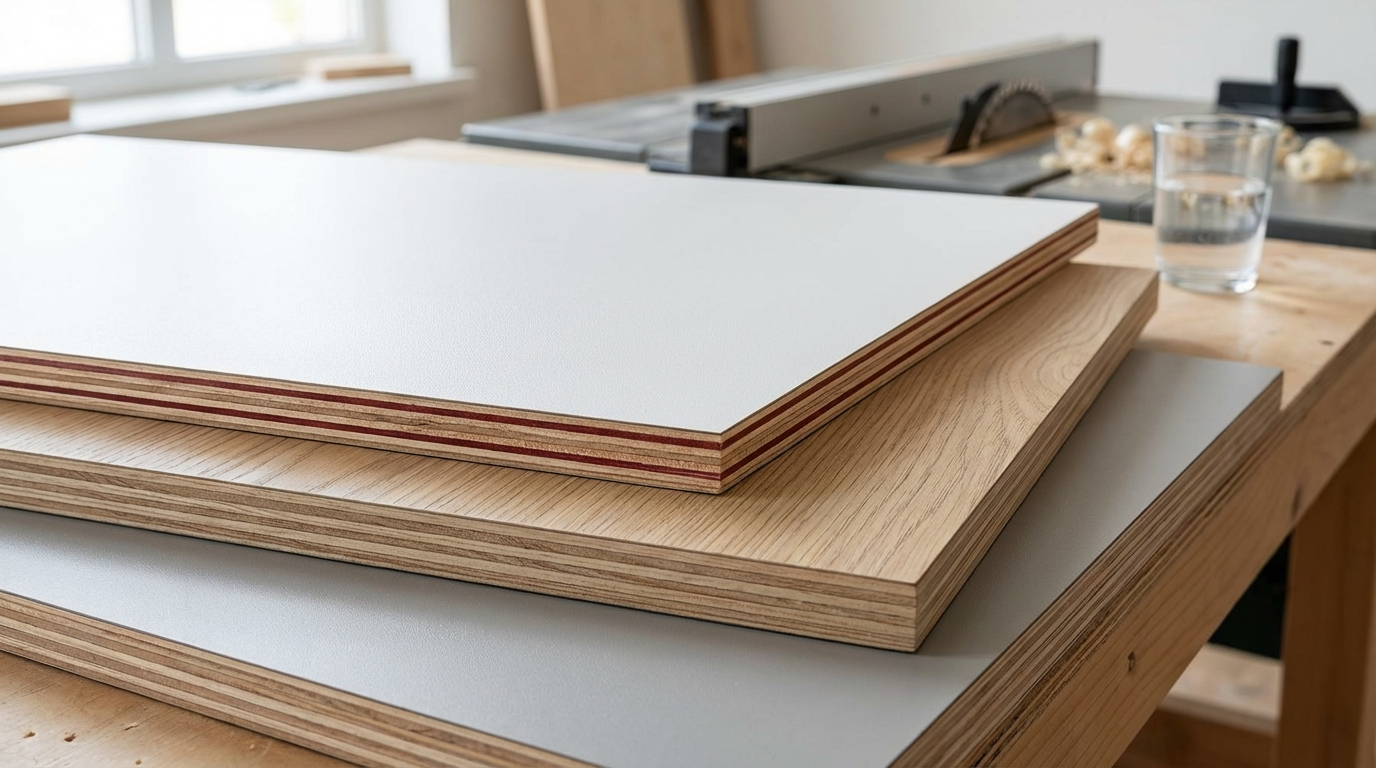
Pre-laminated plywood is a factory-finished panel where decorative laminate is permanently bonded to the plywood surface, eliminating the need for separate lamination at the carpenter's workshop. Available in melamine, PVC, and acrylic finishes, pre-laminated plywood offers consistent quality, faster furniture production, and cleaner edges—particularly valuable for modular kitchen cabinets, wardrobes, and commercial interiors across India.
At a Glance:
- Factory-bonded laminate on BWR or commercial-grade plywood core
- Common thicknesses: 6mm, 9mm, 12mm, 18mm, and 25mm
- Finish options: Melamine, PVC film, acrylic, and veneer overlays
- Price range: ₹45–₹120 per sq ft depending on core grade and finish type
- Best suited for: Modular furniture, kitchen cabinets, office partitions, retail fixtures
- Key advantage: Ready-to-use surface saves lamination time and labour costs
Pre-Laminated Plywood Explained: What Makes It Different
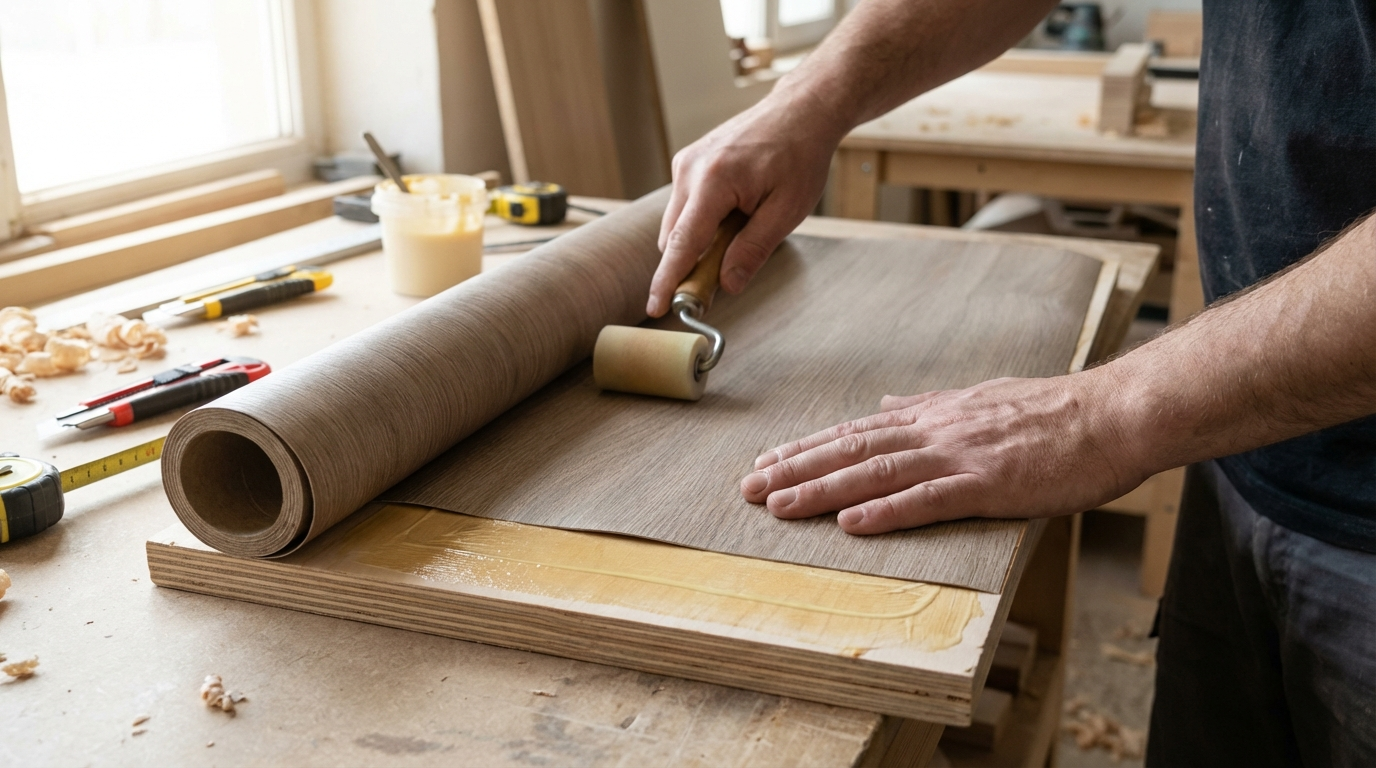
Pre-laminated plywood represents a significant shift from traditional furniture manufacturing practices in India. In conventional methods, carpenters purchase plain plywood, then separately buy decorative laminates, apply adhesive, and press them together using manual or mechanical means. This process introduces multiple variables—adhesive quality, pressing consistency, ambient humidity during application—each capable of causing premature delamination or bubbling.
With pre-laminated boards, the lamination happens under controlled factory conditions using high-pressure or heat-transfer bonding. The result is a molecularly consistent bond between the decorative surface and the plywood core that manual workshop application simply cannot match. This industrial-grade adhesion means the decorative layer becomes an integral part of the panel rather than a separate sheet vulnerable to edge lifting.
The Manufacturing Process
Production begins with selecting appropriate plywood cores—typically BWR (Boiling Water Resistant) grade for moisture-prone applications or commercial MR (Moisture Resistant) grade for dry interior use. The plywood surface undergoes sanding to achieve uniform smoothness, followed by application of specialized bonding agents. Decorative papers or films, pre-impregnated with melamine or other resins, are then positioned and fed through hot press machines operating at temperatures between 150°C and 200°C under pressures exceeding 20 kg/cm².
This combination of heat and pressure activates the resin, creating a thermosetting bond that becomes permanent upon cooling. The finished panels emerge with surfaces already scratch-resistant, stain-resistant, and ready for cutting. Unlike site-applied laminates where edge adhesion depends on carpenter skill, factory pre-lamination achieves consistent bond strength across the entire surface area.
Why Indian Furniture Markets Are Shifting to Prelam
The Indian market dynamics strongly favour pre-laminated solutions for several practical reasons. Rising labour costs in metropolitan areas make time-intensive manual lamination increasingly uneconomical. Modular kitchen manufacturers require predictable, scalable material quality that workshop lamination cannot guarantee. Additionally, the proliferation of CNC routing and edge-banding machines in organized furniture manufacturing demands dimensionally stable, factory-finished inputs. Pre-laminated plywood meets all these requirements while reducing material wastage from lamination failures.
Types of Pre-Laminated Plywood Available in India
The Indian market offers several pre-laminated plywood variants, each designed for specific applications and budget ranges. Understanding these categories helps buyers match products to their actual requirements rather than over-specifying or under-specifying materials.
Melamine Pre-Laminated Plywood
Melamine prelam dominates the commercial furniture segment due to its excellent balance of durability and cost-effectiveness. The surface consists of decorative paper saturated with melamine resin, pressed onto the plywood core. This creates a hard, scratch-resistant finish suitable for office furniture, retail shelving, and residential wardrobes in low-moisture areas. Melamine surfaces typically offer moderate heat resistance up to 120°C briefly, adequate for most furniture applications but not suitable for kitchen countertops near cooking ranges.
Available finishes include solid colours, wood grain reproductions, abstract patterns, and high-gloss options. The wood grain variants have become particularly popular for achieving an aesthetic similar to veneer at a fraction of the cost. Standard melamine prelam thickness ranges from 0.2mm to 0.4mm for the decorative layer, bonded to plywood cores from 6mm to 25mm.
PVC Film Laminated Plywood
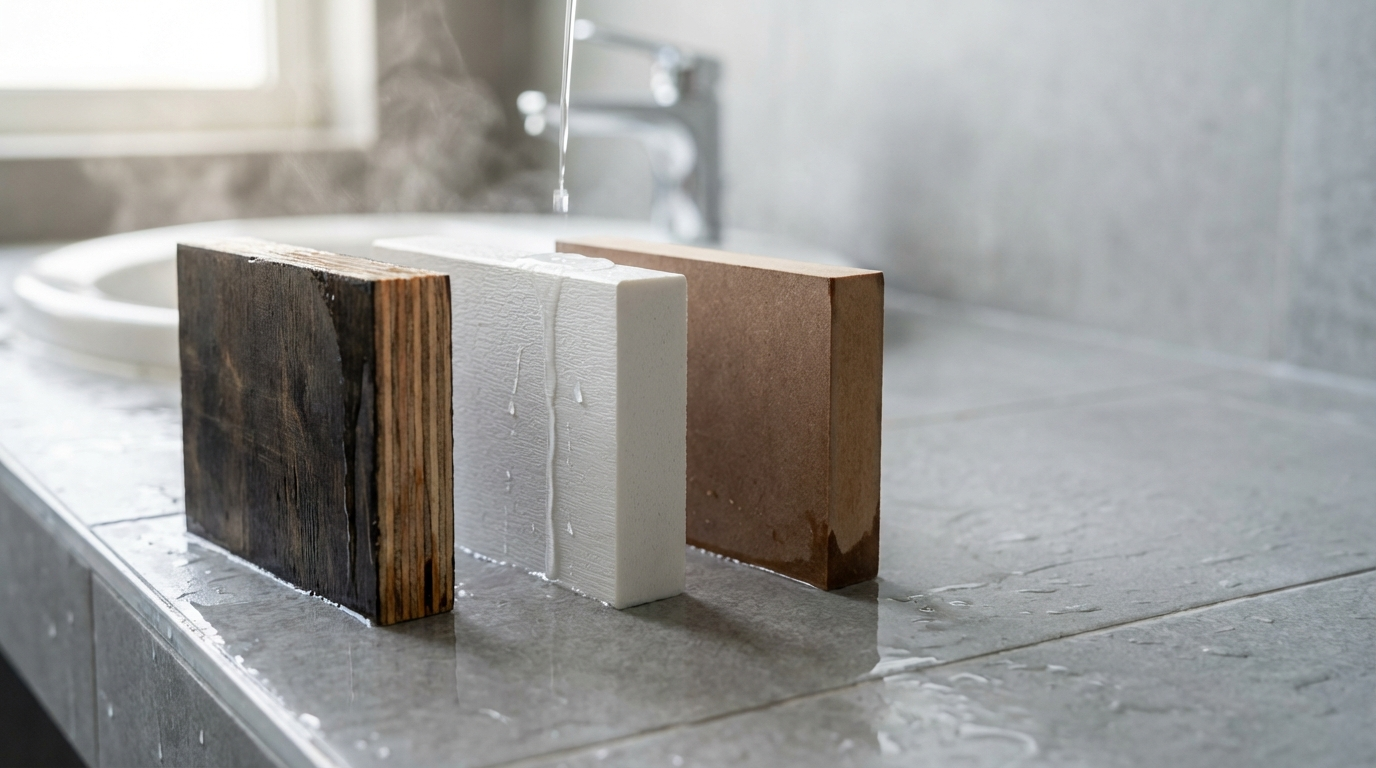
PVC film lamination uses thin polyvinyl chloride sheets instead of resin-impregnated papers. This variant excels in moisture resistance, making it suitable for bathroom vanities, laundry room cabinets, and commercial kitchen applications where water exposure occurs frequently. The PVC surface is inherently waterproof and can be wiped clean easily, though it offers less scratch resistance than melamine alternatives.
PVC prelam tends to cost slightly less than equivalent melamine options but has limitations in high-temperature environments where the film may soften or release from the substrate. For applications below 60°C ambient temperature with occasional water exposure, PVC film laminated plywood performs adequately.
Acrylic and High-Gloss Pre-Laminated Options
Premium applications demand acrylic-faced pre-laminated plywood, which delivers mirror-like gloss finishes impossible to achieve with melamine or PVC. Acrylic surfaces consist of PMMA (polymethyl methacrylate) sheets bonded under pressure, creating a depth of finish that resembles glass while maintaining workability. These panels command premium pricing—often three to four times standard melamine costs—but dominate high-end residential and commercial interior projects.
BWR Pre-Laminated Plywood for Wet Areas
When specifying pre-laminated plywood for kitchens or bathrooms, the core grade matters as much as the surface. BWR pre-laminated plywood combines the water-resistant core with appropriate surface lamination, providing integrated protection against moisture from both sides. The BWR core typically meets IS 303 standards for boiling water resistance, allowing the panel to maintain structural integrity despite humidity fluctuations common in Indian coastal cities and during monsoon seasons.
Comparison Table: Pre-Laminated Plywood Types
| Type | Surface Material | Water Resistance | Scratch Resistance | Price Range (₹/sq ft) | Best For |
|---|---|---|---|---|---|
| Melamine Prelam (MR Core) | Melamine resin paper | Low to Moderate | High | ₹45–₹65 | Wardrobes, office furniture, dry areas |
| Melamine Prelam (BWR Core) | Melamine resin paper | High | High | ₹55–₹80 | Kitchen cabinets, humid climate zones |
| PVC Film Laminated | PVC sheet | Very High | Moderate | ₹40–₹60 | Bathroom vanities, utility cabinets |
| Acrylic High-Gloss | PMMA acrylic | Moderate | Moderate to High | ₹120–₹200 | Premium kitchens, showrooms, retail |
| Veneer Pre-Laminated | Natural wood veneer | Low | Low to Moderate | ₹90–₹150 | Living room furniture, decorative panels |
| Textured Melamine | Embossed melamine paper | Moderate | High | ₹50–₹75 | Wood-look furniture, contemporary interiors |
How to Choose the Right Pre-Laminated Plywood
Selecting appropriate pre-laminated plywood requires evaluating multiple factors beyond surface appearance. The core grade, laminate type, thickness, and manufacturer quality controls all influence long-term performance. A systematic approach prevents costly mismatches between material specifications and application demands.
Core Grade Selection Framework
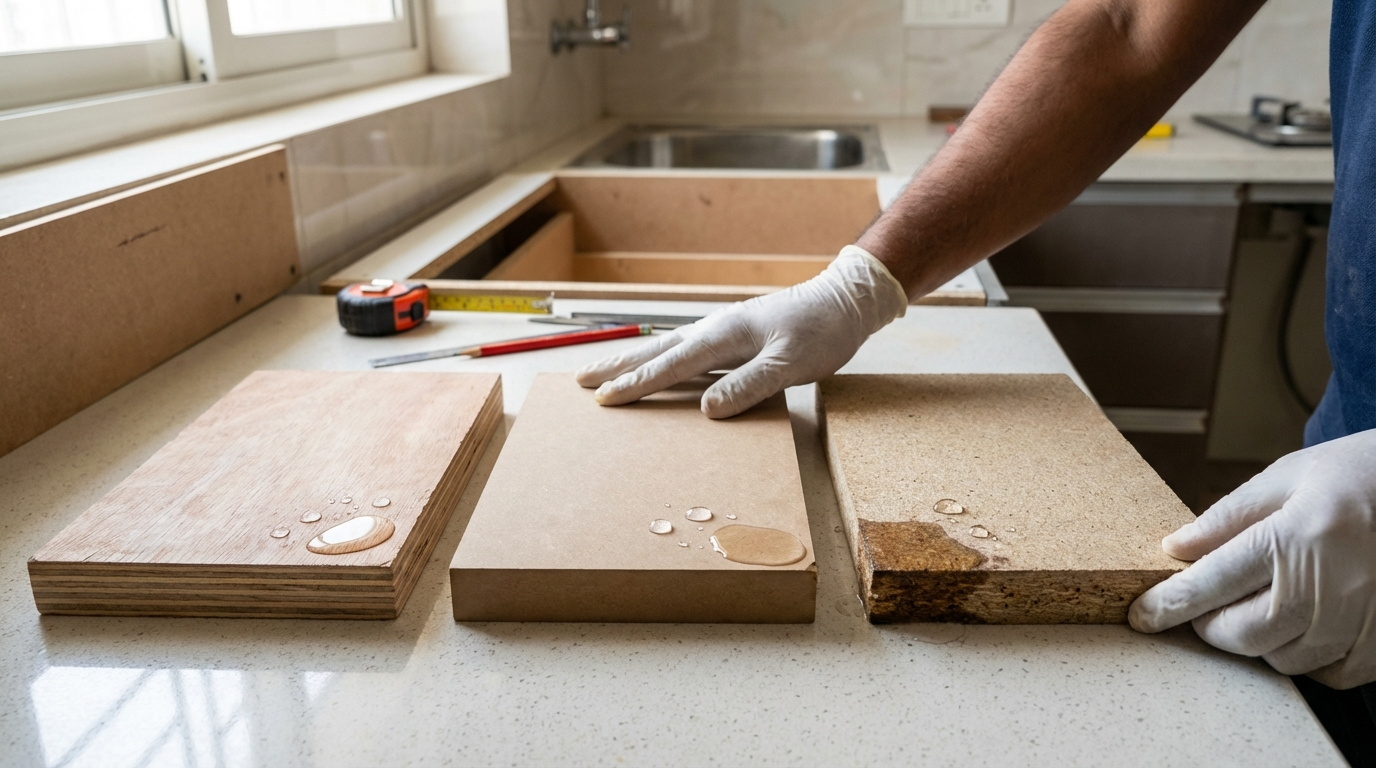
Begin with the moisture exposure profile of your application. For kitchen base units, sink cabinets, and bathroom furniture, BWR core pre-laminated plywood is non-negotiable—regardless of how attractive the surface laminate appears on a cheaper MR core option. The surface laminate cannot compensate for a moisture-susceptible core; water penetration through edges, hardware holes, or surface scratches will cause core swelling and eventual structural failure.
For wardrobes, study tables, office partitions, and similar dry-area applications, commercial MR core with quality lamination performs adequately and offers cost savings of 15–25% over BWR alternatives. The decision framework should prioritize worst-case moisture exposure rather than typical daily conditions.
Thickness Considerations for Different Applications
Pre-laminated plywood thickness selection follows similar principles to plain plywood, with additional considerations for the laminate layer. For cabinet carcasses and structural panels, 18mm or 19mm (trade size variations exist across brands) provides adequate rigidity. Shelving within wardrobes can use 12mm panels for spans under 600mm, while backs and dividers typically require only 6mm or 9mm material.
Note that the advertised thickness includes the laminate layer. An 18mm pre-laminated board typically consists of approximately 17.5mm plywood core with 0.2mm to 0.5mm laminate on each face. For structural calculations and hardware compatibility, this distinction matters—particularly when using European-style hinges and drawer systems calibrated to specific panel thicknesses.
Buyer Checklist: Pre-Laminated Plywood
- Verify core grade marking (IS 303 for BWR, IS 710 certification stamps)
- Check laminate adhesion by examining board edges for separation or bubbles
- Inspect surface for consistent colour and texture across multiple sheets from the same lot
- Confirm actual thickness with caliper measurement—variations beyond 0.5mm indicate quality issues
- Request test certificates from the dealer, particularly for branded products
- Assess surface hardness by light fingernail pressure—quality melamine should not mark
- Verify edge quality for CNC machining suitability if precision cutting is required
When NOT to Choose Pre-Laminated Plywood
Pre-laminated plywood is not universally superior to site lamination. Avoid prelam when you require custom veneer matching across large furniture pieces—factory lamination uses standardized patterns that may not align perfectly across multiple panels. For curved furniture elements requiring bending, plain plywood with post-form laminates performs better. Heritage restoration projects demanding authentic wood appearances also benefit from traditional veneer application rather than printed wood-grain prelam.
Additionally, extremely tight budgets may favour manual lamination with economy-grade laminates over prelam, though this trade-off sacrifices durability and finish consistency. In Tier-3 cities where prelam availability is limited, forcing this material into projects may result in inflated costs due to transport and dealer markup.
Common Mistakes to Avoid When Buying Pre-Laminated Plywood
Even experienced buyers and carpenters make avoidable errors with pre-laminated plywood that compromise project outcomes. Recognizing these pitfalls beforehand saves both money and reputation.
Ignoring Core Grade for Kitchen Applications
The most frequent and costly mistake involves using MR core prelam in kitchens to save costs. Within 18–24 months, water exposure from sink splashes, vegetable washing, and general humidity causes edge swelling and surface bubbling. Replacement costs far exceed the initial savings. Always specify BWR core for any kitchen furniture, regardless of how convincing the dealer's assurances about "improved MR grades" might be.
Mismatched Edge Banding
Pre-laminated plywood requires edge banding to conceal the exposed plywood layers. Many buyers purchase surface-matched edge tape separately, only to discover colour variations between the prelam surface and edge tape—even from the same manufacturer. Always purchase edge banding from the same lot as the prelam sheets, or request manufacturer-supplied matched tapes. This issue becomes particularly visible with solid colour laminates where even slight shade differences appear obvious.
Inadequate Acclimatization
Pre-laminated sheets delivered directly to humid coastal cities or during monsoon season require acclimatization before cutting. Installing panels within 24 hours of delivery—common practice under project time pressure—leads to dimensional changes after installation as the material equilibrates with ambient conditions. Allow 48–72 hours of storage in the installation environment before fabrication.
Over-reliance on Visual Inspection for Quality
Surface appearance tells only part of the quality story. A visually attractive prelam sheet may have inadequate laminate thickness, poor core-to-face bonding, or substandard plywood core hidden beneath the decorative surface. Without destructive testing, buyers must rely on brand reputation, certification marks, and dealer track record rather than visual inspection alone.
Quick Inspection Checks You Can Perform
- Edge tap test: Tap board edges firmly—hollow sounds suggest internal voids or delamination
- Corner flex test: Gently flex corners—quality prelam should not creak or show surface stress marks
- Scratch test: Light fingernail scratch on surface should leave no mark on quality melamine
- Weight assessment: Suspiciously lightweight 18mm sheets may indicate low-density core material
- Smell check: Strong chemical odours suggest inadequate curing or formaldehyde emission issues
Price Guide: Pre-Laminated Plywood in India 2025–2026
Pre-laminated plywood pricing in India varies significantly based on core grade, laminate type, brand positioning, and regional availability. The following ranges assume standard 8×4 feet sheet sizes with prices quoted per square foot for easier comparison across thicknesses.
Price Breakdown by Category
| Product Category | Thickness | Economy Brands (₹/sq ft) | Mid-Range Brands (₹/sq ft) | Premium Brands (₹/sq ft) |
|---|---|---|---|---|
| MR Core Melamine Prelam | 18mm | ₹42–₹50 | ₹50–₹65 | ₹65–₹85 |
| BWR Core Melamine Prelam | 18mm | ₹55–₹65 | ₹65–₹80 | ₹80–₹100 |
| PVC Film Laminated | 18mm | ₹38–₹48 | ₹48–₹60 | ₹60–₹75 |
| High-Gloss Acrylic | 18mm | ₹110–₹130 | ₹130–₹160 | ₹160–₹200 |
| Textured/Synchronized Prelam | 18mm | ₹55–₹65 | ₹65–₹85 | ₹85–₹110 |
Factors Affecting Price Variation
Geographic location significantly impacts pricing. Metropolitan areas like Mumbai, Delhi, and Bengaluru typically see 10–15% lower prices due to dealer competition and manufacturer presence. Tier-2 and Tier-3 cities bear additional transport costs and limited competition, pushing prices higher despite lower labour and overhead costs in those markets.
Brand positioning creates substantial price bands within each product category. Established brands with quality track records command premiums of 25–40% over unbranded or lesser-known alternatives. This premium often justifies itself through consistent quality, warranty support, and better resale value for furniture manufacturers.
Order quantity influences per-unit pricing. Modular kitchen manufacturers and bulk buyers negotiate 8–15% discounts through annual contracts or large project orders. Retail buyers purchasing single sheets pay list prices without volume benefits.
GST and transport add to landed costs. Current GST on plywood products stands at 18%, applied to base material cost. Transport from manufacturing hubs in Gujarat, Haryana, or South India to project sites adds ₹3–₹8 per sq ft depending on distance and logistics efficiency.
Applications and Best Use Cases
Pre-laminated plywood finds applications across residential, commercial, and institutional sectors. Understanding which applications benefit most from prelam helps allocate material budgets effectively.
Modular Kitchen Cabinets
The modular kitchen segment represents the largest consumer of BWR pre-laminated plywood in India. Cabinet carcasses, shelving, and interior components all benefit from factory-finished surfaces that resist kitchen moisture and simplify cleaning. Edge-banded prelam panels create hygienic, seamless surfaces essential for food preparation areas. The consistency of prelam quality also enables kitchen manufacturers to maintain warranty commitments with confidence.
Wardrobe and Bedroom Furniture
Residential wardrobes use substantial quantities of pre-laminated plywood for sides, tops, bases, shelving, and internal components. The variety of available finishes—from wood grains to solid colours—allows designers to match bedroom aesthetics without the cost of natural veneers. For this application, MR core prelam typically suffices unless the residence experiences high ambient humidity.
Office and Commercial Interiors
Workstations, partitions, storage units, and reception counters increasingly use pre-laminated plywood for its combination of durability and professional appearance. The scratch-resistant melamine surface withstands daily commercial use, while the range of solid colours enables brand colour integration. Fire-retardant variants are also available for applications requiring compliance with commercial building codes.
Retail Fixtures and Display Units
Retail environments demand quick installation, easy maintenance, and visual appeal—all strengths of pre-laminated plywood. Display shelving, checkout counters, storage rooms, and wall panelling use prelam extensively. High-gloss acrylic variants create premium retail environments for jewellery, electronics, and fashion retail where surface quality directly influences customer perception.
Frequently Asked Questions
What is the full form of prelam plywood?
Prelam is the abbreviated trade term for pre-laminated plywood, referring to plywood panels with decorative laminate surfaces applied during factory manufacturing rather than at the carpenter's workshop. The lamination occurs under controlled heat and pressure conditions, creating a permanent bond between the decorative surface layer and the plywood core. This differs from traditional field lamination where carpenters apply separate laminate sheets using contact adhesive.
Which is better: pre-laminated plywood or plain plywood with laminate?
Pre-laminated plywood offers superior bond consistency, faster project completion, and reduced labour costs compared to site lamination. However, plain plywood with site-applied laminate provides more flexibility for custom finishes, veneer matching, and curved applications. For standard modular furniture production, prelam is generally preferred. For bespoke furniture, heritage restoration, or applications requiring precise pattern matching across large surfaces, traditional lamination may be more appropriate despite higher labour requirements.
Is pre-laminated plywood waterproof?
The waterproof characteristics of pre-laminated plywood depend primarily on the core grade, not the laminate surface. BWR (Boiling Water Resistant) core prelam provides substantial moisture resistance suitable for kitchens and humid environments. The laminate surface adds additional water resistance on exposed faces, but edges and hardware holes remain vulnerable. No prelam should be considered fully waterproof for exterior applications or direct water immersion—even BWR grades are designed for water resistance rather than submersion.
What is the price of pre-laminated plywood per square foot in India?
Pre-laminated plywood prices in India typically range from ₹40–₹120 per square foot depending on core grade, laminate type, and brand. Economy MR core melamine prelam starts around ₹42–₹50 per sq ft, while premium BWR core variants with quality melamine surfaces range from ₹65–₹100 per sq ft. High-gloss acrylic prelam commands premium pricing of ₹120–₹200 per sq ft. These prices assume standard 18mm thickness and may vary by 10–20% based on city and dealer.
Can pre-laminated plywood be used for bathroom cabinets?
Yes, pre-laminated plywood is suitable for bathroom cabinets when specified correctly. Always use BWR core prelam with PVC or high-quality melamine surface lamination for bathroom applications. Ensure all edges are properly sealed with waterproof edge banding, and apply silicone sealant around hardware penetrations. Even with these precautions, avoid placing prelam cabinets where standing water contact occurs—use marine plywood alternatives for such extreme conditions.
How do I check the quality of pre-laminated plywood before buying?
Quality assessment involves multiple checks: verify ISI certification marks on the panel for core grade compliance, examine board edges for laminate-to-core separation or bubbling, check surface consistency across multiple sheets from the same batch, measure actual thickness with calipers to verify specifications, and perform fingernail scratch tests on the surface—quality melamine should not mark easily. Additionally, tap edges firmly to detect internal voids indicated by hollow sounds.
What thickness of pre-laminated plywood is best for kitchen cabinets?
For kitchen cabinet carcasses (sides, tops, bases), 18mm or 19mm BWR core pre-laminated plywood is the industry standard in India. This thickness provides adequate structural rigidity for standard cabinet spans and compatible with most European-style hardware. Internal shelving can use 12mm prelam for spans under 600mm. Cabinet backs and non-structural partitions require only 6mm or 9mm material. Always verify that the specified thickness includes the laminate layer when planning hardware compatibility.
Is pre-laminated plywood suitable for CNC machining?
High-quality pre-laminated plywood machines well on CNC routers when appropriate tooling and feed rates are used. The key requirements include consistent core density without internal voids, properly cured laminate that resists chipping, and uniform thickness across the sheet. Premium brands typically meet these requirements, while economy variants may exhibit edge chipping, surface delamination at routed profiles, or inconsistent cuts. Always test CNC compatibility with sample pieces before committing to production quantities.
Disclaimer: This content is provided for general informational purposes based on industry practices and publicly available information. Product specifications, standards, prices, and availability may vary by manufacturer, region, and time. Readers should independently verify details with manufacturers, dealers, or qualified professionals before making purchase or construction decisions.Want Plywood Suggestions?
Share a few details and a Apple Ply specialist will suggest suitable brands and connect you to responsive dealers.