Plywood for Beds: Which Type & Thickness is Best?
Find the best plywood for bed construction. Compare types, recommended thickness & calculate how much plywood you need for your bed frame.
Quick Answer
The best plywood for beds in India is BWR (Boiling Water Resistant) grade plywood in 18mm thickness for the base frame and 12mm for the mattress support platform. This combination offers the right balance of strength, moisture resistance, and cost-effectiveness for typical Indian bedroom conditions where humidity fluctuates seasonally.
At a Glance
- Recommended Grade: BWR (Boiling Water Resistant) or MR Plus for most bedrooms
- Ideal Thickness: 18mm for frame structure, 12mm for mattress platform
- Budget Option: Commercial grade (MR) works for dry, well-ventilated rooms
- Premium Choice: Marine plywood for coastal areas or ground-floor bedrooms with dampness
- Avoid: Anything below 12mm for mattress support—causes sagging within months
- Typical Requirement: 2–3 sheets of 8×4 feet plywood for a standard double bed
Understanding Plywood for Bed Construction
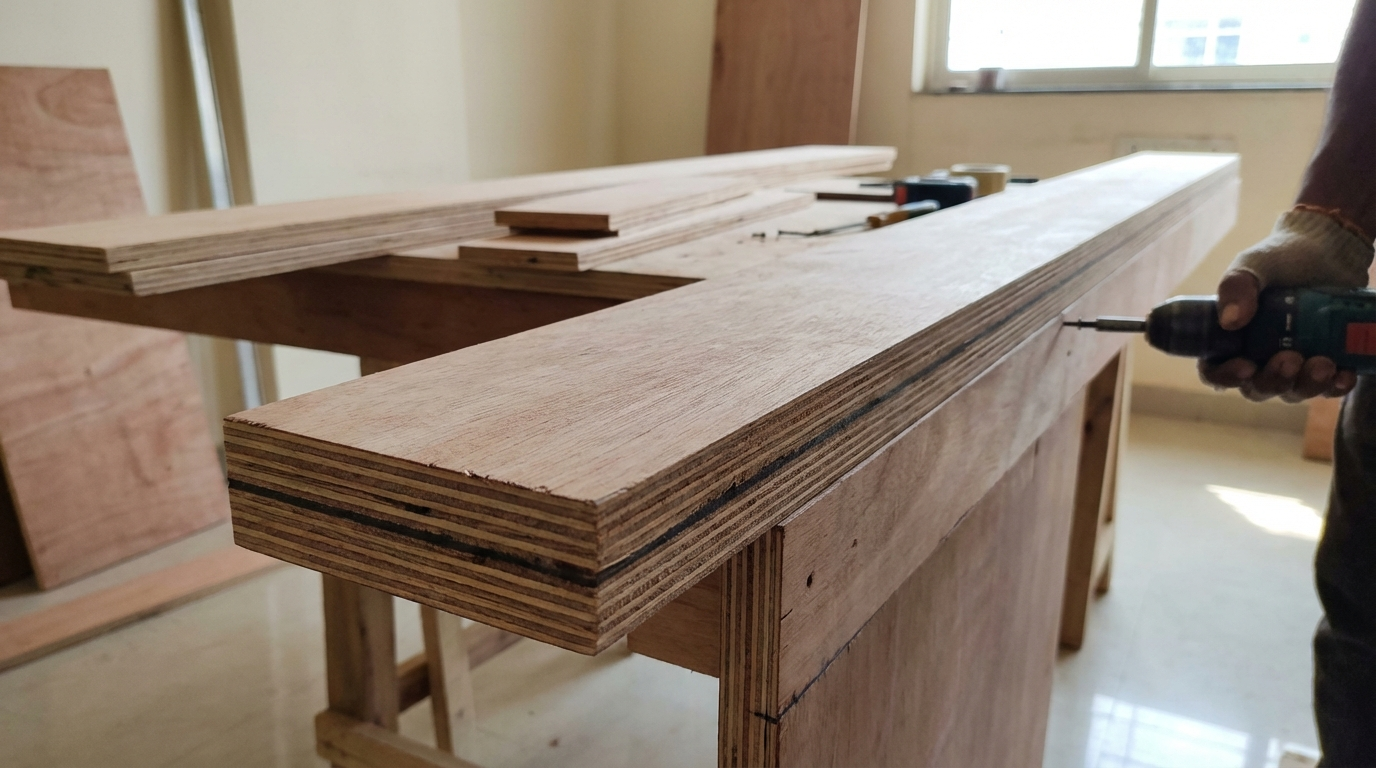
Plywood serves two distinct structural purposes in bed construction: forming the rigid frame that holds everything together, and creating the platform that directly supports your mattress and body weight. Understanding this distinction helps you make smarter purchasing decisions rather than blindly following dealer recommendations.
The frame components—headboard, footboard, and side rails—bear lateral stress and must resist warping over years of use. These sections need plywood with good dimensional stability and screw-holding capacity. The platform or base, however, faces continuous downward pressure from body weight, making thickness and core quality critical factors.
Why Plywood Quality Matters for Beds
A typical double bed supports 150–200 kg of combined weight (mattress plus occupants) distributed across the platform area. Poor-quality plywood with voids in the core layers will develop stress cracks and eventually sag in the centre, creating an uncomfortable sleeping surface and potential structural failure.
In Indian conditions, beds also face humidity cycling—plywood expands during monsoons and contracts in dry winter months. Low-grade commercial plywood without proper moisture resistance will warp, causing visible gaps between joints and squeaking sounds during use. This is particularly problematic in ground-floor bedrooms or homes without air conditioning where humidity levels swing dramatically.
The Core Construction Factor
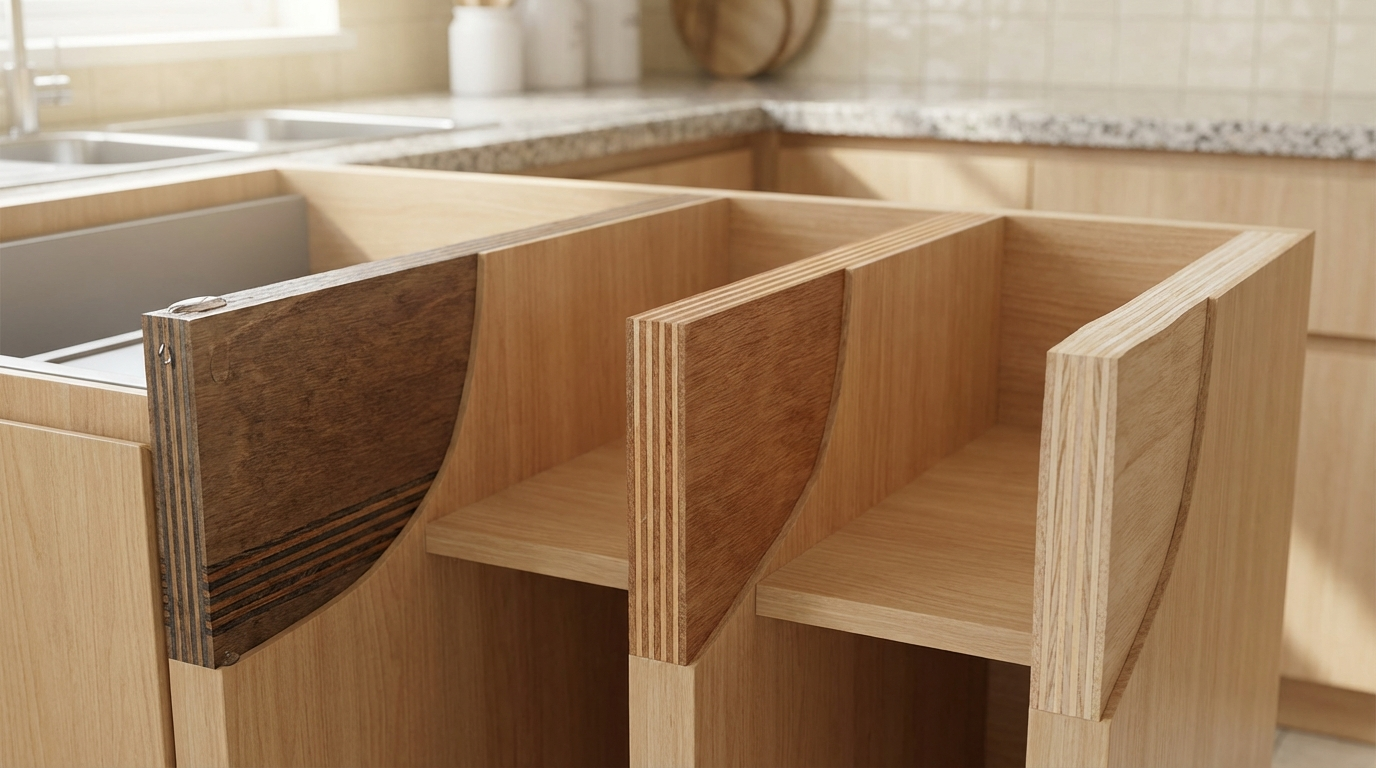
Plywood quality depends heavily on the wood species used in core veneers. Premium brands use uniform hardwood cores (often Gurjan or Eucalyptus), while budget options mix softwood with hardwood, creating inconsistent strength. For bed applications, always check the core by examining the edge—evenly spaced, gap-free layers indicate better construction. Voids or overlapping veneers suggest manufacturing shortcuts that will compromise long-term performance.
Types of Plywood Suitable for Beds
Not all plywood grades are appropriate for bed construction. The Indian market offers several distinct categories, each with specific characteristics that make them suitable—or unsuitable—for bedroom furniture applications.
MR Grade (Commercial Plywood)
MR (Moisture Resistant) plywood uses urea-formaldehyde adhesive that withstands occasional moisture exposure but isn't designed for prolonged humidity. For bedrooms in dry climate zones like Rajasthan, Punjab, or Delhi during most months, MR grade works adequately for bed construction. It's the most affordable option, typically costing 30–40% less than BWR alternatives. However, in coastal cities, humid southern states, or ground-floor bedrooms, MR plywood can delaminate within 3–4 years.
BWR Grade (Boiling Water Resistant)
BWR plywood, made with phenol-formaldehyde resin, handles humidity cycling far better than MR grade. This is the recommended choice for most Indian bedrooms, striking the right balance between cost and durability. The adhesive doesn't break down with seasonal humidity changes, and the plywood maintains dimensional stability year-round. For beds, BWR grade ensures the frame joints stay tight and the platform doesn't develop waves or sags from moisture absorption.
Marine Grade Plywood
Marine plywood represents the highest moisture resistance, designed for boat-building applications. While excellent in quality, it's typically overkill for bed construction unless you're in extremely humid coastal areas (Kochi, Chennai, Mumbai seafront, Kolkata) or have ground-floor bedrooms with persistent dampness. The price premium of 50–70% over BWR often isn't justified for bedroom use.
Calibrated Plywood
Calibrated or sanded plywood offers uniform thickness across the entire sheet, essential for CNC-cut modular bed designs. If your carpenter uses modern machinery or you're ordering factory-made bed components, specify calibrated plywood to ensure precise fitting. Standard plywood can vary by 1–2mm across a single sheet, causing alignment problems in precision manufacturing.
Plywood Thickness Comparison for Bed Components
Different bed components require different thicknesses based on the structural load they bear. Using inappropriate thickness is the most common mistake, often made to save money but resulting in premature failure.
| Bed Component | Recommended Thickness | Minimum Acceptable | Load Type | Failure Risk if Under-Specified |
|---|---|---|---|---|
| Mattress Platform (Single Piece) | 18mm | 16mm | Continuous downward pressure | Centre sagging within 1–2 years |
| Mattress Platform (With Cross Support) | 12mm | 12mm | Distributed pressure | Cracking between supports |
| Side Rails/Frame | 18mm | 16mm | Lateral and vertical stress | Joint loosening, wobbling |
| Headboard (Decorative) | 12mm | 9mm | Minimal structural load | Warping if thin in humid areas |
| Headboard (Functional/Leaning) | 18mm | 16mm | Backward pressure from leaning | Cracking at mounting points |
| Storage Box Base | 12mm | 9mm | Static storage weight | Bowing under heavy items |
| Storage Box Sides | 12mm | 9mm | Lateral pressure | Warping and joint gaps |
| Hydraulic Lift Base | 18mm | 18mm | Dynamic stress from mechanism | Mechanism mounting failure |
The 18mm vs 19mm Confusion
In Indian markets, you'll hear dealers refer to both 18mm and 19mm plywood—these are typically the same product. The nominal thickness is 19mm, but after calibration and sanding, most sheets measure 17.5–18.5mm. Don't get confused or think you're being offered different products. When ordering, specify "19mm commercial thickness" or "18mm calibrated" to clarify your expectation.
How to Choose the Right Plywood for Your Bed
Selecting appropriate plywood requires evaluating multiple factors beyond just price. A systematic approach prevents both overspending on unnecessary quality and underspending on critical components.
Decision Framework
Step 1: Assess Your Location
Coastal cities, hill stations, and ground-floor apartments need BWR minimum. Dry inland cities with upper-floor bedrooms can consider MR grade for budget savings.
Step 2: Determine Bed Design Complexity
Simple platform beds tolerate minor plywood inconsistencies. Storage beds with hydraulic mechanisms or modular designs with CNC-cut parts need calibrated, high-grade plywood.
Step 3: Evaluate Long-Term Plans
If this bed serves 10+ years, invest in BWR with good brand backing. For rental properties or temporary setups, MR grade offers acceptable 4–5 year lifespan.
Buyer's Checklist
- Check ISI mark (IS:303 for MR, IS:710 for Marine/BWR) stamped on the plywood—not just on stickers
- Examine core layers from the edge—look for consistent veneer thickness without voids
- Tap the sheet surface—solid sound indicates dense core; hollow sound suggests voids
- Verify sheet dimensions match stated size (8×4 feet sheets are often 1–2 inches short)
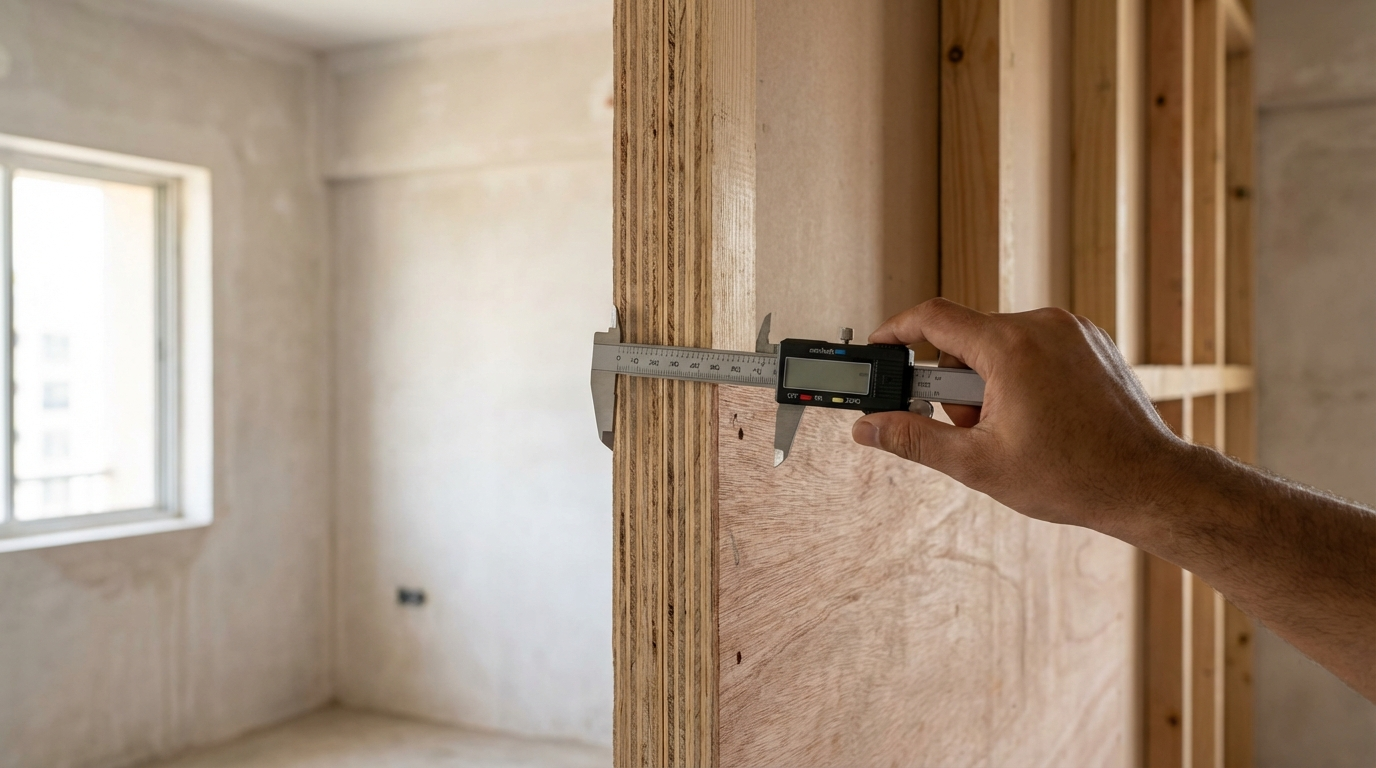
- Confirm thickness with a calliper at multiple points, especially for calibrated claims
- Request the same batch for all sheets to ensure colour and grain consistency
- Ask about warranty terms in writing, not just verbal promises
When NOT to Choose Plywood
Plywood isn't always the optimal material for beds. Consider alternatives in these scenarios:
- Extremely humid environments: HDHMR or marine-grade block boards offer superior moisture resistance for severe dampness
- Ultra-budget constraints: Engineered particle board beds from reputable brands may outperform cheap local plywood
- Termite-prone areas: Solid treated wood or metal frames may be more reliable long-term despite higher costs
- Weight-sensitive designs: Block board provides equivalent strength at lower weight for wall-mounted or fold-out bed mechanisms
Common Mistakes to Avoid When Buying Plywood for Beds
Years of observing the Indian plywood market reveal consistent patterns of buyer errors. Avoiding these mistakes saves money and ensures your bed performs reliably.
Mistake 1: Choosing Based on Face Veneer Alone
An attractive face veneer tells you nothing about core quality. Dealers often display sheets with premium teak or oak faces but inferior poplar or softwood cores. The face is cosmetic; the core determines structural integrity. Always inspect the edge, not just the surface.
Mistake 2: Skimping on Platform Thickness
Using 9mm plywood for mattress platforms—even with support slats—causes gradual sagging. The cost difference between 9mm and 12mm for a bed platform is ₹300–500 total, yet 9mm fails within 18 months under regular use. This false economy is the single most common bed construction error.
Mistake 3: Using MR Grade in Humid Cities
Mumbai, Chennai, Kolkata, and Kerala's humidity levels cause MR-grade plywood to swell, warp, and eventually delaminate. The ₹15–20 per sq ft savings on MR versus BWR results in complete bed replacement within 4–5 years—a poor trade-off.
Mistake 4: Ignoring Acclimatisation
Plywood should sit in your home for 48–72 hours before cutting and assembly. This allows the material to adjust to local humidity levels, reducing post-installation warping. Carpenters rushing to complete jobs often skip this step.
Mistake 5: Trusting Unbranded "BWR" Claims
Many local mills stamp "BWR" on MR-grade plywood to command higher prices. Without ISI certification (IS:710) or reputable brand backing, these claims are unverifiable. Branded plywood costs more but delivers genuine specifications.
Quick Inspection Checks
- Water drop test: Place water drops on the surface—immediate absorption indicates poor face quality
- Bend test: Slight flexing shouldn't cause cracking sounds from core layers
- Weight check: Heavier sheets of same thickness typically indicate denser, better-quality cores
- Edge inspection: Run your finger along cut edges—splinters and voids indicate poor manufacturing
- Stamp verification: ISI marks should be embossed or printed on the wood, not on removable stickers
Plywood Price Guide for Bed Construction
Plywood pricing in India varies significantly based on grade, thickness, brand tier, and regional availability. The following ranges assume standard 8×4 feet sheets purchased from authorised dealers in Tier-1 cities. Tier-2 and Tier-3 city prices may be 10–20% higher due to transport costs.
| Plywood Type | Thickness | Budget Brand (₹/sheet) | Mid-Range Brand (₹/sheet) | Premium Brand (₹/sheet) |
|---|---|---|---|---|
| MR Grade Commercial | 12mm | ₹1,200–1,500 | ₹1,600–2,000 | ₹2,100–2,500 |
| MR Grade Commercial | 18mm | ₹1,800–2,200 | ₹2,400–2,900 | ₹3,000–3,600 |
| BWR Grade | 12mm | ₹1,800–2,200 | ₹2,400–2,800 | ₹3,000–3,500 |
| BWR Grade | 18mm | ₹2,600–3,200 | ₹3,400–4,000 | ₹4,200–5,000 |
| Marine Grade | 12mm | ₹2,800–3,400 | ₹3,600–4,200 | ₹4,500–5,500 |
| Marine Grade | 18mm | ₹4,000–4,800 | ₹5,000–6,000 | ₹6,500–8,000 |
What Drives Price Variation
Core wood species: Gurjan and hardwood cores cost 25–40% more than poplar or softwood cores but offer superior strength and screw retention.
Number of plies: More layers in the same thickness (e.g., 9-ply vs 7-ply in 18mm) means thinner veneers, more glue lines, and generally better stability—but higher cost.
Calibration: Sanded, calibrated sheets command 15–20% premium over rough-cut alternatives but are essential for CNC work.
Brand warranty: Plywood with 10–20 year warranty backing from established brands costs more but offers genuine recourse if defects emerge.
Calculating Your Bed Requirement
A standard queen-size bed (5×6.5 feet) typically requires:
- 1 sheet of 18mm for frame sides and rails
- 1 sheet of 12mm or 18mm for platform
- 0.5–1 sheet of 12mm for headboard and storage components
Total: 2–3 sheets for basic construction. Storage beds with hydraulic mechanisms require an additional sheet. Always order 10–15% extra for cutting waste and potential rework.
Regional Considerations for Indian Buyers
India's climate diversity means plywood selection must account for local conditions. What works in Jaipur won't necessarily perform well in Kochi.
Coastal and High-Humidity Zones
Cities like Mumbai, Chennai, Kolkata, Visakhapatnam, and all of Kerala experience sustained high humidity (70–90% RH) for extended periods. In these regions:
- BWR grade is minimum; marine grade advisable for ground floors
- Termite treatment on all plywood is essential, not optional
- Edge sealing with PU sealant prevents moisture ingress from exposed cuts
- Storage bed bases need ventilation holes to prevent moisture accumulation
Dry Northern and Western Zones
Delhi, Jaipur, Ahmedabad, and interior Punjab experience low humidity (20–40% RH) for much of the year. Here:
- MR grade is acceptable for upper-floor bedrooms
- Air conditioning accelerates moisture loss—ensure adequate acclimatisation
- Extreme summer heat can affect adhesive quality in very cheap plywood
Termite-Prone Areas
Much of South India, parts of Gujarat, and humid eastern regions face significant termite risk. Even BWR plywood is vulnerable to borer and termite attack—the adhesive resists water, not insects. Specify borer-treated plywood or apply external anti-termite treatment during installation. Beds directly on floors (rather than on legs) are particularly vulnerable.
Carpenter's Perspective on Bed Plywood
Experienced carpenters bring practical insights that pure technical specifications miss. Their hands-on experience with cutting, joining, and installing reveals real-world performance patterns.
Screw Holding Capacity Matters
Bed frames endure repeated stress at screw joints—every time someone sits on the bed edge or the bed is moved for cleaning. Softwood-core plywood strips easily, loosening joints within months. Hardwood cores from quality brands hold screws securely even after multiple removal-reinstallation cycles, which matters for knockdown furniture designs.
Edge Banding Realities
If your bed design includes visible plywood edges (common in modern minimalist styles), core quality affects edge-banding adhesion. Plywood with voids or uneven cores creates bubbling and peeling of edge bands over time. Either specify void-free calibrated plywood or design the bed to hide all edges under lipping or laminate overlap.
The Weight Factor
A queen-size bed frame uses substantial plywood, totalling 40–60 kg. For upper-floor installations, carpenters must carry this material up staircases. More importantly, the finished bed weight affects floor loading and ease of movement. In older buildings with questionable floor strength, consider block board alternatives that offer similar strength at 20–25% less weight.
Frequently Asked Questions
Which plywood thickness is best for a double bed base?
For a standard double bed mattress platform, 18mm BWR-grade plywood is ideal when used as a single sheet without intermediate supports. If your design includes cross slats or support beams spaced every 12–18 inches, you can reduce to 12mm plywood while maintaining adequate load-bearing capacity. Going below 12mm for any mattress-support application is not advisable, as progressive sagging becomes inevitable regardless of the support structure beneath.
Is MR plywood good enough for bed construction?
MR (Moisture Resistant) plywood works adequately for beds in dry climate zones like Rajasthan, Delhi, or interior Maharashtra, especially in air-conditioned bedrooms or upper-floor apartments with good ventilation. However, for coastal cities, ground-floor bedrooms, or any space with persistent humidity above 60%, BWR grade is strongly recommended. The 20–30% cost premium for BWR prevents delamination and warping issues that typically emerge after 3–4 monsoon cycles with MR-grade plywood.
How many plywood sheets do I need for a king-size bed?
A king-size bed (6×6.5 feet or 72×78 inches) typically requires 3–4 sheets of 8×4 feet plywood. Budget approximately one sheet of 18mm for the frame structure, one sheet of 12–18mm for the mattress platform, and one to two additional sheets for the headboard, storage components, and cutting waste. Hydraulic storage beds with lift mechanisms need an extra sheet. Always confirm requirements with your carpenter based on the specific design, as elaborate headboards or additional storage compartments increase material needs.
What is the difference between BWR and Marine plywood for beds?
Both BWR and Marine plywood use phenol-formaldehyde adhesive for water resistance, but Marine grade has stricter manufacturing standards. Marine plywood requires completely void-free cores, more uniform veneer thickness, and typically uses higher-quality hardwood throughout. For bed applications, this difference rarely matters—BWR provides sufficient moisture resistance for bedroom conditions. Marine plywood is justified only in exceptionally humid coastal bedrooms, ground-floor situations with rising dampness, or when the bed might face actual water exposure.
Can I use 12mm plywood for the entire bed frame?
Using 12mm plywood throughout is possible but requires careful structural design. The side rails and platform frame should incorporate additional bracing or support components to compensate for reduced thickness. Headboards and footboards can safely use 12mm if they're purely decorative. For structural headboards that people lean against, 18mm remains advisable. The cost savings from using 12mm throughout typically amount to ₹800–1,500 per bed but may compromise durability if the design doesn't account for reduced structural strength.
How do I verify if plywood is genuinely BWR grade?
Genuine BWR plywood should carry the IS:710 mark from the Bureau of Indian Standards, ideally embossed or printed directly on the wood rather than on removable stickers. Additionally, check for the manufacturer's brand name and batch number on the sheet. Reputable brands maintain batch traceability. For definitive testing, submerge a small cut piece in boiling water for 2–4 hours—genuine BWR-grade plywood won't delaminate or show significant swelling, while MR grade will show visible layer separation.
Is termite-treated plywood necessary for beds?
In termite-prone regions—most of South India, coastal areas, and humid eastern states—termite-treated plywood is a wise investment for beds. Plywood that contacts walls or sits close to floors is particularly vulnerable. The treatment adds approximately ₹50–100 per sheet but prevents potentially devastating termite damage. In dry northern regions with minimal termite activity or upper-floor apartments in concrete buildings, the treatment is less critical. When in doubt, the modest cost of treatment provides peace of mind.
What is the price of 18mm plywood for beds in India?
The price of 18mm plywood for beds varies significantly based on grade and brand. Commercial MR-grade 18mm plywood from budget brands starts around ₹1,800–2,200 per 8×4 feet sheet, while mid-range options cost ₹2,400–3,000. BWR-grade 18mm sheets range from ₹2,600–5,000 depending on brand tier. Premium branded plywood with comprehensive warranties can exceed ₹5,000 per sheet. Prices in Tier-2 and Tier-3 cities may be 10–20% higher due to transport and distribution costs. Always factor in 10–15% extra material for cutting waste.
Disclaimer: This content is provided for general informational purposes based on industry practices and publicly available information. Product specifications, standards, prices, and availability may vary by manufacturer, region, and time. Readers should independently verify details with manufacturers, dealers, or qualified professionals before making purchase or construction decisions.Want Plywood Suggestions?
Share a few details and a Apple Ply specialist will suggest suitable brands and connect you to responsive dealers.