Particle Board vs Plywood for Cabinets – Pros & Cons
Deciding between plywood and particle board for cabinets? We break down the pros and cons – comparing strength, cost, and lifespan for each option.
Understanding Particle Board and Plywood: Core Differences for Cabinet Use
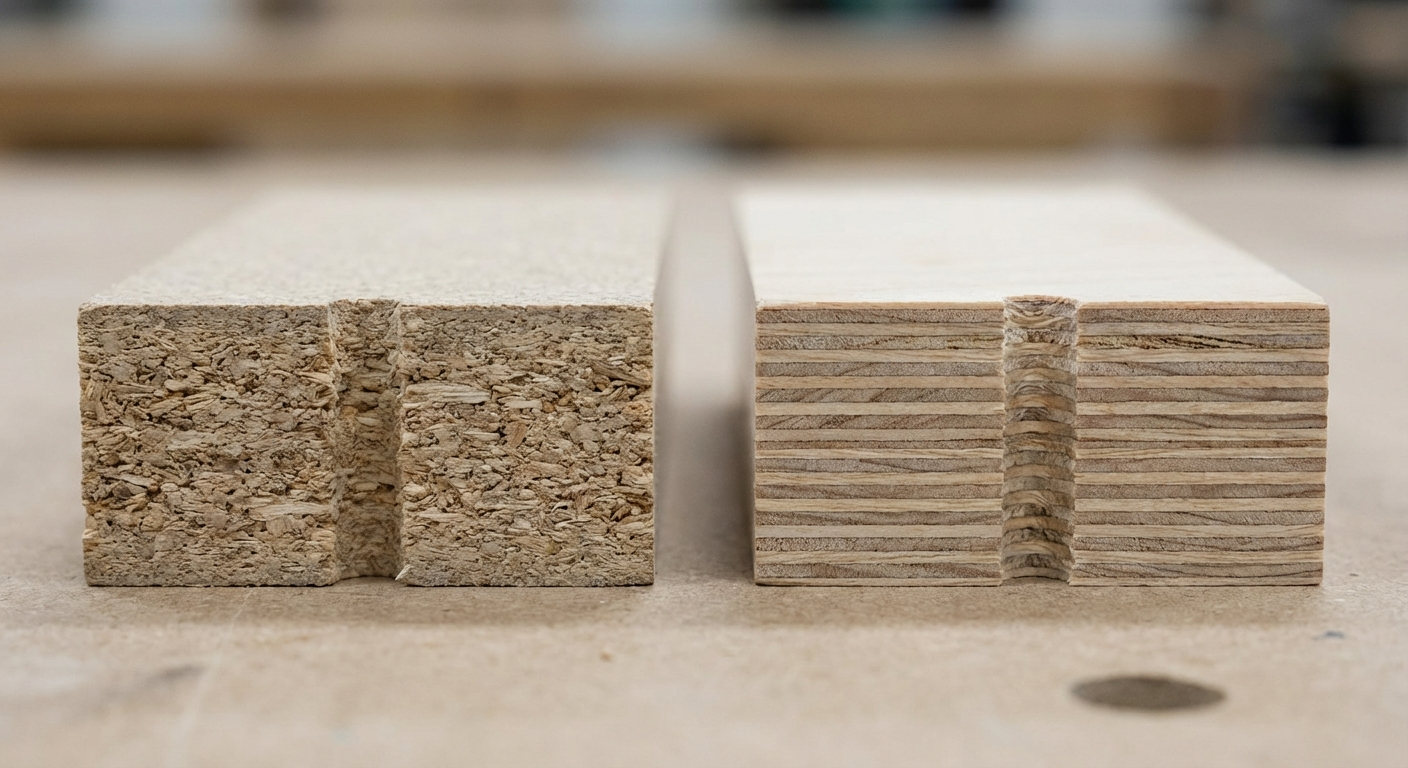
Particle board and plywood represent two foundational engineered wood options for cabinets, each with distinct construction methods that directly impact their suitability for Indian kitchens and wardrobes. Particle board, often called chipboard, starts with wood particles like sawdust and chips mixed with resin, compressed under heat and pressure into flat sheets. This results in a uniform, dense material that's smooth on the surface but internally uniform without layers. Plywood, by contrast, layers thin veneers of wood glued cross-grain—meaning fibers run perpendicular between sheets—for superior stability and strength.
For cabinets, the early verdict is clear: plywood edges out particle board in demanding scenarios like heavy-use modular kitchens, where doors slam daily and shelves bear utensils. Particle board shines in low-moisture, budget wardrobes. Why? Plywood's cross-laminated structure resists warping under load, while particle board's particle makeup can crumble if edges chip. In Indian homes, where cabinets often double as storage for spices or cookware amid fluctuating temperatures, this difference compounds over time.
Consider a typical Chennai apartment: monsoon humidity swells particle board edges if not edge-banded perfectly, leading to sagging shelves. Plywood handles such swings better due to balanced expansion. Particle board's uniformity aids CNC machining for precise modular cuts, popular in South Indian showrooms. Yet, plywood's natural wood base accepts screws better, reducing hinge failures. Thickness matters too—18mm particle board mimics plywood's heft but at half the weight, easing transport for dealers.
From a carpenter's lens, particle board cuts faster with minimal splintering, ideal for quick wardrobe assemblies. Plywood demands sharper blades to avoid veneer tear-out but yields stronger joints. Indian buyers often overlook glue quality; phenolic resins in better particle boards boost water resistance, while plywood's urea-formaldehyde bonds prioritize strength. This foundational grasp sets the stage for deeper comparisons, ensuring choices align with real-world cabinet stresses like weight from steel plates or vibrations from blenders.
In essence, select particle board for cost-sensitive, enclosed cabinets; plywood for exposed, load-bearing ones. This isn't mere theory—it's drawn from decades observing Indian installations where premature failures trace back to mismatched material strengths.
Strength and Durability: Why Plywood Wins for Heavy-Duty Cabinets
Cabinet strength boils down to load-bearing capacity, screw-holding power, and resistance to impacts—critical in bustling Indian households. Plywood's layered veneers create a composite far tougher than particle board's monolithic particle matrix. A 18mm plywood shelf, for instance, supports 50-70kg per running foot without sagging, versus particle board's 30-50kg limit before edges compress.
This gap widens under screws: plywood's dense core grips fasteners 2-3 times longer, preventing loose hinges in kitchen cabinets. Particle board's resin-wood mix swells around screws, loosening over months—common in Delhi homes with frequent door use. Impact resistance follows suit; dropped utensils dent particle board deeply, while plywood absorbs shocks via flex.
In India, why this matters: wardrobes stack heavy sarees or bedsheets, and kitchen cabinets hold pressure cookers. Plywood's cross-grain prevents delamination under shear forces, unlike particle board's vulnerability to edge crushing during assembly. Coastal Kerala cabinets face salt-laden air eroding particle bonds faster; plywood's harder face veneers endure.
Carpenters note plywood's screw withdrawal strength exceeds 200kg per fastener versus particle board's 80-100kg, vital for adjustable shelves. Failures abound: particle board cabinets in Mumbai high-rises sag after two years, doors misaligning. Plywood, though pricier upfront, halves replacement calls. For modular CNC cabinets, particle board's flatness aids routing, but plywood's stability suits curved designs.
Edge cases highlight trade-offs: ultra-thin 12mm particle board suffices for lightweight vanity cabinets, but plywood remains king for base units. Logical extension—combine them: plywood carcasses with particle board backs. Durability isn't static; proper sealing amplifies both, but plywood's inherent edge ensures longevity in India's variable climates.
Cost Breakdown: Balancing Budget with Cabinet Longevity
Cost drives 70% of Indian cabinet decisions, with particle board typically 40-60% cheaper than plywood per sheet. An 8x4ft 18mm particle board runs ₹2000-3000, while equivalent plywood costs ₹3500-5000. For a standard 10ft kitchen run, particle board totals ₹25,000-35,000; plywood ₹40,000-55,000, excluding laminates.
Why the premium? Plywood uses whole veneers from hardwoods like poplar or eucalyptus, processed meticulously. Particle board recycles waste wood, slashing raw costs. Hidden expenses tilt the scale: particle board demands thicker edge banding (₹50-100/meter extra) to mask swelling, and repairs for sagging add ₹5000 yearly in labor.
In India, dealer markups inflate both, but particle board's popularity in tier-2 cities like Coimbatore stems from affordability for middle-class modular setups. Plywood justifies itself via lifespan—15-20 years versus particle board's 7-10—yielding lower lifecycle costs. Bangalore apartments favor plywood for resale value; distressed particle cabinets signal cheap builds.
Carpenter insights: particle board wastes less in cuts, saving 10-15% material. Yet, plywood's reusability in renovations offsets premiums. South Indian monsoon logic: unsealed particle board fails faster, negating savings. Bulk buys from wholesalers drop plywood to near-parity for large projects.
Trade-off clarity: budget wardrobes in dry Pune homes lean particle; humid Hyderabad kitchens demand plywood. Factor labor—particle board assembles 20% quicker, trimming ₹2000-3000/install. Value equation: if cabinets last home occupancy (10+ years), plywood saves via durability. Short-term rentals? Particle board rules.
Moisture Resistance: Essential for India's Humid Conditions
Humidity ravages cabinets, causing swelling, delamination, or mold—particle board suffers most due to its absorbent particles. Even MR (moisture-resistant) grades swell 10-15% in 90% RH, versus plywood's 2-5%. BWR plywood (boiling water resistant) shrugs off spills, ideal for Indian kitchens.
Why India-specific? Monsoons in Mumbai or Chennai push RH to 95%, warping particle edges despite lamination. Coastal Tamil Nadu salt accelerates bond breakdown in particle board. Plywood's hydrophobic glues and sealed veneers maintain flatness, preventing door gaps.
Practical failures: particle board cabinets in Kerala homes bubble after steam from idlis, requiring full replacement. Plywood, with edge sealing, withstands. Laminates mask issues temporarily, but internals fail. MR particle board improves with 10-12% resin, yet trails BWR plywood.
Carpenters recommend 1mm PVC edging on particle for kitchens, adding ₹20/sqft. Plywood needs less, cutting prep time. South modular trends: CNC-cut particle suits dry wardrobes; plywood for wet zones. Test logic: submerge samples—particle disintegrates faster.
Edge cases: air-conditioned Bangalore homes equalize both, but basements favor plywood. Maintenance tip: silica packs extend particle life. Overall, humid India tilts decisively to plywood for cabinets exposed to cooking vapors.
Weight and Handling: Practicalities for Installation
Particle board's lighter weight—25-30kg per 8x4x18mm sheet versus plywood's 40-50kg—eases transport and handling, crucial for multi-story Indian apartments without elevators. Dealers stack more sheets per trip, reducing logistics costs by 20%.
Installation perks: particle board's uniformity minimizes callbacks for uneven fits. Plywood's heft demands two-person lifts, slowing solo carpenters. Yet, stability pays off—plywood cabinets resist floor vibrations better in seismic zones like Gujarat.
India context: Pune's narrow stairwells favor particle for DIY-ish dealer deliveries. South CNC shops machine particle faster, as lighter feeds reduce tool wear. Drawback: particle flexes under transport bumps, chipping edges.
Carpenter view: plywood's rigidity aligns doors perfectly first try. Heavy shelves? Plywood won't bow. Modular kitchens: particle backs save weight. Failures: overloaded particle units collapse in kids' rooms.
Trade-off: prioritize light for uppers, sturdy for lowers. Hybrids optimize both.
Surface Finish and Aesthetic Versatility
Particle board's smooth, void-free face excels under laminates or veneers, achieving seamless high-gloss finishes. Plywood's textured veneers demand sanding for perfection but offer natural wood grains without filler.
Aesthetics in India: Bollywood-inspired glossy kitchens suit particle's base. Plywood's matte realism fits traditional teak-look wardrobes. Laminates adhere better to particle (90% bond success vs 80%).
South modular: CNC foil-wrapping particle yields premium looks cheaply. Plywood accepts paints evenly post-sealer. Failures: particle telegraphing swells ruin finishes.
Carpenter tip: prime plywood for UV resistance. Versatility: particle for bold colors, plywood for stains revealing grain.
Lifespan and Maintenance: Long-Term Ownership Costs
Plywood cabinets endure 15-25 years with minimal upkeep, outlasting particle board's 8-12. Resin degradation hits particle first in heat/humidity.
India realities: Bangalore's dry air extends particle to 12 years; Kerala cuts to 5. Maintenance: wipe particle gently; plywood forgives scrubbing.
Repairs: patch plywood easily; particle crumbles. Resale: plywood boosts property value.
Edge: sealed hybrids last longest.
Common Mistakes Indian Buyers and Carpenters Make
Top error: skimping on thickness—16mm particle sags fast. Ignore humidity: Chennai buyers pick standard particle, facing swells.
Dealer traps: pushing cheap particle as "plywood-grade." Carpenters skip edge banding, causing early failure.
Mistake: overloading without bracing. South CNC over-relies on particle for curves, ignoring flex.
Avoid: test samples, specify BWR/MR grades, hybrid wisely.
Trade-Offs and When NOT to Choose Each Material
Particle pitfalls: avoid kitchens, outdoors, heavy loads. Plywood cons: cost, weight—skip for light decorative uppers.
Trade-offs: particle cheap/quick; plywood durable/stable. India: particle for dry Pune wardrobes; plywood monsoon must.
Decision Framework for Cabinet Buyers in India
Assess: location (humid? plywood), budget (tight? particle), use (heavy? plywood).
| Factor | Choose Particle Board | Choose Plywood |
|---|---|---|
| Budget | <₹30/sqft | >₹40/sqft |
| Humidity | Low (<60% RH) | High (monsoon/coastal) |
| Load | Light (clothes) | Heavy (utensils) |
| Use | Wardrobe uppers | Kitchen bases |
Narrative: start with needs—wet kitchen? Plywood. Follow table.
Frequently Asked Questions on Particle Board vs Plywood for Cabinets
Can particle board cabinets last 10 years in Indian homes?
Yes, in dry interiors with sealing, but expect edge wear. Kitchens shorten to 5-7 years.
Is MR particle board as good as BWR plywood?
No—MR handles spills; BWR survives boils. South India needs BWR.
Why do CNC modular cabinets often use particle board?
Smooth cutting, low cost for mass production. Pair with plywood frames.
How to check quality at Indian dealers?
Tap for density, weigh for thickness, submerge edge in water.
Best for South Indian modular kitchens?
Plywood bases, particle uppers—balances cost/humidity.
Does lamination make particle board waterproof?
Surface yes, edges no—seal rigorously.
Plywood or particle for kids' room cabinets?
Particle for light use; plywood if rough play.
Hybrid approach viable?
Ideal: plywood structure, particle panels—optimizes everywhere.
Disclaimer: This content is provided for general informational purposes based on industry practices and publicly available information. Product specifications, standards, prices, and availability may vary by manufacturer, region, and time. Readers should independently verify details with manufacturers, dealers, or qualified professionals before making purchase or construction decisions.Want Plywood Suggestions?
Share a few details and a Apple Ply specialist will suggest suitable brands and connect you to responsive dealers.