MR vs BWR vs BWP Plywood – Price Comparison & Best Uses
Compare MR, BWR, and BWP (Marine) plywood by price and ideal uses. Learn how much more waterproof grades cost than commercial ply and when to choose each type.
Quick Answer
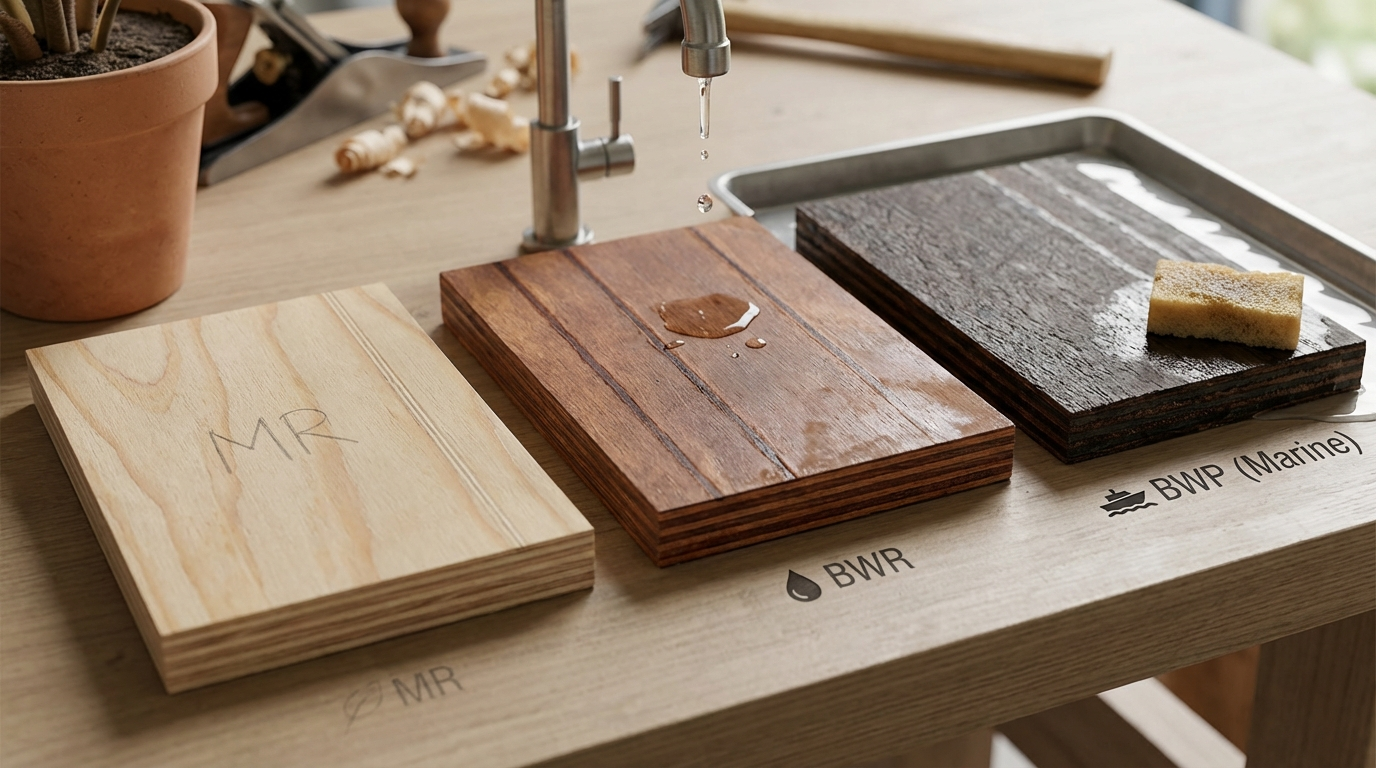
MR plywood suits dry interiors at the lowest cost, BWR handles moderate humidity for mid-range budgets, and BWP (marine grade) offers top waterproofing for wet zones despite higher prices. In Indian markets, expect MR at ₹50-75 per sq ft for 18mm sheets, BWR at ₹70-110, and BWP at ₹100-160—ranges shift by city tier, brand grade, and thickness. Choose based on moisture exposure: dry rooms get MR, kitchens/bathrooms need BWR or BWP.
- At a glance: MR for bedrooms (cheapest, basic glue).
- BWR for humid wardrobes/kitchens (better boil resistance).
- BWP for bathrooms/coastal homes (fully waterproof, premium).
- Price gap: BWR 30-50% over MR; BWP 50-100% over BWR.
- Key factor: India's monsoon demands upgraded grades over commercial ply.
- Verify: Check edge glue lines and stamp for IS markings on-site.
Understanding Plywood Grades: MR, BWR, and BWP Basics
In the Indian plywood market, grades like MR, BWR, and BWP define moisture resistance levels, directly tied to glue formulations and core quality. MR uses urea-formaldehyde glue, adequate for low-humidity spots but prone to swelling in damp conditions. BWR upgrades to phenolic resins for boiling water resistance up to a few hours, fitting humid climates. BWP employs fully waterproof marine-grade glues, surviving prolonged boiling—ideal for high-exposure areas.
These differences stem from glue chemistry: MR's synthetic resin softens above 50-60% humidity, while BWR and BWP maintain bond integrity up to 80-90% due to cross-linked polymers. Core veneers also vary—MR often has mixed hardwood popslar, BWR selects denser species, and BWP uses premium hardwoods for screw-holding. Thickness matters too: standard 18mm for furniture, but 19mm common in India due to milling variances.
For Indian buyers, this grading prevents common failures like delamination in monsoons. A bedroom wardrobe in Delhi's dry winters takes MR fine, but Mumbai's coastal humidity warps it fast. Dealers stock all three, but carpenter advice often pushes BWR as a "safe middle," balancing cost and performance. Always inspect core layers: uniform, void-free veneers signal quality across grades.
Practical tip: In tier-2 cities like Pune or Jaipur, transport adds 5-10% to prices, widening ranges. CNC-cut jobs favor BWP for edge stability, while manual carpentry tolerates MR better on budgets. Understanding these builds confidence over dealer pitches.
What Makes MR Plywood the Budget Choice?
MR (Moisture Resistant) plywood targets cost-conscious Indian interiors where dryness prevails. Its urea-formaldehyde glue resists casual spills but fails under sustained dampness—think 1-2 hours boiling test limit. Cores blend poplar and eucalyptus, keeping weights light at 25-30 kg per 8x4 sheet, easing handling for small carpenters.
Best uses: bedrooms, living rooms, office partitions. In dry zones like Rajasthan homes, MR lasts 8-12 years without issues. Price edge comes from simpler manufacturing—no vacuum pressing needed, unlike higher grades. For 18mm, expect ₹50-75 per sq ft in Mumbai/Delhi dealers; tier-3 towns add ₹5-10 via logistics.
Why it fits India: 60-70% of furniture is MR-grade due to budget modular kitchens or wardrobes under ₹20,000. But skip for puja rooms near windows—monsoon leaks cause bubbling. Carpenter logic: MR screws hold 50-70 kg per point initially, dropping 20% in humidity. Inspect: Tap edges for hollow sounds (voids), check face for uniform color sans patches.
Edge cases: Pair with laminate finishes for spill protection, extending life 2-3 years. In AC homes, it outperforms expectations, but ventilate wardrobes to dodge mold. Dealers mix MR with commercial ply—demand stamped grades to avoid fakes.
BWR Plywood: The Humid Climate Workhorse
BWR (Boiling Water Resistant) steps up with phenolic glue, enduring 2-4 hours boiling without delamination. This mid-tier glue penetrates veneers deeply, enhancing bond strength for India's variable humidity. Cores use selected hardwoods, reducing warping by 30-40% over MR. Sheets weigh 28-35 kg, suiting modular setups.
Ideal for: kitchens, wardrobes in humid cities like Chennai or Kolkata. Handles steam from cooking, minor leaks. Lifespan: 10-15 years in moderate exposure. Prices hover ₹70-110 per sq ft for 18mm—20-40% over MR, justified by press-curing processes hiking production costs.
In practical Indian terms, BWR shines in apartments with poor ventilation. Monsoon humidity (70-90%) swells MR 10-15%, but BWR caps at 5%. CNC routing holds edges crisp, vital for flush doors. Thickness quirks: 16mm for shutters saves 10% cost, 19mm for shelves adds strength.
Carpenter checks: Scratch edge glue—shiny, non-sticky means quality. Avoid if faces show telegraphing (veneer prints). Trade-off: Slightly heavier finish sanding needed vs MR. For ₹50,000 kitchen cabinets, BWR prevents callbacks from swelling, saving rework costs.
BWP Plywood: Marine Grade for Extreme Protection
BWP (Boiling Water Proof), or marine plywood, uses fully synthetic, waterproof glues surviving 6-8+ hours boiling. Premium cores from gurjan or hardwood ensure zero delamination, even submerged. Heaviest at 35-45 kg per sheet, it demands sturdy handling but rewards with superior screw-holding (80-100 kg per point).
Top uses: bathrooms, coastal homes, exteriors. In Kerala backwaters or Goa villas, BWP defies salt spray and floods. Durability: 15-25 years. Prices: ₹100-160 per sq ft for 18mm—50-100% premium over BWR, from imported glues and multi-stage pressing.
India-specific: Essential for modular bathrooms with steam showers or Pune's erratic rains. Glue's cross-linking resists termites better (with treatment). Finishes take paints/laminates seamlessly. Dealer variances: Tier-1 markups 15% higher; buy direct for savings.
Inspection: Weigh sample—dense feel confirms. Boil test edge scrap at home if doubtful. Not for dry zones—overkill adds weight/cost. In high-end projects, BWP enables floating shelves sans sagging.
MR vs BWR vs BWP Plywood – Price Comparison Table
Prices fluctuate with city logistics, brand tiers (economy to premium), sheet size (8x4 standard), and thickness (18mm baseline). Tier-1 cities like Bangalore/Mumbai carry 10-20% premiums over tier-3 via GST/transport. Economy brands shave 15-20%, premiums add for better faces. Always negotiate dealer bulk rates; monsoon hikes 5-10% on demand.
| Grade | Typical Price Range (₹/sq ft, 18mm) | Key Price Drivers | Best Value Scenario |
|---|---|---|---|
| MR | ₹50-75 (Tier-1) ₹45-65 (Tier-2/3) |
Basic glue, mixed core; lower milling | Dry bedrooms, budget furniture |
| BWR | ₹70-110 (Tier-1) ₹65-95 (Tier-2/3) |
Phenolic glue, denser veneers; pressing costs | Humid kitchens, wardrobes |
| BWP | ₹100-160 (Tier-1) ₹90-140 (Tier-2/3) |
Marine glue, premium hardwood; imports | Bathrooms, coastal/exteriors |
This table assumes mid-brand, full sheets. Half-cuts add 10-15%/sq ft. Why ranges? Glue quality varies—IS-marked costs 10% more. Compare at dealers by tapping for density.
How to Choose: Decision Framework for MR, BWR, BWP
Start with exposure: <50% humidity year-round? MR. 50-80% or spills? BWR. >80%, water contact, or outdoors? BWP. Budget next: Allocate 40% of furniture cost to ply. Factor carpenter skill—CNC needs stable BWP/BWR. Indian buyer scenario: For ₹1 lakh modular kitchen in Hyderabad monsoon zone, BWR saves vs BWP without risking failure.
- Checklist:
- Map room humidity (use meter or monsoon history).
- Budget check: MR base, upgrade 30% for BWR, 70% for BWP.
- Load test: Heavy shelves? Prioritize screw-hold (BWP best).
- Finish type: Laminate? Any grade; paint? BWR+.
- Verify stamp: IS 303 (MR/BWR), IS 710 (BWP)—physically check.
- When NOT to choose: MR in bathrooms (swells fast); BWP in dry AC rooms (waste); BWR untreated outdoors (UV fades).
This framework cuts regret—many opt MR everywhere, facing ₹10,000+ repairs. Dealers push stock; insist on samples.
Why This Matters in India: Monsoon and Regional Realities
India's climate diversity demands grade awareness—90% plywood fails from moisture mismatch. Monsoons spike humidity to 95% in Mumbai/Kochi, delaminating MR in weeks; BWR/BWP hold via glue resilience. Coastal belts (Goa, Chennai) add salt corrosion—BWP's density blocks it. Inland humidity like Lucknow wardrobes needs BWR for steam.
Modular boom: CNC factories in Gujarat prefer BWP for precision cuts sans warping. Dealer dynamics: Tier-2 like Indore stock less BWP, hiking spot prices 20%. GST at 18% evens fields, but transport from Kerala mills adds to north. Common: 18mm labeled "19mm" due to swelling allowance—measure dry.
Buyer wins: Right grade halves termite rework (humid cores rot faster). In Pune apartments, BWR kitchens outlast MR by 5 years, justifying premium amid water shortages.
Common Mistakes and Inspection Checks
Top error: Choosing MR for kitchens—"saves ₹5,000 now, costs ₹15,000 later" in delamination. Dealers palm commercial ply as MR; carpenters skip edges for speed. Buyers ignore thickness—16mm sags under TVs. In India, 40% failures trace to unverified stamps amid fake labels.
Quick inspections:
- Edge glue: Uniform, hard (not powdery).
- Core tap: Solid thunk, no dull voids.
- Face scratch: No paper tear.
- Weight: Heavier signals density.
- Boil test scrap: 30 mins for BWR/BWP.
Carpenter pitfalls: Underscrewing BWP (needs deeper holds). Fix: Demand samples, haggle post-inspect. Saves ₹20,000 on a home redo.
Trade-offs and Limitations Across Grades
MR: Cheapest but weakest screw-hold drops 30% wet; finish sands easy but warps. BWR: Balanced, but glue yellows under UV—indoors only. BWP: Toughest, heaviest (install challenges), priciest—overkill for 70% homes. All trade finish quality for moisture: BWP faces may need extra sanding.
Durability vs cost: MR 5-8 years dry, BWP 20+ wet. Termites hit untreated MR fastest. Edge cases: Laminates mask MR flaws short-term. CNC limits: MR edges chip. In budgets, hybrid—MR cabinets, BWR shelves. Limitations: No grade is fireproof—add treatments. Screw-holding: BWP 2x MR, vital for hangings.
Indian angle: High-rises favor BWR for vibration resistance. Weigh: Extra ₹30/sq ft on BWR pays in monsoons.
Frequently Asked Questions
Which is better for Indian kitchens: BWR or BWP plywood?
For most Indian modular kitchens, BWR strikes the ideal balance—resisting cooking steam and spills without BWP's premium cost. In humid cities like Bangalore or Hyderabad, BWR's 2-4 hour boil resistance prevents swelling around sinks, lasting 10-15 years. BWP suits steam-heavy or flood-prone setups, but adds 50% expense unnecessarily for standard homes. Factor ventilation: Good exhaust drops need to BWR. Always pair with sealed edges for longevity.
Is MR plywood safe for wardrobes in monsoon areas?
MR works in wardrobes only where humidity stays under 60% and ventilation is strong—like air-conditioned Delhi bedrooms. Monsoon spikes cause 10-15% swelling, leading to door misalignment. Opt for BWR in Mumbai/Pune for glue that holds amid 80% humidity. Inspect cores for density; treat with termite oil. Budget hack: MR with dehumidifiers, but upgrade saves repairs.
How much more does BWP cost compared to MR?
BWP typically costs 50-100% more than MR for equivalent thickness—₹100-160 vs ₹50-75 per sq ft in tier-1 cities. This gap reflects marine glues and hardwood cores, doubling production. In tier-3 towns, savings narrow to 70-90%. Bulk buys or economy BWP trim 15%. Justify for wet areas; elsewhere, it's excess. Compare dealer quotes post-inspection.
Can BWR plywood be used outdoors in India?
BWR handles covered outdoors like verandas in mild climates but falters in direct rain or UV—glue degrades over 2-3 years. India's intense sun/monsoons demand BWP for patios. Seal edges heavily, but expect fading. Indoor humid spots are BWR's strength. Carpenter tip: Avoid untreated; add weatherproof paint for semi-exposure.
What thickness to choose for MR vs BWR vs BWP?
18mm suits most furniture across grades—MR for light loads, BWR/BWP for heavy. Wardrobes take 16mm to save 10% cost; shelves 19mm for no sag. Indian mills vary: "18mm" often measures 17.5 dry. BWP's density allows thinner cuts without weakness. Match to span: 600mm shelves need 18mm+. Dealer measure, don't trust labels alone.
Does grade affect termite resistance in plywood?
Grade indirectly boosts resistance—BWR/BWP's denser glues and cores slow termite tunnels vs MR's porous bonds. None are immune; all need chemical treatment. Coastal India sees faster attacks on MR. Lifespan: Treated BWP 15+ years, MR 5-7. Check stamps for preservatives; annual sprays extend all.
Which grade for bathroom vanities in coastal cities?
BWP is non-negotiable for coastal bathroom vanities—salt air and steam demand full waterproofing, preventing rot in 2-3 years otherwise. Chennai/Goa homes see BWR fail here. Extra cost pays in zero callbacks. Ventilate, seal joints. For inland, BWR suffices with tiles.
How to spot fake BWP plywood at Indian dealers?
Fakes mimic stamps but fail basics: Light weight, powdery edges, veneer separation on tap. Genuine BWP feels dense, glue hard-shiny. Boil scrap 30 mins—no split. Demand IS 710 mark; cross-check multiple sheets. Dealers cut fakes cheap—insist samples. Saves thousands on failures.
Disclaimer: This content is provided for general informational purposes based on industry practices and publicly available information. Product specifications, standards, prices, and availability may vary by manufacturer, region, and time. Readers should independently verify details with manufacturers, dealers, or qualified professionals before making purchase or construction decisions.Want Plywood Suggestions?
Share a few details and a Apple Ply specialist will suggest suitable brands and connect you to responsive dealers.