Kitply vs Greenply: Detailed Brand Comparison Guide
Compare Kitply vs Greenply plywood brands - quality, price range, product variety & customer satisfaction. Make the right choice.
Quick Answer
The key difference between Kitply and Greenply lies in market positioning and product range. Kitply is one of India's oldest plywood brands, known for durability and value pricing, while Greenply positions itself as India's largest interior infrastructure company with a broader eco-friendly product portfolio. Both offer BWP and BWR grade plywood, but Greenply commands a slight premium due to extensive marketing and wider dealer networks across metros and Tier-2 cities.
At a Glance: Kitply vs Greenply
- Brand Legacy: Kitply established in 1967; Greenply founded later but grew to become India's largest plywood brand by market reach
- Price Range: Kitply typically offers 5-10% lower pricing for comparable grades in most Indian markets
- Product Focus: Greenply has a wider portfolio including MDF, veneers, doors, and flooring; Kitply focuses primarily on plywood and blockboards
- Availability: Greenply has stronger metro presence; Kitply maintains loyal dealer networks in North and East India
- Eco-Certification: Greenply emphasizes FSC certification and zero-emission products more prominently in marketing
- Warranty: Both brands offer comparable warranty terms on their premium BWP grade products
Understanding Kitply and Greenply: Brand Heritage and Market Position
Both Kitply and Greenply represent established names in the Indian plywood industry, yet their journeys and market approaches differ significantly. Understanding this background helps buyers appreciate what each brand brings to the table beyond just product specifications.
Kitply has operated in India since 1967, making it one of the oldest organised plywood manufacturers in the country. The brand built its reputation during an era when plywood quality standards were inconsistent, and Kitply became synonymous with reliability. This heritage means Kitply enjoys strong brand recall among older carpenters and contractors who have used the product across decades. The brand maintains manufacturing facilities primarily in the eastern and northeastern regions of India, where raw material availability from plantation timber has historically been strong.
Greenply, while entering the market later, pursued aggressive expansion and marketing strategies that positioned it as India's largest interior infrastructure company. The brand invested heavily in dealer networks, advertising, and product diversification. Greenply's approach has been to offer a complete interior solutions ecosystem—from plywood and blockboards to MDF panels, veneers, decorative laminates, and wooden flooring. This comprehensive portfolio makes Greenply a preferred choice for architects and interior designers executing turnkey projects.
In practical Indian market terms, both brands occupy the premium segment, competing against each other and Century Ply for the organised sector's top positions. Regional dealer preferences often influence which brand dominates in specific markets—Greenply tends to be stronger in western and southern metros, while Kitply maintains loyal networks in northern and eastern India. For the end consumer, this translates to varying availability and sometimes pricing differences based on location.
Product Range Comparison: Kitply vs Greenply Offerings
When comparing Kitply and Greenply, the breadth of product offerings becomes a significant differentiator. Both brands manufacture plywood across multiple grades, but their portfolios extend in different directions.
Kitply Product Categories
Kitply focuses its core competency on plywood and blockboard manufacturing. The brand offers MR (Moisture Resistant) grade for general interior applications, BWR (Boiling Water Resistant) grade for areas with moderate moisture exposure, and BWP (Boiling Water Proof) grade for high-humidity environments like kitchens and bathrooms. Kitply also manufactures marine-grade plywood suitable for extremely demanding applications. Their blockboard range complements the plywood offerings for applications requiring greater thickness and dimensional stability. Kitply's decorative veneer collection, while present, is not as extensively marketed as their core plywood products.
Greenply Product Categories
Greenply offers a significantly expanded portfolio beyond traditional plywood. The brand's plywood range includes grades from commercial MR through premium BWP, with specific product lines like Greenply Gold, Greenply Optima, and Greenply Absolute catering to different price-performance segments. Beyond plywood, Greenply manufactures MDF and HDHMR boards that have gained popularity in modular furniture and CNC-machined applications. Their decorative veneer range is extensive, offering both natural and reconstituted options. Greenply's door division provides flush doors and decorative door solutions, while their flooring segment offers laminate wooden flooring options.
Implications for Buyers
For buyers seeking only plywood for specific furniture or interior applications, both brands offer comparable options. However, if a project requires multiple material types—plywood for carcasses, MDF for CNC-cut decorative panels, veneers for finishing, and perhaps doors—Greenply's single-brand sourcing can simplify procurement and ensure consistency. This matters particularly in modular kitchen and large residential projects where material matching and vendor coordination become logistical considerations.
Quality Standards and Certifications: Technical Comparison
In the organised plywood sector, quality claims require substantiation through certifications and adherence to Bureau of Indian Standards specifications. Both Kitply and Greenply manufacture products conforming to relevant IS standards, but their positioning differs in emphasis.
| Quality Parameter | Kitply | Greenply | Why It Matters |
|---|---|---|---|
| IS 710 Compliance (Marine Grade) | Available in select products | Available across premium range | Essential for boiling water exposure areas |
| IS 303 Compliance (MR Grade) | Standard across MR range | Standard across MR range | Basic moisture resistance for interiors |
| FSC Certification | Available on select products | Prominently marketed across range | Indicates sustainable forestry sourcing |
| E-Zero Emission | Not prominently featured | Featured in premium products | Lower formaldehyde for healthier interiors |
| CARB P2 Compliance | Not prominently marketed | Available in MDF range | International emission standard compliance |
| Termite/Borer Treatment | Standard in BWR/BWP grades | Standard in BWR/BWP grades | Critical for Indian climate conditions |
| Fire Retardant Options | Available on request | Available in specific product lines | Required for commercial buildings |
The practical verification of these standards remains crucial. Always check the ISI stamp directly on the plywood edge before purchase—this stamp should mention the specific IS standard number (303 for MR, 710 for BWP/Marine). Dealer claims alone should not be trusted for grade verification. In the Indian market, mislabelling of grades is unfortunately common in the unorganised sector, making established brand purchases from authorised dealers a safer approach.
Greenply has invested more visibly in eco-certifications and low-emission technologies, marketing these features to environmentally conscious consumers and commercial projects seeking green building compliance. For standard residential applications, both brands meet requisite Indian standards when purchased through proper channels.
Price Guide: Kitply vs Greenply Cost Comparison
Pricing in the Indian plywood market varies significantly based on grade, thickness, city, and dealer relationships. The following ranges represent typical retail prices for standard 8×4 feet sheets in metro and Tier-1 cities through authorised dealers.
| Product Grade | Thickness | Kitply (₹/sheet approx.) | Greenply (₹/sheet approx.) | Price Difference |
|---|---|---|---|---|
| Commercial MR | 18mm | ₹2,200 – ₹2,800 | ₹2,400 – ₹3,000 | Greenply 5-10% higher |
| BWR Grade | 18mm | ₹3,200 – ₹3,800 | ₹3,400 – ₹4,200 | Greenply 5-10% higher |
| BWP Grade | 18mm | ₹4,000 – ₹4,800 | ₹4,200 – ₹5,200 | Greenply 5-10% higher |
| Marine Grade | 19mm | ₹5,500 – ₹6,500 | ₹5,800 – ₹7,000 | Greenply marginally higher |
| Blockboard | 19mm | ₹2,800 – ₹3,500 | ₹3,000 – ₹3,800 | Comparable pricing |
Factors Affecting Price Variation
Several factors cause the prices to vary from these indicative ranges. Metro cities typically command 10-15% higher prices than Tier-2 cities due to higher operating costs and rental overheads for dealers. GST at 18% applies uniformly, but transport costs vary significantly—coastal cities receiving material by sea may have different landed costs than inland locations requiring road transport from manufacturing hubs in the northeast or south.
Bulk purchases for large projects often attract dealer discounts ranging from 5-12% depending on volume and payment terms. Greenply's premium pricing reflects its higher marketing expenditure and positioning, though the actual product quality difference at comparable grades may not justify the full premium for all applications. Kitply offers better value in markets where its dealer network is strong and established.
The trade practice of referring to 18mm versus 19mm thickness creates confusion—nominal 18mm sheets may measure 17-18mm actual, while 19mm sheets target 18-19mm actual thickness. Always verify actual thickness for structural applications.
How to Choose Between Kitply and Greenply
Selecting between these brands requires evaluating your specific requirements against each brand's strengths. The decision framework below helps structure this evaluation.
Decision Criteria Checklist
- Local Dealer Strength: Visit dealers for both brands in your area. The dealer with better stock availability, competitive pricing, and responsive service often matters more than brand differences.
- Project Scale: For large projects requiring multiple material types, Greenply's comprehensive portfolio enables single-source procurement and consistency.
- Budget Sensitivity: If price is a primary constraint and quality must be maintained, Kitply typically offers better value at comparable grades.
- Eco-Certification Needs: Commercial projects requiring green building compliance or low-emission documentation favour Greenply's certified range.
- Carpenter Preference: Consult your carpenter—experienced craftsmen often have strong preferences based on machining experience with specific brands.
- After-Sales Support: Evaluate which brand's local dealer offers better warranty support and complaint resolution in your area.
- Specific Product Need: If requiring MDF, HDHMR, or laminate flooring alongside plywood, Greenply provides integrated sourcing.
When NOT to Choose These Premium Brands
For temporary construction, packing applications, or hidden structural uses where aesthetics and long-term durability are not critical, these premium brands represent unnecessary expenditure. Local commercial-grade plywood at significantly lower prices serves adequately for such applications. Similarly, for very small repair jobs or experimental DIY projects, the cost difference of premium branding may not be justified.
Rental properties or spaces with short-term occupancy expectations may not require the 15-20 year durability these premium brands offer—mid-tier alternatives can provide adequate 5-8 year performance at lower investment.
Common Mistakes When Buying Kitply or Greenply
Even with established brands, buyers frequently make errors that compromise their purchase value. Awareness of these common mistakes helps ensure you extract maximum value from your investment.
Mistake 1: Buying from Unauthorised Dealers
Counterfeit products using brand names or seconds (rejected factory output) entering unauthorized channels represent a significant problem. Purchase only from authorised dealers who provide proper invoices with GST numbers. Verify dealer authorization through brand websites or customer care helplines.
Mistake 2: Not Verifying ISI Stamps Personally
Relying on dealer assurance about grades without physically checking edge stamps leads to receiving lower grades than paid for. Every sheet should bear the ISI mark with specific standard number—IS 303 for MR, IS 710 for BWP. Missing or illegible stamps warrant rejection.
Mistake 3: Ignoring Thickness Verification
Nominal thickness and actual thickness differ, and cumulative shortfall across multiple sheets represents financial loss. Carry a digital caliper and measure actual thickness at multiple points. Variation exceeding 0.5mm from stated thickness is grounds for negotiation or rejection.
Mistake 4: Selecting Wrong Grade for Application
Using MR grade in kitchens or bathrooms to save money leads to premature delamination in Indian humidity conditions. Conversely, specifying marine grade for dry bedroom applications wastes money. Match grade to actual moisture exposure of the application.
Mistake 5: Not Accounting for Wastage
Ordering exact measured quantities without wastage allowance (typically 8-12% for cutting and fitting) leads to mid-project shortages and potential batch colour variations in veneer-finished work.
Quick Inspection Checks at Dealer
- Tap the sheet surface—hollow sounds indicate voids or poor core bonding
- Flex the sheet gently—quality plywood returns to flat; poor quality retains bend
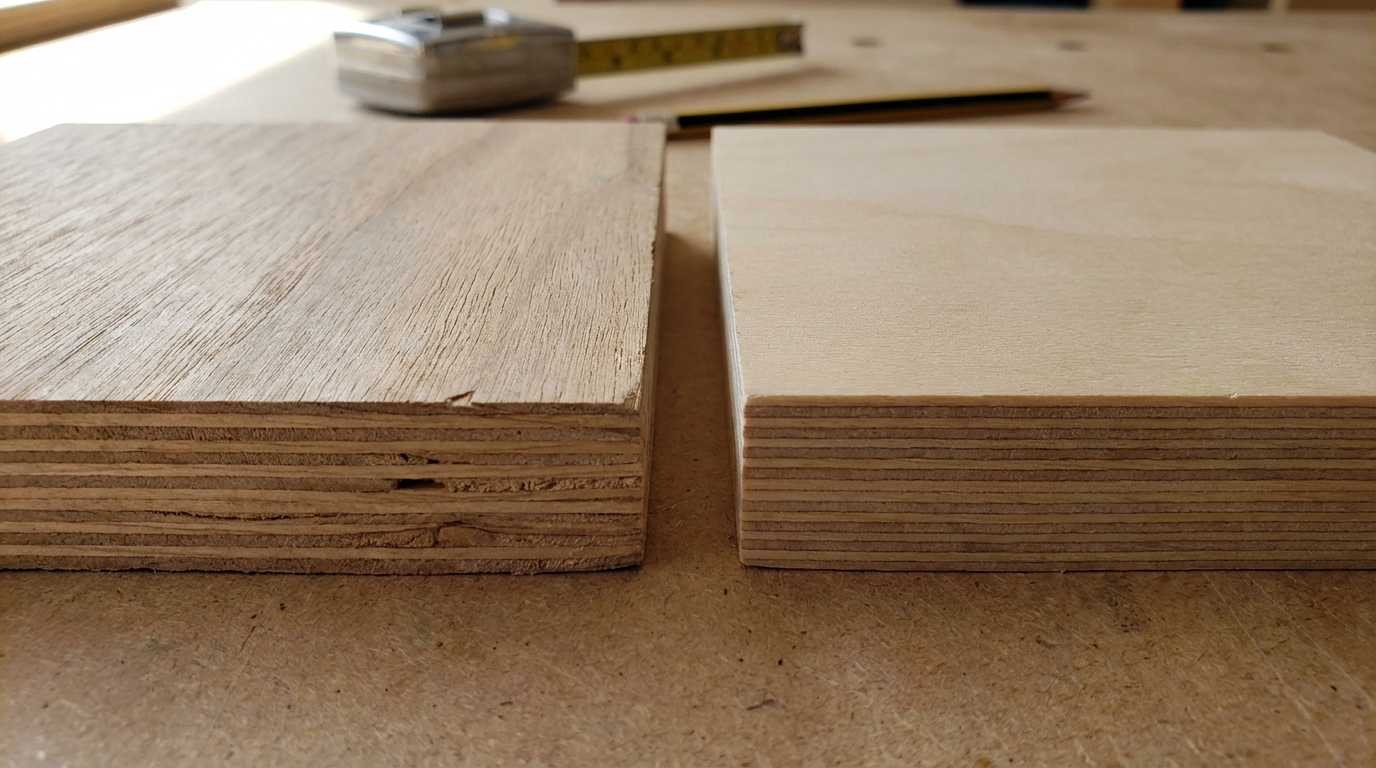
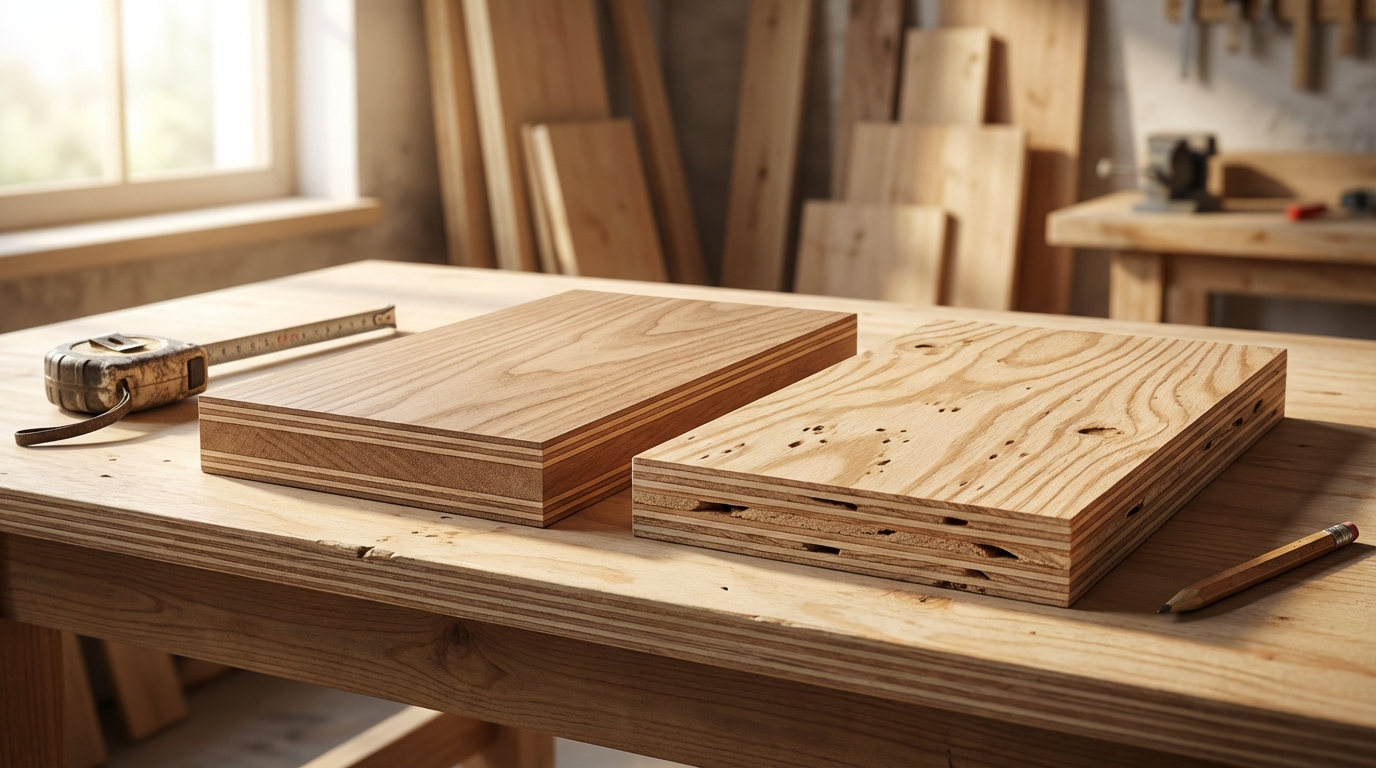
- Check edges for gaps between plies or visible adhesive overflow
- Verify uniform colour across face veneer without patches or repairs
- Smell the sheet—excessive chemical odour indicates high formaldehyde content
Regional Considerations: Coastal vs Inland Performance
India's diverse climate zones create varying demands on plywood performance. Both Kitply and Greenply manufacture products to national standards, but application success depends on matching product grade to regional conditions.
Coastal and High-Humidity Regions
Cities like Mumbai, Chennai, Kolkata, and coastal Kerala experience high humidity levels year-round, with salt-laden air in seaside locations. For these regions, BWP grade plywood is strongly recommended even for interior applications that would use MR grade in drier climates. Both brands' BWP products perform adequately, though ensuring proper edge sealing during installation becomes critical. Exposed plywood edges absorb moisture rapidly, leading to swelling regardless of core quality.
Monsoon conditions across India create temporary but intense humidity spikes. Storage of plywood sheets before installation requires covered, ventilated areas—contact with wet floors or exposure to rain, even briefly, can trigger dimensional changes that become permanent.
Dry and Inland Regions
Cities like Delhi, Jaipur, and interior Madhya Pradesh experience extreme temperature variations and low humidity for much of the year. Here, MR grade plywood performs adequately for most interior applications. The primary concerns shift to termite resistance (both brands treat their products) and veneer cracking from dry heat. Ensuring proper wood seasoning and avoiding placement near direct heat sources like radiators or sunny windows preserves plywood longevity.
Termite Risk Zones
Subterranean termites present significant risks across most of India, with higher prevalence in southern and eastern states. Both Kitply and Greenply incorporate borer and termite treatment in their BWR and BWP grades. However, this treatment protects the plywood—not the surrounding wood or building structure. Complementary building-level termite treatment remains essential for comprehensive protection.
Carpenter's Perspective: Working with Kitply and Greenply
Experienced carpenters who work regularly with both brands offer practical insights that specification sheets don't capture. Their observations help inform realistic expectations.
On machining and cutting, both brands offer good dimensional stability and clean cutting characteristics when using sharp carbide-tipped blades. Carpenters note that Greenply's calibrated range offers more consistent thickness, reducing shimming requirements during installation. Kitply's standard range occasionally shows minor thickness variations that skilled craftsmen accommodate but which challenge less experienced workers.
For edge-banding applications critical in modular furniture, both brands accept PVC and ABS edge bands adequately. The key lies in ensuring clean, squared edges before banding—poor cuts cannot be masked by edge treatment. CNC machining favours both brands' premium grades, with Greenply's Absolute range and Kitply's premium offerings providing smooth routed edges without splintering.
Screw-holding capacity matters for hardware-intensive modular installations. Both brands' BWR and BWP grades provide good screw retention, though pilot holes are recommended for all fixings to prevent surface layer splitting. Pre-laminated options from both brands reduce finishing labour but limit design flexibility.
The consensus among carpenters in most markets suggests that for equivalent grades, both brands deliver comparable workshop performance. Brand selection often defaults to whichever brand the carpenter's trusted supplier stocks reliably, minimizing supply chain disruptions during ongoing projects.
Frequently Asked Questions
What is the full form of BWP in Kitply and Greenply plywood?
BWP stands for Boiling Water Proof, indicating plywood manufactured with phenolic resin adhesive that withstands prolonged water exposure without delamination. This grade conforms to IS 710 standards and is tested by subjecting samples to boiling water for extended periods. Both Kitply and Greenply manufacture BWP grade plywood suitable for high-moisture areas like kitchens, bathrooms, and external applications. BWP grade commands premium pricing over BWR (Boiling Water Resistant) and MR (Moisture Resistant) grades due to superior adhesive quality and manufacturing processes.
Which is better for modular kitchens: Kitply or Greenply?
For modular kitchen applications, both brands offer suitable BWP grade options that handle kitchen humidity effectively. Greenply's Absolute BWP and Kitply's premium BWP perform comparably in practical terms. The deciding factors become local dealer support, pricing, and your modular kitchen manufacturer's preference. Many modular kitchen companies have tie-ups with specific brands for consistent supply and warranty alignment. If choosing independently, select BWP grade from either brand, ensure proper edge sealing during installation, and verify ISI 710 marking on every sheet for genuine moisture protection.
Is Kitply available across all Indian cities?
Kitply maintains strongest availability in North India, East India, and the northeastern states where its manufacturing base and historical dealer networks are concentrated. Metro cities across India typically stock Kitply through established dealers, but Tier-2 and Tier-3 cities in South and West India may have limited availability compared to Greenply. Before finalising Kitply for your project, verify local dealer presence and stock availability. In markets where Kitply distribution is sparse, Century Ply or Greenply often serve as more accessible alternatives with comparable quality in equivalent grades.
What is the price difference between Kitply and Greenply?
Greenply typically commands a 5-10% premium over Kitply for comparable grades and thicknesses in most Indian markets. For a standard 18mm BWR grade 8×4 sheet, this translates to approximately ₹200-400 difference per sheet. The premium reflects Greenply's higher marketing expenditure and broader distribution costs rather than fundamental quality differences. In markets where Kitply has strong dealer networks, its pricing becomes more competitive. Bulk purchases and long-term dealer relationships can narrow or even eliminate this price gap for project-scale buyers.
How do I check if Kitply or Greenply plywood is genuine?
Verify authenticity through multiple checks: purchase only from authorised dealers listed on respective brand websites; check for ISI stamps on sheet edges mentioning specific IS standard numbers; examine invoice for proper GST billing with correct brand product codes; look for hologram stickers or QR codes that premium brands apply to their products; and compare sheet weight and finish against known genuine samples. Both brands operate customer care helplines where you can verify dealer authorisation and report suspected counterfeits. Unusually low pricing from unknown dealers is the strongest counterfeit indicator.
Which brand offers better warranty: Kitply or Greenply?
Both Kitply and Greenply offer warranties on their premium BWP grade products, typically ranging from 15-25 years depending on specific product lines. Warranty terms are comparable, but the practical value depends entirely on local dealer support for claim processing. A strong local dealer relationship matters more than warranty duration on paper. Warranty coverage typically addresses manufacturing defects like delamination under normal use—damage from improper installation, water ingress through unsealed edges, or termite attack due to inadequate building treatment generally falls outside coverage.
Can Kitply and Greenply plywood be used for bathrooms?
Yes, both brands manufacture BWP (Boiling Water Proof) grade plywood specifically suitable for bathroom applications. However, plywood in bathrooms requires additional precautions beyond grade selection: all exposed edges must be sealed with waterproof sealant or edge bands; contact with standing water should be avoided through proper design; and adequate ventilation must be ensured to prevent prolonged moisture exposure. Many designers now prefer marine-grade plywood or HDHMR boards for bathroom vanities where direct water splash is expected. For bathroom door frames and less exposed elements, standard BWP grade from either brand performs adequately.
Is Greenply more eco-friendly than Kitply?
Greenply markets its environmental credentials more prominently, featuring FSC certification, zero-emission product lines, and sustainability initiatives including tree plantation programs claiming millions of trees planted. Kitply also maintains environmental compliance but emphasises these aspects less in consumer communications. For projects requiring documented green building compliance or LEED certification support, Greenply's E-Zero emission products provide easier documentation. For standard residential applications where formal eco-certification is not required, both brands meet regulatory environmental standards, and the practical eco-difference becomes marginal in real-world use.
Disclaimer: This content is provided for general informational purposes based on industry practices and publicly available information. Product specifications, standards, prices, and availability may vary by manufacturer, region, and time. Readers should independently verify details with manufacturers, dealers, or qualified professionals before making purchase or construction decisions.Want Plywood Suggestions?
Share a few details and a Apple Ply specialist will suggest suitable brands and connect you to responsive dealers.