Kajaria Ply vs Century Ply: Complete Brand Analysis
Detailed comparison of Kajaria Ply vs Century Ply. Compare quality, price, product range & customer reviews to make an informed decision.
Quick Answer
The key difference between Kajaria Ply and Century Ply lies in their market positioning and brand heritage. Century Ply is a well-established plywood manufacturer since 1986 with nationwide distribution, while Kajaria Ply is a relatively newer entrant from a company primarily known for ceramic tiles. For plywood-specific applications, Century Ply typically offers a more comprehensive product range and deeper dealer network across India.
At a Glance:
- Century Ply has nearly four decades of plywood manufacturing expertise; Kajaria is primarily a ceramics company
- Century offers BWP, BWR, MR grades with extensive thickness options; Kajaria's plywood range is limited
- Century Ply has 13 manufacturing facilities and 26 branches across India
- Price positioning: Century commands premium pricing; Kajaria targets value-conscious buyers
- Dealer availability: Century has significantly wider pan-India presence
- For serious furniture and interior projects, Century Ply remains the safer choice
Understanding Kajaria Ply and Century Ply Brand Backgrounds
Before comparing products, understanding each brand's core competency and market evolution helps set realistic expectations. These two companies come from fundamentally different backgrounds in India's building materials industry.
Century Ply: The Plywood Specialist
Century Plyboards (India) Limited started operations in 1986 and has built its entire business around wood-based panel products. Headquartered in Kolkata, the company was the first ISO 9001-certified plywood and veneer manufacturer in India. Their product development has been plywood-centric, with innovations like borer-proof plywood introduced in 1997 and subsequent developments in BWR decorative veneers and fire-safe plywood.
With an annual revenue exceeding ₹4,300 crores and 13 manufacturing facilities across India, Century Ply operates at a scale that few Indian plywood manufacturers can match. Their distribution network of 26 branches ensures availability even in Tier-2 and Tier-3 cities, which matters significantly for interior projects where material consistency is crucial.
Kajaria: The Ceramics Giant Entering Plywood
Kajaria Ceramics Limited is India's largest manufacturer of ceramic and vitrified tiles, with an annual revenue exceeding ₹5,800 crores. However, their primary expertise lies in flooring solutions, not wood-based products. Kajaria's venture into plywood represents a brand extension strategy rather than a core business focus.
This distinction matters practically. When you purchase Kajaria tiles, you're buying from a company with decades of tile-specific R&D, quality control, and manufacturing expertise. When purchasing Kajaria Ply, you're buying from a company whose primary competency lies elsewhere. This doesn't automatically mean inferior quality, but it does suggest different levels of specialization and market commitment.
Product Range Comparison: Kajaria Ply vs Century Ply
The breadth and depth of product offerings reveal how seriously each brand approaches the plywood segment. A comprehensive range typically indicates deeper manufacturing capabilities and better ability to serve diverse project requirements.
Century Ply Product Portfolio
Century offers an extensive range covering virtually every plywood application:
- Sainik 710 BWP: Boiling water-proof grade for high-moisture applications
- Sainik MR: Moisture-resistant grade for general furniture
- Club Prime BWP: Premium segment with enhanced durability
- Bond 710 BWP: Mid-premium waterproof plywood
- Architect Plywood: Top-tier product for premium interiors
- WIN MR: Value segment moisture-resistant option
Beyond plywood, Century manufactures blockboards, MDF, particle boards, decorative veneers, laminates, and doors. This integrated approach allows them to offer complete interior solutions and maintain consistent quality standards across complementary products.
Kajaria Ply Product Range
Kajaria's plywood offerings are comparatively limited. Their focus remains on tiles, sanitaryware, and related flooring products. The plywood segment operates more as a supplementary business to capture additional wallet share from customers already purchasing Kajaria tiles for their projects.
For buyers specifically seeking plywood, this limited focus translates to fewer grade options, thickness variations, and specialty products. If your project requires flexible plywood, fire-retardant options, or specific veneer finishes, Century's range provides significantly more choices.
Quality and Performance Comparison Table
The following comparison evaluates both brands across parameters that matter for real-world plywood applications in Indian conditions:
| Parameter | Century Ply | Kajaria Ply | What This Means |
|---|---|---|---|
| Manufacturing Experience | 38+ years in plywood | Limited plywood-specific history | Longer experience typically means refined processes |
| BIS Certification Range | Multiple IS standards across grades | Basic certifications | More certifications indicate broader quality compliance |
| Termite/Borer Treatment | Proprietary treatment, pioneer since 1997 | Standard treatment | Critical for Indian climate conditions |
| Moisture Resistance Grades | MR, BWR, BWP, Marine options | Basic MR and BWP grades | More grades allow precise application matching |
| Thickness Options | 4mm to 25mm in multiple grades | Standard thicknesses only | Flexibility for different furniture requirements |
| Warranty Coverage | Up to 25 years on premium products | Standard warranty periods | Longer warranty suggests manufacturer confidence |
| CNC Machining Compatibility | Excellent, designed for modular kitchens | Variable performance reported | Matters for modern furniture manufacturing |
Price Guide: What to Expect in Indian Markets
Pricing in the Indian plywood market varies significantly based on grade, thickness, city tier, and dealer relationships. These ranges provide general guidance rather than exact figures, as actual prices depend on local market conditions and quantity purchases.
Century Ply Price Ranges
Century commands premium pricing reflecting their market position and quality reputation:
- Sainik MR (19mm): ₹70–₹85 per sq ft in metro cities
- Sainik 710 BWP (19mm): ₹85–₹105 per sq ft
- Club Prime BWP (19mm): ₹95–₹120 per sq ft
- Architect Grade (19mm): ₹130–₹160 per sq ft
Prices in Tier-2 and Tier-3 cities may be 5–15% higher due to transportation costs and lower dealer competition. GST at 18% applies additionally.
Kajaria Ply Price Positioning
Kajaria typically positions plywood at competitive price points to gain market entry:
- Standard MR grades: Generally 10–20% below comparable Century products
- BWP grades: Positioned against mid-tier Century options
However, lower pricing doesn't automatically indicate better value. Consider the total cost of ownership, including potential replacement or repair costs if material quality proves inconsistent over time.
What Causes Price Variation
Several factors affect pricing beyond brand choice:
- Core wood species: Hardwood cores cost more than softwood alternatives
- Glue quality: Phenolic resins for BWP cost more than urea formaldehyde for MR
- Face veneer: Premium face veneers increase costs significantly
- Dealer margin: Varies from 8–18% depending on volume and relationships
- Location: Proximity to manufacturing facilities affects transport costs
How to Choose Between Kajaria Ply and Century Ply
Selecting the right brand depends on your specific project requirements, budget constraints, and long-term expectations. This framework helps structure your decision-making process.
Decision Criteria Framework
Choose Century Ply when:
- Your project involves kitchen cabinets, bathroom vanities, or high-moisture areas
- You need specialty products like flexible plywood or fire-retardant grades
- Long-term durability matters more than upfront cost savings
- Your carpenter recommends specific Century products based on experience
- Dealer availability and warranty service access are important considerations
- You're investing in a property you plan to occupy for 10+ years
Consider Kajaria Ply when:
- Budget constraints are primary, and you're willing to accept potential trade-offs
- Application is for low-stress furniture like storage units in dry areas
- You're already purchasing Kajaria tiles and prefer consolidated billing
- Your project is for rental property with shorter expected furniture lifespan
When NOT to Choose Based on Brand Alone
Never select plywood solely because of brand familiarity from other product categories. Kajaria's excellence in ceramic tiles doesn't automatically transfer to plywood manufacturing. Similarly, don't overpay for Century's premium grades when your application genuinely requires only basic MR plywood.
The most expensive option isn't always the best fit. A 19mm Sainik MR from Century is perfectly adequate for bedroom wardrobes in dry climates—paying extra for BWP in this application wastes money without functional benefit.
Common Mistakes to Avoid When Buying Plywood
Whether you choose Kajaria, Century, or any other brand, these mistakes commonly lead to poor outcomes and wasted money in Indian plywood purchases.
Mistake 1: Trusting Brand Name Without Physical Inspection
Counterfeit plywood remains a significant problem in India. Duplicate branded products often appear identical but use inferior cores, weaker adhesives, and lower-grade veneers. Always purchase from authorized dealers and verify product authenticity through physical inspection.
Mistake 2: Ignoring Core Quality for Face Veneer Appeal
Many buyers focus on smooth face veneer while ignoring core composition. A beautiful face laminated onto poor-quality core will fail within 2–3 years. Check core density, layer consistency, and absence of voids before purchasing.
Mistake 3: Using MR Grade in Wet Areas
MR (moisture-resistant) plywood handles humidity but fails with direct water exposure. Kitchen sink cabinets, bathroom vanities, and areas near water sources require BWP (boiling water-proof) grade. This mistake causes swelling, delamination, and fungal growth within months.
Mistake 4: Overlooking Thickness Specifications
Trade sizes in India create confusion—what's sold as "19mm" may actually measure 17–18mm. This affects furniture dimensions, hardware fitting, and structural integrity. Measure actual thickness before acceptance and adjust cutting lists accordingly.
Quick Inspection Checks
- Tap test: Solid, consistent sound indicates good core bonding; hollow sounds suggest voids
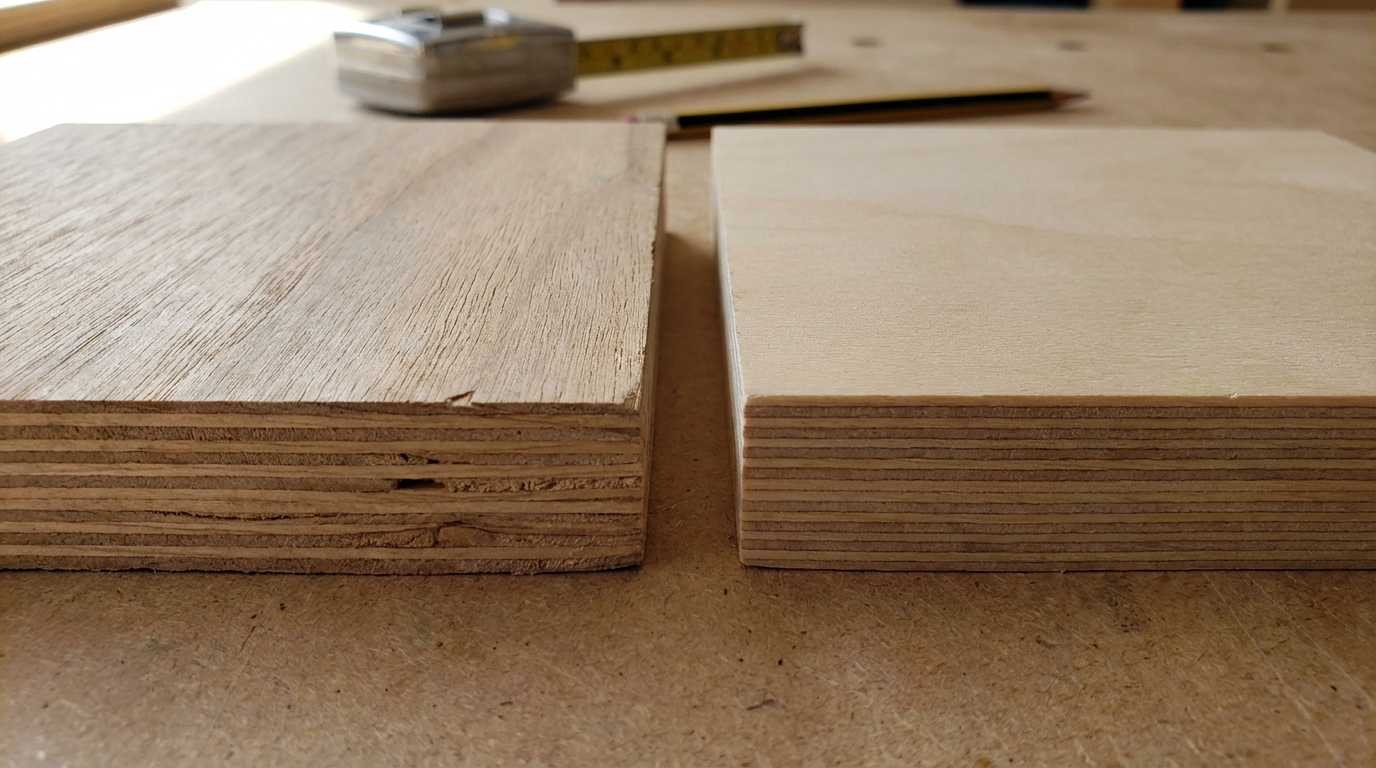
- Edge inspection: Look for gaps between layers, inconsistent layer thickness, or rough edges
- Weight comparison: Heavier plywood of same size typically indicates denser, better-quality core
- Flexibility test: Quality plywood flexes slightly without cracking sounds; brittle behavior indicates poor adhesive
- Smell check: Strong chemical odor suggests poor-quality adhesive with high formaldehyde emissions
Regional Considerations for Indian Buyers
India's diverse climate zones and market conditions affect plywood performance and availability differently across regions. Understanding these variations helps make better purchasing decisions.
Coastal and High-Humidity Regions
Buyers in Mumbai, Chennai, Kolkata, and other coastal cities face unique challenges. Salt-laden air accelerates hardware corrosion, while high humidity stresses even quality plywood. In these regions, Century's BWP grades with their proven moisture resistance typically perform better than budget alternatives. The additional 20–30% cost pays for itself through longer furniture life.
Northern Plains and Dry Climate Zones
Delhi, Rajasthan, and similar dry-climate regions experience extreme temperature variations and low humidity. Here, plywood faces different stresses—thermal expansion cycles rather than moisture damage. MR-grade plywood often performs adequately for most applications, making the premium for BWP less justified except in wet areas.
Metro vs Tier-2/Tier-3 Availability
Century Ply's extensive dealer network ensures relatively consistent availability even in smaller cities. Kajaria Ply's distribution for plywood products remains concentrated in markets where they have strong tile dealer relationships. Before committing to either brand, verify local dealer availability and stock consistency.
In smaller towns, dealer expertise also varies significantly. Century's focused training programs for dealers typically result in better technical guidance compared to dealers handling plywood as a secondary product line.
Carpenter's Perspective: What Professionals Prefer
Experienced carpenters and furniture manufacturers often develop strong brand preferences based on years of working with different materials. Their insights provide practical value beyond marketing claims.
Workability Considerations
Century Ply's consistent core density makes it easier to cut cleanly, hold screws reliably, and accept edge-banding without chipping. Carpenters report that established brands generally provide more predictable behavior during cutting, routing, and finishing operations.
For CNC machining operations common in modular kitchen manufacturing, material consistency matters significantly. Variations in density across a single sheet cause programming issues and inconsistent results. Premium brands typically maintain tighter manufacturing tolerances.
Hardware Compatibility
Modern furniture relies heavily on European-style hinges, drawer systems, and joining hardware. These components require precise screw-holding capacity at specific depths. Quality plywood maintains this capacity across the entire sheet; inferior products may hold well in some areas while failing in others.
Most professional furniture manufacturers standardize on proven brands rather than risk warranty callbacks due to hardware failures. This professional preference, developed through expensive lessons, provides guidance for homeowners as well.
5-Year Durability Outlook
Plywood furniture represents a long-term investment, typically expected to last 10–20 years for quality products. Understanding how different brands perform over time helps justify or question premium pricing.
Expected Performance: Century Ply
Century's BWP grades in properly constructed furniture typically show minimal degradation over 5 years, even in challenging environments. Their termite treatment effectiveness has been proven across decades of Indian market presence. Warranty claims remain relatively low, suggesting consistent quality control.
Expected Performance: Kajaria Ply
Limited market history makes long-term performance assessment difficult for Kajaria Ply. Buyer experiences remain mixed, with some reporting satisfactory results while others note inconsistency between batches. The brand's relative newness to plywood means their manufacturing processes may still be evolving.
Risk Assessment
For high-value furniture investments—modular kitchens costing ₹3–8 lakhs, for instance—the risk-reward calculation favors proven brands. Saving ₹15,000–₹25,000 on plywood while risking a ₹5+ lakh investment doesn't make financial sense. For lower-stakes applications, the calculus differs.
Frequently Asked Questions
Is Kajaria Ply the same company as Kajaria Tiles?
Yes, Kajaria Ply comes from Kajaria Ceramics Limited, India's largest ceramic tile manufacturer. However, their core expertise lies in tiles and sanitaryware rather than wood-based products. The plywood segment represents a brand extension strategy to capture additional market share from customers already purchasing Kajaria flooring products. This distinction matters because plywood manufacturing requires different expertise, technology, and quality control processes compared to ceramic production.
Which is better for kitchen cabinets: Kajaria Ply or Century Ply?
For kitchen cabinets, Century Ply generally performs better due to their specialized BWP grades and proven moisture resistance. Kitchens expose plywood to steam, water splashes, and temperature variations that demand superior adhesive quality and core construction. Century's decades of experience in this specific application, combined with their extensive testing protocols, make them a safer choice for this high-stress furniture application where failure costs are significant.
What is the price difference between Kajaria Ply and Century Ply?
Kajaria Ply typically prices 10–20% below comparable Century Ply products in the same grade category. For example, if Century Sainik MR 19mm costs ₹75–₹85 per sq ft in your city, equivalent Kajaria MR would likely fall in the ₹65–₹75 range. However, direct price comparison requires matching actual specifications, including thickness, grade certification, and core quality, rather than just comparing label descriptions.
Is Century Ply worth the extra cost over Kajaria Ply?
Century Ply's premium pricing is generally justified for moisture-prone applications, long-term furniture investments, and situations requiring specialized products. The extra cost translates to proven termite resistance, consistent quality across manufacturing batches, better warranty support, and wider dealer availability. For basic furniture in dry areas with shorter expected lifespan, the premium may not provide proportionate value.
How to check if Century Ply is genuine or duplicate?
Authentic Century Ply carries holographic stickers, consistent printing quality on face veneer, and uniform edge appearance without gaps. Purchase only from authorized dealers listed on Century's official channels. Check the ISI mark and license number stamped on the sheet. Genuine products have consistent weight and density; duplicates often feel lighter. When in doubt, request the dealer's authorization certificate before purchasing.
Does Kajaria Ply come with termite resistance?
Kajaria Ply products include standard chemical treatment for termite resistance, similar to most branded plywood in India. However, the effectiveness of termite treatment depends on chemical quality, penetration depth, and manufacturing process consistency. Century Ply pioneered borer-proof technology in India since 1997 and has longer track record proving treatment effectiveness across diverse Indian climate conditions and termite species.
Which plywood brand has better dealer network in India?
Century Ply maintains significantly wider dealer coverage across India with 26 branches and thousands of authorized dealers reaching even Tier-3 cities. Kajaria's plywood distribution primarily leverages their existing tile dealer network, which may not have plywood-specific expertise. For buyers outside major metros, Century's network ensures better availability, technical support, and warranty service access compared to Kajaria's plywood-specific distribution.
Can Kajaria Ply be used for bathroom vanity units?
Bathroom vanity units require BWP-grade plywood due to constant moisture exposure from splashing, steam, and humidity. If using Kajaria Ply for bathroom applications, ensure you're purchasing their BWP-certified products specifically designed for wet areas. However, given bathroom furniture's high replacement cost and the critical importance of moisture resistance, many interior professionals recommend established plywood specialists like Century for such demanding applications.
Disclaimer: This content is provided for general informational purposes based on industry practices and publicly available information. Product specifications, standards, prices, and availability may vary by manufacturer, region, and time. Readers should independently verify details with manufacturers, dealers, or qualified professionals before making purchase or construction decisions.Want Plywood Suggestions?
Share a few details and a Apple Ply specialist will suggest suitable brands and connect you to responsive dealers.