Greenply vs Century Ply: Which Plywood Brand is Better?
Greenply vs Century Ply - compare quality, price, warranty & product range. Find out which plywood brand is better for your project.
Quick Answer
The key difference between Greenply and Century Ply lies in their market positioning and product focus—Century Ply leads in premium-grade plywood with superior moisture resistance, while Greenply offers stronger eco-friendly credentials and competitive pricing across mid-range segments. Both are reputable Indian brands with nationwide distribution, but your choice depends on specific application requirements, budget constraints, and regional availability.
At a Glance:
- Century Ply commands higher brand premium but delivers consistent quality across product tiers
- Greenply emphasizes sustainability with FSC-certified options and lower emissions
- Both offer BWR, BWP, and MR grade plywood suitable for Indian conditions
- Century Ply typically costs 10-15% more than equivalent Greenply grades
- Dealer availability favours Century Ply in metros, Greenply in Tier-2 cities
- Warranty terms are comparable; actual enforcement depends on dealer relationship
Greenply vs Century Ply: Understanding Both Brands
Century Ply and Greenply represent the two largest organized plywood manufacturers in India, collectively controlling a significant share of the branded plywood market. Understanding their origins, manufacturing philosophy, and market evolution helps buyers appreciate why certain products from each brand perform differently in real-world applications.
Century Ply's Market Position
Established in 1986, Century Ply has built its reputation on premium positioning and aggressive quality control. The brand operates multiple manufacturing facilities across India, with notable production units in Assam, Tamil Nadu, and Haryana. Their product development focuses heavily on moisture-resistant technologies, which explains their strong presence in kitchen and bathroom cabinetry segments. Century Ply's marketing investment has created substantial brand recall among urban homeowners, making it the default recommendation from many interior designers and modular kitchen companies.
Greenply's Market Position
Greenply Industries, founded in 1994, positions itself as India's largest interior infrastructure company with a strong emphasis on environmental responsibility. Their manufacturing facilities in Uttarakhand, Nagaland, and Gujarat produce a wide range of plywood, MDF, and decorative products. Greenply has invested significantly in plantation programmes and sustainable sourcing, earning FSC certification for several product lines. This eco-friendly positioning resonates particularly well with environmentally conscious buyers and green building projects seeking IGBC certification compliance.
Manufacturing Philosophy Differences
Century Ply emphasizes technological innovation in adhesive formulations and veneer treatment, resulting in products that perform well under stress testing. Greenply focuses on raw material sustainability and process efficiency, keeping production costs competitive while maintaining quality benchmarks. These philosophical differences translate into practical outcomes—Century Ply products often test marginally better in laboratory conditions, while Greenply products offer better value proposition for standard applications.
Product Range Comparison: Century Ply vs Greenply
Both brands offer comprehensive product portfolios covering virtually every plywood application. However, the depth and specialization within each category differs significantly, affecting buyer choices for specific projects.
Plywood Grades Offered
Century Ply's plywood range includes Club Prime (premium BWP), Bond 710 (BWP grade), Architect Ply (high-end interiors), Sainik 710 (BWP mid-range), Sainik MR (moisture resistant), and Win MR (economy segment). This tiered approach allows dealers to offer options across budget ranges while maintaining the Century brand umbrella.
Greenply offers Green Gold BWP 710 (premium), Green Ecotec BWP 710 (mid-range waterproof), Green MR (moisture resistant), Ecotec MR (economy), and specialized products like Platinum BWP Fire Retardant plywood. Their Ecotec range specifically targets cost-conscious buyers without compromising on essential quality parameters.
Blockboard and Specialty Products
Both brands manufacture blockboards for applications requiring thickness beyond standard plywood limits. Century Ply's blockboard range mirrors their plywood tiers, while Greenply offers comparable options with slightly better pricing. For specialty applications like flexible plywood (used in curved furniture), both brands offer solutions, though availability varies by region and dealer stocking patterns.
| Product Category | Century Ply Options | Greenply Options | Typical Price Difference | Best For |
|---|---|---|---|---|
| Premium BWP Plywood | Club Prime, Architect Ply | Green Gold BWP 710 | Century 10-12% higher | High-end modular kitchens |
| Standard BWP Plywood | Bond 710, Sainik 710 | Green Ecotec BWP 710 | Century 8-10% higher | General waterproof applications |
| MR Grade Plywood | Sainik MR, Win MR | Green MR, Ecotec MR | Comparable pricing | Bedrooms, living areas |
| Blockboards | Full range available | Full range available | Century 5-8% higher | Thick panel applications |
| Fire Retardant | Available on order | Platinum BWP FR | Greenply more accessible | Commercial projects, kitchens |
| Flexible Plywood | Limited availability | Club Flexiply BWP | Greenply better stocked | Curved furniture, feature walls |
Quality and Durability Assessment
Quality comparison between Century Ply and Greenply requires examining multiple parameters including raw material sourcing, adhesive performance, veneer quality, and long-term durability under Indian climatic conditions. Both brands claim IS/BIS certification compliance, but practical performance varies based on specific product lines and manufacturing batches.
Raw Material and Core Construction
Century Ply primarily uses hardwood species from Northeast India and imported timber for premium lines. Their veneer selection process emphasizes uniformity and minimal defects, resulting in cleaner surface finishes. Greenply sources timber from their plantation programmes and controlled forestry operations, focusing on sustainable species that meet strength requirements without premium hardwood dependency.
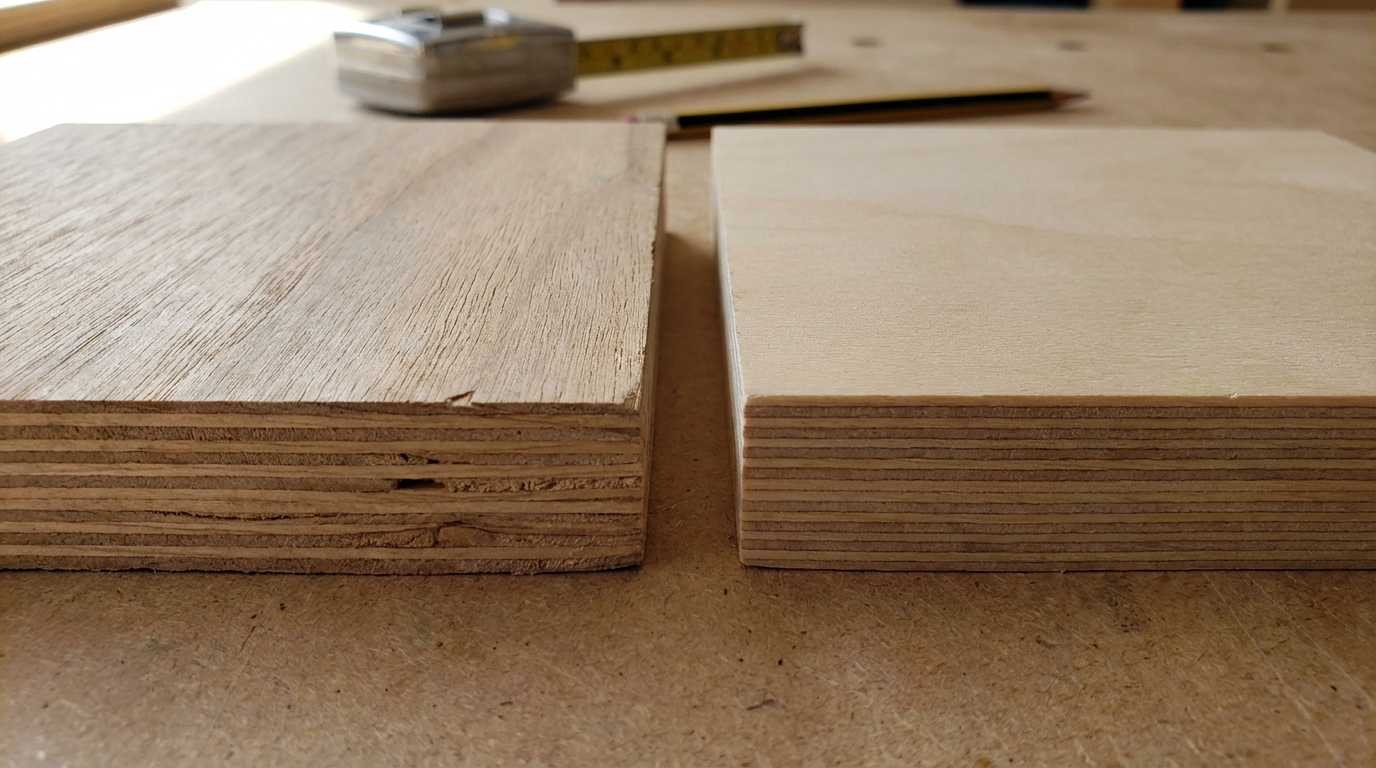
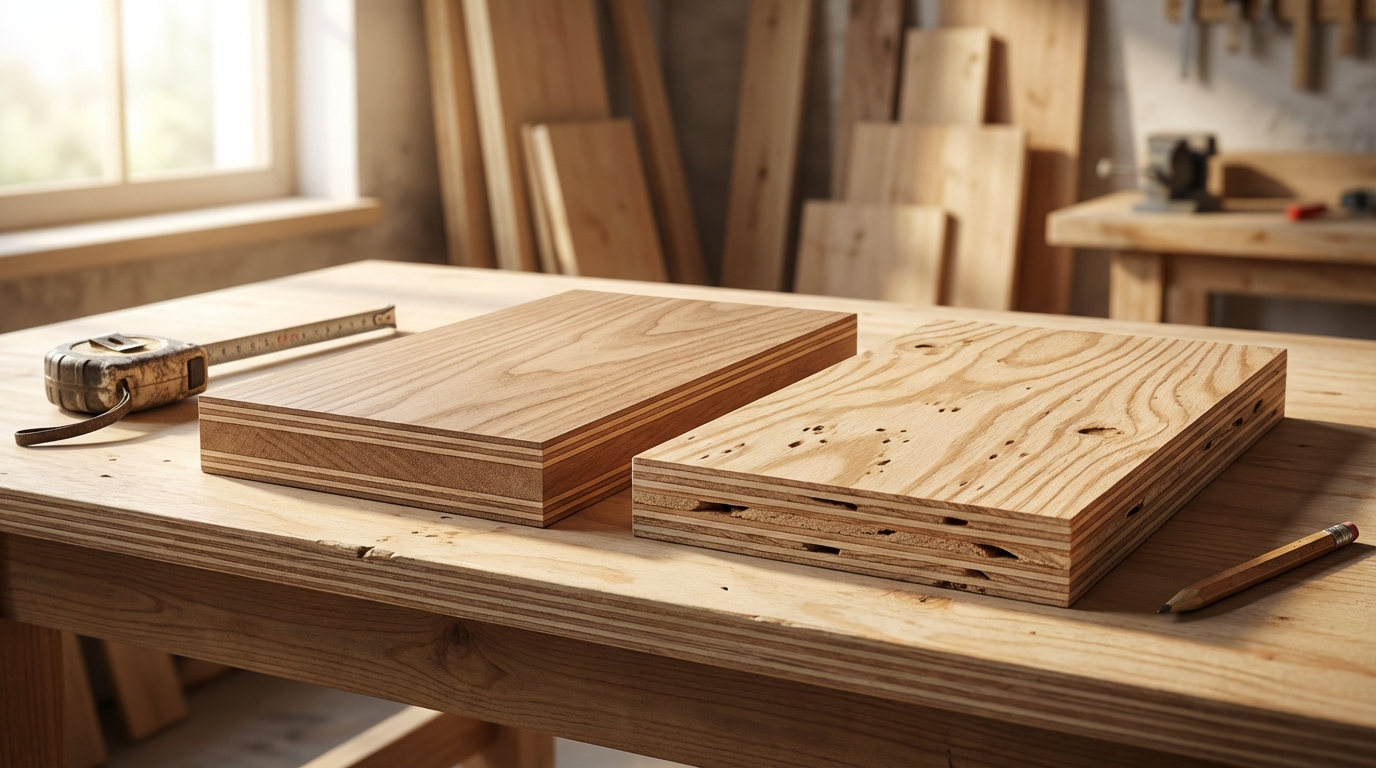
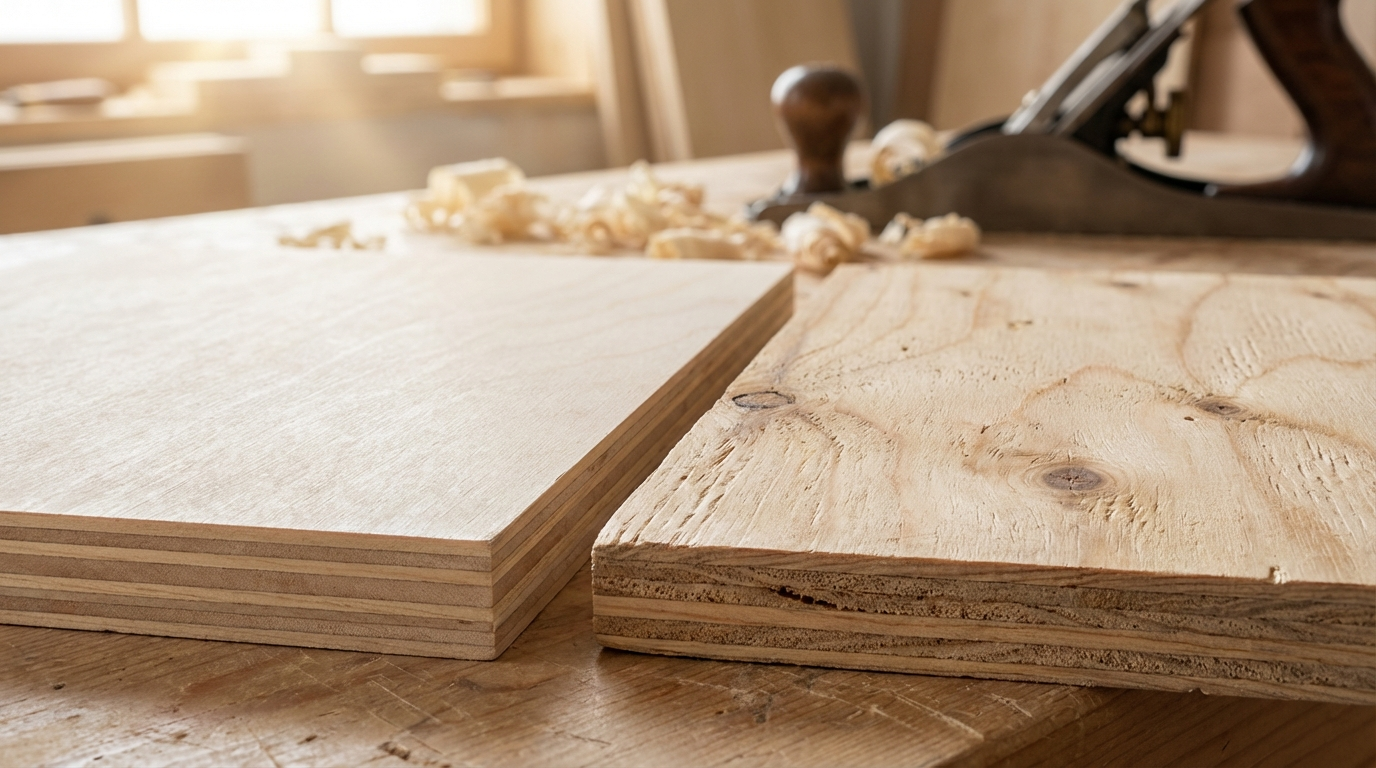
Core construction quality—the arrangement and bonding of inner veneer layers—significantly impacts long-term performance. Both brands maintain acceptable core standards in their mid-range and premium products. However, economy segments from both manufacturers may show more core voids and uneven veneer thickness, which affects screw holding strength and edge finishing quality.
Adhesive and Moisture Performance
BWP (Boiling Water Proof) and BWR (Boiling Water Resistant) grades from both brands undergo similar testing protocols. Century Ply's adhesive formulations tend to perform slightly better in extended immersion tests, making them marginally safer for high-moisture applications like sink cabinet interiors. Greenply's standard grades perform adequately for typical Indian kitchen conditions where direct water contact is limited.
For monsoon-prone coastal areas—Mumbai, Chennai, Kolkata, and Kerala—the adhesive quality becomes critical. Both brands recommend their BWP grades for such regions, though Century Ply's premium lines offer additional margin of safety. In drier northern and western regions, Greenply's BWR grades provide sufficient protection at lower cost.
Surface Finish and Workability
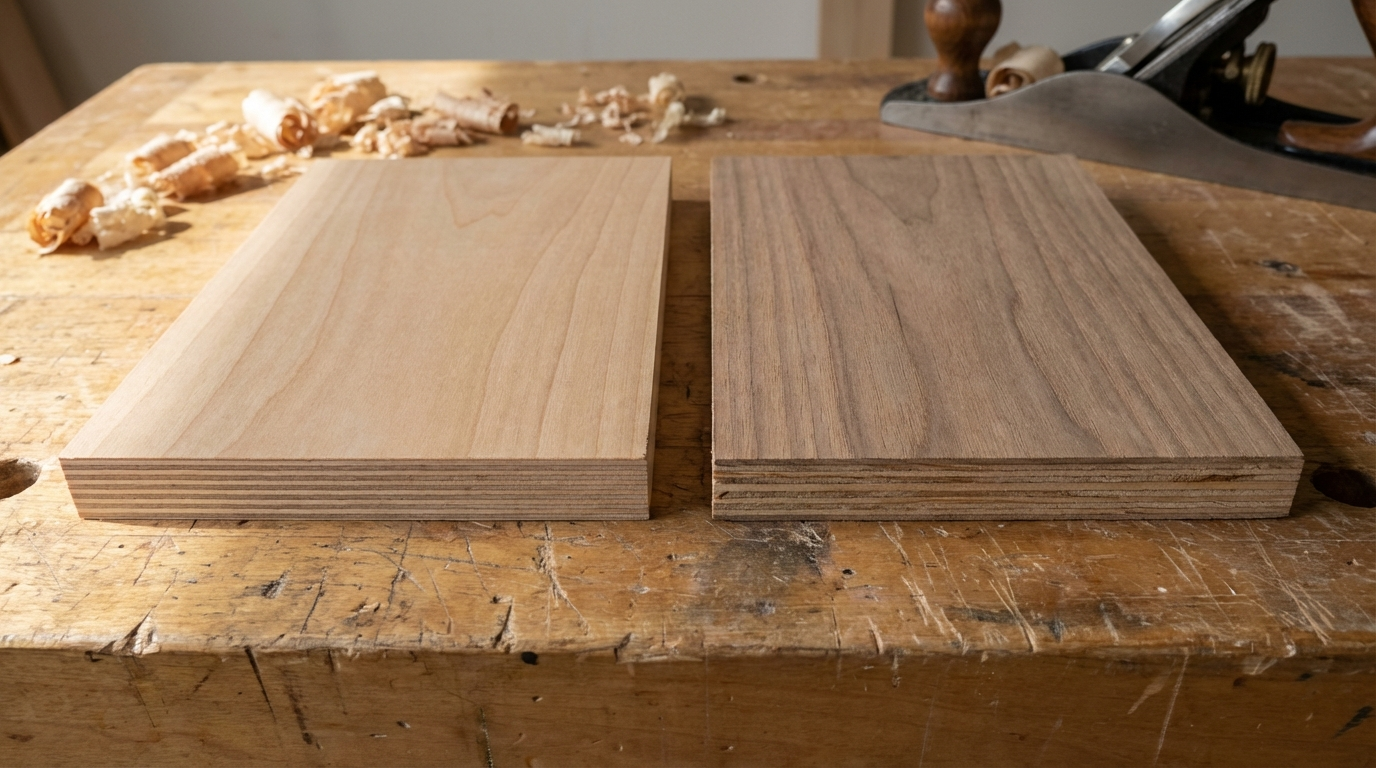
Carpenters generally report that Century Ply's premium grades offer smoother surfaces requiring less sanding before laminate application. This translates to time savings and better final finish quality, partially justifying the price premium. Greenply's surfaces are adequate for most applications but may require additional preparation for high-gloss laminate finishes.
CNC machining compatibility—essential for modern modular furniture—works well with both brands' premium offerings. Economy grades from either manufacturer may cause tool wear and inconsistent edge quality due to core density variations.
Price Comparison: Century Ply vs Greenply
Price differences between these brands vary by product grade, thickness, city tier, and dealer margins. Understanding the pricing structure helps buyers identify genuine value versus arbitrary markups.
Price Range by Grade (Per Square Foot)
The following ranges assume 18-19mm commercial thickness in metro city markets with standard dealer margins. Actual prices vary based on GST, transport costs, and local competition:
| Grade Category | Century Ply Range (₹/sq ft) | Greenply Range (₹/sq ft) | Price Advantage |
|---|---|---|---|
| Premium BWP | ₹95 - ₹130 | ₹85 - ₹115 | Greenply 10-12% lower |
| Standard BWP | ₹75 - ₹95 | ₹68 - ₹88 | Greenply 8-10% lower |
| Commercial MR | ₹55 - ₹75 | ₹52 - ₹72 | Comparable |
| Economy MR | ₹42 - ₹58 | ₹40 - ₹55 | Greenply marginally lower |
| Blockboard (25mm) | ₹85 - ₹110 | ₹78 - ₹100 | Greenply 8-10% lower |
Factors Affecting Price Variation
Thickness significantly impacts pricing—12mm plywood costs approximately 60-65% of 18mm prices, while 6mm costs around 35-40%. Both brands follow similar thickness-based pricing curves. Regional transport costs add ₹3-8 per square foot in remote areas far from manufacturing hubs.
Dealer margins vary considerably—established dealers with volume commitments may offer 5-10% better pricing than smaller retailers. Bulk purchases for complete home projects typically unlock additional discounts from both brands' authorized dealers.
Value for Money Assessment
For premium applications where moisture resistance and surface finish are critical, Century Ply's price premium delivers measurable quality advantages. For standard interior applications in dry areas, Greenply offers better value without compromising essential performance. Budget-conscious projects can safely choose Greenply's Ecotec range without significant quality sacrifice.
How to Choose Between Greenply and Century Ply
Selection between these brands should follow a structured decision framework based on application requirements, budget constraints, and local availability. Neither brand is universally superior—the right choice depends on specific project circumstances.
Decision Framework
Choose Century Ply when:
- Your project involves high-moisture areas like kitchen sink cabinets or bathroom vanities
- Budget allows for premium products and quality is non-negotiable
- You require consistent availability of specific grades in your city
- The project involves high-gloss laminates requiring superior surface finish
- Commercial projects demand documented quality certifications
Choose Greenply when:
- Eco-friendly credentials matter for your project or personal values
- Budget optimization is important without sacrificing core quality
- Your application involves standard interior furniture in relatively dry environments
- Fire retardant plywood is required and readily available
- Dealer relationships offer better Greenply pricing in your area
Buyer Checklist Before Purchase
- Verify dealer authorization—both brands maintain authorized dealer networks
- Check batch manufacturing date—avoid stock older than 12-18 months
- Inspect edges for delamination signs and core void visibility
- Confirm actual thickness matches specification (18mm often measures 17.5-18.5mm)
- Request test certificates for commercial or high-value projects
- Compare multiple dealer quotes for identical specifications
- Clarify warranty terms and claim procedures before purchase
When NOT to Choose Either Brand
For specialized marine applications requiring genuine marine-grade plywood, consider importing specialized products or sourcing from brands with proven marine track records. For extreme budget constraints where even economy grades exceed limits, local mill plywood may serve temporary applications—though durability expectations must adjust accordingly. For structural applications requiring engineered wood products, neither brand's standard plywood is appropriate.
Common Mistakes When Buying Branded Plywood
Even with reputable brands like Century Ply and Greenply, buyers frequently make errors that compromise value or performance. Understanding these mistakes helps avoid costly remediation later.
Grade Selection Errors
The most common mistake involves using MR grade plywood in moisture-prone areas to save costs. While the price difference between MR and BWR grades is typically only ₹15-25 per square foot, the performance difference in humid conditions is dramatic. MR plywood in kitchen base cabinets may show swelling and delamination within 2-3 years, especially during monsoon seasons. Always specify BWR or BWP grades for kitchens, bathrooms, and areas with potential water exposure.
Confusing Brand with Quality Guarantee
Brand names don't guarantee quality across all product lines. Both Century Ply and Greenply offer economy segments that sacrifice quality to meet price points. A premium Greenply product often outperforms an economy Century Ply product, despite brand perceptions. Compare products at equivalent grade levels rather than assuming brand superiority across ranges.
Ignoring Local Humidity Conditions
Buyers in coastal cities like Mumbai, Chennai, or Kochi sometimes choose identical specifications as those in Delhi or Jaipur. Coastal humidity demands higher adhesive performance—even bedroom furniture benefits from BWR over MR grades in such environments. The additional cost is minimal compared to premature furniture replacement.
Quick Inspection Checks
Before accepting delivery, perform these basic quality checks:
- Edge inspection: Look for visible gaps between veneer layers indicating poor bonding
- Surface check: Run palm across surface feeling for roughness, bumps, or depressions
- Flex test: Gently flex sheet ends—excessive flexibility suggests low-density core
- Stamp verification: Confirm BIS certification stamp matches claimed grade
- Thickness measurement: Verify with measuring tape at multiple points
- Smell test: Strong chemical odour may indicate high formaldehyde emissions
Dealer Upsells to Watch
Dealers sometimes push premium grades for applications that don't require them. Bedroom wardrobes in air-conditioned homes rarely need BWP grade—standard MR or BWR suffices. Similarly, decorative panels not exposed to moisture don't require waterproof specifications. Match grade to actual application requirements rather than accepting dealer recommendations uncritically.
Warranty and After-Sales Comparison
Both Century Ply and Greenply offer warranties on their products, but warranty terms and practical enforcement differ significantly. Understanding these differences helps set realistic expectations.
Warranty Terms Overview
Century Ply typically offers warranties ranging from 7 years on economy products to lifetime warranties on premium Club Prime range. Greenply provides similar warranty structures with 5-15 year coverage depending on product grade. However, warranty activation requires proper installation, avoiding direct water contact, and maintaining purchase documentation with batch details.
Practical Warranty Enforcement
In practical terms, warranty claims require demonstrating manufacturing defects rather than installation or usage problems. Both brands process claims through authorized dealers, making dealer relationship quality important for potential claim resolution. Premium grades from either brand rarely face claim situations, while economy grade warranty enforcement proves more challenging due to difficulty distinguishing manufacturing defects from installation issues.
Certification and Documentation
Both brands provide IS/BIS certification compliance on applicable products. Century Ply products typically carry ISO 9001 and OHSAS certifications, while Greenply emphasizes IGBC and FSC certifications on eco-friendly ranges. For commercial projects requiring documentation, both brands can provide test certificates and compliance documentation through authorized channels.
Regional Availability and Dealer Network
Dealer availability significantly impacts brand choice, especially in Tier-2 and Tier-3 cities where inventory variety may be limited.
Metro City Availability
In major metros—Delhi NCR, Mumbai, Bangalore, Chennai, Hyderabad, Kolkata—both brands maintain strong dealer networks with full product range availability. Competition keeps pricing competitive, and buyers can easily compare products across multiple dealers. Century Ply generally has stronger visibility in metro markets due to higher marketing investment.
Tier-2 and Tier-3 City Reality
Smaller cities often show dealer preference patterns based on historical relationships and stocking decisions. Some regions favour Greenply due to better dealer margins or established relationships, while others stock Century Ply more comprehensively. Buyers in such markets may need to accept available brands rather than insisting on specific preferences, unless willing to order through regional distributors with delivery time implications.
Carpenter and Contractor Preferences
Local carpenters often develop brand preferences based on working experience and dealer relationships. Their recommendations carry weight since they handle material daily and understand practical performance. However, their preferences may reflect margin considerations rather than pure quality assessments—verify recommendations against your specific requirements rather than accepting them uncritically.
Frequently Asked Questions
What is the full form of BWP and BWR in plywood?
BWP stands for Boiling Water Proof and BWR stands for Boiling Water Resistant. Despite similar names, BWP offers superior water resistance, theoretically withstanding prolonged boiling water immersion without delamination. BWR provides good moisture resistance for normal humid conditions but isn't designed for direct water contact. For Indian kitchens and bathrooms, BWR typically suffices for most cabinet applications, while BWP provides additional safety margin for areas with potential water pooling or constant splash exposure.
Which is better for kitchen cabinets: Greenply or Century Ply?
For kitchen cabinets, Century Ply's premium BWP grades (Club Prime, Bond 710) offer marginally better moisture resistance in laboratory testing, making them safer for sink cabinets and areas with direct water exposure. However, Greenply's Green Gold BWP 710 performs adequately for most kitchen applications at 10-12% lower cost. The practical difference becomes apparent only in extreme conditions—standard kitchen usage with reasonable care suits either brand's BWP offerings well.
Is Greenply cheaper than Century Ply in India?
Yes, Greenply generally costs 8-15% less than equivalent Century Ply grades across most product categories. The price difference is most pronounced in premium BWP segments and least significant in economy MR grades. However, final pricing depends heavily on dealer margins, purchase volume, and regional factors. In some markets, aggressive Century Ply dealer promotions may temporarily match or beat Greenply pricing on specific products.
How to check if plywood is original Century Ply or Greenply?
Authentic branded plywood carries clear identification: printed brand logos on sheet surfaces, BIS certification stamps with grade markings, and batch/manufacturing codes on edges. Both brands provide authentication methods—Century Ply uses QR codes on premium products, while Greenply marks products with traceable batch numbers. Purchase only from authorized dealers who can provide original invoices. Fake products often show inconsistent printing, missing certification stamps, or unusually low pricing that seems too good to be true.
Which plywood brand is better for humid coastal areas?
For coastal cities like Mumbai, Chennai, Kochi, or Kolkata with high humidity year-round, Century Ply's premium BWP grades typically offer slightly better long-term performance due to superior adhesive formulations. However, Greenply's BWP grades also perform acceptably when properly installed with adequate ventilation provisions. More important than brand choice is selecting appropriate BWP or Marine grade rather than standard MR grades, ensuring proper installation with moisture barriers, and maintaining reasonable ventilation in enclosed spaces.
Do Greenply and Century Ply offer termite-proof plywood?
Both brands offer termite and borer resistant treatment on most product lines, typically indicated by specific product stamps or grade designations. This treatment involves chemical preservation that deters insect infestation. However, no plywood is completely termite-proof under extreme infestation conditions. For areas with known termite problems—common in many Indian regions—ensure specified treatment compliance and consider additional protective measures like metal barriers at floor contact points and periodic inspections.
What is the warranty period for Century Ply and Greenply products?
Warranty periods vary by product grade—Century Ply offers 7-year warranty on economy grades scaling up to lifetime warranty on premium Club Prime products. Greenply provides 5-15 year warranties depending on product line. Practical warranty enforcement requires maintaining purchase invoices with batch details, ensuring installation follows manufacturer guidelines, and demonstrating that problems stem from manufacturing defects rather than misuse or environmental factors. Premium grade warranty claims are processed more smoothly than economy grade disputes.
Can I use MR grade plywood for bathroom cabinets?
Using MR (Moisture Resistant) grade plywood in bathrooms is not recommended, regardless of brand. Bathrooms experience constant humidity, water splashes, and condensation that exceed MR plywood's design parameters. Even premium MR grades may show edge swelling and surface damage within 2-3 years in bathroom environments. Always specify BWP grade for bathroom vanities and cabinets—the additional cost of ₹20-30 per square foot is minimal compared to furniture replacement costs. Both Century Ply and Greenply offer suitable BWP options for bathroom applications.
Disclaimer: This content is provided for general informational purposes based on industry practices and publicly available information. Product specifications, standards, prices, and availability may vary by manufacturer, region, and time. Readers should independently verify details with manufacturers, dealers, or qualified professionals before making purchase or construction decisions.Want Plywood Suggestions?
Share a few details and a Apple Ply specialist will suggest suitable brands and connect you to responsive dealers.