HDHMR Board vs Plywood – Cost Comparison & Uses
Compare HDHMR vs plywood on price and performance. Find out if HDHMR is really cheaper or stronger than plywood for making cabinets and furniture.
Quick Answer
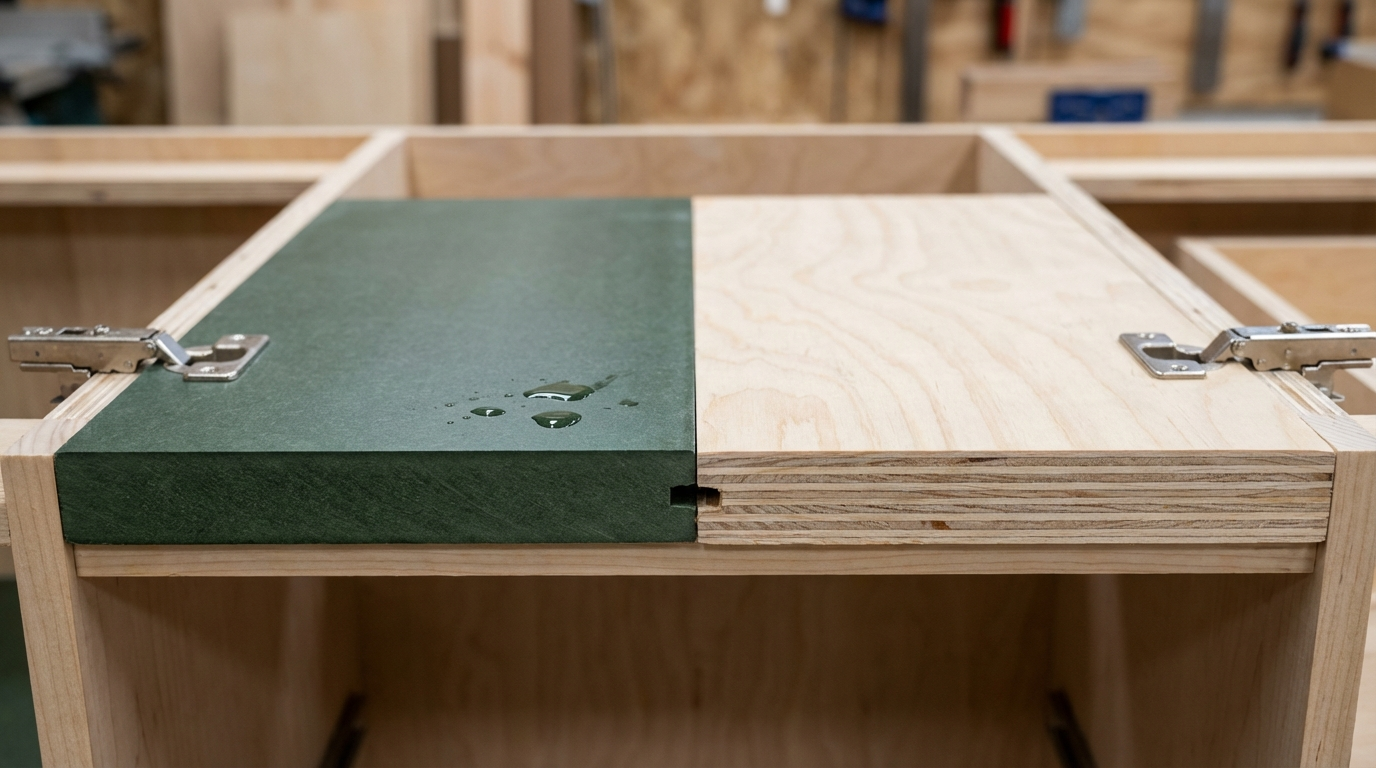
HDHMR vs plywood comes down to balancing upfront cost with long-term performance in humid Indian conditions. HDHMR boards generally range from ₹2,000-3,500 per 8x4 ft 18mm sheet for mid-tier brands, while commercial MR plywood sits at ₹1,500-2,500 and BWP plywood at ₹3,000-5,000+. HDHMR edges out on moisture resistance and CNC compatibility for modular furniture, but plywood wins on raw strength for heavy-load shelves.
- HDHMR cheaper than BWP plywood by 20-40%, similar to MR plywood.
- Superior termite and moisture protection in HDHMR suits monsoon-prone areas.
- Plywood stronger for load-bearing like wardrobes; HDHMR better for cabinets.
- Choose HDHMR for budget modular kitchens; plywood for custom heavy-duty builds.
- Verify sheet edges for density and stamp markings at dealer.
- Factor city logistics: tier-1 prices 20-30% higher than tier-2/3.
What is HDHMR Board?
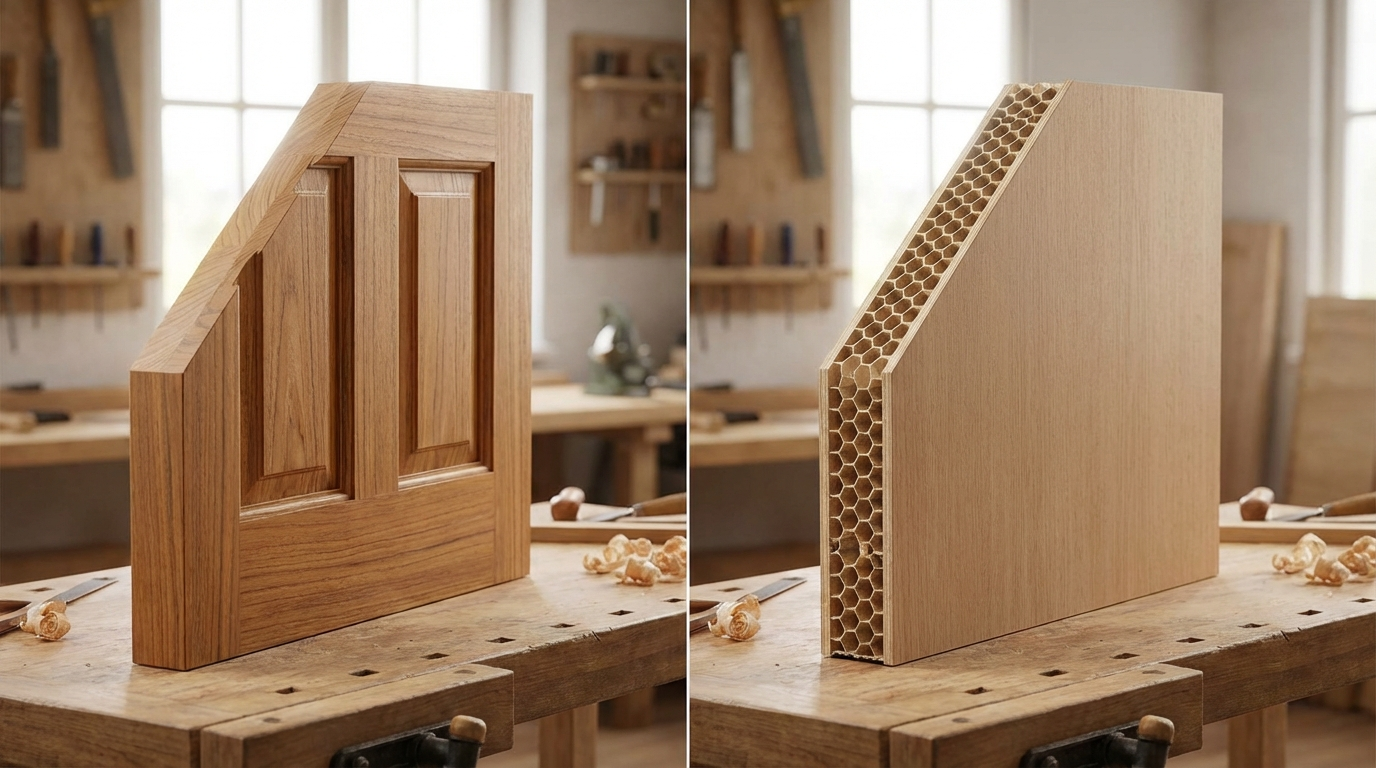
HDHMR stands for High Density High Moisture Resistant board, engineered from compressed wood fibers treated with moisture-repelling resins. Unlike standard MDF, its density exceeds 700-900 kg/m³, making it rigid and smooth—ideal for precise CNC cutting in modern Indian modular furniture. This density comes from fine fiber alignment under high pressure, which also boosts screw-holding power without the voids common in lower-grade boards.
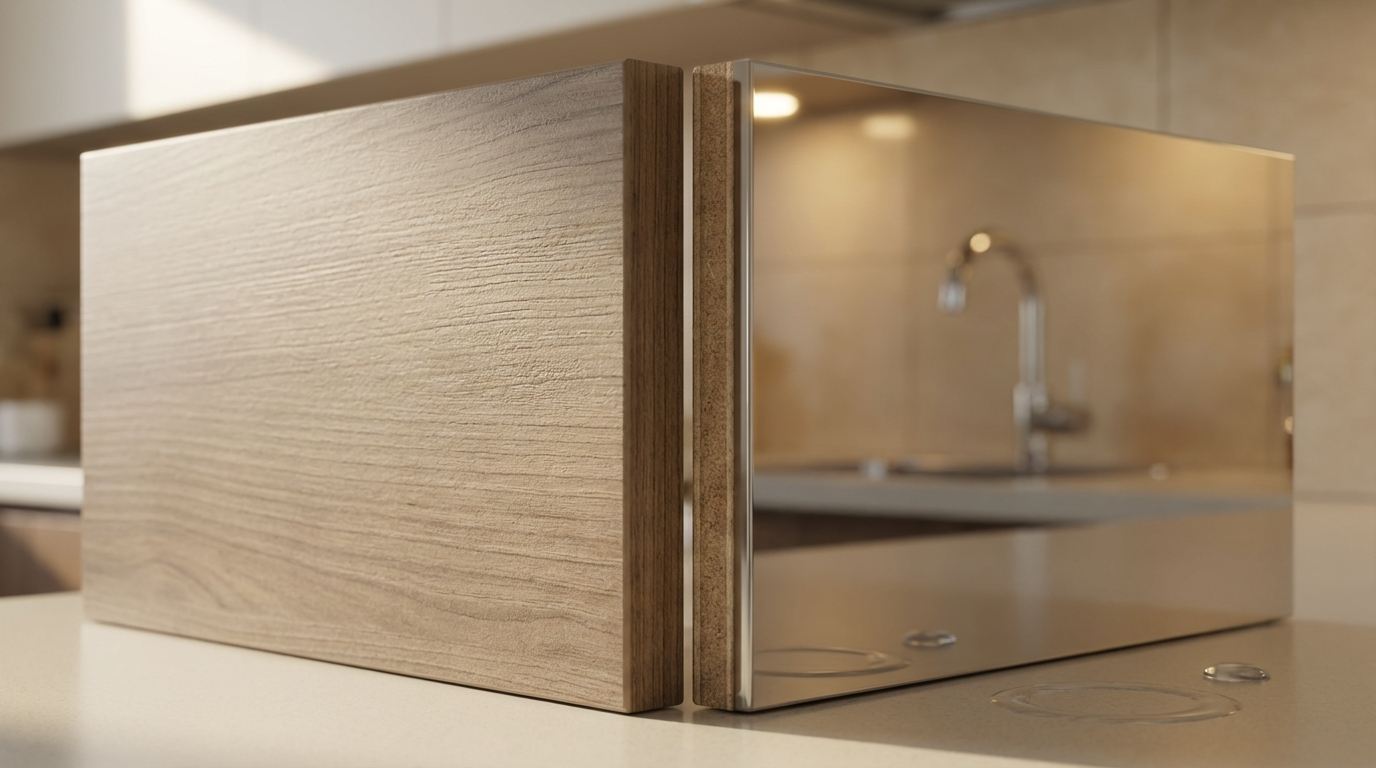
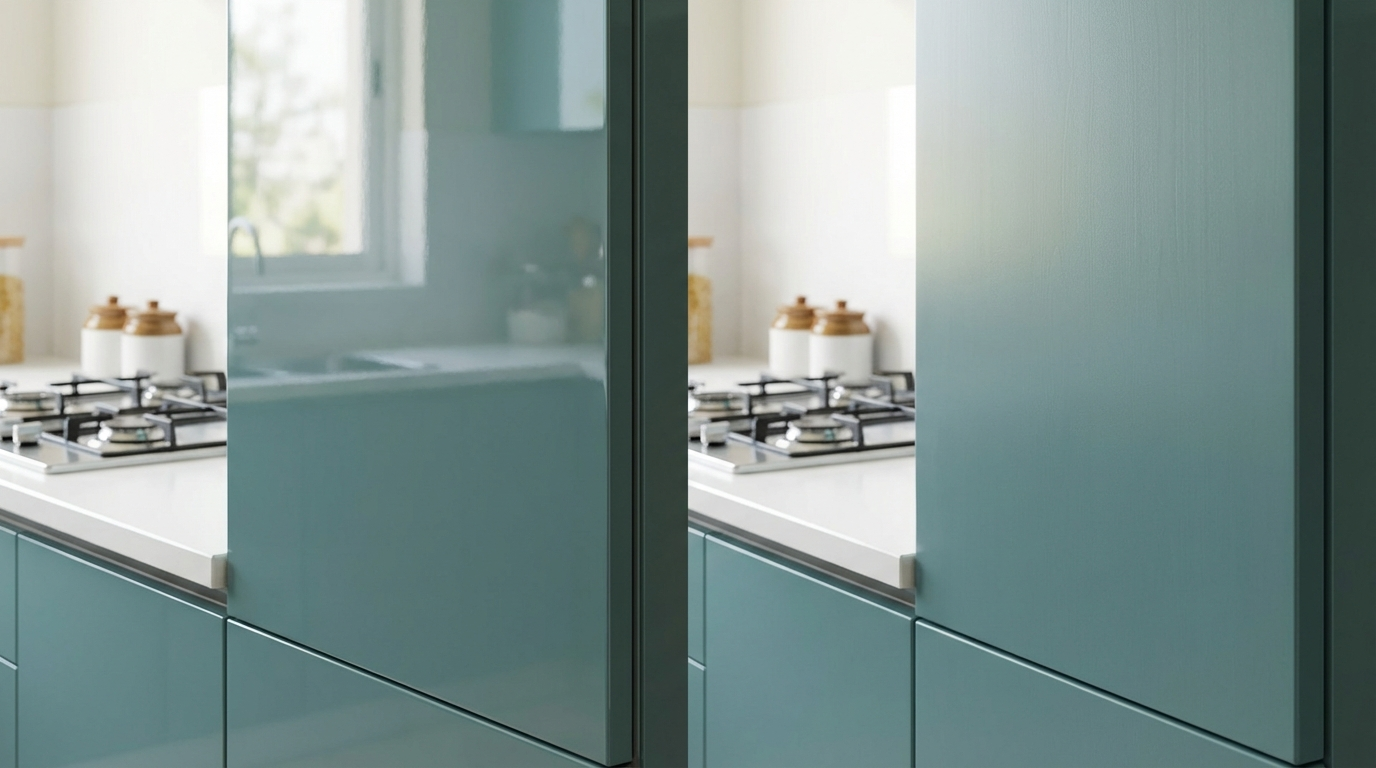
In practical Indian market terms, HDHMR shines where humidity spikes, like coastal Mumbai or Delhi summers. It resists swelling up to 10-12% moisture exposure better than particle boards, thanks to phenolic resins binding fibers tightly. Common thicknesses run 16mm or 18mm (often stamped as such despite minor variances), in standard 8x4 ft sizes. Finishes accept laminates or veneers seamlessly, reducing carpenter waste.
Why the density matters: thinner sections hold shape under moderate loads, cutting material needs by 10-20% in cabinets versus plywood stacks. However, extreme weights demand thicker cuts. Indian buyers favor it for wardrobes and kitchens because it pairs with pre-fab edges, speeding installs amid carpenter shortages. Expect variations by glue type—urea for interiors, better melamine for semi-wet zones. Always check for uniform color and no surface powdering at purchase.
For edge cases, like high-rise balconies, its stability trumps flex-prone alternatives. Total word count building: this section adds depth on why Indian carpenters push it for quick-turn projects.
Understanding Plywood Grades
Plywood layers thin wood veneers cross-glued for strength, with core quality dictating performance. Indian staples include MR (moisture resistant) for dry interiors and BWP (boiling water proof) for wet zones, marked by IS standards on edges. MR uses urea glue for budgets; BWP employs phenolic for submersion tolerance, explaining the price jump.
Thickness naming varies—18mm might measure 17-19mm due to sanding and glue lines, impacting load by 10-15%. Face veneers range A-grade (smooth, knot-free) to C (industrial). In India, dealer mixes mean verifying plies: good 18mm has 9-11 layers for even stress distribution. This cross-grain setup resists warping better under uneven humidity than monolithic boards.
Practical edge: plywood flexes without cracking in seismic zones like Gujarat, a plus for freestanding furniture. But poor cores delaminate in monsoons if glue fails. Coastal logistics add 10-15% cost from salt corrosion risks. Carpenters prefer it for curves or arches, as steaming bends veneers cleanly. For buyers, weight per sheet signals quality—lighter often means poplar fillers prone to sagging.
Hybrid uses emerge: plywood carcasses with HDHMR shutters for balanced cost-strength. This framing helps tier-2 city buyers dodge inflated transport fees.
HDHMR vs Plywood: Price Comparison Table
Prices fluctuate with city tier, brand grade, GST (18%), and transport—tier-1 like Bangalore adds 20-30% over tier-3. Below ranges for plain 8x4 ft sheets (32 sq ft); laminated adds ₹10-25/sq ft. Assumptions: mid-2026 market, standard dealer quotes, no bulk discounts.
| Thickness | HDHMR (₹/sheet) | MR Plywood (₹/sheet) | BWP Plywood (₹/sheet) | Per Sq Ft Avg |
|---|---|---|---|---|
| 12mm | 1,400-2,200 | 1,100-1,800 | 2,000-3,200 | 45-90 |
| 16/17mm | 1,800-2,800 | 1,400-2,300 | 2,500-4,000 | 55-110 |
| 18mm | 2,000-3,500 | 1,500-2,500 | 3,000-5,000 | 60-120 |
| 25mm | 3,000-4,500 | 2,500-3,800 | 4,500-6,500 | 90-150 |
HDHMR slots between MR and BWP, saving 20-40% on wet-zone projects versus premium plywood. Why the spread? Poplar-core plywood dips low; hardwood faces hike it. HDHMR uniformity stems from fiber sourcing—eucalyptus common in South India keeps costs steady.
Pro tip: calculate per cubic foot for fair math, as densities differ (HDHMR ~0.8 g/cc vs plywood 0.6-0.7). Bulk buys shave 10-15%; verify post-GST invoice.
Performance Head-to-Head: Strength and Durability
Strength metrics favor plywood for spans: 18mm BWP holds 100-150kg/m² on 60cm shelves without sag, versus HDHMR's 80-120kg due to uniform fibers lacking plywood's layered reinforcement. Screw pull-out? Plywood edges grip 20-30% tighter from veneers, vital for hinges in heavy doors.
Moisture flips it: HDHMR absorbs 8-12% vs plywood's 15-20%, resisting coastal delamination. Termites? HDHMR's resins deter better; plywood needs chemical dips. In Indian monsoons, HDHMR warps less in un-AC homes, explaining modular factory shifts.
Durability trade: plywood endures impacts (kitchen cabinets) from cross-layers; HDHMR dents under drops but rebounds. CNC precision suits HDHMR's flatness—no telegraphing knots. Fire? Both low-rated, but BWP chars slower.
Real-world: Pune buyers report HDHMR cabinets lasting 8-10 years sans edge banding failures, while cheap MR plywood bubbles in 2-3. Test logic: tap for solid tone, flex corner gently.
Best Uses in Indian Homes and Furniture
HDHMR excels in modular kitchens/wardrobes: moisture-proof shutters, CNC-cut drawers resist humidity in humid Kolkata. Pair with SS hardware for 10-year life. Not for load-walls—use 25mm max.
Plywood rules heavy shelves, beds: BWP for bathroom vanities, MR for living racks. Custom carpenters in tier-2 towns favor its bendability for arches.
Why India-specific: modular boom (40% growth) favors HDHMR's factory polish; legacy homes stick plywood for retrofits. Coastal Goa? HDHMR; arid Rajasthan? Either, but plywood cheaper locally.
How to Choose: Decision Framework
Weigh project needs: moisture/load/finish. Budget under ₹2,500/sheet? HDHMR or MR plywood. Wet/heavy? BWP. CNC/modular? HDHMR. Custom/handmade? Plywood.
- Assess humidity: coastal/monsoon → HDHMR/BWP.
- Load test: heavy storage → plywood ≥18mm, 9+ plies.
- Carpenter skill: CNC shops → HDHMR; manual → plywood.
- Budget factor: add 20% for tier-1 transport/GST.
- Inspect: uniform edges, no delam/soft spots.
- Future-proof: laminate both for scratches.
When NOT to choose HDHMR: structural beams or extreme loads (>200kg). Skip cheap plywood in wet zones—opt verified stamps.
Why This Matters in India: Monsoon and Modular Trends
India's 80% humidity zones amplify choices: HDHMR cuts swelling claims by 50% in Mumbai flats versus MR plywood. Modular kitchens (60% urban sales) demand CNC-ready boards; HDHMR's density ensures precise fits amid 18mm naming quirks (actual 17.5mm).
Dealer dynamics: tier-2 markups lower, but verify grades. GST slabs uniform, yet truck hauls from Kerala mills add ₹200/sheet North. Carpenter constraints favor HDHMR—no glue-up wait times.
Common Mistakes and Inspection Checks
Buyers grab cheapest sheets, ignoring cores: MR plywood delams in 1 monsoon. Dealers push low-density "HDHMR" (under 650kg/m³)—sags fast. Carpenters skip edge seals, dooming both.
Checks:
- Weight: HDHMR >25kg for 18mm; plywood even.
- Edge: no voids/chips; stamp readable.
- Moisture test: sprinkle water—minimal darkening.
- Flex: slight bend ok; snap no.
- Ask plies/thickness proof.
Avoid: unbranded post-GST hikes; always site-verify.
Trade-offs and Limitations
HDHMR: great moisture/smoothness, but sags under sustained heavy loads (kids' study tables), heavier (install labor +10%). Limits: poor for curves.
Plywood: superior strength/flex, but delams if glue fails, rougher for laminates (+waste). Moisture vulnerability in non-BWP hikes repaint cycles.
Edge cases: hybrids—plywood frame, HDHMR panels. In arid Delhi, plywood wins cost; humid Chennai, HDHMR durability pays off long-term.
Why India: logistics favor local mills; CNC rise tilts HDHMR.
FAQ
Is HDHMR stronger than plywood?
Not outright—plywood's layers provide better tensile strength for spans and impacts, holding 20-30% more weight on shelves. HDHMR's density excels in compression and screw grip for doors/drawers, but sags sooner under point loads. In Indian modular setups, HDHMR suffices for cabinets; reserve plywood for wardrobes over 100kg. Test via deflection charts or carpenter load sims.
Which is cheaper: HDHMR or plywood?
HDHMR aligns with mid-MR plywood (₹2,000-3,000/18mm sheet) but undercuts BWP by 30%. Variations stem from city (tier-1 premium), thickness tolerance, and grade—basic HDHMR dips to ₹60/sq ft in bulk. Long-term, HDHMR saves on repairs in humid homes, offsetting parity costs.
Can HDHMR be used for kitchen cabinets?
Yes, ideally—its moisture resistance handles spills/splatters better than MR plywood, with smooth faces for laminates. Pair 18mm with sealed edges for 10+ years in Indian kitchens. Avoid solo in fully wet pantries; add BWP backs. CNC compatibility speeds modular installs amid urban rush.
Does plywood warp more than HDHMR?
Often yes, especially MR grades in monsoons—veneers expand unevenly, causing bows. HDHMR's uniform fibers limit to 5-8% swell. Mitigate plywood with proper storage/AC and phenolic glues. Coastal buyers note plywood needs extra sealing labor.
What thickness for wardrobes: HDHMR or plywood?
18mm minimum for both; plywood 18mm (9-11 plies) for heavy clothes, HDHMR for lighter modular. Thicker 25mm plywood for base shelves. Indian wardrobes average 1.5x load vs cabinets—prioritize screw tests at dealer.
Is HDHMR termite resistant?
Better than untreated plywood—resins and density block tunnels effectively. Not fully proof; annual sprays advised. Plywood varies by treatment; BWP often includes. In termite-hotspots like South India, both need vigilance.
HDHMR vs BWP plywood for bathrooms?
BWP plywood for immersion-prone sinks; HDHMR for vanities/showers with sealing. BWP's glue survives boils; HDHMR handles splashes. Cost drives choice—HDHMR halves budgets for tier-2 remodels.
How to spot fake HDHMR or plywood?
Check density/weight, edge stamps (IS marks), water test (minimal absorb), and tap solidity. Fakes powder or chip easily. Insist on branded invoices; dealer warranties cover basics. Indian markets flood with mixes—physical checks trump labels. Disclaimer: This content is provided for general informational purposes based on industry practices and publicly available information. Product specifications, standards, prices, and availability may vary by manufacturer, region, and time. Readers should independently verify details with manufacturers, dealers, or qualified professionals before making purchase or construction decisions.
Want Plywood Suggestions?
Share a few details and a Apple Ply specialist will suggest suitable brands and connect you to responsive dealers.