Flush Doors: Complete Guide to Types, Sizes & Price in India
Complete flush door guide covering types, standard sizes, price range & top manufacturers in India. Find the perfect flush door for your home.
Quick Answer
Flush doors are flat, smooth-surfaced doors made by bonding plywood or veneer over a solid or hollow core, widely used in Indian homes and offices for their sleek appearance, durability, and affordable pricing. A flush door sits in line with the door frame—it is a flat or level-surfaced door without raised or recessed panels. When closed, these doors are flush with the door frame, hence the name. These minimalistic doors are cost-effective, versatile, and easy to install.
At a Glance
- Standard flush door size in India is commonly 7 feet (2.2 meters) in height and 3 feet (0.9 meters) in width.
- Flush door thickness typically ranges from 30–35 mm for residential use, while solid wood doors use 40–45 mm.
- Flush door prices in India vary depending on material, size, design, brand, and location—typically ranging from ₹3,000 to ₹20,000 per door.
- Different types include solid-core, hollow-core, and cellular-core flush doors for various applications.
- BWR (Boiling Water Resistant) doors are suitable for bathrooms, while BWP (Boiling Water Proof) doors are preferred for outdoor gates.
- Quality flush doors meet IS 2202 standards and carry BIS certification for performance checks including screw holding, slam, and impact resistance.
Flush Doors Explained: What Makes Them Popular in India
Flush doors are characterized by having a flat, unruffled, and plain surface without any ornamental work. This type is usually created from a solid or hollow core that covers both sides with a smooth veneer or plywood. Due to simplicity, sturdiness, and modern looks with sleek and clean lines, flush doors have gained very high popularity for both interior and exterior applications.
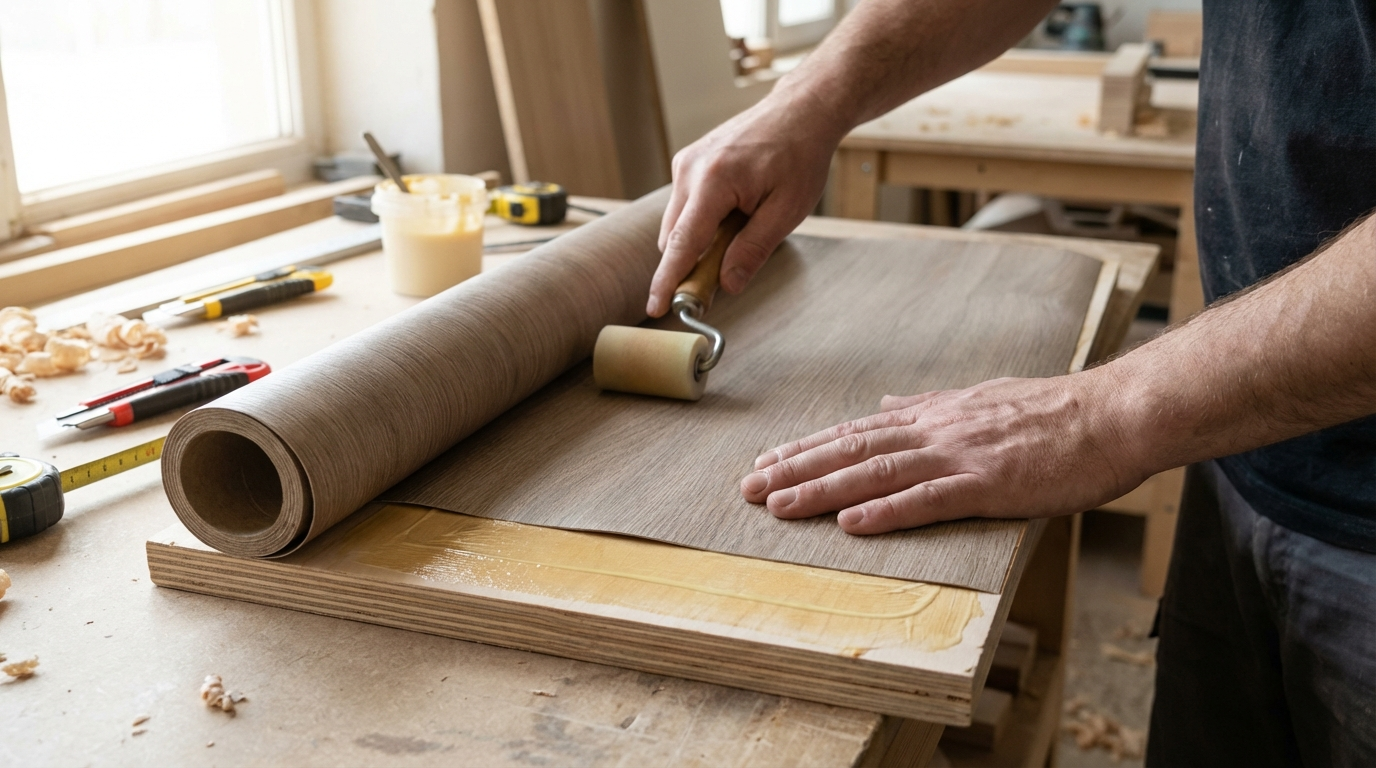
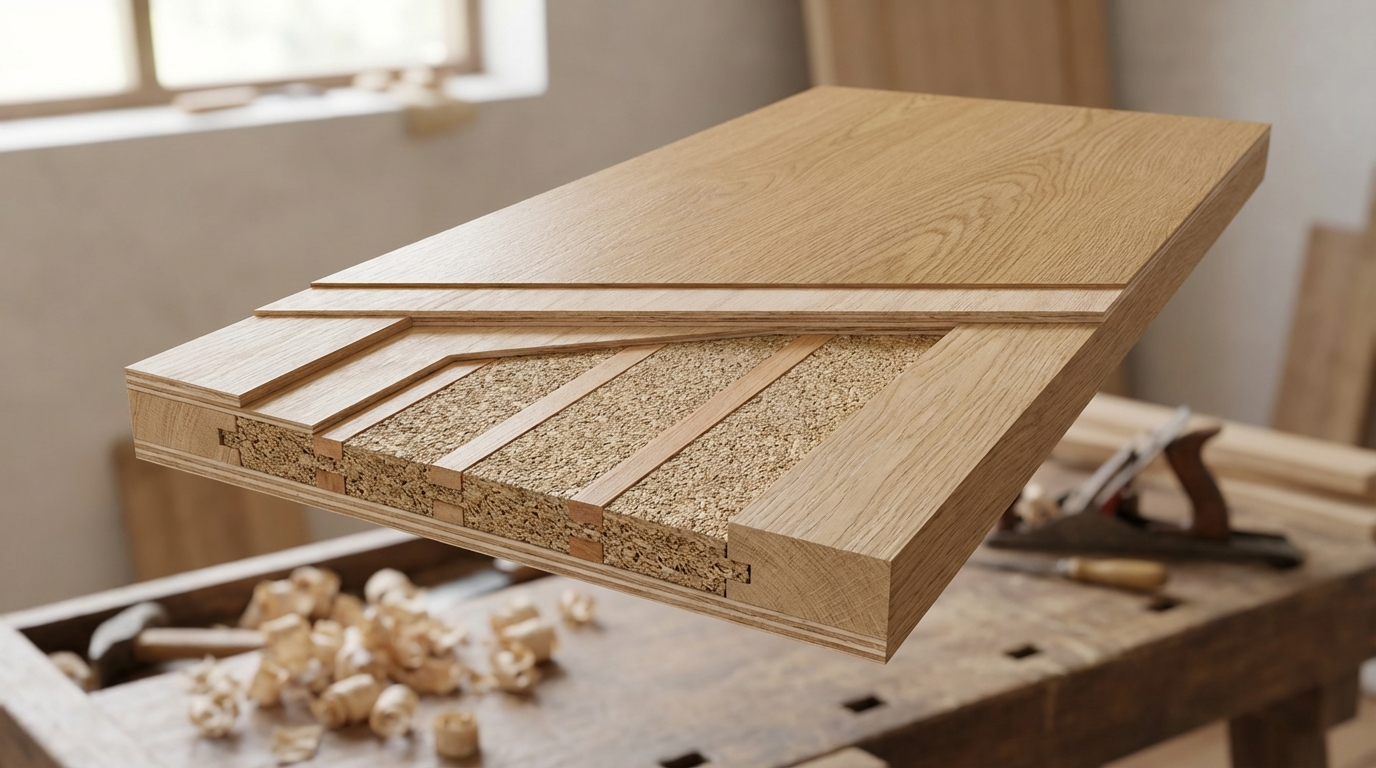
Flush door manufacturers make these doors by sandwiching hardboards or plywood over a light timber frame. Flush doors are manufactured from seasoned and chemically treated timber which makes them dimensionally stable. The doors typically have a solid blockboard core with boiling water proof grade cross bands and wooden face veneers bonded with phenol formaldehyde synthetic resins in a hot press process.
Why Flush Doors Suit Indian Homes
In India's fast-paced world of interior design, flush doors have become essential for modern homes and offices. Their sleek, seamless surfaces and fuss-free maintenance make them a favorite among architects, builders, and homeowners. Flush doors gained popularity in India in the 2000s as urban apartments replaced traditional homes. Their no-fuss design aligned perfectly with modern, fast-paced lifestyles.
From a practical Indian market perspective, flush doors offer distinct advantages over traditional panel doors. They occupy less visual space in compact apartments, accept laminates and veneers easily for customization, and provide consistent performance across varying humidity conditions when the correct grade is chosen. The smooth surface also makes them ideal for modern interiors where clean lines are preferred.
Types of Flush Doors Available in India
The core of the flush door can be hollow or solid and is covered with plywood, medium-density fibreboard (MDF), or other veneer materials. Flush doors can be categorised based on their core, which affects their functionality.
Solid-Core Flush Doors
Solid-core flush doors have a solid interior core of wood or other composite materials. These doors are durable and offer better sound resistance. Solid-core flush doors are ideal for spaces requiring sound reduction and sturdiness, such as offices, conference rooms, and bedrooms. A solid-core flush door is usually made of hard timber. A combination of particle board, MDF, laminated core, cross band, face wood veneer, and block board is also used to manufacture solid core flush doors.
Hollow-Core Flush Doors
As the name suggests, hollow-core flush doors are hollow inside with a honeycomb structure for support. The door frame consists of stiles along with top, intermediate, and bottom rails. The spaces between stiles and rails are filled with wooden battens, and plywood sheets or cross bands and face veneers are glued to the core. A hollow-core flush door is light in weight.
Cellular-Core Flush Doors
Cellular-core flush doors are made of plywood battens usually not less than 25mm wide. These battens are evenly distributed with voids. Shutters are made of plywood sheets which are glued together to form a door. This construction offers a balance between the strength of solid-core and the lightness of hollow-core doors, making it suitable for standard interior applications.
Classification by Water Resistance
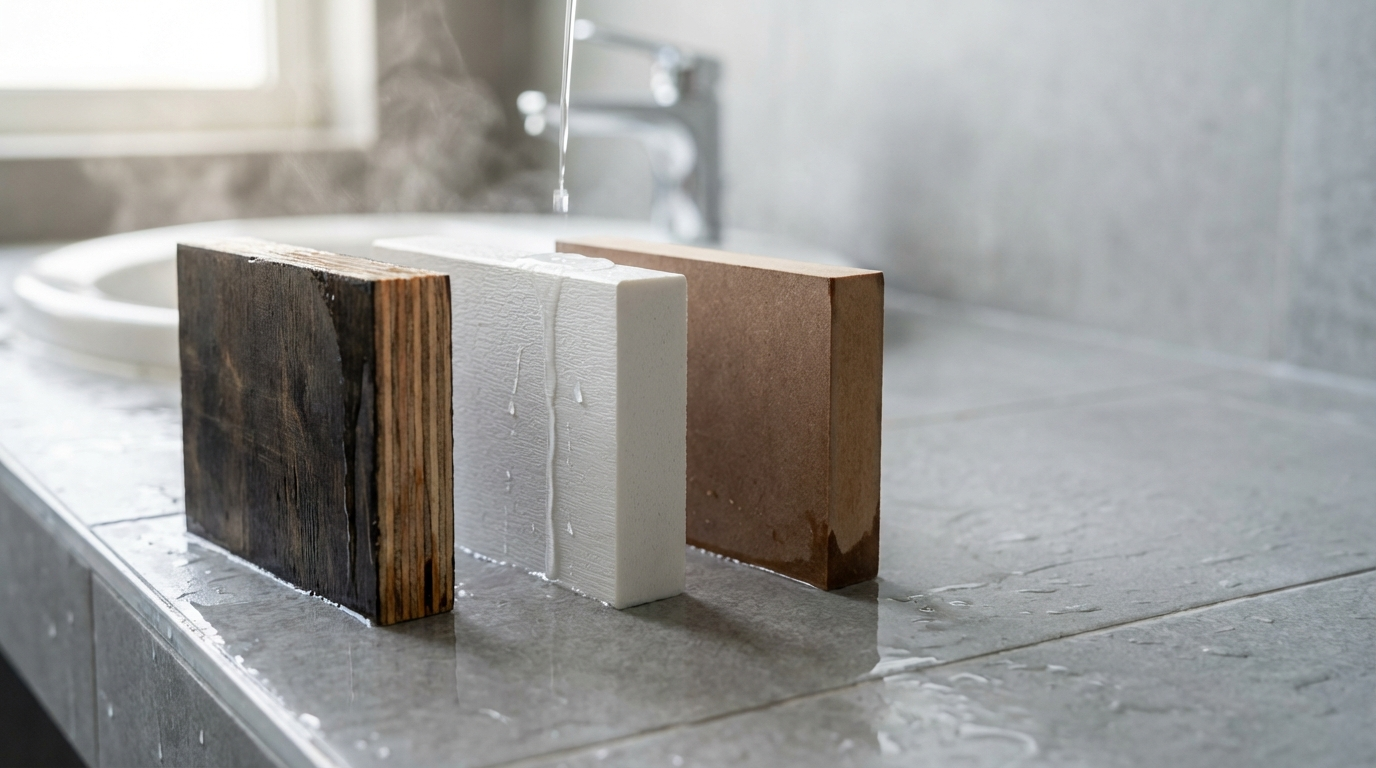
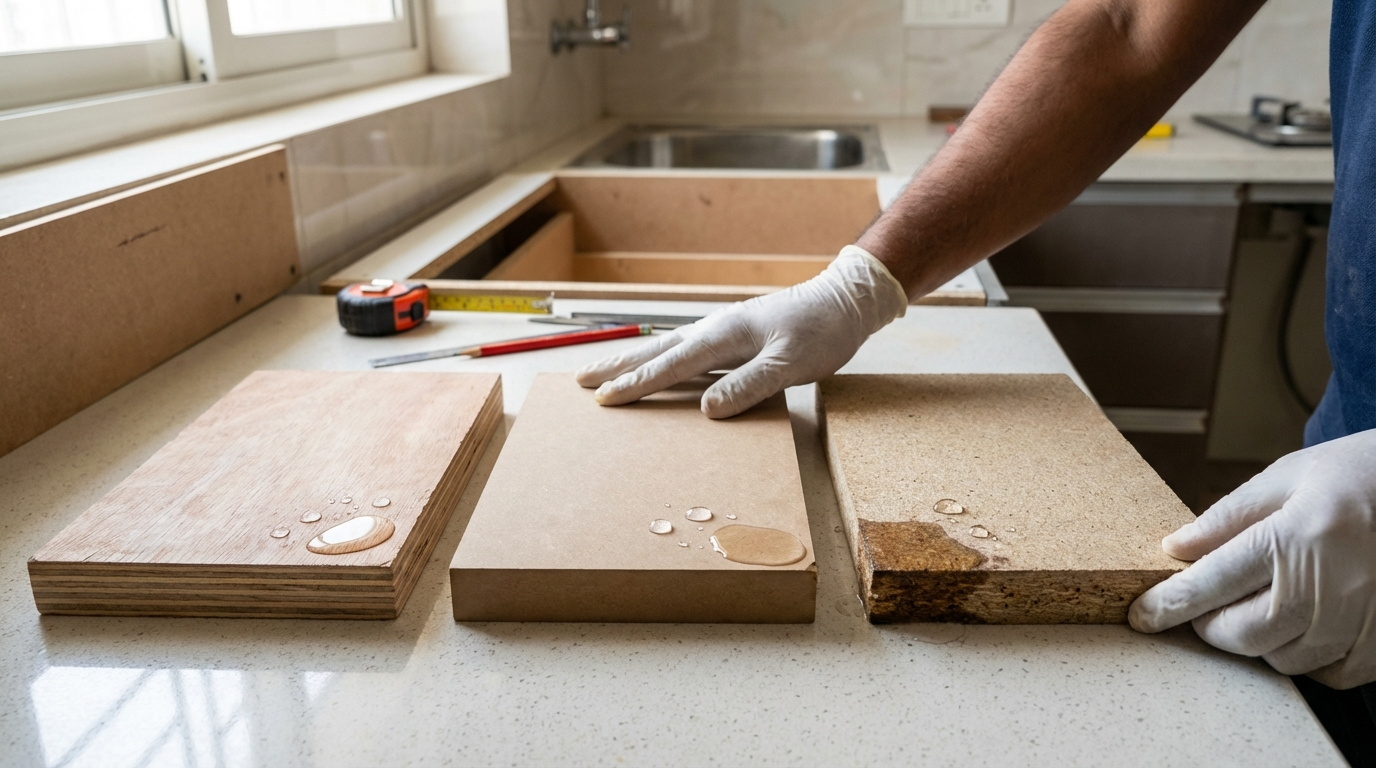
Premium flush doors use kiln-dried hardwood cores treated for moisture and pest resistance. BWR (Boiling Water Resistant) doors are suitable for bathrooms, while BWP (Boiling Water Proof) doors are preferred for outdoor gates. Plywood doors can be great for bathrooms if water-resistant plywood such as Marine Plywood or BWP (Boiling Water Proof) plywood is used. Normal plywood could easily wrinkle, swell, or degrade when in contact with moisture. Proper finish or sealant protects the door even more from moist environments.
Standard Flush Door Sizes in India
In India, the standard door size is typically 7 feet (2.2 meters) in height and 3 feet (0.9 meters) in width. This size works well for most residential and commercial spaces, balancing accessibility and design.
Room-Wise Size Recommendations
The main entrance door is usually larger than interior doors to make a grand impression. The standard size is 3 feet 6 inches to 4 feet wide and 7 feet high (42 to 48 inches by 84 inches).
Bedroom doors typically measure 2 feet 6 inches to 3 feet wide and 7 feet high (30 to 36 inches by 84 inches).
Bathroom doors are slightly smaller, with a standard size of 2 feet 4 inches to 2 feet 6 inches wide and 7 feet high (28 to 30 inches by 84 inches).
Thickness Variations
The thickness of a flush door is very important as it decides the strength, insulation ability, and soundproof nature of the door. Usually, doors in houses have a flush door thickness around 35mm which gives enough robustness for everyday use at home. This size ensures that fittings are installed correctly while keeping costs reasonable.
Projects of a commercial or institutional nature often need flush doors with thickness increased to between 40mm and 50mm. These thicker versions are manufactured for the purpose of enduring heavy use and offering better security features. The extra thickness also enhances fire resistance ratings if required according to building regulations.
Schools, hospitals and government offices need particular sizes of flush doors to meet accessibility rules. These uses usually have flush door size 36″x84″ with thickness 45mm or more.
Flush Door Size Comparison Table
| Application | Width | Height | Thickness | Core Type Recommended | Best For |
|---|---|---|---|---|---|
| Main Entrance | 3.5–4 feet | 7–8 feet | 40–45 mm | Solid Core BWP | Security, grand appearance |
| Bedroom Door | 2.5–3 feet | 7 feet | 30–35 mm | Solid/Cellular Core | Privacy, sound insulation |
| Bathroom Door | 2–2.5 feet | 7 feet | 30–35 mm | BWR/BWP Grade | Moisture resistance |
| Kitchen Door | 2.5–3 feet | 7 feet | 32–35 mm | BWR Grade | Humidity tolerance |
| Office Internal | 3 feet | 7 feet | 35–40 mm | Solid Core | Durability, sound control |
| Commercial/Hospital | 3–4 feet | 7–8 feet | 45–50 mm | Solid Core BWP | Heavy traffic, fire safety |
| Pooja Room | 2–2.5 feet | 7 feet | 30 mm | Hollow/Cellular | Decorative finish |
Flush Door Price Guide for India
The average price varies depending on the thickness. For a 30mm flush door, price can range from Rs. 800 to Rs. 1,500. A 32mm flush door price can go from Rs. 1,000 to Rs. 1,800. A 35mm thick flush door price can range from Rs. 1,200 to Rs. 2,000, while a 40mm flush door price can range from Rs. 1,400 to Rs. 2,500.
Brand-Wise Price Indicators
Commercial flush door prices start from approximately ₹115–120 per sq. ft for BWP grade from economy brands, while premium brands like Century Club Prime start from ₹180+ per sq. ft. Century Sainik BWP flush doors start from approximately ₹140 per sq. ft.
In Delhi markets, Century flush doors with Greenlam laminate (double-sided) range from ₹270–330 per sq. ft. Flush doors with single veneer (40mm thickness, both sides veneer, unpolished) range from ₹225–275 per sq. ft. Membrane flush doors with matte finish start from ₹198–242 per sq. ft.
What Causes Price Variation
Bedroom, kitchen, and bathroom flush door prices may vary depending on the brand, quality of material, and other factors. Key price determinants in the Indian market include:
- Core type: Solid-core doors cost 30–50% more than hollow-core equivalents
- Water resistance grade: BWP costs more than BWR, which costs more than MR (Moisture Resistant)
- Brand tier: Established brands command 20–40% premium over unbranded alternatives
- Finish: Pre-laminated or veneered doors cost more than plain doors requiring on-site finishing
- City tier: Metro pricing typically runs 10–15% higher than Tier-2 cities due to logistics and dealer margins
- GST and transport: 18% GST applies, and transport adds ₹50–150 per door depending on distance from manufacturing hub
Price Comparison by Flush Door Type
| Door Type | Thickness | Price Range (₹/sq. ft) | Price per Standard Door (7x3 ft) | Warranty Typical | Best For |
|---|---|---|---|---|---|
| Hollow Core MR | 30 mm | ₹60–90 | ₹1,200–1,900 | 1–3 years | Internal doors, dry areas |
| Cellular Core BWR | 32 mm | ₹90–130 | ₹1,900–2,700 | 5–7 years | Bedrooms, kitchens |
| Solid Core BWR | 35 mm | ₹120–180 | ₹2,500–3,800 | 7–10 years | Offices, high-traffic areas |
| Solid Core BWP | 35–40 mm | ₹150–250 | ₹3,200–5,300 | 10–15 years | Bathrooms, main entrance |
| Decorative Laminated | 35 mm | ₹220–350 | ₹4,600–7,400 | 7–10 years | Main doors, living areas |
| Veneer Finished BWP | 40 mm | ₹280–400 | ₹5,900–8,400 | 10–15 years | Premium interiors |
| Fire Rated (FR) | 45–50 mm | ₹400–600 | ₹8,400–12,600 | As per rating | Commercial, institutional |
How to Choose the Right Flush Door
Selecting the right flush door requires evaluating multiple factors specific to your usage context, location, and budget. Here is a systematic approach for Indian buyers.
Buyer's Checklist
- Identify the application: Interior dry areas can use MR grade; bathrooms need BWR/BWP; main entrance needs solid-core BWP
- Check the BIS mark: Quality flush doors meet IS 2202 and carry BIS certification, passing over 25 performance checks, including screw holding, slam, and impact resistance.
- Verify core type: Tap the door—solid cores produce dull sounds; hollow cores produce resonant sounds
- Examine edges: Check for uniform thickness and proper lipping (edge treatment) to prevent moisture ingress
- Consider regional humidity: In humid regions like Kerala and coastal areas, BWR-grade doors with antifungal coatings are essential.
- Match to frame: Ensure the door thickness matches your frame depth—common confusion exists between 18mm and 19mm trade sizes
- Assess carpenter skill: Pre-laminated doors reduce dependency on on-site finishing quality
When NOT to Choose Flush Doors
Flush doors may not be ideal in certain situations:
- Heritage or traditional interiors: Panel doors with carved details suit these aesthetics better
- External gates exposed to direct rain: Solid timber or metal gates offer superior weather resistance
- Areas requiring fire ratings without certification: Only FR-rated flush doors meet fire safety codes
- Extremely budget-conscious projects: Low-grade hollow doors may not survive beyond 3–5 years in humid climates
- High-security requirements: Steel or reinforced doors provide better protection than standard flush doors
Common Mistakes to Avoid When Buying Flush Doors
Understanding common pitfalls helps buyers and carpenters achieve better outcomes with flush door installations.
Mistake 1: Ignoring Water Resistance Grade
Using MR-grade doors in bathrooms or kitchens leads to swelling, warping, and edge delamination within 1–2 years. When it comes to bathrooms, plywood should be water-proof or water-resistant. Normal plywood could easily wrinkle, swell, or degrade because it comes in contact with moisture.
Mistake 2: Not Checking Core Quality
Some dealers sell hollow-core doors as solid-core at premium prices. Always tap-test the door—solid cores feel heavy and produce muffled sounds. Request to see a sample cross-section if buying in bulk.
Mistake 3: Skipping BIS Verification
The ISI mark should be clearly visible on the door with the license number. Counterfeit marks exist—verify the manufacturer's license on the BIS website if in doubt.
Mistake 4: Mismatched Frame and Door Thickness
Indian market has thickness confusion—32mm and 35mm are most common. Ensure your frame accommodates the door thickness before purchase to avoid costly adjustments.
Mistake 5: Ignoring Edge Sealing
Flush door edges are vulnerable to moisture. Ensure proper edge-banding or apply sealant on cut edges, especially for bathroom doors. This step is often skipped by carpenters rushing to complete installations.
Mistake 6: Buying Based on Price Alone
Very cheap doors often use low-grade cores that warp within months. For interior doors, allocate at least ₹2,500–3,500 per door (7x3 ft) for reasonable quality that lasts 8–10 years.
Quick Inspection Checks
- Flatness test: Place the door on a flat surface—gaps indicate warping
- Weight check: Solid-core 7x3 ft door weighs 35–45 kg; hollow-core weighs 15–20 kg
- Edge inspection: Look for voids, gaps, or poor bonding at edges
- Surface check: Run palm across surface—quality doors feel uniformly smooth
- Veneer alignment: Wood grain should be consistent and aligned across the surface
Top Flush Door Manufacturers in India
The Indian flush door market includes both national brands with extensive dealer networks and regional manufacturers. Top flush door brands in India include major manufacturers such as Greenply, CenturyPly, and several specialized door companies.
Established National Brands
Century Flush Doors are one of the most trusted options in India, known for their durability, termite resistance, and elegant finish—widely used in homes, offices, and commercial spaces. Century Flush Doors come in Sainik, Club Prime, and Bond categories with different warranty levels.
Greenply flush doors offer strength, dimensional stability, and high impact resistance to provide security, protection, and privacy. These doors are tailor-made to suit the varying needs of residential and commercial customers.
CenturyDoors have set up a benchmark with a wide variety of doors categorized under plain flush doors, decorative flush doors and moulded panel doors. As a premier flush door manufacturer, they offer a collection of entrances crafted with the latest technologies.
Regional and Specialty Manufacturers
Duro Ply offers premium flush doors with options like hollow-core (lightweight) and solid-core (extra sturdy). Archidply uses chemically treated timber to create doors that withstand salty air and humidity, known for triple-layer bonding for enhanced durability.
Kitply's doors are suitable for middle-class homes, with their "Monsoon Shield" range resisting swelling in rainy climates. This is particularly relevant for regions with heavy monsoon exposure.
Frequently Asked Questions
What is the full form of BWP and BWR in flush doors?
BWP stands for Boiling Water Proof, meaning the door can withstand prolonged exposure to water and humidity without delamination. BWR stands for Boiling Water Resistant, offering good moisture resistance but not suitable for continuous water exposure. In practical Indian terms, BWP is recommended for bathrooms, external-facing doors, and coastal areas, while BWR suits kitchens and internal areas with occasional moisture. The difference lies in the adhesive—BWP uses phenol formaldehyde, while BWR uses modified urea formaldehyde resins.
What is the standard flush door size in India?
In India, the standard door size is typically 7 feet (2.2 meters) in height and 3 feet (0.9 meters) in width. This size works well for most residential and commercial spaces. People in India commonly use standard door sizes with 7 ft height and 3 ft width being the most common. However, larger properties like bungalows or villas prefer 8 ft height and 4 ft width. Custom sizes are available but typically cost 15–25% more and require longer lead times.
Which is better: solid-core or hollow-core flush doors?
Solid-core flush doors are quite strong since they contain materials like MDF, particleboard, or timber core, providing both strength and insulating properties for durability. Hollow-core flush doors are less strong and lightweight but enough for most interior applications. Choose solid-core for main entrances, bedrooms requiring sound insulation, and high-traffic areas. Hollow-core is acceptable for internal passages, storerooms, and budget projects. The price difference is typically 40–60%, so evaluate based on actual usage requirements.
Is flush door good for bathroom use in India?
Plywood doors can be great for bathrooms if the right type is used. Water-proof or water-resistant plywood such as Marine Plywood or BWP plywood can resist moisture and humidity. BWP plywood or marine plywood is the best choice for doors as they are highly resistant to moisture and suitable for areas of high humidity. For Indian bathrooms, always select BWP-grade flush doors with proper edge sealing. Apply additional sealant on the bottom edge where water splashes are common. Avoid MR-grade doors in bathrooms under any circumstances.
What is the price of flush doors in India?
Flush door prices in India vary depending on various factors such as material, size, design, brand, and location. As per market trends, a flush door can cost between Rs 3,000 and Rs 20,000. For budget-conscious buyers, hollow-core doors start around ₹1,500–2,500 per piece (7x3 ft). Mid-range BWR solid-core doors cost ₹3,000–5,000. Premium BWP decorative doors with laminate finish can range from ₹6,000–12,000. Always factor in GST (18%) and transportation costs.
How to check flush door quality before purchase?
Perform these checks: First, verify the ISI mark (IS 2202) on the door surface. Second, quality flush doors are stiff, impact-resistant, and possess high strength. The doors hardly warp with time thanks to the rectangular softwood blocks on the inside. Third, check flatness by placing on a level surface. Fourth, examine edges for voids or poor bonding. Fifth, verify weight—a solid-core 7x3 ft door should weigh 35–45 kg. Sixth, request the manufacturer's test certificate for adhesive bonding strength.
Which flush door thickness is best for home use?
The thickness of a flush door decides its strength, insulation, and soundproof nature. Usually, doors in houses have flush door thickness around 35mm which gives enough robustness for everyday use. This size ensures fittings are installed correctly while keeping costs reasonable. Use 30–35 mm thickness for flush doors and 40–45 mm for solid wood doors. For main entrance doors where security matters, opt for 40mm. For internal bedroom and bathroom doors, 32–35mm is adequate. Below 30mm is not recommended for quality installations.
How long do flush doors last in Indian conditions?
Flush door lifespan depends on grade, installation quality, and environmental exposure. Quality doors feature termite and borer proof protection against wood damage, smooth finish ideal for laminates or polish, and high strength and stability—they do not bend or warp. Well-made BWP doors from reputed brands last 15–20 years with proper maintenance. BWR doors typically last 10–15 years in suitable conditions. Hollow-core MR-grade doors may need replacement within 5–8 years. Coastal and high-humidity areas reduce lifespan by 20–30% unless proper grades are used.
Disclaimer: This content is provided for general informational purposes based on industry practices and publicly available information. Product specifications, standards, prices, and availability may vary by manufacturer, region, and time. Readers should independently verify details with manufacturers, dealers, or qualified professionals before making purchase or construction decisions.Want Plywood Suggestions?
Share a few details and a Apple Ply specialist will suggest suitable brands and connect you to responsive dealers.