Flexible Plywood (Flexi Ply): Everything You Need to Know
Discover flexi ply - the bendable plywood for curved furniture & interiors. Learn about flexible plywood types, applications, price & where to buy.
Quick Answer
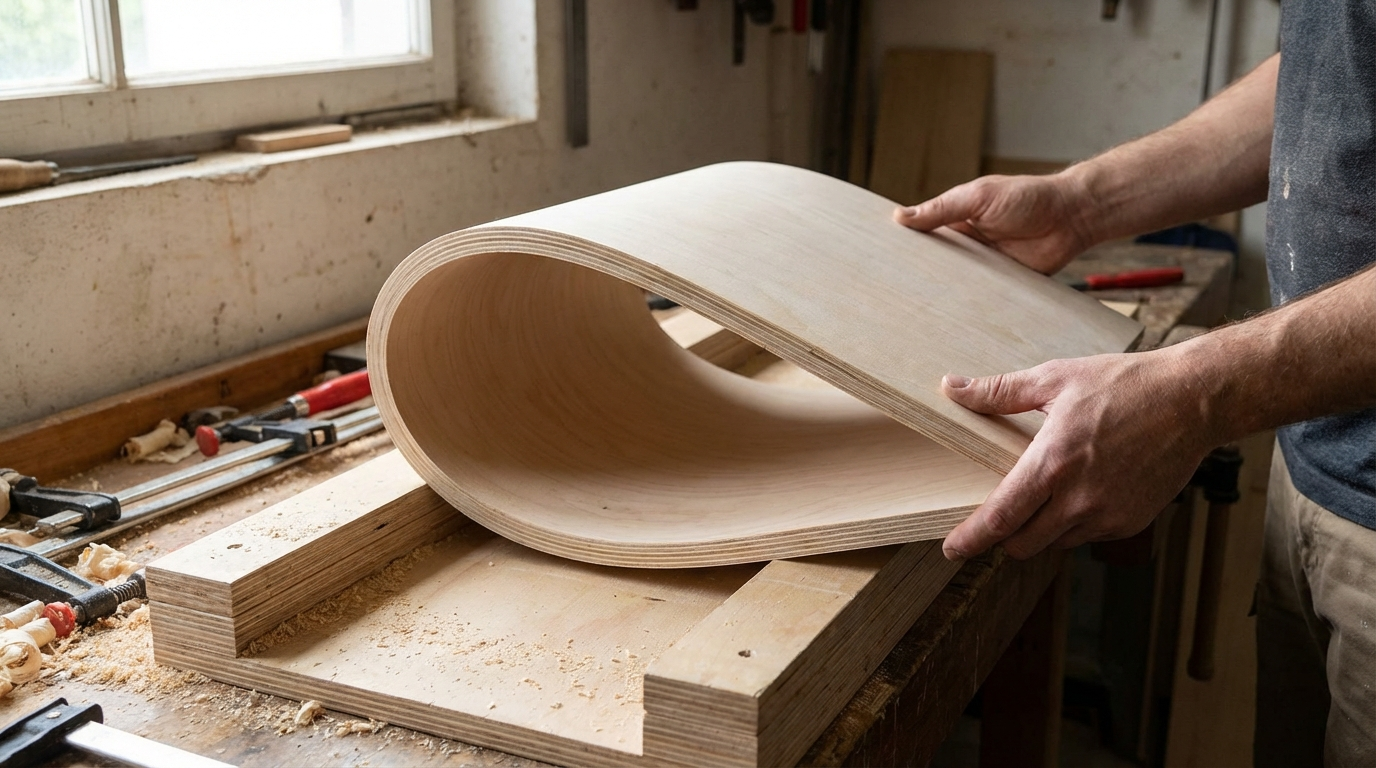
Flexible plywood, commonly called flexi ply or bendy ply, is a specialty engineered wood panel designed to bend and curve without cracking. Made with thin veneers aligned in the same grain direction, it allows woodworkers and designers to create curved furniture, reception counters, wave-pattern ceilings, and architectural features that standard rigid plywood simply cannot achieve.
- What it is: Thin plywood (typically 3mm to 8mm) engineered to bend along one axis
- Key feature: Veneers aligned in same direction rather than cross-grained
- Common uses: Curved headboards, reception desks, cylindrical columns, designer furniture
- Bending radius: Typically 80mm to 400mm depending on thickness
- Price range: ₹45–₹120 per sq ft depending on grade and brand tier
- Availability: Specialty dealers in metros; limited stock in Tier-2/3 cities
Flexible Plywood Explained: What Makes It Bend?
Standard plywood achieves its famous strength and dimensional stability through cross-grain construction—each veneer layer is placed perpendicular to the adjacent one. This engineering prevents warping but also makes the sheet completely rigid. Flexible plywood takes the opposite approach, deliberately sacrificing some rigidity to gain bendability.
In flexi ply, the wood veneers are aligned with their grains running in the same direction. This parallel arrangement allows the sheet to flex smoothly along one axis without cracking or splintering. The manufacturing process uses thinner individual veneers (typically 0.5mm to 1.2mm each) bonded with flexible adhesives that maintain their bond even when the panel curves.
Long Grain vs Cross Grain Flexi Ply
The grain direction determines which way the sheet can bend. Long grain flexible plywood bends along its length—useful for creating vertical curves in column wraps or tall furniture elements. Cross grain flexi ply bends across its width, making it suitable for horizontal curves like reception desk fronts or curved ceiling panels. Understanding this distinction prevents costly mistakes during fabrication, as attempting to bend flexi ply against its intended direction will cause cracking.
Why Thickness Determines Bending Radius
The relationship between thickness and minimum bending radius is critical for project planning. A 3mm flexi ply can achieve tight curves with a radius as small as 50–80mm, while 8mm sheets require a minimum radius of 300–400mm. This inverse relationship means thinner sheets offer more design freedom but require backing support once installed. Many Indian projects use 5mm flexi ply as a practical middle ground, allowing curves of approximately 150–200mm radius while maintaining reasonable handling strength.
Types and Variants of Flexi Ply Available in India
The Indian market offers several categories of flexible plywood, each suited to different applications and budgets. Understanding these variants helps buyers match the product to their specific project requirements rather than overspending on unnecessary features or underspecifying for demanding applications.
Plain Flexible Plywood
The most common and economical variant, plain flexi ply features a smooth sanded surface ready for lamination, veneering, or painting. It serves as the substrate for most curved furniture projects where the final finish will be applied by the fabricator. Poplar and tropical hardwood cores dominate this segment, with prices typically ranging from ₹45–₹70 per sq ft in metropolitan markets.
Pre-Veneered Flexible Plywood
These sheets come with a decorative wood veneer already bonded to one or both faces. Available in species like oak, teak, walnut, and various reconstituted veneers, pre-veneered flexi ply eliminates a fabrication step but limits design flexibility. The veneer must be flexible enough to bend with the substrate without cracking—a consideration that restricts the minimum achievable radius compared to plain sheets.
Fire-Retardant Flexible Plywood
Required for commercial interiors, hospitality projects, and public buildings under Indian fire safety codes, fire-retardant flexi ply is treated with chemicals that slow flame spread. This variant commands a 30–50% premium over standard grades but is non-negotiable for projects requiring fire compliance certifications. Availability is primarily limited to major metro dealers with advance ordering often necessary.
Exterior-Grade Flexible Plywood
While most flexi ply is designed for interior applications, some manufacturers offer moisture-resistant variants using phenolic or melamine adhesives. These suit semi-exposed applications like covered balcony features or high-humidity indoor environments. True exterior-grade flexible plywood remains rare in India, and most architects specify it only for protected outdoor elements.
Comparison: Flexible Plywood vs Standard Plywood vs MDF
| Parameter | Flexible Plywood | Standard BWR Plywood | MDF (Medium Density Fibreboard) |
|---|---|---|---|
| Bendability | Designed to curve without cracking | Rigid; cracks if bent | Cannot bend; snaps under stress |
| Typical Thickness | 3mm to 8mm | 6mm to 25mm | 6mm to 25mm |
| Structural Strength | Low; requires backing after bending | High; self-supporting | Moderate; heavy for its strength |
| Screw Holding | Poor in thin sections | Excellent | Fair; requires special fasteners |
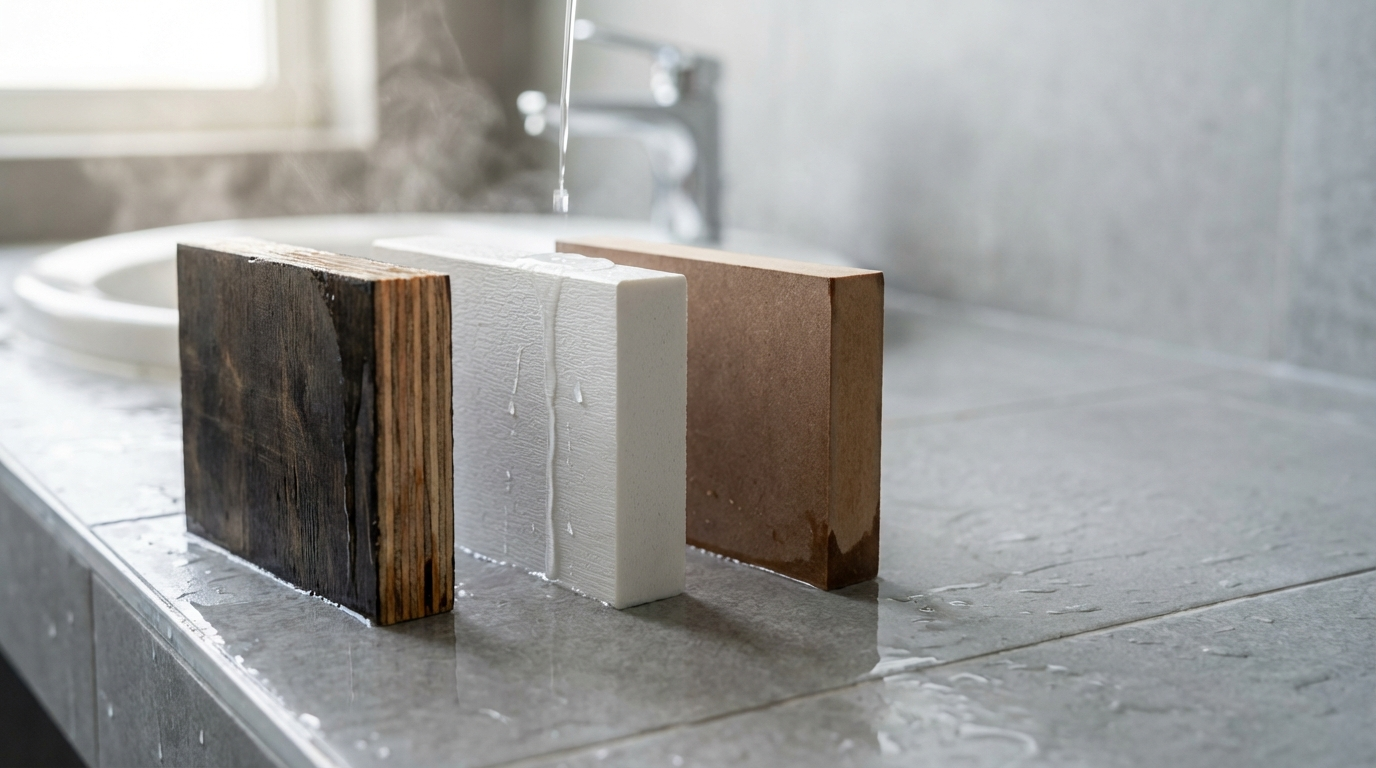
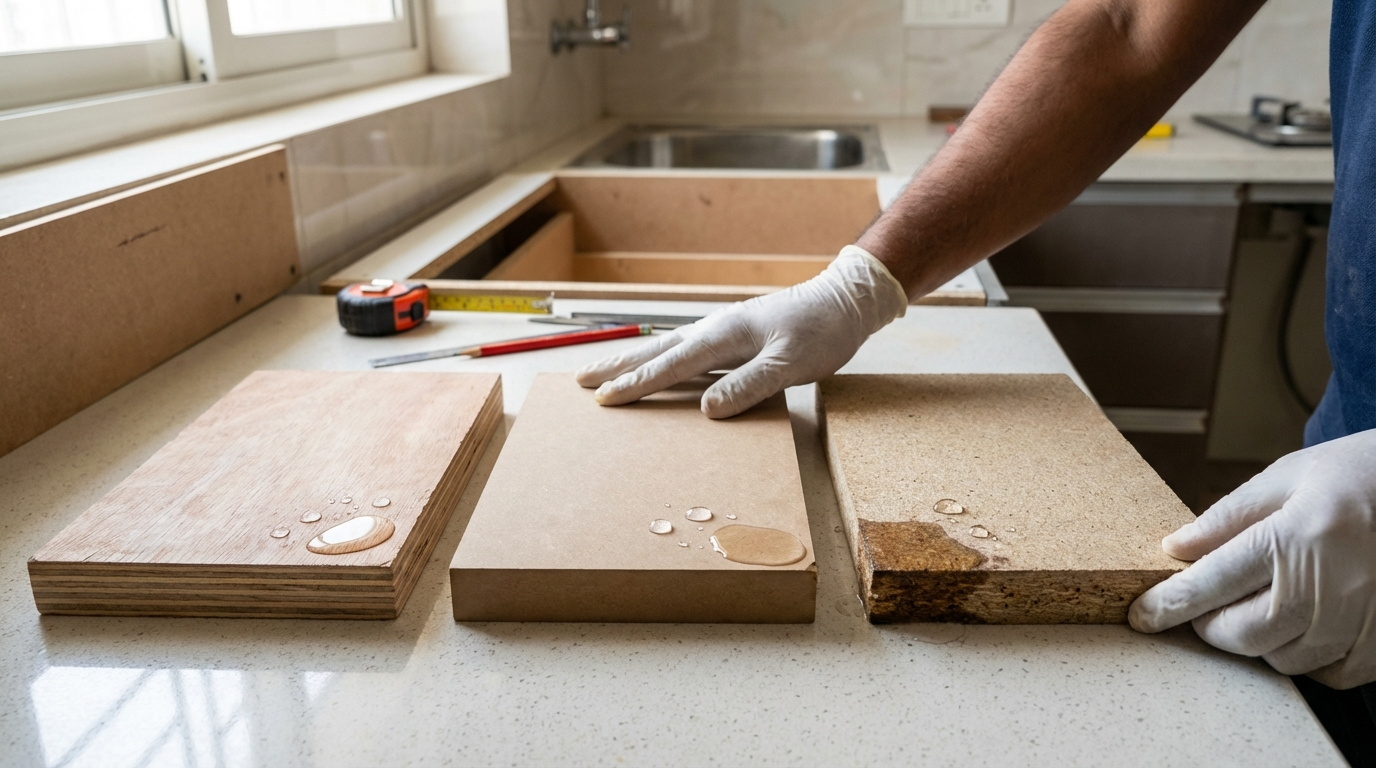
| Moisture Resistance | Varies by grade; mostly interior-only | BWR/BWP grades resist moisture | Swells significantly with moisture |
| Price (₹/sq ft) | ₹45–₹120 | ₹35–₹90 | ₹25–₹50 |
| Best Application | Curved surfaces, designer elements | Flat furniture carcasses | Flat painted surfaces, CNC work |
| Availability in India | Specialty dealers; metros primarily | Widely available everywhere | Widely available everywhere |
Applications: Where Flexible Plywood Excels
Flexi ply has carved out a distinct niche in Indian interiors where designers seek organic, flowing forms that break away from the rectangular monotony of conventional furniture. Understanding where this material truly adds value—versus where it creates unnecessary expense—helps project planners make informed decisions.
Curved Furniture and Headboards
Bedroom headboards with gentle curves, reception desk facades with flowing forms, and ergonomically curved chair backs represent classic flexi ply applications. The material allows furniture makers to create distinctive pieces without the complex steam-bending or kerf-cutting required with standard plywood. Many high-end bedroom designs in Indian metros now feature curved headboard panels extending across the wall, a look achievable economically only with flexible plywood.
Architectural Columns and Pillar Wraps
Cylindrical column wraps in lobbies, showrooms, and retail spaces frequently use flexi ply. The material wraps smoothly around structural columns, creating a uniform curved surface ready for painting or veneering. This application requires calculating the circumference against the sheet's width and ensuring the bending radius matches the column diameter—a common calculation error among inexperienced fabricators.
Wave Ceilings and Curved Wall Panels
Modern commercial interiors—particularly retail stores, restaurants, and corporate offices—use flexi ply to create undulating ceiling designs and curved accent walls. These installations require a supporting framework (typically aluminium or wood battens) shaped to the desired curve, with flexi ply sheets secured to follow the contour. The lightweight nature of thin flexi ply makes it manageable for ceiling applications where heavier materials would stress the mounting system.
Designer Kitchen Elements
While standard kitchen carcasses use rigid plywood, some designer kitchens incorporate curved end panels, rounded island fronts, or arched open shelving. These accent elements use flexi ply laminated to match the main cabinetry, adding visual interest without redesigning the entire kitchen structure.
How to Choose the Right Flexible Plywood
Selecting appropriate flexi ply requires matching the product specifications to your project's geometric requirements, environmental conditions, and budget constraints. Unlike standard plywood where grade and thickness dominate the decision, flexible plywood selection adds the critical dimension of bending performance.
Step 1: Determine Your Required Bending Radius
Before approaching a dealer, calculate the tightest curve your design requires. Measure the radius (not diameter) of the smallest curve. This number determines the maximum thickness you can specify—attempting to force a thick sheet into a tight curve will crack the material or create stress points that fail over time.
Step 2: Select Grain Direction
Identify whether your curves run horizontally or vertically, then specify long grain or cross grain flexi ply accordingly. This is non-negotiable; the wrong grain direction renders the sheet useless for your application. Many buyers order both types for complex projects with multi-directional curves.
Step 3: Assess Moisture Exposure
For applications in humid climates, coastal cities like Mumbai or Chennai, or semi-wet areas, specify moisture-resistant adhesive grades. Standard interior flexi ply in such environments risks delamination within two to three monsoon cycles.
Buyer Checklist
- Calculate minimum bending radius before ordering
- Specify long grain OR cross grain based on curve orientation
- Match thickness to radius requirements (thinner = tighter curves)
- Verify adhesive grade for humid environments
- Confirm availability—many dealers require advance ordering
- Order 15–20% extra for wastage on curved cuts
- Ensure carpenter has prior experience with flexi ply installation
When NOT to Choose Flexible Plywood
Flexi ply is wrong for flat surfaces—it costs more and performs worse than standard plywood for conventional furniture. It lacks structural strength for load-bearing applications without backing. It is unsuitable as a standalone material for shelving, carcasses, or any element requiring rigidity. Additionally, in Tier-2 and Tier-3 cities where specialty plywood is scarce and skilled carpenters familiar with flexi ply are rare, consider alternative curved-effect techniques like kerf-cut standard plywood, which local craftsmen handle more reliably.
Common Mistakes to Avoid with Flexi Ply
Despite its apparent simplicity, flexible plywood projects frequently fail due to planning errors, installation mistakes, or material misunderstanding. Learning from these common failures saves both money and frustration.
Mistake 1: Ignoring Grain Direction
The single most common error is ordering flexi ply without specifying grain direction, or specifying the wrong type. A sheet meant to bend lengthwise will crack when forced to bend across its width. Always communicate curve orientation clearly to dealers and verify the delivered product before cutting.
Mistake 2: Forcing Tighter Curves Than Specified
Every flexi ply thickness has a minimum bending radius. Attempting tighter curves stresses the material beyond its design limits, causing immediate cracking or latent stress that manifests as cracks months later. When designs require very tight curves, use thinner sheets even if this means additional backing structure.
Mistake 3: Inadequate Support Structure
Flexi ply is not self-supporting once bent. It requires a permanent framework to hold its shape. Skimping on the backing structure results in gradual straightening, waviness, or outright failure. Build robust internal frameworks from standard plywood or metal sections before applying the curved skin.
Mistake 4: Using Interior Grade in Humid Applications
Standard flexi ply uses urea-formaldehyde adhesives suitable only for dry interiors. Using this in kitchens, bathrooms, or humid coastal environments leads to delamination where the veneer layers separate. Specify phenolic or melamine-bonded variants for any moisture-exposed application.
Quick Inspection Checks
- Gently flex the sheet before purchase—it should bend smoothly without cracking sounds
- Check edges for visible gaps between veneer layers (indicates poor bonding)
- Verify uniform thickness across the sheet by measuring at multiple points
- Look for surface veneer cracks or checks that will telegraph through finishes
- Confirm manufacturer marking or stamps indicating grade and specifications
Flexible Plywood Price Guide for India
Flexi ply pricing in India varies significantly based on thickness, grade, brand tier, and geographic location. Metropolitan dealers with higher volumes typically offer better rates than specialty orders in smaller cities where the product moves slowly and storage costs add up.
| Thickness | Economy Brand (₹/sq ft) | Standard Brand (₹/sq ft) | Premium Brand (₹/sq ft) | Minimum Bend Radius |
|---|---|---|---|---|
| 3mm | ₹40–₹50 | ₹55–₹70 | ₹75–₹95 | 50–80mm |
| 5mm | ₹50–₹60 | ₹65–₹85 | ₹90–₹115 | 150–200mm |
| 6mm | ₹55–₹70 | ₹75–₹95 | ₹100–₹125 | 200–280mm |
| 8mm | ₹65–₹80 | ₹85–₹105 | ₹110–₹140 | 300–400mm |
Price assumptions: Rates reflect metropolitan markets (Delhi NCR, Mumbai, Bangalore, Chennai) for standard interior-grade flexi ply as of current market conditions. Add 10–20% for Tier-2 city sourcing, 25–40% for fire-retardant grades, and 15–25% for pre-veneered variants. GST at 18% applies additionally.
What Drives Price Variation?
Core wood species significantly impacts pricing—poplar-based flexi ply costs less than tropical hardwood cores but offers reduced durability. Adhesive type matters: phenolic-bonded moisture-resistant grades carry premiums over standard UF-bonded sheets. Brand reputation and warranty coverage also factor in, with established manufacturers commanding higher prices for consistent quality and after-sales support. Transport costs add substantially for inland buyers distant from port cities where imported flexi ply enters or manufacturing hubs where domestic production concentrates.
Working with Flexible Plywood: Practical Tips
Successful flexi ply projects require techniques different from standard plywood fabrication. Sharing these practical insights helps both DIY enthusiasts and those briefing carpenters on their projects.
Cutting and Handling
Cut flexi ply with sharp fine-toothed blades to minimize veneer tearout. Support the sheet fully during cutting—unsupported sections will flex and bind the blade. Store sheets flat until use; standing storage can introduce permanent curves in the wrong direction. Handle carefully as thin sheets damage easily at edges and corners.
Bending and Installation
For tight curves, slightly dampening the convex (outer) surface with a moist cloth can ease bending without the complexity of steam boxes. Work gradually—force the sheet into position over several steps rather than all at once. Use many small fasteners rather than few large ones to distribute holding force evenly across the curve. Allow adhesive to cure fully before removing temporary supports.
Finishing Considerations
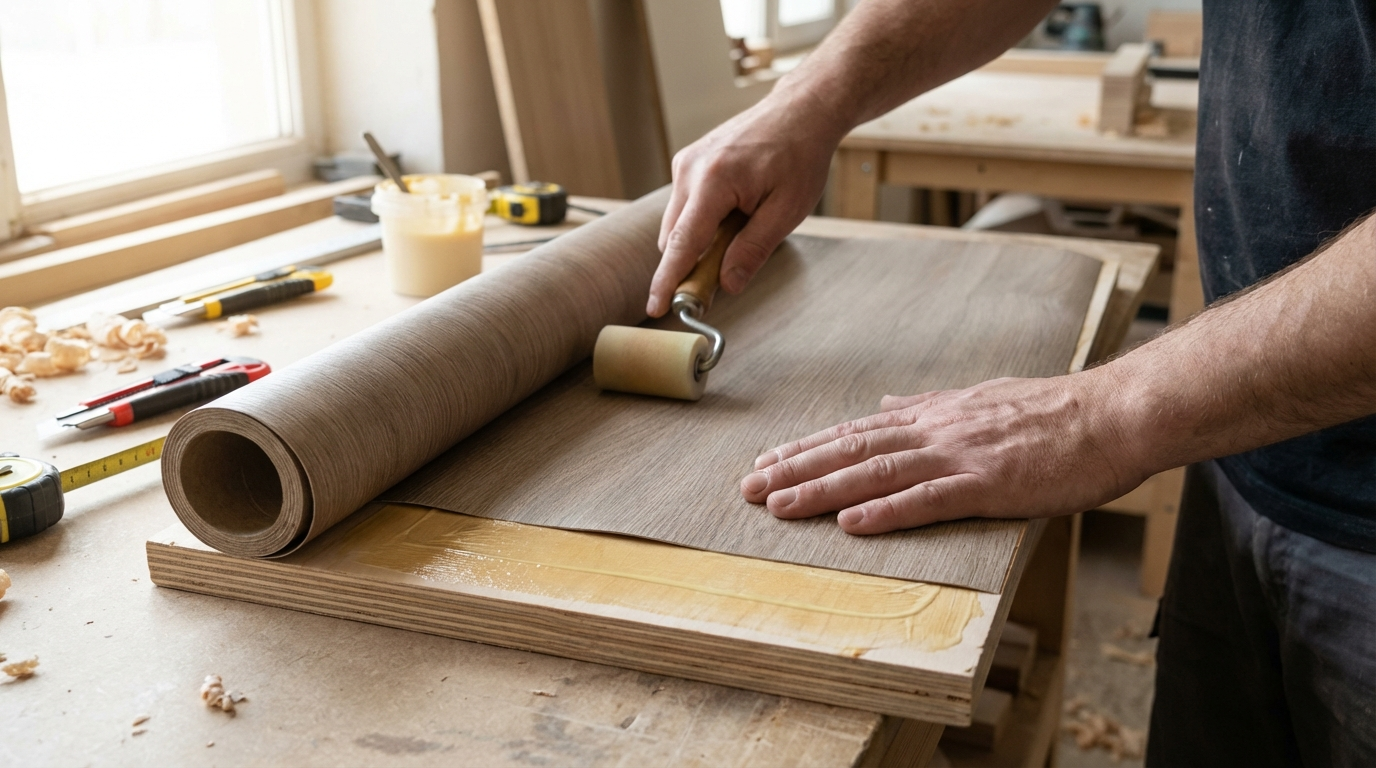
Apply laminates or veneers before bending whenever possible; post-bend application risks bubbles and delamination. For painted finishes, use flexible primers and paints designed for wood—rigid coatings may crack as the panel experiences minor flex during use. Seal all edges thoroughly as thin flexi ply absorbs moisture readily through exposed end grain.
Regional Considerations for Indian Buyers
India's diverse climate and market conditions create regional variations in flexi ply selection and performance that buyers must consider.
Coastal and High-Humidity Zones
Mumbai, Chennai, Kolkata, and coastal Karnataka experience sustained humidity levels that stress interior-grade adhesives. In these regions, specifying moisture-resistant flexi ply is advisable even for air-conditioned interiors, as power outages and seasonal humidity spikes expose materials to damaging conditions. The premium for MR-grade flexi ply is modest insurance against delamination failures.
Metro vs Tier-2/3 Availability
Flexible plywood remains a specialty product with inconsistent availability outside major metros. Bangalore, Delhi NCR, and Mumbai dealers stock multiple variants; smaller cities may offer only one or two options requiring advance ordering. Projects in Tier-2/3 locations should factor in longer lead times, potential shipping costs, and reduced brand choices. Some buyers in these markets source through interior designers or contractors with established metro supplier relationships.
Carpenter Skill Dependency
Flexi ply installation requires specific skills many traditional carpenters lack. Metropolitan markets have craftsmen experienced with designer furniture and curved elements; smaller markets may not. Before specifying flexi ply, assess local fabricator capability. An inexperienced carpenter working with unfamiliar material often produces poor results regardless of product quality—sometimes alternative techniques using familiar materials yield better outcomes.
Frequently Asked Questions
What is the full form of flexi ply?
Flexi ply is the informal term for flexible plywood. There is no technical "full form" as such—the name simply describes plywood engineered for flexibility. Other common names include bendy ply, bending plywood, curve ply, and wiggle board. In trade parlance, the terms are used interchangeably regardless of brand, though some manufacturers market their products under proprietary names that include "flex" or "curve" in the branding.
Which is better: flexi ply or MDF for curved furniture?
Flexi ply is significantly better for curved applications because MDF cannot bend—it snaps under bending stress. MDF is a rigid panel material suited only for flat surfaces. The only way to create curves with MDF involves CNC-routing stacked layers, which is expensive and heavy. Flexible plywood bends naturally, weighs less, and produces smoother curves. For any genuinely curved furniture element, flexi ply is the appropriate material choice.
Is flexible plywood good for kitchen cabinets?
Flexible plywood is suitable only for specific curved accent elements in kitchens—such as rounded end panels or curved island fronts—not for structural cabinet carcasses. Kitchen carcasses require rigid, moisture-resistant plywood (BWR or BWP grade) for structural integrity and durability. Use flexi ply only where you specifically need a curve, and ensure you specify moisture-resistant grades given kitchen humidity from cooking and washing activities.
What is the price of flexible plywood in India?
Flexible plywood prices in India typically range from ₹45 to ₹120 per square foot depending on thickness, brand tier, and adhesive grade. Thinner 3mm sheets start around ₹45–50 per sq ft in economy brands, while 8mm premium-brand sheets reach ₹110–140 per sq ft. Pre-veneered and fire-retardant variants cost 20–50% more. Prices are higher in Tier-2/3 cities due to transport and limited dealer competition. Always add 18% GST to quoted rates.
How do you check flexible plywood quality before buying?
Flex the sheet gently at the dealer's location—quality flexi ply bends smoothly without cracking sounds. Examine the edges for gaps between veneer layers, which indicate poor adhesive bonding. Check surface veneers for pre-existing cracks, rough patches, or thickness variations. Verify the sheet carries manufacturer stamps indicating grade and specifications. For significant purchases, request a sample piece to test bending radius compatibility with your design requirements before placing the full order.
Can flexible plywood be used outdoors?
Standard flexible plywood is not suitable for outdoor use. Most flexi ply uses interior-grade adhesives that deteriorate with rain exposure, UV radiation, and temperature cycling. Even moisture-resistant grades are designed for humid interiors rather than direct weather exposure. For protected outdoor applications—covered balconies or verandas—specify exterior-grade flexi ply and apply comprehensive sealing. Fully exposed outdoor curved elements typically require alternative materials like bent solid wood, fibreglass, or metal.
What thickness of flexi ply is best for tight curves?
For tight curves with radii below 100mm, use 3mm flexible plywood, which can typically achieve 50–80mm radius bends. As curve radius increases, you can use thicker sheets: 5mm flexi ply suits 150–200mm radii, while 6mm and 8mm sheets work for gentler curves of 200–400mm radius. Always prioritize bend radius requirements over structural thickness preferences—use thinner flexi ply with adequate backing structure rather than forcing thick sheets into curves they cannot accommodate.
Where can I buy flexible plywood in India?
Flexible plywood is available at specialty plywood dealers in major metropolitan areas including Delhi NCR, Mumbai, Bangalore, Chennai, Hyderabad, and Pune. Large plywood retail chains and building material warehouses in these cities typically stock multiple variants. For Tier-2/3 cities, contact established plywood dealers who can order from their metro suppliers. Online building material platforms increasingly list flexi ply, though verifying quality before purchase remains challenging. Interior designers and contractors often have established supplier relationships that provide access to reliable sources.
Disclaimer: This content is provided for general informational purposes based on industry practices and publicly available information. Product specifications, standards, prices, and availability may vary by manufacturer, region, and time. Readers should independently verify details with manufacturers, dealers, or qualified professionals before making purchase or construction decisions.Want Plywood Suggestions?
Share a few details and a Apple Ply specialist will suggest suitable brands and connect you to responsive dealers.