Fire Retardant Plywood vs Normal – Is FR Ply Worth It?
Fire-retardant plywood: what it is, how it differs from normal ply, and whether its fire-resistant benefits justify higher cost. Decide if FR ply is worth it.
Quick Answer
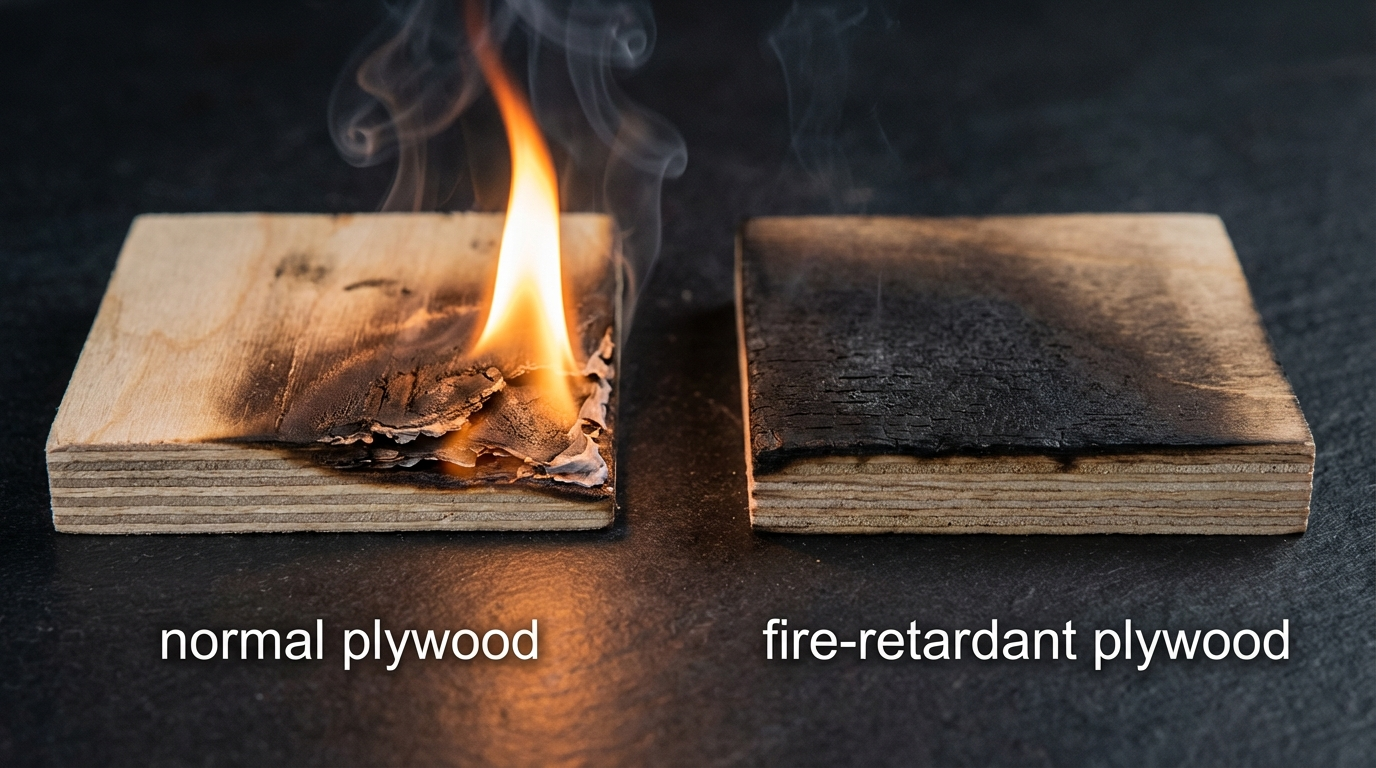
Fire retardant plywood offers superior fire resistance compared to standard plywood by slowing flame spread and charring instead of igniting fully, making it ideal for high-risk areas like kitchens, hotels, and commercial spaces. However, for typical Indian homes without strict fire norms, the 30-50% higher cost often outweighs benefits unless safety regulations demand it. Weigh your usage, local building codes, and budget before deciding.
- FR plywood chars and self-extinguishes; standard burns rapidly.
- Premium: 30-50% more expensive due to chemical treatment.
- Best for: kitchens, public areas, coastal humidity zones.
- Skip for: bedrooms, low-rise homes to save costs.
- Verify: Look for IS:5509 markings on edges.
- Typical thickness: 12mm-19mm for both, but FR feels denser.
What is Fire Retardant Plywood?
Fire retardant plywood, often called FR ply in Indian markets, starts with the same core of layered wood veneers bonded by adhesives as standard plywood. The key difference lies in a specialized chemical impregnation process during manufacturing. These fire-retardant chemicals—typically ammonium-based compounds—are infused into the wood fibers under pressure, altering how the material reacts to heat and flames.
In practical terms, when exposed to fire, FR plywood forms a protective char layer that insulates inner layers, limiting oxygen access and reducing flame spread. This contrasts with untreated wood, which fuels fire quickly. Indian manufacturers produce FR grades in MR (moisture resistant), BWR (boiling water resistant), and BWP (boiling water proof) variants, suiting diverse climates from humid Kerala coasts to dry Rajasthan interiors.
Thickness options mirror standard ply—6mm for partitions, 12mm for wardrobes, 18-19mm for flooring—but FR versions weigh 5-10% more due to treatment density. Edge sealing becomes crucial during installation, as untreated cuts can lose some retardancy. In Indian use cases, FR ply shines in modular kitchens where gas stoves pose ignition risks, or commercial foyers needing compliance with fire safety audits.
Buyers often confuse FR with fully fireproof material; it's not indestructible but buys critical evacuation time—30-60 minutes extra in tests versus standard's quick collapse. Local carpenters note FR ply's screw-holding strength matches or exceeds normals, aiding CNC-cut furniture. Always check physical stamps for treatment verification, as dealer claims vary by city tier.
This treatment adds manufacturing steps like vacuum impregnation, explaining the cost jump, yet it aligns with growing urban fire safety awareness post high-rise incidents in Mumbai and Delhi. For Indian households, FR ply represents proactive safety without compromising workability.
How Does Fire Retardant Plywood Differ from Normal Plywood?
Standard plywood relies on basic glues like urea-formaldehyde for MR grades or phenolic resins for waterproof types, focusing on strength and moisture resistance. Fire retardant plywood incorporates those same bases but adds fire-suppressant chemicals throughout the plies, fundamentally changing fire behavior without altering structural integrity much.
Visually, both appear similar—smooth surfaces, consistent thickness—but FR ply emits a faint chemical odor initially and darkens faster under UV. Weight difference shows during handling: an 8x4 ft 18mm FR sheet feels noticeably heavier, signaling deeper treatment penetration. Glue lines in FR hold up better under heat, preventing delamination that plagues standard ply in fire scenarios.
In Indian market terms, normal ply suits budget wardrobes and partitions where fire risk is low, while FR targets regulated zones. Treatment affects finish: FR may require extra sanding for painting, as chemicals can raise grains slightly. Screw withdrawal strength remains comparable, around 200-300N per test point, but FR edges chip less during humid monsoons due to stabilized fibers.
Moisture performance varies by base grade—FR MR swells 10-15% like standard, but FR BWP resists boiling better, ideal for coastal Goa homes. Manufacturing rejects rise for FR due to uniform chemical absorption needs, pushing prices up. Practical difference emerges in real fires: standard ignites at 250°C, spreading fast; FR delays to 350°C+, charring controllably.
Installation tweaks for FR include fire-rated sealants on cuts and avoiding direct flame zones. Dealers in Tier-2 cities like Jaipur stock less FR, inflating transport costs from Gujarat hubs. Overall, differences boil down to risk mitigation versus everyday economy, guiding choices based on home layout and occupancy.
Fire Resistance Explained: Real-World Performance
Fire retardancy in plywood is measured by flame spread rate, ignition time, and smoke density—FR ply excels here by design. In lab conditions mimicking Indian building fires, standard plywood flames propagate at 1-2m/min, fully involving in 5-10 minutes. FR versions cap at 0.2-0.5m/min, charring surface while core stays intact for 45+ minutes.
This performance stems from intumescent chemicals expanding into foam-like barriers under heat, starving flames. Indian scenarios amplify value: cramped Mumbai apartments with LPG leaks benefit from FR kitchen cabinets delaying spread. Post-monsoon drying reduces standard ply's warp risk, but FR maintains flatness better due to stabilized resins.
Smoke output drops 40-60% with FR, crucial for visibility during evacuation in high-occupancy Delhi offices. Heat release halves, per typical tests, lowering flashover risks. However, prolonged exposure (2+ hours) overwhelms any plywood; FR just extends safe windows.
In practice, combine FR with gypsum boards or intumescent paints for layered protection. Coastal Tamil Nadu users favor FR BWP for dual fire-moisture defense against cyclones. Carpenters report FR cuts cleanly on CNC but dust more, needing masks. Verify performance via edge markings like Class 1 FR, common in India.
Urban fire audits increasingly mandate FR in stairwells and corridors, pushing adoption. For villas in Bangalore, FR flooring under rugs adds unseen safety without aesthetic change. Understanding these metrics empowers buyers to match ply to actual hazards, not hype.
FR Plywood vs Standard Plywood: Detailed Comparison Table
Comparing fire retardant plywood against standard reveals clear trade-offs in safety, cost, and suitability. Below is a side-by-side breakdown tailored to Indian buyer needs, factoring thickness (18mm), sheet size (8x4 ft), and common grades.
| Aspect | Fire Retardant Plywood | Standard Plywood |
|---|---|---|
| Fire Behavior | Chars, slows spread (0.2-0.5m/min), self-extinguishes | Burns rapidly (1-2m/min), full involvement quick |
| Cost per Sheet (Rs, Tier-1 city) | 3,500-5,500 (MR/BWR) | 2,000-3,500 (MR/BWR) |
| Weight (kg/sheet, 18mm) | 35-42 | 30-36 |
| Moisture Resistance | Matches base grade (MR: 15% swell; BWP: <5%) | MR: 15-20% swell; BWP: <8% |
| Screw Holding | 220-320N, stable in heat | 200-300N, weakens faster |
| Best Uses | Kitchens, hotels, high-rises | Wardrobes, ceilings, low-risk |
| Installation Notes | Seal cuts, heavier handling | Standard tools/finishes |
Ranges reflect brand tier (mid-to-premium), city logistics (Tier-1 lower due to volume), and GST-inclusive pricing. FR premium stems from treatment; opt based on fire exposure.
This table simplifies dealer negotiations—cross-check samples for density and markings.
Cost Breakdown: Is FR Ply Worth the Premium?
Fire retardant plywood commands a 30-50% markup over standard due to chemical costs, specialized presses, and quality controls. For an 18mm MR sheet in Delhi, expect Rs 3,500-4,500 versus Rs 2,200-3,200 for normal—wider in Tier-3 like Patna at Rs 4,000-5,500 FR due to freight from Surat mills.
Breakdown: base wood 40%, glue/treatment 30% (FR higher here), labor 15%, overhead 15%. Thickness scales linearly—12mm halves costs—but FR ratio stays. Bulk buys (50+ sheets) shave 10-15%, vital for contractors.
ROI hinges on application: kitchens save Rs 50,000+ in fire damage potential; bedrooms waste premium. Coastal Chennai adds 10% for BWP FR (Rs 5,000-7,000) versus inland Pune MR savings. Carpenter polishing adds Rs 20-30/sqft same for both.
Monsoon transport inflates all by 5-8%; dealer markups hit 20% in low-stock areas. Long-term, FR cuts insurance premiums marginally in commercial setups. Calculate: if fire risk >1% yearly, premium pays via safety. Otherwise, allocate to moisture upgrades.
In India’s price-sensitive market, FR justifies for mandated zones, blending safety with sensible spending.
How to Choose: Decision Framework for Indian Buyers
Selecting between FR and standard plywood demands balancing fire risk, budget, and site specifics. Start with hazard mapping: high flame proximity (stoves, electricals)? Mandate FR. Low-risk (storage)? Standard suffices. Factor occupancy—families with kids/elderly lean FR. Check local bylaws; metros enforce stricter.
Budget check: add 35% uplift, offset by thinner sheets if structural ok. Consult carpenter on workability—FR denser, suits skilled hands. Test samples: tap for solidity, sniff for treatment.
- High Priority: Kitchens, commercial—choose FR.
- Medium: Partitions near bedrooms—consider BWR FR.
- Low: False ceilings—standard MR.
- Verify stamps: IS treatment codes.
- Thickness: 12-18mm standard; match load.
- Quantity: Buy sealed packs.
When NOT to choose FR: Pure budget projects under Rs 5 lakh, rural low-rises sans gas, or moisture-primary needs (opt BWP standard). Overkill inflates without gain. Dealer pressure? Walk to next.
This framework streamlines from confusion to confidence, prioritizing Indian realities like erratic power sparking fires.
Why Fire Retardant Plywood Matters in Indian Homes and Commercial Spaces
India’s diverse climates and dense living amplify fire plywood’s relevance. Monsoon humidity in Mumbai weakens standard glues, hastening delam in fires; FR’s sealed fibers resist dual threats. High-rise societies in Gurgaon mandate FR for corridors, curbing rapid spread in lifts.
Modular kitchens explode in popularity—FR cabinets contain LPG flares, buying 20-40 minutes. Coastal Andhra hotels use FR paneling against salt-air degradation plus fire audits. CNC carpentry boom favors FR’s stability, no warp post-cut.
Dealer ecosystems push standards cheaply, but post-Diwali blaze stories shift savvy buyers. Commercial: offices save on sprinklers with FR walls. Homes: puja rooms near diyas benefit subtly.
Transport from Kerala mills adds Rs 200/sheet; stock Tier-1 for deals. Matters most where evacuation paths narrow, turning ply choice into life safeguard.
Common Mistakes to Avoid When Buying Fire Retardant Plywood
Buyers err trusting verbal claims sans inspection—always flip sheets for edge stamps denoting FR treatment. Dealers offload old stock as FR; tap test: FR rings denser. Skipping thickness checks: 17.5mm labeled 18mm common, inflating costs.
Carpenters cut without sealing, nullifying retardancy—insist on fire putty. Ignoring grade: MR FR fails in wet zones; demand BWR/BWP. Bulk ignoring warpage: stack flat, ventilated.
Mistake: assuming all FR equal—mid-tier lacks deep penetration. Inspection checks: weigh sample (heavier=better), flame-test scrap (char vs burn), probe moisture meter (<12%). Dealer upcharges 20%? Negotiate or switch.
Post-monsoon buys risk swelled stock; prefer fresh mills. These pitfalls cost thousands; smart checks ensure value.
Trade-offs and Limitations of FR Plywood
FR’s fire edge trades cost and minor workability tweaks. Premium strains budgets; thinner alternatives risk strength. Heavier sheets challenge solo handling, upping labor 10%.
Chemicals leach faintly initially, needing ventilation; paints adhere slower. Edges vulnerable post-cut—mandatory sealing adds time. Not waterproof standalone; pair with laminates.
Limitations: extreme fires overwhelm; UV fades faster outdoors. Screw-holding good but heat-softens glues eventually. In dry interiors, overkill versus termite-treated standard.
Humidity swells match base grade—no magic. Finish sanding intensive for glossy works. Trade-off: safety for versatility dip. Ideal mid-ground: zoned use, like FR kitchen + standard elsewhere.
FAQ
Is fire retardant plywood fully fireproof?
No, fire retardant plywood resists and delays fire spread by charring externally while protecting the core, but it is not fireproof. In Indian homes, it provides 30-60 minutes of resistance versus standard's quick burn, enough for evacuation in kitchen fires or hotel lobbies. Prolonged direct flames eventually penetrate, so layer with extinguishers and detectors for full safety. Verify treatment depth via markings for reliable performance.
Does FR plywood cost much more than normal in India?
Yes, expect 30-50% higher, with 18mm sheets ranging Rs 3,500-5,500 in metros versus Rs 2,000-3,500 for standard, varying by grade, city freight, and dealer. BWP FR pushes top end for coastal needs. Bulk or Tier-2 negotiations trim gaps; weigh against fire insurance savings in regulated builds. Always sample-price multiple yards.
Can I use fire retardant plywood for moisture-prone areas?
Yes, if selected in BWR or BWP grades—FR MR suits dry indoors, but pair BWP FR for Mumbai monsoons or Chennai baths, resisting <5% swell. Treatment stabilizes but doesn't enhance base moisture traits. Seal edges doubly; carpenters note it warps less overall. Ideal for kitchens blending fire-moisture risks.
How do I identify genuine FR plywood at the dealer?
Inspect edge stamps for IS:5509 or FR Class 1 markings, tap for dense thud, weigh for 5-10% heft over standard. Flame-test a cut scrap—it chars black without flaming. Avoid faded labels or mismatched odors. Demand mill test reports physically; cross-city dealers stock verified lines.
Is FR plywood suitable for home furniture like wardrobes?
For low-risk wardrobes, standard suffices to save costs; reserve FR for kitchens or near-electricals. Its density aids screw-holding in heavy doors, but overkill inflates budgets. In humid Kolkata flats, FR BWR adds stability sans fire need. Match to room hazard, not blanket use.
What are the maintenance tips for fire retardant plywood?
Seal all cuts immediately with fire-rated varnish, ventilate new installs to off-gas chemicals, and avoid direct flame contact. Clean with mild soaps; repaint yearly in high-UV. Monsoon: elevate stacks. Its char layer self-renews minimally post-minor heats. Regular checks prevent delam, extending life 15-20 years like standard.
Should I choose FR plywood for commercial projects in India?
Absolutely for hotels, offices, schools—fire audits demand it, delaying spread in crowded spaces. Kitchens and foyers prioritize; save on non-egress areas. With rising Delhi-NCR norms, FR complies while matching CNC precision. Cost offsets via lower rebuild risks post-incidents.
Does fire retardant treatment affect plywood strength?
Minimal impact—FR maintains MOR (modulus of rupture) 40-50 MPa like standard, with better heat stability. Slight brittleness in thin plies; test screw pulls match. Indian carpenters handle identically post-sanding. Trade minor weight for safety gains.
Disclaimer: This content is provided for general informational purposes based on industry practices and publicly available information. Product specifications, standards, prices, and availability may vary by manufacturer, region, and time. Readers should independently verify details with manufacturers, dealers, or qualified professionals before making purchase or construction decisions.Want Plywood Suggestions?
Share a few details and a Apple Ply specialist will suggest suitable brands and connect you to responsive dealers.