Finger Joint Rubber Wood Board: Complete Guide
Everything about finger joint rubber wood boards - benefits, applications, sizes & price. Compare with solid wood for furniture making.
Quick Answer
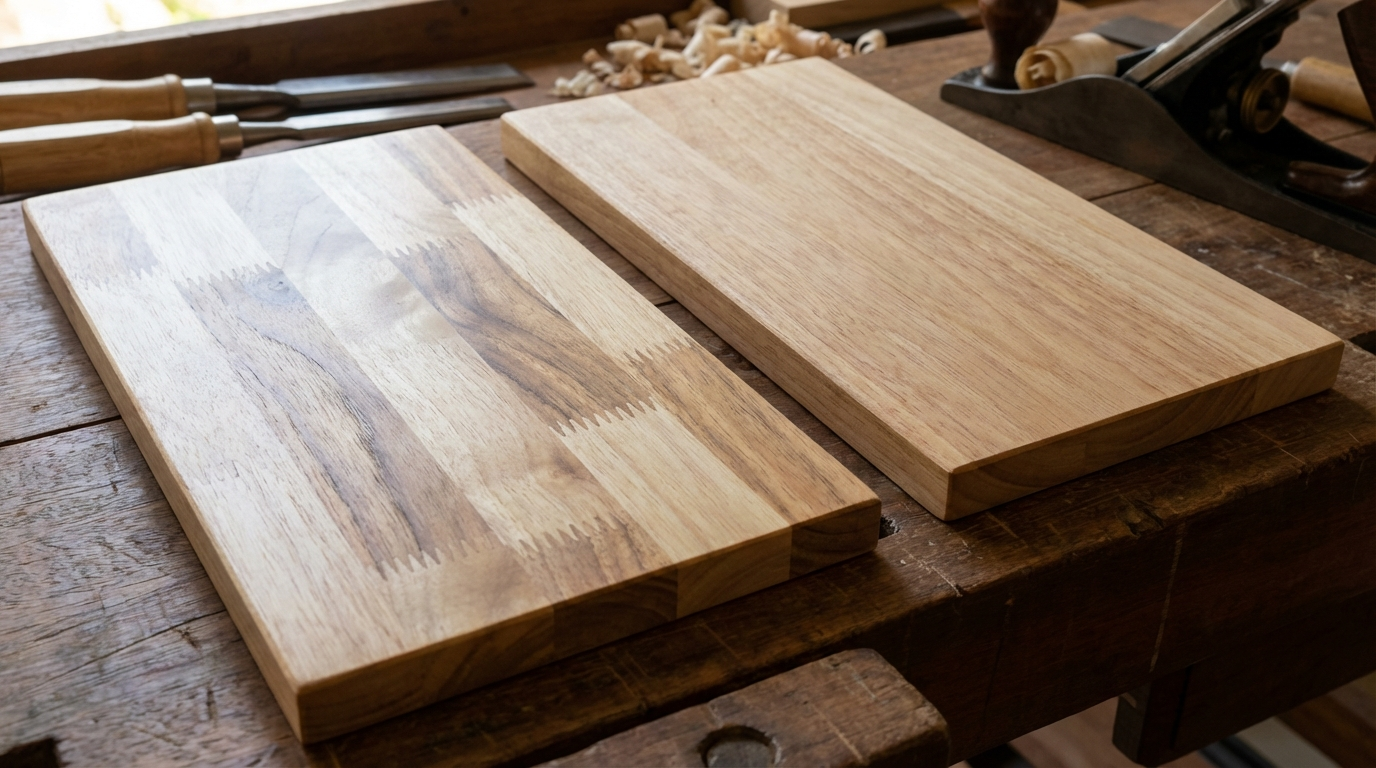
Finger joint rubber wood board is an engineered solid wood panel made by joining small rubber wood pieces end-to-end using interlocking finger-like joints and adhesive. This creates a dimensionally stable, eco-friendly material ideal for furniture, interior decoration, and construction applications where solid wood aesthetics are desired at lower cost.
At a Glance
- Made from plantation rubber wood after latex production ends—highly sustainable
- Uses significantly less adhesive than plywood or MDF, resulting in lower formaldehyde emissions
- Available in thicknesses from 8mm to 40mm for diverse applications
- Approximately 30–40% cheaper than equivalent solid hardwood panels
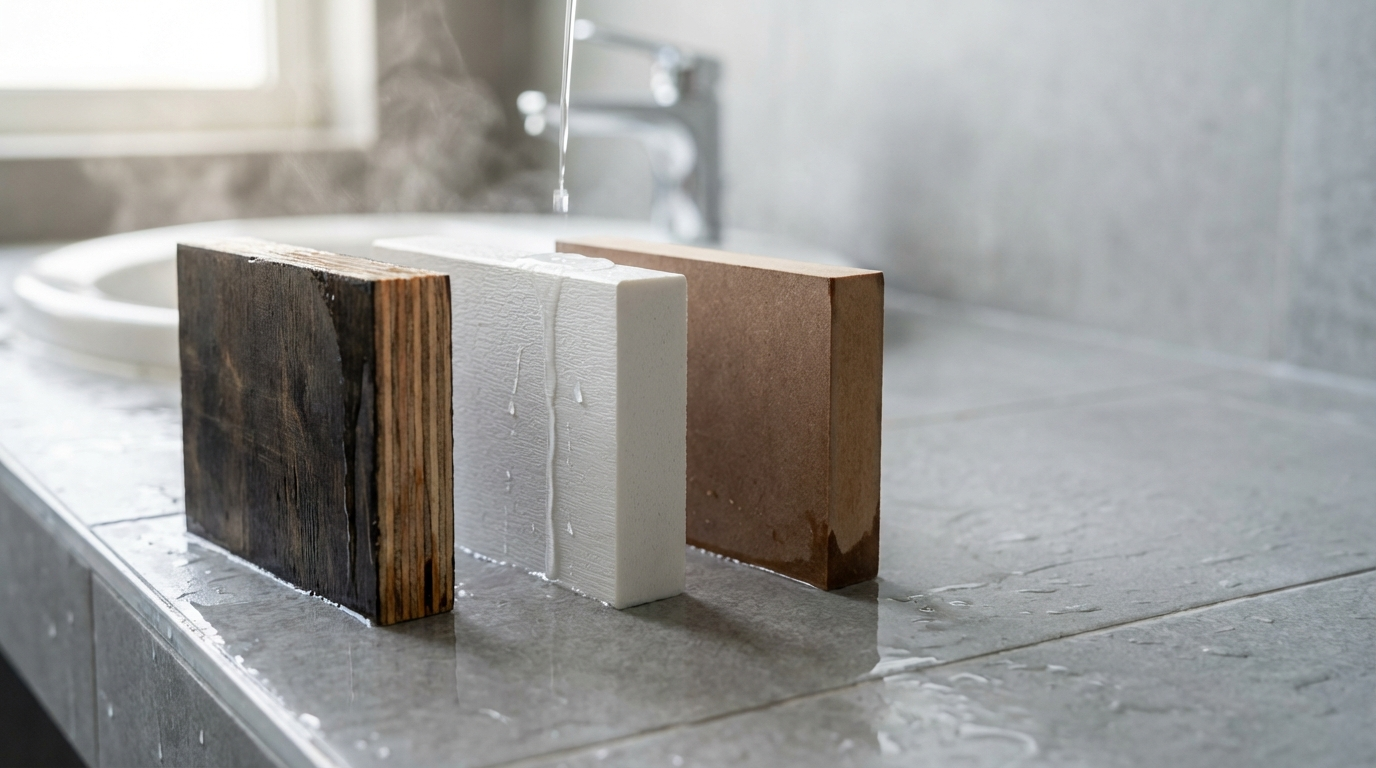
- Requires proper moisture protection—not inherently water-resistant
- Ideal for wardrobes, tables, shelving, and interior panelling where visible wood grain matters
Finger Joint Rubber Wood Board Explained
Finger joint rubber wood board represents a clever utilisation of plantation timber that would otherwise go to waste. Once rubber trees (Hevea brasiliensis) reach 25–30 years and cease productive latex yield, they are harvested. The timber from these trees is then processed into finger joint boards through a specific manufacturing sequence.
The production process begins with cutting rubber wood into smaller pieces, which are then machined with interlocking "finger" profiles at their ends—resembling interlocked human fingers. These pieces are bonded together using industrial adhesive (typically E0 or E1 grade for low formaldehyde emission), then pressed under controlled conditions. The resulting panel undergoes kiln drying to achieve moisture content between 8–12%, followed by surface sanding and optional protective coating.
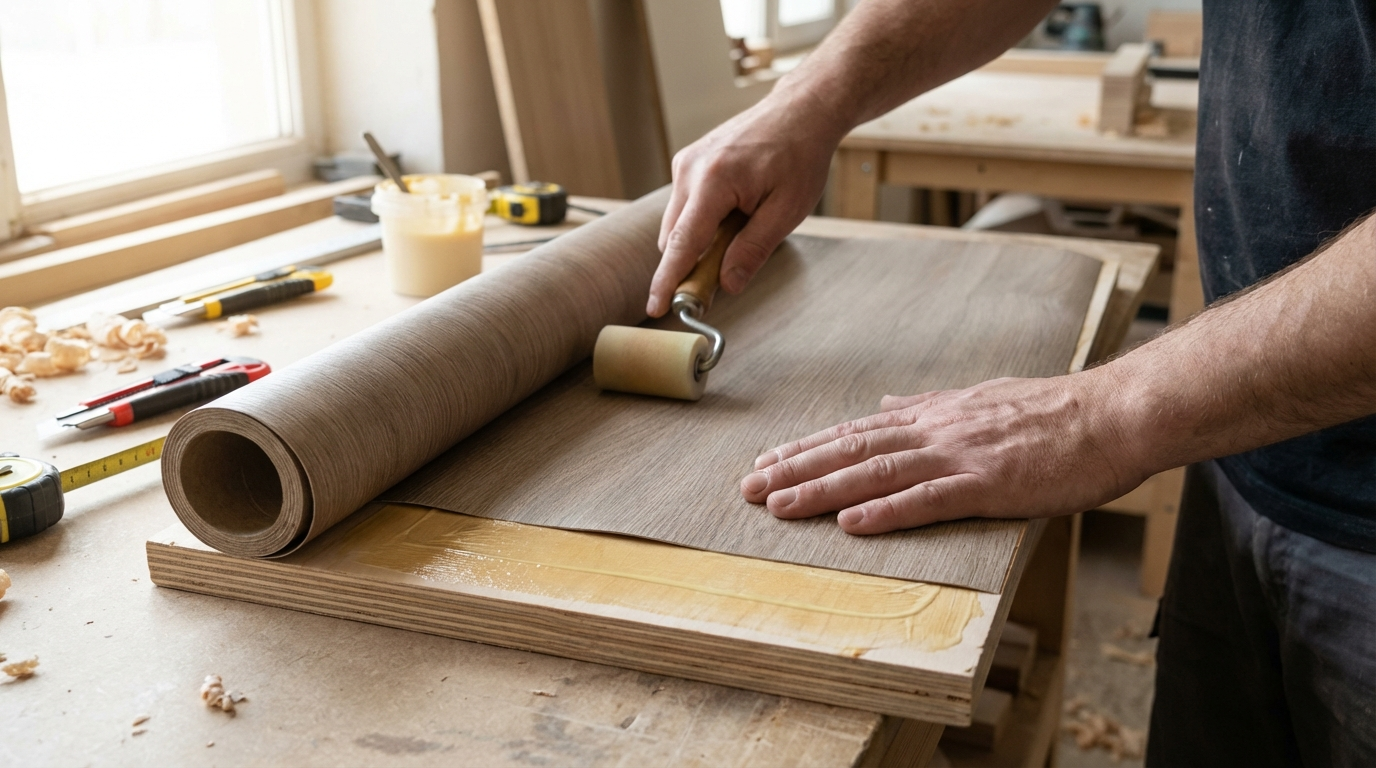
What distinguishes finger joint boards from plywood is fundamental: plywood uses thin veneers layered in alternating grain directions, while finger joint boards are essentially reconstituted solid wood. The natural grain runs continuously through the panel, creating an aesthetic closer to solid timber than any veneer-faced product could achieve.
Why Rubber Wood Specifically?
Rubber wood has become the dominant species for finger joint boards globally, and particularly in the Indian market, for several practical reasons. First, it offers excellent sustainability credentials—using trees that have completed their primary economic purpose. Second, rubber wood possesses moderate hardness (similar to ash) and consistent grain structure, making it predictable to machine and finish. Third, the extensive rubber plantations in Kerala, Karnataka, and Tamil Nadu, along with imports from Thailand, Malaysia, and Vietnam, ensure steady supply at competitive pricing.
From a practical standpoint, rubber wood machines well without excessive tool wear, accepts stains and finishes uniformly, and provides sufficient strength for most furniture applications. Its light colour (ranging from cream to pale yellow) offers versatility for various finish options.
Types and Grades of Finger Joint Rubber Wood Boards
Understanding the grading system helps buyers select appropriate material for specific applications. The Indian market sees various grades, though standardisation remains inconsistent across suppliers.
By Joint Visibility
Knotty Grade: Contains visible knots, colour variations, and natural characteristics. This grade costs less and suits applications where rustic appearance is acceptable or where the surface will be concealed. Many carpenters prefer this for furniture carcasses and internal components.
Knot-Free (Clear) Grade: Selected pieces with minimal defects, uniform colour, and clean appearance. Commands premium pricing and is specified for visible furniture surfaces, table tops, and decorative panelling where aesthetics matter.
By Joint Type
Exposed Joint: The finger joint pattern remains visible on the panel surface. While structurally sound, this affects appearance and is typically used where surfaces will be painted or covered.
Concealed Joint: The jointing occurs in a manner that leaves the face surfaces clean, without visible finger patterns. This is more expensive to manufacture and preferred for furniture where natural wood appearance is paramount.
By Adhesive Grade
E0 Grade: Ultra-low formaldehyde emission, meeting the strictest environmental standards. Suitable for enclosed spaces, children's furniture, and health-conscious applications.
E1 Grade: Low formaldehyde emission meeting standard regulatory requirements. Acceptable for most residential and commercial applications.
E2 Grade: Higher emission levels, typically limited to industrial or well-ventilated applications. Less common in quality-focused Indian retail markets.
Comparison: Finger Joint Rubber Wood vs Alternative Materials
| Parameter | Finger Joint Rubber Wood | Solid Rubber Wood | Commercial Plywood (BWR) | MDF Board |
|---|---|---|---|---|
| Material Structure | Joined solid wood pieces | Single piece timber | Layered veneers | Compressed wood fibres |
| Natural Wood Grain | Visible, authentic | Visible, continuous | Surface veneer only | None (requires laminate) |
| Formaldehyde Content | Low (E0/E1 grades) | None | Moderate to High | Moderate to High |
| Dimensional Stability | Good | Variable (prone to warping) | Excellent | Excellent (unless wet) |
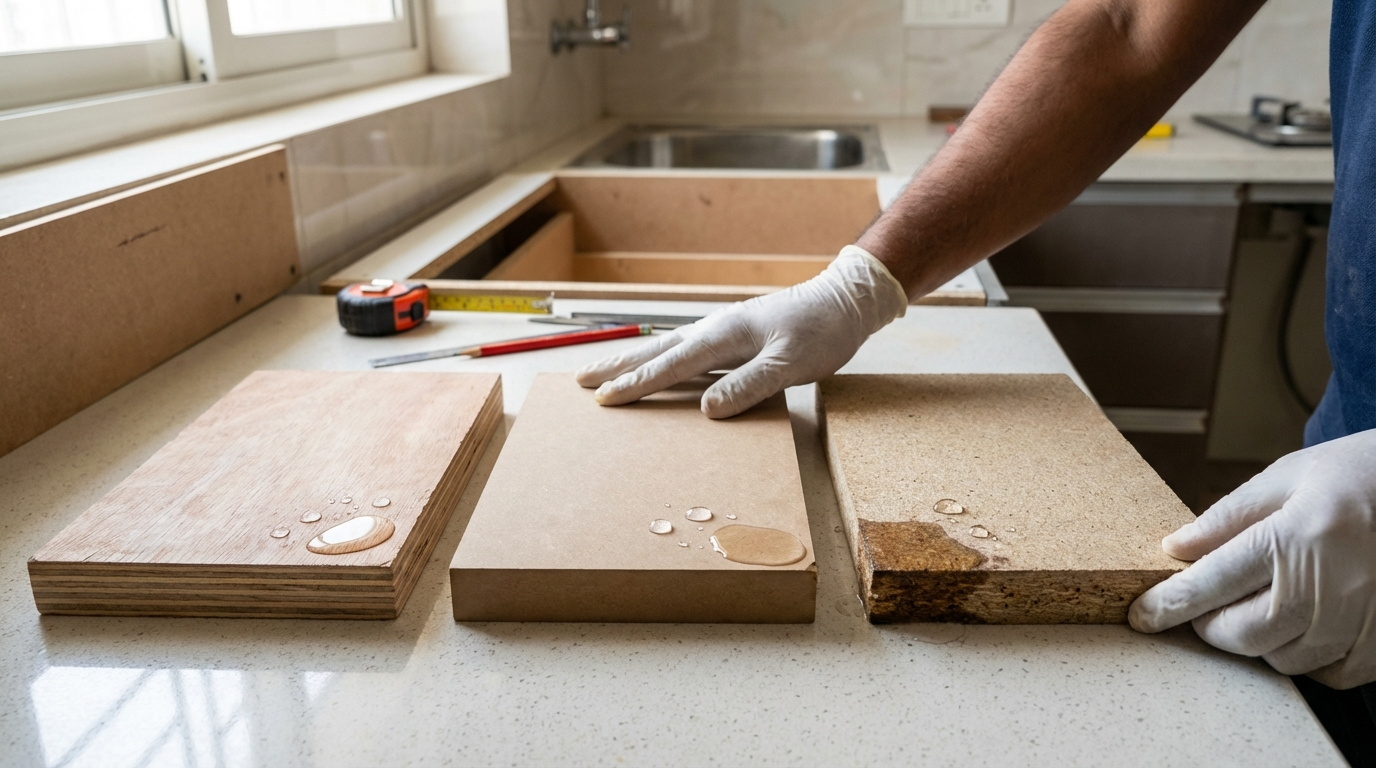
| Moisture Resistance | Poor (needs treatment) | Poor | Moderate (BWR grade) | Very Poor |
| Screw Holding | Excellent | Excellent | Good | Poor (edge crumbling) |
| Price Range (₹/sq ft, 18mm) | ₹45–85 | ₹80–150 | ₹55–90 | ₹35–55 |
| Best Applications | Furniture tops, shelves, panels | Premium furniture, carving | Carcasses, shutters, modular | Painted surfaces, CNC work |
Key Takeaway from Comparison
Finger joint rubber wood occupies a specific niche: it delivers genuine solid wood aesthetics and excellent screw-holding properties at prices between MDF and solid timber. However, it requires careful moisture management and is not suitable for areas with direct water exposure or high humidity without proper sealing.
How to Choose Finger Joint Rubber Wood Board
Selecting the right finger joint board requires evaluating several factors beyond just price. The Indian market presents specific challenges including inconsistent grading, variable quality across suppliers, and limited standardisation.
Decision Framework
Identify Your Application: For visible furniture surfaces like table tops and cabinet doors, invest in clear grade with concealed joints. For furniture carcasses, shelving interiors, or surfaces to be painted, knotty grade offers better value without compromising structural performance.
Assess Environmental Conditions: If the furniture will be placed in air-conditioned rooms with controlled humidity, standard grades work well. For installations in coastal cities or naturally humid environments (Kerala, coastal Karnataka, parts of Bengal), either specify additional surface treatment or consider alternative materials entirely.
Evaluate Finish Requirements: If applying transparent finishes (lacquer, polish, or oil), grain quality and colour uniformity become critical—specify accordingly. For painted finishes, surface defects matter less than flatness and stability.
Buyer's Checklist
- Check moisture content—quality boards should be kiln-dried to 8–12%; visibly damp or heavy boards indicate poor drying
- Examine joints for gaps, lifting, or visible glue squeeze-out—these indicate manufacturing defects
- Verify thickness consistency across the sheet; variation beyond 1mm suggests quality issues
- Inspect surface flatness by placing a straight edge across the board
- Request adhesive grade specification (E0 or E1) in writing from the supplier
- For large orders, ask for sample cuts to verify internal quality matches surface appearance
- Confirm the supplier's return policy for defective sheets
When NOT to Choose Finger Joint Rubber Wood
This material is genuinely unsuitable for certain applications, and honest dealers should advise against it in these scenarios:
Bathrooms and wet areas: Even sealed finger joint boards will eventually fail with repeated moisture exposure. The glue joints are the weakest point—water infiltration causes swelling and eventual delamination.
Outdoor furniture: Without industrial-grade weather protection and regular maintenance, outdoor exposure rapidly degrades the material. Choose marine-grade plywood or teak instead.
Structural load-bearing: Finger joint boards are not engineered for structural applications. The joints, while strong for furniture use, cannot match the load-bearing capacity of solid timber or structural-grade plywood.
High-humidity storage rooms: In cities like Mumbai, Chennai, or Kolkata, storage areas without climate control can maintain humidity levels that cause gradual warping and mould growth on untreated finger joint boards.
Common Mistakes to Avoid
Both buyers and carpenters make predictable errors with finger joint rubber wood, often learning expensive lessons that proper guidance could prevent.
Mistake 1: Ignoring Moisture Content
Many dealers stock boards that haven't been properly kiln-dried, particularly during monsoon season when demand outpaces supply. Furniture made from high-moisture boards warps within months as the wood equilibrates with ambient humidity. Always verify kiln-drying credentials and consider purchasing from climate-controlled warehouses.
Mistake 2: Skipping Edge Sealing
The finger joints are most vulnerable at the board edges. Carpenters who cut boards and leave edges unsealed create entry points for moisture. Every cut edge should receive edge banding or sealant application before installation, especially in humid regions.
Mistake 3: Confusing Appearance with Quality
A smooth, attractive surface doesn't guarantee quality joints beneath. Some manufacturers use excessive filler to mask poor jointing. Tap the board and listen for consistency—areas with excessive filler sound different. Better still, request a sample cut to inspect internal joint quality.
Mistake 4: Inadequate Surface Protection
Unfinished finger joint boards are highly susceptible to staining, moisture absorption, and surface damage. Many buyers delay finishing, leaving boards exposed during storage or installation. Apply at minimum a primer coat immediately upon receipt if final finishing will be delayed.
Mistake 5: Using Standard Hardware Without Pre-drilling
While finger joint boards hold screws well, driving screws near edges without pre-drilling can split the wood along joint lines. This is particularly common with inexperienced carpenters accustomed to working with MDF, which forgives such technique errors.
Quick Inspection Checks
- Run your palm across the surface—quality boards feel consistently smooth without sudden ridges at joints
- Sight along the board edge to check for warping or twist
- Look at joint lines under good lighting—well-made joints are nearly invisible
- Press firmly near joints to check for any give or sponginess indicating poor bonding
- Check weight consistency between boards of the same size—significant variation indicates moisture differences
Price Guide for Finger Joint Rubber Wood in India
Pricing for finger joint rubber wood boards varies significantly based on multiple factors. The ranges below assume procurement from established dealers in metro cities, with legitimate quality assurance.
| Thickness | Standard Grade (₹/sq ft) | Premium Grade (₹/sq ft) | Typical Sheet Size |
|---|---|---|---|
| 12mm | ₹35–50 | ₹55–70 | 8×4 feet |
| 18mm | ₹45–65 | ₹70–95 | 8×4 feet |
| 25mm | ₹60–85 | ₹90–120 | 8×4 feet |
| 30mm | ₹75–100 | ₹110–145 | 8×4 feet |
| 40mm | ₹95–130 | ₹140–180 | 8×4 feet |
What Drives Price Variation
Grade Selection: Clear, knot-free grades with concealed joints command 30–50% premiums over standard grades with visible knots and exposed joints.
Import vs Domestic: Imported boards from Thailand and Malaysia often carry higher price tags due to transport costs and import duties, but may offer more consistent quality and certification. Domestic production from Kerala and Karnataka can be competitive but quality varies widely between mills.
City Tier Impact: Metro cities (Delhi, Mumbai, Bangalore, Chennai) typically show 10–15% higher prices than Tier-2 cities due to higher dealer overheads. However, metro dealers often provide better quality assurance and return policies.
Order Volume: Bulk purchases (50+ sheets) can secure 8–15% discounts from established suppliers. Single sheet retail purchases attract maximum margin.
GST Considerations: Finger joint boards typically attract 18% GST. Verify whether quoted prices are inclusive or exclusive, as this significantly affects comparison shopping.
Budget vs Premium: Which Makes Sense?
For furniture carcasses, drawer components, and concealed surfaces, standard grade boards offer excellent value. The cost savings compound across an entire furniture project. Reserve premium grades specifically for visible surfaces—table tops, cabinet fronts, and exposed shelving where grain appearance matters for the final aesthetic.
Applications and Best Uses
Finger joint rubber wood finds its sweet spot in applications requiring visible solid wood aesthetics combined with dimensional stability—areas where MDF's lack of grain and plywood's veneer limitations become drawbacks.
Furniture Manufacturing
Table tops, desk surfaces, and dining tables benefit significantly from finger joint boards. The material machines cleanly for edge profiles, accepts traditional joinery techniques, and provides the warmth of real wood grain. Wardrobes and storage units use finger joint boards for visible shelving and internal partitions where screw-holding strength matters more than moisture resistance.
Interior Decoration
Wall panelling, ceiling treatments, and decorative elements increasingly use finger joint rubber wood. The natural grain adds warmth to interiors that laminated products cannot replicate. Wainscoting, dado panels, and feature walls are particularly suited applications.
Kitchen Applications—With Caution
Finger joint boards work for upper kitchen cabinets, pantry shelving, and areas away from direct water exposure. However, they require robust sealing and are not recommended for sink cabinets, areas below hobs, or any location with regular moisture contact. For such areas, BWR or BWP grade plywood remains the practical choice.
Commercial and Retail
Retail fixtures, display units, and commercial furniture frequently specify finger joint rubber wood for its balance of appearance and economy. The material suits applications requiring frequent reconfiguration, as it holds fasteners well through multiple assembly cycles.
Carpenter's Perspective: Working with Finger Joint Boards
Experienced carpenters familiar with this material note several practical considerations that affect project outcomes.
Machining behaviour is generally excellent—the material cuts cleanly on table saws and circular saws with standard TCT blades. Router work produces clean edges without excessive tear-out. However, feeding speed should be moderate; rushing cuts can cause chipping at joint lines.
Sanding requires attention to grain direction changes at joints. Belt sanders can create visible undulation if not managed carefully. Random orbital sanders produce more uniform results across joint transitions.
Finishing penetrates uniformly across most of the surface, but joint lines may absorb stain slightly differently, creating subtle colour variation. Pre-sealer application helps achieve more uniform stain absorption on clear-finished projects.
Joinery techniques work as expected—mortise and tenon, dowel joints, and biscuit joinery all perform reliably. The main caution involves planning joint locations to avoid placing furniture joints directly over finger joints in the board, which could create weakness.
Frequently Asked Questions
What is finger joint wood board made of?
Finger joint wood board is made from small pieces of solid wood (most commonly rubber wood in India) that are machined with interlocking finger-shaped profiles at their ends. These pieces are then bonded together using industrial adhesive under pressure, creating a continuous panel. The process utilises shorter wood pieces that would otherwise be wasted, making it an efficient use of timber resources while creating panels larger than available from single pieces of wood.
Is finger joint rubber wood good for furniture?
Finger joint rubber wood is excellent for indoor furniture applications, particularly wardrobes, tables, shelving, and cabinets. It offers genuine solid wood aesthetics, good screw-holding capacity, and consistent machining properties. However, it requires protection from moisture and is not recommended for bathroom furniture or outdoor use. For living rooms, bedrooms, and studies with normal humidity levels, it performs reliably for 15–20 years with proper finishing and maintenance.
Which is better: finger joint board or plywood?
The choice depends on application requirements. Finger joint board offers superior natural wood appearance and better screw-holding for repeated assembly, making it ideal for visible furniture surfaces. Plywood provides better moisture resistance (especially BWR and BWP grades), superior dimensional stability in varying humidity, and works better for structural applications. For furniture carcasses in humid areas or kitchen cabinets near water, plywood is preferable. For decorative surfaces and dry-area furniture, finger joint board offers aesthetic advantages.
What is the price of finger joint rubber wood board in India?
Finger joint rubber wood boards typically range from ₹35 to ₹180 per square foot in India, depending on thickness, grade, and location. Standard 18mm boards cost approximately ₹45–65 per square foot for regular grades and ₹70–95 for premium clear grades. Prices are generally 10–15% higher in metro cities and may include or exclude 18% GST depending on the dealer. Bulk purchases of 50+ sheets often attract 8–15% discounts from established suppliers.
Can finger joint board be used in kitchens?
Finger joint boards can be used selectively in kitchens—for upper cabinets, pantry shelving, and breakfast counters away from water sources. However, they are not recommended for sink cabinets, areas below hobs, or locations with regular moisture exposure. The adhesive joints are vulnerable to repeated wetting, which causes swelling and eventual delamination. For moisture-prone kitchen areas, BWR or BWP grade plywood with appropriate lamination remains the practical choice despite the aesthetic trade-off.
How do you check finger joint board quality?
Quality finger joint boards exhibit consistent weight (indicating uniform drying), smooth surfaces without ridges at joints, and invisible or barely visible joint lines. Run your palm across the surface checking for bumps at joints. Sight along the edge to verify flatness. Tap different areas and listen for consistent sound—hollow areas indicate gaps or filler. Examine cut edges if possible to verify tight joints without visible gaps. Ask suppliers for adhesive grade certification (E0 or E1) and kiln-drying documentation.
Does finger joint rubber wood last long?
Properly finished and maintained finger joint rubber wood furniture typically lasts 15–25 years in indoor applications. Longevity depends heavily on environmental conditions and finishing quality. In air-conditioned spaces with stable humidity, the material performs excellently. In naturally humid environments without protection, warping and joint failure can occur within 5–8 years. Regular maintenance including periodic refinishing every 3–5 years extends service life significantly. Avoid placement near windows with rain exposure or in bathrooms.
Is finger joint board eco-friendly?
Finger joint rubber wood board is considered one of the more eco-friendly engineered wood options. It utilises rubber trees that have completed their latex-producing cycle (25–30 years), converting potential agricultural waste into useful material. The manufacturing process uses significantly less adhesive than plywood or MDF, resulting in lower formaldehyde emissions. Additionally, finger jointing allows use of shorter wood pieces that would otherwise be discarded, improving timber utilisation efficiency. FSC-certified options are available from quality suppliers for environmentally conscious projects.
Disclaimer: This content is provided for general informational purposes based on industry practices and publicly available information. Product specifications, standards, prices, and availability may vary by manufacturer, region, and time. Readers should independently verify details with manufacturers, dealers, or qualified professionals before making purchase or construction decisions.Want Plywood Suggestions?
Share a few details and a Apple Ply specialist will suggest suitable brands and connect you to responsive dealers.