Fabric Laminate Sheets: Types, Uses & Price Guide
Complete guide to fabric laminate sheets for wardrobes & furniture. Compare types, textures, prices & application methods.
Quick Answer
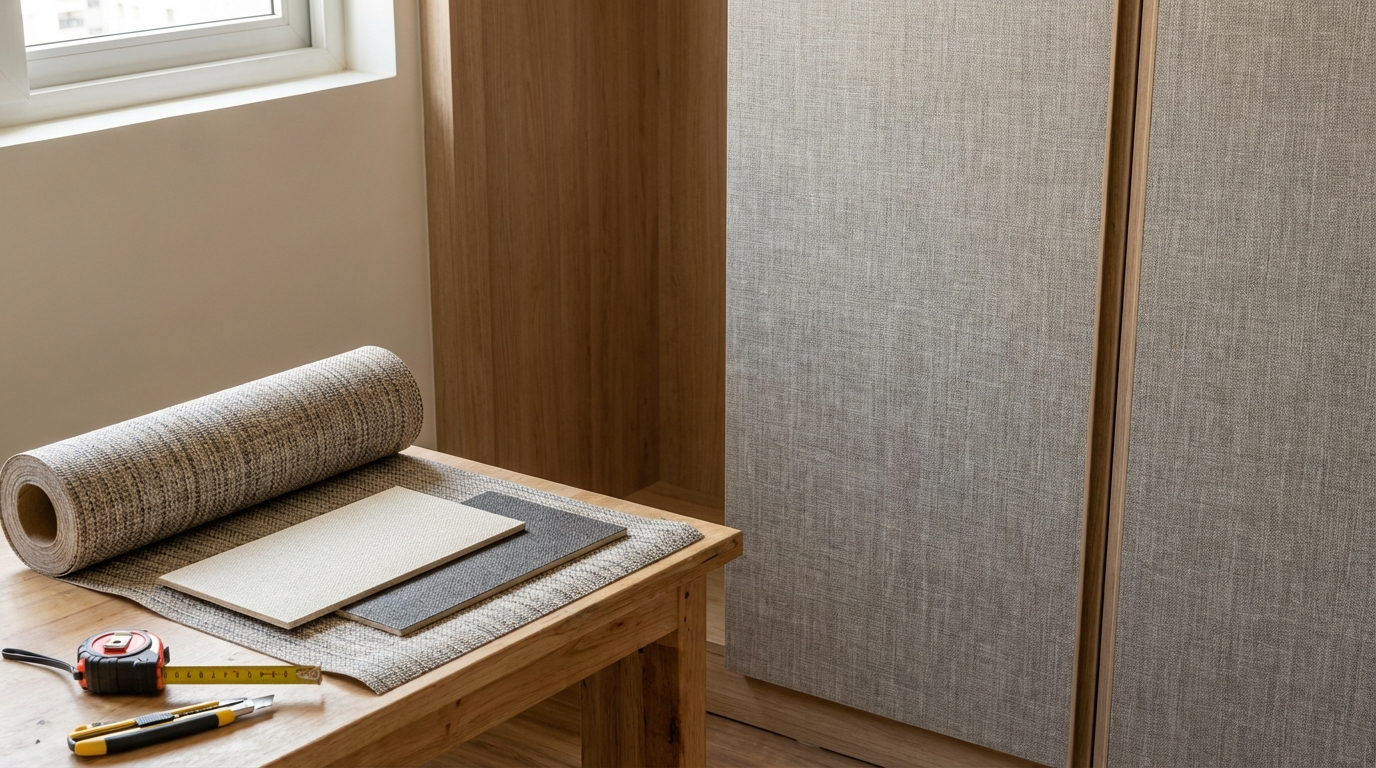
Fabric laminate sheets are decorative high-pressure laminates featuring woven textile patterns that replicate the look and texture of real fabric without the maintenance concerns. These laminates are popular for wardrobe shutters, bedroom furniture, and accent panels where a soft, luxurious appearance is desired. Prices typically range from ₹950 to ₹2,200 per sheet (8×4 feet) depending on texture depth, brand tier, and finish quality.
At a Glance:
- Fabric laminates mimic linen, jute, silk, and canvas textures on HPL surface
- Standard size: 8×4 feet (2440mm × 1220mm) with thickness options from 0.8mm to 1.5mm
- Best suited for low-moisture areas like bedrooms, living rooms, and office furniture
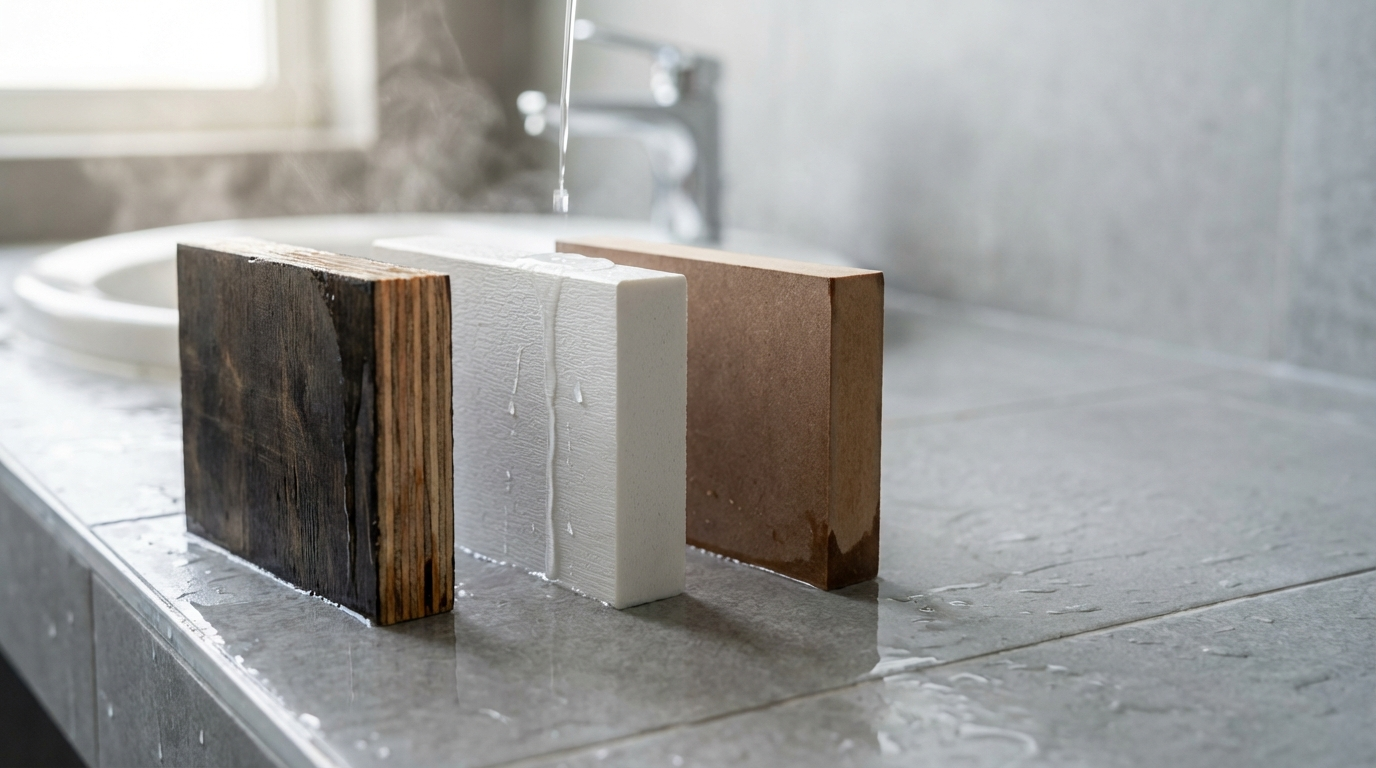
- Not recommended for kitchen countertops or bathroom cabinets due to texture trapping moisture
- Premium over solid-color laminates: typically 15-30% higher pricing
- Requires skilled application to maintain pattern continuity across panels
Fabric Laminate Sheets Explained: What Makes Them Different
Fabric laminate sheets belong to the decorative laminate category where the top decorative layer is printed and embossed to simulate woven textile materials. Unlike plain solid or woodgrain laminates, fabric laminates undergo additional texturing processes that create tactile depth—you can actually feel the weave pattern when you run your fingers across the surface.
The manufacturing process involves saturating multiple layers of kraft paper with phenolic resin, topped by a decorative paper printed with fabric patterns. This assembly is then fused under high pressure (around 1,000-1,400 PSI) and temperatures exceeding 140°C. The embossing rollers create the characteristic textile texture during this pressing stage, which is why higher-quality fabric laminates have more pronounced, realistic textures.
Why Fabric Laminates Gained Popularity in Indian Interiors
The Indian interior design market shifted significantly toward fabric laminates around 2018-2020, driven by the modular furniture boom and designer preferences for European-inspired aesthetics. Real fabric upholstery on furniture surfaces presents practical challenges in Indian conditions—dust accumulation, difficulty cleaning, and vulnerability to humidity and termite damage when used over substrates.
Fabric laminates solve these problems by offering the visual warmth of textiles with the durability of HPL. They're particularly favored in metropolitan markets like Mumbai, Bangalore, and Delhi NCR where contemporary minimalist designs dominate. In practical terms, a linen-textured laminate wardrobe shutter delivers the soft, sophisticated look of fabric without requiring the periodic cleaning or replacement that actual fabric panels would need.
Core Composition and Construction
A typical fabric laminate sheet consists of four distinct layers fused together. The bottom layer comprises multiple sheets of kraft paper saturated with phenolic resin, providing structural strength. Above this sits a barrier layer that prevents resin migration. The decorative layer carries the printed fabric pattern, while the topmost overlay is a transparent melamine-impregnated sheet that provides scratch and abrasion resistance while allowing the texture to remain visible and tactile.
Types of Fabric Laminate Textures Available in India
The Indian market offers fabric laminates in several distinct texture families, each suited to different design applications and budget ranges. Understanding these categories helps in selecting the right product for specific furniture requirements.
Linen Texture Laminates
Linen-textured laminates are the most commonly specified fabric laminate variety in India. They feature a subtle cross-weave pattern that mimics natural linen cloth. The texture depth is moderate—visible but not overly pronounced—making them versatile for both traditional and contemporary furniture. Linen textures work exceptionally well on wardrobe shutters, headboard panels, and study table surfaces. Most major laminate manufacturers including Merino, Greenlam, and Century offer extensive linen collections in neutral tones.
Jute and Canvas Textures
These heavier, more rustic textures replicate coarse natural fiber weaves. Jute-textured laminates have gained particular traction in eco-conscious interior themes and properties with traditional Indian or bohemian design directions. The deeper texture makes them suitable for statement pieces rather than large surface coverage. Canvas textures offer a slightly finer weave than jute but with visible crosshatch patterns that add character to furniture facades.
Silk and Satin Finish Textures
At the premium end, silk-textured laminates feature fine, almost subtle linear patterns that catch light at different angles. These are popular for high-end bedroom furniture and living room accent panels. The texture is less pronounced than linen or jute variants but creates sophisticated light-play effects. Satin-finish fabric laminates have a slight sheen that distinguishes them from matte varieties, though they require more careful maintenance to avoid visible fingerprints.
Tweed and Herringbone Patterns
These geometric fabric patterns offer distinct character compared to plain-weave textures. Tweed laminates feature multicolored fleck patterns within the weave, while herringbone presents a distinctive V-shaped repeating pattern. Both are typically positioned as premium designer collections and command higher prices than standard fabric textures.
Comparison Table: Fabric Laminate Types and Applications
| Texture Type | Texture Depth | Price Range (₹/sheet 8×4) | Best Applications | Maintenance Level | Availability in Tier-2 Cities |
|---|---|---|---|---|---|
| Linen | Medium | ₹1,000 - ₹1,600 | Wardrobes, TV units, headboards | Easy | Readily available |
| Jute | Deep | ₹1,100 - ₹1,800 | Accent panels, console tables | Moderate (dust in grooves) | Limited selection |
| Canvas | Medium-Deep | ₹1,050 - ₹1,700 | Study tables, cabinet fronts | Moderate | Available through dealers |
| Silk | Fine/Subtle | ₹1,400 - ₹2,200 | Bedroom furniture, premium wardrobes | High (fingerprints visible) | Metro cities mainly |
| Tweed | Medium | ₹1,500 - ₹2,100 | Designer furniture, office cabinets | Easy (pattern hides marks) | Special order mostly |
| Herringbone | Medium | ₹1,600 - ₹2,200 | Feature walls, high-end wardrobes | Moderate | Special order mostly |
How to Choose the Right Fabric Laminate for Your Project
Selecting fabric laminates requires considering multiple factors beyond just aesthetic preference. The texture, thickness, application area, and ambient conditions all influence which variant will perform best over time.
Thickness Selection Based on Application
For wardrobe shutters and cabinet doors that see frequent handling, 1mm or 1.5mm thickness provides better impact resistance and edge durability. The 0.8mm sheets, while more affordable, tend to chip at edges more easily and are better suited for vertical surfaces with minimal contact like wall panels or furniture backs. In the Indian market, 1mm thickness represents the practical middle ground for most furniture applications—it bonds well with standard 18mm plywood substrates and handles normal wear adequately.
Color and Pattern Considerations
Fabric laminates in lighter shades (creams, off-whites, light greys) tend to show dust accumulation in textured grooves more visibly than mid-tones. For homes without air conditioning in dusty urban environments, medium-toned fabric laminates in beige, taupe, or grey families offer better practical performance. The pattern repeat is another consideration—larger weave patterns may create visible misalignment if panels are not carefully matched during application.
Buyer Checklist for Fabric Laminates
- Verify texture depth by running fingers across sample—premium variants have consistent, defined textures
- Check pattern registration—print should align precisely with embossed texture
- Request actual batch samples, not just catalog images (texture can vary between production runs)
- Confirm thickness with calipers if purchasing for high-use furniture
- Assess surface hardness—press fingernail against surface; quality laminates shouldn't mark easily
- Verify backing paper condition—should be intact without flaking or moisture damage
- Order 10-15% extra material to account for pattern matching and wastage
When NOT to Choose Fabric Laminates
Fabric laminates are unsuitable for kitchen cabinet exteriors where cooking grease and oil splatter can settle into textured surfaces and prove difficult to clean. Bathroom vanities and any furniture in high-humidity areas should avoid fabric textures—moisture can penetrate the texture grooves over time, particularly in coastal cities like Mumbai or Chennai where humidity regularly exceeds 80%. Similarly, fabric laminates aren't ideal for children's furniture or playroom installations where frequent cleaning and heavy abuse are expected. The textured surface also doesn't suit applications requiring smooth surfaces for writing or working, such as study table tops.
Application Methods and Carpenter Considerations
Proper application of fabric laminates requires more attention than standard smooth-finish laminates. The textured surface makes alignment critical, and improper bonding can create visible defects that are particularly noticeable on large panels.
Substrate Preparation
Fabric laminates require smooth, well-prepared substrates. Commercial plywood or MDF with consistent surface density works best. Any substrate imperfections—bumps, dents, or rough patches—will telegraph through the laminate surface, especially visible on fine-textured silk varieties. Before application, carpenters should sand the substrate surface with 120-grit paper and wipe clean to remove dust. In humid conditions, allowing plywood to acclimatize for 24-48 hours reduces warping risk post-application.
Adhesive Selection and Application
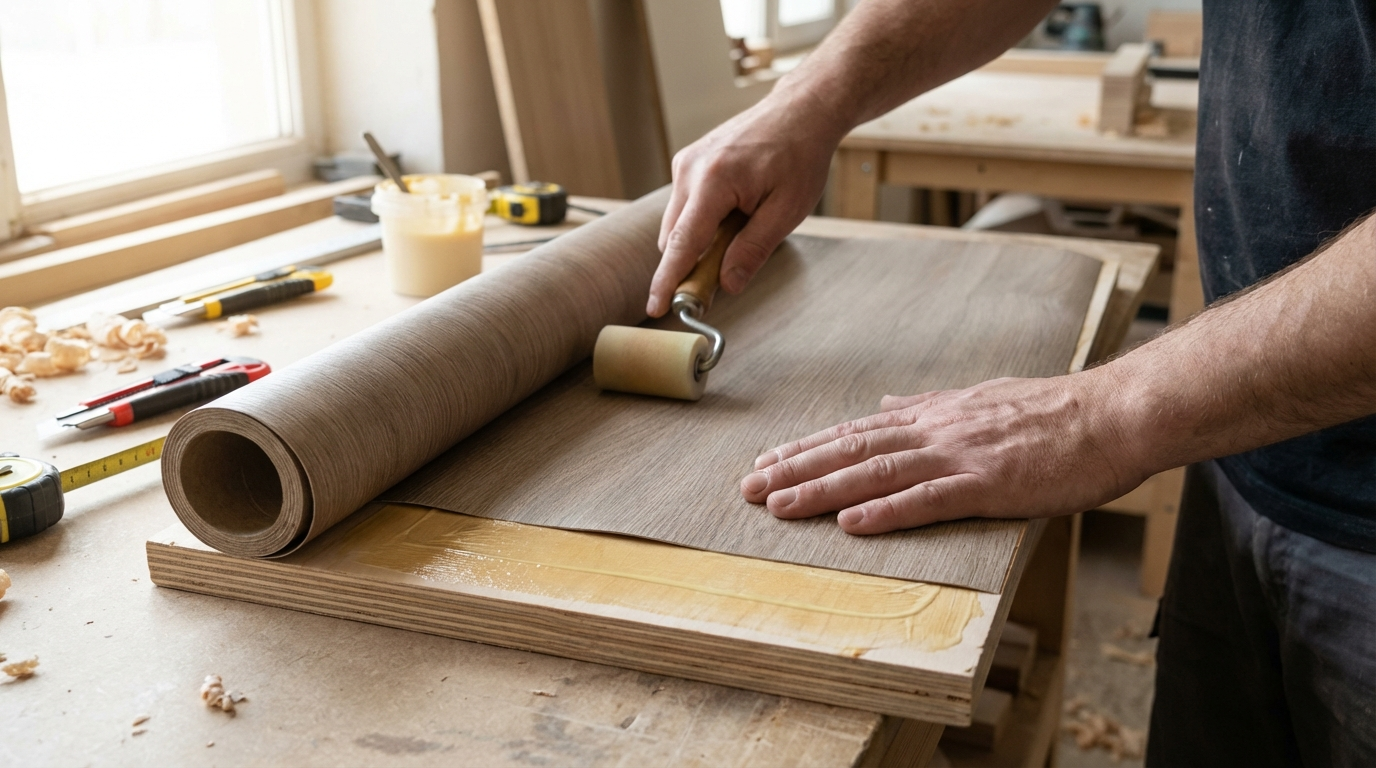
Contact adhesive (SR or synthetic rubber-based) is standard for fabric laminate bonding in India. Apply adhesive evenly on both substrate and laminate back, ensuring complete coverage without pooling. The texture on fabric laminates means any adhesive voids can create visible depressions. Drying time varies with humidity—in monsoon conditions, allow 30-45 minutes versus 15-20 minutes in dry weather before bonding.
Pattern Matching Across Multiple Panels
When covering large wardrobes or wall units with multiple laminate sheets, pattern continuity becomes critical. Fabric laminates with distinct directional patterns (herringbone, linear weaves) must be planned for grain direction consistency. Experienced carpenters mark sheet edges before cutting and dry-fit panels to verify alignment before final bonding. This pattern matching creates 10-15% higher material wastage compared to solid-color laminates.
Edge Finishing Options
Edge banding for fabric laminates presents challenges—matching the texture perfectly is difficult with standard PVC edge bands. Options include using solid-color edge bands in complementary tones, applying 90-degree laminate wraps around edges, or using aluminum edge profiles for a contemporary look. CNC-processed modular furniture typically uses 1mm matching PVC edging, which works adequately but won't replicate the surface texture.
Price Guide: Fabric Laminate Sheets in India (2025-26)
Fabric laminate pricing varies significantly based on brand tier, texture complexity, and regional availability. The following ranges assume standard 8×4 feet (2440mm × 1220mm) sheet dimensions and 1mm thickness unless otherwise specified.
Price Breakdown by Brand Tier
| Brand Category | Example Brands | Price Range (₹/sheet) | Texture Quality | Pattern Variety |
|---|---|---|---|---|
| Premium | Merino, Greenlam, Royale Touche | ₹1,400 - ₹2,200 | Deep, consistent embossing | Extensive collections |
| Mid-Range | Century, Virgo, Stylam | ₹1,100 - ₹1,600 | Good texture definition | Moderate selection |
| Economy | Regional/local brands | ₹850 - ₹1,200 | Shallow textures | Limited options |
Factors Affecting Price Variation
Thickness: 0.8mm sheets typically cost 15-20% less than 1mm variants, while 1.5mm commercial-grade fabric laminates command 25-35% premium over standard 1mm sheets.
Texture Complexity: Basic linen patterns sit at lower price points, while specialty textures like herringbone or silk finishes occupy premium tiers. The embossing roller complexity and print registration requirements for these patterns add manufacturing costs.
Geographic Location: Metro city dealers typically stock fresh inventory at competitive prices, while Tier-2 and Tier-3 city purchases may involve 8-12% higher costs due to transport and lower turnover. Coastal cities often see slightly higher prices due to humidity-related storage requirements.
GST Impact: Laminates attract 18% GST in India. Quoted prices at dealer level are typically GST-inclusive, but verify this explicitly—wholesale quotes sometimes exclude GST, creating apparent savings that disappear at billing.
Cost Comparison: Fabric vs. Other Laminate Types
Fabric laminates carry a 20-40% premium over solid-color matte laminates of equivalent thickness and brand tier. Compared to woodgrain laminates, the premium is typically 10-25%. This pricing reflects the additional manufacturing complexity of texture embossing and pattern registration requirements.
Common Mistakes to Avoid When Using Fabric Laminates
Understanding typical failures helps both buyers and carpenters achieve better outcomes with fabric laminate applications.
Mistake 1: Using Fabric Laminates in Humid Areas
The textured surface of fabric laminates creates microscopic grooves where moisture can accumulate. In bathroom vanities or kitchen areas near sinks, this leads to gradual moisture penetration, edge swelling, and eventual delamination. Even in bedroom wardrobes, ensure the room has adequate ventilation—fabric laminates in poorly ventilated wardrobes storing damp clothing have shown premature failure in high-humidity regions.
Mistake 2: Insufficient Adhesive Coverage
Unlike smooth laminates where small adhesive voids may go unnoticed, fabric laminate textures make depressions highly visible under angled light. Carpenters sometimes apply adhesive quickly, missing edges or corners. The fix is time-consuming—complete removal and reapplication. Insist on roller application rather than brush application for uniform coverage.
Mistake 3: Ignoring Pattern Direction
Many fabric laminates have subtle directional patterns. Installing adjacent panels with opposing grain directions creates visible mismatch that becomes apparent only after completion. Always mark "UP" arrows on sheet backs before cutting and verify orientation during dry-fitting.
Mistake 4: Using Standard Cleaning Methods
Aggressive scrubbing or abrasive cleaners damage fabric laminate textures faster than smooth finishes. The raised texture portions wear down, creating shiny spots on matte surfaces. Use only soft microfiber cloths with mild soap solution for cleaning.
Mistake 5: Ordering Without Physical Samples
Catalog images cannot convey texture depth or tactile quality. Online or catalog orders frequently disappoint when delivered material doesn't match expectations. Always procure actual samples from the same batch before committing to full orders.
Quick Inspection Checks
- Run palm across surface—texture should feel consistent without sharp edges or rough spots
- View sheet at 45-degree angle under light—embossing should align with printed pattern
- Check edges for chips, cracks, or separation between layers
- Verify backing paper adhesion—should not peel or flake when scratched lightly
- Confirm all sheets from same production batch for color consistency
Regional Considerations for Indian Buyers
Climate and regional factors significantly impact fabric laminate selection and performance across different parts of India.
Coastal Cities (Mumbai, Chennai, Kolkata, Kochi)
High humidity levels ranging from 70-90% for extended periods make fabric laminate selection critical. Opt for thicker variants (1mm minimum) with better edge sealing. Silk textures with finer patterns perform better than deep jute textures where moisture can accumulate. Specify edge banding with moisture-resistant adhesives and consider aluminum edge profiles for additional protection.
Hot and Dry Regions (Delhi NCR, Rajasthan, Central India)
Extreme temperature variations between seasons can cause substrate expansion and contraction. Ensure proper acclimatization of both plywood substrates and laminate sheets before bonding. Lighter-colored fabric laminates are preferable in direct sunlight areas—darker textures absorb more heat and may show adhesive failure over time.
Tier-2 and Tier-3 City Realities
Premium fabric laminate collections may not be readily stocked by local dealers, requiring advance ordering with 2-3 week lead times. Pattern matching becomes challenging when dealers cannot supply from the same batch. Consider ordering 20% extra material to account for potential replacement needs. Local carpenter familiarity with textured laminates may be limited—discuss specific handling requirements before work begins.
Frequently Asked Questions
What is the full form of HPL in fabric laminates?
HPL stands for High-Pressure Laminate, referring to the manufacturing process where decorative and kraft paper layers are fused under pressures exceeding 1,000 PSI and temperatures above 140°C. Fabric laminates are a decorative subcategory within HPL, distinguished by their textured surfaces that mimic woven textiles. The high-pressure process creates a dense, durable surface that resists scratches, stains, and moderate heat better than low-pressure alternatives.
Which is better: fabric laminate or veneer for wardrobes?
Fabric laminates offer better durability, moisture resistance, and consistent appearance compared to natural wood veneers. Veneers provide authentic wood character but require careful maintenance, are vulnerable to scratches, and may show variation between panels. For Indian conditions with humidity fluctuations, fabric laminates perform more reliably over 5-10 year periods. However, veneers suit traditional interiors where natural wood aesthetics are prioritized over practical maintenance considerations.
Can fabric laminate sheets be used in kitchens?
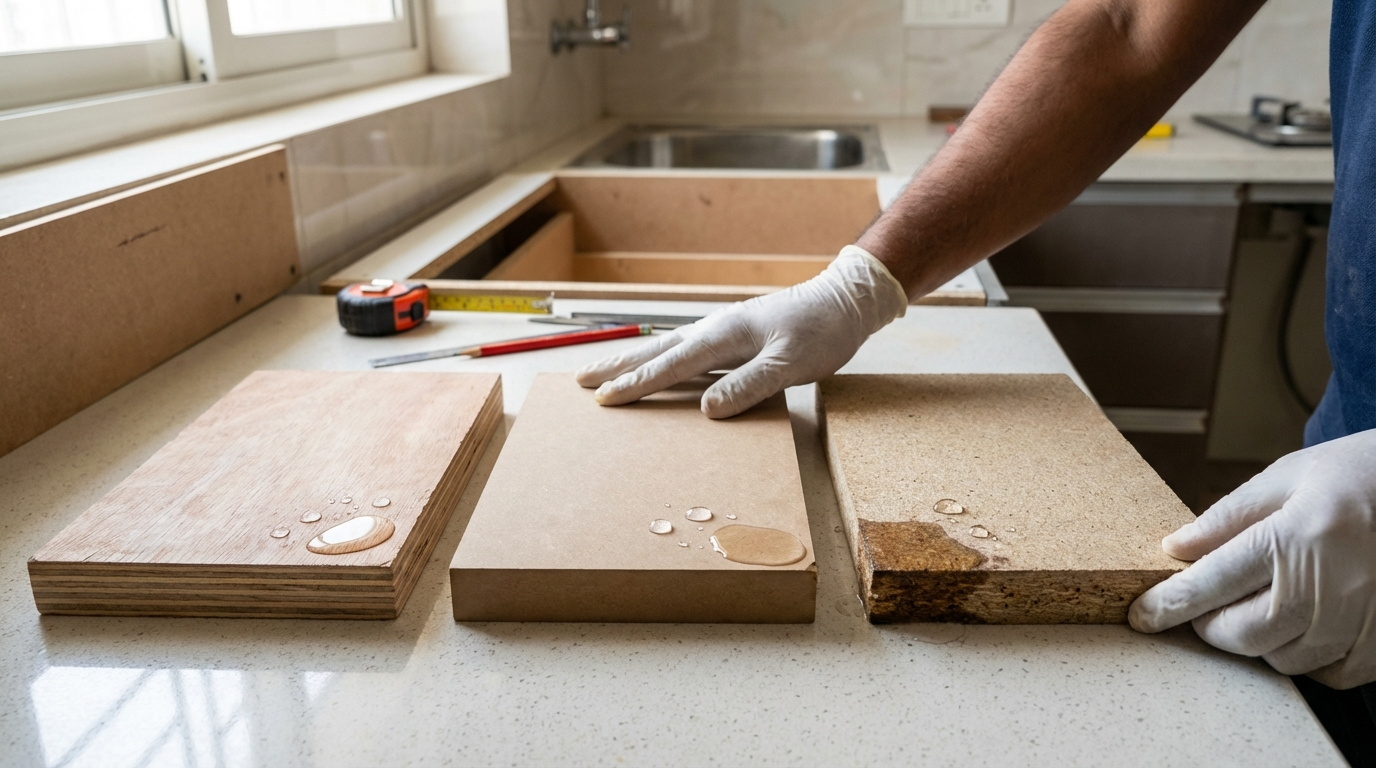
Fabric laminates are not recommended for kitchen cabinet exteriors or countertops. The textured surface traps cooking oils, grease, and food particles that become difficult to clean without damaging the texture. For kitchen applications, smooth matte or gloss finish laminates with easy-clean properties are more practical. If fabric textures are desired in kitchen spaces, limit use to tall unit shutters away from cooking zones or pantry cabinets with minimal exposure to cooking activities.
What is the standard fabric laminate sheet size in India?
The standard fabric laminate sheet size in India is 8 feet × 4 feet (2440mm × 1220mm), consistent with other decorative laminate varieties. Some manufacturers offer 10×4 feet sheets for specific applications requiring fewer joints on large surfaces. Thickness options range from 0.6mm to 1.5mm, with 1mm being most commonly specified for furniture applications. Always verify exact dimensions with suppliers as slight manufacturing variations exist between brands.
How do I clean fabric laminate surfaces without damaging the texture?
Clean fabric laminate surfaces using a soft microfiber cloth dampened with mild soap solution or diluted dishwashing liquid. Wipe in the direction of the texture pattern, not against it. Avoid abrasive scrubbers, harsh chemical cleaners, or excessive water that can penetrate texture grooves. For stubborn marks, use a soft brush with gentle circular motions. Regular dusting with dry microfiber cloths prevents accumulation in texture grooves. Never use acetone, thinner, or bleach-based cleaners on laminate surfaces.
What is the price difference between matte and gloss fabric laminates?
Most fabric laminates come in matte or silk-matte finishes rather than high-gloss options—the embossed texture naturally creates a non-reflective surface. When gloss variants exist within fabric collections, they typically command 10-15% premium over matte equivalents due to additional processing requirements. However, glossy fabric laminates are relatively uncommon; the texture's appeal lies in its soft, non-reflective character that high-gloss finishes would diminish.
How long do fabric laminates last compared to regular laminates?
Fabric laminates have comparable durability to standard HPL laminates when properly applied and maintained—typically 10-15 years under normal residential use. The textured surface may show wear patterns earlier than smooth laminates in high-contact areas where repeated touching gradually polishes raised texture portions. Durability depends heavily on substrate quality, adhesive application, and environmental conditions. In high-humidity areas without proper ventilation, any laminate type may show premature edge failure.
Can fabric laminates be applied over old laminate surfaces?
Technically possible but not recommended. Applying new laminate over existing laminate creates a thicker assembly that complicates edge finishing and hardware installation. The old laminate surface must be thoroughly sanded to create adhesion for new bonding—smooth existing surfaces don't bond reliably with contact adhesives. For renovation projects, removing old laminate and preparing fresh substrate ensures better long-term results. If overlay is unavoidable, use only the thinnest (0.6mm or 0.8mm) fabric laminate variants to minimize thickness buildup.
Disclaimer: This content is provided for general informational purposes based on industry practices and publicly available information. Product specifications, standards, prices, and availability may vary by manufacturer, region, and time. Readers should independently verify details with manufacturers, dealers, or qualified professionals before making purchase or construction decisions.Want Plywood Suggestions?
Share a few details and a Apple Ply specialist will suggest suitable brands and connect you to responsive dealers.