Container Flooring Plywood: Specifications & Buying Guide
Complete guide to container flooring plywood - specifications, grades & suppliers. Find the best plywood for shipping containers & truck floors.
Quick Answer
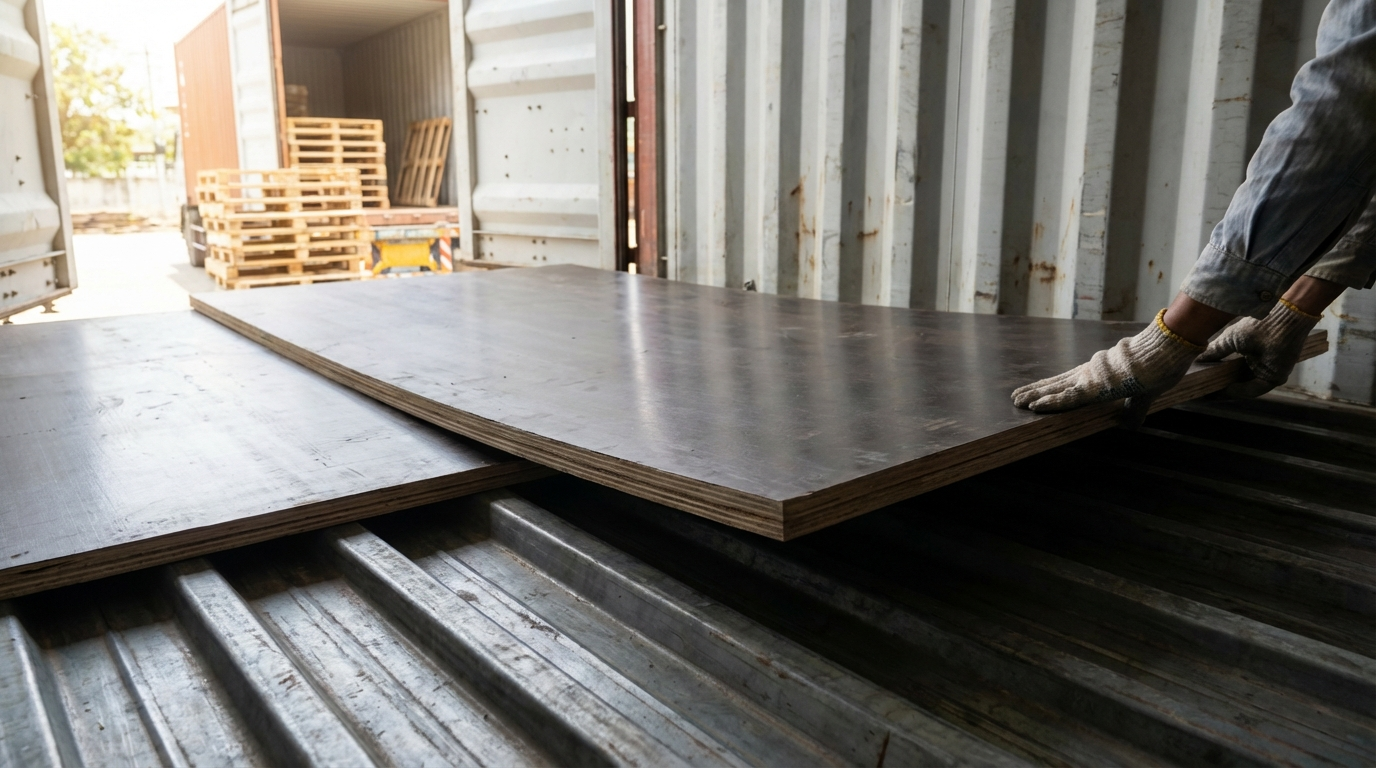
Container flooring plywood is a heavy-duty, marine-grade engineered panel specifically designed for shipping container floors and truck decks. Made from hardwood species like Keruing or Apitong with phenolic adhesive, it withstands extreme loads, moisture, and mechanical wear during cargo transport. Standard thickness is 28mm with a minimum 19-ply construction, meeting IICL TB001 specifications.
At a Glance
- Standard Thickness: 28mm (±1mm tolerance)
- Minimum Ply Count: 19 plies of hardwood veneer
- Load Capacity: Withstands forklift axle loads up to 7,260 kg
- Density Requirement: Minimum 700 kg/m³
- Price Range: ₹120–₹160 per sq ft (depending on brand and specifications)
- Primary Standard: IICL TB001 for international shipping containers
Container Flooring Plywood Explained
Container flooring plywood represents one of the most demanding applications for engineered wood products. Unlike decorative or furniture-grade plywood, this industrial-grade panel must endure constant mechanical stress from forklifts, heavy cargo loads, and exposure to varying climatic conditions during sea, rail, and road transport.
The construction relies on multiple layers of hardwood veneers bonded with phenolic resin adhesive—the same waterproof bonding technology used in marine applications. This adhesive system provides exceptional resistance to moisture infiltration, preventing the rot and decay that would compromise structural integrity during ocean shipping or monsoon exposure in Indian logistics yards.
Why Keruing and Apitong Dominate
The shipping industry has standardised on tropical hardwoods like Keruing (Dipterocarpus spp.) and Apitong for container floors due to their exceptional density and natural decay resistance. These species provide the mechanical strength needed to support concentrated loads from forklift wheels without experiencing rolling shear failure—an internal failure mode where wood fibres separate within the panel's core.
In the Indian context, most container flooring plywood is imported from Southeast Asian manufacturers, particularly Malaysia and Indonesia, where these hardwood species are commercially available. Domestic manufacturers like Apple Ply have established production facilities using similar specifications to serve the Indian shipping and logistics sector.
Critical Performance Requirements
Container flooring must pass rigorous testing beyond what standard construction plywood undergoes. The IICL (Institute of International Container Lessors) mandates short-span shear tests where panels must withstand minimum failure loads of 6,780 Newtons. Additionally, floor panels undergo cyclic boil testing to verify adhesive bond durability under extreme moisture exposure—a critical requirement given that shipping containers regularly traverse humid equatorial routes.
Types of Container and Truck Flooring Plywood
While the core product category shares similar specifications, container flooring plywood comes in several variants based on construction method, surface treatment, and intended application.
Standard Hardwood Plywood Flooring
Traditional container flooring uses 100% Keruing or Apitong veneers throughout the panel construction. This remains the industry benchmark and what most international shipping lines specify for new container construction. The uniform hardwood composition ensures consistent mechanical properties across the entire panel thickness.
Bamboo Composite Flooring
As traditional hardwood supplies have decreased globally, bamboo has emerged as an alternative material. Bamboo flooring panels use either pure bamboo mat construction or hybrid designs combining bamboo with wood veneers. The faster regeneration cycle of bamboo (3-5 years versus decades for hardwood) makes it more sustainable, though availability remains limited in the Indian market.
Metal-Reinforced Truck Flooring
For truck body applications in India, manufacturers offer plywood with metal reinforcement—steel strips embedded within the panel or applied to the surface. This hybrid construction addresses the additional impact stresses from loading and unloading operations common in Indian trucking where goods are often manually handled rather than palletised.
Coated and Treated Variants
Surface coatings significantly extend service life. Options include:
- Polyurethane coating: Provides abrasion resistance and UV protection
- Phenolic surface film (PSF): Creates a smooth, cleanable surface
- Bitumen coating: Applied to undersides for moisture barrier protection
- Anti-slip treatments: Textured surfaces for safety in wet conditions
Container Flooring Plywood Specifications Comparison
| Parameter | IICL Standard Requirement | Premium Grade | Truck Flooring Grade | Budget Grade |
|---|---|---|---|---|
| Thickness | 28mm ± 1mm | 28mm | 21-28mm | 24-26mm |
| Minimum Ply Count | 19 plies | 19-21 plies | 15-19 plies | 15 plies |
| Density | ≥700 kg/m³ | 720-750 kg/m³ | 680-700 kg/m³ | 650-680 kg/m³ |
| Moisture Content | ≤14% | 10-12% | 12-14% | 14-16% |
| Short Span Test Load | ≥6,780N (1,525 lbf) | 7,500N+ | 6,000N+ | 5,500N+ |
| Adhesive Type | Phenolic (BWP) | Phenolic Class 3 | Phenolic | Phenolic/MR |
| Expected Service Life | 12-15 years | 15+ years | 8-12 years | 5-8 years |
| Price Range (₹/sq ft) | - | ₹140-160 | ₹110-130 | ₹85-100 |
How to Choose Container Flooring Plywood
Selecting the right container flooring involves understanding your specific application requirements, load patterns, and budget constraints. The decision framework differs significantly between international shipping container manufacture, domestic truck body fabrication, and container floor replacement.
Application-Based Selection Criteria
For new shipping container construction intended for international service, IICL TB001 compliance is non-negotiable. Shipping lines and lessors require certification documentation, and panels must carry permanent identification marks showing manufacturer, date, and production batch details. Cutting corners here results in container rejection during inspection.
Domestic truck flooring applications in India offer more flexibility. While premium Keruing-based panels provide longest service life, many truck body manufacturers successfully use domestic hardwood alternatives at lower cost points. The key consideration becomes the cargo type—heavy machinery transport demands premium specifications, while lighter goods movement can work with standard grades.
Buyer's Checklist
- Verify ply count by examining panel edge—count visible layers and confirm minimum 19 for container use
- Check edge density—premium panels feel noticeably heavier and denser at edges
- Confirm phenolic adhesive by asking for BWP grade certification
- Request test certificates showing short-span shear test results
- Verify manufacturer identification marking on panel edges
- Check moisture content if possible—should not exceed 14%
- Examine surface for voids, gaps, or loose veneers in face plies
When NOT to Choose Container Flooring Plywood
This specialised product is overkill for most applications. Do not specify container flooring plywood for:
- General construction shuttering—standard shuttering ply is more economical
- Interior furniture or cabinetry—unnecessarily heavy and expensive
- Light-duty vehicle flooring like autorickshaws or tempos
- Decorative applications—the dark hardwood appearance is purely functional
- Applications requiring frequent cutting and modification—the density makes working difficult
Common Mistakes to Avoid When Buying Container Flooring
The industrial nature of container flooring plywood means buyers often lack the specialised knowledge to evaluate quality effectively. Understanding common pitfalls helps prevent costly purchasing errors.
Confusing MR Grade for BWP Grade
Perhaps the most expensive mistake involves accepting MR (moisture resistant) grade panels marketed as container flooring. While MR grade works adequately for dry interior applications, it fails catastrophically in the wet-dry cycles of shipping container service. The urea-formaldehyde adhesive in MR plywood deteriorates with moisture exposure, leading to delamination within months. Always verify phenolic (BWP) adhesive certification.
Ignoring Ply Count Verification
Some suppliers reduce ply count while maintaining panel thickness by using thicker individual veneers. A 15-ply panel may look similar to a 19-ply panel but will fail under concentrated forklift loads. The additional plies distribute stress and prevent rolling shear failure. Always count visible plies on the panel edge before purchase.
Overlooking Moisture Content
Panels shipped from high-humidity manufacturing locations or stored improperly in Indian port areas often arrive with elevated moisture content. Installing panels exceeding 14% moisture leads to dimensional changes, warping, and premature failure. For critical applications, test moisture content before installation.
Skipping Edge Sealing
Container flooring panels require edge sealing with exterior-grade varnish or equivalent coating. Unsealed edges allow moisture ingress that compromises adhesive bonds from the panel perimeter inward. Many cheaper suppliers skip this step—inspect edges before accepting delivery.
Quick Inspection Checks
- Weight test: A standard 2440x1220mm panel should weigh approximately 45-50 kg
- Tap test: Tapping should produce solid sound, not hollow or drum-like tones indicating delamination
- Edge inspection: Look for gaps, voids, or missing glue lines between plies
- Surface check: Face veneer should be single piece without joints or patches
- Marking verification: Production date and manufacturer details should be stamped on edges
Container Flooring Plywood Price Guide
Pricing for container flooring plywood in India varies significantly based on grade, source, and market conditions. Understanding the factors driving price differences helps buyers make informed decisions.
Current Market Price Ranges
| Grade/Type | Thickness | Price Range (₹/sq ft) | Price Range (₹/sheet 8x4) |
|---|---|---|---|
| IICL Certified Import | 28mm | ₹145-165 | ₹4,600-5,300 |
| Premium Domestic (Keruing) | 28mm | ₹130-150 | ₹4,200-4,800 |
| Standard Domestic | 28mm | ₹110-130 | ₹3,500-4,200 |
| Truck Flooring Grade | 21mm | ₹85-105 | ₹2,700-3,400 |
| Metal-Reinforced Truck | 21mm | ₹120-145 | ₹3,850-4,650 |
Note: Prices reflect metro city rates as of late 2024. Tier-2 and Tier-3 cities may see 5-15% variation due to transport costs. GST at 18% applies additionally.
What Drives Price Variation
Several factors create the wide price spread in this category:
Species and sourcing: Genuine Keruing from certified sustainable forests commands premium pricing. Alternative hardwood species or mixed-species panels cost less but may not meet stringent international specifications.
Certification requirements: IICL-certified panels for international container use require documented quality control, third-party testing, and traceability systems—all adding to cost. Domestic truck flooring without certification requirements costs significantly less.
Volume and relationship: Container manufacturers purchasing full container loads directly from mills get substantially better pricing than dealers buying smaller quantities. For individual truck body fabricators, dealer relationships and volume commitments affect negotiated rates.
Regional availability: Ports like Mundra, JNPT, and Chennai have better access to imported panels. Inland locations face additional transport costs that increase final pricing.
Regional Considerations for Indian Buyers
India's diverse climate and regional logistics patterns create specific considerations for container and truck flooring selection.
Coastal and High-Humidity Zones
Mumbai, Chennai, Kolkata, and other coastal regions experience sustained high humidity that challenges even premium panels. For truck bodies operating primarily in these areas, specifying additional surface treatments and ensuring proper edge sealing becomes critical. The monsoon months particularly stress container flooring through rapid humidity cycles.
Northern Plains and Temperature Extremes
Trucks operating between Delhi, Punjab, and the Northeast face extreme temperature variations—from near-freezing winter nights to 45°C+ summer days. This thermal cycling stresses adhesive bonds and accelerates any existing defects. Premium phenolic adhesive grades with verified cyclic testing become essential for these applications.
Dealer Network Realities
Unlike furniture plywood available through extensive dealer networks, container flooring remains a specialised product with limited distribution. Major availability centres include:
- Gujarat: Mundra port proximity and heavy logistics industry
- Maharashtra: JNPT and automotive industry demand
- Tamil Nadu: Chennai port and commercial vehicle manufacturing
- Kerala: Container manufacturing facilities and export industries
Buyers in other regions typically work through indent orders with longer lead times or accept higher transport costs from these hubs.
Frequently Asked Questions
What is the full form of IICL in container flooring?
IICL stands for Institute of International Container Lessors, the industry body that establishes performance standards for shipping container components including floor panels. IICL TB001 is the specific technical bulletin defining requirements for container flooring plywood, covering specifications like minimum 19-ply construction, 28mm thickness, 700 kg/m³ density, and mandatory testing protocols. Compliance with IICL standards is required for containers entering international shipping service.
Which is better for truck flooring: plywood or steel?
The choice depends on cargo type and operating conditions. Plywood offers better impact absorption, lighter weight, and easier repair—making it preferred for general cargo trucks in India. Steel flooring suits applications involving abrasive materials, frequent washing, or chemical exposure. Plywood costs less initially but requires replacement every 8-12 years, while steel lasts longer but adds significant weight. Most Indian truck body manufacturers default to plywood unless specific cargo requirements dictate otherwise.
Can container flooring plywood be used for bus flooring?
While technically suitable from a strength perspective, container flooring plywood is generally not recommended for passenger vehicle applications. The panel's heavy weight increases fuel consumption unnecessarily, and its dark hardwood appearance is unsuitable for passenger interiors. Bus manufacturers typically specify lighter marine plywood grades with appropriate surface treatments. However, for heavy-duty cargo buses or utility vehicles, container flooring specifications may be appropriate.
How to check container flooring plywood quality?
Perform these verification steps: First, count visible plies on the panel edge—minimum 19 for container grade. Second, check weight—a standard 8x4 sheet should weigh 45-50 kg. Third, tap the surface and listen for hollow sounds indicating internal delamination. Fourth, verify edge sealing and manufacturer markings. Fifth, request test certificates showing short-span shear test results meeting 6,780N minimum. For critical applications, take sample panels for independent laboratory testing.
What is the lifespan of container flooring plywood?
Quality container flooring plywood meeting IICL specifications is designed for 12-15 years of service in international shipping containers—one of the most demanding applications. Truck flooring applications typically see 8-12 years depending on cargo type, loading frequency, and maintenance. Factors reducing lifespan include moisture exposure, overloading beyond specifications, impact damage from dropped cargo, and inadequate edge protection. Regular inspection and timely replacement of damaged sections extends overall floor system life.
Is BWP grade mandatory for container flooring?
Yes, BWP (Boiling Water Proof) grade adhesive is mandatory for any flooring application involving moisture exposure. The phenolic resin adhesive used in BWP plywood maintains structural integrity even after repeated wet-dry cycles that would destroy MR grade panels. International standards like IICL TB001 specifically require Class 3 adhesive performance per EN 314-2 standards, which corresponds to BWP grade in Indian terminology. Never accept MR grade for container or truck flooring applications.
What is the standard size of container flooring plywood?
Standard container flooring panels measure 2440mm × 1220mm (approximately 8 feet × 4 feet) at 28mm thickness. However, actual container floor layouts use various cut sizes. A 40-foot container typically requires 12 panels including six long boards (2400×1160mm) and smaller pieces fitted around structural components. A 20-foot container uses 6 panels. Custom sizes are available for specific truck body dimensions—common Indian truck widths require panels cut to approximately 2100mm or 2300mm lengths.
Why is container flooring so expensive compared to regular plywood?
Container flooring costs 2-3 times more than standard construction plywood due to several factors. The minimum 19-ply construction uses significantly more veneer than typical 5-7 ply panels. Premium hardwood species like Keruing cost more than plantation timber alternatives. Phenolic adhesive is more expensive than urea-formaldehyde used in MR grades. Manufacturing requires specialised equipment for high-pressure lamination achieving 700+ kg/m³ density. Finally, quality control including mandatory testing and certification adds overhead that justified for the demanding application requirements.
Disclaimer: This content is provided for general informational purposes based on industry practices and publicly available information. Product specifications, standards, prices, and availability may vary by manufacturer, region, and time. Readers should independently verify details with manufacturers, dealers, or qualified professionals before making purchase or construction decisions.Want Plywood Suggestions?
Share a few details and a Apple Ply specialist will suggest suitable brands and connect you to responsive dealers.