BWP Grade Marine Plywood for Kitchens and Bathrooms
Why BWP grade marine plywood is ideal for kitchens and bathrooms. Learn about waterproof properties, installation & long-term benefits.
Quick Answer
BWP grade marine plywood is the ideal choice for kitchens and bathrooms because it withstands continuous water exposure without delaminating, swelling, or warping. Manufactured with phenol-formaldehyde resin and conforming to IS 710 standards, this plywood maintains structural integrity even when submerged in boiling water for extended periods—making it the gold standard for moisture-prone interiors across Indian homes.
At a Glance:
- BWP (Boiling Water Proof) plywood resists water penetration for 72+ hours without structural damage
- IS 710 certification ensures verified waterproof performance for marine and wet-area applications
- Phenol-formaldehyde bonding provides superior moisture resistance compared to MR or BWR grades
- Ideal thickness for kitchen cabinets: 18mm for carcass, 12mm for shutters
- Price range typically ₹90–160 per sq ft depending on brand tier, thickness, and city
- Essential for coastal cities, high-humidity regions, and homes without proper ventilation
BWP Grade Marine Plywood Explained: What Makes It Different
BWP grade marine plywood represents the highest waterproofing standard in the Indian plywood classification system. The term "BWP" stands for Boiling Water Proof, indicating that the plywood can withstand immersion in boiling water for extended periods—typically 72 hours or more—without the layers separating or the wood deteriorating. This exceptional water resistance comes from the manufacturing process and the specific adhesive used to bond the veneer layers.
The critical differentiator in BWP marine plywood is the phenol-formaldehyde resin used as the bonding agent. Unlike urea-formaldehyde (used in MR grade) or even standard phenolic resins (used in some BWR grades), the phenol-formaldehyde resin creates a waterproof chemical bond between veneer layers. This bond doesn't weaken when exposed to moisture, steam, or direct water contact—conditions that are unavoidable in kitchens and bathrooms.
The IS 710 Standard and Why It Matters
In India, marine plywood quality is governed by the IS 710 standard issued by the Bureau of Indian Standards. This certification isn't merely a label—it represents verified testing for boiling water resistance, glue shear strength, tensile strength, and moisture content. When you purchase IS 710 certified plywood, you're getting material that has passed standardized tests for prolonged water exposure.
However, buyers should understand that the IS 710 stamp on plywood should be physically verified. In Indian markets, particularly in Tier-2 and Tier-3 cities, non-certified plywood is sometimes marketed as "marine grade" without actual certification. Always check for the ISI mark and the IS 710 number stamped directly on the plywood sheet—not just on labels or invoices.
Core Construction and Veneer Quality
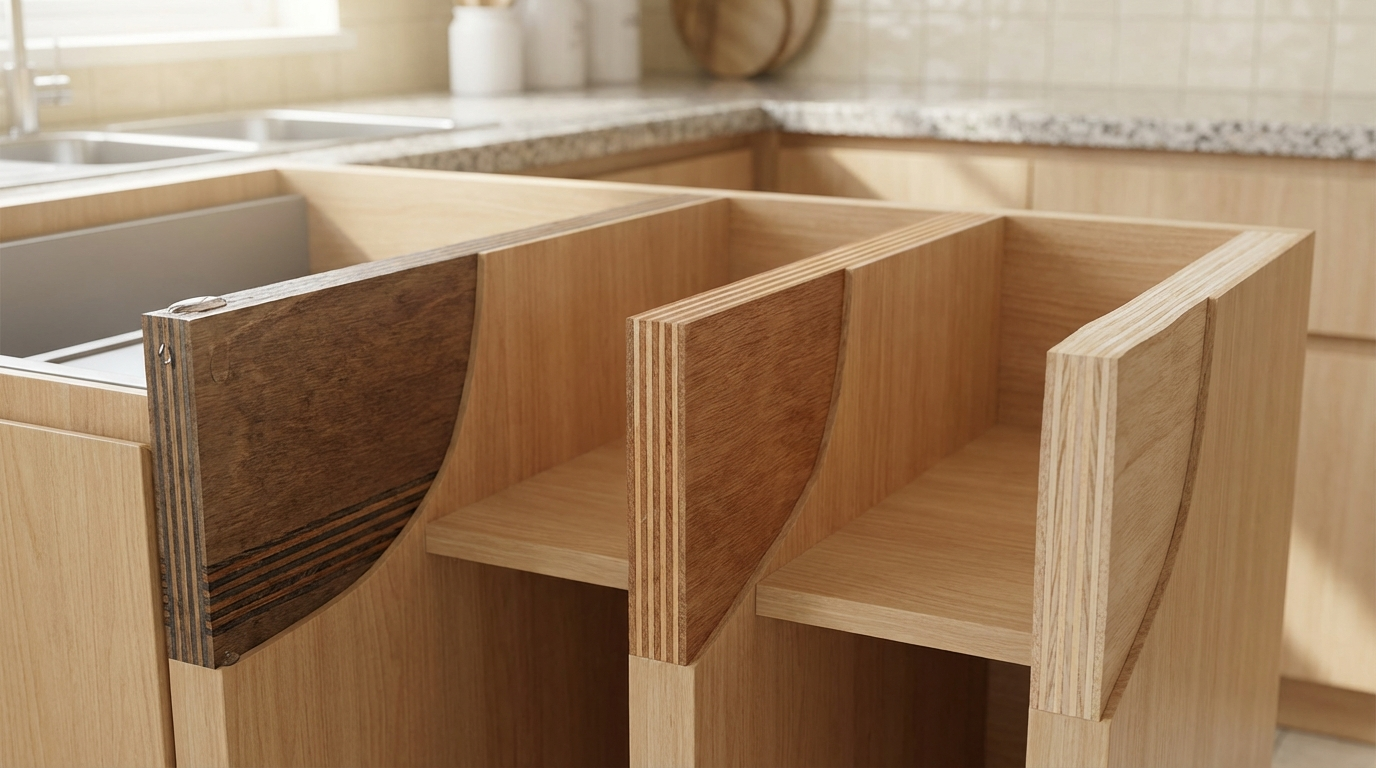
Genuine BWP marine plywood uses hardwood veneers that are void-free—meaning no gaps, knots, or patches exist within the core layers. This void-free construction ensures consistent strength across the entire sheet and prevents water from pooling in internal cavities, which would eventually cause rot even in waterproof plywood. The veneers are typically calibrated for uniform thickness, contributing to better machining quality for modular kitchen installations.
Types of Waterproof Plywood: Understanding the Grades
Before investing in plywood for wet areas, understanding the hierarchy of water-resistant grades helps buyers make informed decisions. Not all "waterproof" plywood offers the same protection level, and choosing the wrong grade for high-moisture environments leads to premature failure.
MR (Moisture Resistant) Grade Plywood
MR grade plywood uses urea-formaldehyde resin and handles atmospheric humidity reasonably well. However, it cannot withstand direct water contact or prolonged moisture exposure. This grade works for wardrobes, bedroom furniture, and dry interior applications. Using MR plywood in kitchens or bathrooms is a common mistake that leads to swelling and delamination within 2-3 years, especially during monsoon seasons or in coastal cities.
BWR (Boiling Water Resistant) Grade Plywood
BWR plywood offers moderate water resistance and can handle occasional moisture exposure. It typically withstands boiling water for up to 8 hours before showing signs of delamination. This grade suits semi-wet areas where moisture contact is intermittent—such as kitchen wall cabinets that don't directly contact water or bathroom areas with good ventilation. However, for sink cabinets, under-counter storage, or poorly ventilated bathrooms, BWR may prove inadequate.
BWP (Boiling Water Proof) Marine Grade Plywood
BWP marine plywood provides complete waterproof protection and maintains integrity even with continuous water exposure. Conforming to IS 710 standards, this grade handles the most demanding conditions—from kitchen sink cabinets to bathroom floor-mounted vanities. The phenol-formaldehyde bonding ensures that even accidental flooding or plumbing leaks don't cause immediate structural damage.
Comparison Table: Plywood Grades for Wet Areas
| Feature | MR Grade Plywood | BWR Grade Plywood | BWP Marine Plywood (IS 710) |
|---|---|---|---|
| Full Form | Moisture Resistant | Boiling Water Resistant | Boiling Water Proof |
| Adhesive Used | Urea-formaldehyde | Phenolic resin | Phenol-formaldehyde resin |
| Water Resistance Duration | 2-3 hours (humid conditions) | Up to 8 hours | 72+ hours |
| Indian Standard | IS 303 | IS 303 (BWR variant) | IS 710 |
| Price Range (₹/sq ft, 18mm) | ₹45–70 | ₹65–100 | ₹90–160 |
| Kitchen Cabinet Suitability | Not recommended | Wall cabinets only | All cabinets including sink unit |
| Bathroom Suitability | Not recommended | Vanity tops with good ventilation | All applications including floor-mounted |
| Typical Warranty Period | 5-10 years | 15-20 years | 20-25 years |
Why BWP Marine Plywood Is Essential for Kitchen Applications
Indian kitchens present unique challenges that make BWP plywood not just preferable, but often necessary. The combination of steam from cooking, water splashes near sinks, and high humidity during monsoon creates conditions where lower-grade plywood fails within a few years. Understanding these specific stressors helps justify the higher investment in marine-grade material.
Sink Cabinet and Under-Counter Storage
The area beneath kitchen sinks experiences the harshest moisture conditions in any home. Minor leaks from pipe joints, condensation from cold water pipes, and splashing during dishwashing create a continuously damp environment. BWP marine plywood handles these conditions without swelling at the edges or delaminating from the bottom. In contrast, MR or even BWR grade plywood used in sink cabinets typically shows visible damage within 18-24 months—bubbling laminate, soft spots, and separated layers.
Modular Kitchen Requirements
Modern modular kitchens rely heavily on CNC machining for precision cutting of cabinet components. BWP marine plywood's void-free core and calibrated thickness ensure clean cuts without chipping or tear-out—critical for the hinge boring, dowel holes, and handle cutouts that modular systems require. Attempting CNC work on lower-grade plywood with internal voids results in rough edges and weak joints that compromise the entire installation.
Steam and Cooking Heat Exposure
Above gas hobs and near tandoor or pressure cooker cooking areas, plywood faces steam exposure multiple times daily. BWP plywood's phenol-formaldehyde bond doesn't weaken with repeated heat-moisture cycles, whereas urea-formaldehyde bonds in MR plywood gradually deteriorate. This is particularly relevant in Indian cooking styles where extended pressure cooking and high-heat tadka preparation generate significant steam.
Bathroom Applications: Where BWP Plywood Excels
Bathrooms represent perhaps the most demanding environment for any wood-based material. The combination of high humidity, direct water contact, temperature variations, and often poor ventilation creates conditions that quickly destroy unsuitable materials. BWP marine plywood addresses these challenges effectively when properly installed.
Vanity Cabinets and Wash Basin Units
Bathroom vanities experience direct water contact daily—from hand washing, teeth brushing, and general splashing. The cabinet floor and the area around plumbing cutouts face continuous moisture exposure. BWP plywood maintains structural integrity in these conditions, while MR grade plywood typically shows swelling at sink cutout edges within the first year. For vanity applications, 18mm BWP plywood for the carcass with proper edge-banding creates a durable structure.
Shower-Adjacent Storage and Humidity Zones
Even storage units not directly in the shower zone face high humidity levels. In Indian bathrooms—particularly those without exhaust fans or windows—humidity remains elevated for hours after bathing. BWP marine plywood handles this ambient moisture without the gradual swelling that affects MR grade. For bathroom applications, ensuring all exposed edges receive proper treatment (either edge-banding or PU sealing) maximizes longevity.
Floor-Mounted vs Wall-Mounted Considerations
Floor-mounted bathroom furniture faces additional risk from floor washing and minor flooding. In Indian homes where bathroom floors are regularly washed with water, cabinet plinths made from MR plywood deteriorate rapidly. BWP plywood, combined with PVC or aluminum plinths, provides the necessary water resistance. Wall-mounted vanities, being elevated from floor-level moisture, can sometimes use BWR grade for the upper portions—though BWP remains the safer choice throughout.
How to Choose BWP Marine Plywood for Your Project
Selecting the right BWP plywood involves more than just specifying the grade. Several factors influence performance, and understanding these helps buyers avoid common pitfalls in the Indian market.
Thickness Selection Guidelines
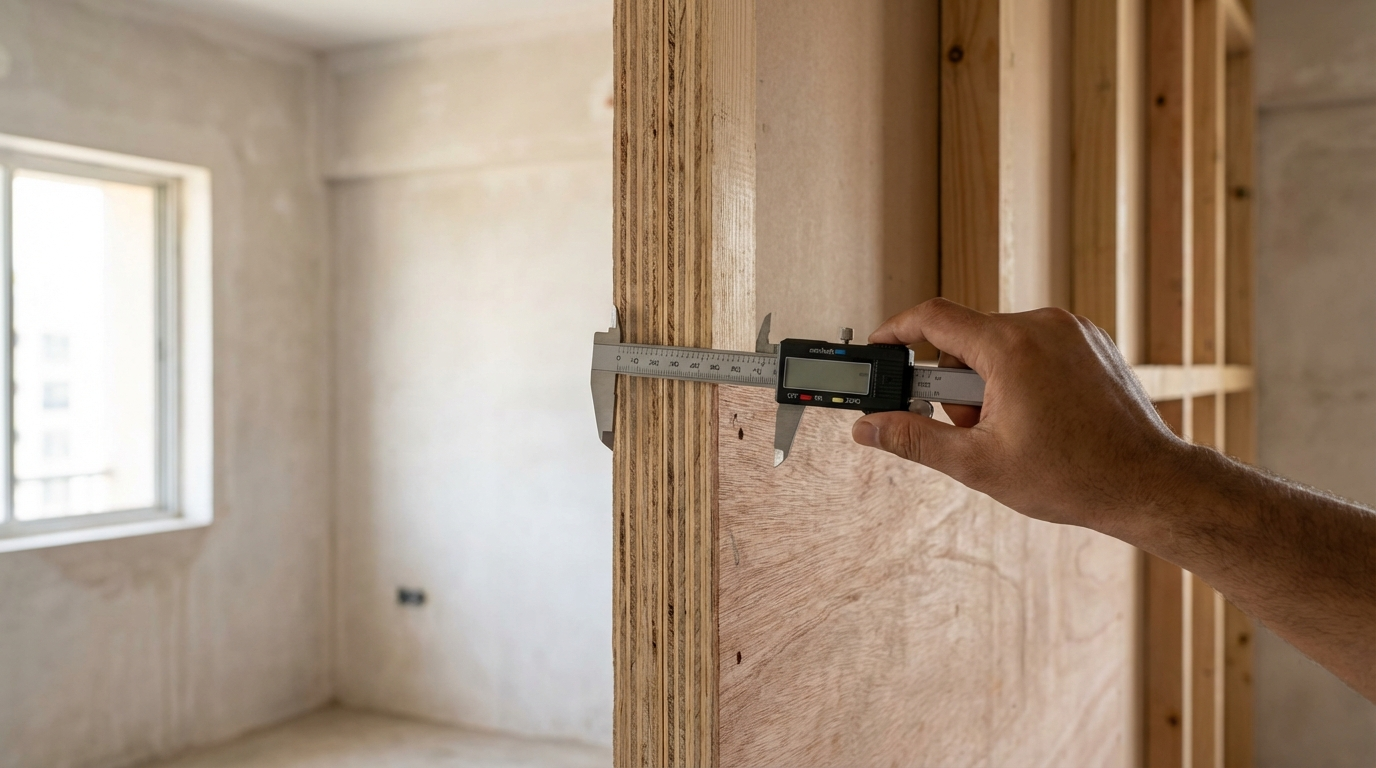
For kitchen and bathroom cabinets, the standard recommendation is 18mm BWP plywood for carcass construction and 12mm for shutter doors. However, Indian trade sizes often create confusion—what's sold as "18mm" may measure 17mm or 19mm depending on the manufacturer. Always verify actual thickness at the dealer, as modular kitchen hardware is designed for specific dimensions. Using 16mm plywood with 18mm hardware results in loose fittings and premature wear.
Brand Tier and Quality Verification
Indian plywood brands roughly fall into premium, mid-range, and economy tiers. Premium brands like Greenply, Century, and Kitply maintain more consistent IS 710 compliance and void-free cores. Economy brands may carry IS 710 stamps but show more variation in quality between batches. When purchasing from lesser-known brands, always inspect multiple sheets from the lot—checking for voids by tapping across the surface and examining edges for gaps between veneers.
Buyer Checklist for BWP Marine Plywood
- Verify IS 710 certification stamp directly on the plywood sheet, not just invoice
- Check for void-free core by tapping across the surface—hollow sounds indicate voids
- Examine all four edges for visible gaps or poor veneer bonding
- Confirm actual thickness measurement matches your hardware requirements
- Ask about termite and borer treatment—essential for coastal and humid regions
- Request the boiling water test certificate if available from the dealer
- Compare prices across dealers—significant underpricing often indicates quality compromise
When NOT to Choose BWP Marine Plywood
Despite its superior water resistance, BWP plywood isn't always the necessary choice—and understanding when to save money matters as much as knowing when to invest. For bedroom wardrobes, dry storage areas, and furniture in air-conditioned rooms with no moisture exposure, MR grade plywood works adequately and costs significantly less. Using BWP plywood throughout a home regardless of moisture exposure adds unnecessary expense. Reserve marine-grade material specifically for kitchens, bathrooms, balconies, and other areas with genuine water contact.
Common Mistakes to Avoid with Marine Plywood
Even with the right plywood grade, installation and maintenance errors can lead to premature failure. Understanding these common mistakes helps buyers work effectively with carpenters and ensure long-term performance.
Ignoring Edge Treatment
BWP plywood's waterproofing applies to the bonded surfaces, but exposed edges remain vulnerable to moisture ingress. In Indian carpentry practice, edge-banding or sealing is sometimes skipped to save time or cost—particularly on hidden edges inside cabinets. This creates entry points for moisture that can eventually affect even marine-grade plywood. Insist on complete edge treatment: PVC edge-banding for visible edges and at minimum, primer sealing for hidden edges.
Using Incompatible Hardware
Standard iron screws and hinges rust in bathroom environments, and this rust can spread to surrounding plywood, creating brown stains and weakening the material. Specify stainless steel or zinc-alloy hardware for all bathroom applications. In kitchens, at minimum use rust-resistant hardware for sink cabinet and dishwasher-adjacent units.
Poor Ventilation Allowances
Sealed cabinets without any ventilation trap moisture inside, creating conditions where even BWP plywood can develop mold. Ensure bathroom vanities have ventilation gaps or mesh-covered openings, particularly in floor-mounted units. Kitchen sink cabinets benefit from ventilated base panels or removable plinth sections.
Quick Inspection Checks
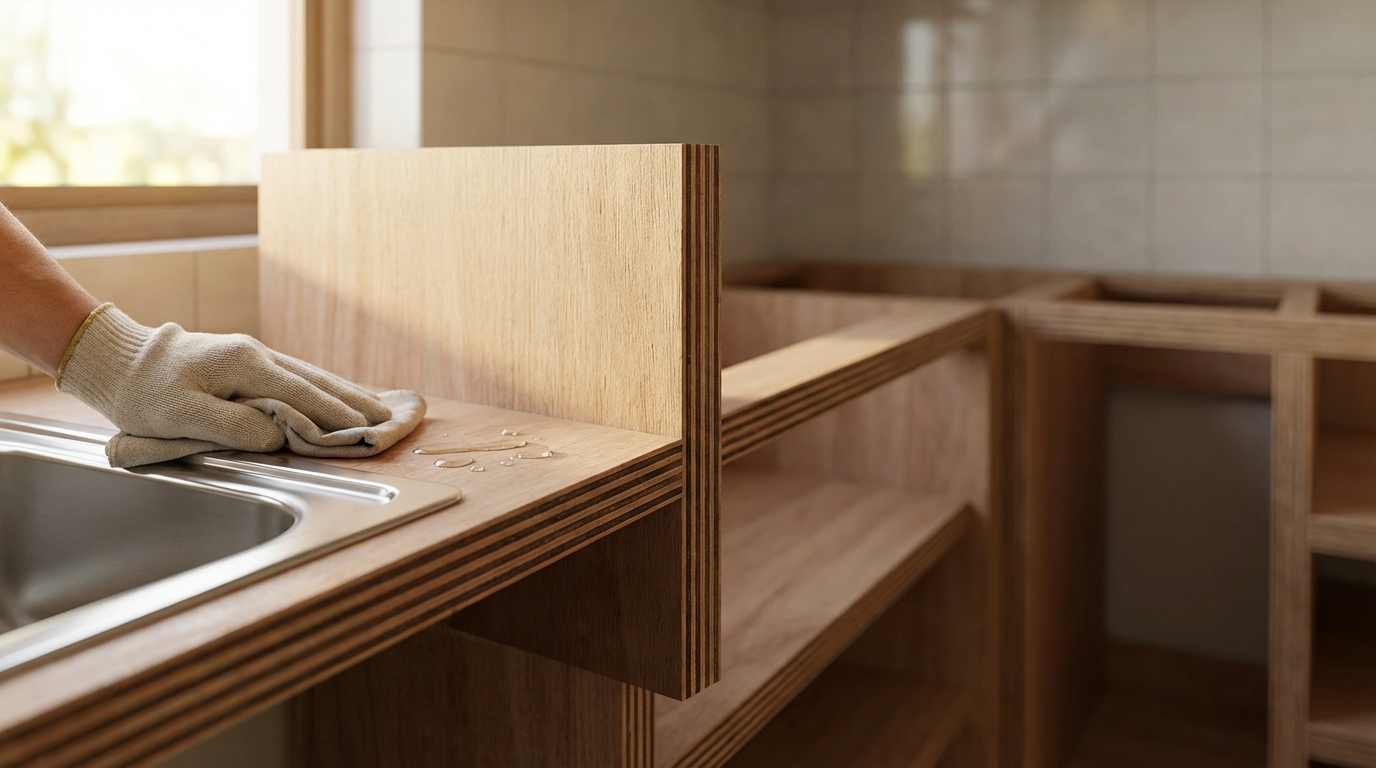
- Water drop test: Place water drops on the surface—they should bead up rather than absorb
- Edge examination: Look for any separating layers or visible gaps at sheet edges
- Weight check: Genuine marine plywood feels denser than MR grade of same thickness
- Surface tap test: Consistent solid sound across the sheet indicates void-free core
- ISI mark verification: Mark should be embossed or printed on the sheet itself
Price Guide: BWP Marine Plywood in India
BWP marine plywood pricing varies significantly based on multiple factors. Understanding these variables helps buyers budget accurately and identify suspiciously low prices that may indicate quality compromise.
Price Range by Brand Tier
| Brand Tier | 18mm (₹/sq ft) | 12mm (₹/sq ft) | Example Brands | Best For |
|---|---|---|---|---|
| Premium | ₹120–160 | ₹90–120 | Greenply, Century, Kitply | High-end modular kitchens, commercial projects |
| Mid-range | ₹95–120 | ₹70–95 | Apple Ply, National, Regional leaders | Residential projects, good quality-price balance |
| Economy | ₹75–95 | ₹55–75 | Local manufacturers, lesser-known brands | Budget projects, with careful quality verification |
Factors Affecting Price
City and Location: Prices in metro cities like Mumbai, Delhi, and Bangalore run 10-15% higher than Tier-2 cities due to higher dealer costs and transport. However, metro dealers typically stock more reliable brands. In Tier-3 cities, prices may be lower but brand availability is limited, and quality verification becomes more challenging.
Thickness and Size: Standard sheet size of 8x4 feet in 18mm thickness represents the baseline. Thicker sheets (25mm) for specialized applications cost proportionally more. Non-standard sizes may require cutting charges.
Transport and GST: Current GST on plywood is 18%, included in most dealer quotes. Transport costs add ₹5-15 per sq ft depending on distance from manufacturing hub. Projects in remote locations should factor this into budgeting.
Cost Comparison: Full Kitchen Project
For a typical 100 sq ft modular kitchen using 18mm BWP plywood for carcass, the plywood cost difference between MR and BWP grade amounts to approximately ₹4,000-6,000. Considering that a single sink cabinet replacement due to water damage costs ₹8,000-15,000 including labor and laminate, the BWP premium pays for itself if it prevents even one repair over the kitchen's lifetime.
Regional Considerations Across India
India's geographic and climatic diversity means BWP plywood performs differently—and matters more or less—depending on location. Understanding regional factors helps buyers calibrate their investment appropriately.
Coastal Cities and High-Humidity Zones
In cities like Mumbai, Chennai, Mangalore, Kochi, and Kolkata, BWP marine plywood is essentially mandatory for any wet-area application. The combination of high ambient humidity, salt-laden air, and heavy monsoon rainfall accelerates deterioration of lower-grade plywood. In these regions, even well-ventilated bathrooms maintain high humidity levels year-round, making marine-grade the only sensible choice. Additionally, termite treatment becomes critical as coastal humidity creates ideal conditions for termite activity.
Northern Plains and Dry Regions
In cities like Delhi, Jaipur, and interior northern India, humidity fluctuates seasonally. While BWP remains recommended for kitchen sink cabinets and shower-adjacent bathroom furniture, well-ventilated bathrooms with exhaust fans might adequately function with BWR grade for general storage. However, during monsoon months, even these dry regions experience elevated humidity, making BWP the safer long-term choice.
Hill Stations and Cold Regions
In places like Shimla, Darjeeling, and Ooty, lower temperatures mean less evaporation and higher retained moisture. Condensation on cold surfaces adds to moisture exposure. BWP plywood performs well in these conditions, with the additional consideration that phenol-formaldehyde bonds maintain strength in cold better than urea-formaldehyde.
Frequently Asked Questions
What is the full form of BWP plywood?
BWP stands for Boiling Water Proof, indicating plywood that can withstand prolonged immersion in boiling water without delaminating or losing structural integrity. This classification represents the highest water-resistance grade in Indian plywood standards, governed by IS 710 certification. The boiling water proof designation means the phenol-formaldehyde adhesive bonding the veneer layers remains stable even under extreme moisture and heat conditions encountered in kitchens and bathrooms.
Which is better BWP or BWR plywood for kitchen?
BWP plywood is superior for kitchen applications, particularly for sink cabinets, under-counter storage, and areas near dishwashers or water dispensers. BWR plywood offers only 8 hours of boiling water resistance compared to BWP's 72+ hours. For kitchen wall cabinets away from direct water contact, BWR may suffice, but professional installers typically recommend BWP throughout the kitchen for consistent protection. The price difference of ₹20-40 per square foot is justified by significantly better long-term performance.
Is marine plywood good for bathroom vanity?
Yes, BWP marine plywood is the recommended choice for bathroom vanities due to its exceptional water resistance. Bathroom vanities face daily water splashing, high humidity after showers, and occasional plumbing leaks. Marine plywood handles these conditions without swelling or delaminating. For optimal results, combine 18mm BWP plywood carcass with proper edge-banding on all exposed edges and stainless steel hardware to prevent rust-related damage in the humid bathroom environment.
How to check if plywood is genuine BWP grade?
Verify the IS 710 certification mark stamped directly on the plywood sheet—not just on invoices or labels. Genuine BWP plywood shows the ISI mark with licence number embossed on the surface. Physically inspect edges for tight veneer bonding without visible gaps. Perform a tap test across the surface; consistent solid sounds indicate void-free core while hollow sounds suggest internal voids. Reputable dealers can provide test certificates, and premium brands maintain more consistent quality across batches.
What is the price of BWP marine plywood in India?
BWP marine plywood typically costs ₹90-160 per square foot for 18mm thickness, depending on brand tier and city. Premium brands like Greenply and Century range ₹120-160, mid-range brands ₹95-120, and economy options ₹75-95. Prices vary by 10-15% between metros and Tier-2 cities. Standard 8x4 feet sheets in 18mm thickness cost approximately ₹2,900-5,100 per sheet. Always factor in 18% GST and potential transport charges when budgeting for projects.
Can MR plywood be used in kitchen instead of BWP?
MR plywood is not recommended for kitchen use, particularly near sinks, dishwashers, or any water source. While MR grade handles atmospheric humidity, it cannot withstand direct water contact or steam exposure common in Indian kitchens. Using MR plywood in kitchens typically results in visible swelling and delamination within 18-24 months, especially during monsoon seasons. For dry pantry storage away from cooking areas, MR might function temporarily, but BWP or at minimum BWR grade is advisable for all kitchen applications.
How long does BWP plywood last in bathroom?
Properly installed BWP marine plywood with adequate edge treatment typically lasts 15-25 years in bathroom applications. Premium brands offer warranties of 20-25 years for IS 710 certified products. Longevity depends on installation quality—proper edge-banding, ventilation allowances, and stainless steel hardware significantly extend life. In coastal humid regions, expect the lower end of this range. Poor ventilation, exposed edges, or rusting hardware can reduce lifespan to 8-12 years even with marine-grade plywood.
What thickness of BWP plywood for modular kitchen?
Standard practice recommends 18mm BWP plywood for cabinet carcass construction and 12mm for shutter doors in modular kitchens. The 18mm thickness provides adequate screw-holding capacity for hinges and drawer slides while maintaining structural rigidity. Note that actual measurements may vary between manufacturers—verify that your plywood matches hardware specifications, as modular kitchen fittings are designed for precise dimensions. Some premium installations use 19mm or 25mm for extra-heavy applications like pullout pantry units.
Disclaimer: This content is provided for general informational purposes based on industry practices and publicly available information. Product specifications, standards, prices, and availability may vary by manufacturer, region, and time. Readers should independently verify details with manufacturers, dealers, or qualified professionals before making purchase or construction decisions.Want Plywood Suggestions?
Share a few details and a Apple Ply specialist will suggest suitable brands and connect you to responsive dealers.