Block Board: What It Is, Uses, Types & Complete Buying Guide
Complete guide to block board - learn what it is, its uses, types, price range & how to choose the best blockboard for furniture & doors.
Quick Answer
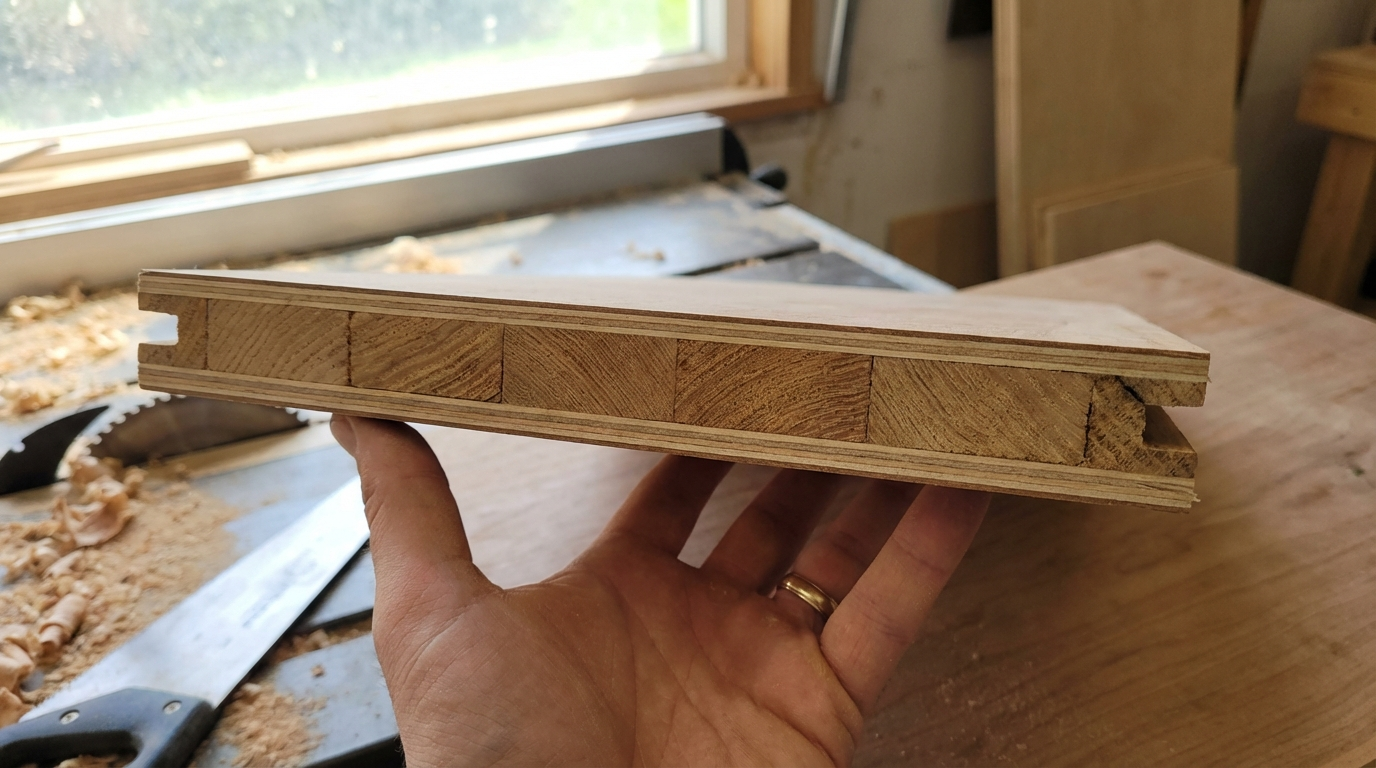
Block board is an engineered wood panel made by sandwiching softwood strips between thin veneer layers, creating a lightweight yet strong material ideal for furniture, doors, and partitions. In India, it remains the preferred choice for wardrobes, long shelving, and flush doors where plywood's weight becomes a handling issue. Block board offers excellent screw-holding strength along its length while costing 15–25% less than equivalent plywood grades.
At a Glance:
- Core made of solid softwood strips (typically pine or poplar) bonded edge-to-edge
- Available in BWP (waterproof), BWR (water-resistant), and MR (moisture-resistant) grades
- Standard thickness: 19mm (often sold as 18mm in trade), also available in 25mm
- Price range: ₹45–95 per sq ft depending on grade, brand tier, and city
- Best suited for vertical applications and long spans where sagging resistance matters
- Not recommended for curved work or heavy load-bearing horizontal surfaces
Block Board Explained: What It Is and How It Works
Block board belongs to the engineered wood family, positioned between solid timber and plywood in terms of construction logic. The manufacturing process involves arranging softwood strips—typically 25–30mm wide—edge to edge to form a solid core. This core is then sandwiched between veneer layers (usually hardwood or softwood veneers) and bonded under high temperature and pressure using phenolic or urea-formaldehyde adhesives depending on the grade.
The critical difference from plywood lies in the core structure. While plywood uses multiple thin veneers stacked with alternating grain directions, block board relies on a solid wood strip core running in one direction. This construction gives block board its characteristic properties: excellent resistance to bending along the length of the strips, but relatively weaker performance across the grain.
Why Indian Carpenters Prefer Block Board for Certain Applications
In practical Indian market terms, block board solves a specific problem that plywood cannot address efficiently—weight. A standard 8×4 feet sheet of 19mm commercial plywood weighs approximately 35–40 kg, while equivalent block board weighs 25–30 kg. This 25–30% weight reduction matters significantly when building tall wardrobes, long bookshelves, or flush doors that need daily handling.
The material also machines cleanly with standard carpentry tools, accepts screws without pre-drilling in most cases, and provides a stable substrate for laminate, veneer, or paint finishes. However, carpenters must understand the grain direction limitation—cutting and using block board against the strip direction significantly reduces structural integrity.
The Manufacturing Reality in India
Indian block board manufacturing clusters in Gujarat, Haryana, and parts of South India. Quality varies significantly based on the wood species used for the core, the adhesive grade, and the pressing technology. Premium manufacturers use kiln-dried softwood strips with consistent moisture content (8–12%), while budget producers may use partially seasoned wood that leads to future warping or internal voids.
Types of Block Board Available in the Indian Market
Block board classification in India follows two parallel systems: one based on water resistance (adhesive grade) and another based on core wood quality and veneer finish. Understanding both helps buyers match the product to their specific application.
Classification by Water Resistance Grade
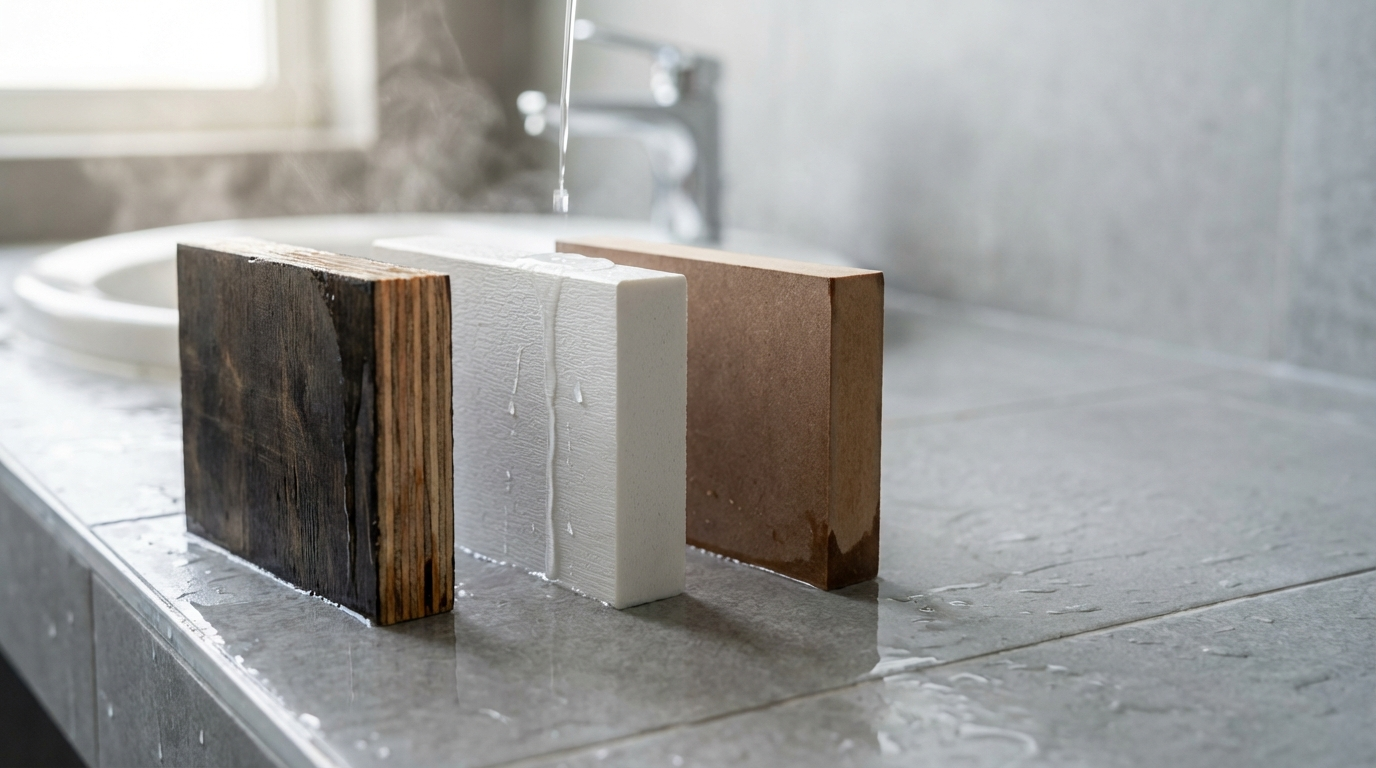
BWP (Boiling Water Proof) Block Board: Uses phenol-formaldehyde resin adhesive that can withstand prolonged moisture exposure. This grade is commonly associated with IS 1659 standards and suits kitchen cabinets, bathroom vanities, and areas with high humidity. The adhesive bond survives the boiling water test for extended periods without delamination.
BWR (Boiling Water Resistant) Block Board: A step below BWP, this grade resists moisture effectively for typical indoor applications but may show degradation under continuous water contact. Suitable for bedroom furniture, living room units, and office partitions in non-coastal areas.
MR (Moisture Resistant) Block Board: The most economical grade using urea-formaldehyde adhesive. Appropriate only for dry interior applications like false ceiling frameworks, temporary partitions, or furniture in climate-controlled environments. Not recommended for Mumbai, Chennai, Kolkata, or other coastal cities with high ambient humidity.
Specialized Block Board Variants
Marine Grade Block Board: Treated with preservatives to resist fungal and borer attack. Specifically manufactured for extreme moisture environments and outdoor-adjacent applications. Commands a 40–60% premium over standard BWP grades.
Fire-Retardant Block Board: Chemically treated to slow flame spread. Required by building codes for commercial establishments, hotels, hospitals, and public buildings. The treatment adds approximately ₹15–25 per sq ft to the base price.
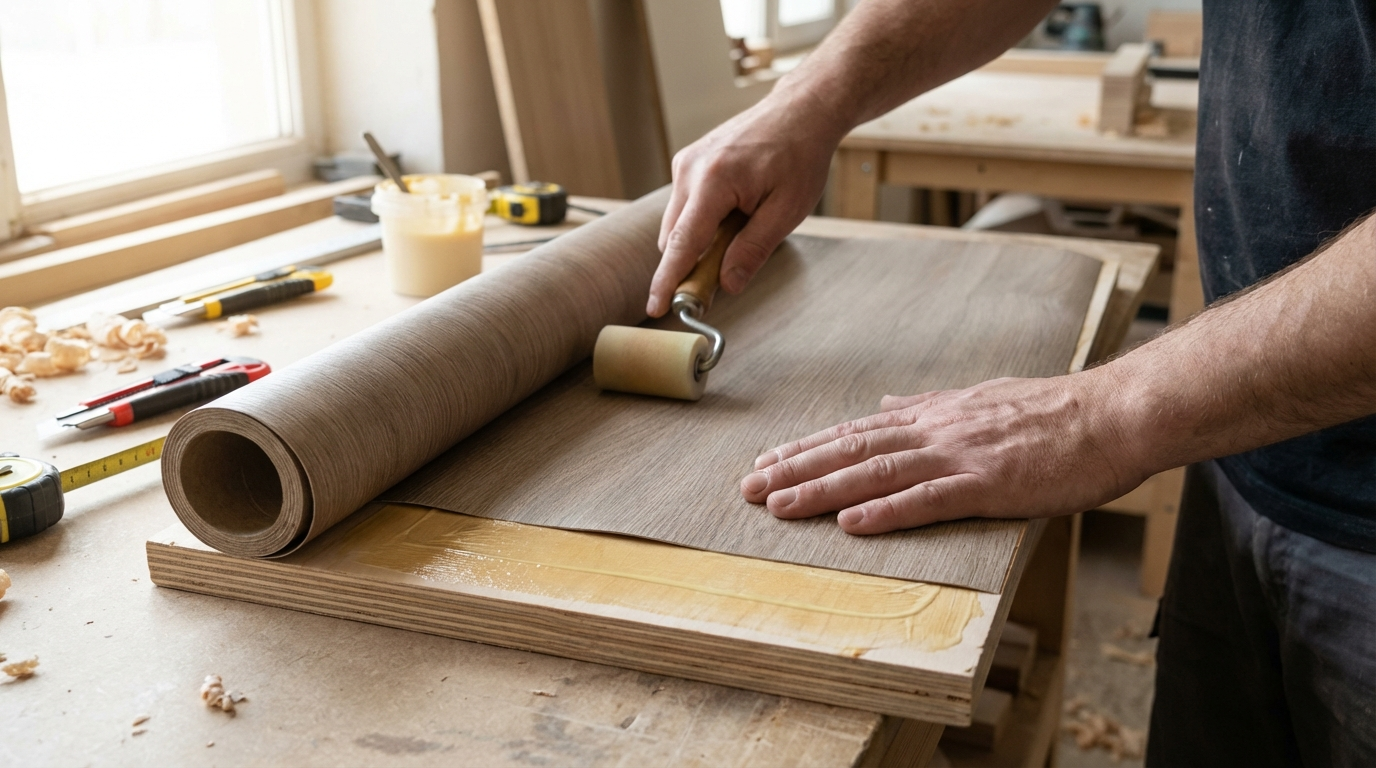
Decorative Block Board: Pre-finished with high-quality veneers (teak, oak, walnut) on one or both faces. Reduces finishing costs and time but limits design flexibility. Popular for ready-to-assemble furniture and modular systems.
Block Board vs Plywood: Which Should You Choose?
The block board versus plywood decision hinges on specific application requirements rather than one being universally superior. Both materials serve different purposes effectively, and understanding their comparative strengths prevents costly specification errors.
| Parameter | Block Board | Commercial Plywood | Winner For |
|---|---|---|---|
| Weight (19mm, 8×4 ft) | 25–30 kg | 35–40 kg | Block board for handling ease |
| Screw Holding (along grain) | Excellent | Very Good | Block board for edge screwing |
| Bending Resistance | Good along strips | Uniform all directions | Plywood for unpredictable loads |
| Price (MR grade) | ₹45–60/sq ft | ₹55–75/sq ft | Block board for budget projects |
| CNC Machining Suitability | Limited | Excellent | Plywood for modular kitchens |
| Curved Work | Not suitable | Possible with thin grades | Plywood for design flexibility |
| Long Shelf Spans (>90cm) | Superior sag resistance | May require support | Block board for bookshelves |
| Availability in Tier-2 Cities | Good | Excellent | Plywood for remote locations |
When Block Board Outperforms Plywood
Block board excels in applications requiring long unsupported spans, vertical load-bearing panels, and situations where daily handling matters. Flush doors represent the classic block board application—the material provides adequate strength, smooth surface finish, and manageable weight for door operation. Similarly, wardrobe shutters, tall bookshelf panels, and partition walls benefit from block board's properties.
When Plywood Is the Better Choice
Modern modular kitchen manufacturing almost exclusively uses plywood due to CNC routing requirements. Block board's strip core creates inconsistent cutting resistance, leading to chipping and uneven edges during precision machining. For kitchen carcasses, drawer boxes, and any application requiring dowel joinery or minifix fittings, plywood remains the appropriate specification.
How to Choose the Right Block Board for Your Project
Selecting appropriate block board requires evaluating five critical factors against your specific application. The decision framework below applies whether you're specifying material for a contractor or purchasing directly from a dealer.
Decision Framework: 5 Critical Factors
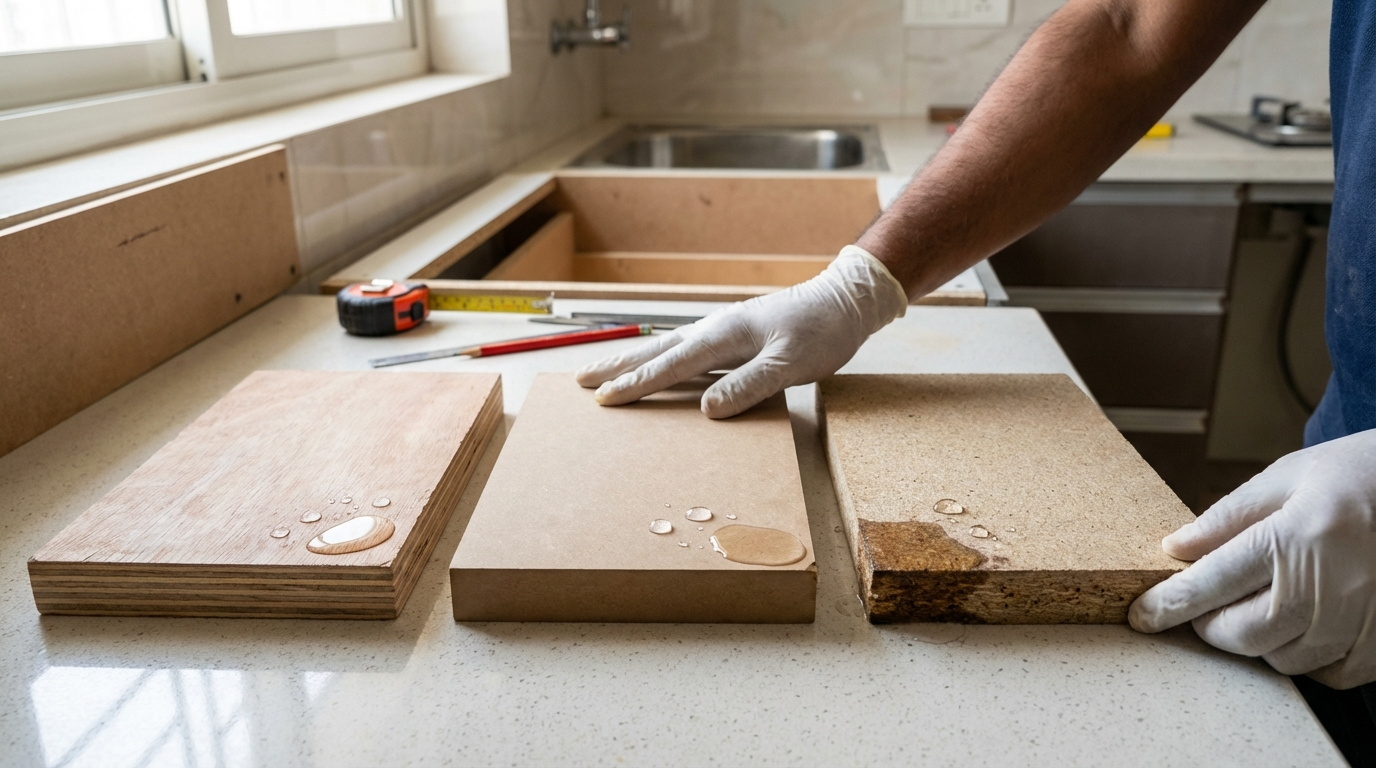
1. Moisture Exposure Assessment: Evaluate the installation environment realistically. Kitchen areas near sinks, bathroom-adjacent walls, and furniture in coastal cities require minimum BWR grade, preferably BWP. Dry interior applications in northern India can use MR grade safely.
2. Load and Span Requirements: Calculate the maximum unsupported span and expected load. Block board handles up to 120cm spans effectively for shelving with moderate loads (books, decorative items). Heavy storage requirements need either shorter spans or plywood specification.
3. Finishing Method: Your planned surface treatment affects block board selection. Veneer finishing requires clean, void-free surfaces—premium grades essential. Laminate application is more forgiving of minor surface imperfections. Paint finishing needs proper primer application regardless of block board quality.
4. Budget Constraints: Block board pricing varies 40–50% between economy and premium brands within the same grade. Determine your quality floor based on application criticality. Wardrobe carcasses can use mid-tier products; visible surfaces and doors justify premium investment.
5. Carpenter Skill Level: Block board requires understanding of grain direction for cutting and joinery. Inexperienced carpenters may waste material or create weak joints. Ensure your contractor has block board experience, or specify plywood for critical applications.
Buyer's Checklist Before Purchase
- Verify grade marking on sheets (BWP/BWR/MR stamped on the board)
- Check for physical IS standard compliance stamps where applicable
- Inspect edges for void spaces or irregular strip spacing
- Confirm thickness with vernier caliper—18mm trade size should measure 17.5–18.5mm
- Request adhesive test certificate for BWP claims
- Assess veneer quality—tight grain, no patches, uniform color
- Verify moisture content claim—reputable dealers provide readings
When NOT to Choose Block Board
Avoid block board for modular kitchen carcasses requiring CNC machining. Do not specify it for structural applications bearing continuous heavy loads. Skip block board for curved furniture components or any design requiring bending. Avoid it for outdoor applications even with marine grade—use marine plywood or treated solid wood instead. Finally, avoid block board when the budget allows only the lowest quality tier—poor block board fails faster than decent plywood.
Common Mistakes to Avoid When Buying and Using Block Board
Understanding typical failure modes helps buyers and carpenters prevent costly errors. These mistakes occur repeatedly across Indian furniture manufacturing and home construction projects.
Mistake 1: Ignoring Strip Direction During Cutting
Block board strips run along the 8-foot length. Cutting large panels across the strips for shelving creates weak sections prone to sagging. Always orient cuts to maintain strip continuity along the load-bearing direction. If uncertain, examine the board edge—strip direction is visible.
Mistake 2: Using MR Grade in Humid Environments
The price difference between MR and BWR grades is typically ₹8–15 per sq ft. This small saving creates disproportionate failure risk in Mumbai, Chennai, Kolkata, Kerala, and coastal Karnataka. Adhesive breakdown in MR grade under humidity causes delamination within 2–3 monsoon seasons. Always specify minimum BWR for these regions.
Mistake 3: Overlooking Internal Voids
Budget block boards often contain gaps between core strips due to inconsistent strip sizing or poor pressing. These voids cause surface undulation after laminate application and create weak points for hardware insertion. Tap the board surface and listen—hollow sounds indicate voids.
Mistake 4: Inadequate Edge Treatment
Exposed block board edges reveal the strip core, which absorbs moisture readily and looks unfinished. Edge banding is mandatory, not optional. PVC edge banding suits most applications; wooden lipping provides superior appearance for premium furniture. Never leave block board edges exposed, even in dry storage.
Mistake 5: Assuming Equal Performance to Plywood
Block board is not a direct plywood substitute. Using it interchangeably creates structural and finishing issues. Specify each material for its strengths—block board for doors and long shelves, plywood for carcasses and precision work.
Quick Inspection Checks at the Dealer
- Lift one corner of stacked sheets—consistent weight indicates quality uniformity
- Sight along the length from one end—warping or twisting visible immediately
- Press firmly on the surface—quality boards feel solid, not springy
- Check grade stamps—missing marks often indicate ungraded economy production
- Smell the board—strong chemical odor may indicate formaldehyde emission issues
Block Board Price Guide: What to Expect in 2026
Block board pricing in India depends on grade, brand positioning, thickness, veneer quality, and geographic location. The following ranges assume 19mm thickness, 8×4 feet sheet size, and prices in major metro markets. Tier-2 and Tier-3 cities may see 5–10% higher prices due to transport costs.
| Grade | Economy Brands (₹/sq ft) | Mid-Tier Brands (₹/sq ft) | Premium Brands (₹/sq ft) | Typical Use Case |
|---|---|---|---|---|
| MR Grade | ₹40–48 | ₹48–58 | ₹58–70 | Dry interior, false ceiling |
| BWR Grade | ₹52–62 | ₹62–75 | ₹75–88 | Wardrobes, general furniture |
| BWP Grade | ₹65–78 | ₹78–92 | ₹92–110 | Kitchen, bathroom adjacent |
| Marine Grade | ₹85–100 | ₹100–120 | ₹120–145 | High moisture, coastal areas |
| Fire-Retardant | ₹95–115 | ₹115–135 | ₹135–160 | Commercial, hospitality |
What Causes Price Variation?
Core Wood Species: Premium manufacturers use imported softwood (pine from New Zealand, Chile) with consistent density. Budget producers use local poplar or mixed species with variable quality.
Adhesive Quality: Genuine phenolic resin for BWP costs more than lower-grade alternatives. Some economy brands use intermediate adhesives while marking boards as BWP—buyer verification essential.
Veneer Quality: Face veneer thickness and species significantly impact price. Hardwood face veneers (gurjan, teak) cost more than softwood faces. Premium boards use 0.5–0.6mm veneers; economy boards may use 0.3mm.
Manufacturing Standards: Calibrated pressing, consistent thickness, and quality control add manufacturing cost. Reputable brands maintain tighter tolerances than unbranded production.
GST and Logistics: Current GST on block board is 18%. Transport from manufacturing clusters to distant markets adds ₹3–8 per sq ft depending on distance. Coastal cities with nearby manufacturing enjoy lower delivered prices.
5-Year Durability Outlook: What to Expect from Your Block Board
Block board longevity depends primarily on grade selection matching actual use conditions, proper installation, and surface finishing quality. Understanding realistic durability expectations helps set appropriate specifications.
Premium BWP Block Board in Appropriate Conditions
Properly manufactured BWP block board with quality veneers, installed in suitable environments with complete edge sealing, typically delivers 15–20 years of service life. Kitchen cabinets in well-ventilated spaces, flush doors with proper weather protection, and wardrobes in climate-controlled rooms represent ideal applications.
Mid-Tier BWR Block Board Performance
Standard BWR grade in bedroom and living room furniture shows 10–15 year durability in northern Indian climates. Coastal and high-humidity regions reduce this to 7–10 years even with good maintenance. Signs of aging include veneer lifting at edges, slight surface undulation, and hardware loosening.
MR Grade: Limited Lifespan Expectations
MR grade block board should be considered a 5–8 year material under best conditions. Use only for temporary installations, rental property furniture, or applications where replacement is planned. Monsoon exposure, even indirect, accelerates deterioration significantly.
Regional Considerations for Block Board Longevity
Coastal cities (Mumbai, Chennai, Kolkata, Kochi, Visakhapatnam) impose harsh conditions on wood products. Specify one grade higher than inland requirements—BWP where BWR would normally suffice. Interior regions with extreme temperature variation (Rajasthan, parts of MP, Vidarbha) stress adhesive bonds through expansion-contraction cycles—premium adhesives matter more than veneer quality here.
Frequently Asked Questions
What is block board made of?
Block board consists of a core made from softwood strips (typically 25–30mm wide) arranged edge-to-edge, sandwiched between thin veneer layers on both faces. The veneers are usually hardwood species like gurjan, and the entire assembly is bonded using adhesive under heat and pressure. The core strips are typically pine, poplar, or similar softwoods that provide strength while keeping weight manageable. This construction differentiates it from plywood, which uses multiple thin veneer layers throughout.
Which is better: block board or plywood for wardrobes?
For wardrobe shutters and tall panels, block board offers advantages in weight and sag resistance over long spans. For wardrobe carcasses and internal components requiring precise hardware fittings, plywood performs better due to uniform composition and superior CNC machining compatibility. The practical approach in Indian furniture making combines both—block board for doors and visible panels, plywood for the structural carcass. This optimizes both cost and performance.
Is block board good for kitchen cabinets?
Block board suits kitchen cabinet doors and shutter panels when BWP grade is specified. However, modern modular kitchen carcasses require plywood due to drilling precision needs for European hinges and minifix fittings. Kitchen environments demand waterproof adhesive grades—never use MR or BWR block board near sinks or cooking areas. Proper edge banding is essential to prevent moisture ingress. For base cabinets near floor level, marine plywood remains the safer specification.
What is the full form of BWP in block board?
BWP stands for Boiling Water Proof, indicating the adhesive grade used in manufacturing. BWP block board uses phenol-formaldehyde resin that maintains bond strength even after prolonged exposure to boiling water—the standard test involves immersing samples in boiling water for extended periods. This grade is essential for humid environments, coastal areas, and moisture-prone applications. The related grade BWR (Boiling Water Resistant) offers good moisture resistance but lower tolerance than BWP.
How to check block board quality at the shop?
Start by checking for grade stamps (BWP/BWR/MR) marked on the sheet—missing marks indicate ungraded production. Examine the edge to assess strip uniformity and spacing—irregular gaps suggest manufacturing defects. Tap the surface at multiple points; hollow sounds reveal internal voids. Sight along the length to detect warping or twisting. Check veneer quality for patches, cracks, or loose areas. Finally, verify thickness with measuring instruments—significant variation from stated size indicates quality issues.
What is the standard block board size available in India?
Standard block board sheets measure 8 feet × 4 feet (2440mm × 1220mm), matching plywood sizing for compatibility with furniture designs. Common thicknesses include 19mm (often sold as 18mm in trade terminology) and 25mm for heavy-duty applications. Some manufacturers offer 12mm and 16mm options, though structural applications typically require 19mm minimum. Custom sizes are occasionally available from larger manufacturers but command premium pricing and minimum order quantities.
Can block board be used for flush doors?
Block board is the traditional and still-preferred material for flush door manufacturing in India. Its combination of adequate strength, manageable weight, and flat surface makes it ideal for door panels. The strip core provides excellent screw-holding for hinge and lock hardware. For exterior-facing doors or bathroom applications, specify BWP grade with proper primer sealing and weather-resistant paint or laminate finish. Typical flush door construction uses 30–35mm block board core with hardwood lipping.
Block board price per square foot in India?
Block board prices in Indian metros range from ₹40–70 per sq ft for MR grade, ₹52–88 per sq ft for BWR grade, and ₹65–110 per sq ft for BWP grade, depending on brand tier. Premium brands with superior veneer and adhesive quality command the higher end. Prices in Tier-2 and Tier-3 cities run 5–10% higher due to transport costs. Always compare on grade-equivalent basis—apparent savings on economy brands often reflect lower adhesive quality rather than genuine value.
Disclaimer: This content is provided for general informational purposes based on industry practices and publicly available information. Product specifications, standards, prices, and availability may vary by manufacturer, region, and time. Readers should independently verify details with manufacturers, dealers, or qualified professionals before making purchase or construction decisions.Want Plywood Suggestions?
Share a few details and a Apple Ply specialist will suggest suitable brands and connect you to responsive dealers.