Best Plywood for Wardrobes and Cupboards
Find out which plywood is ideal for wardrobes and cupboards. We compare grades, thickness, and features so you can choose the best option.
Why Wardrobes Demand Specialized Plywood Choices
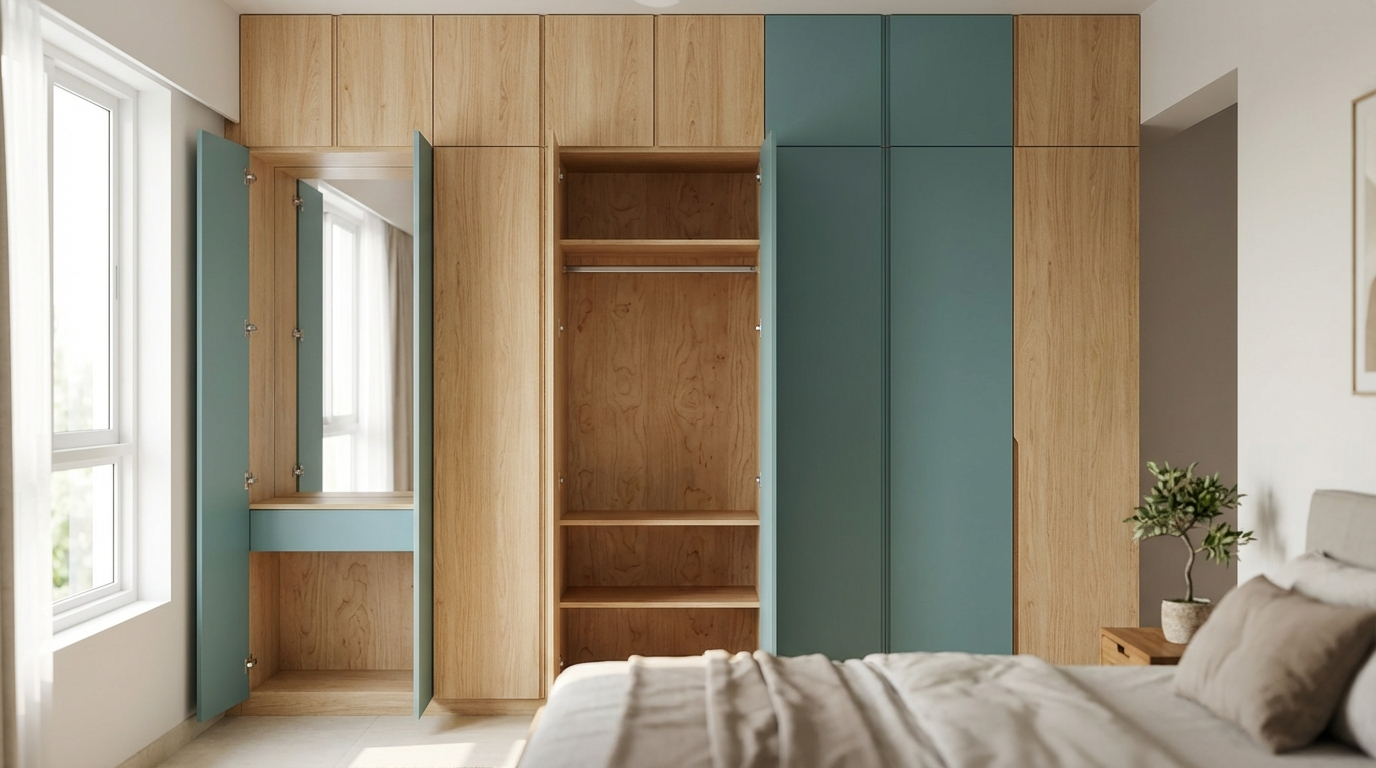
Wardrobes and cupboards bear constant weight from clothes, linens, and household items, while facing daily wear from opening, closing, and hanging. In Indian homes, where humidity fluctuates wildly—especially during monsoons—the ideal plywood resists warping, termites, and delamination. The best choice boils down to BWR (Boiling Water Resistant) grade plywood in 18mm thickness for main panels like shutters and carcasses. This combination handles loads up to 50-60 kg per shelf without sagging, stays stable in 70-90% relative humidity, and lasts 15-20 years with minimal maintenance.
Why BWR over cheaper MR grades? MR plywood, suited for low-moisture areas like bookshelves, swells and buckles under wardrobe stress, leading to misaligned doors and musty smells from trapped moisture. Commercial plywood falls short too, as its lower glue strength fails under repeated use. For Indian buyers, this matters because wardrobes often double as storage in compact urban flats, where poor plywood leads to costly replacements every 5-7 years. Opt for 18mm over 12mm for structural integrity; thinner sheets flex under heavy winter woolens or stacked bedsheets, causing visible deformation over time.
Practical insight from carpenters: In Mumbai's humid apartments, we've seen 16mm BWR hold firm where 12mm commercial failed after two monsoons. Thickness ensures screw-holding power for hinges and sliders, vital for smooth operation. Features like uniform density (above 550 kg/m³) prevent localized weak spots. This isn't guesswork—it's from observing thousands of installations where mismatched plywood turned dream wardrobes into headaches.
In South India, coastal Kerala homes amplify these needs; salt-laden air accelerates corrosion on fittings if plywood delaminates. Start your selection here: prioritize BWR 18mm as the baseline, then layer on features like termite resistance for longevity.
Breaking Down Plywood Grades for Wardrobe Durability
Plywood grades classify based on glue quality, face veneers, and core strength, directly impacting wardrobe performance. IS:303 standards guide this in India, but real-world use reveals nuances. MR (Moisture Resistant) grade uses urea-formaldehyde glue, fine for dry interiors but degrades in bathrooms-adjacent wardrobes, causing layers to separate and edges to fray.
BWR grade elevates with phenolic resins, surviving boiling water tests—perfect for wardrobes in humid bedrooms. It resists 24-hour submersion without delamination, translating to monsoon-proof stability. For premium needs, BWP (Boiling Water Proof) marine-grade offers marine plywood toughness, ideal for coastal or flood-prone areas, but overkill for standard wardrobes unless budget allows.
Core composition matters too: hardwoods like poplar or eucalyptus in BWR provide better screw grip than softwood mixes in commercial grades. Face veneers should be 1.0-1.2mm thick for paint adhesion; thinner ones chip during finishing. Density uniformity avoids "dead spots" where shelves sag unevenly.
Indian buyer scenario: In Delhi's dry winters versus Kolkata's muggy summers, BWR adapts seamlessly, while MR leads to peeling laminates. Carpenter tip: Test by pressing edges; crumbly cores signal low-grade fillers. Trade-off: BWR costs 20-30% more upfront but saves 50% on repairs long-term. Avoid imported "exotic" grades without BIS certification—they warp unpredictably in tropical climates.
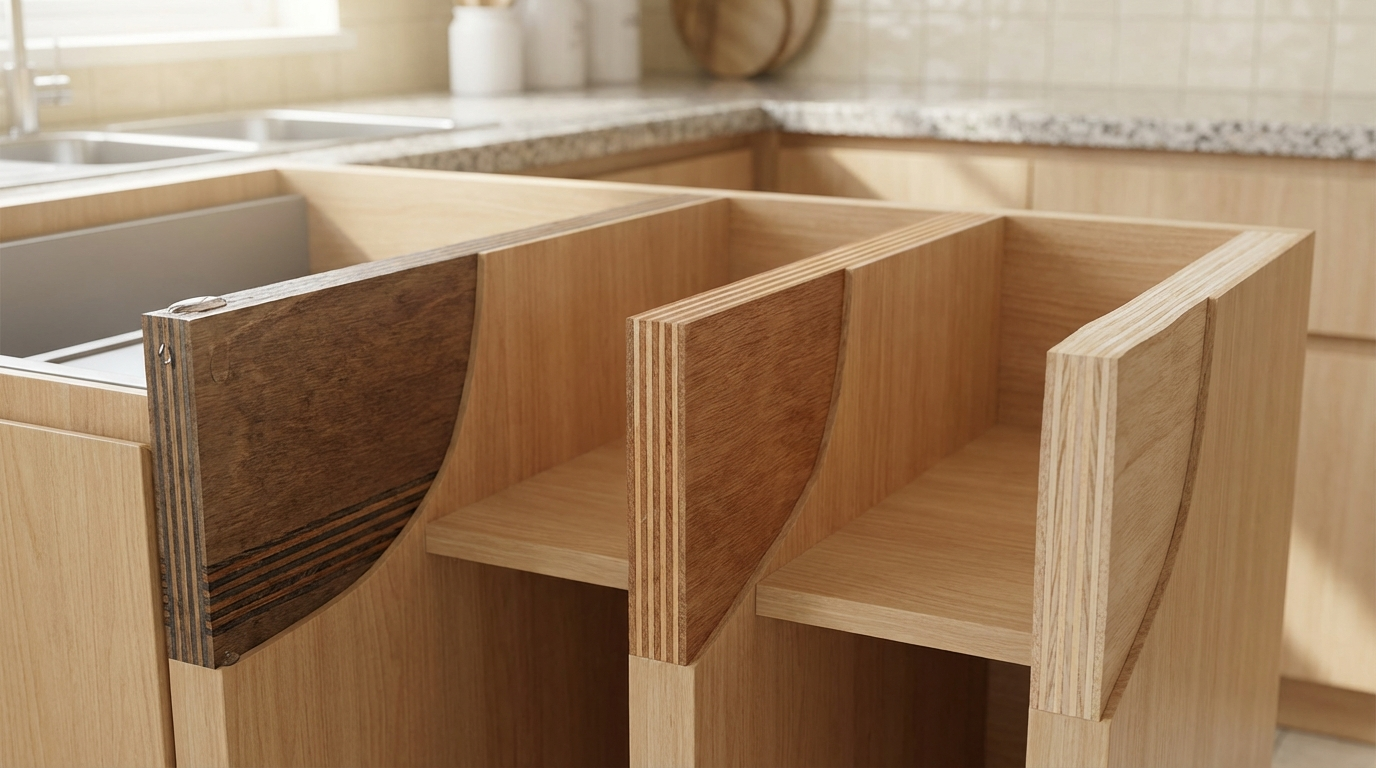
Edge banding is non-negotiable; unsealed BWR absorbs moisture sideways, mimicking MR failure. This grade breakdown empowers choices beyond dealer hype, ensuring wardrobes endure family growth and seasonal shifts.
Selecting the Right Thickness for Wardrobe Components
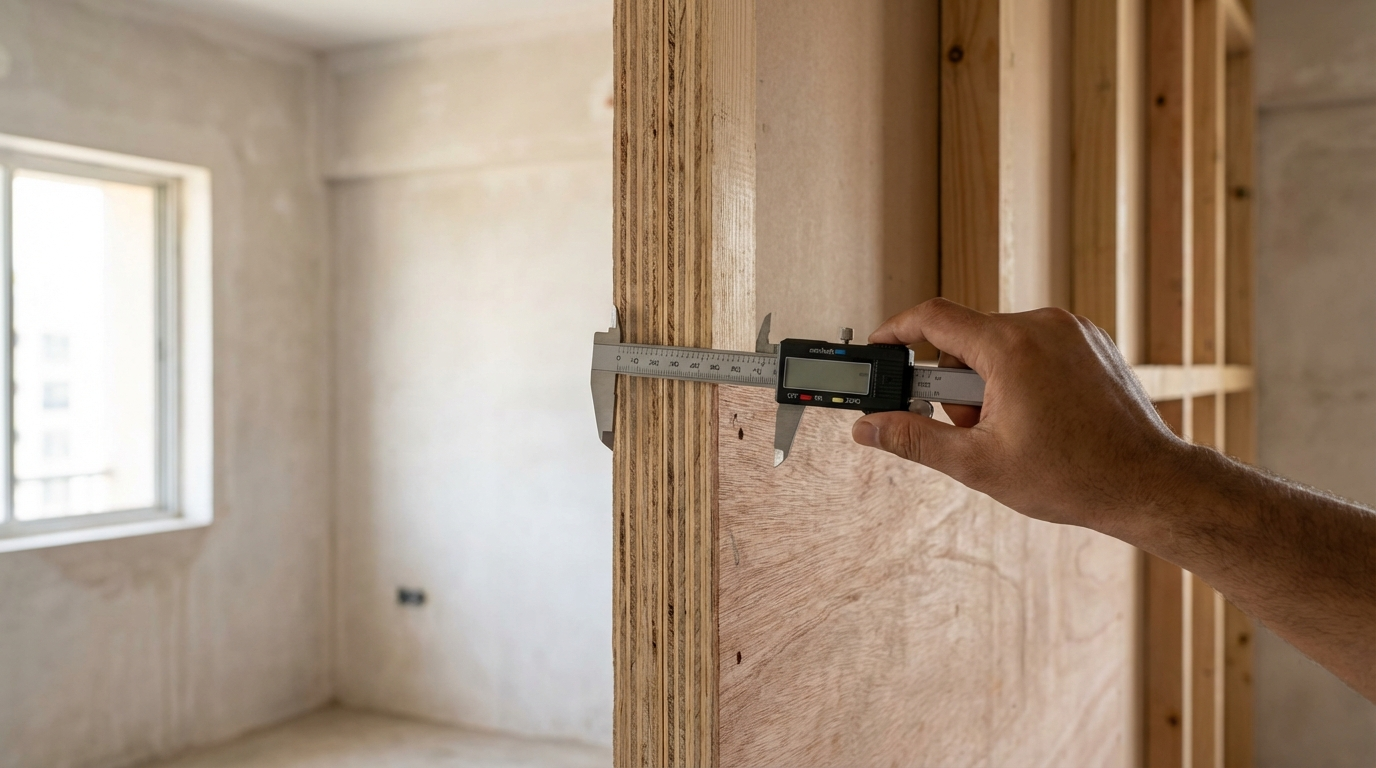
Thickness dictates load-bearing and rigidity; wardrobes aren't uniform—one-size-fits-all fails. Main carcass (sides, top, bottom) needs 18mm BWR for spans up to 900mm wide, supporting 40-50kg shelves without deflection over 2mm. Shutters demand 18mm too for slam resistance and hinge stability; 16mm warps under wind from fans or doors.
Partitions and shelves: 12-16mm suffices if backed, but standalone shelves over 600mm require 18mm to prevent bowing under quilt stacks. Back panels can drop to 3-6mm phenolic, but plywood backs (6mm BWR) add rigidity in freestanding units. Why these specs? Indian wardrobes often hold bulky saris, bedsheets, and festive wear—loads MR 12mm can't handle, leading to cracks at joints.
Modular wardrobes in Bangalore's apartments favor 18mm for CNC-cut precision; thinner sheets vibrate during machining, causing inaccuracies. Carpenter mistake: Using 12mm everywhere to cut costs—results in door misalignment after 6 months. In humid Chennai, 18mm BWR's extra mass resists expansion; thinner options swell 5-7% more.
Trade-offs: 19-25mm boosts strength for heavy-duty almirahs but increases weight (25-30kg per panel), straining sliders. Visual check: Hold a sample horizontally; no sag under fist pressure means wardrobe-ready. For kids' rooms, 16mm partitions save weight without risk. Layer thickness with grade—BWR 18mm outperforms BWP 12mm in everyday use.
South Indian insight: Monsoon-driven humidity swells thinner plywood 10-15% faster, misaligning tracks. Spec 18mm baseline for peace of mind.
Essential Features That Define Premium Wardrobe Plywood
Beyond grade and thickness, features like termite resistance, formaldehyde emission (E1/E0), and surface finish separate durable from disposable plywood. Termite-proofing via chemicals or natural borates is crucial in termite-hotspots like Tamil Nadu; untreated boards harbor infestations within 2 years, ruining clothes.
Low-emission glues minimize health risks in bedrooms—E0 levels under 0.5ppm suit kids' wardrobes. Smooth, knot-free faces ensure even laminate or paint; cross-band veneers (8-10 layers) boost screw retention by 30%. Pre-laminated options save labor but check groove compatibility for sliders.
Humidity resistance shines in India: BWR with sealed edges withstands 85% RH without cupping. Fire-retardant additives help in urban high-rises, slowing flame spread. Density over 600kg/m³ resists dents from hangers.
Real-world failure: Unsealed commercial plywood in Pune homes delaminated post-monsoon, fostering mold. Carpenter advice: Tap for solid tone—no hollow echoes. For CNC wardrobes, zero-gap tolerances matter; premium sheets cut cleanly.
Coastal edge case: Salt accelerates glue breakdown—opt for marine additives. These features compound: termite + low-formaldehyde BWR 18mm yields 20+ year lifespan, justifying premium pricing through zero callbacks.
Commercial vs. BWR vs. BWP: Trade-Offs for Indian Wardrobes
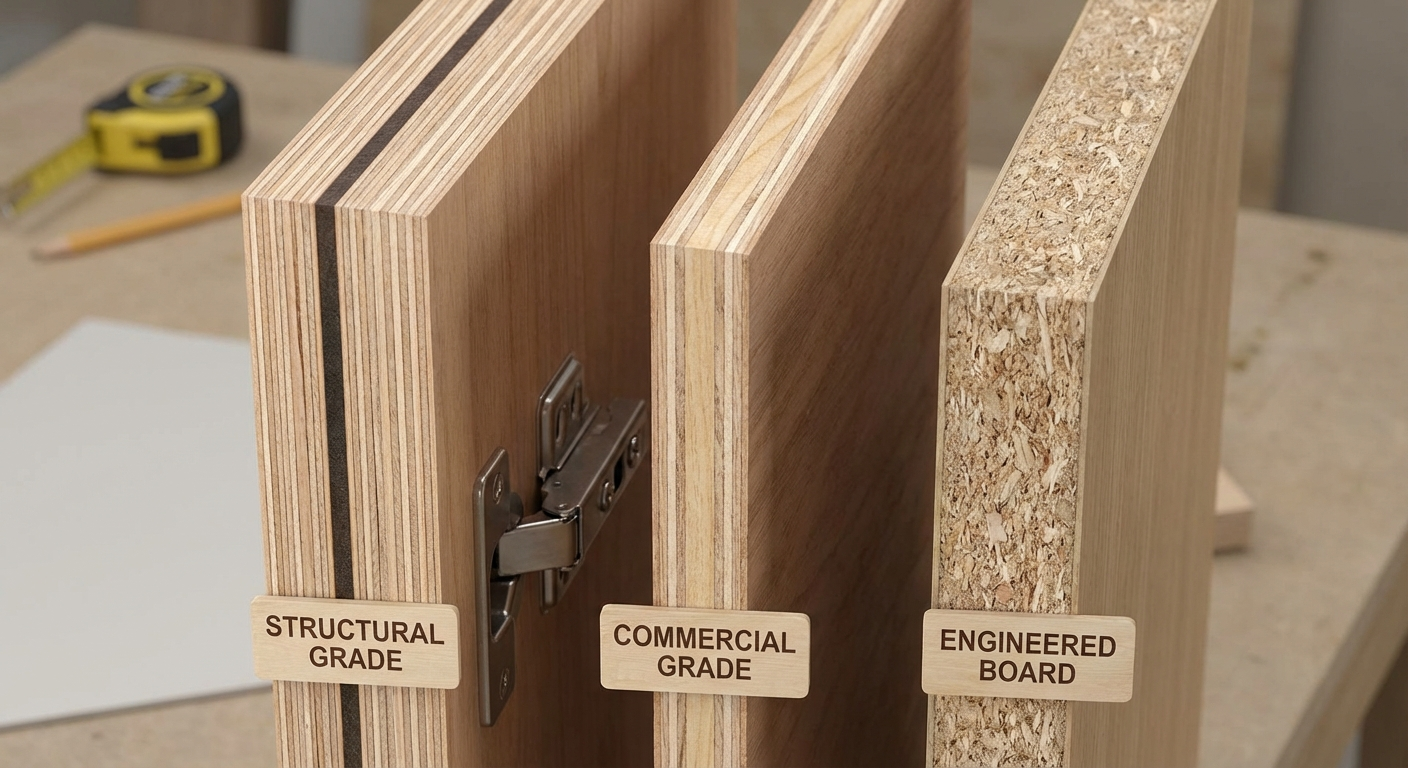
Commercial plywood tempts with low cost for basic cupboards, but its urea glue fails under moisture, ideal only for air-conditioned dry stores. BWR steps up for bedrooms, resisting boils and humidity; BWP for basements or outdoorsy wardrobes.
Trade-offs: Commercial (₹40-60/sqft) warps fast, lifetime 5-8 years. BWR (₹70-100/sqft) lasts 12-18 years, balancing cost-strength. BWP (₹120+/sqft) excels in extremes but overheats laminates. Why BWR wins? India's 60-90% RH average; commercial swells 8-10%, BWR under 2%.
Buyer mistake: Dealer-push for commercial in humid zones—leads to sagging shelves. Carpenter view: BWR glues hold screws 40% tighter. South India: BWP for Kochi flood zones; BWR elsewhere. Limitations: No plywood is "indestructible"—pair with vapor barriers.
Edge cases: Rental flats favor commercial for disposability; permanent homes demand BWR. Logical pick: Assess humidity/load—BWR covers 80% scenarios.
Common Mistakes Buyers and Carpenters Make with Wardrobe Plywood
Top error: Ignoring humidity mapping—Delhi buyers grab MR, but AC breakdowns cause failures. Solution: Default to BWR. Second: Skimping on thickness; 12mm shutters droop, jamming sliders after 1 year.
Carpenters over-drill weak cores, loosening fittings—test density first. No edge sealing lets moisture wick in, mimicking leaks. Laminating without primer peels in monsoons. Buying "discount" stocks with fillers that crumble.
Indian scenario: Festive rushes lead to unverified plywood; post-Diwali regrets abound. Dealer tricks: Mixing grades. South tip: CNC ignores thin veneers—splinters galore. Avoid by: Sample-testing, measuring moisture content under 12%.
Failure narrative: Chennai family’s Greenply MR wardrobe buckled under saris, costing ₹20k redo. Learn: Prioritize specs over sales talk.
Tailoring Plywood Choices for South Indian Homes
South India's monsoons (80-95% RH), coastal salt, and modular trends demand robust plywood. Kerala/Coastal: BWP 18mm resists corrosion; interiors BWR. Bangalore modulars: CNC-friendly BWR with precise densities.
Humidity swells softwoods—hardwood cores mandatory. Termites thrive here; treated BWR essential. Dealer buying: Verify BIS, not labels. Monsoon prep: Seal all edges twice.
Case: Hyderabad cupboard with MR delaminated; BWR survived. Trade-off: Higher upfront for zero monsoons woes. Chennai CNC: 18mm BWR cuts flawlessly for sliders.
Decision Framework: Step-by-Step Guide to Picking Wardrobe Plywood
Framework: 1. Map environment (humidity/load). 2. Baseline: BWR 18mm. 3. Add-ons (termite/fire). 4. Test samples. 5. Budget check.
| Scenario | Grade | Thickness | Key Feature | Expected Life |
|---|---|---|---|---|
| Standard Bedroom | BWR | 18mm carcass, 16mm shelves | Termite resistant | 15 years |
| Humid/Monsoon | BWR | 18mm all | Edge sealed | 18 years |
| Coastal/Modular | BWP | 18-19mm | CNC smooth | 20+ years |
| Budget Cupboard | Commercial | 16mm | Basic | 5-7 years |
Apply: Urban flat? BWR row. Expand for kids/heavy use. This matrix cuts confusion.
Frequently Asked Questions About Wardrobe Plywood
Is 18mm plywood always necessary for wardrobes?
Not always, but it's the sweet spot for most Indian homes. For spans under 600mm and light loads like summer clothes, 16mm BWR works, saving 15% cost without risk. However, family wardrobes with woolens demand 18mm to avoid sagging—thinner options bow 3-5mm under 30kg, misaligning doors. Carpenters prefer 18mm for hinge strength; test by loading samples.
Can I use MR plywood for wardrobes in air-conditioned rooms?
Short-term yes, but risky. AC hides issues until breakdowns or monsoons swell it 5-8%. BWR's resin glue prevents this, essential for reliability. In dry Rajasthan, MR suffices; elsewhere, upgrade to avoid musty odors and repairs.
How do I check plywood quality at the dealer?
Inspect edges for voids, tap for solid sound, weigh for density (heavier=better). Moisture under 12%, no knots over 5mm. Screw test: Holds without splitting. Ignore shiny faces—check core.
What's better for laminated wardrobes: pre-lam or plain plywood?
Plain BWR 18mm lets carpenters match laminates perfectly, avoiding bubbles. Pre-lam saves time but limits designs. For CNC, plain excels in precision.
Does termite treatment really last in plywood wardrobes?
Yes, with borate-infused BWR—10-15 years if sealed. Reapply barriers yearly. Untreated invites colony damage within 2 years in South India.
Should I choose Apple Ply or Greenply for wardrobes?
Both offer solid BWR lines; pick based on local dealer stock and density tests. Consistency trumps name—verify specs match IS standards.
How much does good wardrobe plywood cost per sq ft?
BWR 18mm ranges ₹70-110, factoring region/brand. Factor 20% extra for features. Long-term: Saves vs. cheap redo every 5 years.
Can plywood wardrobes handle modular kitchen adjacency?
BWR 18mm yes, with vapor gaps. Avoid MR near steam; BWP for heavy exposure.
Disclaimer: This content is provided for general informational purposes based on industry practices and publicly available information. Product specifications, standards, prices, and availability may vary by manufacturer, region, and time. Readers should independently verify details with manufacturers, dealers, or qualified professionals before making purchase or construction decisions.Want Plywood Suggestions?
Share a few details and a Apple Ply specialist will suggest suitable brands and connect you to responsive dealers.