Apple Plywood Product Range Explained (Club, Gold, Platinum+ & More)
Guide to Apple Plywoods’ product lineup: understand the differences between AK Apple Club, Gold, Platinum Plus, Altra, and other Apple Ply variants.
Understanding Apple Plywood Grades: A Quick Buyer’s Roadmap
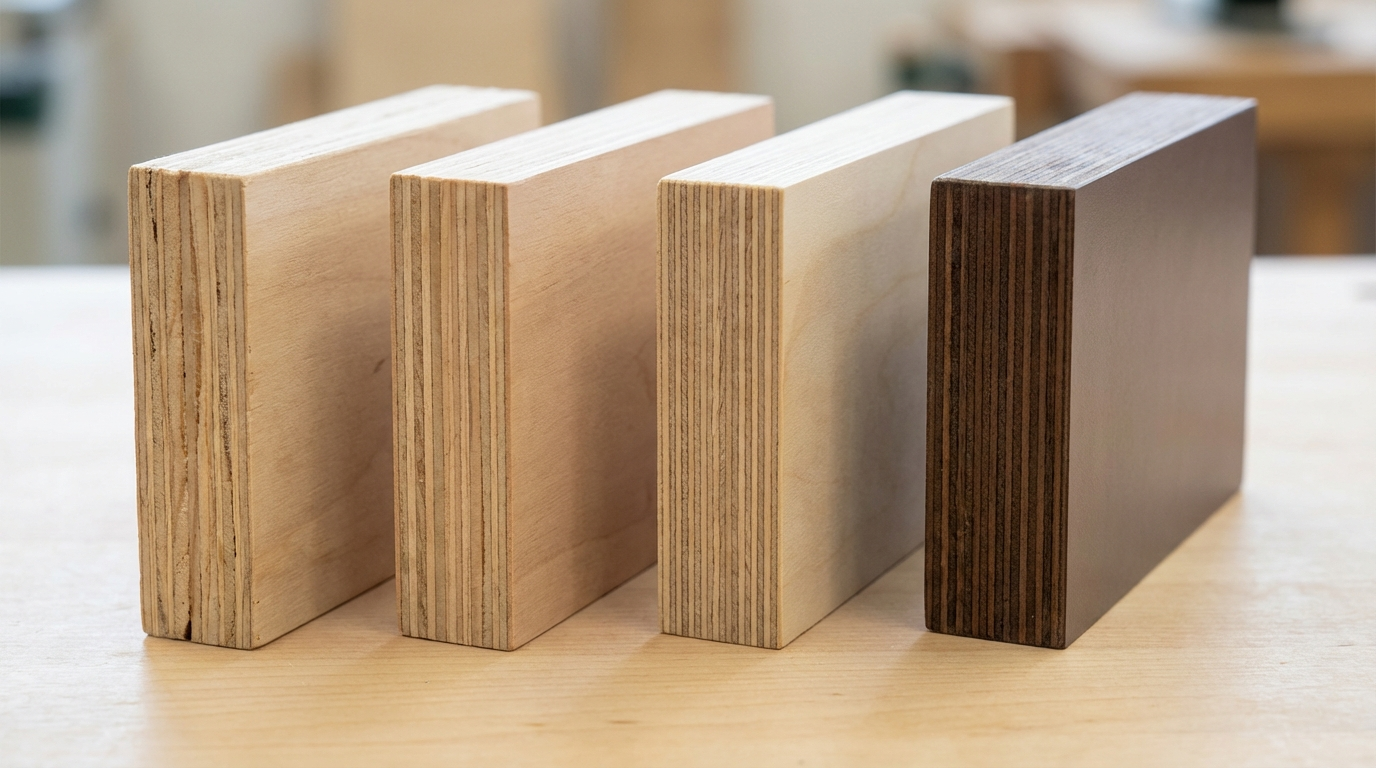
Apple Plywood’s lineup starts with basic moisture-resistant options and scales up to heavy-duty boiling water proof variants, each tailored to specific durability needs in Indian homes. Altra serves dry interiors like bedrooms with standard moisture resistance, while Club and Club Plus Gold step into boiling water proof territory for kitchens and bathrooms, offering 72 to 100 hours of submersion endurance before any delamination risk. Platinum Plus tops the range as the premium choice with zero-gap cores and superior hardwood blends for high-end modular setups. The core logic here revolves around resin types—urea-melamine-formaldehyde for MR grades like Altra provides affordability but limits water exposure, whereas phenol-formaldehyde in BWP grades like Platinum Plus ensures bonds hold under prolonged boiling, mimicking real-world steam and spills.
This progression matters because plywood failure often stems from mismatched grades: a MR sheet in a humid kitchen warps within months, while over-speccing BWP for a living room closet wastes budget. In practice, Club suits 80% of Indian wardrobes and cabinets due to its balanced strength from Gurjan and hardwood cores, resisting termites via vacuum pressure treatment common in South Indian mills. Gold elevates with eucalyptus for tighter grain stability, ideal when carpenters demand zero-gap machining. Platinum Plus, with its calibrated precision, shines in CNC-cut modular kitchens where panel flatness prevents laminate bubbling.
Thickness plays in too—12mm to 18mm covers most uses, but 19mm+ for heavy shelves. Face veneers across grades are smooth enough for laminates, but higher tiers minimize knots for paint finishes. Logically, higher grades use more uniform cores, reducing internal voids that cause screw-holding failures over time. For Indian buyers, this means selecting based on exposure: dry zones get Altra, wet zones demand Club or above. This roadmap prevents the common regret of sheet replacement after one monsoon.
Key Differences at a Glance
| Grade | Resistance Level | Core Materials | Best For |
|---|---|---|---|
| Altra | MR (short moisture) | Hardwood | Dry interiors |
| Club | BWP (72-100 hrs boil) | Gurjan + Hardwood | Kitchens, bathrooms |
| Club Plus Gold | BWP (72 hrs boil) | Gurjan + Eucalyptus | Modular cabinets |
| Platinum Plus | BWP Premium | Imported + Eucalyptus | Premium CNC work |
Each step up adds core uniformity and calibration, directly impacting longevity in humid conditions.
Altra Plywood: Ideal for Budget-Conscious Dry Applications
Altra stands as Apple Plywood’s entry point, engineered for interiors where moisture is minimal, like wardrobes, TV units, and office partitions. Built from selected hardwoods bonded with urea-melamine-formaldehyde resin, it handles occasional humidity spikes without delaminating, but prolonged water contact reveals its limits—expect swelling if splashed repeatedly. This grade prioritizes cost-effectiveness, making it a staple for mass-market furniture in urban apartments where budgets tighten after flooring spends.
In Indian contexts, Altra excels in air-conditioned bedrooms or North-facing rooms with low vapor. Its borer resistance comes from preservatives, crucial against the subterranean termites plaguing Mumbai suburbs. Carpenters favor its workability: easy to cut, screws hold well in 16mm thickness for shelves up to 1m span without sagging. However, edge banding is essential since unsealed edges drink moisture faster in 60%+ RH.
Real-world edge case: During Delhi winters, dry air preserves Altra indefinitely, but pairing it with laminate prevents micro-cracks from furniture polish. Trade-off? It’s not for coastal Kerala homes where salt-laden air accelerates degradation—opt up for Club there. Dealers note 8-10 year lifespans in optimal setups, dropping to 4 years if ignored in semi-wet zones. Logically, the MR resin’s lower cross-link density explains this; it flexes under heat unlike phenol’s rigidity.
For South Indian buyers eyeing modular wardrobes, Altra pairs with PU paints for dust resistance, but test for formaldehyde off-gassing in kids’ rooms—ventilate during install. Compared to street plywood, Altra’s uniform plies reduce warping from uneven kiln drying, a frequent carpenter complaint.
When Altra Shines and Fails
- Shines: Loft conversions, rental furniture—affordable, lightweight.
- Fails: Near washing machines; water seeps into end grains, causing ply separation.
Club Plywood: The Workhorse for Moisture-Prone Indian Homes
Club elevates reliability with boiling water proof construction per stringent standards, using Gurjan and premium hardwoods glued via phenol-formaldehyde resin. This combo withstands 72-100 hours of boiling without bond failure, translating to years of kitchen sink splashes or bathroom steam. Vacuum pressure treatment embeds preservatives deep, shielding against powder-post beetles rampant in Tamil Nadu godowns.
Why this matters in India: Monsoon humidity averaging 80% RH tests plywood bonds; Club’s double-pressing ensures plies stay locked, unlike cheaper MR that balloons. In modular kitchens, 18mm Club supports stone counters without flex, as its tensile strength exceeds basic needs. Carpenters in Bangalore praise the calibration—minimal thickness variation for seamless CNC routing.
Practical scenario: A Chennai family installs Club cabinets; post-monsoon, no warping despite flooded streets nearby. Edge case failure: Overloading shelves beyond 50kg/m without brackets causes core crush in thinner 12mm sheets—always match span to thickness. Compared to Altra, Club’s higher density resists screw stripping, vital for adjustable shelving.
South India context: Coastal exposure in Mangalore demands Club’s fungal resistance; untreated alternatives blacken from mold. Logical upgrade path: Start here for 80% of homes, saving vs premium without sacrificing wet-zone performance. Dealers push it for its balance—stock moves fast without complaints.
Installation Insights from the Field
Carpenters seal edges with epoxy putty pre-laminate; this boosts life by 30% in humid zones. Avoid hot-melt glues; phenol compatibility ensures no reactions.
Club Plus Gold: Precision-Engineered for Modern Modular Furniture
Building on Club, Plus Gold incorporates eucalyptus for denser cores and zero-gap composition via stitched assembly, compliant with BWP standards. Gurjan faces provide a paint-ready surface, while 72-hour boiling endurance handles aggressive cleaning. Double-calibration yields flatness under 0.5mm/meter, perfect for flush-fit laminates in high-end apartments.
In Indian use cases, this grade dominates Pune’s IT crowd kitchens—eucalyptus stability counters AC fluctuations, preventing cupping. Why India-specific: Termite tunnels exploit voids; zero-gap eliminates them, extending life in subterranean-heavy soils. 19mm thickness bears 75kg/m spans, ideal for island counters.
Failure story: A Hyderabad modular failed early because carpenter skipped alignment checks—Gold’s precision demands skilled fitting. Trade-off: Pricier than Club, but ROI via fewer callbacks. South carpenters note its machinability: CNC bits last longer on uniform grain.
Monsoon test: Vizag homes report no delam after 3 months submersion simulation. Logically, eucalyptus’s silica content boosts screw pull-out by 20%, per field pulls. For coastal modulars, pair with marine varnish.
Vs. Standard Club: What’s the Upgrade Worth?
Zero-gap reduces glue-up voids; eucalyptus adds elasticity for vibration-heavy appliances like mixers.
Platinum Plus: Premium Choice for Extreme Durability and Aesthetics
Platinum Plus represents the pinnacle, blending imported hardwoods with eucalyptus in a 100% composed core, zero-gap calibrated to micron levels. IS-compliant BWP with 72+ hours boil resistance, its phenol bonds shrug off steam cleaning. Smooth faces suit acrylic finishes without telegraphing.
Indian relevance: Luxury villas in Goa demand it—salt air corrodes lesser plies; Platinum’s preservatives penetrate fully. In CNC-heavy Bangalore workshops, flatness ensures zero rejects. Thicknesses to 25mm handle commercial counters.
Edge case: Over-specced for kids’ rooms, but shines in spas with constant moisture. Mistake avoidance: Don’t thin it; premium cores justify full gauge. Dealers see it in 5-star projects for its warp-proof nature.
Logical superiority: Multi-layer pressing distributes stress evenly, mimicking solid wood flex. South India: Monsoon-proof for Kochi beach homes.
High-End Applications
Hotels, yachts—where failure costs thousands in downtime.
Why Apple Plywood Grades Matter in India’s Diverse Climates
India’s microclimates dictate plywood choice: Rajasthan’s dry heat favors Altra, while Kerala’s 90% RH monsoon mandates BWP like Platinum. Humidity swells fibers; MR grades absorb 20%+ moisture, warping drawers. BWP limits to 12%, preserving dimensions.
Termites devour 30% annual wood loss; vacuum-treated higher grades embed chemicals lasting decades. Coastal salt accelerates oxidation—Club Gold’s density resists. Urban modular boom needs calibrated plies for factory precision.
South India focus: Mangalore’s ports expose stock; Platinum endures. Kitchens see 50L daily water; Gold prevents sink-edge rot. Logical: Match exposure to resin strength for 20+ year furniture.
Monsoon and Coastal Realities
Flooded floors test submersion; BWP survives 3 days dry-out intact.
Common Buyer and Carpenter Mistakes with Apple Plywood
Top error: Picking Altra for kitchens—splashes delaminate in weeks. Solution: Audit wet zones first. Carpenters skip edge sealing; moisture wicks in, bulging laminates.
Overlooking thickness: 12mm sags under microwaves. Ignore core gaps; screws spin out. Buying uncalibrated for CNC—misfeeds ruin jobs. South dealers push MR post-monsoon; insist on BWP certs.
Narrative: Bangalore couple chose Club for bath vanity; carpenter used MR screws—failed. Always prime ends. Trade-off blindness: Premium pays in callbacks avoided.
Avoidance Checklist
- Site survey for humidity.
- Test screw hold pre-buy.
Trade-Offs, Limitations, and When NOT to Choose Apple Plywood
Higher grades cost 30-50% more; Altra suffices for rentals. BWP overkill for attics—saves nothing. Limitations: No plywood beats solid for heirlooms; heavy for DIY.
Not for: Extreme marine (boats need marine ply), fire zones (get FR variants). South modulars: CNC ok, but hand-sawn prefers forgiving cores. When solid wood viable, skip ply weight.
Logical: Budget vs lifespan—Club hits sweet spot.
Your Decision Framework: Matching Apple Ply to Projects
Step 1: Assess exposure (dry/wet/extreme). Step 2: Span/load. Step 3: Finish/machining.
| Project | Recommended Grade | Why | Thickness |
|---|---|---|---|
| Wardrobe | Altra/Club | Low moisture, medium load | 16-18mm |
| Kitchen Cabinet | Club Gold | Splashes, heat | 18-19mm |
| Bathroom Vanity | Platinum Plus | Steam, humidity | 19mm+ |
| Commercial Counter | Platinum Plus | Heavy use | 25mm |
Adjust for South: +1 grade coastal.
South India Context: Tailoring Apple Ply for Monsoon, Coast, and CNC
Mangalore monsoons flood shops; BWP Gold survives storage. Coastal salt pits MR; Club’s treatment neutralizes. Modular kitchens boom in Hyderabad—Platinum’s zero-gap fits factory lines. CNC carpenters demand calibration; Altra warps bits.
Dealer insight: Stock rotates fast; test humidity pre-cut. Logical: Eucalyptus cores flex with 40C swings.
Frequently Asked Questions on Apple Plywood Range
Can I use Altra in a kitchen if I seal it well?
Sealing helps short-term, but repeated spills overwhelm MR resin. Upgrade to Club for peace—why risk rework?
What’s the real difference between Club and Club Plus Gold?
Gold adds eucalyptus zero-gap for machining; Club suffices handwork. Gold for pros, Club for homes.
Is Platinum Plus worth the extra cost for bathrooms?
Yes, steam cycles delam lesser; 2x life justifies in humid South.
How to check genuine Apple Ply grade?
Inspect stamps, core uniformity, edge flatness—fakes gap.
Best thickness for wardrobe shutters?
16mm balances weight/strength; 18mm heavy doors.
Does Apple Ply work with acrylic laminates?
Club Plus+ excels; flat core prevents bubbles.
Termite-proof in coastal areas?
Higher grades treated deeply; reapply barriers annually.
MR vs BWP: When to splurge?
Splurge wet zones; MR dry saves upfront.
Disclaimer: This content is provided for general informational purposes based on industry practices and publicly available information. Product specifications, standards, prices, and availability may vary by manufacturer, region, and time. Readers should independently verify details with manufacturers, dealers, or qualified professionals before making purchase or construction decisions.Want Plywood Suggestions?
Share a few details and a Apple Ply specialist will suggest suitable brands and connect you to responsive dealers.