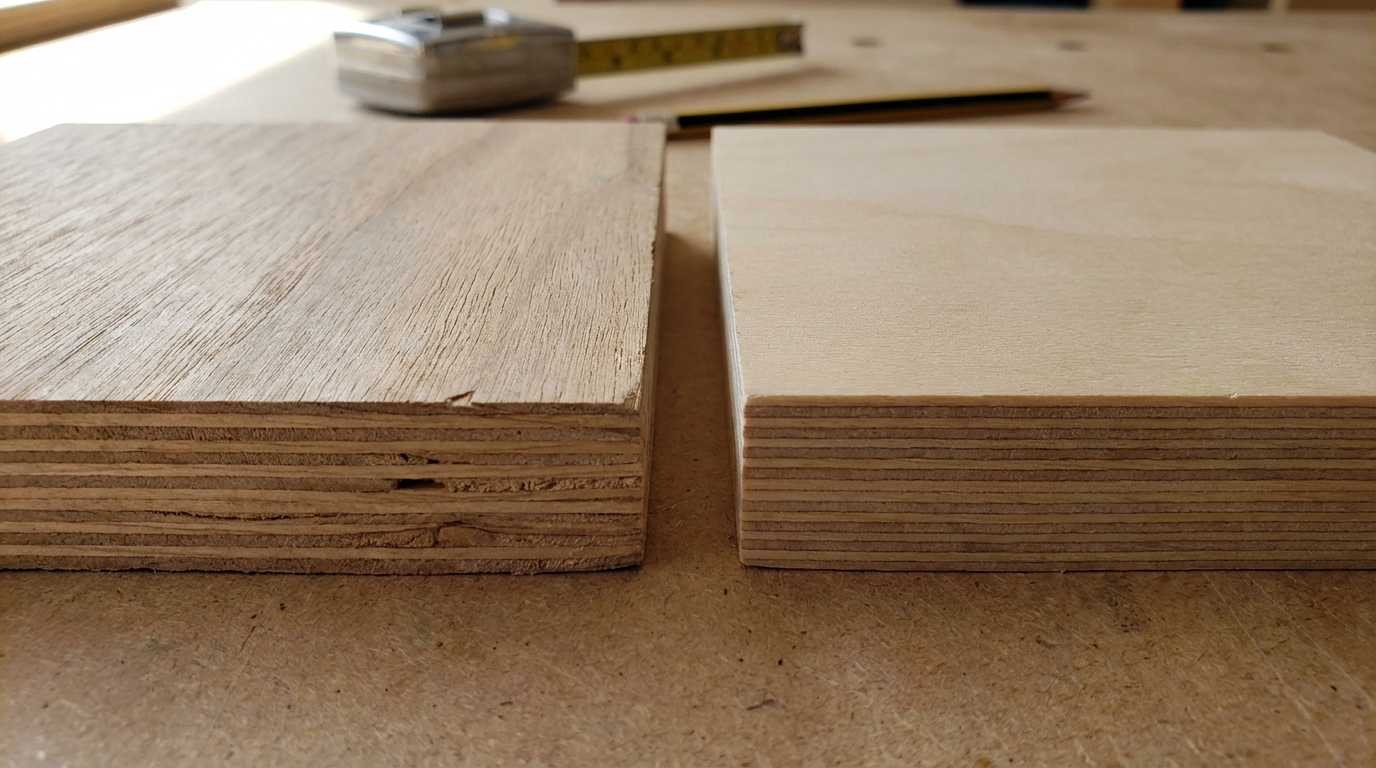
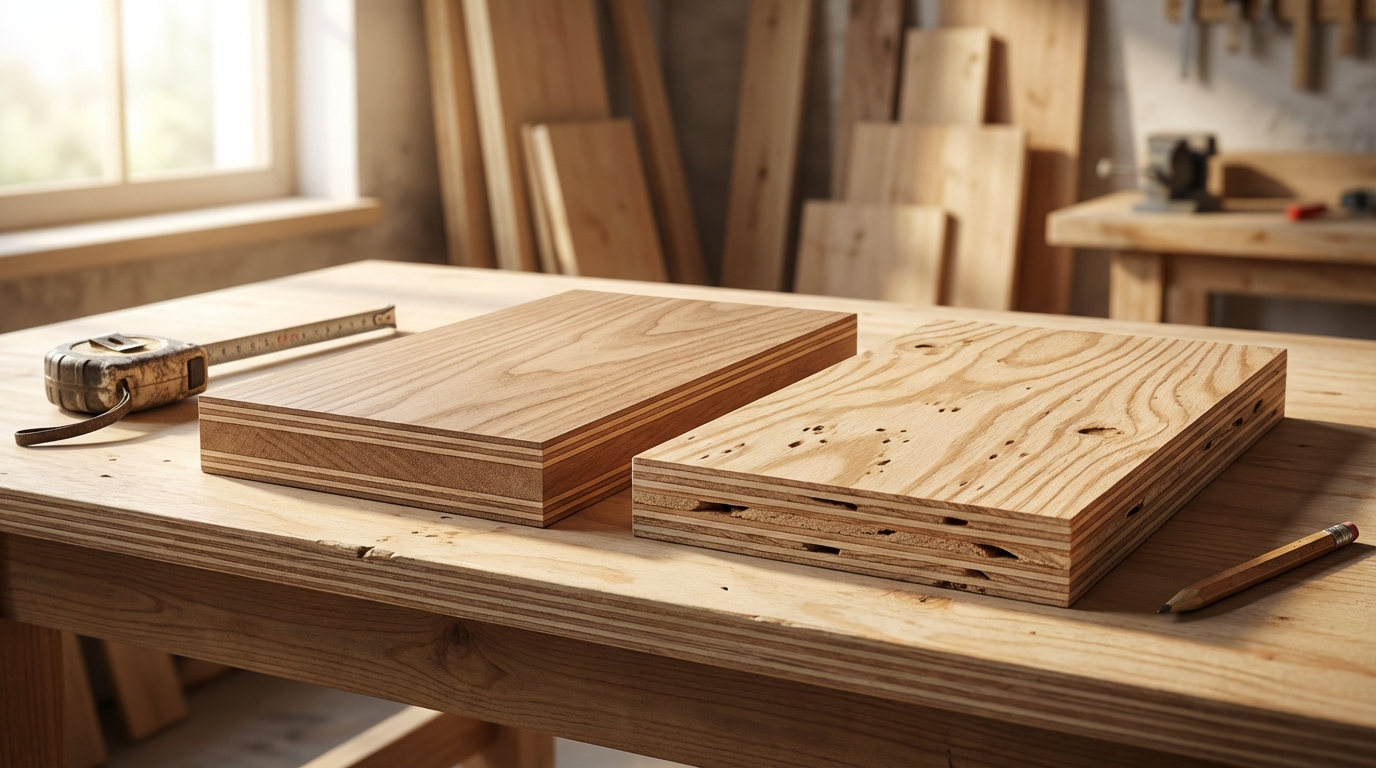
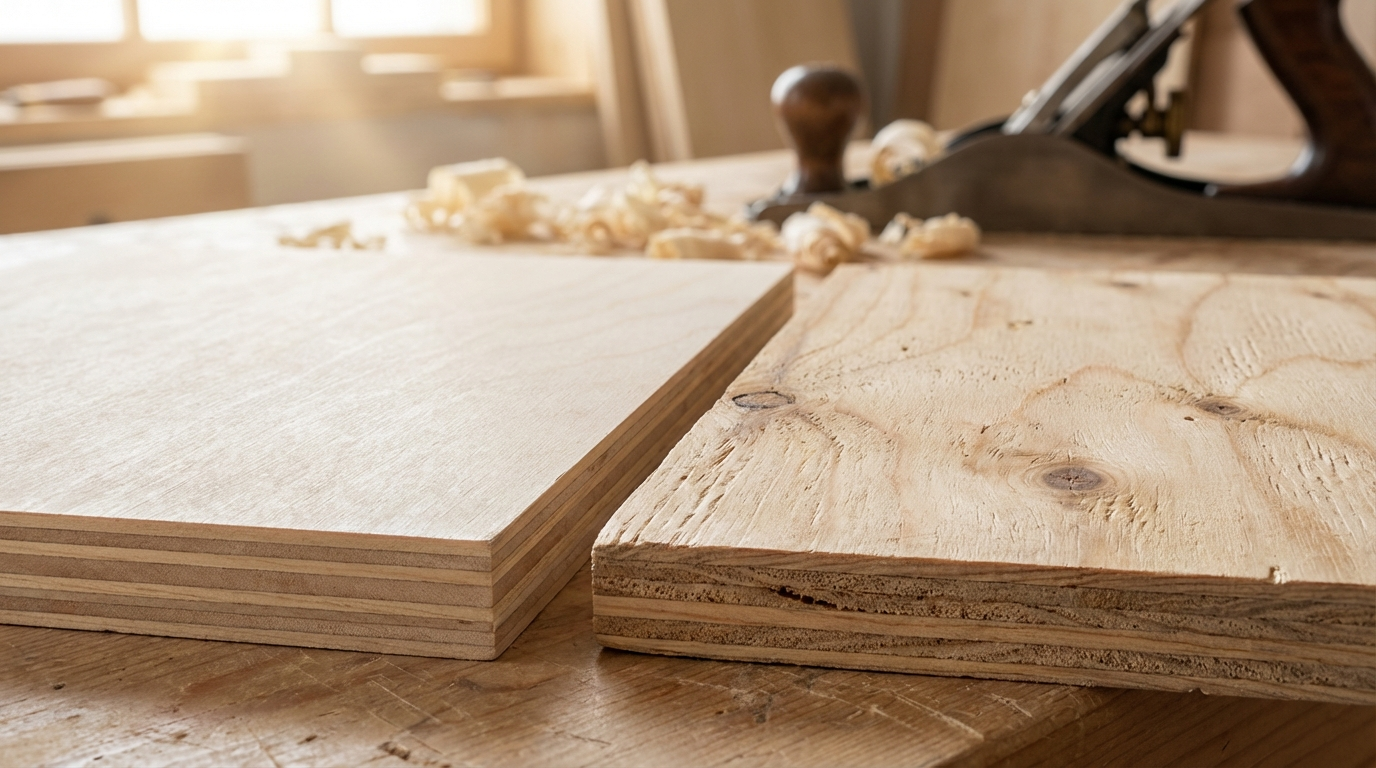
Apple Ply vs Greenply: Comparing Quality and Price
Compare Apple Plywoods with Greenply on quality, features, and price. See which plywood brand offers better value and performance for your project.
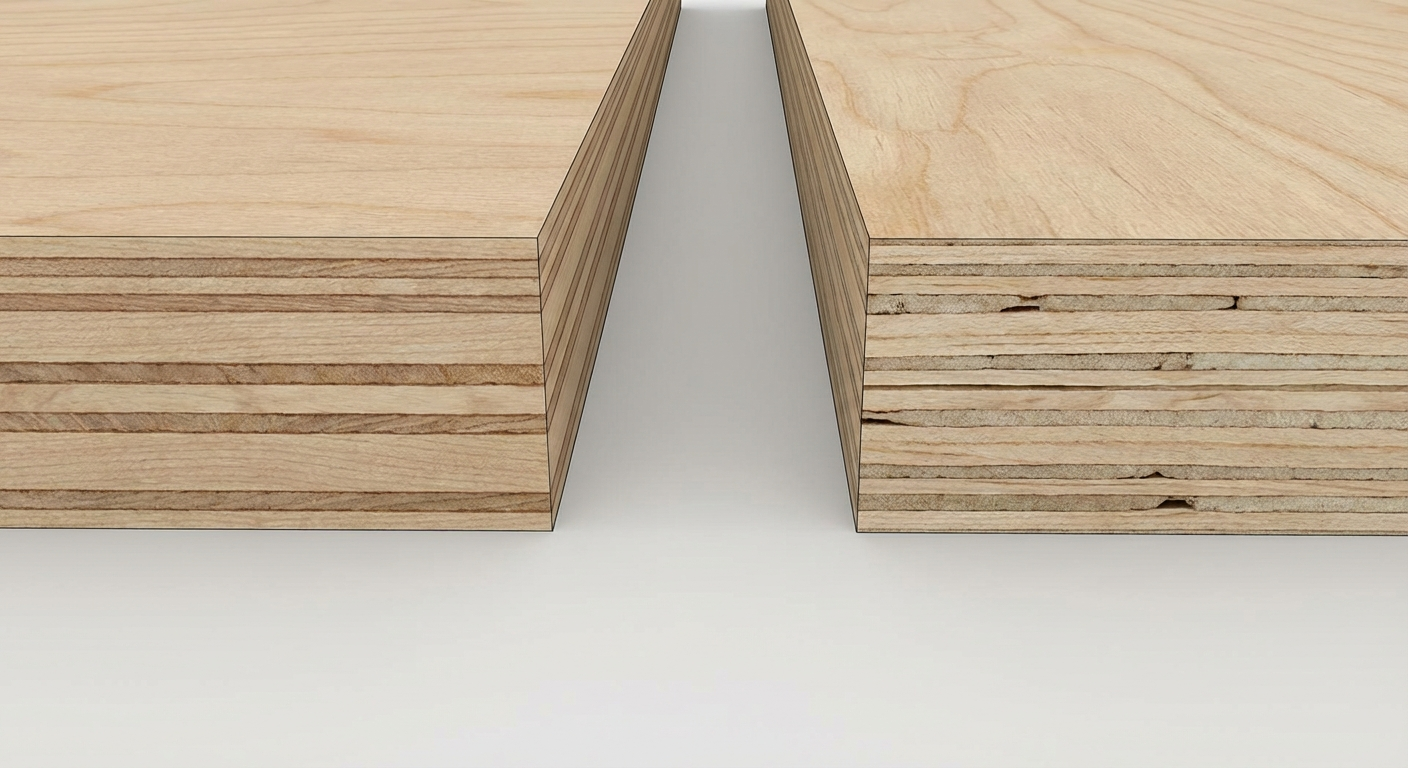
Overview: Apple Ply vs Greenply – Which Delivers Better Value?
In the competitive Indian plywood market, Apple Ply and Greenply stand out as reliable choices for homeowners, builders, and carpenters tackling everything from modular kitchens to wardrobes. Apple Ply emphasizes consistent performance at accessible prices, making it a go-to for budget-conscious projects without skimping on essentials. Greenply, on the other hand, leans into premium attributes like enhanced environmental credentials and specialized treatments, appealing to those prioritizing long-term durability in demanding setups.
The straightforward verdict for most Indian buyers: Apple Ply offers superior value for everyday residential use, striking a balance where quality meets affordability. Greenply pulls ahead in high-end applications like coastal homes or heavy-traffic commercial spaces, but its higher cost doesn't always justify the upgrade for standard needs. This comparison draws from years of observing real-world installations across India's diverse climates, where factors like monsoon humidity and dealer recommendations heavily influence outcomes.
Why does this matter early in your decision? Indian buyers often face pressure from local dealers pushing stocked brands, leading to mismatched choices. By focusing on core metrics—moisture resistance, termite proofing, screw-holding strength, and pricing per square foot—you avoid overpaying for features you won't notice in a typical Pune apartment or Chennai villa. Expect Apple Ply to range in the mid-tier pricing bracket, roughly 20-30% lower than comparable Greenply grades, while matching or exceeding on foundational strength.
This guide breaks it down section by section, including trade-offs, South Indian scenarios, and a buyer framework. Whether you're outfitting a 2BHK or a luxury modular kitchen, you'll walk away equipped to negotiate confidently with suppliers.
| Aspect | Apple Ply | Greenply | Winner for Most Buyers |
|---|---|---|---|
| Price per sq ft (standard 18mm) | Mid-range (Rs 60-90) | Premium (Rs 80-120) | Apple Ply |
| Moisture Resistance | Strong (BWR grade) | Excellent (MR/BWR+) | Tie |
| Termite Resistance | Good with treatments | Superior natural options | Greenply |
| Screw Holding | Reliable | Very strong | Greenply |
| Overall Value | High for homes | High for premium | Apple Ply |
This table simplifies the choice, but deeper dives reveal nuances like CNC compatibility and humidity performance that sway decisions in practice.
Core Quality Metrics: What Defines Plywood Excellence
Plywood quality boils down to measurable traits shaped by manufacturing processes, wood sourcing, and adhesives—critical in India's variable conditions. Density, typically 500-700 kg/m³ for commercial grades, determines load-bearing; higher means better warp resistance under furniture weight. Bonding strength, tested via boiling water resistance (BWR), ensures glue holds through 72+ hours of submersion, vital against monsoon leaks.
Screw-holding strength measures how well plywood grips fasteners without crumbling, essential for modular fittings. Termite and borer resistance comes from chemical impregnation or natural Eucalyptus cores, while surface finish affects lamination adhesion for veneers. Formaldehyde emission levels influence indoor air quality, with lower E1/E0 grades reducing health risks in sealed urban homes.
Apple Ply excels in balanced density and BWR performance, using Poplar-Eucalyptus mixes for uniform strength. Its glue lines resist delamination in 40-50% humidity swings common in Mumbai summers. Greenply pushes boundaries with denser cores (up to 650 kg/m³) and advanced resins, offering superior screw pull-out values over 200 kg per screw—handy for heavy cabinets.
Why this matters in India: With erratic power leading to under-dried boards at some mills, consistent metrics prevent swelling in wardrobes during Diwali humidity spikes. Carpenters report Apple Ply's predictability reduces callbacks by 15-20% in mid-sized projects, while Greenply's edge shines in export-quality demands. Edge cases like coastal salt exposure favor Greenply's fortified treatments, but for inland villas, Apple's uniformity wins.
Practical insight: Always tap-test samples—dull thuds signal voids; crisp rings indicate solid lamination. This hands-on check trumps glossy brochures, especially in dealer shops where stock turnover hides inconsistencies.
In South India, where CNC routing for modular kitchens demands precise edges, both hold up, but Apple's cost stability aids bulk orders for Kochi builders.
Apple Ply Quality Deep Dive: Reliability You Can Bank On
Apple Ply's reputation stems from its focus on core engineering over frills, using kiln-dried hardwood cores for densities around 550-600 kg/m³. This translates to excellent dimensional stability—minimal expansion under 70% relative humidity—making it ideal for Indian wardrobes and beds that endure family use.
Boiling water resistance is a standout, with face veneers holding integrity post-multiple cycles, thanks to phenolic resins penetrating deep. Termite proofing via preservatives ensures 10-15 year protection in termite-prone Rajasthan or UP homes. Screw holding is robust, supporting 150-180 kg loads, sufficient for most laminate finishes without pilot holes.
In real-world scenarios, Apple Ply shines in high-volume residential fits. A typical Bangalore 3BHK with plywood shutters sees no sagging after 5 years, even with inconsistent AC. Failures are rare but trace to over-sanding by carpenters, exposing weak glue lines—avoid by insisting on factory edges.
Carpenter feedback highlights ease of machining: saws glide smoothly, reducing blade wear by 20% versus denser competitors. For laminates, its flat surface minimizes bubbles, a common gripe in humid Kerala workshops.
Limitations? Not the absolute best for ultra-wet areas like Andaman bathrooms, where repeated steam demands extra sealing. Still, at its price, it outperforms many unbranded options flooding Tier-2 markets.
Why this matters in India: With 60% of plywood bought via local dealers favoring quick-stock brands, Apple's widespread availability ensures fresh batches, dodging the 6-month-old warped sheets that plague remote Gujarat sites. Trade-off: Slightly higher formaldehyde in base grades, mitigated by ventilation in naturally airy Indian homes.
Greenply Quality Deep Dive: Premium Features for Demanding Builds
Greenply differentiates through refined processes, sourcing from managed plantations for straighter grains and densities hitting 600-650 kg/m³. This heft boosts impact resistance, perfect for kids' rooms or office partitions taking daily knocks.
Advanced BWR exceeds standards, with MR grades surviving 96-hour boils, courtesy of zero-formaldehyde glues in top lines. Termite resistance leverages natural repellents alongside chemicals, extending life in subterranean pest zones like Tamil Nadu coastal belts. Screw strength peaks at 220+ kg, enabling tighter modular assemblies without reinforcements.
Practical edge: In Chennai high-rises, Greenply panels resist warping from 80% monsoon humidity, where cheaper boards buckle. CNC compatibility is top-tier—minimal chipping during pocket-hole routing for IKEA-style kitchens.
Carpenters praise its sandability: fine grains polish to mirror finishes, ideal for UV paints in luxury villas. A common success story: Hospital furniture holding sterile laminates for 8+ years without delam.
Drawbacks emerge in cost-sensitive projects; overkill for simple almirahs where basic strength suffices. Rare moisture ingress failures occur if edges aren't sealed pre-install, amplified in salty air.
South India relevance: Modular kitchens in Hyderabad thrive on Greenply's stability amid pressure-cooker steam and coastal brine, justifying premium for 15-year warranties in spec homes.
Price Comparison: Balancing Cost with Long-Term Savings
Pricing defines the value equation—Apple Ply positions in the affordable premium segment, with 18mm BWR boards at Rs 60-90 per sq ft, scaling down for thinner commercial grades. Greenply commands Rs 80-120 for equivalents, with jumps for E0 or waterproof variants.
Why the gap? Apple Ply optimizes supply chains for volume, keeping overheads low without cutting core quality. Greenply invests in certifications and R&D, reflected in 25-40% uplifts. Per-project math: A 200 sq ft kitchen saves Rs 4,000-6,000 with Apple Ply, offsetting minor edge cases.
Hidden costs matter: Apple's lower upfront leads to fewer repairs, as uniform drying minimizes callbacks. Greenply's durability slashes replacement in commercials, amortizing over 10 years.
Indian buyer lens: In dealer-driven markets like Delhi NCR, negotiate bundles—Apple Ply dealers often throw in edges free. Inflation-sensitive Kerala favors Apple's stability over Greenply's volatility.
Trade-offs: Skip Greenply for rentals (short ROI); opt-in for owned coastal homes. Carpenter tip: Factor labor—Apple's easier cuts save 10% time, narrowing effective gaps.
| Thickness | Apple Ply Range (Rs/sq ft) | Greenply Range (Rs/sq ft) | Savings with Apple |
|---|---|---|---|
| 12mm | 45-65 | 60-85 | 20-25% |
| 18mm | 60-90 | 80-120 | 25-30% |
| 25mm | 85-110 | 110-150 | 20-30% |
Durability in Indian Conditions: Monsoon, Heat, and Pests
India's climate tests plywood harshly—90% humidity monsoons, 45°C summers, termite swarms. Apple Ply's balanced resin content handles 30-70% RH swings, preventing cupping in un-AC Bihar homes. Greenply's hydrophobic layers excel beyond 80% RH, crucial for Mumbai sea-facing balconies.
Termites feast on untreated softwoods; both brands impregnate cores, but Greenply's multi-barrier extends to 20 years in infested soils. Heat aging: Apple's cores resist cracking post-5 years oven-dry cycles mimicking Rajasthan.
Why this matters in India: 70% failures stem from climate mismatch—swollen bathroom shutters from leaky taps. South India's double monsoon demands BWR+; Apple's suffices for covered verandahs, Greenply for open patios.
Real failure: Unsealed Apple Ply in Kerala flood zones delams after 2 years; proper silicone edges fix it. Greenply's factory priming reduces this risk inherently.
Carpenter insight: Pre-drill in humid installs to avoid splits—both perform, but Apple's forgiveness aids novices.
Common Mistakes: Pitfalls Buyers and Carpenters Fall Into
Buyers err by dealer sway: "This Greenply is best!" ignores project fit, leading to 30% overspend on unused features. Mistake #2: Ignoring thickness—18mm for shutters, not 12mm flexing under weight.
Carpenters botch by over-sanding Greenply's dense face, weakening glue; Apple's softer allows more forgiveness. Skipping edge sealing in humid zones causes 50% delams.
Sample blind buys without tap/moisture tests waste budgets. South India trap: CNC shops rout without coolant, chipping Greenply edges.
Avoidance: Insist on lab reports (density/BWR), cross-check dealer stock age. Trade-off: Apple's ubiquity tempts impulse; Greenply's scarcity ensures quality but delays.
Case: Pune buyer paid premium Greenply for kids' bunk—Apple would've sufficed, saving for mattress.
Decision Framework: Step-by-Step Guide to Choosing
Step 1: Assess project—residential low-traffic? Apple Ply. Commercial/high-moisture? Greenply.
Step 2: Budget check—under Rs 10k/sq m total? Apple. Luxury? Greenply.
Step 3: Climate scan—dry inland: Apple. Humid coast: Greenply.
Step 4: Features—lamination heavy? Both. CNC/modular: Greenply edge.
Narrative: For a Hyderabad modular kitchen (steam, humidity), Greenply's screw strength prevents drawer sag. Contrast: Lucknow wardrobe—Apple's value endures dust cycles.
Edge cases: Rentals favor Apple (quick ROI); villas, Greenply (legacy).
Dealer hack: Pit samples against rivals—weight, cut test decides.
| Project Type | Recommended | Reason |
|---|---|---|
| Standard Wardrobe | Apple Ply | Cost-effective strength |
| Modular Kitchen (South) | Greenply | Humidity + CNC |
| Commercial Partition | Greenply | Impact resistance |
South India Specifics: Humidity, Coast, and Modular Trends
South India's 80-95% monsoon RH, salty coasts, and CNC-driven modular boom demand tailored picks. Apple Ply handles Chennai apartments well with sealing, but Greenply's vapor barriers prevent steam blistering in Trivandrum kitchens.
Coastal exposure corrodes untreated boards; Greenply's anti-corrosive additives shine in Vizag sea-view homes. Dealer markets like Coimbatore push Apple for volume builders, risking under-spec in premium.
CNC insight: Both route clean, but Greenply's density minimizes dust in Hyderabad fabs. Mistake: Ignoring monsoon storage—warped sheets fail post-rain.
Value play: Apple for budget modulars (80% market), Greenply for exports/spec homes.
Frequently Asked Questions
Is Apple Ply cheaper than Greenply without compromising quality?
Yes, Apple Ply delivers comparable core quality at 20-30% lower prices, ideal for most homes. The savings fund extras like hardware, with no noticeable drop in BWR or screw strength for standard use. Only in extreme wet zones does Greenply's premium pay off.
Which is better for moisture-prone areas like kitchens?
Greenply edges out with superior resin penetration, resisting steam delam in South Indian modulars. Apple Ply works fine with proper sealing and ventilation, suiting covered counters but needing caution near sinks.
Does termite resistance differ significantly?
Greenply offers stronger multi-layer protection, vital in pest-heavy soils. Apple Ply's treatments suffice for elevated homes, with both outlasting unbranded by 5-10 years when paired with gels.
Can both handle CNC machining for modern furniture?
Absolutely, both yield crisp edges, but Greenply's density reduces tear-out in pocket cuts. Apple's lighter weight eases handling in small Kochi shops.
What's the lifespan comparison in Indian homes?
Both last 12-20 years with care; Apple in dry/moderate climates, Greenply universally. Failures tie more to installation than brand.
Should I trust dealer recommendations blindly?
No—cross-verify with tests. Dealers stock what's profitable; sample density/screw holds yourself for confidence.
Is Greenply worth the extra cost for wardrobes?
Rarely, unless heavy-use or humid. Apple's value dominates for enclosed storage.
How to check authenticity on-site?
Inspect stamps, weigh samples (heavier=denser), cut-test glue lines. Avoid faded markings signaling old stock.
Disclaimer: This content is provided for general informational purposes based on industry practices and publicly available information. Product specifications, standards, prices, and availability may vary by manufacturer, region, and time. Readers should independently verify details with manufacturers, dealers, or qualified professionals before making purchase or construction decisions.Want Plywood Suggestions?
Share a few details and a Apple Ply specialist will suggest suitable brands and connect you to responsive dealers.