What is Gurjan Plywood? Is Gurjan Core Better?
Heard of Gurjan plywood? Learn what Gurjan wood is, why many premium plywoods use it for cores, and whether Gurjan plywood is better than other types.
What Exactly is Gurjan Plywood?
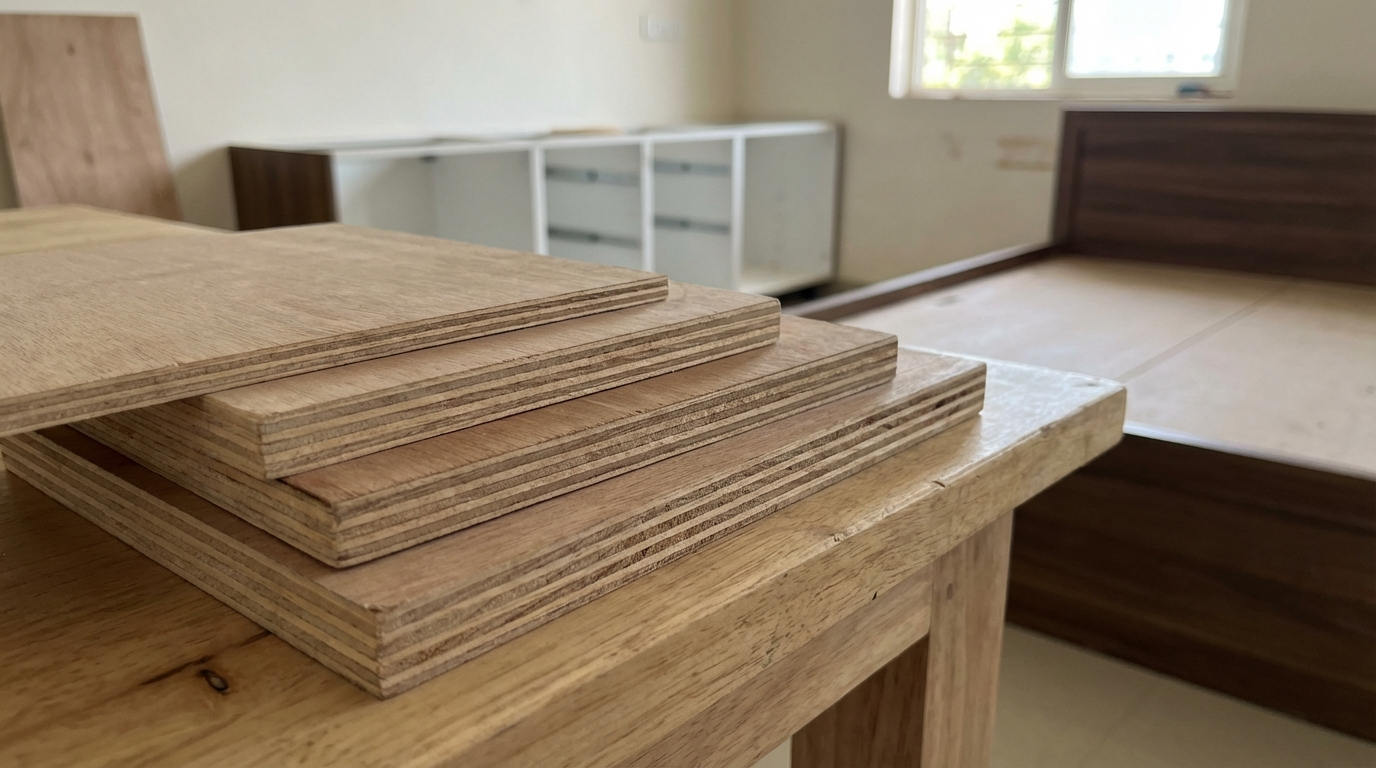
Gurjan plywood refers to plywood where Gurjan wood, a dense tropical hardwood sourced primarily from Southeast Asian regions like Myanmar and Malaysia, plays a key role in its construction. This wood comes from trees in the Dipterocarpus family, known for their straight grain, uniform texture, and impressive natural strength. In plywood manufacturing, Gurjan is most valued as a core material, forming the inner layers that provide structural integrity, while outer faces might use finer veneers for aesthetics.
Unlike standard plywood made from faster-growing softwoods like eucalyptus or poplar, Gurjan plywood stands out because of the hardwood's inherent qualities. The core consists of multiple thin Gurjan veneers glued cross-grain under high pressure and heat, creating a panel that's exceptionally stable and load-bearing. Indian manufacturers often specify "Gurjan core" on premium boards to highlight this feature, signaling reliability for furniture, cabinets, and partitions.
To answer the core question upfront: Yes, Gurjan core is generally better than common alternatives for demanding applications. Its superior density—typically ranging from 650 to 850 kg per cubic meter—delivers higher screw-holding power and resistance to warping, making it a top choice for heavy-use interiors. However, "better" depends on your specific needs, budget, and local conditions, which we'll unpack in detail throughout this guide.
In practical terms, when you buy Gurjan plywood, you're investing in a product engineered for longevity. The wood's natural oils and tight grain reduce glue delamination risks, a common failure in cheaper boards exposed to India's variable humidity. For Indian buyers, this translates to fewer callbacks from carpenters and longer-lasting wardrobes or kitchen shutters. Understanding this foundation helps you spot genuine Gurjan core plywood amid market lookalikes.
Dealers often describe it as "heavy-duty" because a standard 18mm sheet feels noticeably weightier than poplar-based options. This heft comes from the wood's slow growth, yielding denser fibers that bond better during pressing. Over years of advising fabricators, I've seen Gurjan cores hold up in multi-story apartments where lighter cores sag under shelving loads.
Key Properties of Gurjan Wood: Why It's Ideal for Plywood Cores
Gurjan wood's standout properties stem from its botanical makeup and growth environment. With a Janka hardness rating often exceeding 1,000 lbf, it resists denting far better than softwoods, which typically score under 500. This hardness ensures the plywood maintains flatness during CNC routing, crucial for modern modular furniture in urban Indian homes.
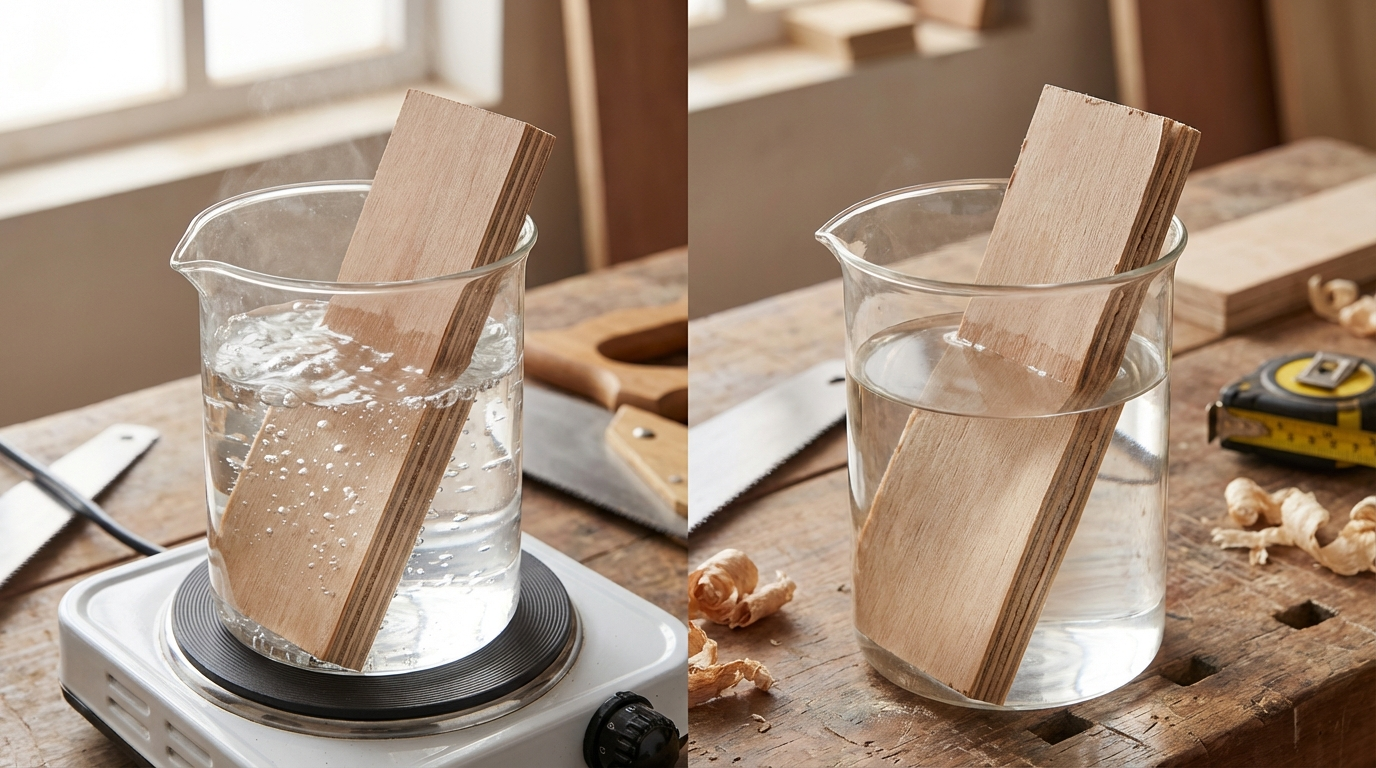
Another critical trait is its low moisture absorption rate. Gurjan expands less than 8-10% radially when soaked, compared to 15-20% for eucalyptus. This stability prevents bubbling or buckling in humid climates, explaining why premium boards use it exclusively for cores. The straight grain also promotes even glue penetration, enhancing interlayer shear strength—vital for preventing splits under repeated door slams or drawer pulls.
Termite and borer resistance adds value in India, where wooden furniture faces constant pest threats. Gurjan's natural resins deter insects better than plantation woods, though it's not invincible without chemical treatments. Density variations exist—higher-end imports hit 800+ kg/m³ for elite cores—but even standard grades outperform alternatives in bending tests, supporting spans up to 50% longer without sagging.
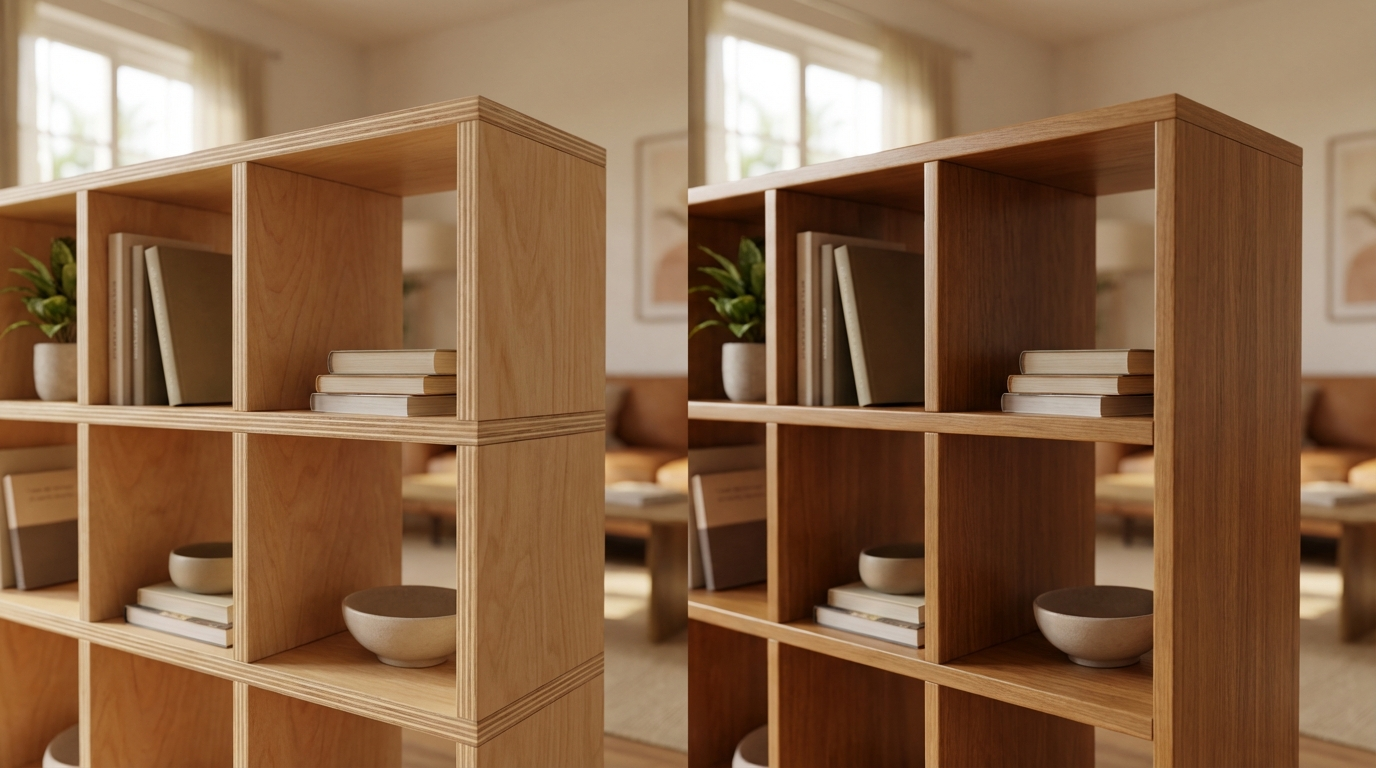
From a manufacturing perspective, Gurjan veneers peel cleanly, yielding consistent thicknesses that minimize voids. This uniformity shines in high-pressure lamination, where uneven cores lead to peeling laminates. Indian carpenters appreciate how it sands smoothly post-assembly, reducing finishing time and costs. In coastal South India, where salt-laden air accelerates decay, Gurjan's durability extends panel life by years.
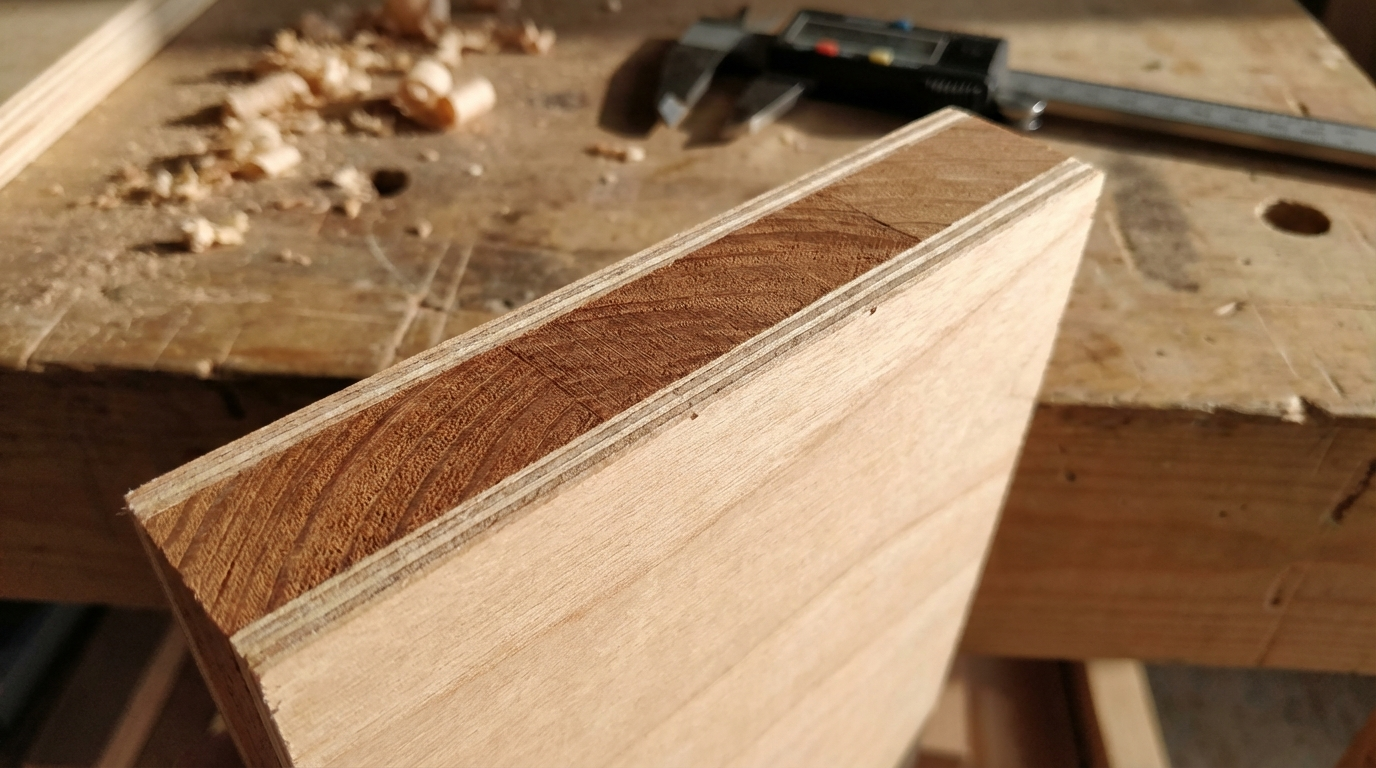
Why does this matter in India? With rising real estate densities, homes pack more furniture into smaller spaces, demanding cores that won't fail under cumulative loads. Gurjan delivers, but buyers must verify core composition via edge inspection—peel back a veneer to confirm the telltale reddish-brown Gurjan layers versus pale poplar.
Why Premium Plywood Uses Gurjan Cores: Manufacturing Insights
Premium plywood manufacturers prioritize Gurjan cores for their proven performance in rigorous Indian Standards testing. The wood's high modulus of elasticity—around 10-12 GPa—allows thinner panels to bear heavier loads, optimizing material use in cost-sensitive markets. During hot-pressing at 120-140°C, Gurjan's resins activate, creating bonds 20-30% stronger than phenolic glues on softwoods.
Supply chains favor Gurjan because it's abundant yet regulated, ensuring traceability that builds buyer trust. Factories layer 11-15 Gurjan plies in 18mm boards for balanced strength in all directions, unlike unidirectional softwood cores prone to cupping. This cross-lamination resists twisting, a boon for wardrobes in monsoon-prone areas where humidity swings from 40% to 90%.
In practice, Gurjan cores excel in screw withdrawal tests, holding 2-3 times more force than poplar, ideal for modular kitchens with adjustable shelves. Premium brands layer it with moisture-resistant glues (MR grade or BWR), elevating overall water resistance. I've consulted factories where Gurjan reduces rejection rates by 15%, as it handles edge-banding without chipping.
For Indian buyers, this means furniture that withstands daily abuse—kids climbing racks or heavy utensil storage—without mid-life repairs. South Indian CNC shops love it for precise cuts in prefab cabinets, as the core doesn't fray under high-speed bits. However, processing requires sharp tools, as Gurjan dulls blades faster than softwoods.
Ultimately, choosing Gurjan core plywood aligns with long-term savings, as its robustness cuts maintenance and replacement costs in high-humidity homes.
Gurjan Core vs. Other Plywood Cores: Head-to-Head Comparison
To evaluate if Gurjan core is truly better, compare it against common Indian alternatives like eucalyptus, poplar, and softwood mixes. Gurjan leads in density and strength but trades off on cost and availability.
| Core Type | Density (kg/m³) | Bending Strength | Moisture Expansion | Best For | Drawbacks |
|---|---|---|---|---|---|
| Gurjan | 650-850 | High (50-70 MPa) | Low (8-12%) | Heavy furniture, kitchens | Higher cost |
| Eucalyptus | 450-600 | Medium (40-55 MPa) | Medium (12-18%) | Partitions, doors | Warps in humidity |
| Poplar | 400-550 | Low-Medium (35-50 MPa) | High (15-22%) | Light interiors | Poor screw hold |
| Mixed Softwood | 350-500 | Low (30-45 MPa) | High (18-25%) | Budget shelving | Termite prone |
Gurjan outperforms in structural tests, supporting 30-50% more weight before deflection. Eucalyptus, a local favorite, grows fast but absorbs moisture quicker, leading to delamination in bathrooms. Poplar offers smooth faces but lacks core rigidity, sagging under bookshelves.
In Indian scenarios, Gurjan shines for almirahs in humid Mumbai flats, while eucalyptus suffices for dry Delhi partitions. Cost-wise, Gurjan adds 20-40% premium, justified for longevity. Edge cases like vibration-heavy areas (near washing machines) favor Gurjan's damping properties.
Carpenters report Gurjan cuts cleaner on table saws, reducing dust and waste. For South India’s modular kitchens, its stability ensures precise joints post-CNC.
Common Mistakes Indian Buyers and Carpenters Make with Gurjan Plywood
Even with Gurjan's strengths, pitfalls abound. First, buyers overlook core verification, accepting dealer claims without checking edges. Genuine Gurjan shows consistent reddish hues and fine grain; fakes mix cheaper woods, failing under load.
Carpenters often under-treat Gurjan for termites, assuming natural resistance suffices. In pest-heavy Kerala homes, untreated boards invite borers within 2-3 years. Always pair with preservatives during seasoning.
Another error: Using inadequate screws. Gurjan's density demands coarser threads (4-5mm) for grip; fine ones pull out, causing shelf collapses. In modular setups, skipping pilot holes leads to splitting—drill 70% depth for best results.
Buyers ignore thickness consistency. Inferior mills produce uneven Gurjan plies, causing laminate bubbles. Test by tapping: uniform thud indicates quality. In dealer-driven South India markets, pressure for quick buys skips moisture checks—refuse boards over 12% MC.
Failure cases abound: A Chennai coastal villa's kitchen cabinets warped despite "Gurjan" labels, traced to poplar core misrepresentation. Lessons? Insist on lab reports or trusted wholesalers. Overlooking acclimation—stack boards 48 hours pre-cut—invites shrinkage gaps.
These mistakes inflate costs 2x via repairs. Smart buyers involve carpenters early for edge inspections.
Trade-offs and Limitations: When Gurjan Core Falls Short
Gurjan isn't universally superior; trade-offs exist. Highest cost—30-50% more than eucalyptus—strains budgets for large projects like full-home furniture. Lighter poplar suits low-load areas like wall panels, saving weight for easy handling.
Weight poses issues: An 8x4 ft 18mm Gurjan sheet tips 60-70kg, challenging solo installation in high-rises without lifts. Workability lags—harder to nail, requiring pre-drilling, slowing carpenters versus softwoods.
Availability fluctuates with imports; monsoon delays spike prices in North India. In dry interiors, Gurjan's density adds unnecessary expense if moisture isn't a threat.
Limitations include lower paint absorption due to resins—prime twice for even finishes. Not ideal for curved work; stiffness resists bending. In extreme heat (above 50°C factories), it expands more than engineered alternatives.
Edge case: Vibration zones like near generators favor flexible cores. For budget modular kitchens in tier-2 cities, hybrid cores balance better. Why mention? Honest advice prevents over-specifying, saving 20-30% without compromising essentials.
In South India, coastal salt corrosion demands extra sealing, as Gurjan alone doesn't repel it fully.
Decision Framework: How to Choose Gurjan Core Plywood Wisely
Follow this step-by-step framework for confident buys:
- Assess Load Needs: Heavy shelves/kitchens? Gurjan. Light decor? Eucalyptus.
- Climate Check: Humidity >70% RH? Prioritize Gurjan stability.
- Budget Audit: Allocate 20% extra for premium cores if lifespan >10 years targeted.
- Inspect Physically: Edge grain, weight, thud test.
- Verify Grade: BWR/MR for wet areas; ensure Gurjan core specified.
- Carpenter Input: Confirm tool compatibility.
- Future-Proof: CNC/modular? Gurjan's precision wins.
For a Mumbai apartment: Gurjan for wardrobes (high load/humidity), poplar for study tables. South Indian modular kitchen? Gurjan core with laminate faces withstands steam/monsoon.
This narrative cuts decision paralysis, blending logic with scenarios. Table alternative for quick scan:
| Scenario | Choose Gurjan If... | Alternatives If... |
|---|---|---|
| Kitchen Cabinets | Heavy utensils, steam exposure | Light storage: Poplar |
| Wardrobes | Full height, humid rooms | Dry closets: Eucalyptus |
| Partitions | Load-bearing | Decorative: Softwood |
Gurjan Plywood in South India: Monsoon, Coastal, and Modern Applications
South India's challenges amplify Gurjan's value. Monsoon humidity (80-95% RH) swells softwood cores, but Gurjan limits expansion to 2-3mm per meter, preserving door alignments. Coastal exposure in Chennai or Kochi introduces salt spray; Gurjan's density slows corrosion, paired with epoxy paints for 15+ year life.
Modular kitchens thrive on Gurjan—stable for CNC-machined joints that withstand vibrations from mixers. Dealer markets like Coimbatore push volumes; negotiate core guarantees. In villas, Gurjan partitions resist cyclone winds better.
Carpenters note easier polishing post-monsoon. Why it matters: Rising AC use drops indoor RH, but kitchens remain steamy—Gurjan prevents laminate peels. For exports-oriented factories, it meets global standards seamlessly.
Frequently Asked Questions About Gurjan Plywood
Is Gurjan plywood termite-proof? Not inherently, but its density and resins offer better resistance than softwoods. Treat with oils or chemicals for full protection, especially in ground-contact zones. In Indian homes, combine with boric acid dips for 10-year safety.
How much more expensive is Gurjan core plywood? Expect 25-45% premium over standard MR plywood, varying by thickness and city. For 18mm sheets, this means Rs. 100-150 extra per sq ft, offset by durability savings.
Can Gurjan plywood be used outdoors? With BWP glue and UV coatings, yes for verandas. Avoid direct rain without sealing, as edges absorb faster than faces.
What's the difference between Gurjan face and Gurjan core? Face uses thin Gurjan veneers for beauty; core builds strength with thicker plies. Full Gurjan (face+core) maximizes benefits.
Does Gurjan plywood warp in humidity? Minimal warping due to low expansion; ideal for Bangalore's variable weather. Acclimate 72 hours pre-install.
Is Gurjan core suitable for CNC cutting? Excellent—uniform density prevents bit wander, perfect for South Indian prefab kitchens.
How to identify fake Gurjan plywood? Check reddish core grain, weight, and screw test. Reputable dealers provide cross-sections.
What's the lifespan of Gurjan core plywood? 15-25 years indoors with care, doubling budget options in high-use areas.
Disclaimer: This content is provided for general informational purposes based on industry practices and publicly available information. Product specifications, standards, prices, and availability may vary by manufacturer, region, and time. Readers should independently verify details with manufacturers, dealers, or qualified professionals before making purchase or construction decisions.
Want Plywood Suggestions?
Share a few details and a Apple Ply specialist will suggest suitable brands and connect you to responsive dealers.