Plywood Thickness Guide: Which mm to Use for What?
Complete plywood thickness guide explaining which mm to use for furniture, cabinets, beds & more. Standard plywood sizes in India explained.
Quick Answer
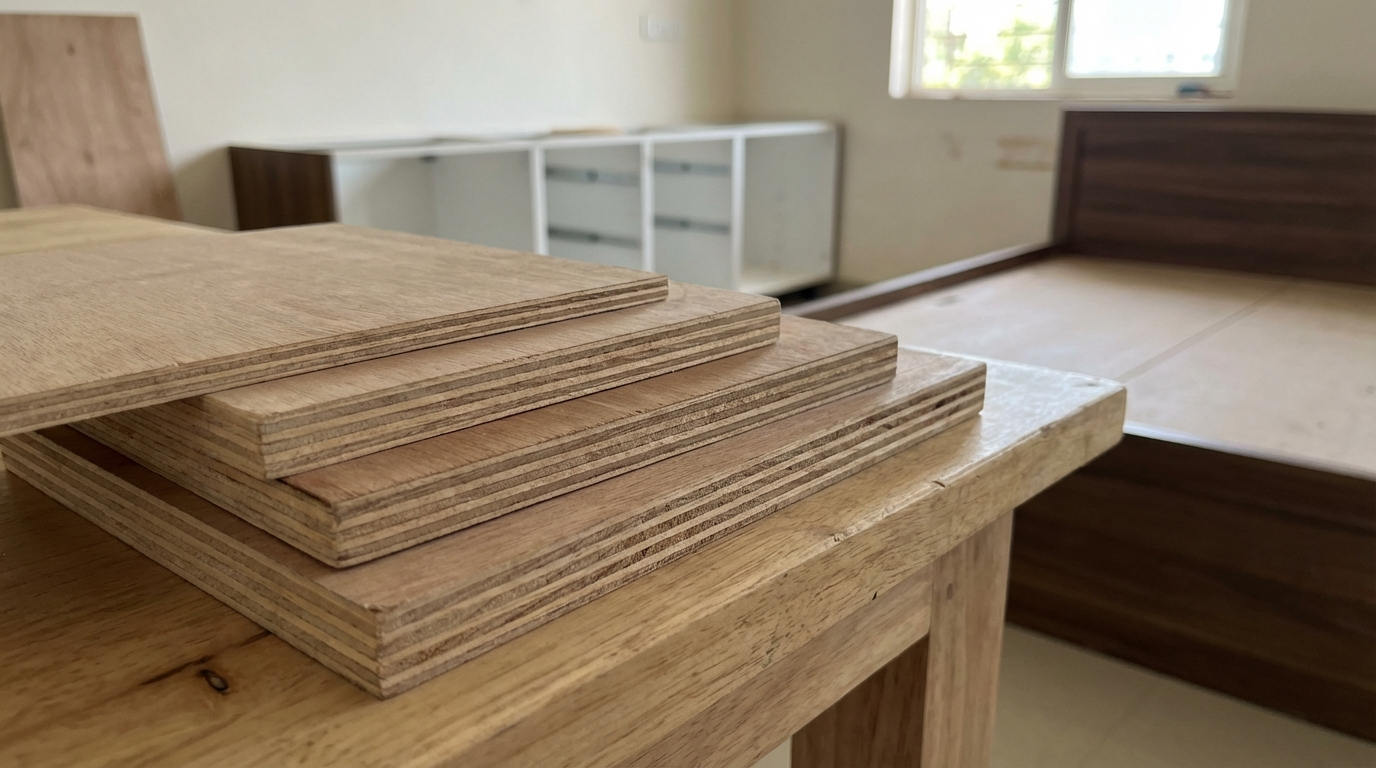
Plywood thickness selection depends entirely on the structural load and application—4mm to 6mm works for backing and laminates, 12mm suits shelves and partitions, while 18mm to 19mm is the standard for furniture carcasses, and 25mm handles heavy-duty beds and tabletops. Using the wrong thickness leads to sagging, warping, or unnecessary cost overruns.
At a Glance:- 4mm–6mm: Backing panels, drawer bottoms, decorative laminates
- 9mm: Light shelving, ceiling panels, packaging
- 12mm: Wardrobe partitions, modular kitchen shelves, wall paneling
- 18mm–19mm: Furniture carcasses, cabinet boxes, bed frames
- 25mm: Heavy tabletops, commercial counters, load-bearing structures
- Always match thickness to span length—longer unsupported spans need thicker boards
Plywood Thickness Guide: Understanding the Basics
In India, plywood thickness is measured in millimeters (mm) and directly correlates with the board's load-bearing capacity, rigidity, and intended application. The thickness you choose isn't just about strength—it affects furniture weight, hardware compatibility, cost, and even how your carpenter executes joints and edge treatments.
Standard plywood sheets in the Indian market come in a fixed size of 8 feet × 4 feet (2440mm × 1220mm), with thickness ranging from 3mm to 25mm. The most commonly stocked thicknesses at dealers across metros and Tier-2 cities are 4mm, 6mm, 9mm, 12mm, 18mm, and 19mm. Thicker variants like 21mm and 25mm require specific ordering in many locations outside major cities.
Why Thickness Matters Beyond Strength
Thicker plywood doesn't just hold more weight—it affects multiple aspects of your project. Edge banding becomes more visible and requires skilled finishing on thicker boards. Hardware like hinges and drawer slides have specific thickness requirements; most European-style soft-close hinges are calibrated for 18mm panels. CNC machining for modular kitchens also assumes standard 18mm or 19mm stock. Using non-standard thicknesses can create compatibility issues that your carpenter may not anticipate until assembly stage.
The 18mm vs 19mm Confusion in India
This is one of the most common points of confusion in the Indian plywood market. Historically, plywood was manufactured to approximate imperial measurements, leading to 19mm (roughly ¾ inch) becoming standard. However, metric standardization pushed many manufacturers toward true 18mm boards. Today, both exist in the market, sometimes labeled interchangeably by dealers. The practical difference is minimal for most furniture applications, but it becomes critical when mixing boards from different manufacturers in the same project or when precise hardware fitting is required. Always verify actual thickness with a caliper before bulk purchase.
Standard Plywood Thickness Options Available in India
The Indian plywood market offers a defined range of thicknesses, each serving specific purposes. Understanding this range helps you communicate precisely with dealers and carpenters, avoiding the common mistake of accepting whatever stock is available.
Thin Plywood: 3mm to 6mm Range
These are non-structural boards used primarily for covering, backing, and decorative purposes. The 4mm thickness is the workhorse of this category—it's what goes behind your wardrobe as backing, forms the bottom of drawers, and serves as the substrate for decorative laminates in budget furniture. At 6mm, you get marginally better rigidity, making it suitable for curved applications and ceiling panels where some structural integrity is needed without adding significant weight.
Medium Plywood: 9mm to 12mm Range
This middle range offers the first level of genuine structural capability. 9mm plywood handles light shelving where span lengths are short (under 60cm unsupported) and loads are minimal—think shoe racks and display shelves. At 12mm, you enter territory suitable for wardrobe internal partitions, modular kitchen base shelves (with proper support), and wall paneling that needs to carry hooks or light fixtures. Many budget furniture makers use 12mm for cabinet sides to reduce costs, though this practice compromises long-term durability.
Furniture-Grade Plywood: 18mm to 19mm Range
This is the standard thickness for all serious furniture construction in India. Cabinet carcasses, bed frames, table structures, study tables, kitchen cabinets, office furniture—virtually everything that needs to bear weight and last decades uses this range. The 18mm-19mm thickness provides the optimal balance of strength, weight, and material cost. It's thick enough to accept screws and hardware securely while remaining light enough for practical handling and installation.
Heavy-Duty Plywood: 21mm to 25mm Range
Reserved for applications demanding maximum rigidity and load capacity—commercial countertops, reception desks, dining tables with long unsupported spans, and industrial shelving. In residential contexts, 25mm finds use in large bed platforms and heavy-duty kitchen countertops that won't receive granite or quartz overlay. Availability outside metros can be limited, and the weight adds significantly to transport and handling costs.
Plywood Thickness Comparison Table
| Thickness | Primary Applications | Maximum Unsupported Span | Indicative Price Range (₹/sq ft) | Availability |
|---|---|---|---|---|
| 4mm | Backing panels, drawer bottoms, laminate base | Not load-bearing | ₹18–35 (Commercial grade) | Widely available |
| 6mm | Ceiling panels, curved surfaces, light backing | Not load-bearing | ₹25–45 (Commercial grade) | Widely available |
| 9mm | Light shelves, packaging, temporary structures | 45–50cm with light load | ₹35–55 (Commercial grade) | Common in metros |
| 12mm | Partitions, modular shelves, wall panels | 55–65cm with moderate load | ₹50–85 (MR grade) | Widely available |
| 18mm | Furniture carcasses, cabinets, bed structures | 75–90cm with standard load | ₹85–140 (MR grade) | Standard stock everywhere |
| 19mm | Premium furniture, modular kitchens, wardrobes | 75–90cm with standard load | ₹90–150 (BWR/Marine grade) | Standard stock everywhere |
| 25mm | Heavy tabletops, commercial counters, platforms | 100–120cm with heavy load | ₹130–200 (BWR grade) | Order-basis in Tier-2/3 cities |
Note: Prices assume Tier-1 city dealers, mid-range branded plywood. Actual rates vary by brand tier, city, and current market conditions. GST extra.
Application-Wise Thickness Recommendations
Choosing the right plywood thickness requires matching the board to its specific use case. This section provides definitive guidance for common Indian household and commercial applications.
Kitchen Cabinets and Modular Kitchens
For kitchen cabinet carcasses—both base units and wall units—18mm BWR (Boiling Water Resistant) or Marine grade plywood is the industry standard. The moisture exposure in Indian kitchens, especially near sinks and cooking areas, makes water resistance non-negotiable. Base cabinets carrying heavy vessels, grains, and appliances need the structural integrity that only 18mm provides. For internal shelves within these cabinets, 12mm can work if the span is under 50cm and loads are distributed. Shutter (door) construction typically uses 18mm for framed shutters and 17mm-18mm for flat slab doors.
Wardrobes and Storage Units
Wardrobe exteriors and main structural frames demand 18mm-19mm thickness. The carcass sides, top, bottom, and fixed shelves all need this thickness to handle the combined weight of clothing, the stress of door hinges, and the lateral forces from daily opening and closing. Adjustable internal shelves can use 12mm if spans are kept short—long hanging sections should have 18mm shelves with vertical dividers every 80-90cm maximum. Drawer boxes themselves can use 12mm sides with 4mm or 6mm bottoms, provided drawer slides are properly rated.
Beds and Bed Frames
Bed platforms are high-stress applications—they carry significant static weight plus dynamic loads from movement. For double beds, 18mm plywood is the minimum for the sleeping platform, with supports (battens) placed every 30-40cm underneath. The headboard and footboard can use 18mm for structural components, though decorative headboard panels may use 12mm backed onto an 18mm frame. Box bed storage compartments need 18mm sides and 12mm bottoms with central support.
Study Tables and Workstations
Standard study tables with leg spans under 90cm work well with 18mm tops. Executive desks with larger spans (120cm+) benefit from 25mm tops to prevent any flex or perceived weakness. The desk structure—legs, side panels, modesty panels—uses 18mm throughout. Keyboard trays can be 12mm if spans are short.
False Ceilings and Wall Paneling
False ceiling applications typically use 6mm plywood on a metal or wooden frame grid. The plywood isn't load-bearing—it simply provides a surface for painting or finishing. Wall paneling for decorative purposes uses 6mm-9mm, while functional wall panels carrying shelves, hooks, or fixtures need 12mm minimum, with 18mm backing plates where heavy loads concentrate.
How to Choose the Right Plywood Thickness
Selecting appropriate thickness involves evaluating multiple factors beyond just the application name. This decision framework helps you make informed choices that balance performance, cost, and practical constraints.
Key Selection Criteria
Load Assessment: Calculate both static load (permanent weight like books, clothes, vessels) and dynamic load (movement, impact, vibration). Heavier loads need thicker boards or shorter spans between supports.
Span Length: The unsupported distance between mounting points or supports is critical. A 12mm shelf spanning 40cm performs well, but the same board spanning 80cm will sag under moderate load within months.
Moisture Exposure: For kitchens, bathrooms, and coastal locations, thickness alone isn't enough—you need appropriate grade (BWR/Marine) at the chosen thickness. Thinner boards in high-moisture areas fail faster regardless of grade.
Hardware Compatibility: European hinges, drawer slides, and cam locks are engineered for specific panel thicknesses. Using 12mm boards with hardware designed for 18mm panels leads to weak connections and premature failure.
Buyer Checklist Before Purchase
- Measure actual thickness with a caliper—don't trust labels alone
- Confirm the span lengths in your design and match to appropriate thickness
- Verify hardware specifications match your chosen thickness
- Check core construction—same thickness in commercial grade vs BWR differs in composition
- Assess dealer stock—non-standard thicknesses may have long lead times
- Factor weight into transport and handling costs for thicker boards
- Consider carpenter's familiarity with the thickness for edge treatments
When NOT to Use Thinner Plywood
Never compromise on thickness for cost savings in these scenarios: kitchen base cabinets (moisture and weight stress), bed platforms (safety and long-term sagging), load-bearing shelves in commercial settings, and any application where hardware requires specific thickness. The money saved on thinner boards often gets spent double on repairs within 2-3 years. In humid climates and coastal cities like Mumbai, Chennai, or Kolkata, going thinner than recommended accelerates failure due to moisture-related expansion and weakening.
Common Mistakes to Avoid
Years of observing furniture failures and dealer complaints reveal consistent patterns of thickness-related mistakes. Avoiding these errors saves significant money and frustration.
Using 12mm Where 18mm is Required
The most frequent cost-cutting mistake—using 12mm for cabinet carcasses to save ₹20-30 per square foot. The initial savings evaporate when shelves sag, hinges pull out, and the entire unit requires replacement in 4-5 years instead of lasting 15-20 years. This is especially damaging in kitchen cabinets where moisture accelerates the degradation.
Ignoring Span-to-Thickness Ratios
A 12mm shelf works perfectly at 40cm span but fails at 70cm. Many buyers and carpenters don't calculate these ratios, resulting in sagging shelves that may not show problems for 6-12 months, well after the carpenter has been paid. Always add vertical dividers or mid-supports for longer spans, or upgrade thickness.
Mixing Thicknesses from Different Manufacturers
An 18mm board from one manufacturer may actually measure 17.5mm, while another's measures 18.2mm. This creates alignment nightmares during assembly, especially in modular furniture and kitchen cabinets where multiple panels must align precisely. Source all panels for a single project from one manufacturer and batch.
Overlooking Edge Treatment Requirements
Thicker boards require more material and skill for edge banding. A 25mm edge needs wider edge tape and a more skilled carpenter to apply it without visible glue lines or peeling. Budget for higher finishing costs when specifying thicker plywood.
Quick Inspection Checks
- Measure actual thickness at multiple points—variation over 0.5mm indicates quality issues
- Check for core voids by tapping—hollow sounds indicate gaps
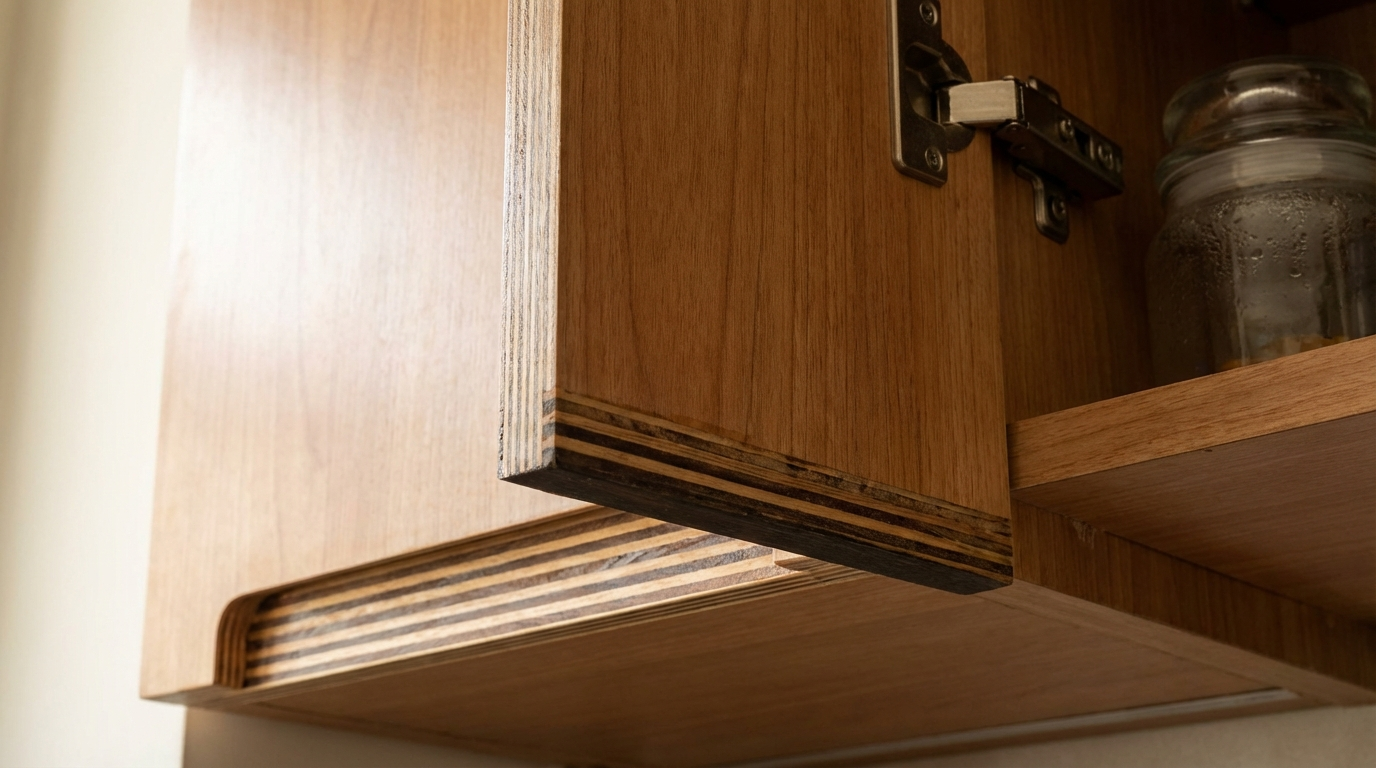
- Examine edge layers—all plies should be clearly visible and evenly bonded
- Verify the board lies flat—any warping indicates storage damage or manufacturing defects
- Request IS/BIS marking verification for claimed grades
Price Guide for Plywood by Thickness
Plywood pricing in India varies significantly based on thickness, grade, brand tier, and location. Understanding these variables helps you budget accurately and identify fair dealer pricing.
What Drives Price Differences
Grade Premium: BWR and Marine grades cost 30-50% more than MR grade at the same thickness. The adhesive quality and timber treatment justify this premium for moisture-prone applications.
Brand Tier: Premium brands like Greenply, Century, and Kitply command 15-25% premiums over regional brands. The premium reflects consistent quality, better after-sales support, and reliable thickness accuracy.
City Location: Metros have competitive pricing due to dealer density. Tier-2 and Tier-3 cities often pay 10-20% more, plus higher transport costs for non-standard thicknesses that aren't locally stocked.
Thickness Premium: Price per square foot increases with thickness, but not linearly. An 18mm board costs roughly 2-2.5x what a 9mm board costs, not 2x, due to higher material and manufacturing complexity.
Indicative Price Ranges (2024-25)
| Thickness | Commercial Grade (₹/sq ft) | MR Grade (₹/sq ft) | BWR Grade (₹/sq ft) | Marine Grade (₹/sq ft) |
|---|---|---|---|---|
| 4mm | ₹18–28 | ₹25–35 | ₹35–45 | ₹45–60 |
| 6mm | ₹25–35 | ₹35–45 | ₹48–60 | ₹60–75 |
| 12mm | ₹45–60 | ₹55–75 | ₹80–100 | ₹100–125 |
| 18mm | ₹70–90 | ₹85–110 | ₹115–145 | ₹145–180 |
| 19mm | ₹75–95 | ₹90–120 | ₹125–155 | ₹155–195 |
| 25mm | ₹100–130 | ₹125–160 | ₹165–210 | ₹200–260 |
Note: Prices are indicative for mid-range branded plywood in Tier-1 cities. Regional variations, dealer margins, and bulk discounts affect actual purchase rates. GST applicable additionally.
Budget vs Premium: Where Thickness Matters Most
If budget constraints force choices, prioritize thickness and grade for structural components—cabinet sides, bed platforms, and load-bearing frames. You can save on internal components like drawer bottoms (4mm instead of 6mm) and backing panels (4mm commercial grade) without compromising furniture lifespan. Never economize on kitchen cabinet carcasses or bed structures—the cost difference is minimal compared to replacement costs.
Regional and Climate Considerations
India's diverse climate zones significantly affect plywood thickness decisions. What works in Jaipur may fail prematurely in Chennai or Kolkata.
Coastal and High-Humidity Zones
Cities like Mumbai, Kolkata, Chennai, Kochi, and Goa experience sustained high humidity (often 70-85%) for months. Plywood absorbs moisture and expands; in thin boards, this causes faster warping and delamination. For these regions, consider going one thickness level up for critical applications—12mm where 9mm might suffice inland, 19mm instead of 18mm for furniture carcasses. More importantly, never compromise on grade—BWR or Marine is essential, not optional.
Monsoon-Specific Risks
During monsoons, even interior furniture faces humidity stress. Thin backing panels (4mm) on wardrobes can warp and pop out of grooves. Drawer bottoms may swell and jam. While thickness helps, ensuring proper grade and adequate ventilation behind furniture is equally important. Leave 25-50mm gap between furniture backs and walls in high-humidity rooms.
Termite-Prone Regions
Central and Southern India face significant termite risks. While thickness doesn't directly prevent termite attack, thicker boards buy more time before structural failure occurs. Combine appropriate thickness with termite-treated plywood or regular anti-termite treatment of the furniture and surrounding areas.
Frequently Asked Questions
What is the standard plywood thickness for kitchen cabinets in India?
The standard thickness for kitchen cabinet carcasses in India is 18mm BWR (Boiling Water Resistant) or Marine grade plywood. This thickness provides adequate strength for heavy vessels and utensils while allowing proper hinge and hardware installation. Internal shelves within cabinets may use 12mm if spans are short (under 50cm), but all structural components—sides, top, bottom, and fixed shelves—should be 18mm minimum. For modular kitchens with CNC-cut components, 18mm is virtually mandatory as machine calibrations assume this standard.
Can I use 12mm plywood instead of 18mm for wardrobes?
Using 12mm plywood for wardrobe carcass construction is not recommended despite the cost savings. The 12mm thickness cannot adequately support hinge stress, hanging clothes weight, and lateral forces from daily use. Within 3-5 years, you'll likely see hinge screws loosening, shelves sagging, and overall structure becoming unstable. However, 12mm works acceptably for internal components like adjustable shelves (with short spans) and drawer sides. The wardrobe frame, sides, top, and bottom must be 18mm for longevity.
Which plywood thickness is best for bed frames?
For double bed platforms, 18mm plywood is the minimum recommended thickness, supported by horizontal battens spaced 30-40cm apart. King-size beds or heavy-duty applications benefit from 19mm or even 25mm for the sleeping platform. The structural frame—headboard mounting, side rails, and footboard—should use 18mm throughout. Box bed storage sections need 18mm sides with 12mm bottoms (with central support for larger boxes). Single beds can manage with 18mm platforms with fewer support battens.
What is the difference between 18mm and 19mm plywood?
The 18mm and 19mm plywood difference stems from historical manufacturing standards. Older imperial-based production created 19mm boards (approximately ¾ inch), while metric standardization pushed manufacturers toward true 18mm. In practical terms, both work similarly for furniture applications. The distinction matters when mixing boards from different manufacturers in one project, when precise hardware fitting is required, or when ordering replacement panels. Always verify actual measured thickness rather than relying on labels, and source all panels for a project from one manufacturer to ensure consistency.
How much does 18mm plywood cost per square foot in India?
18mm plywood prices in India vary significantly by grade and brand. Commercial grade ranges from ₹70-90 per square foot, MR grade costs ₹85-110, BWR grade runs ₹115-145, and Marine grade commands ₹145-180 per square foot. These are indicative rates for mid-range branded plywood in Tier-1 cities. Regional manufacturers may offer 10-20% lower rates, while premium national brands cost 15-25% more. Transport to Tier-2/3 cities, dealer margins, and bulk purchase discounts all affect final pricing. GST applies additionally.
Is 4mm plywood strong enough for drawer bottoms?
Yes, 4mm plywood is adequate for drawer bottoms in most household furniture applications. The key factor is proper support—the drawer bottom should rest in grooves on all four sides and the span shouldn't exceed 45-50cm without a central support strip. For heavy-duty drawers (like those storing tools or heavy utensils), upgrade to 6mm. The 4mm bottom works because the load is distributed across the entire surface and the drawer sides carry the weight. Using a higher grade like MR helps prevent moisture-related sagging in kitchen and bathroom drawers.
What is the maximum span for 12mm plywood shelves without sagging?
For 12mm plywood shelves carrying typical household loads (books, clothes, utensils), the maximum unsupported span should not exceed 55-65cm. Beyond this, visible sagging develops over 6-12 months, especially with constant loads. For longer spans, either upgrade to 18mm thickness, add a vertical divider or mid-support, or install a front edge stiffener (solid wood lipping). In high-humidity areas, reduce the maximum span by 10-15% as moisture absorption softens the board over time. Heavy-load applications like library shelves need 18mm regardless of span length.
How to check plywood thickness at the dealer before buying?
Always carry a digital caliper or vernier caliper when purchasing plywood—dealers rarely object to measurement verification. Measure thickness at multiple points: center of the board, all four edges, and corners. Variation exceeding 0.5mm across the board indicates manufacturing inconsistencies. Compare the measured thickness against the stated size and don't accept boards that fall short—an 18mm board measuring 16.5mm is not acceptable. Also count the ply layers visible at edges; more layers generally indicate better quality. Check that the board lies flat on the ground without rocking, which indicates warping.
Disclaimer: This content is provided for general informational purposes based on industry practices and publicly available information. Product specifications, standards, prices, and availability may vary by manufacturer, region, and time. Readers should independently verify details with manufacturers, dealers, or qualified professionals before making purchase or construction decisions.Want Plywood Suggestions?
Share a few details and a Apple Ply specialist will suggest suitable brands and connect you to responsive dealers.