MR Grade Plywood: Full Form, Uses & Price Guide
MR grade plywood full form is Moisture Resistant. Learn IS 303 certification, best uses for interiors & current prices in India.
Quick Answer
MR grade plywood full form is Moisture Resistant plywood, manufactured according to IS 303 standards for interior applications. This commercial-grade plywood uses urea-formaldehyde resin bonding that resists humidity and atmospheric moisture but is not waterproof. MR plywood is India's most commonly used plywood grade for bedroom furniture, wardrobes, and dry-area interiors, offering an economical balance of strength and durability.
At a Glance
- Full Form: Moisture Resistant (MR) Plywood
- BIS Standard: IS 303 certification for interior-grade plywood
- Bonding Agent: Urea-formaldehyde (UF) resin adhesive
- Best For: Dry interiors—bedrooms, living rooms, office furniture
- Price Range: ₹45–₹100 per sq ft (varies by thickness, brand tier, city)
- Not Suitable For: Kitchens, bathrooms, outdoor use, or water-exposed areas
MR Grade Plywood Explained: What Makes It Moisture Resistant
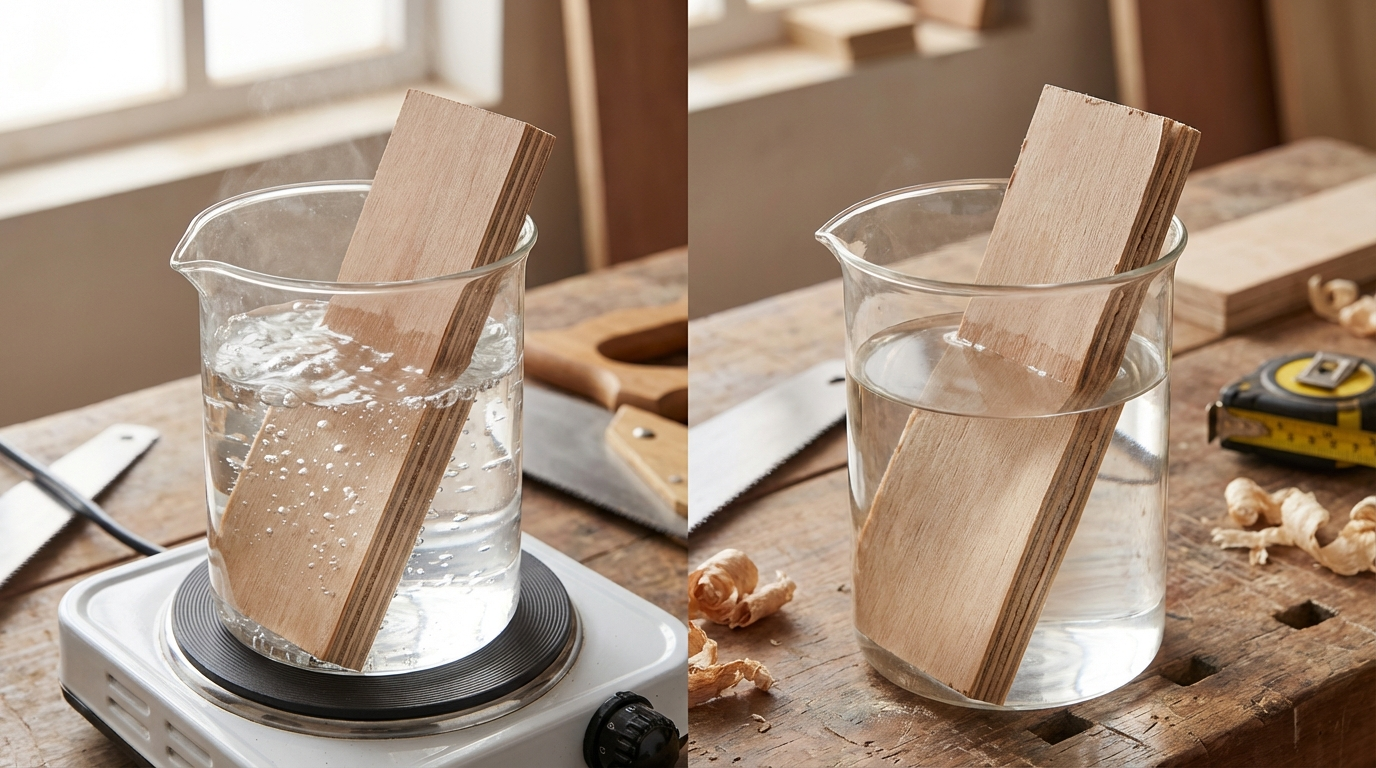
MR grade plywood derives its moisture resistance from the specific adhesive used during manufacturing—urea-formaldehyde resin. This synthetic bonding agent creates a strong bond between wood veneers that can withstand normal indoor humidity levels typically found in Indian homes. However, understanding what "moisture resistant" actually means is critical before making a purchase decision.
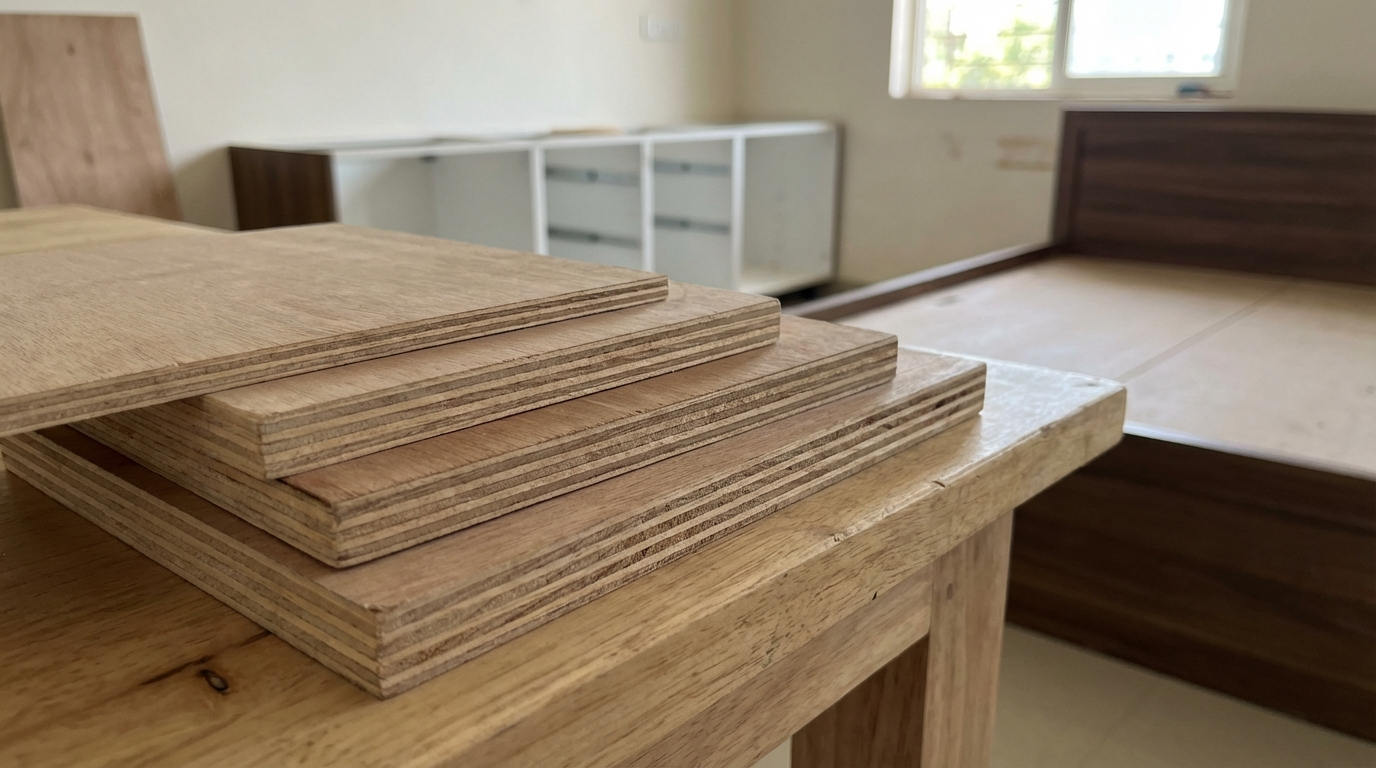
The manufacturing process involves layering thin wood veneers at alternating 90-degree angles (cross-graining), then bonding them under controlled heat and pressure using UF resin. This cross-laminated structure provides dimensional stability—the plywood won't twist, warp, or split under normal indoor conditions. The number of layers typically ranges from 3-ply to 19-ply configurations depending on thickness requirements.
How IS 303 Certification Works
IS 303 is the Bureau of Indian Standards specification that governs both MR and BWR grade plywood. When you see "IS 303" stamped on plywood, it indicates the product has been tested for specific parameters including glue adhesion, thickness tolerance, and moisture content. The standard differentiates between two bonding types:
- Type 1 (BWR): Boiling Water Resistant—phenol-formaldehyde bonding
- Type 2 (MR): Moisture Resistant—urea-formaldehyde bonding
In practical Indian market terms, most dealers stock "commercial plywood" which is essentially MR grade. The IS 303 mark should be visible as a permanent stamp on the panel edge, not just a sticker. Always verify this physical marking when purchasing, as uncertified products often flood the market at lower prices but with significantly reduced quality.
The Humidity Tolerance Reality
MR plywood tolerates ambient humidity—the moisture present in air—but cannot withstand direct water contact or prolonged exposure to high moisture environments. In most Indian cities with average humidity levels of 50-70%, MR grade performs adequately for interior furniture. However, in coastal regions like Mumbai, Chennai, or Kochi where humidity regularly exceeds 80%, even MR-grade furniture in air-conditioned rooms may show gradual degradation over 7-10 years.
Types of MR Grade Plywood Available in India
MR plywood isn't a single product—it encompasses several variants based on core composition, veneer quality, and manufacturing precision. Understanding these types helps match the right product to your specific furniture requirement and budget.
By Core Material
Hardwood Core MR Plywood: Uses dense hardwood species like gurjan, eucalyptus, or poplar for inner layers. This type offers superior screw-holding capacity and is preferred for heavy-duty furniture like wardrobes and storage units. Most premium Indian brands use hardwood cores exclusively.
Softwood Core MR Plywood: Uses lighter woods like pine or fast-growing plantation timber. More affordable but lower density means reduced structural strength. Common in budget furniture and temporary applications.
Calibrated MR Plywood: Panels that pass through sanding machines to achieve uniform thickness across the entire sheet. Essential for modular kitchen manufacturers and CNC machining operations where even 0.5mm variation causes fitting problems. Commands a premium of ₹8-15 per sq ft over non-calibrated options.
By Face Veneer Quality
Grade A Face: Minimal defects, tight grain pattern, suitable for clear polish or light-stain finishes. Used for visible furniture surfaces.
Grade B Face: Minor patches, slight colour variations—perfectly acceptable when laminate or veneer overlay will cover the surface.
Grade C/D Face (Back Grade): Knots, patches, and repairs visible—used for hidden structural components, back panels, and shelving interiors.
MR Grade vs BWR vs BWP: Comparison Table
Choosing between plywood grades requires understanding their fundamental differences in water resistance, application suitability, and cost implications. The following comparison clarifies where each grade performs best in Indian conditions.
| Parameter | MR Grade (IS 303 Type 2) | BWR Grade (IS 303 Type 1) | BWP/Marine (IS 710) |
|---|---|---|---|
| Full Form | Moisture Resistant | Boiling Water Resistant | Boiling Water Proof |
| Adhesive Used | Urea-formaldehyde (UF) | Phenol-formaldehyde (PF) | Phenol-formaldehyde (PF) |
| Water Resistance | Humidity only, not waterproof | Resistant to occasional water | Fully waterproof, submersion safe |
| Best Applications | Bedrooms, living rooms, offices | Kitchen cabinets, bathroom vanities | Marine use, outdoor furniture, wet areas |
| Price Range (₹/sq ft) | ₹45–₹100 | ₹75–₹140 | ₹120–₹250 |
| Colour of Adhesive Line | Light/white colour at edges | Reddish-brown at edges | Dark reddish-brown throughout |
| Suitable for Modular Kitchen | No (except non-sink areas) | Yes (recommended for kitchen) | Yes (premium choice) |
| Termite Resistance | Only if chemically treated | Better inherent resistance | High inherent resistance |
The adhesive line colour is a practical field test carpenters use. When you examine the edge of MR plywood, the glue lines between veneers appear light or whitish. BWR and BWP grades show distinctly reddish-brown glue lines due to phenolic resin. This visual check, while not definitive, helps identify grade misrepresentation at dealer shops.
How to Choose the Right MR Plywood for Your Project
Selecting MR plywood involves evaluating several factors beyond just price. The wrong choice leads to premature furniture failure—warping, delamination, or structural weakness that manifests within 2-3 years. Here's a systematic decision framework.
Thickness Selection Guide
Indian market thickness naming creates confusion. What dealers call "18mm" is often actually 17mm or 17.5mm. For furniture applications, here's what works:
- 4mm–6mm: Back panels, drawer bottoms, cabinet backs
- 8mm–9mm: Shelf partitions, light-duty surfaces
- 12mm: Wardrobe sides, internal partitions, modular components
- 16mm–18mm: Wardrobe shutters, bed structures, heavy-duty furniture carcasses
- 19mm: Premium furniture where edge-banding aesthetics matter—the extra millimetre provides cleaner finishing
Buyer Checklist Before Purchase
- Verify IS 303 stamp is physically embossed or printed on panel edge (not just a removable sticker)
- Check adhesive line colour—whitish indicates MR, reddish-brown indicates higher grades
- Examine face veneer for patches, cracks, or overlapping joints
- Flex the panel gently—excessive flexibility suggests inferior core material
- Confirm thickness with a calliper if available; request written thickness guarantee from dealer
- Ask about calibration if panels are for modular or CNC work
- Inquire about warranty terms and what they actually cover
When NOT to Choose MR Grade Plywood
MR plywood fails in specific conditions regardless of brand quality or price paid:
- Kitchen sink cabinets: Direct water exposure causes delamination within months
- Bathroom furniture: Steam and humidity exceed MR tolerance
- Outdoor applications: Rain, dew, and temperature cycling destroy MR bonding
- Coastal ground-floor homes without AC: Sustained 85%+ humidity causes gradual swelling
- Areas with known water seepage or wall dampness: Moisture wicks through contact points
For these applications, upgrading to BWR (kitchen) or BWP (bathroom/outdoor) is not optional—it's essential for reasonable furniture lifespan.
Common Mistakes to Avoid When Buying MR Plywood
The Indian plywood market presents unique challenges—unorganized retail, grade misrepresentation, and regional quality variations. These mistakes cost buyers money and lead to furniture failures.
Mistake 1: Trusting "Commercial Ply" Without Verification
"Commercial plywood" is a catch-all term that technically means MR grade but is often applied to sub-standard products. Always verify IS 303 marking physically. Many dealers sell unbranded or non-ISI panels as "commercial" at lower prices—these lack standardized adhesive quality and may fail within 1-2 years even in dry conditions.
Mistake 2: Using MR Grade Throughout the Kitchen
A persistent myth suggests that MR plywood works for "upper kitchen cabinets" since they're away from the sink. In reality, steam rises, cooking generates moisture, and oil accumulation creates conditions unsuitable for MR bonding. The entire kitchen should use minimum BWR grade for 10+ year durability.
Mistake 3: Ignoring Calibration for Modular Work
Standard MR plywood has thickness tolerances of ±1mm. Modular kitchen manufacturers and CNC operations require calibrated panels with ±0.3mm tolerance. Using non-calibrated plywood for modular furniture results in uneven gaps, misaligned shutters, and edge-band failures.
Mistake 4: Overlooking Termite Treatment
Base MR plywood has no inherent termite resistance. In regions like Karnataka, Tamil Nadu, Kerala, and Maharashtra where termite pressure is high, chemical treatment (borer-termite or BT treatment) is essential. Premium brands include this treatment; economy options often skip it. Ask specifically about termite treatment and verify any claims.
Quick Inspection Checks at the Dealer
- Tap Test: Knock on the panel centre—hollow or drum-like sounds indicate core voids
- Sight Test: View the panel at an angle against light to detect surface undulations
- Edge Inspection: Look for gaps between veneers, uneven layers, or excessive filler
- Flex Test: Gently bow a smaller panel—it should resist flexing uniformly without cracking sounds
- Weight Check: Compare similar-sized panels; significantly lighter ones suggest lower-density cores
MR Grade Plywood Price Guide for 2025-26
MR plywood pricing in India varies significantly based on multiple factors. The ranges below represent typical market prices across metro and Tier-2 cities, assuming standard 8×4 feet sheet sizes.
| Thickness | Economy Brand (₹/sq ft) | Mid-Range Brand (₹/sq ft) | Premium Brand (₹/sq ft) |
|---|---|---|---|
| 6mm | ₹28–₹35 | ₹38–₹48 | ₹52–₹65 |
| 9mm | ₹35–₹42 | ₹48–₹58 | ₹62–₹78 |
| 12mm | ₹42–₹52 | ₹55–₹70 | ₹75–₹95 |
| 16mm | ₹52–₹62 | ₹68–₹85 | ₹90–₹115 |
| 18mm/19mm | ₹58–₹72 | ₹78–₹95 | ₹100–₹130 |
Factors Affecting MR Plywood Prices
Brand Positioning: Established brands like Greenply, Century, Kitply, and Apple Ply command premiums of 15-30% over regional brands. This premium partially reflects consistent quality control and legitimate warranty backing.
Core Wood Species: Gurjan-core plywood costs more than eucalyptus or poplar-core variants. The density difference affects screw retention and long-term structural integrity.
Calibration Premium: Calibrated panels suitable for modular work add ₹8–₹15 per sq ft over standard panels of the same brand and thickness.
City and Transport: Metros like Mumbai, Delhi, and Bangalore typically have competitive pricing due to multiple dealer options. Tier-3 cities may see 10-15% higher prices reflecting transport costs and limited competition. Coastal cities often stock more BWR, making MR less readily available in premium brands.
GST Impact: Plywood attracts 18% GST. Dealers quoting "without bill" prices are offering 15-18% apparent savings but you lose warranty claims and quality recourse.
Budget vs Premium: Which Makes Sense?
For furniture expected to last 8-12 years, mid-range branded MR plywood offers the best value. Economy options may save 25-35% upfront but often require replacement within 4-6 years due to adhesive failure or core degradation. Premium options make sense for visible furniture pieces where surface finish quality matters, or when the brand's warranty terms provide genuine coverage.
Carpenter's Perspective on Working with MR Plywood
Experienced carpenters across India have developed practical insights about MR plywood that influence furniture durability beyond the material specifications.
Edge Treatment Requirements
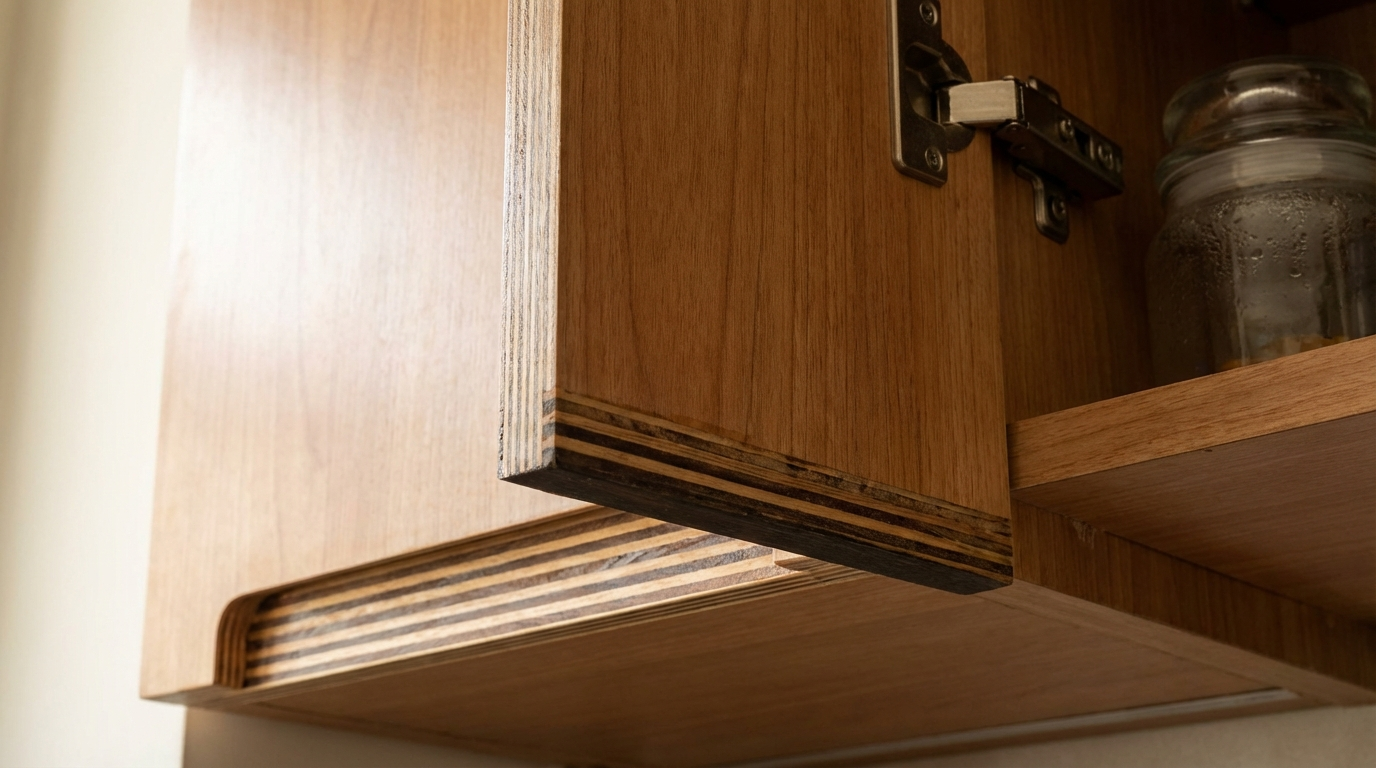
MR plywood edges are vulnerable to moisture ingress. Even in dry rooms, humidity enters through exposed edges over time. Proper edge-banding using PVC or ABS strips is essential for furniture longevity. Budget projects that skip edge treatment often show swelling at edges within 2-3 years, particularly during monsoon seasons.
Screw Holding and Joinery
MR plywood holds screws adequately in face grain but struggles with edge screwing, especially in thinner panels. Carpenters typically use wooden dowels, biscuit joints, or cam-lock fittings for panel-to-panel connections rather than relying solely on edge screws. This is particularly critical for wardrobe shelf supports and modular furniture assembly.
Finishing Considerations
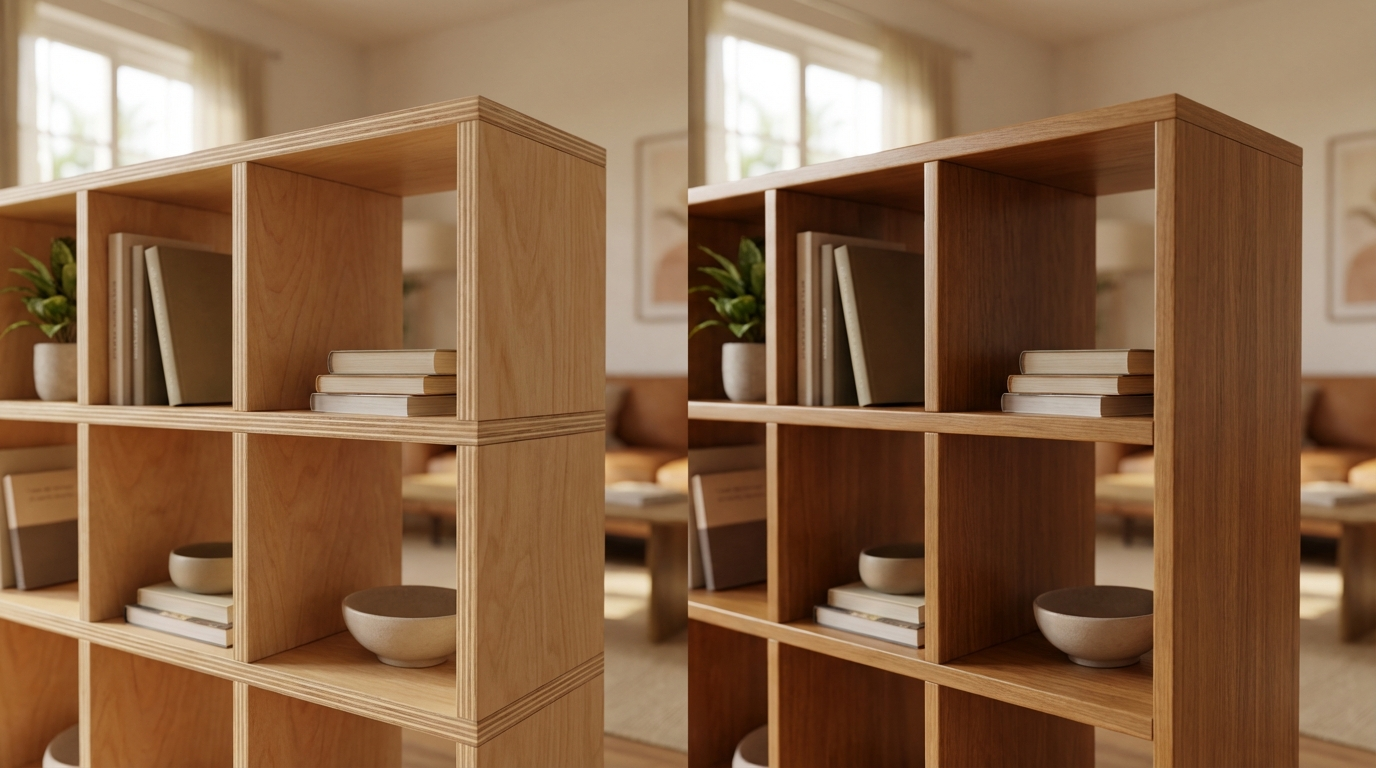
MR plywood accepts laminates, veneers, and paint finishes well. However, the face veneer quality determines final appearance when using transparent or semi-transparent finishes. Grade A face panels are necessary for polish work; Grade B suffices for laminate applications. Discuss finish plans with your carpenter before purchasing to ensure appropriate face grade selection.
Regional Considerations Across India
India's climate diversity means MR plywood performs differently across regions. Understanding these variations helps set realistic durability expectations.
Humid Coastal Zones
Cities like Mumbai, Chennai, Kochi, Visakhapatnam, and Kolkata experience extended periods of 75-90% humidity. MR plywood in ground-floor non-AC rooms may show gradual swelling over 5-7 years. Air-conditioned spaces fare better, but many homeowners in these regions prefer BWR grade even for bedroom furniture as a preventive measure.
Northern Plains and Dry Regions
Delhi NCR, Rajasthan, Gujarat, and central India experience moderate humidity (40-65%) for most of the year. MR plywood performs reliably for 10-15 years in these conditions. The primary concern shifts to termite protection rather than moisture.
Hill Stations and Cold Climates
Regions like Shimla, Ooty, and Northeast hill towns experience high monsoon humidity but drier winters. Temperature cycling and condensation on cold surfaces can affect MR plywood near windows. Positioning furniture away from condensation-prone areas extends lifespan.
Frequently Asked Questions
What is the full form of MR grade plywood?
MR grade plywood full form is Moisture Resistant plywood. It refers to interior-grade plywood manufactured under IS 303 Type 2 specifications using urea-formaldehyde adhesive. The "moisture resistant" designation indicates tolerance to atmospheric humidity and minor moisture exposure, but not water immersion or sustained wet conditions. This grade is India's most widely used plywood for residential furniture in dry areas like bedrooms and living rooms.
Is MR plywood waterproof?
MR plywood is not waterproof—it is only moisture resistant. The urea-formaldehyde adhesive used in MR plywood tolerates humidity but breaks down when exposed to direct water contact. Water exposure causes the glue bond to weaken, leading to delamination, swelling, and eventual structural failure. For waterproof applications like bathrooms, kitchens near sinks, or outdoor use, BWR or BWP grade plywood with phenolic resin bonding is necessary.
Which is better MR or BWR plywood?
Neither is universally "better"—the right choice depends on application. MR plywood is more economical and perfectly suitable for completely dry interiors like bedrooms, living rooms, and home offices. BWR plywood costs 30-50% more but is essential for kitchens, utility areas, and spaces with occasional water exposure. Using MR where BWR is needed leads to premature failure; using BWR where MR suffices wastes money without benefit.
Can MR plywood be used in kitchen?
MR plywood is not recommended for kitchen use except for overhead storage cabinets far from cooking areas and sinks. Base cabinets, sink units, and areas near cooking zones experience water splashes, steam, and humidity that exceed MR tolerance. Within 2-4 years, MR plywood in wet kitchen zones typically shows swelling, edge delamination, and adhesive failure. BWR grade is the minimum recommendation for all kitchen furniture.
What is the price of MR plywood per sq ft in India?
MR plywood prices in India range from ₹45-₹100 per sq ft for 18mm thickness, depending on brand tier and city. Economy brands start around ₹55-72 per sq ft, mid-range brands price at ₹78-95 per sq ft, and premium brands reach ₹100-130 per sq ft. Thinner panels (6mm-12mm) cost proportionally less. Prices vary by 10-15% between metros and smaller cities due to transport costs and dealer competition.
How to check MR plywood quality?
Quality verification involves multiple checks: First, locate the IS 303 embossed stamp on the panel edge—this should be permanent marking, not a sticker. Second, examine the edge for whitish glue lines (reddish indicates higher grades being sold as MR). Third, tap the panel centre and listen for hollow sounds indicating core voids. Fourth, flex the panel gently to test stiffness. Finally, inspect face veneer for excessive patches, cracks, or overlapping joints.
What is the difference between MR plywood and commercial plywood?
In Indian market terminology, "commercial plywood" and "MR plywood" refer to the same product—interior-grade plywood with urea-formaldehyde bonding under IS 303 Type 2 specifications. Dealers use "commercial" as a colloquial term. However, some unscrupulous sellers label non-ISI certified or substandard plywood as "commercial" to justify lower prices. Always verify IS 303 marking regardless of what the product is called.
How long does MR plywood last?
MR plywood furniture typically lasts 8-15 years in dry indoor conditions with proper care. Factors affecting lifespan include regional humidity, edge treatment quality, termite protection, and furniture placement. In low-humidity regions with air-conditioned rooms and properly edge-banded furniture, 12-15 years is achievable. In humid coastal cities without AC, lifespan may reduce to 6-8 years. Direct water exposure or wall dampness can cause failure within months regardless of brand quality.
Disclaimer: This content is provided for general informational purposes based on industry practices and publicly available information. Product specifications, standards, prices, and availability may vary by manufacturer, region, and time. Readers should independently verify details with manufacturers, dealers, or qualified professionals before making purchase or construction decisions.Want Plywood Suggestions?
Share a few details and a Apple Ply specialist will suggest suitable brands and connect you to responsive dealers.