Pre-Laminated Plywood (Prelam): Features and Uses
What is pre-laminated plywood? We explain how prelam plywood comes with a factory-finished laminate layer, its benefits, and where it’s best applied.
What is Pre-Laminated Plywood?
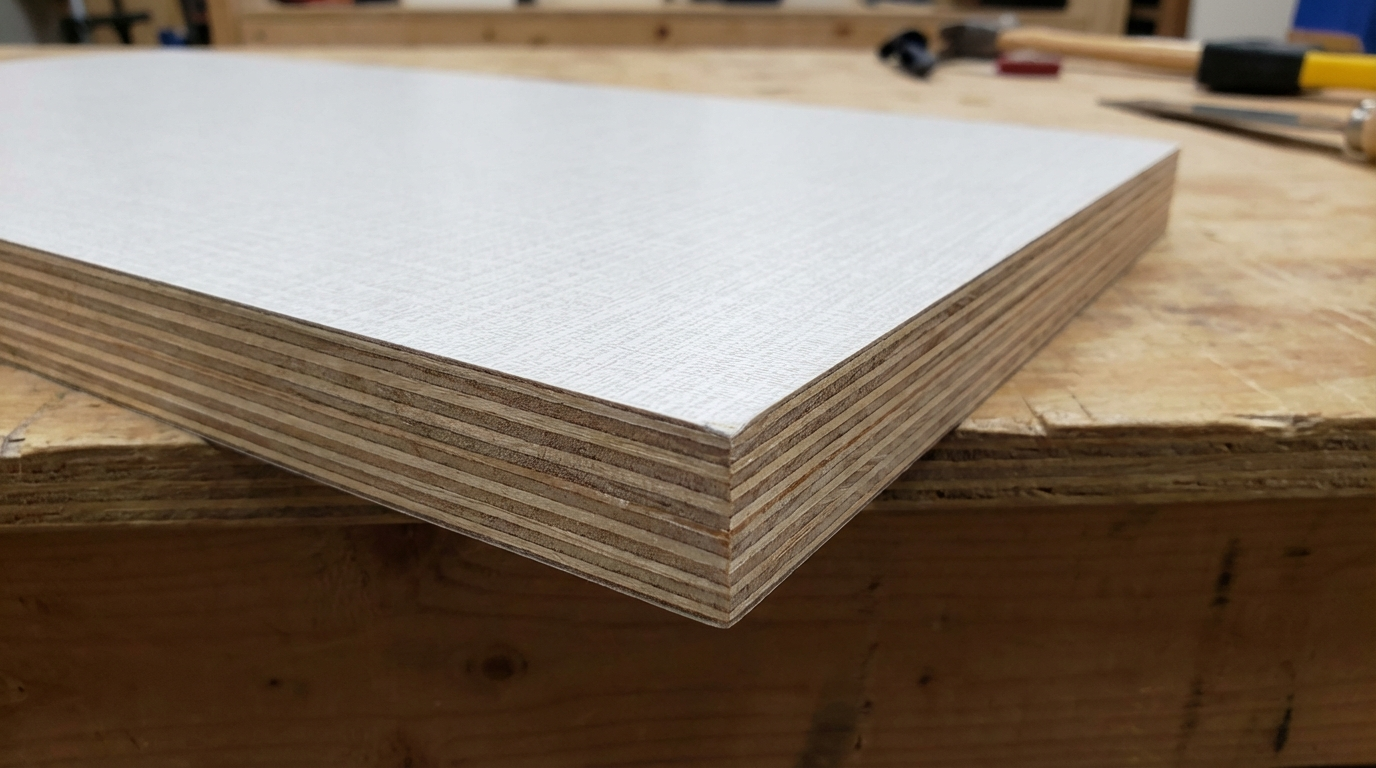
Pre-laminated plywood, often shortened to prelam, is a type of engineered wood panel where high-pressure laminates or similar decorative finishes are directly bonded to the plywood surface during the manufacturing process at the factory. Unlike regular plywood that requires separate lamination after purchase, prelam arrives ready for installation with a durable, pre-applied surface layer on one or both sides. This laminate layer—typically 0.6 to 1 mm thick—provides color, texture, and pattern options ranging from wood grains to solid hues or stone effects, all sealed for protection.
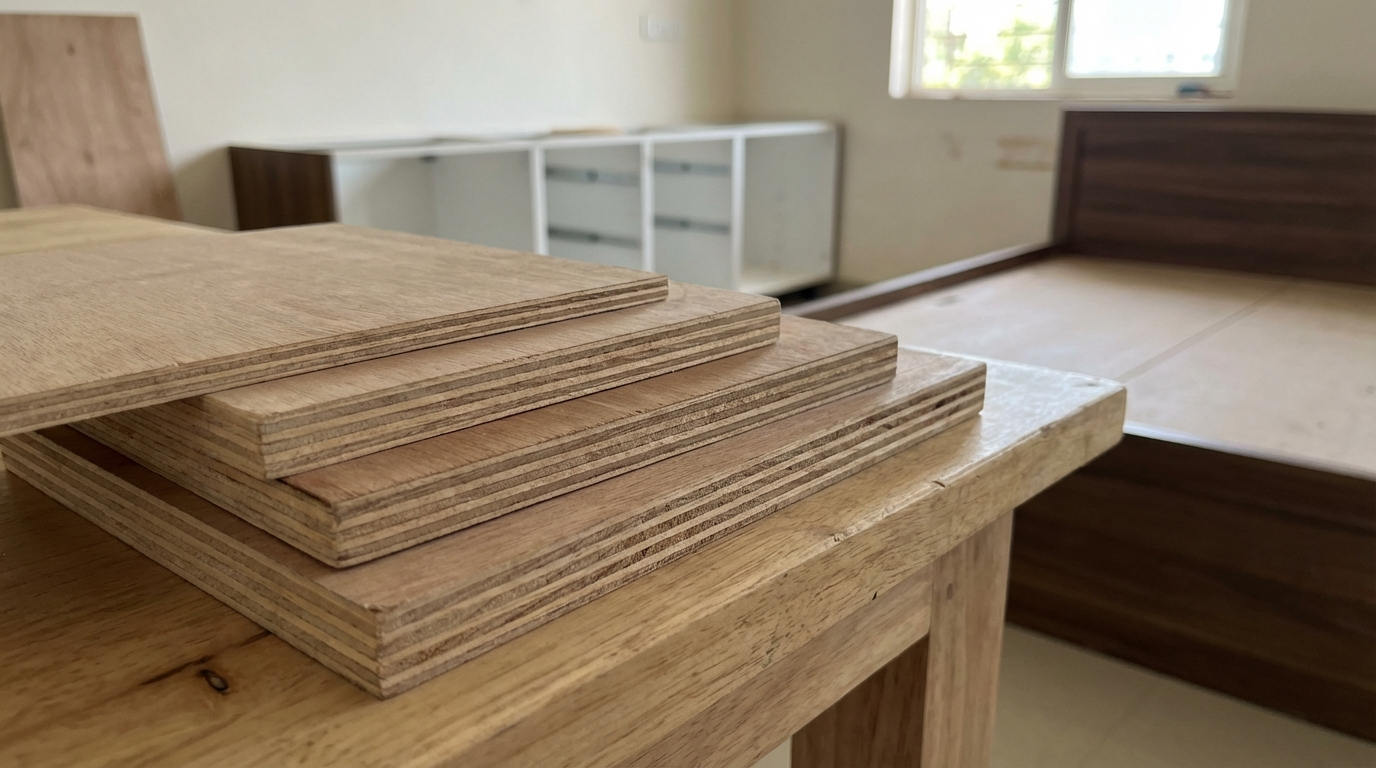
The core remains standard plywood made from layers of wood veneers glued cross-directionally for strength, usually in thicknesses from 3 mm to 25 mm. The key distinction lies in the factory bonding: adhesives like urea-formaldehyde or phenolic resins ensure a tight, void-free bond under heat and pressure. This process eliminates the need for on-site polishing, edging, or veneering, saving time and reducing labor errors common in Indian carpentry workshops.
In practical terms, imagine ordering plywood for a kitchen cabinet: with prelam, you unbox it, cut to size, edge-band if needed, and assemble directly. No waiting for laminate sheets to cure or worrying about bubbles from poor application. This factory precision makes prelam ideal for modern interiors where speed and finish quality matter.
Why does this matter early for buyers? It directly addresses the core question: prelam plywood combines the structural reliability of plywood with an instant aesthetic upgrade, bypassing the hassles of post-manufacture finishing. In India, where modular furniture demand surges, this translates to faster project turnarounds without compromising on looks or durability.
From an industry standpoint, prelam's rise stems from evolving manufacturing capabilities. Factories now embed UV-resistant topcoats into the laminate, enhancing scratch resistance and fade-proofing against harsh sunlight. Thicknesses suit diverse needs: thin 4-6 mm sheets for wardrobes, thicker 18 mm for tabletops. Understanding this foundation helps buyers select without overpaying for redundant processes.
How Pre-Laminated Plywood is Manufactured
The manufacturing of pre-laminated plywood begins with selecting quality hardwood or softwood veneers, typically poplar, eucalyptus, or tropical hardwoods prevalent in India. These veneers, 1-3 mm thick, are dried to below 10% moisture to prevent warping, then glued with waterproof boils or moisture-resistant adhesives. Layers are laid alternately for isotropic strength—odd numbers like 5, 7, or 11 plies ensure balance.
Post-pressing into plain plywood at 100-150 kg/cm² pressure and 120-140°C, the panels undergo surface preparation: sanding for smoothness and defect filling. Here's where prelam diverges: pre-cut laminate sheets, made from kraft paper impregnated with melamine resin, are aligned precisely over the plywood using automated feeders. The stack enters a short-cycle laminating press, applying 80-100 kg/cm² and 140-180°C for 30-60 seconds per side, fusing the laminate molecularly to the wood.
Cooling, trimming, and quality checks follow. Edges may receive PVC or ABS strips for sealing, though many prelam panels ship edge-exposed for custom banding. Advanced lines incorporate CNC-controlled patterning for realistic textures like oak or teak veins. In India, factories in regions like Punjab and Gujarat dominate due to access to raw materials and power stability.
This process yields panels with superior bond strength—peel tests exceed 150 N/25 mm—because factory conditions control variables like humidity and pressure uniformity. On-site lamination, by contrast, often fails under inconsistent heat guns or presses. For Indian buyers, grasping this explains why prelam holds up better in humid coastal areas: the laminate acts as a vapor barrier, locking out moisture that delaminates plain plywood.
Variations include single-side prelam for backing boards or double-side for freestanding furniture. Boiling-water-resistant (BWR) grades use phenolic cores for wet areas. Manufacturing scale affects quality—larger runs minimize defects like telegraphing (core impressions on the surface). Buyers benefit by insisting on IS-marked panels, ensuring standardized glue shear and formaldehyde emission limits.
Key Features of Pre-Laminated Plywood
Pre-laminated plywood stands out through its laminate layer's properties fused to a robust core. Surface features include high gloss, matte, suede, or textured finishes, with patterns mimicking exotic woods unavailable locally. Abrasion resistance reaches 200-400 cycles under standard tests, thanks to aluminum oxide overlays, making it suitable for high-traffic tabletops.
Dimensionally, panels measure standard 8x4 feet or 6x4 feet, with thicknesses calibrated for load-bearing: 12 mm deflects less than 2 mm under 100 kg point load over 1-meter span. The laminate's 0.7-1.2 mm thickness adds rigidity without bulk. Heat resistance up to 180°C prevents scorching from hot utensils, vital in Indian kitchens.
Moisture performance varies by grade: MR (moisture-resistant) grades absorb under 10% after 24-hour submersion, while BWR types limit to 5%. Impact resistance handles dropped objects better than veneered plywood due to the tough topcoat. Chemical resistance guards against spills like turmeric stains or cleaners.
In South India, where monsoon humidity spikes to 90%, prelam's sealed edges and low-emission glues (E1 or better) reduce formaldehyde off-gassing, improving indoor air. CNC compatibility shines here—precise laser-cuttable without chipping, unlike post-laminated surfaces that fray. Fire-retardant variants meet class B standards for commercial spaces.
Edge finish matters: many prelam arrive with matching laminate-wrapped edges, minimizing banding needs. Weight per sheet (around 40-60 kg for 18 mm) suits manual handling yet demands proper storage off-ground. These features collectively make prelam a versatile base for modular systems, where uniformity across batches ensures seamless joins.
Advantages of Using Pre-Laminated Plywood
One primary advantage is time efficiency: factory finishing skips 2-3 days of on-site lamination, crucial for India's deadline-driven projects like Diwali renovations. Cost savings follow—laminate labor drops 30-40%, with material waste under 5% versus 15% in manual work. Uniformity across sheets eliminates color mismatches plaguing dealer-supplied laminates.
Durability edges out alternatives: the high-pressure bond withstands boiling water for hours without delamination, outperforming hot-pressed laminates in peel strength. Aesthetic versatility offers 100+ designs, from walnut replicas to glossy whites, suiting diverse Indian tastes without custom printing costs.
Installation ease appeals to carpenters: direct screwing or nailing without pilot holes in thin laminates, and compatibility with PU or acrylic primers for spot repairs. Low maintenance—no polishing needed, just damp wiping—suits busy households. Environmental angles include optimized glue use, reducing VOCs compared to multiple finishing layers.
In modular kitchens popular in urban South India, prelam's flatness post-CNC routing ensures perfect drawer alignments, avoiding callbacks. Why this matters in India: with dealer-driven buying, prelam minimizes discrepancies between sample swatches and delivered goods, building trust. For coastal homes, salt-laden air doesn't corrode the surface like uncoated plywood.
Longevity estimates: 15-20 years in dry interiors, 10+ in humid zones with edge sealing. These benefits compound in high-volume uses like hostels, where quick assembly cuts labor 25%. Overall, prelam shifts projects from craftsmanship-dependent to process-efficient.
Common Applications and Uses in Indian Homes and Offices
Pre-laminated plywood excels in wardrobes, where its moisture resistance protects clothes from humidity-induced mold, especially in Mumbai's monsoons. Full-height sliders or hinged doors leverage 18 mm thickness for sag-free shelves spanning 1 meter. Patterns like grey oak blend with minimalist designs.
Kitchen cabinets represent 40% of usage: counter bases in BWR prelam handle spills, while uppers in MR grades suffice. Modular islands benefit from seamless laminate joins, hiding plywood edges. In South Indian homes, where wet grinding areas adjoin, prelam's stain-proofing prevents masala residues from embedding.
Office furniture like partitions and desks uses 12 mm prelam for acoustic panels or cable-managed workstations. Commercial spaces opt for anti-fingerprint matte finishes. Bed frames and headboards employ curved prelam for ergonomic contours, cut via CNC.
False ceilings and wall panels in apartments add luxury without painting hassles. In coastal Kerala villas, UV-stable prelam withstands salty breezes on balcony enclosures. Schools and hostels favor it for bunk beds—impact-resistant and easy-clean.
Trade applications include shop counters and exhibition stalls, where quick setup shines. For Indian buyers, matching uses to grades avoids failures: MR for bedrooms, BWR for baths. Carpenter insight: always edge-seal exposed cuts to extend life. These applications make prelam a staple in dealer inventories nationwide.
Why Pre-Laminated Plywood Matters in the Indian Market
In India's diverse climates, prelam addresses core pain points. Northern dry heat causes plain plywood to crack; prelam's laminate stabilizes surfaces. But South India's monsoon humidity—80-95% for months—tests moisture management. Here, BWR prelam with sealed cores prevents swelling up to 5% versus 15% in untreated boards, crucial for Chennai apartments where leaks are common.
Coastal exposure in Goa or Vizag accelerates corrosion; prelam's phenolic barriers resist salt spray, unlike veneers that blister. Modular kitchens, booming in Bengaluru IT homes, demand prelam for its CNC precision—router bits glide without tear-out, enabling intricate handle recesses.
Dealer-driven buying dominates: wholesalers stock prelam in bulk, offering swatch books for on-spot decisions, reducing transport of loose laminates. This cuts project timelines by 20%, vital for festive rushes. Carpenter workflows simplify—no edge routers needed if factory-edged, freeing time for assemblies.
Urban density amplifies needs: compact 1BHKs use prelam for multi-functional units like bed-cum-study tables. Economic angle: mid-tier pricing (higher than plain but lower lifecycle) suits growing middle-class budgets. Why this matters: prelam bridges traditional craftsmanship with factory efficiency, empowering small contractors in dealer ecosystems.
Sustainability ties in—eucalyptus cores from plantations reduce deforestation pressure. In fire-prone commercial builds, FR grades comply without additives. Overall, prelam adapts to India's scale, from villas to PGs, making it indispensable.
Common Mistakes Buyers and Carpenters Make with Prelam Plywood
A frequent error is ignoring core grade: buyers pick glossy prelam for kitchens without BWR rating, leading to delamination from steam. Always verify boil tests—submerge samples 8 hours; no separation means reliable. In humid South India, MR-only fails post-monsoon.
Carpenters often skip edge sealing: CNC cuts expose porous plywood cores, inviting termites or moisture. Apply matching PVC bands or silicone within hours. Another pitfall: overloading thin sheets—6 mm prelam warps under heavy books; use 12 mm+ for spans over 60 cm.
Storage blunders abound: stacking flat on concrete absorbs ground moisture, telegraphing patterns. Elevate on bearers in shaded godowns. Dealer pressure to buy 'budget' prelam risks thin laminates (under 0.6 mm) that scratch easily—test with keys.
Installation oversights: screwing too close to edges (under 20 mm) splits laminate; pre-drill always. In modular kitchens, ignoring expansion gaps (2-3 mm) causes buckling in summer heat. Narrative from field: a Kochi project failed when uncoated backs met AC drips, warping cabinets—lesson: double-side prelam or back-seal.
Mixing thicknesses mid-project mismatches heights. Buyer mistake: chasing cheapest dealer without IS 1659 checks, getting high-formaldehyde boards that irritate eyes. Train carpenters on dust extraction during routing—prelam particles irritate more. Avoiding these extends life 5-10 years.
Trade-Offs, Limitations, and When Not to Choose Prelam
Prelam's upfront cost runs 20-40% higher than plain plywood due to lamination, though lifecycle evens out. Limitation: customization lags—factory patterns limit hyper-local designs like specific marble veins; post-laminate suits bespoke.
Repair challenges: deep scratches expose core, requiring full panel replacement versus sanding veneers. Heavy custom curving needs steam-bending pre-prelam plywood. Weight adds 10-15% over plain, straining weak floors in old buildings.
Edge exposure: unfinished sides demand banding, adding steps unlike blockboard's uniformity. In extreme heat (>50°C factories), low-grade laminates bubble. Not ideal for outdoor exposure—UV degrades over 2 years without marine-grade.
When not to choose: heavy structural beams (use sawn timber), or ultra-budget flips where plain + paint saves 30%. In termite-hotspots without treatment, core vulnerability persists despite surface. For painted finishes, prelam wastes the laminate.
Trade-off matrix: speed vs. flexibility—prelam wins rushed jobs but loses artistic tweaks. In dealer buys, stock availability trumps variety. South India edge: great for modular but overkill for rustic village homes. Weigh project scale: small jobs favor it; massive renovations may revert to bulk plain.
Decision Framework for Selecting Pre-Laminated Plywood
Navigate choices with this step-by-step framework tailored for Indian buyers. First, assess environment: humid/coastal? Mandate BWR double-side. Dry interiors? MR single-side suffices. Second, usage intensity: high-traffic kitchens/offices need abrasion-resistant textures; bedrooms take gloss.
Third, budget vs. lifespan: calculate total ownership—prelam's 15-year durability offsets 25% premium. Fourth, project type: modular/CNC? Prioritize flatness under 0.5 mm tolerance. Manual carpentry? Edge-sealed variants.
Fifth, dealer verification: demand core samples, boil test, and emission certs. Sixth, thickness selector: shelves <80 cm span use 12 mm; floors 18-25 mm.
| Use Case | Recommended Grade | Thickness | Key Check |
|---|---|---|---|
| Wardrobe interiors | MR | 12-18 mm | Sag test |
| Kitchen cabinets | BWR | 18 mm | Boil resistance |
| Office desks | MR textured | 18-25 mm | Scratch resistance |
| Wall panels | MR | 6-9 mm | Light weight |
This framework empowers confident picks, avoiding 80% of regrets. Simulate: for Bengaluru modular kitchen, select BWR 18 mm grey prelam—handles humidity, fits CNC, dealer-stocked.
Frequently Asked Questions About Pre-Laminated Plywood
Can pre-laminated plywood be used in bathrooms?
Yes, but only BWR or marine-grade variants with full edge sealing. Regular MR absorbs water over time, swelling cores. In South Indian coastal baths with high humidity, apply silicone sealant on all cuts and joints. Avoid direct shower exposure—use tiles over. Lifespan: 8-12 years with ventilation.
Is prelam plywood termite-resistant?
Not inherently; the laminate blocks surface access, but untreated cores remain vulnerable. Opt for IS 12076-treated panels with chemicals like chlorpyrifos. In termite-prone Tamil Nadu, pair with gel baits. Inspect annually; edges are weak points.
How does prelam compare to veneer plywood?
Prelam offers thicker, tougher protection (1 mm vs. 0.6 mm veneer), better for wear. Veneer suits paintable curves; prelam excels in ready finishes. Cost: prelam middle-tier, veneer budget. India preference: prelam for speed.
Can I paint over pre-laminated plywood?
Possible but suboptimal—roughen surface with 180-grit, prime with PU. Adhesion holds but chips easier than bare wood. Better for spot fixes; new projects choose plain if painting planned.
What thickness is best for wardrobe shutters?
18 mm for stability, preventing sag on 2-foot widths. Lighter 12 mm for internals. Test deflection: <1 mm under 20 kg. CNC-routable for hinges.
Does prelam work with CNC machines?
Perfectly—clean cuts without chipping if feeds are 15-20 m/min. South India modular firms standardize on it. Use upcut bits for laminates.
How to clean and maintain prelam surfaces?
Damp microfiber cloth with mild soap; no abrasives. Avoid excess water pooling. For stains, baking soda paste. Lasts decades with care.
Is pre-laminated plywood eco-friendly?
Moderately—eucalyptus cores renewable, low glue waste. E0 emission grades minimize VOCs. Better than particleboard in recyclability.
Disclaimer: This content is provided for general informational purposes based on industry practices and publicly available information. Product specifications, standards, prices, and availability may vary by manufacturer, region, and time. Readers should independently verify details with manufacturers, dealers, or qualified professionals before making purchase or construction decisions.
Want Plywood Suggestions?
Share a few details and a Apple Ply specialist will suggest suitable brands and connect you to responsive dealers.