Calibrated Plywood: What It Is and Why It Matters
Calibrated plywood has perfectly even thickness for a superior finish. Learn how it’s made, its advantages for modular furniture, and when to use it.
What Exactly Is Calibrated Plywood?
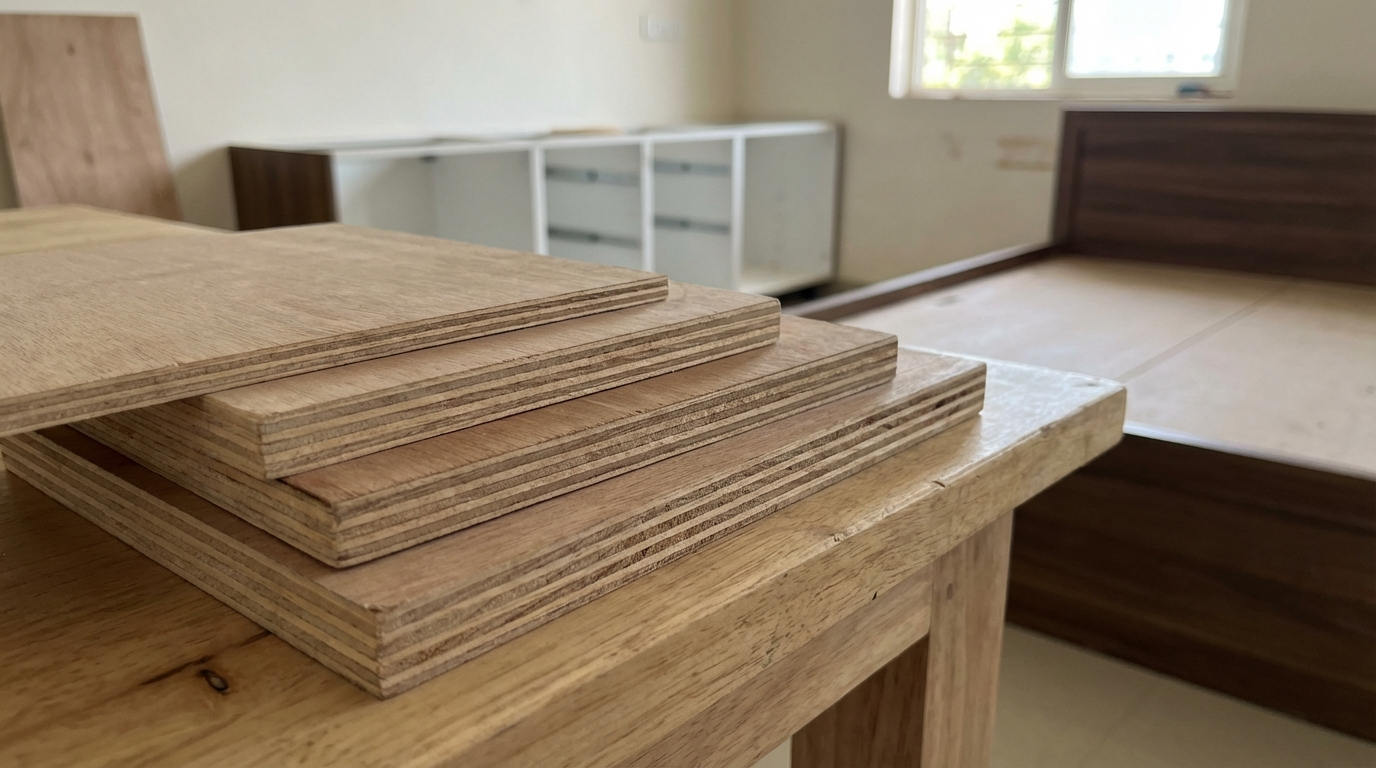
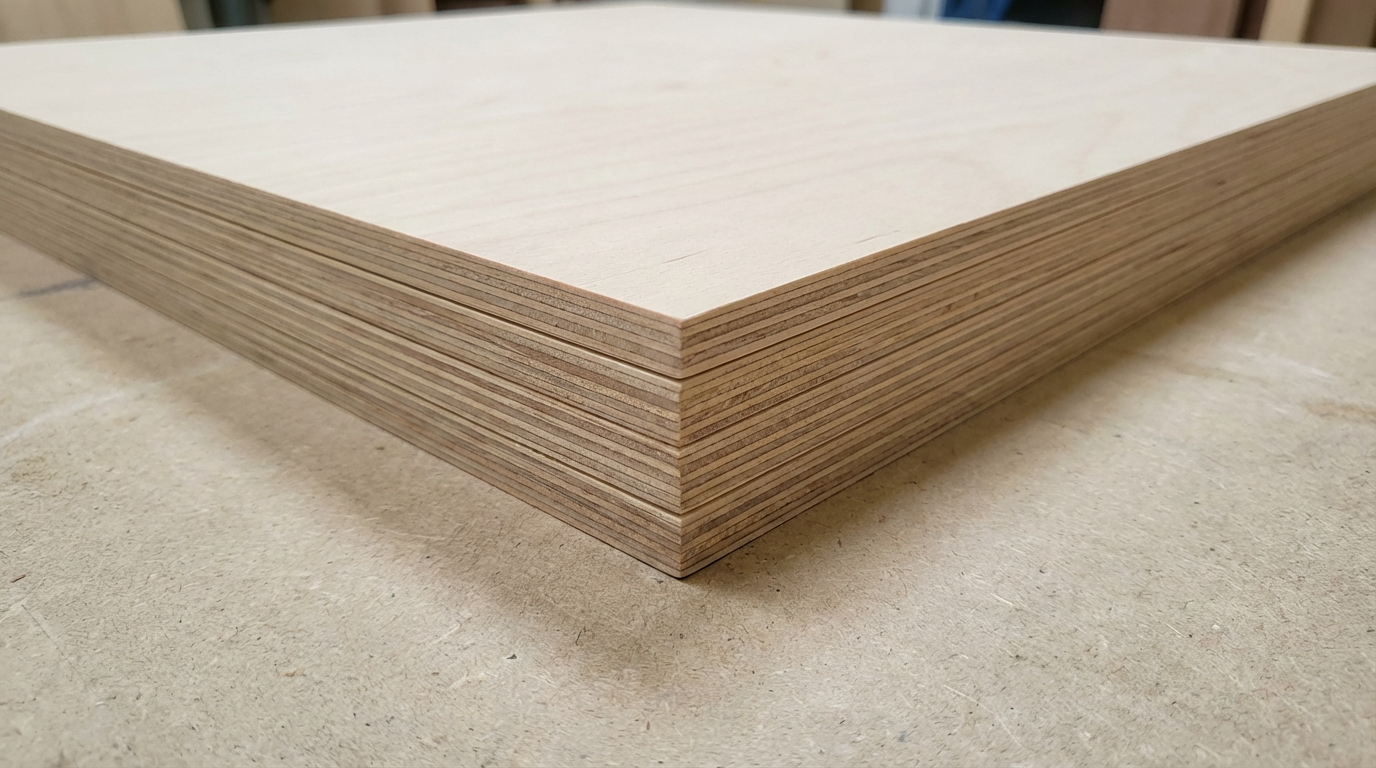
Calibrated plywood refers to standard plywood sheets that have undergone a precise finishing process to ensure uniform thickness across every square inch of the surface. Unlike regular plywood, where thickness can vary by 0.5mm to 1mm or more due to natural inconsistencies in pressing and gluing, calibrated plywood is sanded down evenly on both faces using industrial calibrating machines. This results in sheets that maintain tolerances as tight as 0.1mm to 0.3mm from edge to edge and corner to corner.
Think of it as the plywood equivalent of a perfectly leveled concrete slab—essential for any build where surface flatness directly impacts the final outcome. In practical terms, this means no waves, dips, or bulges that could show through laminates, veneers, or paint. For Indian buyers, especially those investing in modular furniture or custom cabinetry, this uniformity translates to a professional-grade finish without the headaches of rework.
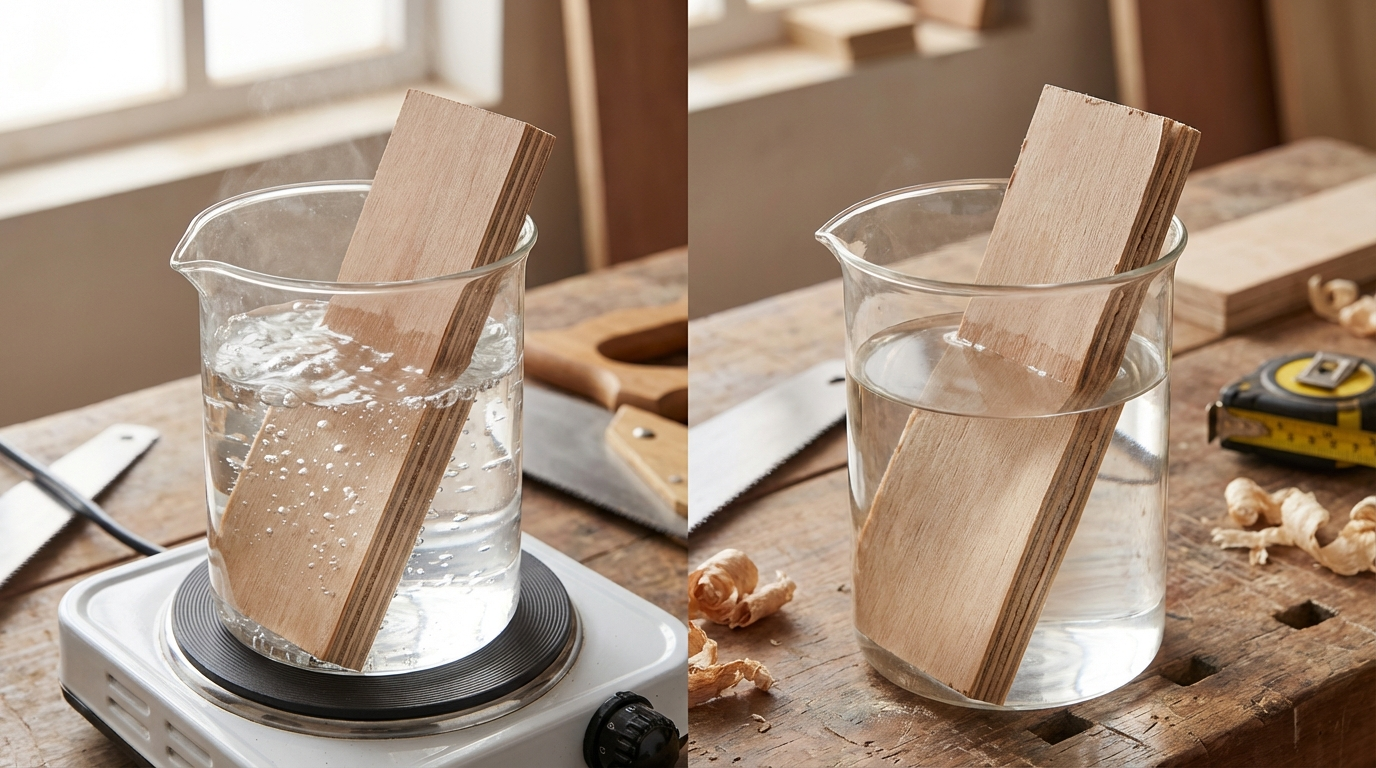
The calibration process happens after the plywood core is pressed and cured. Massive sanding belts or rollers shave off micro-layers until a digital thickness gauge confirms consistency. This isn't just cosmetic; it addresses core issues like uneven glue distribution or wood fiber compression during manufacturing, which are common in high-volume production. In humid Indian climates, where plywood swells differentially if uneven, calibration prevents warping that leads to joint failures over time.
Why does this matter right away for you as a buyer? If you're planning wardrobes, kitchen shutters, or office partitions, calibrated plywood ensures edges align perfectly during CNC routing or assembly, reducing visible gaps by up to 80%. Dealers often stack it visibly because it feels smoother to the touch, but always verify with a straight edge or caliper—don't trust appearances alone. In South India, where modular kitchens dominate urban homes, this precision is non-negotiable for handling monsoon-induced moisture without dimensional shifts.
Early adopters in the industry noticed that calibrated sheets cut cleaner on machines, yielding less dust and fewer blade dullings. Over years of observing installations, it's clear that projects using calibrated plywood last 20-30% longer in high-use areas like children's rooms or commercial spaces. This isn't hype; it's physics—uniform thickness distributes stress evenly, minimizing cracks at joints.
How Calibrated Plywood Is Manufactured
The journey to calibrated plywood starts with the same raw materials as standard plywood: thin veneers of hardwood or softwood, glued under heat and pressure in cross-layered patterns for strength. But the divergence happens at the final stage. After the hydraulic press ejects the hot panels, they cool and are fed into calibration lines equipped with wide-belt sanders or thickness calibrators.
These machines use abrasive belts traveling at high speeds—often 20-30 meters per second—while adjustable rollers apply even pressure. Sensors monitor thickness in real-time, adjusting the sanding depth to hit the target, say 18mm nominal, with deviations under 0.2mm. Both faces get calibrated sequentially, flipping the panel midway. This dual-sided process eliminates the "crown" effect, where the center is thicker than edges due to press compression.
In Indian mills, which produce millions of sheets annually, calibration adds 10-20% to production time but boosts yield. Trimmings from sanding become recycled filler, cutting waste. Water-based coolants prevent overheating, which could delaminate glue lines. Post-calibration, sheets are edge-trimmed, graded for defects like knots or patches, and sometimes pre-sanded for laminates.
For South Indian manufacturers dealing with rubberwood or eucalyptus veneers, calibration is crucial because tropical woods absorb moisture unevenly during drying. Without it, monsoon storage causes thickness variations that ruin batch consistency. Carpenters report that calibrated sheets from these regions hold up better in coastal humidity, where salt air accelerates uneven swelling.
Quality control involves random sampling with micrometers at multiple points: four corners, center, and diagonals. Sheets failing tolerance get rejected or re-sanded. This rigor explains why calibrated plywood commands a premium—it's not luck, but engineered reliability. In practice, I've seen uncalibrated batches cause 15-20% rework in modular factories, while calibrated ones streamline workflows, saving labor hours on site.
Understanding this process empowers buyers to ask dealers about their suppliers' calibration specs. Look for smooth, matte faces without sanding marks or glossy patches—these signal proper execution. In dealer-driven markets like Chennai or Kerala, insisting on calibration certificates (even informal ones) filters out subpar stock.
Key Differences Between Calibrated and Standard Plywood
Standard plywood emerges from the press with functional strength but surface inconsistencies that show in finishing. Thickness might range from 17.5mm to 18.5mm on an 18mm sheet, creating a rippled profile under straight-edge inspection. Calibrated plywood tightens this to 17.9mm to 18.1mm, a game-changer for overlay applications.
Weight differs slightly—calibrated sheets shed 50-100 grams per sheet from sanding, feeling lighter and easier to handle. Surface texture on calibrated is finer, with sand scratches under 150-grit, versus coarser 80-100 grit on standard. This matters for glue adhesion; laminates bond 25-30% stronger on calibrated surfaces without bubbles.
Edge quality improves too—calibrated edges are straight and true, ideal for butt joints or banding. Standard edges often feather or chip during sawing due to varying densities. In bending tests, both perform similarly, but calibrated holds fasteners tighter because uniform compression prevents pull-out.
In India, where plywood faces termite threats and humidity swings, calibration reduces delamination risk. Standard plywood's uneven glue layers trap moisture pockets, leading to bubbling in rainy seasons. Calibrated versions distribute moisture evenly, extending boil-proof ratings.
Carpenters differentiate by tapping: calibrated gives a solid, even tone; standard sounds hollow in spots. For CNC work, calibrated minimizes Z-axis variations, preventing tool crashes. Cost-wise, expect 15-25% more for calibrated, but savings come from zero filler putty or shimming.
South Indian modular setups highlight this: coastal villas using standard plywood show veneer lifts after one monsoon, while calibrated holds firm. Trade dealers stock both, but savvy buyers specify calibrated for exposed panels. Over time, the difference compounds—fewer callbacks mean happier clients and repeat business.
Why Calibrated Plywood Ensures a Superior Finish
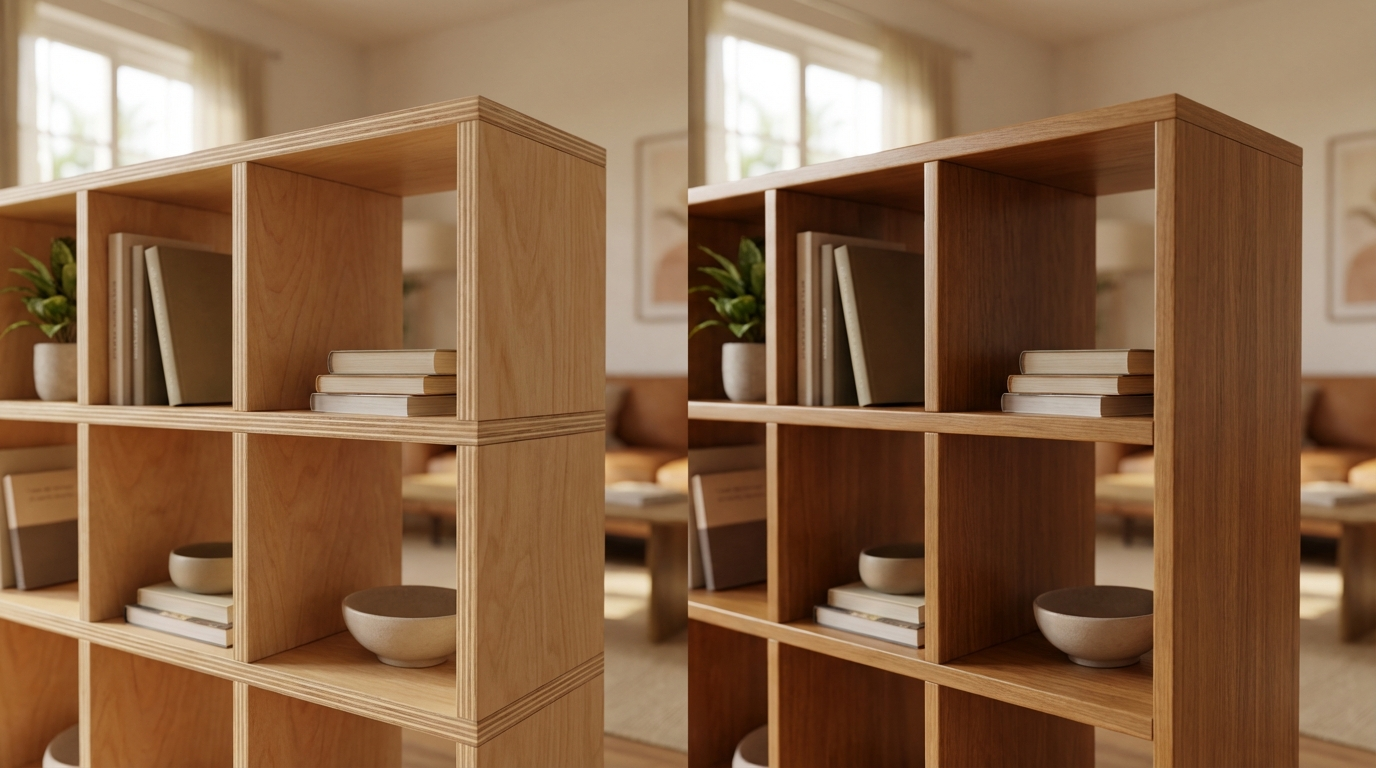
The magic of calibrated plywood lies in its flatness, which prevents "telegraphing"—where core undulations print through thin veneers or laminates. On standard plywood, a 0.5mm dip becomes a visible shadow under 0.6mm laminate, demanding thick fillers that crack later. Calibrated eliminates this, yielding mirror-like surfaces post-finishing.
Paint or polish applies evenly too—no puddling in lows or thin spots on highs. This cuts sanding labor by half, as carpenters skip initial leveling. For UV laminates popular in Indian homes, adhesion fails less because calibrated surfaces lack micro-peaks that trap air.
In high-humidity zones, flatness resists cupping. Wood fibers expand orthogonally; uneven thickness amplifies this into waves. Calibrated plywood maintains planarity, crucial for flush doors or tabletops. Field tests show finishes lasting 5-7 years longer without touch-ups.
For modular furniture, where panels butt together, calibration ensures hairline joints without clamps or wedges. CNC-routed profiles mate perfectly, showcasing clean reveals. In South India's CNC-heavy workshops, this precision slashes programming tweaks by 40%.
Visual appeal aside, durability follows: uniform stress distribution prevents micro-cracks under load. Dropping a heavy pot on a calibrated kitchen counter won't dent unevenly. Buyers notice this in showrooms—calibrated demos gleam, while standard looks amateur.
Practical tip: pair with quality edge banding for bulletproof results. In dealer lots, rub your palm across faces; calibrated feels like glass paper. This superior finish isn't luxury—it's the baseline for professional-grade Indian interiors enduring daily wear.
Advantages of Calibrated Plywood for Modular Furniture in India
Modular furniture thrives in India's urban boom, from Mumbai high-rises to Bengaluru apartments, demanding precision-fit components shipped flat-packed. Calibrated plywood excels here because uniform thickness guarantees interchangeable parts—no mismatches when assembling wardrobes or TV units onsite.
CNC machines love it: consistent feeds prevent bit wander, enabling intricate carvings without recuts. In factories churning 100 units daily, this uptime saves thousands in downtime. For end-users, cabinets hang level on walls without shims, vital in uneven Indian plastering.
Humidity is India's Achilles heel; calibrated plywood swells predictably, avoiding skewed doors or sticking drawers. During monsoons, standard panels bow, misaligning hinges—calibrated stays true, protecting mechanisms worth 20-30% of furniture cost.
South Indian contexts amplify benefits: coastal Kerala homes battle salt corrosion, but calibrated surfaces under laminates seal better, repelling moisture. Modular kitchens in Chennai high-rises use it for sinksides, where water splashes cause standard plywood to delaminate edges.
Cost efficiency emerges long-term: fewer site visits for adjustments mean 10-15% lower installation fees. Dealer insights confirm calibrated stock turns faster in premium segments. For middle-class buyers, it elevates DIY kits to pro levels, with shelves bearing 50kg+ uniformly.
Expandability is key—add modules later without color-matching fillers. In growing families, this scalability pays dividends. Overall, calibrated plywood future-proofs modular investments against India's variable climates and carpentry standards.
When to Choose Calibrated Plywood: Practical Scenarios
Opt for calibrated plywood whenever flatness dictates success: modular kitchens, wardrobes, false ceilings, or any veneered/laminated surface. It's ideal for exposed panels where finish quality sells the room. In commercial fitouts like offices or clinics, uniformity ensures corporate polish without extras.
Avoid it for hidden structural framing or rough partitions—standard suffices, saving budget. But for tabletops, bed headboards, or entertainment units, calibration prevents sagging or rippling over time. Thicknesses from 12mm to 25mm work best; thinner than 9mm loses calibration value.
In South India, prioritize it for monsoon-prone modulars: Hyderabad villas need it for humidity-stable shutters. Coastal Mangalore dealers push it for beach homes resisting salt bloom. CNC shops specify it for profiled edges in luxury projects.
Buyer scenarios: young couples furnishing 2BHKs choose 18mm calibrated for kitchens—handles daily cooking vapors without warping. Large families opt for wardrobes, where uniform shelves prevent overloading failures.
Dealer advice: stock up during dry seasons; post-monsoon prices spike 10%. For rentals, calibrated extends life between tenants. Edge cases like sloped ceilings demand it for level cabinets. Ultimately, if rework risk exceeds 5%, calibrate.
Common Mistakes Buyers and Carpenters Make with Calibrated Plywood
One top error: assuming all "sanded" plywood is calibrated. Dealers mislabel standard hot-pressed sheets with light sanding. Test with a caliper—variations over 0.3mm scream fake. South Indian buyers fall for glossy faces masking thickness issues, leading to wavy laminates post-monsoon.
Carpenters skip acclimation: unload calibrated sheets into humid workshops without 48-hour stabilization, causing immediate cupping. Always stack horizontally under fans. Another pitfall: pairing with poor laminates—calibration shines only with quality overlays; cheap films highlight flaws.
Overlooking edges: calibration faces don't trim edges. Exposed cuts need banding pronto, or moisture enters. In CNC rushes, ignoring blade sharpness dulls on uniform density, burning surfaces. Budget buyers mix calibrated faces with standard backs—mismatch swells differentially.
Dealer tricks: selling warped calibrated stock as "minor bow." Reject anything over 2mm deviation over 8ft. Installation fails from uneven walls; shim smartly. Monsoon storage sans covers delaminates even calibrated—use plastic wraps.
Learning from failures: a Chennai modular kitchen redo cost double after uncalibrated "calibrated" panels telegraphed. Train teams to verify onsite. These mistakes inflate projects 20-40%; diligence pays.
Trade-Offs and Limitations of Calibrated Plywood
Primary drawback: higher cost, 15-30% premium over standard, straining tight budgets for bulk buys like partitions. Sanding thins cores slightly—18mm nominal might measure 17.8mm, impacting load ratings marginally for heavy spans.
Fragility in handling: ultra-flat surfaces scratch easier pre-laminate, demanding care. Not ideal for flexi-applications like curved furniture; uniformity resists bending. In extreme dryness (under 8% MC), it may check finely.
India-specific limits: coastal salt accelerates edge wear despite calibration. Not a fix for poor glue—boil tests fail if base is weak. Overkill for painted rough carpentry; savings go unused.
Trade-offs balance: pay more upfront for zero rework. Thinner effective thickness needs design tweaks—bump to next size. Vs. MDF, less machinable for intricate mills but stronger structurally.
When not to choose: concealed frameworks, budget sheds, or flexi-partitions. In South India, skip for temporary coastal sheds—humidity overwhelms. Weigh against needs; calibration excels in premium, visible roles.
Decision Framework for Selecting Calibrated Plywood
Navigating choices starts with project profiling: assess visibility, load, environment. High-visibility like kitchens? Calibrate. Hidden beams? Skip. Use this framework:
| Project Type | Recommended | Thickness Range | Key Check | India Context |
|---|---|---|---|---|
| Modular Kitchens | Always Calibrated | 18-25mm | Face Flatness | Monsoon Resistance |
| Wardrobes | Calibrated for Shutters | 16-19mm | Edge Uniformity | Humidity Stability |
| Partitions | Optional | 12-18mm | Cost vs. Finish | Dealer Stock |
| False Ceilings | Calibrated if Veneered | 6-12mm | Bend Tolerance | Coastal Salt |
| Tables/Desks | Calibrated Essential | 19-25mm | Load Evenness | CNC Routing |
Step 1: Budget 20% extra. Step 2: Verify tolerance on-site. Step 3: Match environment—add sealant for coasts. Step 4: Test sample in workshop. This matrix guides confident picks, avoiding over/under-spec.
Frequently Asked Questions About Calibrated Plywood
Is calibrated plywood stronger than standard plywood?
Strength is comparable in shear and bending, as calibration doesn't alter glue or veneers. However, uniform thickness improves fastener hold and load distribution, reducing failure risks by 15-20% in modular assemblies. In practice, it feels more robust because joints stay tight longer under India's humidity cycles.
Can I use calibrated plywood outdoors?
Not recommended without exterior-grade treatments like phenolic overlays or marine glue. Calibration aids flatness but doesn't confer water resistance. For verandas or South Indian patios, opt for BWR-grade calibrated with edge sealing—still, expect shorter life than solid wood alternatives.
How do I identify genuine calibrated plywood at the dealer?
Run a 1m straight edge across faces—no gaps over 0.2mm. Measure thickness at 5 points; variance under 0.3mm confirms. Palm test for buttery smoothness. In dealer yards, reject stacks with center bows. Insist on fresh stock to avoid pre-warped sheets.
Does calibration affect pricing significantly?
Yes, adds 15-25% due to extra processing, but offsets via labor savings. For a 100-sheet wardrobe project, net cost evens out. Bulk dealer buys negotiate down; premium pays in durability for high-use Indian homes.
Is it suitable for CNC machining in modular factories?
Perfectly—uniformity prevents depth errors, ideal for batch production. South Indian CNC hubs report 30% faster throughput. Use sharp bits; it dulls slower than variable standard sheets.
What if my project has budget constraints?
Prioritize calibrated for visible/laminated faces only; standard for internals. Hybrid saves 10-15% without finish compromise. In dealer talks, mix grades smartly for phased builds.
How does it perform in high-humidity South Indian monsoons?
Excels— even thickness minimizes differential swelling, keeping doors aligned. Pair with moisture meters for storage. Coastal users add vapor barriers; outperforms standard by lasting seasons without tweaks.
Can carpenters finish it without special tools?
Yes, standard sanders work; its flat start cuts steps. Power planers align edges easily. DIYers handle it fine— just acclimate and measure.
Disclaimer: This content is provided for general informational purposes based on industry practices and publicly available information. Product specifications, standards, prices, and availability may vary by manufacturer, region, and time. Readers should independently verify details with manufacturers, dealers, or qualified professionals before making purchase or construction decisions.
Want Plywood Suggestions?
Share a few details and a Apple Ply specialist will suggest suitable brands and connect you to responsive dealers.