Plywood Thickness Guide – 6mm vs 12mm vs 18mm for Furniture
Plywood thickness guide (6mm, 12mm, 18mm) for furniture and cabinets. Learn which thickness is best for shelves, backs, or frames to balance strength and cost.
Quick Answer
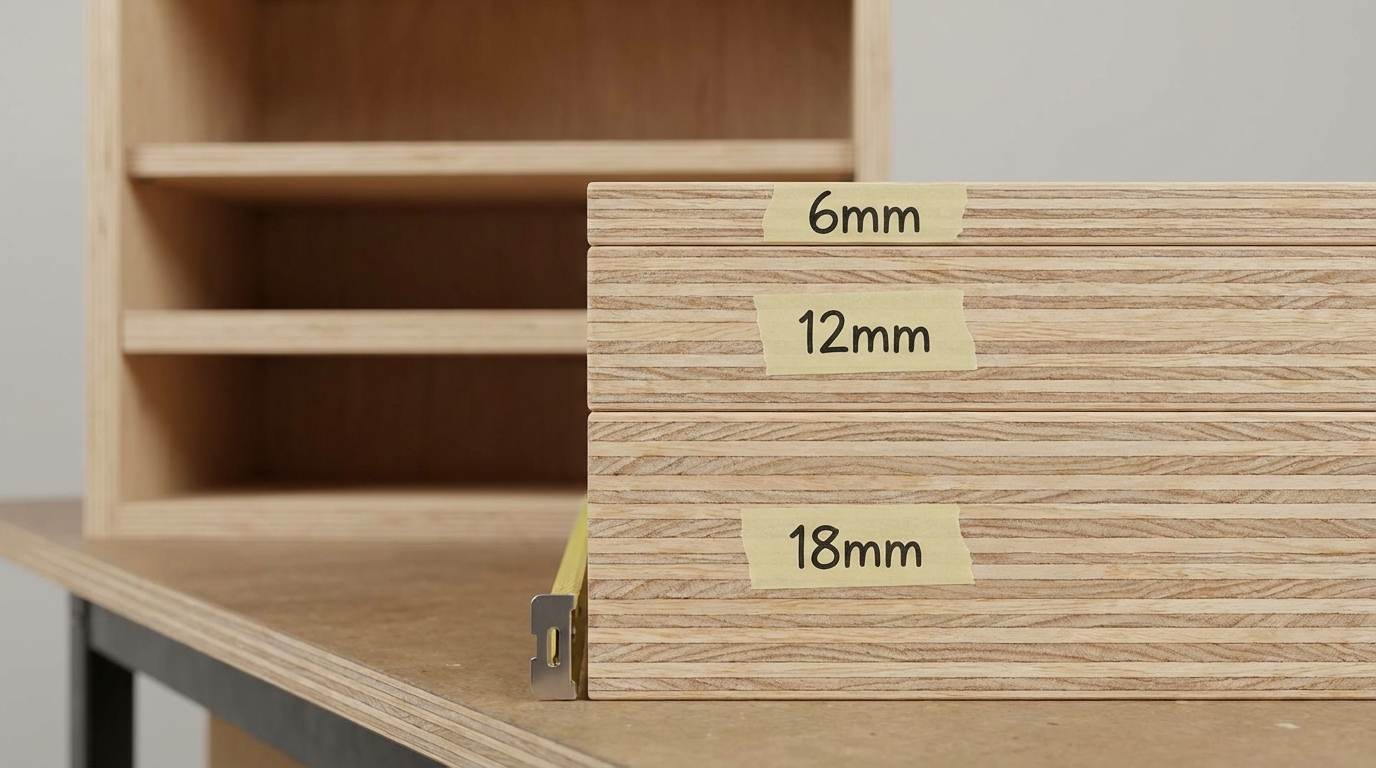
In this plywood thickness guide for furniture, choose 6mm for lightweight backs, panels, and decorative elements where cost savings matter most. Opt for 12mm on standard shelves, cabinet sides, and doors to handle everyday loads without excess weight. Use 18mm for structural frames, heavy-duty shelves, and bases needing maximum strength and screw-holding in high-stress areas. Balance thickness with span length, load expectations, and budget—thinner saves money but risks sagging, while thicker adds durability at higher cost.
- 6mm: Best for non-load-bearing parts like wardrobe backs or false panels; lightest and cheapest.
- 12mm: Versatile middle ground for most furniture shelves and carcasses; good strength-to-weight ratio.
- 18mm: Ideal for load-bearing frames, kitchen platforms, and spans over 60cm; premium durability.
- Factor in moisture grade (MR for dry interiors, BWR for kitchens); always check actual thickness on edges (common 5.5-6.2mm variance).
- In India, dealer sheets often labeled as 18mm mean 17-19mm—measure to avoid surprises.
- Quick rule: Multiply expected load by span squared; match to thickness rating.
How Plywood Thickness Works
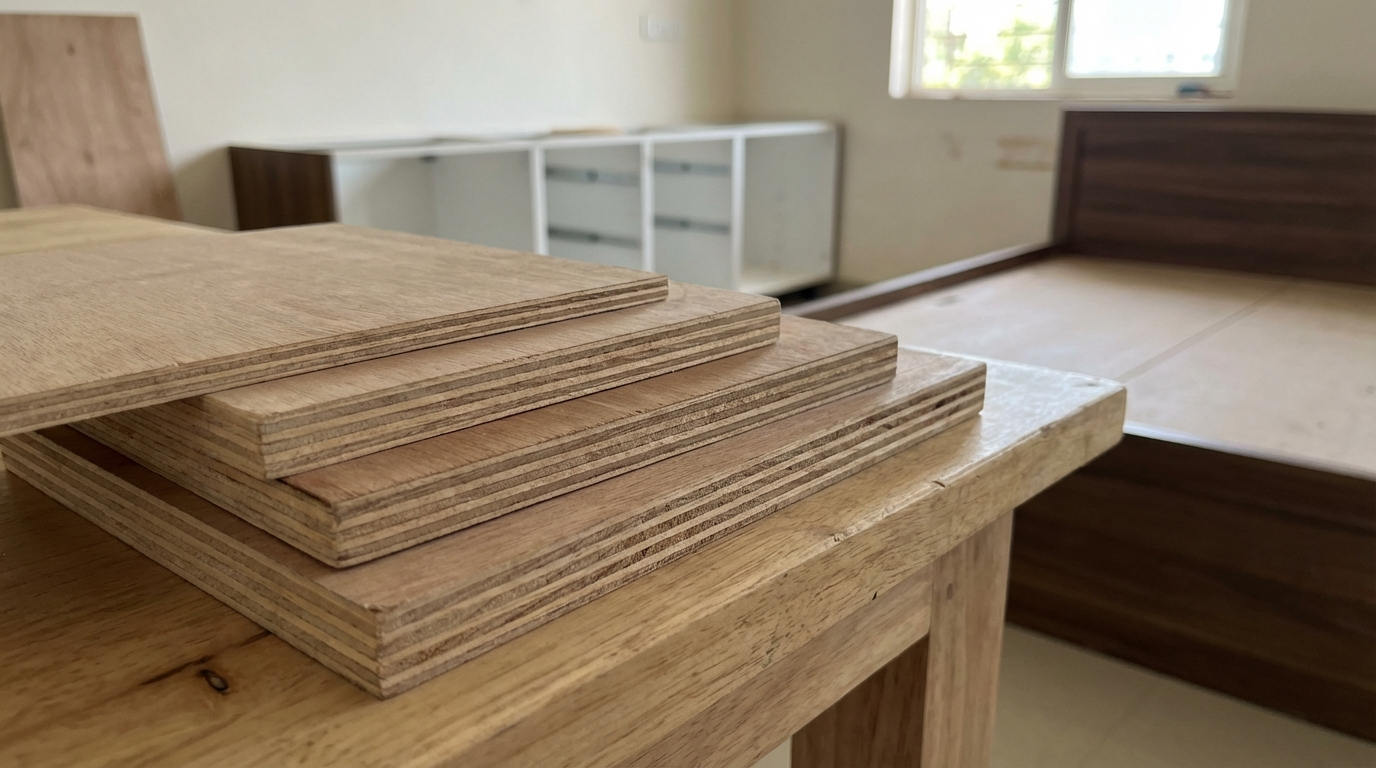
Plywood thickness directly influences its structural performance in furniture, determined by the number of plies (layers of thin wood veneers glued together) and the core material. Thinner sheets like 6mm typically have 5-7 plies with a softwood core, providing flexibility but limited rigidity. As thickness increases to 12mm or 18mm, ply count rises to 9-13 or more, stacking stronger hardwood faces over denser cores for better load distribution. In practical terms, this means a 6mm sheet bends easily under finger pressure, while 18mm resists deflection even under body weight.
The key metric is modulus of elasticity—thicker plywood has higher values, reducing sag over spans. For furniture, consider unsupported span: 6mm handles 30-40cm max without sagging, 12mm up to 60-80cm, and 18mm beyond 1m for heavy loads. Indian manufacturing variances play a role; coastal factories use more resin to combat humidity, slightly bulking actual thickness, while northern ones prioritize density. Glue lines (4-6% of total thickness) also vary—cheaper urea-formaldehyde in MR grades vs. phenolic in BWR, affecting water resistance.
Edge inspection reveals truth: caliper measure shows 6mm as 5.8-6.2mm typically, due to sanding. For CNC-cut modular furniture booming in India, precise thickness ensures tight joints; mismatches cause gaps. Carpenter tip: Test screw-holding by driving a 1.5-inch screw—6mm pulls out easily, 18mm grips firm. This foundational understanding prevents over-spec or under-build in wardrobes, beds, or tables.
In high-humidity Delhi summers or Mumbai monsoons, thinner plywood warps faster if not sealed, emphasizing grade over mere thickness. Always pair with proper finishing: laminate or PU polish locks edges, extending life regardless of mm count.
6mm Plywood: Lightweight and Economical Uses
6mm plywood shines in non-structural furniture roles where minimal weight and cost trump heavy strength. Ideal for wardrobe backs, drawer bottoms, and partition panels, it cuts easily with hand tools and weighs under 15kg per 8x4 sheet, easing transport for small apartments. In Indian homes, use it for slat shutters, headboard panels, or TV cabinets' rear sides—areas seeing no direct load. Its flexibility allows curved designs in modern decor, like wave-patterned feature walls.
Strength limits it: under 10kg uniform load over 40cm span, it deflects 5-10mm, fine for decor but risky for shelves holding books. Common in budget modular kitchens for filler strips or toe-kicks, saving 20-30% vs. thicker options. Why it fails prematurely: exposed edges absorb monsoon moisture, leading to delamination in coastal Gujarat or Kerala homes. Seal all cuts with putty or tape immediately.
Carpenter logic: Pair with 12mm frames for hybrid builds—backs snap in place without adding bulk. Dealer choice: Commercial MR grade suffices for interiors; avoid in bathrooms. Indian market nuance: Often sold as "6-ply" but verify ply count (should be 5+); thinner cores mean poorer screw hold, so use rivets or glue for attachments. For kids' furniture, its lightness reduces tip-over risk, but reinforce joints.
Edge case: NOT for any shelf or door—sagging inevitable under daily use. In tier-2 cities like Jaipur, where labor cuts thin sheets fast, it's a staple for quick-turnover projects, but always edge-band to prevent chipping during handling.
12mm Plywood: The Versatile Workhorse for Everyday Furniture
12mm plywood strikes the optimal balance for 80% of Indian household furniture, offering solid strength without the heft or price of 18mm. Perfect for kitchen cabinet sides, wardrobe shelves (under 50kg load), and bed headboards, it spans 60cm unsupported with minimal 2-3mm deflection. Weighing 25-30kg per sheet, it's manageable for solo carpenters, common in Pune or Bangalore workshops churning modular units.
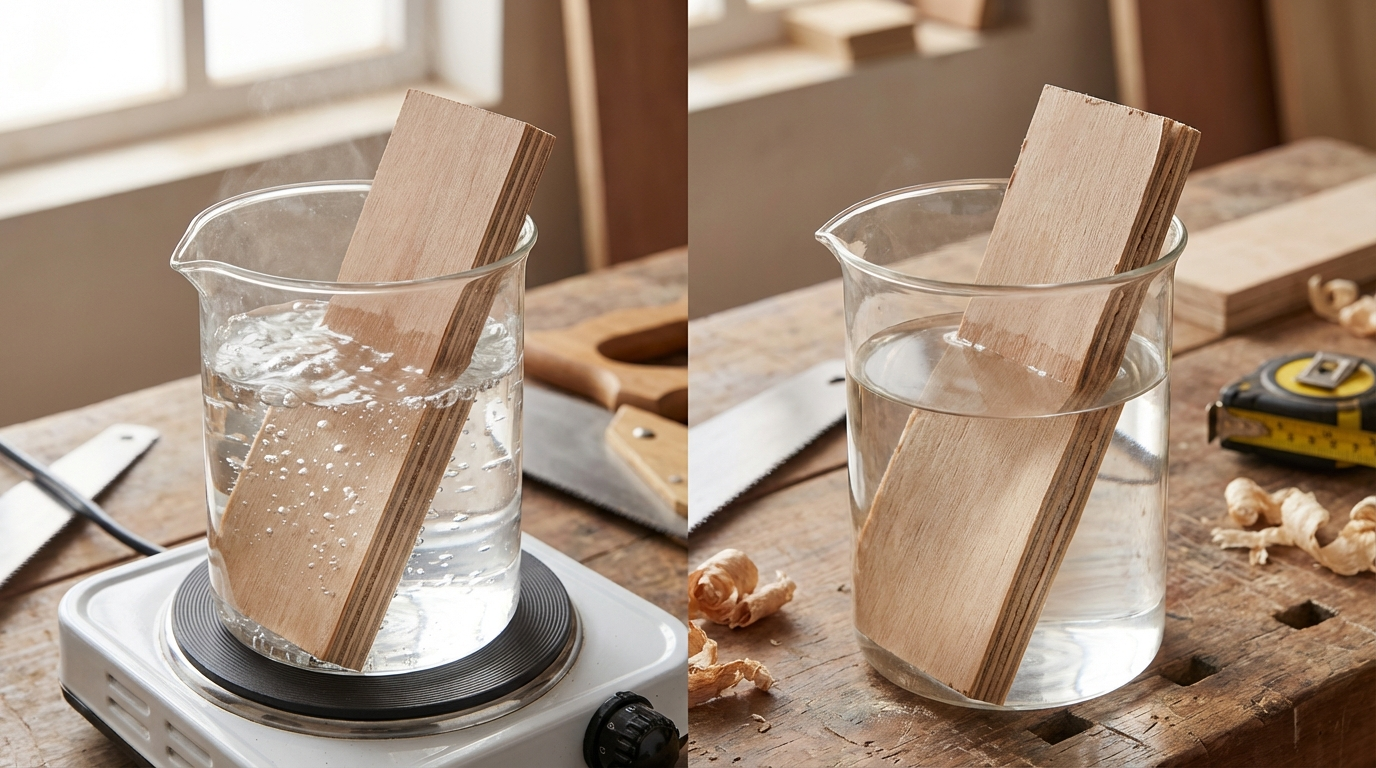
In practical Indian scenarios, it forms the carcass of L-shaped sofas, study tables, or almirah doors—holding laminates well with strong screw grip (up to 20kg pull-out force). BWR grades excel in semi-wet areas like utility cabinets, resisting 24-hour boil tests better than MR. Thickness variance: Expect 11.5-12.5mm; measure at factory edges, as sanding reduces it.
Why popular: Cost-effective for middle-class buyers—thicker than 6mm avoids sagging complaints, lighter than 18mm cuts transport costs by 20%. Monsoon-proofing tip: Apply two coats of sealer; in Chennai humidity, untreated 12mm swells 5-8% vs. 2% for sealed. Carpenter pitfalls: Over-spanning without mid-supports causes bowing under pressure cookers or water drums.
When NOT to choose: Heavy industrial shelves or earthquake-prone zones needing extra rigidity. Hybrid use: 12mm shelves on 18mm frames for premium bedsits. Dealer advice: IS-marked sheets (verify stamp) ensure consistent density; cheaper "market" grades have voids, leading to core collapse in 2-3 years.
18mm Plywood: Heavy-Duty Strength for Demanding Applications
18mm plywood delivers top-tier rigidity for load-bearing furniture elements like platform bed frames, kitchen counter bases, and heavy wardrobes spanning 1m+. With 11-13 plies and hardwood cores, it handles 100kg+ over long distances, deflecting under 1mm—essential for open shelves in living rooms stacked with crockery. At 40-50kg per sheet, it's for pro installs, suiting large metro homes.
In India, it's the go-to for study tables with PC setups or garage cabinets holding tools; superior screw-holding (40kg+ pull-out) suits frequent adjustments. BWP grades mandatory for coastal or flood-prone areas like Hyderabad basements, shrugging off prolonged dampness. Actual thickness: 17-19mm common—caliper check avoids "short-weight" dealer tricks.
Real-world edge: In joint-family homes, it bears cumulative weights without creaking; CNC precision cuts yield flush modular kitchens. Failures stem from poor glue—voids cause splitting under torque. Seal liberally; PU finish adds 10-15% life in dusty Rajasthan interiors.
Limitations: Overkill for light duties, hiking costs 50-80%; weight strains old buildings' floors. NOT for decorative panels—too rigid for bends. Pair with 12mm for cost-optimized lofts: 18mm base, thinner tops.
Plywood Thickness Comparison Table
This table compares 6mm, 12mm, and 18mm plywood across key furniture metrics, using typical Indian commercial MR grade (8x4 sheets). Ranges reflect tier-1 city dealer prices (e.g., Mumbai/Delhi), varying by brand tier, glue type, and logistics—add 10-20% for tier-2/3 cities or BWR upgrades. Always verify sheet stamp for grade.
| Thickness | Max Span (kg load) | Weight (8x4 sheet) | Cost Range (Rs.) | Best Furniture Uses | Screw Hold Strength |
|---|---|---|---|---|---|
| 6mm | 30-40cm (10kg) | 12-18kg | 700-1,200 | Backs, bottoms, panels | Low (5-10kg pull-out) |
| 12mm | 60-80cm (50kg) | 25-35kg | 1,200-2,000 | Shelves, sides, doors | Medium (15-25kg) |
| 18mm | 100cm+ (100kg+) | 40-55kg | 2,000-3,500 | Frames, bases, platforms | High (30-50kg+) |
Factors shifting ranges: Premium brands +20%, monsoon-season transport +15%, bulk dealer buys -10%. Strength assumes proper support; test deflection on-site by loading progressively.
How to Choose: Decision Framework
Start with load calculation: Estimate kg per sqm (books=20kg, clothes=10kg) times span in meters squared, then match thickness. Factor room use—dry bedroom favors MR/thinner, kitchen needs BWR/thicker. Budget rule: Allocate 40% of furniture cost to plywood; scale thickness accordingly. Indian buyer checklist:
- Measure span precisely—add 10cm buffer for deflection.
- Test sample: Press center; under 3mm sag = good.
- Check edges: Uniform thickness, no voids/delams.
- Moisture grade: MR interiors, BWR/BWP exposed.
- Carpenter input: Tool compatibility (thinner easier hand-saw).
- When NOT 6mm: Any shelf/door.
- NOT 12mm: Spans >80cm or >75kg.
- NOT 18mm: Budget <Rs.2,500/sheet or light decor.
For modular kitchens, prioritize CNC-friendly even thicknesses. In dealer yards, haggle bundles mixing sizes. Post-buy: Acclimatize sheets 48hrs in site humidity.
Why Thickness Matters in India
India's diverse climates demand thickness-aware choices: Monsoon humidity (80%+ in Mumbai July) swells thinner 6mm 10-15% if unsealed, vs. 5% for 18mm BWR, causing wardrobe doors to bind. Coastal Kerala homes favor thicker for termite-prone softwood cores; northern dry air suits thinner to cut heating costs. Dealer-driven buys amplify issues—bulk 12mm deals tempt underspec'ing frames.
Modular boom (CNC in Gurgaon factories) requires exact mm for joints; variances gap laminates. GST/transport jacks 18mm costs 25% more to remote Bihar vs. local. Carpenter constraints: Hand tools struggle thick sheets, slowing tier-3 installs. Heavy joint-family loads (double beds + storage) mandate 18mm bases to prevent floor cracks in old Mumbai chawls.
Common Mistakes and Inspection Checks
Buyer error #1: Choosing by price alone—6mm shelves sag under Diwali sweets, leading to replacements in 6 months. Dealers push "18mm" mislabels (actual 16mm); measure all four edges. Carpenter mistake: No mid-supports on 12mm spans, warping under AC drip. Inspection at yard: Tap for hollows (voids), sniff for chemical whiff (poor glue), flex corner (cracks=bad).
On-site: Load test with sandbags; check screw pilot holes pre-drill. Avoid exposed cuts in kitchens—swells in summer. Hybrid fail: Thin backs on thick frames rattle loose. Quick checks save 20% rework: Verify stamp (IS 303/710), acclimatize, edge-seal Day 1.
Trade-offs and Limitations
Thicker = stronger but heavier/costlier: 18mm adds 2x weight, straining lifts in high-rises, costs 3x 6mm. Thinner saves 30% budget but compromises durability—screw strips out, needs glue backups. Moisture trade: Thick BWP resists but pricier; thin MR fails wet. Finish matters: Laminate hides thin edges better. Limitations: No thickness beats poor grade—voidy 18mm worse than solid 12mm. Edge case: Earthquake zones need balanced hybrids. Screw-holding drops 50% near edges; reinforce with blocks.
Frequently Asked Questions
Which plywood thickness is best for wardrobe shelves?
For standard Indian wardrobes (40-60cm deep, holding clothes/suitcases up to 40kg), 12mm provides the sweet spot—spans without mid-supports, grips screws for adjustable heights, and keeps total weight under 100kg for easy moving. In humid Pune flats, pair with BWR grade; 6mm sags under winter blankets, 18mm overkill unless spanning 80cm+ for heavy bedding storage. Carpenters prefer it for quick assembly, but add battens if loads exceed 50kg to prevent long-term bowing from daily pulls.
Is 6mm plywood strong enough for kitchen cabinets?
6mm works only for non-load backs or fillers in dry pantries, not sides/shelves where steam and spills demand rigidity—risks buckling under utensils. Opt 12mm minimum for carcasses; in Indian modular kitchens with gas stoves, BWR 12mm resists warping better amid humidity spikes. Dealer bundles often mix it cheaply, but inspect for even plies; unsealed edges delam in 3-6 months, forcing costly fixes.
Can I use 18mm plywood for bed frames?
Yes, 18mm excels for sturdy platform beds or lofts bearing 150kg+ couples/kids, spanning 1.2m with minimal flex—ideal for slatted bases in space-crunched Mumbai homes. Trade-off: Heavier install, higher cost; use MR for bedrooms, BWP if basements flood. Carpenter tip: Pre-drill to avoid splits; hybrids with 12mm slats save 15% without weakness.
What causes plywood to sag and how does thickness help?
Sagging stems from overload, long spans, or moisture-softened cores—common in undersized 6mm shelves under books. Thicker plies distribute stress; 12mm halves deflection vs. 6mm, 18mm quarters it. In Delhi winters (low humidity), dry cores crack if thin; monsoons swell thin sheets. Fix: Match thickness to span/load, seal edges, add supports every 50cm. Indian fix: Angle irons for budget boosts.
Does plywood thickness affect laminate sticking?
Yes—thicker 12-18mm offers flat surfaces for even glue spread, reducing bubbles in high-pressure lamination common in Indian factories. Thin 6mm flexes under heat, causing peels on wardrobe fronts. Prep: Sand uniform; coastal humidity needs extra adhesive. For glossy finishes, thicker resists dents from daily bumps.
Which thickness for modular kitchen shutters?
12mm standard for shutters (hinge loads, frequent opens)—balances swing weight, screw hold for soft-closers. 6mm too whippy for aluminum frames; 18mm heavy for top cabinets. In Chennai wet zones, BWR prevents swelling; CNC cuts ensure flush. Avoid market grades—voids telegraph through laminates.
How to check real plywood thickness at dealer?
Use vernier caliper on sheet edges/corners—ignore labels, as "18mm" often 17.2mm post-sand. Tap sides for solid tone (no voids), check stamp for grade/date. Flex gently: Even bend = quality plies. In crowded yards, buy samples; acclimatize before final verdict. Bargain variances into price.
Is thicker plywood always more termite-resistant?
Not inherently—resistance ties to treatment/wood species, but thicker 18mm hides core better, slowing penetration vs. thin 6mm fully infested fast. Indian staples: Pine cores vulnerable; opt treated BWR. Monsoon-stored stacks invite attacks; elevate sheets, inspect quarterly. Thickness buys time for detection.
Disclaimer: This content is provided for general informational purposes based on industry practices and publicly available information. Product specifications, standards, prices, and availability may vary by manufacturer, region, and time. Readers should independently verify details with manufacturers, dealers, or qualified professionals before making purchase or construction decisions.
Want Plywood Suggestions?
Share a few details and a Apple Ply specialist will suggest suitable brands and connect you to responsive dealers.