Plywood Manufacturers in India: Complete Industry Guide
Directory of plywood manufacturers in India. Find top plywood companies, their products, locations & contact details for bulk orders.
Quick Answer
Plywood manufacturers in India range from large-scale national brands with advanced manufacturing facilities to regional producers serving local markets. The industry is concentrated in key hubs including Yamunanagar (Haryana), Perumbavoor (Kerala), Gandhidham (Gujarat), and parts of West Bengal and Assam, with major players like Greenply, CenturyPly, Kitply, and Archidply leading production. Understanding manufacturer credentials, production standards, and distribution networks helps buyers source quality plywood at competitive prices.
At a Glance: India's Plywood Manufacturing Landscape
- India ranks among the top five global plywood producers with an estimated annual production exceeding 10 million cubic metres
- Major manufacturing clusters: Yamunanagar (North India's largest), Perumbavoor (South India's hub), and Gujarat coastal belt
- Organised sector accounts for approximately 25-30% of total production; unorganised mills dominate volume
- IS 303 (MR grade) and IS 710 (BWR/Marine grade) are the primary BIS certifications to verify
- Raw material sourcing includes plantation timber (poplar, eucalyptus), imported hardwoods (gurjan, keruing), and softwoods
- Factory-direct pricing typically 15-25% lower than retail, but minimum order quantities apply
Understanding India's Plywood Manufacturing Industry
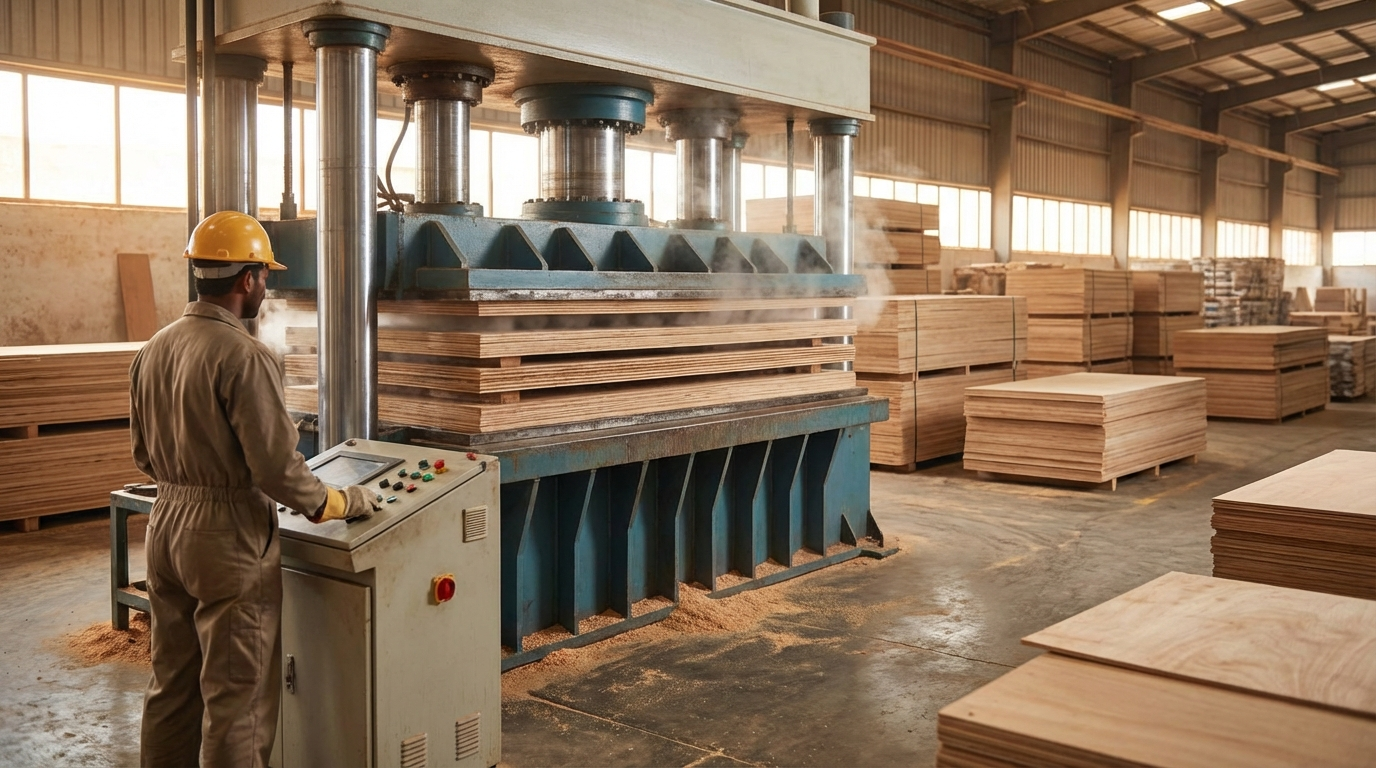
The plywood manufacturing sector in India operates across a spectrum of scales—from large integrated facilities with automated production lines to small-scale units producing for local consumption. This fragmented structure directly impacts product quality, pricing consistency, and availability across different regions.
Major manufacturers typically operate multiple plants strategically located near raw material sources or consumption centres. For instance, companies source plantation timber from Punjab and Haryana for their northern units while importing tropical hardwoods through Gujarat and Kerala ports for premium product lines. This dual sourcing strategy allows them to offer both budget-friendly commercial plywood and high-end marine or calibrated grades.
The Organised vs Unorganised Sector Reality
A critical aspect of India's plywood industry that buyers must understand is the organised-unorganised divide. Organised manufacturers—typically those with BIS certification, proper GST registration, and branded products—represent only about a quarter of total production. The remaining volume comes from smaller units that may lack consistent quality control or proper documentation.
This matters practically because a "local mill" plywood sheet might cost significantly less but could have inconsistent thickness, poor glue quality, or inadequate treatment. For structural applications, kitchen cabinetry, or any furniture expected to last beyond 5-7 years, sourcing from established manufacturers with verifiable quality standards becomes essential rather than optional.
The industry has witnessed consolidation over the past decade, with larger players acquiring regional brands and expanding distribution networks. This trend has improved availability of quality products in Tier-2 and Tier-3 cities, though dealer markups and transport costs still create significant price variations across regions.
Major Plywood Manufacturing Hubs in India
India's plywood production is geographically clustered around raw material availability and historical industrial development. Understanding these hubs helps buyers identify potential sourcing options and understand regional quality characteristics.
Yamunanagar, Haryana
Often called India's "Plywood City," Yamunanagar hosts the largest concentration of plywood mills in the country. The region benefits from proximity to poplar and eucalyptus plantations in Punjab and Haryana, making it the primary source for commercial-grade MR plywood. Products from this cluster dominate North and Central Indian markets. However, quality varies significantly—from BIS-certified factories to small units with minimal quality control.
Perumbavoor, Kerala
Kerala's plywood manufacturing cluster specialises in higher-grade products, particularly marine plywood and decorative veneers. Access to port facilities allows easy import of hardwood logs from Southeast Asia. Manufacturers here typically focus on BWR (Boiling Water Resistant) grades and premium furniture-grade plywood. Products from this region command a price premium but are preferred for humid climate applications.
Gujarat Coastal Belt
Gandhidham and surrounding areas have emerged as significant manufacturing centres, leveraging port proximity for raw material imports. This cluster primarily serves Western and Central Indian markets with a mix of commercial and marine-grade products.
Eastern India Cluster
West Bengal and Assam house several manufacturers leveraging local timber resources. Kolkata serves as a major trading hub, while Assam-based units often specialise in products using indigenous timber species. This region produces substantial volumes of commercial plywood serving Eastern markets.
Leading Plywood Manufacturers: Comparison Table
| Manufacturer | Headquarters | Key Product Grades | Manufacturing Facilities | Typical Price Segment | Best Known For |
|---|---|---|---|---|---|
| Greenply Industries | Kolkata | MR, BWR, Zero Emission MDF | Multiple plants across India | Mid to Premium | Eco-friendly products, MDF range |
| CenturyPly | Kolkata | MR, BWR, Club Prime, Firewall | Units in multiple states | Mid to Premium | Fire-retardant technology, veneers |
| Kitply Industries | Kolkata | MR, BWR, Densified | Eastern India focus | Budget to Mid | Value-for-money commercial grades |
| Archidply Industries | Delhi NCR | MR, BWR, Low-emission | Rudrapur, Sitarganj | Mid to Premium | E1 emission standards, laminates |
| Duro Ply (Sarda Group) | Kolkata | MR, BWR, Film Faced | Eastern and Central India | Budget to Mid | Shuttering plywood |
| MWP (Maheshwari Woods) | Bengaluru | BWR, Gurjan, Flexi Ply | Nanjangud, Karnataka | Mid to Premium | South India distribution, veneer |
| Austin Plywood | Perumbavoor | Marine, BWR, Calibrated | Kerala-based | Premium | Marine grades for humid climates |
| Saburi Panels | Kolkata | MR, BWR, WPC Boards | Multiple facilities | Budget to Mid | Panel board range |
How to Choose the Right Plywood Manufacturer
Selecting a manufacturer goes beyond brand recognition—it requires evaluating production capabilities, quality consistency, and after-sales support. Whether you're a contractor placing bulk orders or a homeowner working through a dealer, understanding manufacturer credentials helps ensure you receive products matching your specifications.
Key Evaluation Criteria
Start by verifying BIS certification for the specific product grade you need. A manufacturer may hold IS 303 certification for MR plywood but not IS 710 for marine grades. Request certificate copies and cross-verify the licence number on the BIS website. Check whether the certification covers the specific thickness and face veneer you require—certifications are product-specific, not blanket approvals.
Assess the raw material sourcing approach. Manufacturers using plantation timber (poplar, eucalyptus) produce more affordable commercial grades, while those importing hardwood face veneers (gurjan, keruing, okoume) offer premium products. Neither is inherently better—the choice depends on your application requirements and budget.
Buyer's Checklist for Manufacturer Selection
- Verify current BIS certification for required grade (IS 303/IS 710)
- Check minimum order quantity requirements for direct purchase
- Confirm warranty terms and claim process in writing
- Request test reports for glue bond strength and moisture content
- Evaluate dealer network strength in your city for after-sales support
- Compare GST-inclusive landed costs, not just factory prices
- Ask about calibration tolerance for CNC and modular kitchen applications
When NOT to Source Directly from Manufacturers
Direct manufacturer purchase isn't always advantageous. Minimum order quantities typically start at 50-100 sheets, making it impractical for single-home requirements. Transport costs for small quantities can negate factory pricing benefits. Additionally, local dealers often provide cutting, delivery, and return services that manufacturers don't offer. For orders under 200-300 sheets, working through authorised dealers usually proves more practical despite marginally higher prices.
Common Mistakes When Sourcing from Manufacturers
Understanding typical sourcing errors helps avoid costly mistakes, whether dealing directly with manufacturers or through their dealer networks.
Assuming Brand Equals Consistency
Even reputable manufacturers produce different quality tiers. A brand's "Gold" and "Platinum" variants differ significantly in core quality, face veneer thickness, and glue formulation. Buyers sometimes assume all products from a trusted brand meet the same standards—they don't. Always specify the exact product variant and verify it matches the delivery.
Ignoring Thickness Calibration
Standard "18mm" plywood can vary from 17mm to 19mm across manufacturers. For modular kitchens and CNC-machined furniture, this variation causes fitting issues. If precision matters, specifically request calibrated plywood and verify tolerance ranges with the manufacturer. Premium manufacturers offer calibration within ±0.2mm; standard production may vary by ±1mm or more.
Not Verifying Dealer Authorisation
Counterfeit products carrying major brand names circulate in Indian markets. Always verify dealer authorisation through the manufacturer's official channels—most brands provide dealer lists on their websites or through customer care lines. Purchasing from unauthorised sources typically voids warranty coverage.
Overlooking Transport and Handling Damage
Plywood is susceptible to edge damage, moisture absorption, and surface scratches during transit. When receiving bulk shipments, inspect edges for delamination and surfaces for damage before accepting delivery. Document any issues immediately—manufacturers' warranty processes typically require damage reporting within 24-48 hours of receipt.
Quick Inspection Checks
- Tap different areas of the sheet—uniform sound indicates consistent core; hollow sounds suggest voids
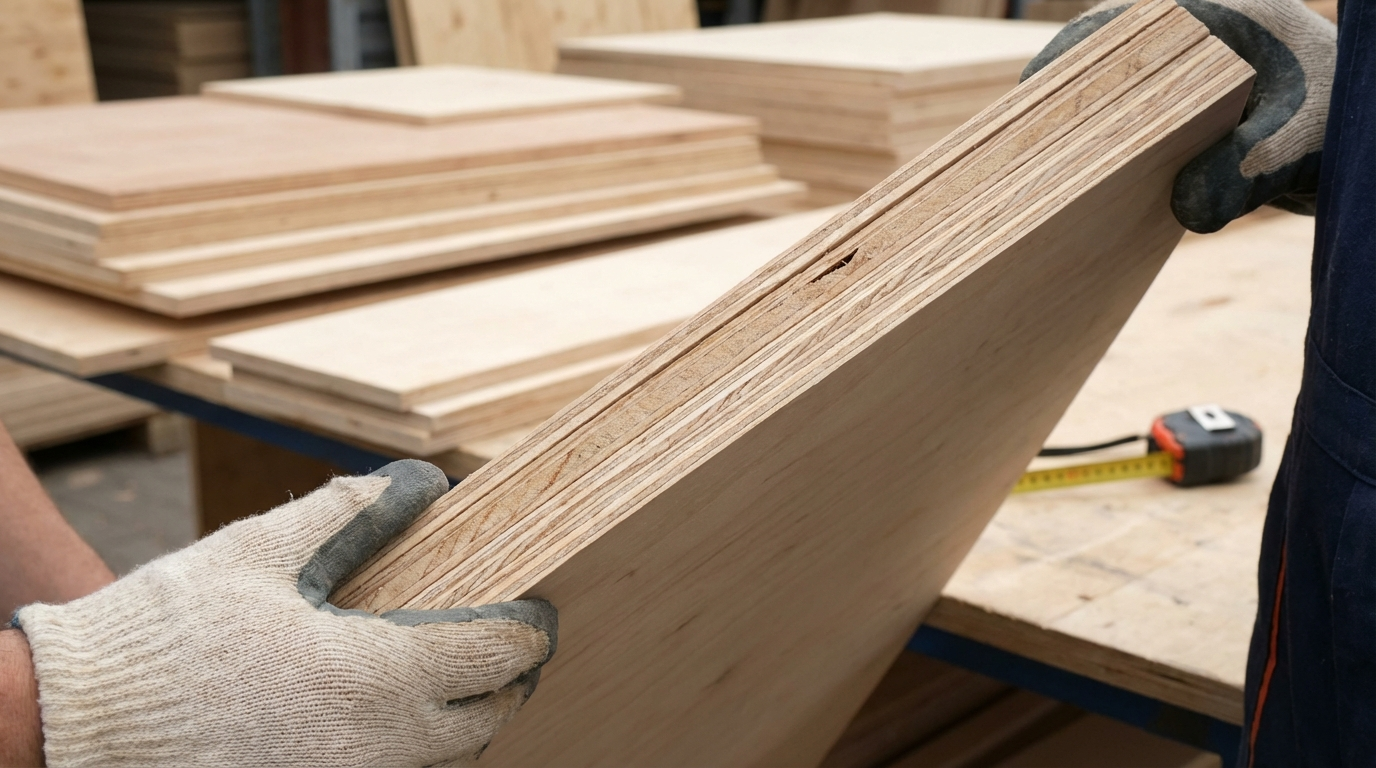
- Check edge for visible glue lines and ensure cores are gap-free
- Verify weight consistency across sheets from the same lot
- Examine face veneer for patches, cracks, or delamination at edges
- Measure actual thickness at multiple points with a vernier calliper
Price Guide: Manufacturer Pricing vs Market Rates
Understanding the pricing structure from manufacturer to end consumer helps set realistic budget expectations and identify potential overcharging.
Factory Gate vs Retail Pricing
Manufacturers typically sell to dealers at 15-25% below MRP (Maximum Retail Price). This margin covers dealer overheads, storage, cutting services, and profit. Direct factory purchase for bulk orders might save 10-15% over dealer rates but requires handling logistics independently.
| Plywood Grade | Typical Factory Price Range (₹/sheet) | Retail Price Range (₹/sheet) | Key Price Factors |
|---|---|---|---|
| Commercial MR 18mm (8x4 ft) | ₹1,200-1,800 | ₹1,500-2,200 | Core timber species, face quality |
| BWR Grade 18mm (8x4 ft) | ₹2,200-3,500 | ₹2,800-4,200 | Glue formulation, face veneer |
| Marine Grade 18mm (8x4 ft) | ₹3,500-5,500 | ₹4,200-6,500 | Hardwood species, certification |
| Calibrated BWR 18mm (8x4 ft) | ₹3,000-4,500 | ₹3,600-5,500 | Tolerance level, sanding quality |
| Fire Retardant 18mm (8x4 ft) | ₹4,000-6,000 | ₹4,800-7,200 | Treatment chemical, base grade |
Price ranges assume Tier-1 city retail (Metro areas); Tier-2/3 cities may see 5-15% variation due to transport costs. Rates as typically observed in trade; actual prices vary by brand tier and market conditions.
Factors Causing Price Variation
Face veneer species significantly impacts pricing—gurjan and okoume command premiums over poplar faces. Core construction matters equally; solid eucalyptus cores cost more than mixed softwood cores. Glue formulation differentiates MR from BWR grades, with phenolic resins costing more than urea formaldehyde. Finally, treatment processes (termite-proofing, fire-retardant, preservative) add ₹100-400 per sheet depending on the treatment level.
Regional Considerations for Manufacturer Selection
India's diverse climate zones and regional construction practices influence which manufacturers and product grades suit specific areas.
Coastal and High-Humidity Regions
For properties in Kerala, coastal Maharashtra, Goa, or the Konkan belt, prioritising manufacturers specialising in BWR and marine grades becomes essential. Kerala-based manufacturers like those in Perumbavoor often formulate products specifically for high-humidity performance. In these regions, even interior furniture benefits from higher moisture resistance—commercial MR grade plywood may show swelling and delamination within 2-3 years in poorly ventilated spaces.
Northern Plains and Low-Humidity Zones
In Rajasthan, Gujarat interiors, and parts of Madhya Pradesh, standard MR grade from Yamunanagar manufacturers performs adequately for most applications. The key concern here shifts from moisture to termite resistance—ensure the manufacturer offers proper preservative treatment, as dry conditions favour termite activity. Borer treatment certificates become more important than enhanced water resistance.
Metro vs Smaller City Dynamics
Major cities have authorised dealer networks for most national brands, allowing product verification and warranty claims. In smaller towns, local mill products dominate, and national brand availability may be limited to one or two dealers. For projects in such areas, either arrange transport from the nearest metro dealer or carefully evaluate local alternatives. Requesting test certificates from local manufacturers before bulk purchase is advisable—legitimate producers maintain documentation even without national brand recognition.
Frequently Asked Questions
Which is the largest plywood manufacturer in India?
Greenply Industries and CenturyPly are typically considered the two largest organised plywood manufacturers in India by revenue and production capacity. Both companies operate multiple manufacturing facilities across the country and maintain extensive pan-India distribution networks. However, the unorganised sector collectively produces higher volumes, making precise size comparison challenging. For bulk buyers, both brands offer comparable quality at similar price points, with regional availability often determining the practical choice.
How can I verify if a plywood manufacturer has BIS certification?
Every BIS-certified plywood sheet must carry the ISI mark along with a licence number printed or stamped on the surface. You can verify this licence number on the Bureau of Indian Standards website or by contacting BIS regional offices. Cross-check that the certification covers the specific grade (IS 303 for MR, IS 710 for BWR/Marine) and the thickness you're purchasing. Some manufacturers hold certification for limited product variants only—don't assume all their products are certified.
What is the difference between branded and local mill plywood?
Branded plywood from established manufacturers typically undergoes consistent quality control, uses standardised raw materials, and carries verifiable certifications. Local mill products vary significantly in quality—some regional manufacturers produce excellent plywood, while others lack proper glue formulation or treatment processes. The key difference lies in consistency and accountability. Branded products offer warranty support and standardised specifications, while local mills may provide better pricing but limited recourse for quality issues.
Can I buy directly from plywood manufacturers in India?
Most manufacturers sell through dealer networks rather than directly to end consumers. However, bulk buyers (typically 100+ sheets) can often arrange direct purchase through the manufacturer's sales team. You'll need GST registration for B2B transactions, and minimum order quantities apply. For smaller requirements, authorised dealers remain the practical channel. Some manufacturers operate factory outlets or showrooms in major cities where retail purchase is possible, though discounts may be limited.
Which plywood grade is best for kitchen cabinets in India?
BWR (Boiling Water Resistant) grade plywood, conforming to IS 710, is recommended for kitchen applications in Indian conditions. The kitchen environment involves regular humidity fluctuations, occasional water exposure near sinks, and heat from cooking. Marine grade offers superior performance but costs 30-50% more with marginal practical benefit for most kitchens. Avoid commercial MR grade for kitchen cabinetry—urea formaldehyde glue in MR plywood degrades with repeated moisture exposure, causing delamination within 3-5 years.
What is the full form of BWR and MR in plywood?
BWR stands for Boiling Water Resistant, indicating plywood manufactured with phenolic resin adhesive that withstands prolonged moisture exposure without delamination. MR stands for Moisture Resistant, using urea formaldehyde glue suitable for interior applications with occasional humidity but not direct water contact. These designations align with BIS standards—IS 710 covers BWR grade (previously called Marine grade), while IS 303 covers MR grade. Understanding these distinctions helps specify the right product for your application.
How do I identify original branded plywood vs duplicate?
Genuine branded plywood carries consistent markings including brand logo, product variant name, BIS certification mark with licence number, and thickness. Many brands embed holograms or unique identification codes verifiable through their websites or customer care. Check edge printing quality—duplicates often have smudged or inconsistent printing. Most importantly, purchase from authorised dealers listed on the manufacturer's official website or obtainable through their customer care numbers. Suspiciously low pricing usually indicates counterfeit products.
Why does plywood price vary so much between dealers?
Several factors cause price variation across dealers for the same product. Location significantly impacts costs—dealers in commercial areas or metros have higher overheads. Volume discounts from manufacturers differ based on dealer tier. Storage conditions and credit terms affect pricing. Some dealers include cutting and delivery services in their base price while others charge separately. Additionally, older stock might be discounted to clear inventory. Always compare GST-inclusive prices with delivery costs for accurate comparison across dealers.
Disclaimer: This content is provided for general informational purposes based on industry practices and publicly available information. Product specifications, standards, prices, and availability may vary by manufacturer, region, and time. Readers should independently verify details with manufacturers, dealers, or qualified professionals before making purchase or construction decisions.Want Plywood Suggestions?
Share a few details and a Apple Ply specialist will suggest suitable brands and connect you to responsive dealers.