MR vs BWR vs BWP Plywood: Key Differences Explained
Understand the difference between MR (Moisture Resistant), BWR (Boiling Water Resistant), and BWP (Boiling Waterproof) plywood grades to choose the right one.
What Are MR, BWR, and BWP Plywood Grades?
In the world of plywood, grades like MR, BWR, and BWP define the level of moisture resistance, which directly impacts where and how long the material lasts in real-world use. MR stands for Moisture Resistant, suitable for dry indoor environments with occasional humidity spikes. BWR means Boiling Water Resistant, handling repeated exposure to moisture and even brief submersion without delaminating. BWP, or Boiling Water Proof, represents the highest tier, engineered to withstand prolonged boiling water tests and extreme wet conditions indefinitely.
To answer the core buyer question upfront: Choose MR for cost-effective interior furniture in low-humidity homes, BWR for bathrooms or kitchens with moderate moisture, and BWP for high-risk areas like coastal exteriors or steam-heavy commercial spaces. This hierarchy stems from glue formulations—MR uses urea formaldehyde, which softens in dampness; BWR employs phenolic resins for better bonding under heat and water; BWP features marine-grade glues that maintain integrity even after boiling cycles.
Understanding these starts with India's diverse climates. In arid Rajasthan interiors, MR suffices, but Mumbai's monsoon demands BWR or higher. Manufacturers bond thin wood veneers under pressure, but the glue type dictates performance. MR plywood might swell 10-15% in humidity, while BWP shows under 2% change. This isn't just lab specs; it's why cheap MR fails in wardrobes during humid summers, warping doors and ruining aesthetics.
Practical tip for Indian buyers: Always check the core—hardwood for strength, poplar for lightness—but glue grade overrides all for longevity. Dealers often push MR as "good enough," but matching grade to use prevents callbacks. In South India's coastal belts like Chennai, where salt-laden air accelerates corrosion, skipping BWP means replacing shutters every 2-3 years.
| Grade | Glue Type | Water Test | Best For |
|---|---|---|---|
| MR | Urea Formaldehyde | Humidity only | Dry interiors |
| BWR | Phenolic Resin | 3-hour boil (limited cycles) | Semi-wet areas |
| BWP | Marine Phenolic | 72+ hour boil (repeated) | Wet/exposed |
This table simplifies selection, but real decisions factor thickness (6-19mm), face finish, and local humidity. Over 70% of Indian households misuse MR in kitchens, leading to delamination within a year— a costly lesson in matching grade to environment.
Composition and Manufacturing Differences
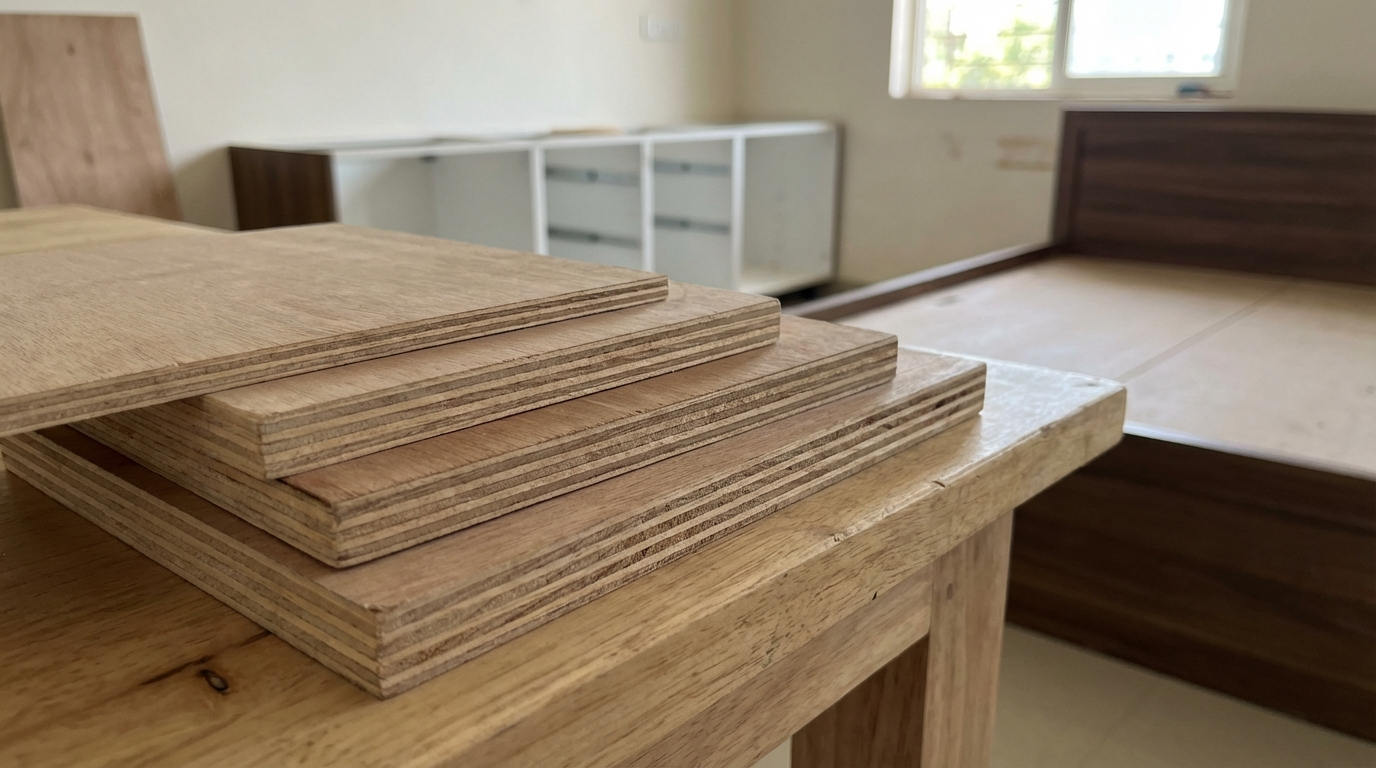
Plywood's magic lies in its layered veneers glued cross-grain for stability, but MR, BWR, and BWP diverge sharply in glue chemistry and curing processes. MR plywood relies on urea-formaldehyde adhesives, cheap and fast-curing at room temperature, ideal for mass production but vulnerable to hydrolysis—water molecules break glue bonds in dampness. This explains why MR warps in humid cupboards, as the glue softens and layers separate.
BWR steps up with modified phenolic resins, cured under heat and pressure (hot press), creating tighter bonds resistant to boiling for short durations. The process involves higher temperatures (120-140°C), reducing voids and boosting shear strength by 30-40%. In Indian factories, this means denser cores, often gurjan or eucalyptus veneers, preventing the "ballooning" seen in MR during rains.
BWP takes it further with fully waterproof PF (phenol formaldehyde) glues, boiled-proof after multiple 6-hour cycles. Manufacturing uses high-pressure steam pressing, aligning fibers for superior tensile strength—up to 50% more than MR. Cores here are tropical hardwoods like sal or teak alternatives, resisting fungal decay inherent in wet climates.
Why the expense? BWP's glue costs 2-3x more, but in practice, it pays off. Consider a Kerala modular kitchen: MR shelves sag under utensils' steam; BWR holds 5-7 years; BWP endures 15+. South Indian CNC shops prefer BWP blanks for precision cutting, as lower grades splinter under humid router bits.
Edge sealing matters too—MR needs multiple coats, BWR one, BWP none. Dealers in Hyderabad note BWP's lower rejection rates (under 5%) versus MR's 20% in monsoons. Logically, investment in better glue prevents veneer checking, where surfaces crack from expansion mismatch.
In trade, unbranded MR floods markets at ₹40/sqft, BWR at ₹60, BWP ₹90+. But failures from skimping haunt carpenters with rework. Always verify BIS grading stamps, as fakes mimic labels but fail in water tubs.
Water Resistance: Breaking Down the Tests
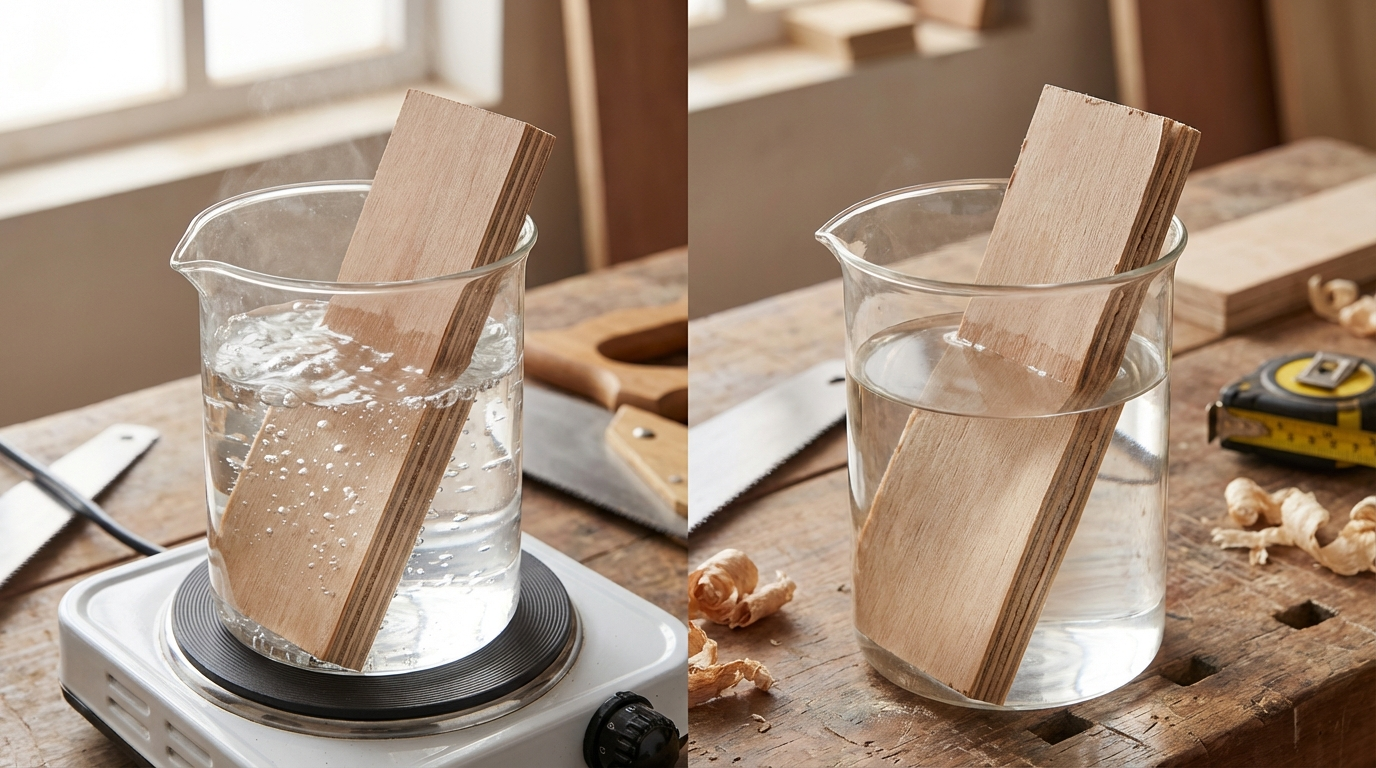
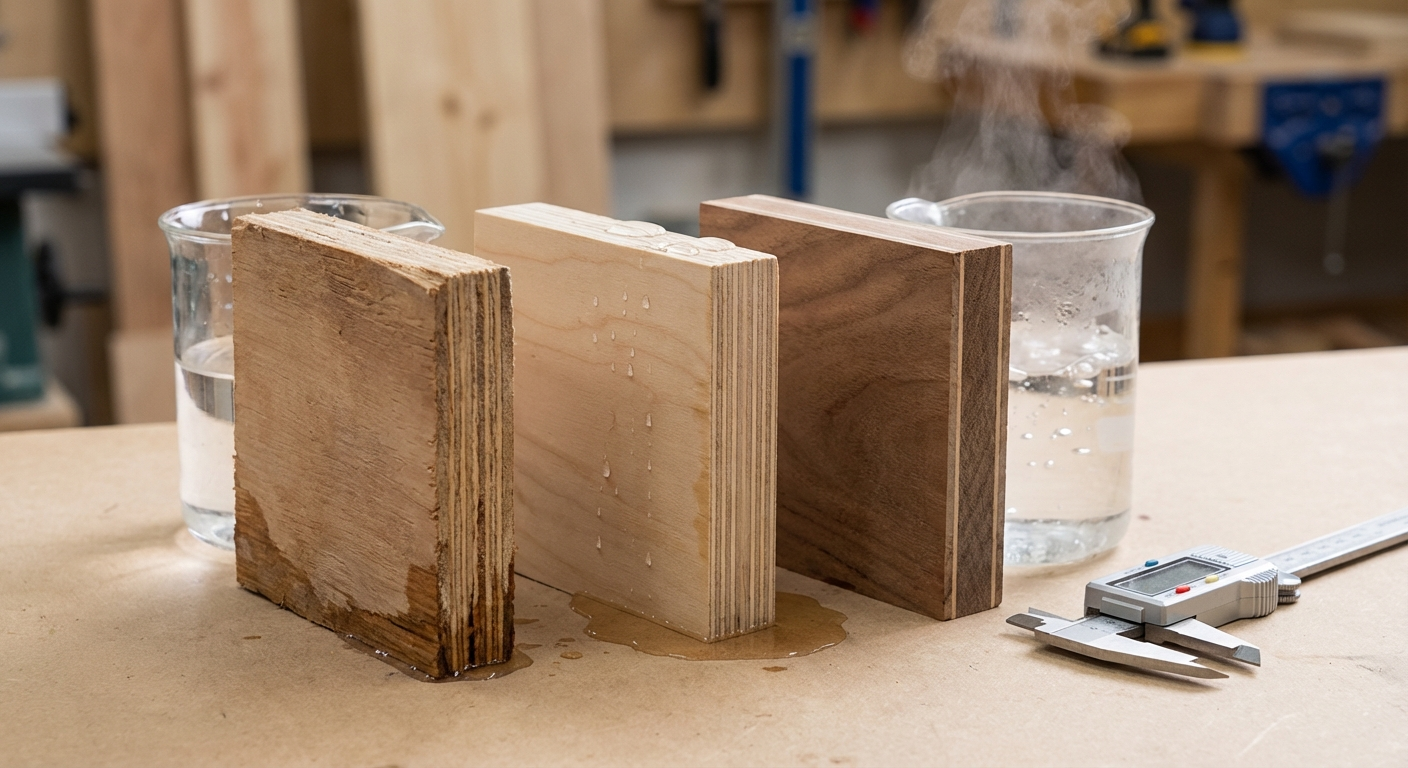
Water resistance defines these grades through standardized boil tests, revealing real durability. MR plywood passes only humidity exposure—no submersion—delaminating after 2-4 hours in water due to urea glue's solubility. Think of it as paper glue in rain: swells, weakens, fails.
BWR withstands 3-4 hours of boiling water per cycle, up to 2-3 cycles, as phenolic glue cross-links tighter under heat. This simulates kitchen splashes or bathroom steam, where repeated wetting occurs. In tests, BWR retains 80-90% bond strength post-boil, versus MR's 40%.
BWP endures 72 hours continuous boil or 6-hour cycles repeated 10+ times, glue bonds unscathed. Marine-grade PF resists hydrolysis completely, maintaining 95%+ strength. This hierarchy explains coastal failures: MR shutters in Goa rot in a season; BWP ones last decades.
In India, BIS IS:303 standards govern MR/BWR, IS:710 for BWP. But practical tests matter—submerge samples overnight. MR buckles; BWR softens slightly; BWP rigid. South India's monsoon humidity (80-95%) amplifies this: uncoated MR absorbs 20% moisture, BWP under 5%.
Carpenters in Bangalore kitchens see BWR edges fray after 3 years of cooking steam; BWP ignores it. For modular units, BWP's low swell (1-2mm per meter) prevents door misalignment. Why matters: India's 60% urban homes have wet zones; wrong grade means ₹50,000+ redo.
Sealants help MR marginally, but can't match inherent glue. In humid Pune, untreated MR cabinets mold; BWR with laminate lasts longer. Always prioritize core glue over paints—surface fixes fail subsurface bonds.
Strength, Durability, and Performance Metrics
Beyond water, these grades differ in mechanical strength from glue and core quality. MR offers basic screw-holding (200-300N), fine for light shelves but shears under heavy loads like Wardrobe bars. Its lower density (500-600kg/m³) suits portability but fatigues faster.
BWR boosts to 400-500N screw pull-out, with 20-30% higher modulus of rupture (40-50N/mm²), handling kitchen cabinets dynamically. Heat-pressed veneers reduce internal stresses, minimizing screw-head sinking over time.
BWP excels at 600-800N hold, 60-70N/mm² rupture strength, ideal for structural beams or marine partitions. Dense cores (700kg/m³+) resist impact—dropping a 10kg pot dents MR, bounces off BWP.
Durability ties to decay resistance: MR succumbs to termites in 1-2 years untreated; BWP's phenolic repels fungi for 10+. In India's termite-prone North, this gap widens. South coastal CNC work demands BWP's stability—humid shops warp MR blanks mid-cut.
Veneer thickness varies: MR 1.0-1.2mm faces peel easily; BWP 1.6mm+ endures sanding. Fire ratings follow: BWR/BWP char slower due to resins. In modular kitchens, BWP shelves bear 100kg/m² indefinitely; MR 40kg max.
Longevity: MR 3-5 years interiors; BWR 7-10 semi-wet; BWP 15-25 everywhere. Trade carpenters note BWP's lower callbacks, justifying 50% premium.
Ideal Applications and Real-World Use Cases
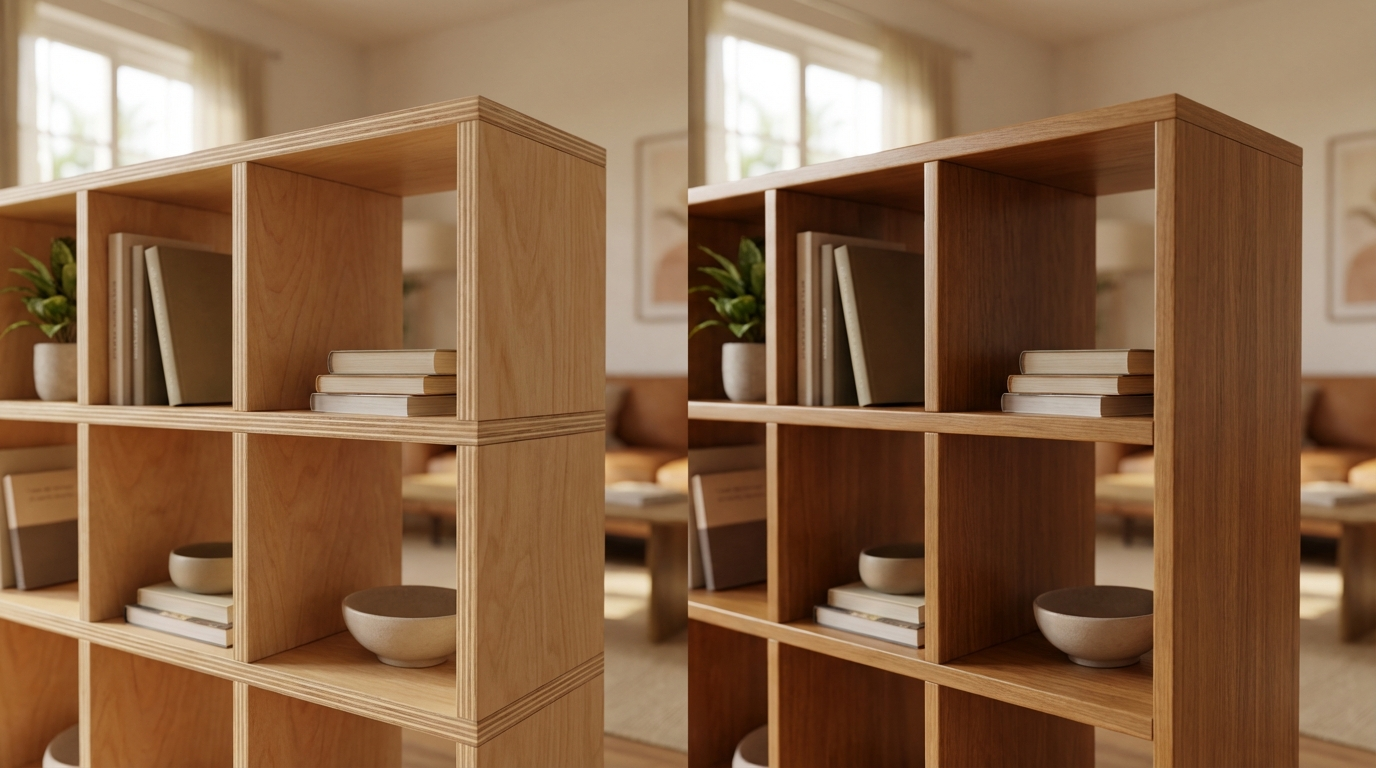
Matching grade to application avoids 80% of failures. MR shines in bedrooms—almirahs, beds, partitions—where RH stays under 60%. Affordable for bulk buys, laminates hide minor swells.
BWR fits bathrooms, kitchens, laundry: vanity units, cabinets under sinks. Handles daily wipes, steam; edges taped prevent ingress. In Pune apartments, BWR wardrobes near AC vents last without sagging.
BWP for extremes: exterior doors, boat interiors, commercial kitchens, coastal balconies. Boilers, saunas, flood-prone basements. In Chennai high-rises, BWP modular kitchens ignore sea spray and monsoons.
South India specifics: Coimbatore factories use BWR for machine enclosures; BWP for coastal export packing. CNC routers favor BWP's chip resistance in humid bays. Dealers push MR for false ceilings—fine dry, disastrous leaky roofs.
Failure cases: MR in Kerala bathrooms delaminates from shower mist; BWR outdoors rusts fittings; even BWP needs ventilation in sealed steams. Hybrid uses: BWR core with BWP edges for cost-saving.
Thickness guides: 12mm MR furniture; 18mm BWP structures. Always overhang supports 5cm to deflect water.
Why These Differences Matter in the Indian Climate
India's microclimates amplify grade choices. Monsoon North-East sees 90% RH for months—MR cabinets bloom mold; BWR holds, BWP thrives. Coastal Gujarat salt accelerates MR corrosion; BWP's glue neutralizes it.
South India's perpetual humidity (70-90%) demands BWR minimum for cabinets. Chennai modular kitchens steam-cook plywood—MR warps laminates off; BWP stays flat for 15 years. Coimbatore's textile humidity rots MR partitions yearly.
Urban AC homes mask issues, but power cuts spike humidity, exposing MR weaknesses. Rural wells/bathrooms need BWP. Why critical: 40% homes retrofit post-failure, costing double.
Dealer insights: Hyderabad sellers stock 60% MR for price-sensitive buyers, but advise BWR+ for kitchens. CNC boom in Bangalore favors BWP for defect-free cuts. Monsoon prep: Stock BWP for repairs.
Cost of wrong choice: ₹20,000 MR kitchen redo after 2 years vs. ₹35,000 BWP lasting 20. Logical: Higher upfront saves lifecycle costs in humid India.
Common Mistakes by Buyers and Carpenters
Top error: Universal MR use—70% buyers grab cheapest, ignoring wet zones. Result: Delhi wardrobes swell, Mumbai kitchens collapse. Dealers enable with "lamination fixes lies."
Carpenters cut corners: No edge sealing on BWR, leading to capillary ingress. South Indian fabricators skip dados on MR, accelerating shear failure under weight.
Mistake 3: Thickness confusion—6mm MR shelves bend; must match load. Ignoring core: Soft poplar MR vs. hard gurjan BWP.
Monsoon buys: Purchasing uncoated stock, swells in transit. CNC errors: Humid shops route MR, edges chip. Visual grading: Fancy faces hide poor glue.
Fixes: Water-test dealer samples. Demand boil certificates. South tip: Coastal carpenters prime BWR thrice. Avoid "grade mixing"—MR face on BWP core fakes.
Buyer regret: Festival wardrobes in MR fail Diwali humidity. Educate: Ask "boil test cycles?" True experts specify per zone.
Trade-Offs and Limitations of Each Grade
MR pros: Cheap (₹40-50/sqft), lightweight, easy machining. Cons: Poor wet strength, high formaldehyde emissions (health risk indoors), termite prone. Not for outdoors ever.
BWR: Balanced (₹60-75), good strength, moderate emissions. Limits: Cycles-limited boil (fails prolonged submersion), edges vulnerable, higher weight.
BWP: Ultimate durability (₹90+), low emissions, structural. Drawbacks: Heavy, expensive, harder to cut/nail (needs predrill), overkill for dry areas.
Edge cases: MR in AC servers ok; BWR not for immersion pools; BWP formaldehyde-free variants cost extra. Heat: All warp over 60°C, BWP least.
India trade-offs: MR for budget MIG housing; BWP unaffordable rural. CNC: BWP dust irritates less. Lifecycle: BWP ROI in 5 years wet use.
When NOT: MR outdoors, BWR marine, BWP dry furniture (waste). Balance with hybrids.
Decision Framework for Choosing the Right Plywood
Step 1: Map exposure—dry (bedroom), semi (kitchen), wet (bath). Dry=MR; semi=BWR; wet=BWP.
Step 2: Load asses—light MR ok; heavy BWP.
Step 3: Climate factor—North dry MR; South humid BWR+; coastal BWP.
Step 4: Budget vs. lifespan—MR quick flip; BWP heirloom.
Narrative: For Bangalore modular kitchen (humid, steam): BWR 18mm, edge-sealed. Coastal balcony: BWP 19mm treated.
| Use Case | Recommended Grade | Why | Alternatives |
|---|---|---|---|
| Bedroom Furniture | MR | Low moisture | BWR if humid |
| Kitchen Cabinets | BWR | Steam/splashes | BWP premium |
| Bathroom Vanity | BWP | Constant wet | BWR tiled |
| Coastal Exterior | BWP | Salt/humidity | None |
Validate with carpenter consult. South India: Add 1 grade up for monsoons.
Frequently Asked Questions
Can I use MR plywood in a kitchen?
MR works marginally in dry kitchens with exhaust fans and laminates, but expect swelling from spills or steam within 1-2 years. In India's steamy cooking style—curries boiling over—BWR prevents delamination. South modular setups amplify risks; upgrade for peace.
Is BWR plywood truly waterproof?
BWR resists boiling briefly but isn't fully waterproof like BWP. It handles cycles of wetting/drying, ideal for Indian bathrooms, but prolonged submersion (floods) causes core softening. Seal edges religiously for longevity.
How to identify genuine BWP plywood?
Check thick faces, heavy weight, BIS IS:710 stamp. Boil-test sliver: No separation after hours. Avoid light "BWP" labels—fakes abound. Dealers demo rarely; insist or source verified mills.
What's the price difference in India?
MR ₹40-60/sqft, BWR ₹60-90, BWP ₹90-150 for 18mm. Varies by city—cheaper North, premium South coasts. Factor thickness; BWP's durability offsets 50% premium in wet uses.
Does plywood grade affect termite resistance?
Higher grades' phenolic glues deter termites better than MR's urea. Treat all, but BWP needs least. India's termite belts demand chemical dip regardless.
Best for CNC cutting in humid areas?
BWP—minimal warp, clean edges. South CNC hubs like Coimbatore swear by it; MR gums blades in humidity. Predrill always.
Can I paint or laminate any grade?
Yes, but substrate matters. MR bubbles under laminate in damp; BWP bonds forever. Prime edges first.
BWP vs. marine plywood—same?
BWP is marine-grade, boil-proof for boats. Distinction minor; both top-tier for wet extremes. Disclaimer: This content is provided for general informational purposes based on industry practices and publicly available information. Product specifications, standards, prices, and availability may vary by manufacturer, region, and time. Readers should independently verify details with manufacturers, dealers, or qualified professionals before making purchase or construction decisions.
Want Plywood Suggestions?
Share a few details and a Apple Ply specialist will suggest suitable brands and connect you to responsive dealers.