MR Grade Plywood: Full Form, Meaning & Applications
MR Grade Plywood stands for Moisture Resistant. Learn about MR plywood properties, IS 303 certification, applications & when to use it.
Quick Answer
MR Grade Plywood stands for Moisture Resistant Plywood, a type of commercial-grade plywood manufactured using urea-formaldehyde resin that can withstand humidity and dampness but is not waterproof. It is certified under IS 303 standards in India and is the most commonly used plywood for interior furniture in dry areas like bedrooms, living rooms, and offices.
At a Glance
- Full Form: MR = Moisture Resistant
- BIS Standard: IS 303 certification
- Resin Used: Urea-formaldehyde (UF) adhesive
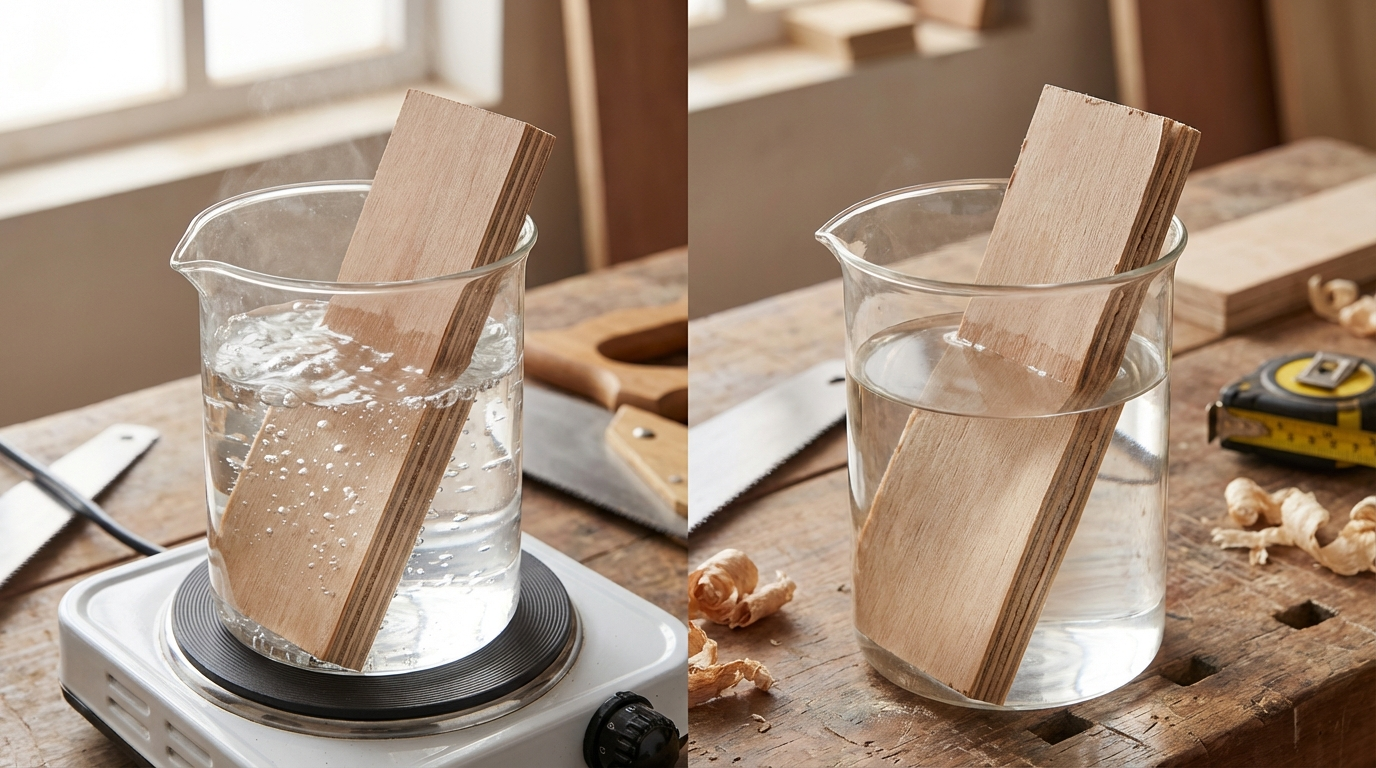
- Water Resistance: Handles humidity, not direct water contact
- Best Applications: Wardrobes, beds, TV units, office furniture, wall panelling
- Not Suitable For: Kitchens, bathrooms, outdoor furniture, or areas with water exposure
MR Grade Plywood Meaning and Technical Breakdown
MR grade plywood represents the foundational commercial plywood category used across India for interior furniture construction. The term "moisture resistant" describes its ability to handle atmospheric humidity and minor dampness without immediate deterioration—a critical distinction from being truly waterproof.
Understanding the Resin Technology
The moisture resistance in MR plywood comes from melamine urea-formaldehyde (MUF) resin used to bond the wood veneers together. This synthetic adhesive creates adequate bonding strength for indoor conditions where humidity levels fluctuate but direct water exposure is absent. The resin performs well in air-conditioned environments, temperature-controlled offices, and well-ventilated residential spaces.
In practical Indian market terms, MUF resin provides roughly 2-3 hours of resistance against brief moisture exposure—sufficient for wiping spills quickly but entirely inadequate for prolonged wetness. This is why MR plywood is categorically unsuitable for kitchen sink areas, bathroom cabinets, or any furniture that might encounter standing water.
IS 303 Certification Explained
The Bureau of Indian Standards (BIS) classifies MR grade plywood under IS 303, which covers both moisture-resistant and boiling water-resistant plywood categories. When examining an MR plywood sheet, look for the IS 303 mark along with the manufacturer's CM/L (Certificate of Marking/Licence) number. This certification confirms that the plywood has undergone standardised testing for bonding strength, moisture tolerance, and dimensional stability.
A common misconception among buyers is assuming all IS 303 plywood offers identical performance. The standard actually covers multiple grades—MR grade represents the entry-level moisture resistance tier, while BWR (Boiling Water Resistant) grade under the same IS 303 umbrella offers significantly higher water tolerance. Always verify whether the specific sheet is marked as MR grade, not just IS 303 certified.
Construction and Layer Configuration
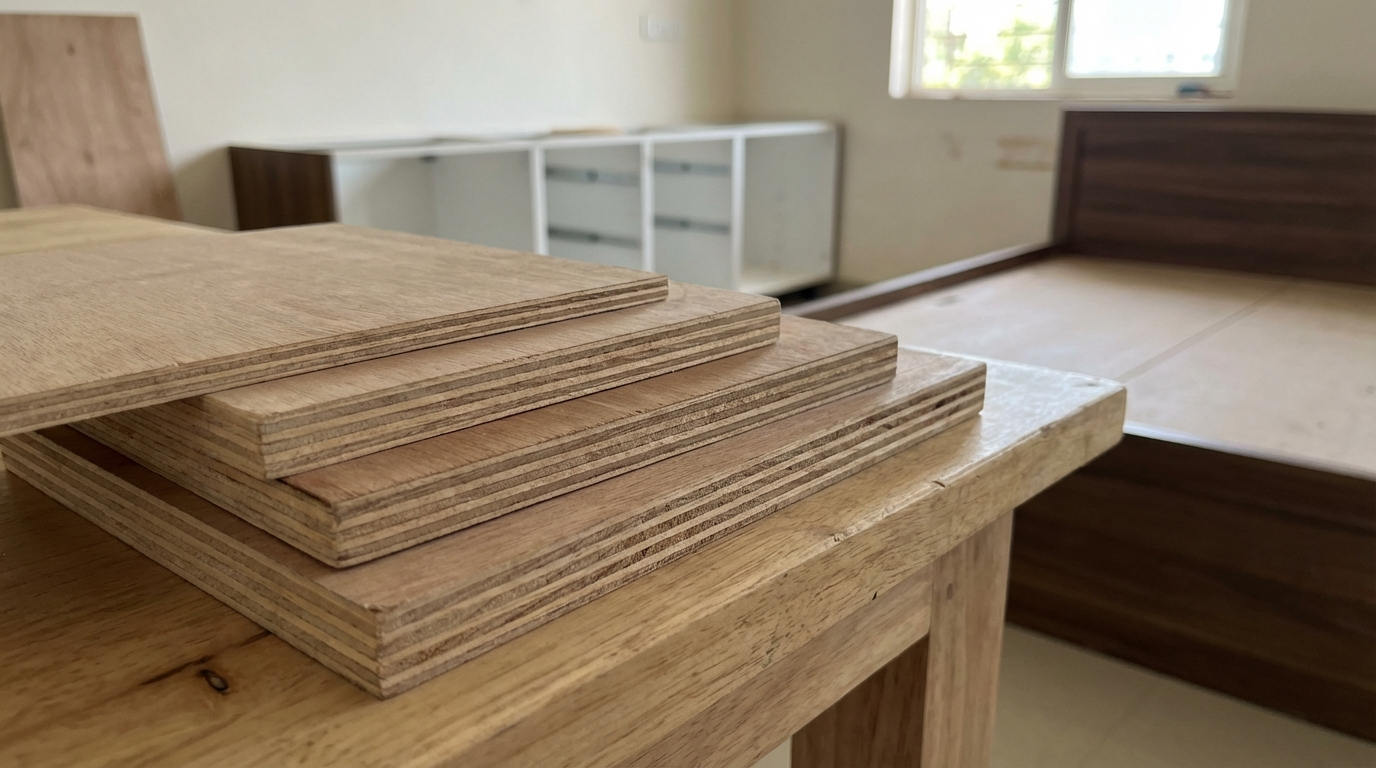
MR grade plywood is constructed by layering thin wood veneers with alternating grain directions—a technique that provides uniform strength in all directions and prevents warping under normal conditions. Standard configurations include 3-ply (typically 4-6mm thickness), 5-ply (8-12mm), 7-ply (15-18mm), and higher ply counts for thicker sheets. Each additional layer increases structural stability and screw-holding capacity, making higher-ply configurations preferable for furniture carcasses and load-bearing shelves.
Types and Variants of MR Grade Plywood
While MR grade represents a single moisture-resistance category, the market offers several variants based on face veneer quality, core construction, and finishing treatments. Understanding these distinctions helps buyers match product specifications to application requirements.
Commercial Grade MR Plywood
Standard commercial MR plywood features hardwood veneers with acceptable face quality suitable for laminate or veneer finishing. This category dominates the Indian furniture market due to its balance of cost and performance. Face imperfections like minor knots, colour variations, and grain irregularities are common and typically concealed during finishing. For wardrobes, bed platforms, and concealed cabinet structures, commercial grade MR plywood delivers adequate performance without premium pricing.
Decorative Grade MR Plywood
Higher face-quality MR plywood features carefully selected veneers with minimal defects, suitable for natural wood finishing or thin veneer overlays where substrate quality affects final appearance. This grade commands a 15-25% premium over commercial variants but eliminates surface preparation challenges that compromise finishing quality.
Calibrated MR Plywood
Calibrated plywood undergoes precision thickness sanding to achieve uniform measurements across the entire sheet—critical for modular furniture manufacturers and CNC machining operations. Standard MR plywood may vary by 0.5-1mm across a single sheet, causing alignment problems in modern modular kitchen systems. Calibrated MR plywood maintains thickness tolerance within 0.2mm, enabling seamless edge-banding and precise panel fitting. This variant is increasingly demanded in metro cities where modular furniture dominates the market.
Flexi MR Plywood
Flexible MR plywood uses thinner veneers and modified construction to allow bending into curved shapes—useful for designer headboards, reception counters, and architectural elements. Available typically in 3-5mm thicknesses, flexi ply requires skilled carpentry to achieve consistent curves without cracking.
MR Grade vs BWR vs BWP Plywood: Comparison Table
The fundamental decision for most Indian buyers involves choosing between MR, BWR, and BWP grades based on application requirements and budget constraints. This comparison clarifies the practical differences that matter for furniture selection.
| Parameter | MR Grade Plywood | BWR Grade Plywood | BWP/Marine Grade Plywood |
|---|---|---|---|
| Full Form | Moisture Resistant | Boiling Water Resistant | Boiling Water Proof |
| BIS Standard | IS 303 | IS 303 | IS 710 |
| Resin Type | Urea-formaldehyde | Phenol-formaldehyde | Phenol-formaldehyde (high grade) |
| Water Resistance | Humidity only | Up to 8 hours boiling water | Continuous water exposure |
| Best Applications | Bedrooms, living rooms, offices | Kitchens, humid rooms | Bathrooms, outdoor, marine use |
| Termite Treatment | Optional (brand dependent) | Commonly included | Standard inclusion |
| Price Range (18mm) | ₹45-75 per sq ft | ₹65-100 per sq ft | ₹90-140 per sq ft |
| Typical Warranty | 5-7 years | 10-15 years | 15 years to lifetime |
When MR Grade Makes Sense
MR grade plywood delivers optimal value for completely dry interior applications where budget efficiency matters. A bedroom wardrobe in an air-conditioned apartment faces minimal moisture stress—using BWP grade here represents unnecessary expenditure without proportional benefit. Similarly, office partitions, study tables, TV units in living rooms, and display shelving rarely encounter water exposure that would justify premium waterproof grades.
When to Upgrade Beyond MR Grade
The moment furniture placement involves proximity to water sources, cooking areas, or high-humidity zones, MR grade becomes inadequate. Kitchen cabinets—even those away from the sink—face steam exposure, cooking splashes, and condensation that degrades MR plywood within 3-5 years. Bathrooms demand BWP grade exclusively. Coastal cities and monsoon-heavy regions benefit from BWR grade even for nominally dry applications due to elevated ambient humidity levels that accelerate MR plywood deterioration.
Applications and Best Uses for MR Grade Plywood
Understanding appropriate applications prevents both underspecification (MR grade in wet areas) and overspecification (expensive BWP grade where MR suffices). The following breakdown covers practical furniture applications across Indian homes and commercial spaces.
Bedroom Furniture Applications
MR grade plywood performs excellently for bedroom furniture in well-ventilated or climate-controlled spaces. Wardrobe carcasses, bed platforms, headboards, side tables, and dressing units all represent appropriate MR grade applications. For bed platforms supporting hydraulic mechanisms, ensure minimum 18mm thickness with adequate ply count for structural integrity. Wardrobe shutters benefit from MR grade when faced with decorative laminates that add a moisture barrier layer.
Living Room and Entertainment Units
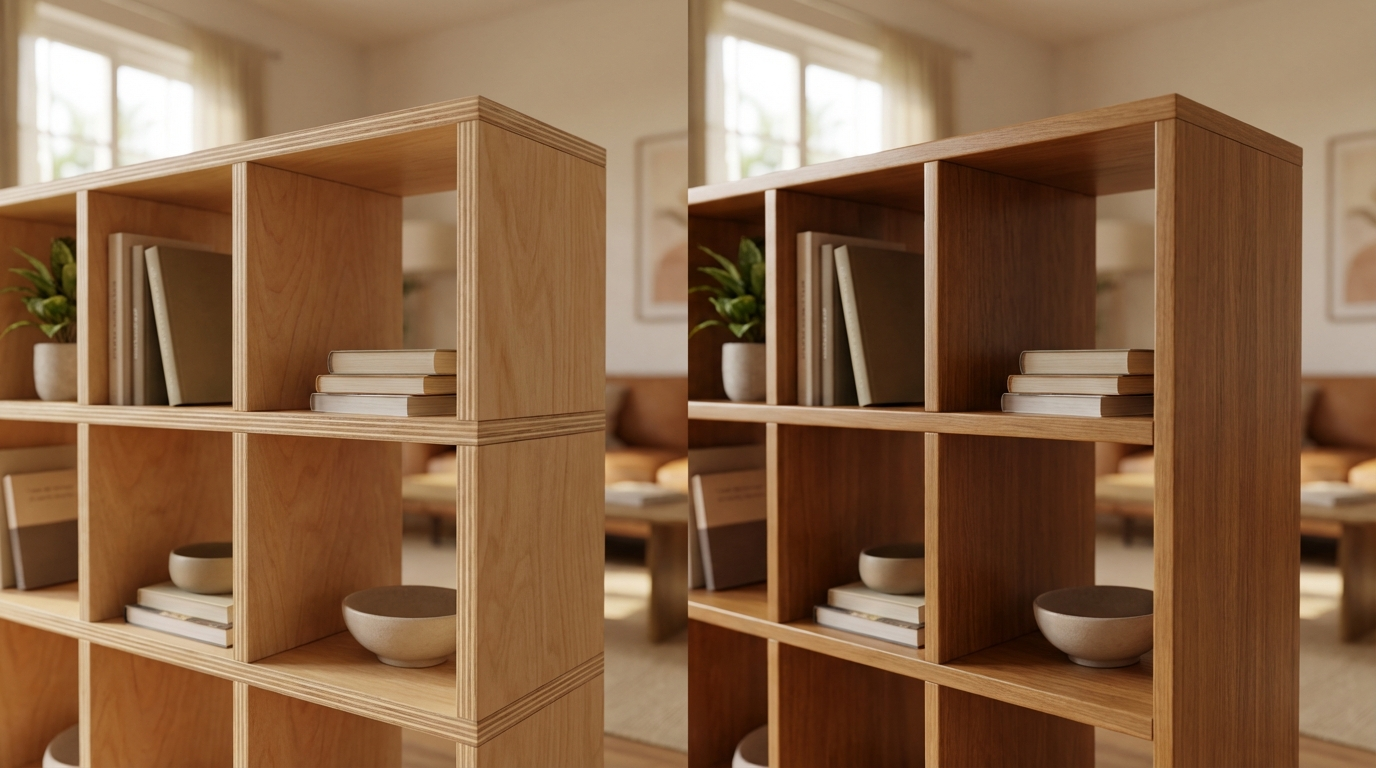
TV units, bookshelves, display cabinets, and storage consoles in living areas face minimal moisture exposure, making MR grade the cost-effective choice. Wall panelling installations using MR plywood work well when walls remain dry and rooms receive adequate ventilation. Avoid MR grade for wall panelling in rooms with external walls prone to seepage during monsoons.
Office and Commercial Interiors
Corporate offices, retail fixtures, and commercial interiors represent ideal MR grade applications. Climate-controlled environments with consistent humidity levels allow MR plywood to perform for 15-20 years without degradation. Reception desks, workstations, conference room furniture, and storage systems all utilise MR grade effectively.
Applications to Strictly Avoid
Never use MR grade plywood for kitchen cabinets (including upper units), bathroom vanities, wash area furniture, balcony storage, or any furniture exposed to rain or direct water contact. False ceilings in kitchens and bathrooms require BWR or BWP grades despite being overhead—steam and humidity rise, causing MR grade ceiling panels to sag and delaminate within 2-3 years.
How to Choose the Right MR Grade Plywood
Selecting quality MR plywood requires understanding specification parameters, verification methods, and red flags that indicate substandard products. Indian markets vary significantly in product quality, making informed selection essential.
Thickness Selection Guidelines
MR plywood thickness directly impacts structural performance and furniture longevity. For furniture carcasses and load-bearing components, 18mm or 19mm (trade size) provides adequate strength. Wardrobe shutters typically use 18mm for rigidity, while drawer bottoms and backing panels use 4-6mm. Bed platforms supporting body weight and hydraulic mechanisms require 18mm minimum with 7-ply or higher construction.
A common confusion in Indian markets involves the 18mm versus 19mm naming convention. Manufacturers produce both dimensions, with 19mm often representing "nominal" measurement that accounts for laminate thickness. Clarify actual core thickness when ordering, as structural calculations depend on precise dimensions.
Quality Verification Checklist
- ISI Mark Verification: Check CM/L number authenticity through BIS website
- Surface Smoothness: Run palm across face—quality plywood feels uniformly smooth without undulations
- Edge Inspection: Examine cut edges for void-free core layers in straight alignment
- Weight Check: Quality MR plywood feels substantially heavy; lightweight sheets indicate inferior core density
- Thickness Uniformity: Measure multiple points across the sheet; variation beyond 0.5mm suggests poor calibration
- Nail Test: Request carpenter demonstration—quality plywood holds nails firmly without splitting
When NOT to Choose MR Grade
Avoid MR grade selection in the following scenarios regardless of budget constraints:
- Any furniture within 3 feet of water sources (sinks, taps, washing machines)
- Coastal locations where salt-laden humidity accelerates adhesive breakdown
- Ground floor rooms in areas with high water table or flooding risk
- Rooms with known seepage or dampness issues
- External-facing walls without adequate waterproofing
- Rental properties where maintenance may be neglected
Common Mistakes When Buying MR Grade Plywood
The Indian plywood market's complexity creates multiple opportunities for costly mistakes. Understanding these pitfalls helps buyers avoid compromised furniture quality and premature replacement expenses.
Mistake 1: Confusing Moisture Resistant with Waterproof
The most damaging misconception involves assuming MR plywood can handle water exposure. Marketing language sometimes implies broader protection than MR grade actually provides. Moisture resistance means humidity tolerance—not waterproofing. Placing MR plywood furniture near kitchen sinks or in bathrooms guarantees delamination within 2-4 years, negating any initial cost savings.
Mistake 2: Ignoring Termite Treatment Status
Not all MR plywood includes termite and borer treatment. Standard commercial MR plywood may lack chemical treatment, leaving furniture vulnerable in termite-prone regions. Verify treatment status explicitly—reputed brands typically offer treated variants at slight premiums. Ground floor installations and wooden flooring contact points face elevated termite risk requiring treated plywood.
Mistake 3: Buying Based on Brand Name Alone
Counterfeit plywood represents a significant market problem, with inferior products stamped and recoloured to mimic premium brands. Always purchase from authorised dealers who provide authentic test certificates. Verify ISI CM/L numbers independently through BIS verification portals. Suspiciously low pricing for premium brand names typically indicates counterfeit products.
Mistake 4: Neglecting Calibration Requirements
Modular furniture and CNC-cut components require calibrated plywood for proper fitting. Using non-calibrated MR plywood in modular kitchen systems causes misalignment, edge-banding failures, and visible gaps at joints. The calibration premium (typically 10-15%) pays for itself through reduced carpenter callbacks and superior finishing.
Mistake 5: Underspecifying for High-Humidity Cities
Mumbai, Chennai, Kolkata, and coastal cities experience ambient humidity levels that stress MR plywood even in nominally dry rooms. Wardrobes against external walls, furniture in non-air-conditioned spaces, and installations in poorly ventilated rooms benefit from BWR grade upgrading. The 25-35% price premium prevents furniture degradation that becomes apparent within 5-7 years.
Quick Inspection Checks
- Tap Test: Solid, resonant sound indicates good density; hollow sound suggests voids
- Bend Test: Quality plywood shows slight flex without cracking; brittle response indicates poor bonding
- Smell Check: Strong chemical odour suggests excessive formaldehyde—avoid for bedroom furniture
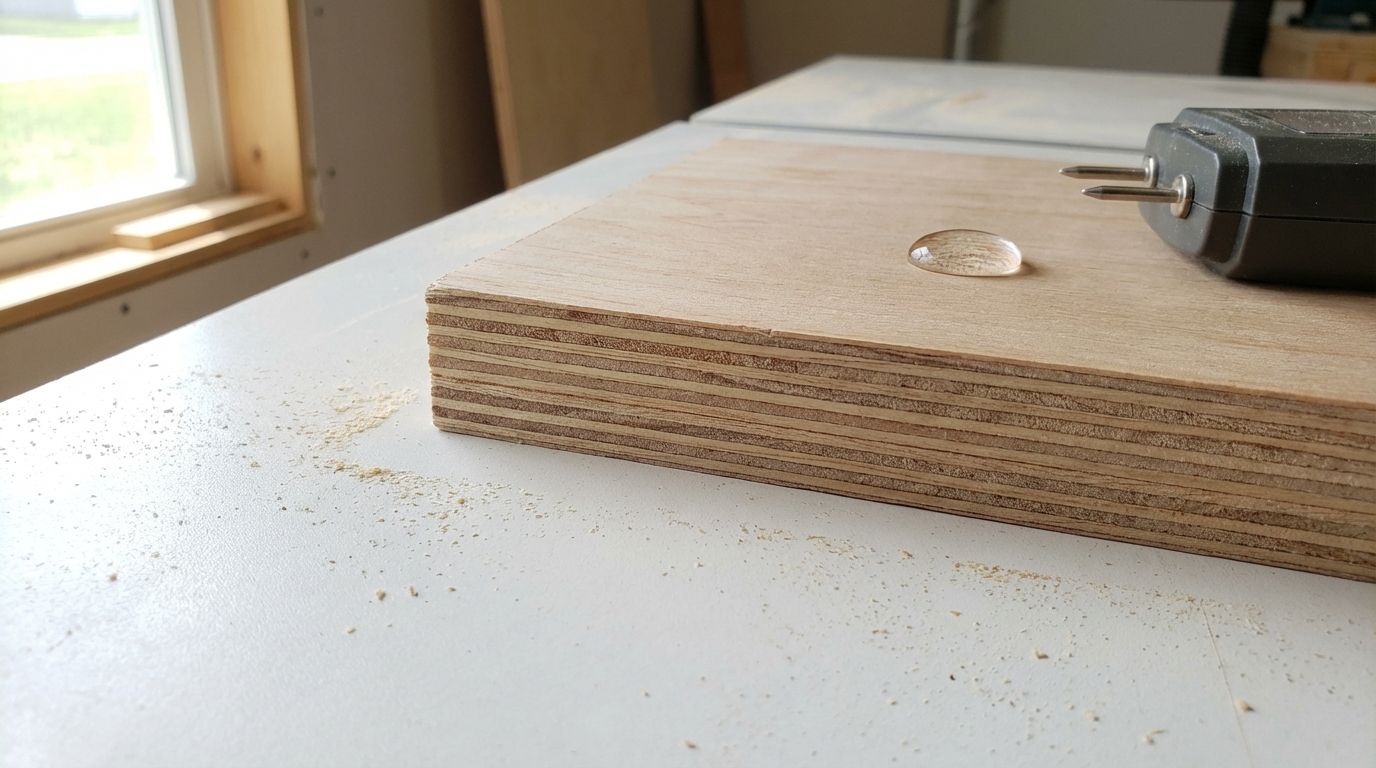
- Water Drop Test: Place water drop on surface; immediate absorption indicates poor face quality
MR Grade Plywood Price Guide for India
MR plywood pricing varies based on brand reputation, thickness, face quality, and geographic location. Understanding these variables helps buyers evaluate quotations accurately and avoid overpayment or suspiciously cheap counterfeits.
Price Range by Thickness (per square foot)
| Thickness | Economy Brands | Mid-Range Brands | Premium Brands |
|---|---|---|---|
| 6mm | ₹18-25 | ₹25-35 | ₹35-45 |
| 9mm | ₹28-38 | ₹38-50 | ₹50-65 |
| 12mm | ₹35-48 | ₹48-65 | ₹65-85 |
| 18mm | ₹45-60 | ₹60-80 | ₹80-100 |
| 19mm | ₹48-65 | ₹65-85 | ₹85-110 |
Note: Prices reflect 2024-25 metro city dealer rates. Tier-2/Tier-3 cities may see 5-15% variations based on transportation costs and local competition.
Factors Affecting MR Plywood Pricing
Brand Tier: Established brands with nationwide dealer networks command 30-50% premiums over regional manufacturers. This premium reflects consistent quality control, warranty backing, and counterfeit protection—not merely marketing.
Face Veneer Quality: Decorative-grade faces with minimal defects cost more than commercial-grade surfaces intended for laminate covering. For concealed applications, commercial grade delivers equivalent performance at lower cost.
Calibration: Precision-thickness plywood costs 10-15% more than standard variants. Essential for modular applications but unnecessary for traditional carpentry.
Termite Treatment: Chemically treated MR plywood adds ₹5-10 per square foot—a worthwhile investment for ground-floor installations and termite-prone regions.
GST and Transport: The 18% GST applies uniformly, but transportation costs vary significantly by location. Remote areas and island territories face elevated pricing due to logistics challenges.
Budget Allocation Strategy
For a typical 2BHK home furniture project, allocating 60-70% of plywood budget to MR grade (bedrooms, living areas) and 30-40% to BWR/BWP grades (kitchen, bathrooms) optimises cost-effectiveness without compromising durability in critical areas. Attempting to use MR grade throughout initially saves 15-20% but typically requires kitchen cabinet replacement within 5-7 years—negating any savings.
Frequently Asked Questions
What is the full form of MR plywood?
MR stands for Moisture Resistant. This plywood grade can withstand humidity and atmospheric dampness but is not waterproof. The moisture resistance comes from urea-formaldehyde resin used to bond the veneer layers, which tolerates humid conditions but breaks down when exposed to direct water contact or prolonged wetness. MR plywood is certified under IS 303 standards in India and represents the most commonly used commercial plywood for interior furniture applications.
Is MR grade plywood waterproof?
No, MR grade plywood is explicitly not waterproof. It can handle humidity and occasional surface dampness that gets wiped quickly, but direct water contact causes the urea-formaldehyde adhesive to weaken and eventually fail. Prolonged moisture exposure leads to delamination where veneer layers separate, and the plywood loses structural integrity. For waterproof applications, BWR (Boiling Water Resistant) or BWP (Boiling Water Proof) grades certified under IS 303 and IS 710 respectively are necessary.
Can MR plywood be used in kitchens?
MR plywood is not recommended for kitchen applications due to regular exposure to steam, cooking splashes, and humidity from food preparation. Even kitchen cabinets away from direct water sources face moisture stress that degrades MR grade within 3-5 years. BWR grade plywood is the minimum recommendation for kitchen cabinets, with BWP grade preferred for under-sink units and areas near water sources. The additional cost of appropriate grades prevents premature cabinet replacement.
What is the difference between MR and BWR plywood?
The primary difference lies in adhesive type and water resistance. MR plywood uses urea-formaldehyde resin offering humidity resistance only, while BWR plywood uses phenol-formaldehyde resin that withstands boiling water exposure for up to 8 hours. BWR grade costs approximately 25-35% more than MR grade but offers significantly longer life in semi-wet applications like kitchens. Both grades fall under IS 303 certification, so buyers must verify the specific grade marking on each sheet.
What is the price of MR plywood in India?
MR plywood prices in India typically range from ₹45-100 per square foot for 18mm thickness, depending on brand tier and face quality. Economy brands start around ₹45-60, mid-range options cost ₹60-80, and premium brands command ₹80-100 per square foot. Prices vary by 5-15% between metro and smaller cities due to transportation costs. Calibrated plywood and termite-treated variants add 10-15% to base prices. Always compare prices across multiple dealers to identify market rates.
How to check MR plywood quality before buying?
Quality verification involves multiple checks: examine the ISI mark and verify the CM/L number through BIS website, check surface smoothness by running your palm across the face, inspect cut edges for void-free cores in straight alignment, and assess weight (quality plywood feels noticeably heavy). Request a nail test from your carpenter—quality MR plywood holds nails without splitting. Measure thickness at multiple points; variations beyond 0.5mm indicate poor manufacturing standards.
Which is better for wardrobe: MR or BWR plywood?
For wardrobes in air-conditioned bedrooms or well-ventilated dry rooms, MR grade provides adequate performance at lower cost. However, wardrobes against external walls in humid cities like Mumbai, Chennai, or Kolkata benefit from BWR grade to prevent moisture-related degradation. Wardrobes adjacent to bathrooms should use BWR grade regardless of location. The decision depends on specific placement conditions—MR grade delivers excellent value when humidity exposure is genuinely minimal.
Does MR plywood come with termite protection?
Standard MR plywood may or may not include termite and borer treatment—this varies by manufacturer and product line. Reputed brands typically offer both treated and untreated variants, with treated versions costing ₹5-10 per square foot more. Ground floor installations, furniture with soil contact, and termite-prone regions require explicitly treated plywood. Always verify treatment status at purchase rather than assuming inclusion. Look for "termite and borer resistant" or "preservative treated" markings on the product.
Disclaimer: This content is provided for general informational purposes based on industry practices and publicly available information. Product specifications, standards, prices, and availability may vary by manufacturer, region, and time. Readers should independently verify details with manufacturers, dealers, or qualified professionals before making purchase or construction decisions.
Want Plywood Suggestions?
Share a few details and a Apple Ply specialist will suggest suitable brands and connect you to responsive dealers.