IS 1659 Plywood: BWP Grade Block Board Certification Explained
Learn about IS 1659 certification for BWP grade block board. Understand testing standards, quality parameters & how to verify genuine products.
Quick Answer
IS 1659 is the Indian Standard specification governing block board manufacturing, with BWP (Boiling Water Proof) grade representing the highest quality tier designed for moisture-intensive environments. This certification ensures block boards meet stringent Bureau of Indian Standards (BIS) requirements for adhesive quality, core construction, dimensional stability, and water resistance—making it mandatory for manufacturers to obtain the ISI mark before selling in India.
At a Glance
- IS 1659:2004 is the governing standard for commercial and decorative block boards in India
- BWP Grade uses phenol formaldehyde resin, suitable for exterior and high-humidity applications
- Mandatory ISI Mark required from February 2025 for all block board manufacturers
- Two primary grades: BWP (Boiling Water Proof) and MR (Moisture Resistant)
- Testing includes: boiling water resistance, mycological tests, modulus of rupture, and adhesion tests
- Price range: BWP grade block boards typically cost ₹85–₹140 per sq ft depending on thickness and brand tier
IS 1659 Block Board Certification Explained
IS 1659:2004 is the definitive Indian Standard that establishes technical requirements for block boards used across construction and interior applications. Published by the Bureau of Indian Standards, this specification covers everything from raw material selection to finished product testing, ensuring uniformity and reliability across the Indian market.
The standard addresses a critical concern in the Indian context: quality consistency. Before mandatory certification, the market was flooded with substandard block boards that would delaminate during monsoons, warp under humidity stress, or fail prematurely in kitchen installations. IS 1659 certification changed this landscape by establishing clear benchmarks manufacturers must meet.
What IS 1659 Covers
The standard encompasses comprehensive requirements including permissible timber species for core construction, adhesive specifications for different grades, veneer quality and thickness parameters, dimensional tolerances, and mandatory testing protocols. It specifically addresses both commercial-grade boards for general use and decorative-grade boards where surface finish matters.
One critical aspect IS 1659 mandates is preservative treatment protocols. Given India's diverse climate—from coastal humidity in Mumbai and Chennai to dry inland regions—the standard requires appropriate treatment against termites and borers, a practical consideration that directly impacts product longevity in Indian homes.
Why Certification Became Mandatory
The Ministry of Commerce and Industry issued the Wood Based Boards (Quality Control) Order in March 2024, making BIS certification compulsory. This regulatory shift means block boards—whether domestically manufactured or imported—must carry the ISI mark under a valid BIS license. The implementation deadline was set for February 2025 for regular enterprises, with extended timelines for micro and small enterprises. This order aims to eliminate substandard products and protect consumers who previously had no reliable way to verify quality claims made by manufacturers and dealers.
BWP Grade vs MR Grade: Understanding the Difference
IS 1659 classifies block boards into two primary grades based on adhesive type and water resistance capability. Understanding this distinction is fundamental for making appropriate material choices for different applications in Indian homes and commercial spaces.
BWP Grade Block Board
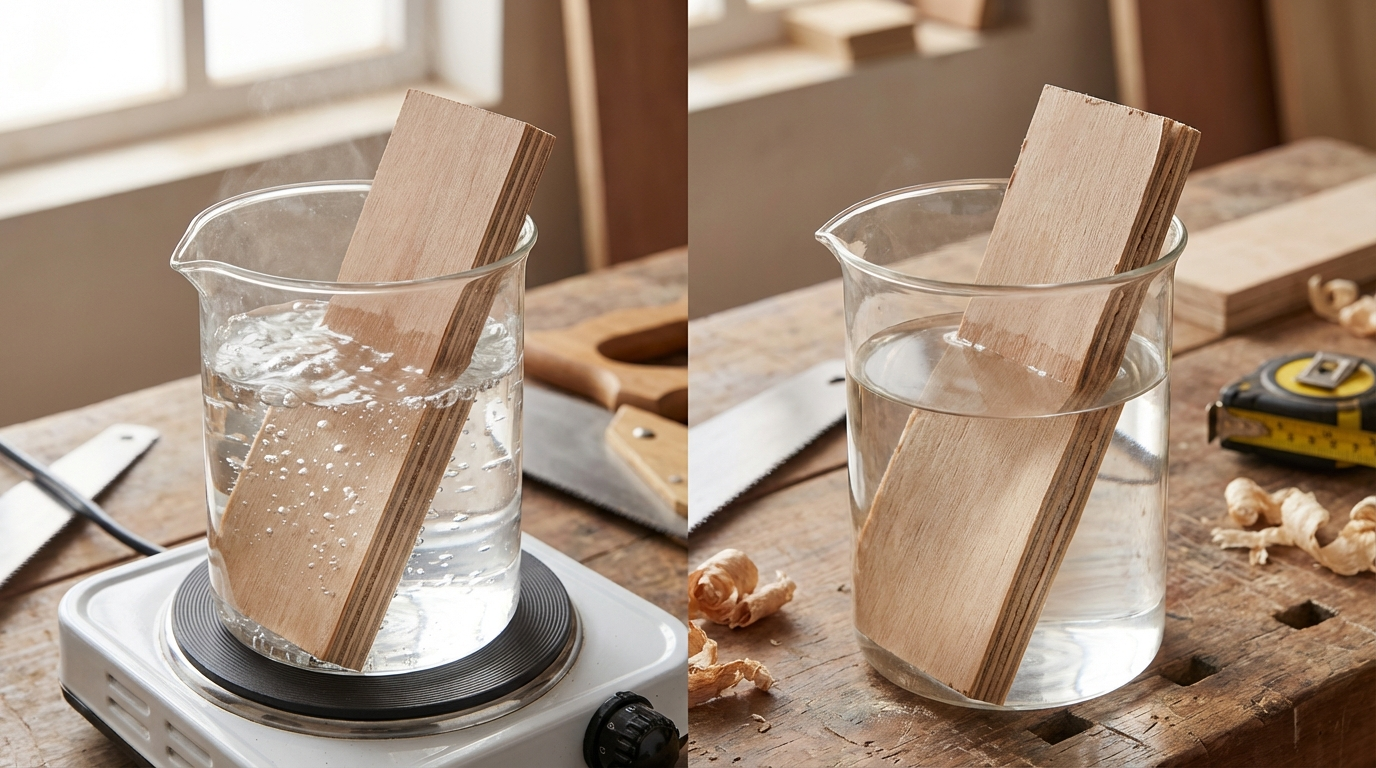
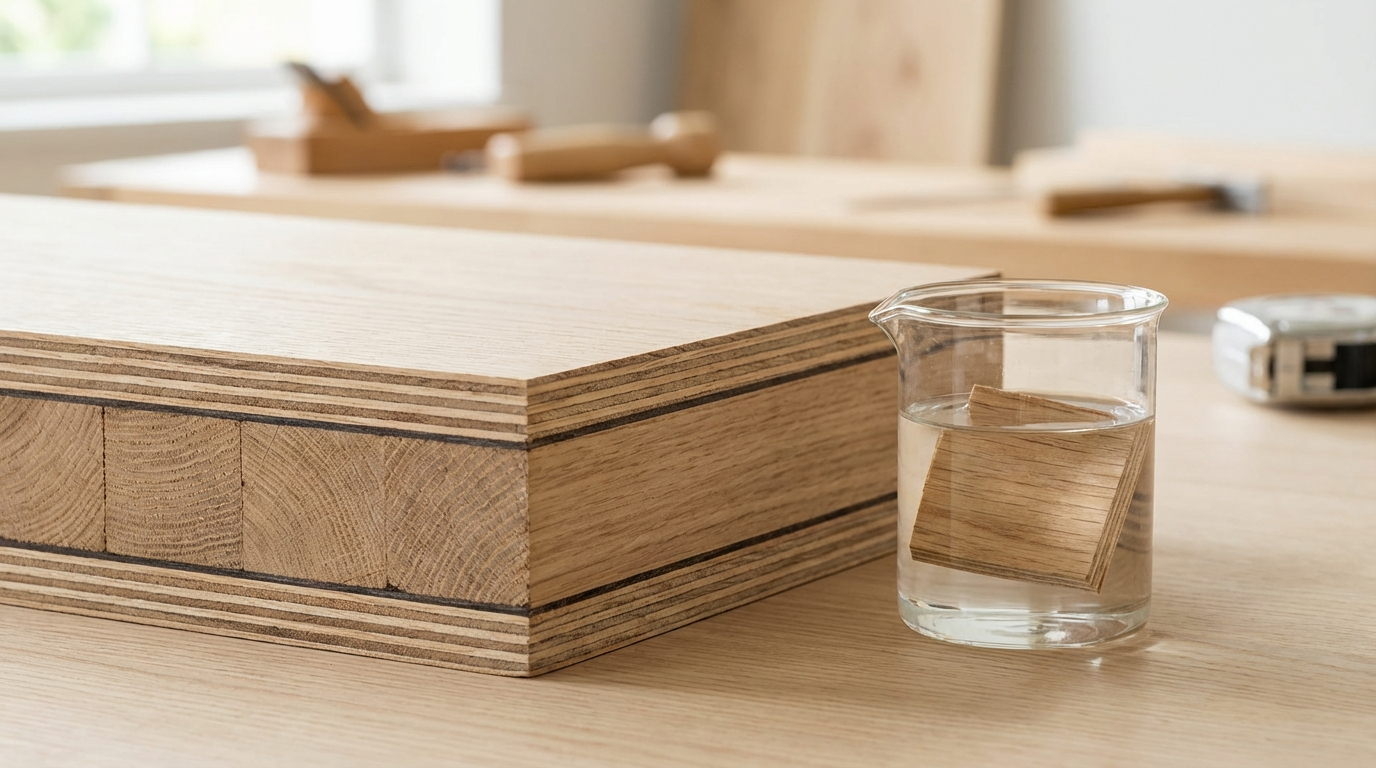
BWP (Boiling Water Proof) grade block boards use phenol formaldehyde resin as the bonding adhesive. This synthetic resin creates bonds that withstand prolonged exposure to water, steam, and high humidity without delamination. The "boiling water" terminology comes from the testing method—BWP boards must survive immersion in boiling water for extended periods during quality testing.
In practical Indian terms, BWP grade is the appropriate choice for kitchen cabinets, bathroom vanities, areas near windows exposed to rain ingress, and any furniture in coastal cities like Mumbai, Kochi, or Visakhapatnam where ambient humidity remains consistently high throughout the year.
MR Grade Block Board
MR (Moisture Resistant) grade uses urea formaldehyde resin, which offers protection against occasional moisture exposure but cannot withstand continuous water contact or high-humidity environments. MR grade boards are suitable for bedroom furniture, living room cabinets, and office applications in climate-controlled or dry inland environments.
The critical practical difference becomes apparent during monsoon season. BWP grade maintains structural integrity even when humidity levels spike above 80%, while MR grade may show edge swelling or gradual adhesive weakening under the same conditions. For modular kitchen installations—now standard in metro apartments—BWP grade is non-negotiable regardless of cost considerations.
Decorative vs Commercial Types
Within each grade, IS 1659 further categorizes boards as decorative or commercial. Decorative types feature higher-quality face veneers suitable for clear finishes and visible surfaces, while commercial types are designed for applications where the board surface will be covered with laminates, veneers, or paint. This classification affects pricing and should influence purchasing decisions based on end-use requirements.
IS 1659 Testing Standards and Quality Parameters
The certification process under IS 1659 involves rigorous testing protocols conducted by BIS-approved laboratories. Understanding these tests helps buyers appreciate what certified products have undergone and what quality parameters they guarantee.
| Test Category | What It Measures | BWP Requirement | Why It Matters |
|---|---|---|---|
| Resistance to Water | Adhesive bond durability under water exposure | Must survive boiling water immersion test | Ensures kitchen/bathroom suitability |
| Adhesion of Plies | Bond strength between core and face veneers | No delamination under specified stress | Prevents peeling and surface failure |
| Modulus of Rupture | Bending strength before breaking | Minimum N/mm² as per specification | Determines load-bearing capacity |
| Modulus of Elasticity | Stiffness and resistance to deflection | Minimum threshold per grade | Prevents sagging in shelves/panels |
| Mycological Test | Resistance to fungal growth | No fungal degradation | Critical for humid Indian climates |
| Dimensional Tolerance | Thickness, length, width accuracy | Within specified mm variance | Ensures consistent carpentry work |
| Dimensional Changes (Humidity) | Expansion/contraction under humidity variation | Within acceptable percentage | Prevents warping and joint failure |
Core Construction Requirements
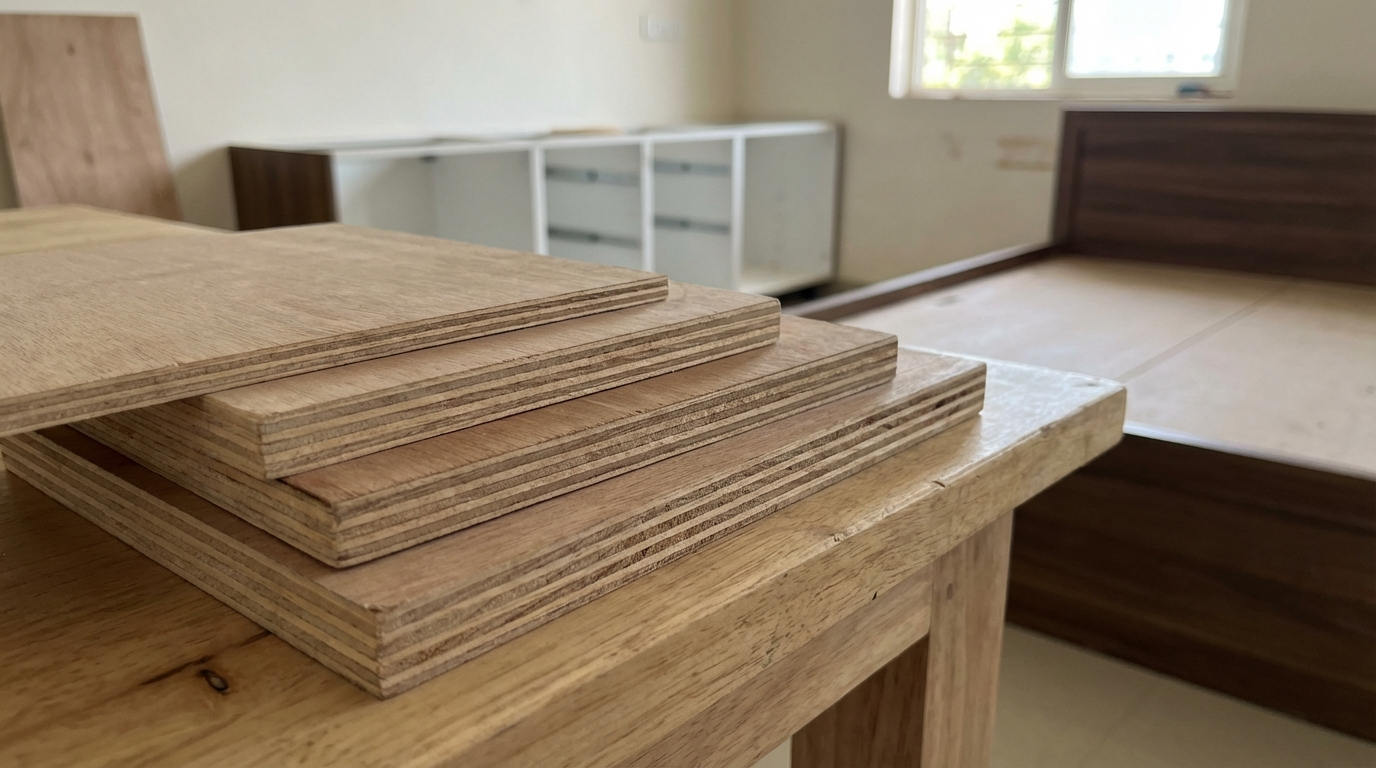
IS 1659 specifies that block board cores must be constructed from solid timber battens bonded edge-to-edge. The standard defines acceptable batten widths, gap tolerances between battens, and requirements for the cross-band veneers that sandwich the core. These construction parameters directly impact the board's resistance to warping—a common complaint with substandard products.
The Spot Test Significance
Among the mandatory tests, the spot test verifies adhesive distribution consistency. Uneven glue spread during manufacturing creates weak zones that fail under stress. This test ensures the phenol formaldehyde resin in BWP boards is uniformly applied, preventing localized delamination that often appears months after installation when substandard boards are used.
How to Verify Genuine IS 1659 Certified Block Board
With mandatory certification now enforced, the market includes both genuinely certified products and those with fraudulent markings. Buyers need practical verification methods beyond trusting dealer claims.
ISI Mark Verification
Genuine IS 1659 certified block boards display the ISI mark along with the license number. This license number can be verified on the BIS website. The marking should include: the ISI logo, the standard number (IS 1659), the grade (BWP or MR), the manufacturer's license number, and the manufacturing date or batch code. Blurry, inconsistent, or easily removable markings suggest counterfeits.
Physical Inspection Checks
- Edge examination: Cut edges should show uniform core battens without excessive gaps, voids, or mixed wood species
- Weight consistency: Certified BWP boards have consistent density; unusually light boards suggest inferior core material
- Surface veneer: Face veneers should be firmly bonded with no bubbling, lifting, or visible glue patches
- Thickness verification: Measure with calipers at multiple points; variation beyond 1mm suggests poor quality control
- Odor test: Strong chemical or rotten smell indicates substandard adhesives or improperly dried core timber
Dealer Documentation
Request the BIS certificate copy from your dealer. Legitimate dealers maintain documentation linking their inventory to licensed manufacturers. Reluctance to provide this documentation is a red flag. In metro cities, organized dealers increasingly offer QR code verification linking to manufacturer credentials—a practice becoming standard with established brands.
Common Mistakes to Avoid When Buying BWP Block Board
Despite certification requirements, buyers and even carpenters frequently make errors that lead to product failures and financial losses. These mistakes often stem from price prioritization over quality verification or misunderstanding grade requirements.
Choosing MR Grade for Wet Areas
The most consequential mistake is installing MR grade block boards in kitchens or bathrooms to save ₹15–25 per sq ft. This economy proves false when boards swell near sinks, delaminate behind cooking ranges, or develop fungal growth within 2–3 years. The replacement cost and inconvenience far exceed the initial savings. Always insist on BWP grade for any moisture-exposed application.
Ignoring Thickness Trade Conventions
In Indian markets, "18mm" block board often measures 17–17.5mm actual thickness, while "19mm" may be the true 18mm product. This trade convention confuses buyers specifying materials for modular kitchen installations where CNC machines require precise thickness calibration. Always verify actual thickness with calipers rather than accepting nominal labels.
Trusting Verbal Grade Claims
Many dealers sell MR grade boards while verbally assuring BWP quality. Without physical verification of ISI markings and grade stamps, buyers have no recourse when products fail. The certification marking must clearly state "BWP" or equivalent grade designation—verbal assurances hold no value.
Neglecting Acclimatization
Block boards brought directly from godown storage to air-conditioned apartments expand or contract as they adjust to different humidity levels. Carpenters should store boards in the installation environment for 48–72 hours before cutting and installation. Skipping this step causes warping and joint gaps that appear weeks after installation.
Quick Inspection Checklist
- Verify ISI mark is printed, not stickered
- Cross-check license number format (CM/L-xxxxxxx pattern)
- Inspect cut edges for core quality before purchase
- Test surface veneer adhesion by pressing firmly at edges
- Compare weight across multiple sheets of same specification
- Smell for chemical or decay odors indicating poor processing
BWP Block Board Price Guide for India
Pricing for IS 1659 certified BWP grade block boards varies significantly based on multiple factors. Understanding these variables helps buyers evaluate whether quoted prices reflect genuine quality or inflated margins.
| Thickness | Economy Tier (₹/sq ft) | Mid-Range (₹/sq ft) | Premium Brands (₹/sq ft) | Best Application |
|---|---|---|---|---|
| 12mm | ₹55–65 | ₹70–85 | ₹90–110 | Backing panels, partitions |
| 16mm | ₹70–80 | ₹85–100 | ₹110–130 | Light shelving, doors |
| 19mm | ₹85–95 | ₹100–120 | ₹130–155 | Kitchen cabinets, wardrobes |
| 25mm | ₹100–115 | ₹120–140 | ₹150–180 | Heavy-duty tables, counters |
Note: Prices based on metro city retail rates, January 2026. Tier-2 and Tier-3 cities may show 5–15% variation. GST at 18% additional.
What Drives Price Variation
Several factors explain price differences between apparently similar products:
- Core timber species: Hardwood cores cost more than softwood alternatives but offer better screw-holding
- Face veneer quality: Decorative grades with defect-free veneers command premium pricing
- Manufacturing technology: Automated plants achieve better consistency than semi-manual operations
- Brand reputation: Established brands with consistent quality history price higher
- Transport distance: Products shipped from distant manufacturing hubs include logistics costs
Budget vs Premium: Which Makes Sense?
For kitchen cabinets and bathroom furniture—applications with direct moisture exposure and daily use—premium BWP boards justify their cost through longevity. The ₹30–40 per sq ft premium translates to roughly ₹3,000–5,000 additional cost for an average modular kitchen but prevents premature replacement costing ₹50,000+ within 5–7 years.
For bedroom wardrobes and living room furniture in climate-controlled spaces, mid-range BWP boards offer the optimal balance. Economy tier products carry higher variance risk and should only be considered for temporary or non-critical applications.
Regional Considerations for BWP Block Board Selection
India's diverse climate zones demand different approaches to block board selection, even when choosing certified BWP grade products. What works in Jaipur may underperform in Kochi.
Coastal and High-Humidity Regions
Cities like Mumbai, Chennai, Kolkata, and Kochi experience ambient humidity exceeding 75% for significant portions of the year. In these regions, BWP grade is mandatory for all furniture—not just kitchen applications. Additionally, preservative treatment against termites and borers becomes critical, as these pests thrive in humid conditions. Buyers should specifically verify that boards carry preservative treatment certification alongside the IS 1659 BWP marking.
Dry Inland Regions
In cities like Delhi, Jaipur, Ahmedabad, and interior Maharashtra, the humidity challenge reverses seasonally. Extreme dryness during summer months causes moisture loss and potential cracking in poorly acclimatized boards. Here, the focus should be on boards with good dimensional stability ratings. MR grade remains acceptable for non-kitchen applications, though BWP grade provides added safety margin during monsoon months when humidity spikes temporarily.
Tier-2 and Tier-3 City Realities
Smaller cities often face limited availability of premium certified products. Dealers may stock fewer brands, reducing buyer choice. In such markets, ordering from metro distributors may prove economical despite transport costs, especially for larger projects where quality consistency matters. Building relationships with reputable dealers who maintain proper storage conditions—protected from rain and ground moisture—becomes particularly important in these markets.
Frequently Asked Questions
What is the full form of BWP in block board?
BWP stands for Boiling Water Proof, indicating that the block board uses phenol formaldehyde resin adhesive capable of withstanding prolonged boiling water exposure without delamination. This grade is specifically designed for high-moisture applications including kitchens, bathrooms, and exterior-facing furniture. The "boiling water" terminology derives from the testing method where samples are immersed in boiling water for specified durations to verify adhesive bond integrity.
Is IS 1659 certification mandatory for block boards in India?
Yes, IS 1659 certification became mandatory following the Wood Based Boards (Quality Control) Order issued in March 2024. All block boards sold in India—whether domestically manufactured or imported—must carry the ISI mark under a valid BIS license. The implementation deadline was February 2025 for standard enterprises, with extended timelines for micro and small enterprises. Violations attract penalties under the Bureau of Indian Standards Act, 2016.
Which is better: BWP block board or BWP plywood?
BWP block board and BWP plywood serve different purposes. Block board features a solid timber batten core, making it lighter and better for large panels like doors, partitions, and table tops where reduced weight matters. BWP plywood has superior screw-holding strength and edge finishing properties, making it preferable for modular kitchen boxes and shelving. For wardrobe carcasses and large flat surfaces, block board often proves more economical while maintaining adequate performance.
How to check if block board is genuine BWP grade?
Genuine BWP grade block boards display the ISI mark with clear markings including: the IS 1659 standard number, "BWP" grade designation, manufacturer's license number, and batch identification. Verify the license number through the BIS online portal. Physical checks include examining cut edges for uniform core construction, testing surface veneer adhesion, and checking for consistent weight across sheets. Avoid products with stickered rather than printed markings.
What is the price of 19mm BWP block board in India?
The 19mm BWP grade block board typically ranges from ₹85–155 per square foot depending on brand tier and city. Economy brands start around ₹85–95, mid-range options fall between ₹100–120, while premium brands command ₹130–155 per sq ft. These prices reflect metro city retail rates and exclude GST at 18%. Tier-2 cities may show 5–10% variation. Full sheets (8×4 feet) translate to approximately ₹2,700–5,000 per sheet across quality tiers.
Is BWP block board good for kitchen cabinets?
BWP block board is suitable for kitchen cabinet carcasses, particularly for back panels, side panels, and vertical partitions where its lighter weight compared to plywood offers advantages. However, for base units near sinks, areas adjacent to cooking ranges, and any surface experiencing direct water contact, BWP plywood often provides superior performance due to better edge integrity. Many carpenters use block board for cabinet boxes while using plywood for kitchen shutter frames.
What tests are conducted under IS 1659 certification?
IS 1659 mandates multiple tests including: resistance to water (boiling water immersion for BWP), adhesion of plies, modulus of rupture (bending strength), modulus of elasticity (stiffness), mycological test (fungal resistance), dimensional tolerance verification, and dimensional changes under humidity variation. The spot test verifies uniform adhesive distribution. These comprehensive tests ensure certified products meet performance requirements across diverse Indian climate conditions.
How long does BWP block board last in humid conditions?
Quality IS 1659 certified BWP block board, properly installed with adequate edge sealing, typically lasts 15–20 years even in humid coastal cities. Performance depends on installation quality—exposed edges must be sealed with appropriate edge banding, and areas near water sources should receive additional waterproofing treatment. Substandard or improperly certified products may fail within 3–5 years through edge swelling, delamination, or fungal growth, emphasizing the importance of verified certification.
Disclaimer: This content is provided for general informational purposes based on industry practices and publicly available information. Product specifications, standards, prices, and availability may vary by manufacturer, region, and time. Readers should independently verify details with manufacturers, dealers, or qualified professionals before making purchase or construction decisions.
Want Plywood Suggestions?
Share a few details and a Apple Ply specialist will suggest suitable brands and connect you to responsive dealers.