HDHMR Board: Full Form, Meaning, Uses & Everything You Need to Know
HDHMR stands for High Density High Moisture Resistance. Learn about HDHMR board properties, uses, price & why it's better than plywood for interiors.
Quick Answer
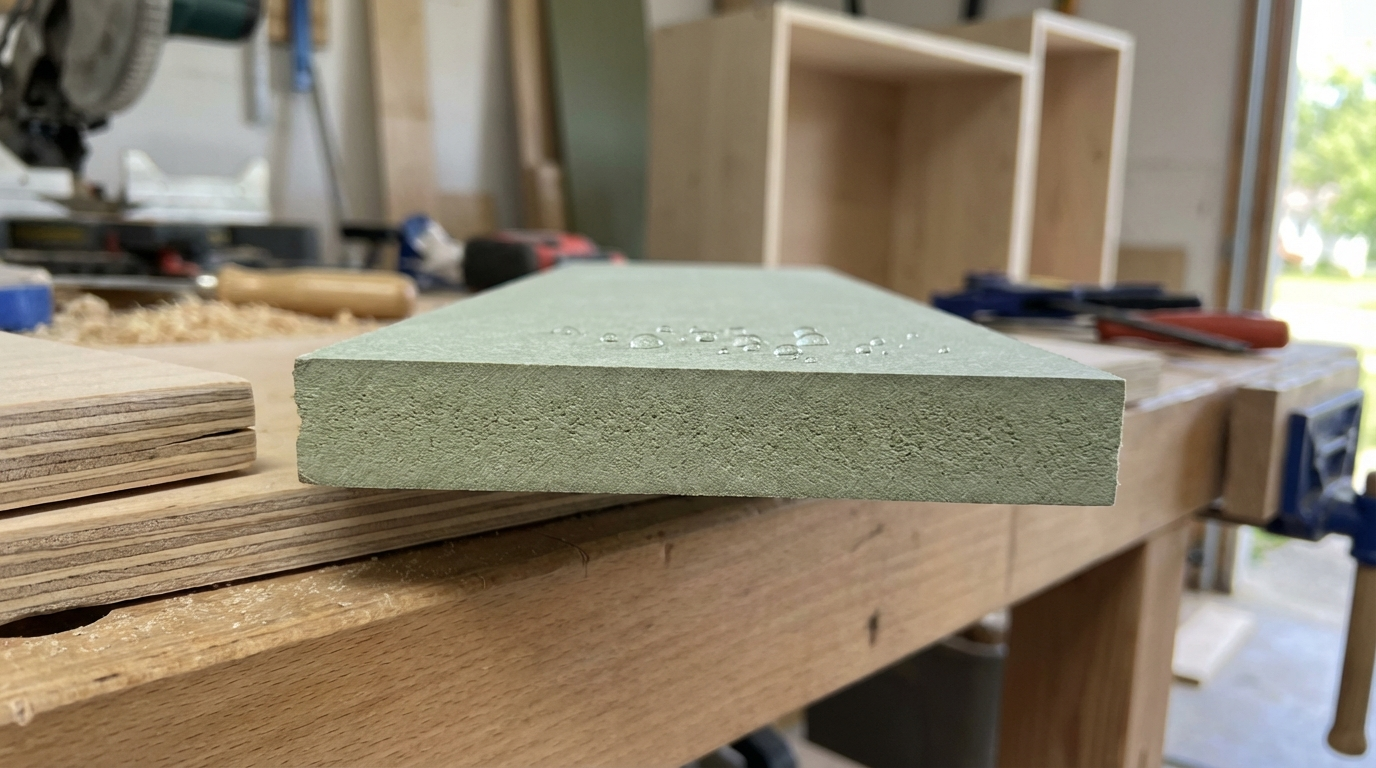
HDHMR stands for High Density High Moisture Resistance—an engineered wood board made by compressing wood fibres with moisture-resistant resins under high pressure and temperature. In practical Indian market terms, HDHMR is the go-to alternative to plywood for modular kitchens, wardrobes, and bathroom vanities where humidity exposure is a concern. It offers superior moisture resistance, termite protection, and a smooth surface ideal for laminate or paint finishes.
At a Glance
- Full Form: High Density High Moisture Resistance
- Density Range: Typically 800–900 kg/m³ (higher than standard MDF at 600–750 kg/m³)
- Common Thicknesses: 6mm, 9mm, 12mm, 16mm, 18mm, and 25mm
- Standard Sheet Size: 8×4 feet (2440×1220 mm)
- Price Range: ₹50–₹110 per sq ft depending on thickness and brand
- Best For: Kitchen cabinets, wardrobes, bathroom vanities, and humid climate applications
HDHMR Board Explained: What Makes It Different
HDHMR board represents a significant advancement in engineered wood technology, specifically designed to address the moisture-related failures that plague traditional MDF and lower-grade particle boards in Indian conditions. The manufacturing process involves compressing wood fibres—typically sourced from rubberwood, pine, or eucalyptus—with specially formulated phenolic or melamine-urea resins under temperatures exceeding 200°C and pressures of 3–5 MPa.
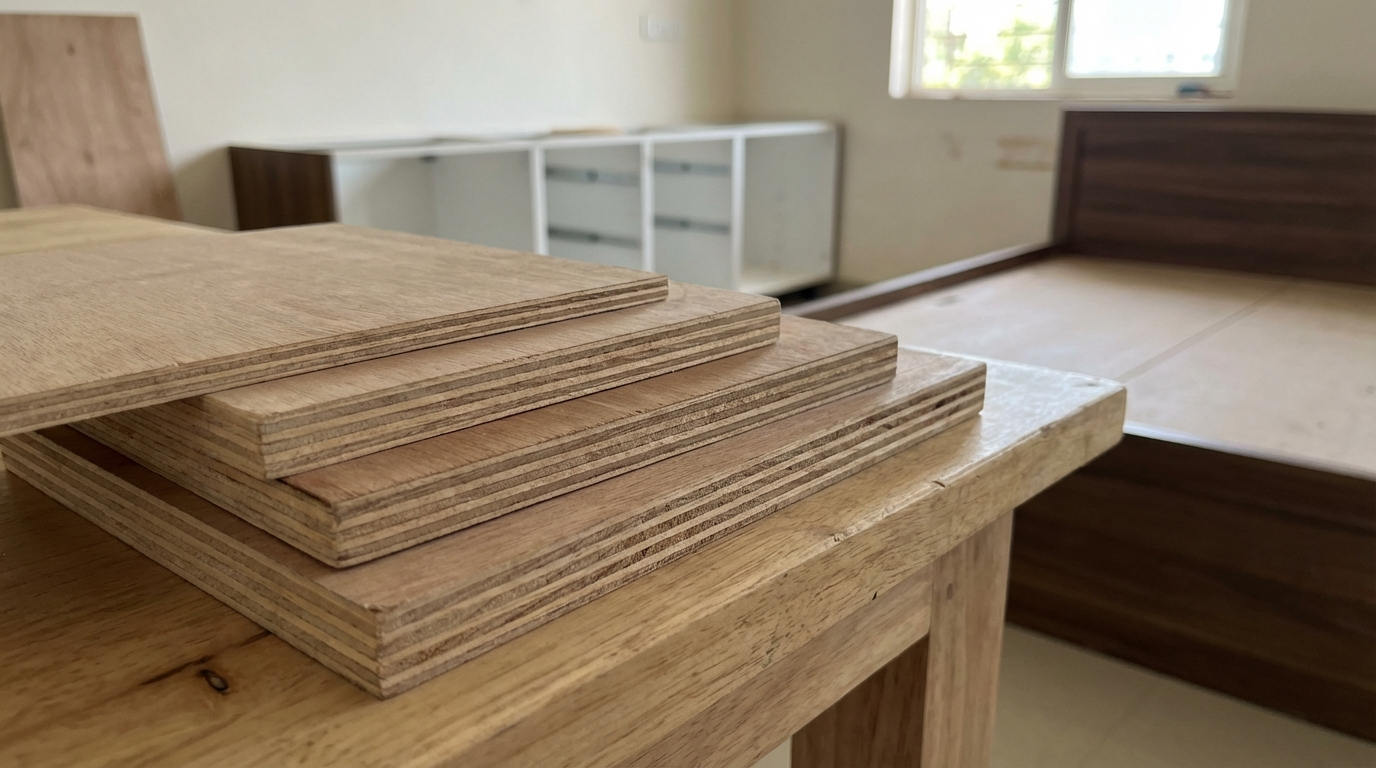
The resulting board exhibits a uniform, knot-free structure with no directional grain, making it dimensionally stable and predictable for CNC machining. Unlike plywood, which derives strength from cross-laminated veneers, HDHMR achieves its performance through sheer density and resin formulation. This fundamental difference explains why HDHMR behaves differently under stress—it does not delaminate like plywood but can chip if edges are mishandled.
How HDHMR Differs from Standard MDF
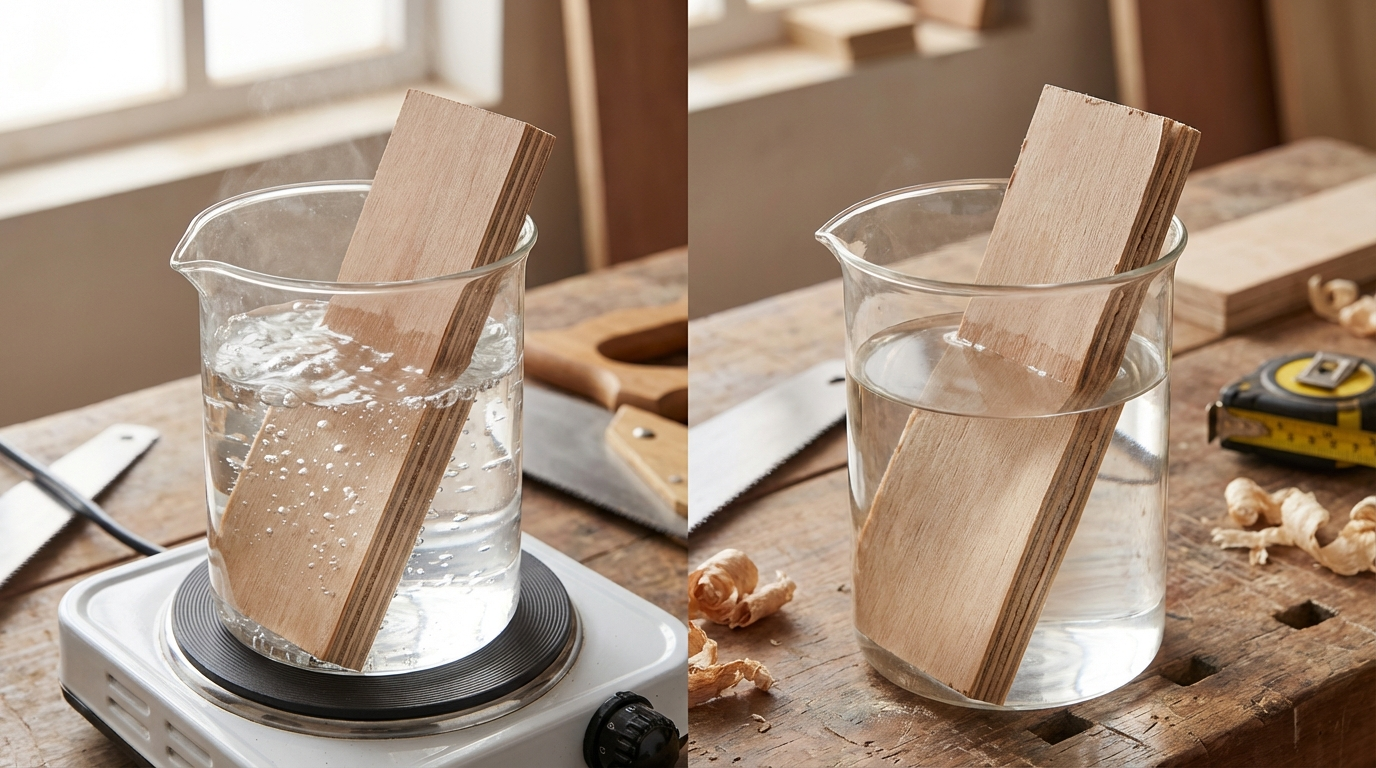
Standard MDF (Medium Density Fibreboard) typically swells 25–35% when submerged in water for 24 hours. HDHMR, by contrast, limits this swelling to under 8% in the same test conditions. This performance gap stems from the moisture-resistant resin system and the higher compression density. In practical terms, this means an HDHMR kitchen cabinet base exposed to occasional water spillage will not bubble or warp the way MDF would within months of installation.
The density difference also affects screw-holding capacity. HDHMR provides superior grip for confirmat screws and concealed hinges—a critical consideration for heavy wardrobe doors that undergo thousands of opening cycles. Carpenters across Indian metros consistently report that hinge failures are significantly less common with HDHMR compared to standard MDF substrates.
Types and Grades of HDHMR Boards Available in India
While HDHMR is broadly categorised as a single product type, the Indian market sees several variations based on manufacturer specifications, surface finish, and intended application. Understanding these distinctions helps buyers match the right product to their specific project requirements.
Plain (Raw) HDHMR
Plain HDHMR arrives as an unfinished board with a smooth, typically greyish-brown surface. This is the most common form sold through building material dealers and timber merchants. Carpenters apply laminates, veneers, or paint finishes on-site. Plain boards offer maximum flexibility in finish selection and are generally 10–15% cheaper than pre-laminated variants. Most kitchen and wardrobe projects in India use plain HDHMR with high-pressure laminates applied during fabrication.
Pre-Laminated HDHMR
Factory-laminated boards come with decorative surfaces already bonded—typically in solid colours like white, cream, or wood-grain patterns. These save fabrication time and ensure consistent laminate adhesion under controlled factory conditions. However, the colour range is limited compared to choosing your own laminate, and cut edges still require edge-banding on-site. Pre-laminated boards suit standardised modular furniture production where speed matters more than customisation.
Low-Emission (E1/E0 Grade) HDHMR
Some premium manufacturers offer boards with reduced formaldehyde emissions, certified to E1 or E0 standards. These command a 15–25% price premium and are typically specified for children's bedrooms, hospitals, or buyers with chemical sensitivity concerns. Century Ply's "Low Emission Premium Plus" and similar branded variants fall into this category. While all branded HDHMR meets basic safety norms, these grades provide additional assurance for indoor air quality.
HDHMR Board Comparison Table: Properties at a Glance
| Property | HDHMR | Standard MDF | Commercial Plywood | BWR Plywood |
|---|---|---|---|---|
| Density (kg/m³) | 800–900 | 600–750 | 550–650 | 650–750 |
| 24-Hour Water Swelling | 5–8% | 25–35% | 8–15% | 3–6% |
| Termite Resistance | Yes (chemical treatment) | No | Varies by treatment | Varies by treatment |
| Surface Smoothness | Excellent (no grain) | Excellent | Moderate (grain visible) | Moderate |
| Screw Holding (Face) | Good | Moderate | Excellent | Excellent |
| CNC Machining Suitability | Excellent | Excellent | Limited | Limited |
| Price Range (₹/sq ft, 18mm) | 90–110 | 55–70 | 70–90 | 110–150 |
| Best For | Humid interiors, kitchens | Dry interiors only | General furniture | High-moisture areas |
Common Uses of HDHMR Board in Indian Interiors
HDHMR has found its primary application in spaces where moisture exposure, either from humidity or occasional water contact, would compromise standard MDF or particle board. The Indian climate—with monsoon humidity often exceeding 85% in coastal cities—makes this moisture resistance particularly valuable.
Modular Kitchen Cabinets
Kitchen cabinet carcasses represent the largest application segment for HDHMR in India. The board's moisture resistance handles sink-area splashes, cooking steam, and the general humidity of Indian kitchens. Typically, 18mm HDHMR is used for cabinet boxes (sides, bottom, top), with 6mm sheets for back panels. The smooth surface accepts high-pressure laminates uniformly, and the density ensures that soft-close hinges and drawer systems function reliably over years of use.
Wardrobes and Bedroom Storage
Wardrobe manufacturers increasingly specify HDHMR for both the carcass and shutter construction. The termite-resistant properties provide peace of mind in regions where borer infestation is common, while the dimensional stability prevents the door-racking and binding issues that afflict cheaper substrates. For 7-foot tall wardrobe doors, 18mm HDHMR maintains straightness better than thinner alternatives.
Bathroom Vanities and Wall Panels
When properly laminated and edge-sealed, HDHMR performs admirably in bathroom environments—for vanity cabinets, under-sink storage, and wall panelling outside direct shower areas. The critical requirement is comprehensive edge protection; exposed cut edges remain the vulnerability point. Many interior designers now specify HDHMR for bathroom furniture with the explicit instruction that all edges receive PVC edge-banding or PU sealant.
Office Partitions and Commercial Furniture
The uniform density and clean-cutting characteristics make HDHMR ideal for CNC-routed decorative panels, office partitions, and reception desks. Commercial installations benefit from the consistent quality—unlike plywood, there are no internal voids or knots that might telegraph through laminate finishes or cause localised weakness.
How to Choose the Right HDHMR Board
Selecting HDHMR requires matching board specifications to your specific application, budget, and local availability. The wrong thickness choice or an off-brand product can lead to premature failure or unnecessary expense.
Thickness Selection Guide
Thickness directly determines load-bearing capacity and hardware compatibility. For wardrobe and kitchen cabinet carcasses, 16mm or 18mm is standard—these thicknesses accommodate concealed hinges and provide adequate structural rigidity. Back panels typically use 6mm, while drawer sides can be 12mm for lighter construction. Long shelves (over 60cm span) should use 18mm to prevent sagging under book or crockery loads.
Brand vs Generic: The Real Difference
Branded HDHMR from established manufacturers (Action Tesa, Century, Greenpanel, among others) maintains consistent density and resin quality across batches. Generic boards sold as "HDHMR" may actually be moisture-resistant MDF with lower density—a distinction that matters for long-term performance. The price difference of 15–25% typically justifies the branded product for primary furniture; generic alternatives might suffice for hidden components like cabinet backs.
Buyer's Checklist
- Verify density by weight—an 18mm 8×4 sheet should weigh approximately 40–45 kg
- Check for brand stamps or printed identification on board edges
- Inspect edges for uniform compression without visible voids or crumbling
- Confirm thickness with calipers—trade sizes like "17mm" are common
- Request moisture resistance test certificates for critical applications
- Ensure flat storage at the dealer—warped sheets indicate poor handling
When NOT to Choose HDHMR
HDHMR is not appropriate for exterior applications, structural load-bearing elements, or areas with direct water immersion. It cannot replace marine plywood for boat interiors or outdoor furniture. Similarly, door frames and window frames requiring repeated screw insertions over time perform better with solid wood or WPC alternatives. Very thin HDHMR (under 9mm) should not be used where flexing might occur—the material can snap rather than bend.
Common Mistakes to Avoid When Using HDHMR
Despite its robust characteristics, HDHMR can fail when mishandled during fabrication or installation. Understanding these failure modes helps both buyers and carpenters prevent costly problems.
Neglecting Edge Sealing
The single most common failure with HDHMR occurs at unprotected cut edges. While the face surfaces resist moisture effectively, cut edges expose the compressed fibres directly to humidity. Within one monsoon season, unsealed edges in kitchen applications can swell and bubble. Every cut edge must receive PVC edge-banding, laminate strips, or at minimum, PU sealant. This applies even to edges hidden from view.
Using Wrong Fasteners
Standard wood screws often strip in HDHMR because the material lacks the cross-grain structure that helps plywood grip. Confirmat screws (with their wider thread profile) or pre-inserted threaded inserts provide dramatically better holding power for hinges and adjustable shelf pins. Nails offer almost no holding strength in HDHMR and should be avoided entirely.
Ignoring Weight in Design
HDHMR weighs roughly 30% more than equivalent plywood. Large wardrobe doors in 18mm HDHMR impose significant hinge stress—specify four hinges rather than three for doors over 1.5 metres tall. Wall-mounted cabinets require heavy-duty anchors rated for the actual load, not standard drywall fixings.
Insufficient Support During Cutting
The weight and density of HDHMR means unsupported sections can snap during cutting, causing injuries and material waste. Always support the full sheet on a stable surface, with the cut-off section also supported to prevent sudden breaking. Use sharp carbide-tipped blades with 60+ teeth for clean edges without chipping.
Quick Inspection Checks
- Press firmly on the board centre—no flex should occur in 18mm sheets over a 2-foot span
- Examine factory edges under good lighting for uniform colour and density
- Tap the surface and listen for a solid, consistent sound (hollow spots indicate defects)
- Scratch a hidden area lightly—fibres should not separate easily
HDHMR Board Price Guide for India
HDHMR pricing varies significantly based on thickness, brand positioning, and regional availability. These ranges reflect typical dealer prices in Tier-1 and Tier-2 cities as of early 2026, excluding GST and cutting charges.
| Thickness | Economy Brand (₹/sq ft) | Premium Brand (₹/sq ft) | Per Sheet (8×4, Premium) |
|---|---|---|---|
| 6mm | 45–55 | 55–65 | ₹1,760–₹2,080 |
| 9mm | 55–65 | 65–80 | ₹2,080–₹2,560 |
| 12mm | 65–80 | 80–95 | ₹2,560–₹3,040 |
| 16mm | 80–95 | 95–105 | ₹3,040–₹3,360 |
| 18mm | 90–100 | 100–115 | ₹3,200–₹3,680 |
| 25mm | 120–135 | 140–160 | ₹4,480–₹5,120 |
What Drives Price Variation
Brand reputation accounts for the largest price differential—established names command premiums for consistent quality and warranty support. Regional transport costs add 5–10% in areas far from manufacturing hubs (primarily Gujarat, Uttarakhand, and South India). Pre-laminated boards cost 20–30% more than plain equivalents. Low-emission certified grades carry an additional premium. Bulk purchases (10+ sheets) typically qualify for dealer discounts of 5–8%.
Total Project Cost Perspective
When budgeting, remember that raw board cost represents only 40–50% of finished furniture cost. Laminates, edge-banding, hardware, and labour contribute substantially. A kitchen using premium HDHMR versus economy-grade might differ by ₹8,000–₹12,000 on board cost alone—a modest increment when weighed against the total kitchen investment of ₹2–4 lakhs.
Frequently Asked Questions
What is the full form of HDHMR board?
HDHMR stands for High Density High Moisture Resistance. The name directly describes its two defining characteristics: a density higher than standard MDF (typically 800–900 kg/m³ compared to 600–750 kg/m³ for MDF), and resin formulations specifically engineered to resist moisture absorption and swelling. This combination makes it suitable for humid Indian conditions where standard fibreboards would fail within a few years.
Which is better, HDHMR or plywood for kitchen cabinets?
For kitchen cabinet carcasses, HDHMR offers better moisture resistance at a comparable or lower price than BWR plywood. Its uniform surface also provides superior laminate adhesion. However, plywood offers better screw-holding for repeated hardware adjustments and greater impact resistance. Many interior contractors now use HDHMR for cabinet bodies while reserving plywood for high-stress areas like sink base cabinets where occasional water pooling occurs.
Is HDHMR board waterproof?
HDHMR is moisture-resistant, not waterproof. This distinction matters significantly. The board can handle high humidity, steam, and occasional water splashes without swelling—making it suitable for kitchens and bathroom vanities. However, prolonged water immersion will eventually cause swelling, particularly at cut edges. For truly waterproof applications like shower enclosures, marine plywood or PVC boards remain the appropriate choice.
How much does HDHMR board cost in India?
HDHMR board prices in India typically range from ₹50 to ₹115 per square foot depending on thickness (6mm to 25mm), brand tier, and regional availability. An 18mm branded sheet of 8×4 feet (32 sq ft) generally costs between ₹3,000 and ₹3,700 before GST. Pre-laminated variants add approximately 25% to these base prices. Coastal cities and northeastern states may see higher prices due to transport costs.
Can HDHMR board be used in bathrooms?
HDHMR performs well for bathroom vanity cabinets, under-sink storage, and wall panels outside direct wet zones. The critical requirement is comprehensive edge sealing—all cut edges must be protected with PVC edge-banding or sealant before installation. Avoid using HDHMR for flooring, inside shower enclosures, or any surface with regular standing water. Properly sealed HDHMR bathroom furniture can last 8–10 years without moisture-related issues.
What thickness of HDHMR is best for wardrobes?
Wardrobe carcasses (sides, top, bottom, shelves) should use 16mm or 18mm HDHMR for adequate structural rigidity and hinge-screw holding capacity. Back panels can use 6mm to reduce weight. For tall wardrobe doors (over 6 feet), 18mm is strongly recommended to prevent warping—the additional weight requires robust soft-close hinges rated for heavy doors. Internal partitions and drawer components can use 12mm where space optimisation is important.
How to check HDHMR board quality before buying?
Check the weight first—an 18mm 8×4 sheet should feel noticeably heavy (40–45 kg). Examine edges for uniform density without visible voids or loose fibres. Look for brand stamps or printed text on the board surface or edge. Tap the board and listen for a solid, consistent sound; hollow areas indicate internal defects. Ask the dealer for the brand's technical specification sheet and compare stated density with the weight you observe.
Is HDHMR board termite-proof?
Branded HDHMR boards typically include chemical additives that deter termites and borers. This treatment provides significant protection compared to untreated plywood or MDF. However, "resistant" is more accurate than "proof"—no wood-based product offers absolute immunity. The chemical treatment effectiveness can vary between manufacturers, so specify branded boards from established companies for applications where termite risk is high, particularly in tropical and humid regions of India.
Disclaimer: This content is provided for general informational purposes based on industry practices and publicly available information. Product specifications, standards, prices, and availability may vary by manufacturer, region, and time. Readers should independently verify details with manufacturers, dealers, or qualified professionals before making purchase or construction decisions.
Want Plywood Suggestions?
Share a few details and a Apple Ply specialist will suggest suitable brands and connect you to responsive dealers.