Gurjan Plywood: What It Is, Benefits & Price Guide 2026
Complete guide to Gurjan plywood - what makes Gurjan core superior, price comparison, how to identify genuine Gurjan ply & top brands.
Quick Answer
Gurjan plywood is a premium-grade engineered wood panel made from the timber of Gurjan trees (Dipterocarpus species), primarily imported from Southeast Asian countries like Myanmar, Indonesia, and Malaysia. Known for exceptional strength, high density, natural termite resistance, and superior water-resistant properties, Gurjan plywood commands a premium in the Indian market. Prices typically range from ₹40–60 per sq ft for basic variants to ₹110–150 per sq ft for 100% authentic Gurjan plywood in 18mm thickness.
At a Glance
- Wood Species: Dipterocarpus (Gurjan hardwood) – a dense Southeast Asian timber
- Key Strength: High load-bearing capacity, superior screw-holding, minimal warping
- Water Resistance: Available in BWR (IS 303) and BWP/Marine (IS 710) grades
- Common Applications: Modular kitchens, wardrobes, doors, windows, structural furniture
- Price Range (2026): ₹60–150 per sq ft depending on grade, thickness, and authenticity
- Caution: Market is flooded with "Gurjan face" products – verify full-core authenticity before purchase
What Is Gurjan Plywood? Understanding the Core Material
Gurjan plywood is crafted from Dipterocarpus species hardwood, offering higher density, better stability, and enhanced resistance to weathering compared to regular plywood. The Gurjan tree is a slow-growing hardwood species native to the dense tropical forests of Southeast Asia, including Myanmar (Burma), Indonesia, Malaysia, and the Andaman & Nicobar Islands. Countries such as Burma, Indonesia, Malaysia, and Andaman & Nicobar Islands often export Gurjan plywood to India.
Gurjan wood has a beautiful brownish-red colour and is slightly heavier and stiffer than teak wood. The gurjan wood is very well-liked in the Indian market because of its toughness and endurance. Unlike fast-growing softwoods like poplar, Gurjan timber develops tight grain patterns and natural resin ducts that contribute to its legendary durability.
How Gurjan Plywood Is Made
Gurjan plywood is made from the wood of the Gurjan tree, found in Southeast Asia. The plywood is created by bonding multiple layers of Gurjan veneers together. The manufacturing process involves peeling Gurjan logs into thin veneers, treating them with preservatives, and bonding them with phenolic (PF) or melamine-enhanced resins under controlled heat and pressure. The cross-grain layering—where each veneer is placed perpendicular to the adjacent one—provides dimensional stability that solid wood cannot match, particularly important during India's extreme monsoon humidity swings.
Why Gurjan Commands a Premium
Gurjan plywood is expensive due to its superior strength, durability, and the specific region where the Gurjan tree grows. The quality and longevity it offers justify the cost. The premium pricing reflects import costs, limited sustainable supply, and the performance gap between Gurjan and domestic alternatives. In practical Indian terms, a Gurjan-core wardrobe will typically outlast eucalyptus or poplar equivalents by 5–10 years under similar conditions.
Types and Grades of Gurjan Plywood
Understanding Gurjan plywood variants is crucial because the Indian market uses this term loosely. Three distinct product categories exist, each with different performance characteristics and price points.
100% Full Gurjan Plywood
What turns out to be a 100% Gurjan Plywood is that in which the core, middle panels, front and back faces, everything is completely made out of Gurjan wood. This is the authentic premium product—every veneer layer from face to core uses imported Gurjan timber. These sheets command the highest prices but deliver unmatched performance for heavy-duty applications like main doors, structural frames, and high-end modular kitchens.
Gurjan Face Plywood
100% Gurjan Face Veneer" that's a sign of misleading customers. It basically means only face is made of Gurjan. In reality most plywoods, face is made of gurjan veneer. This is the most common product sold as "Gurjan plywood" in Indian markets. The exterior face veneers are genuine Gurjan, but the core uses eucalyptus, poplar, or mixed hardwoods. While offering aesthetic appeal and decent durability, it lacks the structural performance of full Gurjan variants.
Gurjan Core with Alternate Layers
Some manufacturers alternate Gurjan veneers with eucalyptus or other hardwoods to balance cost and performance. This hybrid approach delivers better screw-holding than pure eucalyptus while keeping prices accessible—typically 20–30% lower than 100% Gurjan equivalents.
Grade Classifications
BWP/Marine (Boiling Water Proof) (IS – 710) – Made with Phenol Bonded Resin, this ply is manufactured to be completely water proof. Gurjan plywood is available in standard BIS grades:
- MR Grade (IS 303): Moisture-resistant, suitable for dry interiors like bedrooms
- BWR Grade (IS 303): Boiling water resistant, appropriate for kitchens and moderate moisture areas
- BWP/Marine Grade (IS 710): Boiling water proof, required for bathrooms, outdoor furniture, and coastal applications
Gurjan Plywood Comparison Table
| Parameter | 100% Gurjan (BWP) | Gurjan Face (BWR) | Eucalyptus Core (BWR) | Poplar Core (MR) |
|---|---|---|---|---|
| Core Material | Full Gurjan hardwood | Eucalyptus/Mixed | Eucalyptus | Poplar softwood |
| Density (kg/m³) | 750–900 | 650–750 | 650–720 | 450–550 |
| Screw Holding | Excellent | Good | Good | Moderate |
| Water Resistance | 72+ hours boiling | 8+ hours boiling | 8+ hours boiling | Limited |
| Termite Resistance | Natural + treated | Treatment required | Treatment required | High risk |
| Best For | Main doors, kitchens, coastal areas | Wardrobes, beds, general furniture | Budget interiors | Temporary/dry applications |
| Price Range (18mm) | ₹110–150/sq ft | ₹65–90/sq ft | ₹55–75/sq ft | ₹40–55/sq ft |
| Warranty (Typical) | 15–25 years | 10–15 years | 7–12 years | 5–7 years |
Key Benefits of Gurjan Plywood
Superior Load-Bearing Capacity – Ideal for doors, frames, and structural furniture. Greater Nail & Screw Holding Strength – Handles heavy-duty hardware with ease. Natural Resistance to Moisture & Fungal Decay – Suitable for coastal, humid, and semi-exposed areas. Longer Life Cycle – Lasts significantly longer than softwood or mixed-core plywood. Dimensional Stability – Performs well in fluctuating temperatures and high humidity.
Strength and Durability
Gurjan plywood, sourced from the mighty Gurjan trees of Southeast Asia, boasts a remarkable combination of characteristics: Unmatched Strength: Gurjan wood is a hardwood, renowned for its density and resistance to warping, cracking, and breaking. The high density—typically 750–900 kg/m³—translates to superior performance under mechanical stress. For modular kitchen carcasses that must support heavy stone countertops, or wardrobe shutters subjected to thousands of opening-closing cycles, Gurjan's structural advantage is measurable.
Moisture and Weather Resistance
Water-resistant: It has good water-resistant properties, making it suitable for areas with high moisture levels, such as kitchens and bathrooms. In the Indian context—where monsoon humidity can exceed 90% for months and coastal cities face salt-laden air year-round—this moisture resistance prevents the swelling and edge deterioration common in cheaper plywood.
Natural Termite Resistance
The natural oils in Gurjan wood provide resistance against termites and other insects, making it less prone to infestation. This is particularly valuable in tropical India, where termite damage is a persistent concern. While chemical treatment enhances protection, Gurjan's inherent resistance provides a baseline defence that poplar and certain eucalyptus species lack.
Workability and Finish
Despite its density and strength, Gurjan face plywood is relatively easy to work with. It can be cut, shaped, and joined using standard woodworking tools, making the construction process smooth and efficient. The plywood's uniform structure ensures that there are no weak spots or inconsistencies, allowing for precise and intricate designs. This matters for CNC-machined modular kitchens where precision routing is essential.
How to Choose Genuine Gurjan Plywood
The Indian plywood market is notorious for mislabelling. 90% of the plywood in the Indian market is sold under the name of Gurjan Plywood while only about 20% of them actually contain Gurjan Timber. Here's how to protect yourself:
Visual Inspection Checklist
- Colour: Genuine Gurjan plywood has a distinctive reddish-brown color. Gurjan timber generally is reddish-brown and darker in color than Eucalyptus, plus it has a granular texture.
- Weight: Original Gurjan ply feels noticeably heavier due to its high density. An 8×4 ft sheet in 19mm thickness should weigh 40+ kg for full Gurjan.
- Sound Test: Tap the sheet — it should give a solid sound, not a hollow echo.
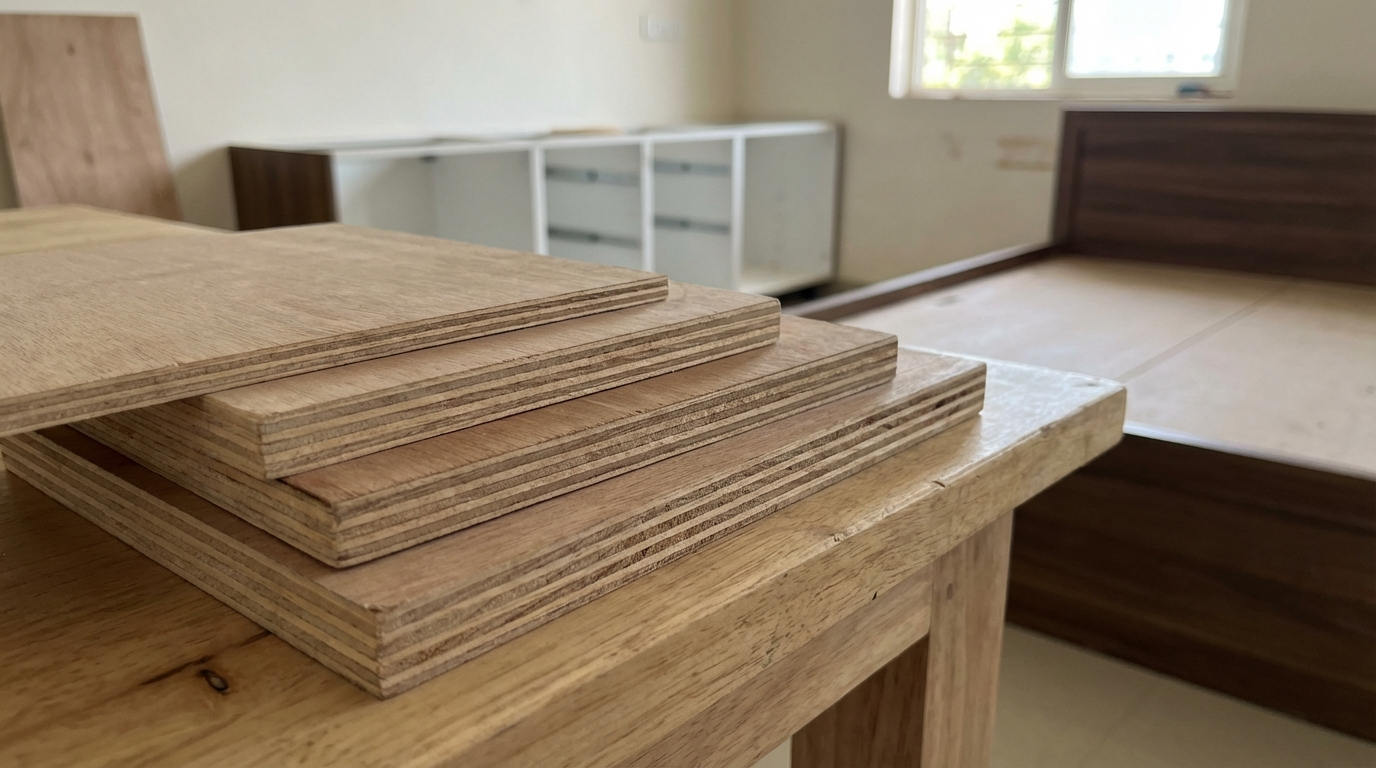
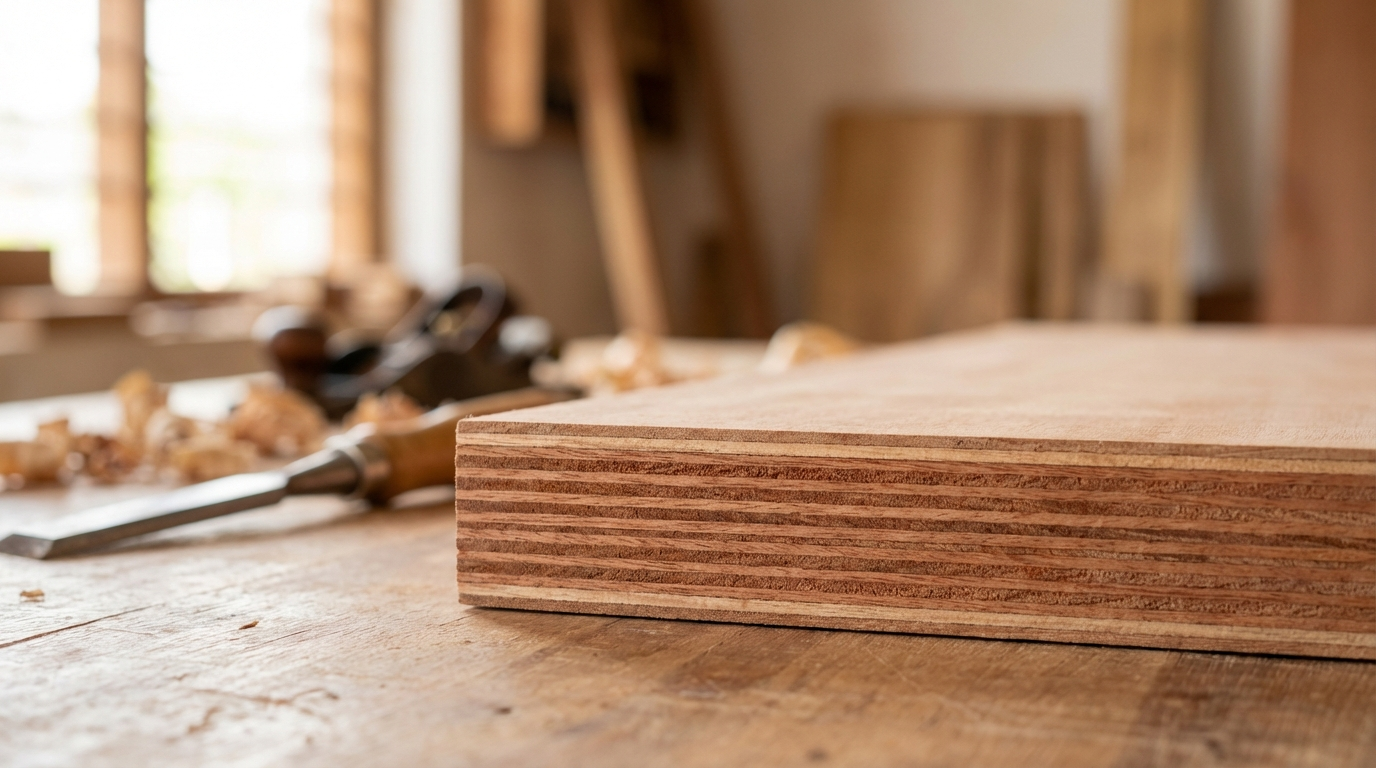
- Edge Inspection: Cut a section — real Gurjan shows uniform layers with no gaps or fillers. Cheap ply will have voids and cracked edges.
Certification Verification
One of the first steps in identifying high-quality Gurjan face plywood is to check for certification and adherence to industry standards. Reliable manufacturers will have their plywood certified by relevant authorities, ensuring that the product meets specific quality benchmarks. Look for certifications such as ISI (Indian Standards Institute) or BIS (Bureau of Indian Standards) marks.
Buyer Checklist
- Request to see the sheet edge—full Gurjan will show consistent reddish-brown layers throughout
- Ask specifically: "Is this 100% Gurjan or Gurjan face?" and get written confirmation
- Check for BIS IS 710 stamp for marine/BWP grade applications
- Verify the brand stamp matches the delivery—brand switching is common
- Purchase from authorized dealers with GST billing
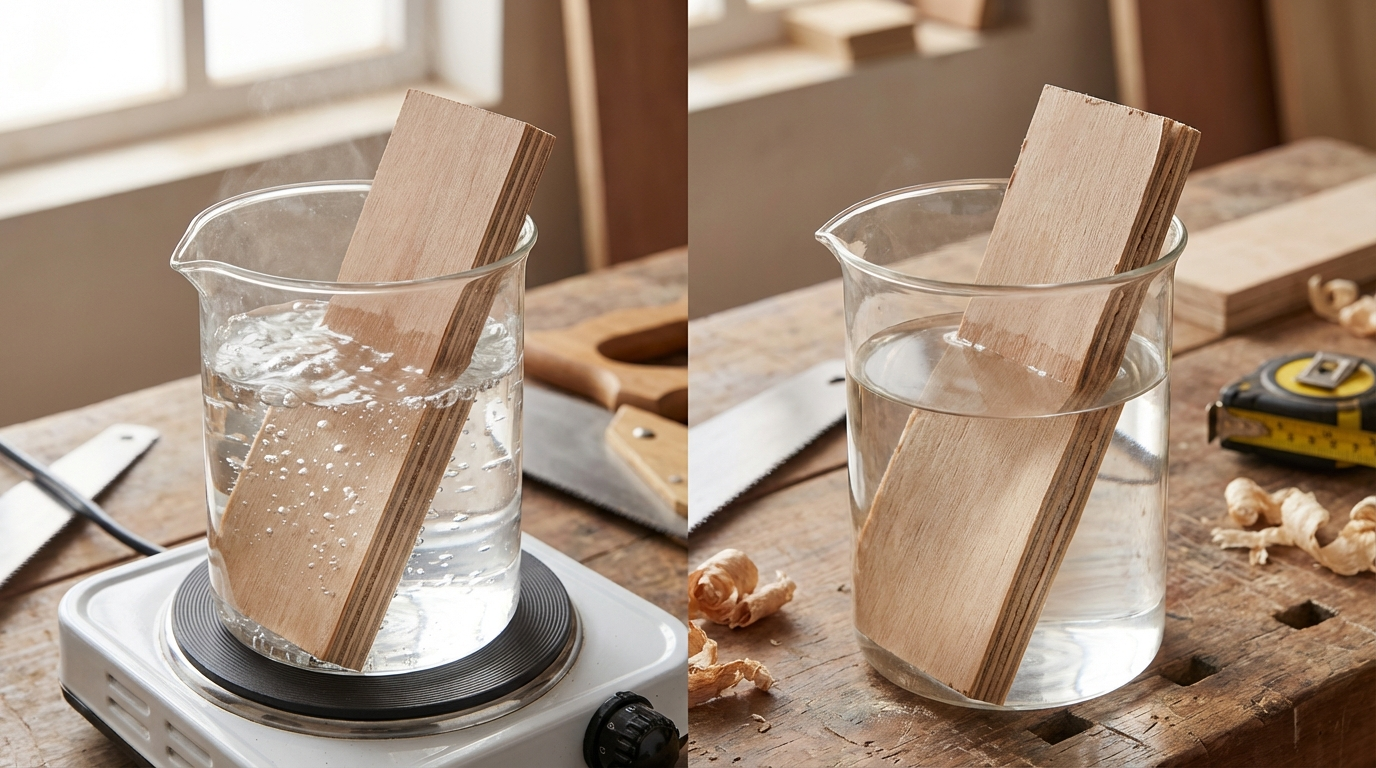
- Consider a boiling water test on a sample piece before bulk purchase
When NOT to Choose Gurjan Plywood
Gurjan is not universally necessary. Avoid paying the Gurjan premium when:
- You're furnishing rental properties or temporary spaces
- The application is purely decorative with no structural demands
- Budget constraints are severe—a well-made eucalyptus BWR may serve adequately
- The furniture will be disposed of within 5–7 years
- You're in a dry inland region with minimal termite pressure and low humidity
Common Mistakes to Avoid When Buying Gurjan Plywood
1. Trusting "Gurjan Face" Claims at Premium Prices
It is because Gurjan plywood is so well-known, that numerous sellers defraud buyers under its name. These sellers use gurjan veneers on the exterior and less expensive or delicate wood inside. As a result, there is a significant likelihood that the gurjan plywood being offered to you at a price that seems suspiciously low is a fake.
2. Ignoring the Core for the Face
The face grain/look of a plywood doesn't matter as they have absolutely no role to play in structural integrity, instead its just pure aesthetics. However as a rule of thumb, good quality manufacturers use good quality Gurjan face veneers which deliver a high quality finish to the ply. Always inspect the core—the face veneer will be covered by laminate anyway.
3. Assuming Dark Colour Equals BWP Grade
Manufacturers all over India have devised a new way of fooling customers – they dip their MR ply in dark colour which gives it a look of BWP ply and then sell it at a much higher rate under the name of BWP Grade ply whereas it's not. The only reliable test is the boiling water or pressure cooker test.
4. Relying Solely on Carpenter Recommendations
Make sure carpenter is not pushing you in to buying plywood of his choice. Carpenters often have commission arrangements with specific dealers. Get independent quotes and inspect materials yourself.
5. Overlooking Thickness Variations
Nominal 18mm plywood may measure anywhere from 17mm to 19mm depending on calibration. For modular kitchen cabinets requiring precision hardware, insist on calibrated plywood with ±0.3mm tolerance—this may cost 10–15% more but prevents fitting issues.
Quick Inspection Checks
- Bend Test: A quality sheet should resist moderate bending pressure without cracking sounds
- Scratch Test: Gurjan face won't scratch easily with a fingernail
- Smell Check: Fresh, genuine Gurjan has a distinct woody aroma—chemical odours suggest excess formaldehyde
- Layer Count: 18mm Gurjan typically has 13+ layers; fewer layers indicate thicker, lower-quality veneers
Gurjan Plywood Price Guide 2026
The Gurjan plywood price can vary depending on a number of factors such as thickness, size, grade and supplier. Due to transportation costs and varied tax schemes, Gurjan plywood prices vary slightly across state lines.
Current Price Ranges (January 2026)
| Category | Thickness | Grade | Price Range (₹/sq ft) | Sheet Price (8×4 ft) |
|---|---|---|---|---|
| Gurjan Face (Economy) | 16mm | BWR | ₹40–60 | ₹1,280–1,920 |
| Gurjan Face (Standard) | 18mm | BWR | ₹65–85 | ₹2,080–2,720 |
| 100% Gurjan | 18mm | BWP (IS 710) | ₹85–110 | ₹2,720–3,520 |
| 100% Gurjan Premium | 18mm | BWP Calibrated | ₹110–150 | ₹3,520–4,800 |
| Gurjan Marine | 19mm | IS 710 (15-layer) | ₹120–160 | ₹3,840–5,120 |
Note: Prices are indicative for metro cities (Delhi, Mumbai, Bengaluru, Hyderabad) as of January 2026. Add 8–15% for Tier-2/Tier-3 cities due to transportation costs. All prices exclude 18% GST.
What Drives Price Variation
- Core Authenticity: Full Gurjan vs. Gurjan face is the biggest price determinant
- Grade: BWP (IS 710) costs 20–30% more than BWR (IS 303)
- Calibration: Calibrated sheets with uniform thickness command 10–15% premium
- Brand Tier: National brands (Greenply, Century, Kitply) price 15–25% higher than regional equivalents
- Location: Due to transportation costs and varied tax schemes, Gurjan plywood prices vary slightly across state lines.
- Minimum Order: Bulk purchases (10+ sheets) often unlock 5–8% dealer discounts
Cost-Benefit Analysis
Against BWR-grade plywood, Gurjan provides superior water resistance. Therefore, although initial costs may be higher, Gurjan plywood can prove to be cost-effective in the long run due to its longevity and minimal maintenance requirements. For a typical 3BHK apartment interior project requiring 50–60 sheets, the premium for 100% Gurjan over Gurjan face plywood adds approximately ₹25,000–40,000. If this extends furniture life by 8–10 years, the annualized cost difference becomes negligible.
Frequently Asked Questions
What is the full form of Gurjan plywood?
Gurjan plywood takes its name from the Gurjan tree, scientifically known as Dipterocarpus species. There is no acronym or abbreviated form—Gurjan simply refers to this family of hardwood trees native to Southeast Asian tropical forests. Gurjan Plywood is made from the wood of the Gurjan trees which grow in abundance in most South East Asian countries. Gurjan tree is a kind of hardwood species which carries along with it extraordinary strength and excellent quality. The term has become synonymous with premium-grade plywood in Indian markets, though buyers should verify whether they're purchasing 100% Gurjan or Gurjan face products.
Which is better: Gurjan plywood or marine plywood?
These terms aren't mutually exclusive. Marine plywood refers to the bonding grade (BWP/IS 710 with phenolic resin), while Gurjan describes the timber species used. The best option is Gurjan Marine plywood—which combines the superior timber with waterproof bonding. Gurjan plywood is a type of marine plywood that is manufactured using Gurjan wood, which is known for its strength and ability to stay intact in all weather conditions. For bathroom and kitchen applications, Gurjan Marine (IS 710) offers the strongest combination. Regular marine plywood with eucalyptus core is adequate for moderate moisture exposure at lower cost.
Is Gurjan plywood good for kitchen cabinets?
Gurjan plywood is excellent for kitchen applications, particularly for carcasses and sink base units that face daily moisture exposure. It has good water-resistant properties, making it suitable for areas with high moisture levels, such as kitchens and bathrooms. For modular kitchens, opt for BWR grade minimum (BWP for sink units) in 18mm thickness. The superior screw-holding strength is valuable for heavy hardware like soft-close hinges and drawer channels. Ensure calibrated Gurjan is used for CNC-machined components to maintain precision tolerances.
How can I identify genuine Gurjan plywood?
Gurjan ply typically has a reddish-brown hue with consistent, dense grain patterns. Softwood alternatives are paler and uneven. Check the edge profile—all layers should show the characteristic brownish-red colour, not just the face. High-quality Gurjan plywood will have a solid, uniform core with minimal gaps or voids. When inspecting the plywood, check for the presence of overlapping or uneven veneers, which can compromise the structural integrity of the sheet. Weight is another indicator—Gurjan sheets are noticeably heavier than poplar or low-density eucalyptus equivalents.
What is Gurjan plywood price in India for 18mm thickness?
The most basic Gurjan Plywood costs approximately 40–60 rupees per square foot for 16 mm thickness. For 18mm thickness, expect ₹65–85 per sq ft for Gurjan face BWR and ₹85–150 per sq ft for 100% Gurjan BWP grade. The most basic Gurjan Plywood costs approximately 40–60 rupees per square foot for 16 mm thickness. 100% Authentic Gurjan Plywood prices can be anywhere in the ballpark of 110 to 150 rupees per square foot. Calibrated variants from premium brands typically fall at the higher end of this range.
Does Gurjan plywood shrink or expand like solid wood?
It's durable, and many homeowners worldwide select Gurjan plywood for creating doors and windows. In addition, Gurjan, like conventional solid wood, does not shrink or expand over time. The cross-grain veneer construction counteracts wood's natural tendency to move with humidity changes. This dimensional stability makes Gurjan plywood superior to solid timber for door panels and large wardrobe shutters that would otherwise warp seasonally. However, exposed edges must still be properly sealed to prevent moisture ingress.
Is Gurjan plywood termite proof without treatment?
The natural oils in Gurjan wood provide resistance against termites and other insects, ensuring longevity. While Gurjan has inherent termite-deterrent properties, no untreated wood is completely termite-proof in tropical Indian conditions. Quality manufacturers add chemical treatment (typically borate-based) during manufacturing. For ground-floor applications in termite-prone regions like coastal Karnataka or interior Andhra, additional termite barriers at floor level are still recommended regardless of plywood grade.
Why is Gurjan plywood more expensive than other types?
Since gurjan woods are imported from abroad, Gurjan plywoods are expensive compared to other plywood grades. Gurjan made plywood is at least 50% more expensive than Eucalyptus made plywood as Gurjan Timber is now only imported from Burma or Laos (Most of the Gurjan forest in India is exhausted). The premium reflects import duties, limited sustainable supply, higher raw material density (more wood per sheet), and the performance advantages in strength and longevity. For budget-conscious buyers in low-moisture applications, eucalyptus-core BWR offers reasonable value, though with trade-offs in durability.
Disclaimer: This content is provided for general informational purposes based on industry practices and publicly available information. Product specifications, standards, prices, and availability may vary by manufacturer, region, and time. Readers should independently verify details with manufacturers, dealers, or qualified professionals before making purchase or construction decisions.Want Plywood Suggestions?
Share a few details and a Apple Ply specialist will suggest suitable brands and connect you to responsive dealers.