BWR Plywood: Full Form, Meaning & Applications Guide
BWR plywood full form is Boiling Water Resistant. Learn the difference from BWP, IS 303 standards, price & ideal applications.
Quick Answer
BWR plywood full form is Boiling Water Resistant plywood. Plywood for general purposes in India is classified into two grades depending upon the bond strength developed by the adhesive used for bonding the veneers: Boiling Water Resistant or BWR Grade, and Moisture Resistant or MR Grade. BWR plywood is designed to resist moisture and humidity, making it ideal for kitchens, bathrooms, and semi-outdoor furniture in the Indian climate.
At a Glance
- Full Form: Boiling Water Resistant
- Indian Standard: IS 303
- BWR plywood is suitable for both interior and exterior projects, treated with phenolic resin which makes it water resistant.
- BWR is superior to MR in strength, durability and is termite and borer proof.
- BWR Grade plywood price typically ranges from ₹95 to ₹125 per sq. ft.
- Best suited for: Kitchen cabinets, bathroom vanities, modular kitchens, and humid environments
BWR Plywood Full Form and Meaning Explained
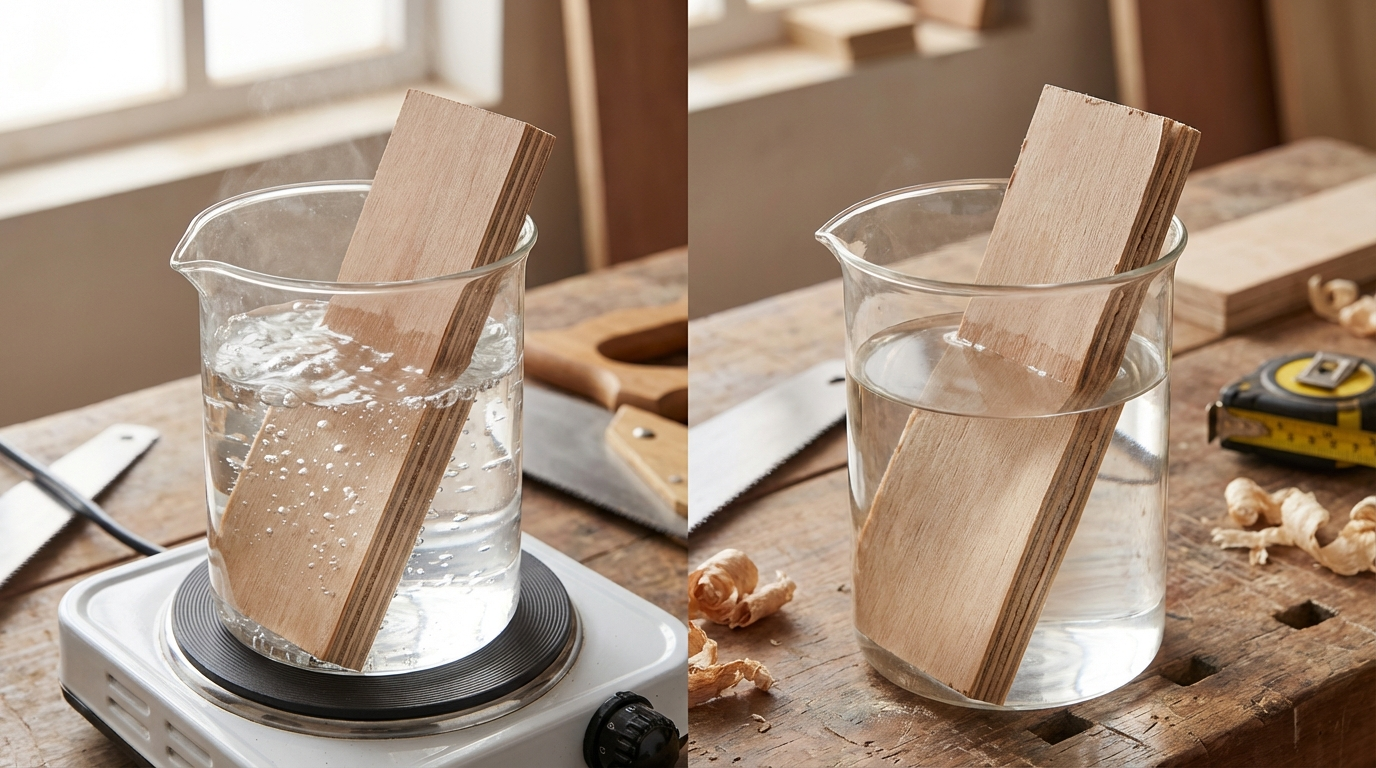
BWR stands for Boiling Water Resistant, which describes the adhesive's ability to withstand exposure to boiling water during standardised testing. BWR plywood is designed to resist water up to some extent and is manufactured using a synthetic phenol formaldehyde resin, which makes the plywood resistant to water for some time.
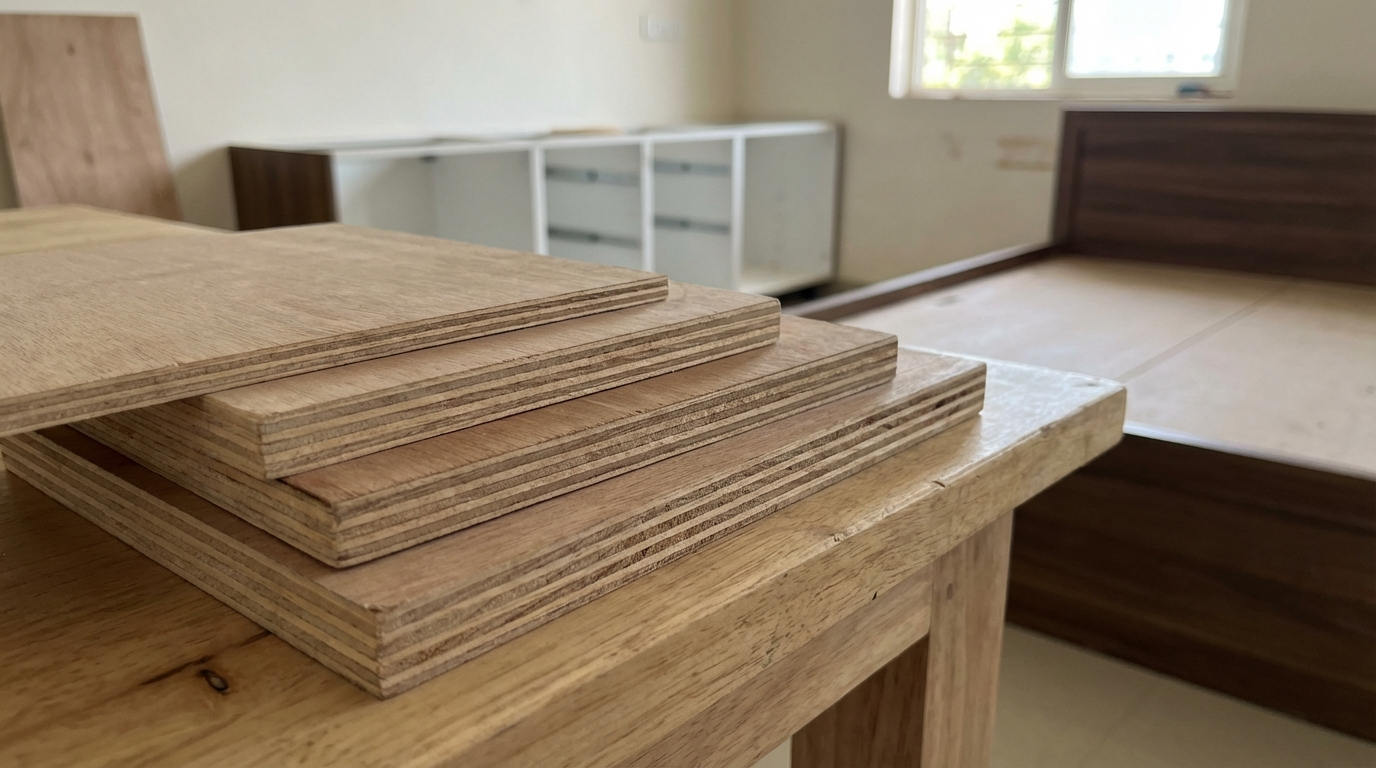
The manufacturing process begins with selecting high-quality wood veneers, which are dried to a specific moisture level before being layered in a cross-grain pattern. This cross-graining enhances the plywood's strength and reduces the chances of warping.
How BWR Differs from Regular Commercial Plywood
Unlike MR (Moisture Resistant) or commercial plywood, BWR grade undergoes additional chemical treatment that enables it to perform better in humid environments. BWR plywood is dipped into superior adhesives and chemicals so that it can face moderate water exposure without losing its integrity. This makes it a step above MR plywood for applications where occasional moisture contact is expected.
In the Indian context, this distinction becomes critical during monsoon months when humidity levels spike to 80–90% in coastal cities like Mumbai, Chennai, and Kolkata. Furniture made with MR plywood may show signs of swelling or delamination over 3–5 years in such conditions, while properly manufactured BWR plywood resists these issues far more effectively.
The IS 303 Standard in India
As per Indian standards, IS 303 plywood specification stands for Moisture Resistant and Boiling Water Resistant grades of plywood. This Bureau of Indian Standards (BIS) certification is what differentiates genuine BWR plywood from misleading market claims. To ensure BIS certified plywood is purchased, one should make sure the plywood sheet is stamped with an ISI mark along with the Indian Standard specification number like IS 303 or IS 710.
BWR Plywood Grades and Types
BWR grade plywood is classified into three types, namely AA, AB and BB based on the quality of the two surfaces, A and B in terms of general permissible defects. The type of plywood shall denote first the quality of face followed by the quality of back. For example, Type AA shall have both surfaces of quality A, Type AB shall have face of quality A and the back of quality B and Type BB shall have both the surfaces of quality B.
Surface Quality Types Under BWR
| Grade Type | Face Quality | Back Quality | Best For | Typical Use |
|---|---|---|---|---|
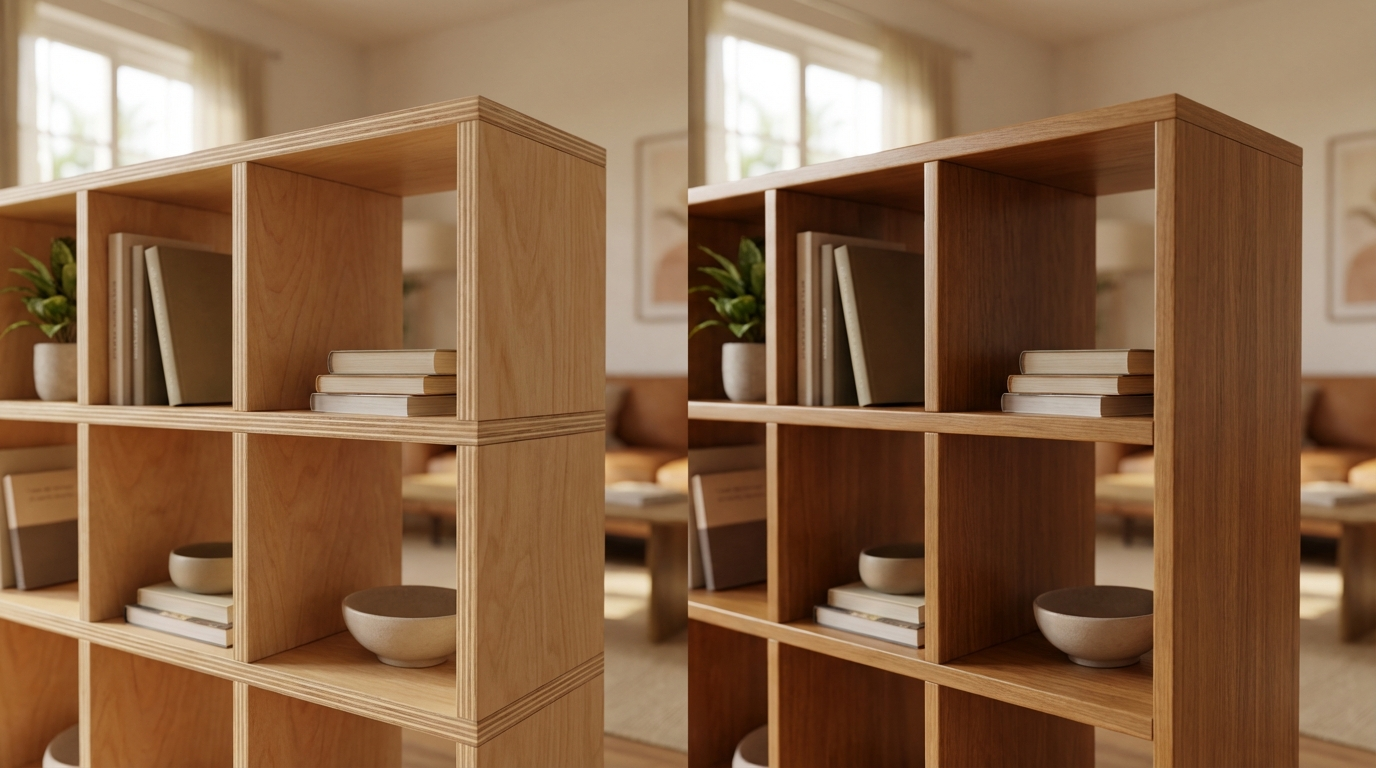
| BWR-AA | A (Premium) | A (Premium) | Both-side visible furniture | Open shelving, partition panels |
| BWR-AB | A (Premium) | B (Standard) | One-side visible work | Kitchen cabinets, wardrobe interiors |
| BWR-BB | B (Standard) | B (Standard) | Hidden structural work | Carcass, back panels, lofts |
The plywood for general purposes may be grouped under two categories: Group 1 includes BWR-AA, BWR-AB and BWR-BB, while Group 2 includes MR-AA, MR-AB and MR-BB. Since Grade-BWR Type-AA being the most superior grade, for covering all grades and types under the licence, BWR-AA variety may be drawn for independent testing.
Regional Considerations in India
In humid coastal regions like Kerala, Goa, and the Konkan belt, BWR plywood performs significantly better than MR grade for all interior furniture. For interior areas like Delhi, Jaipur, or Nagpur where humidity is lower except during monsoons, MR plywood can work for bedrooms and living rooms, but BWR remains essential for kitchens and bathrooms regardless of location.
BWR vs BWP vs MR: Comparison Table
Understanding the distinction between MR, BWR, and BWP grades helps buyers make appropriate choices based on their specific requirements and budget constraints.
| Parameter | MR (Moisture Resistant) | BWR (Boiling Water Resistant) | BWP (Boiling Water Proof) |
|---|---|---|---|
| Full Form | Moisture Resistant | Boiling Water Resistant | Boiling Water Proof |
| Indian Standard | IS 303 | IS 303 | IS 710 |
| Water Resistance | Resists humidity, not water | Resists moderate water exposure | Fully waterproof |
| Adhesive Used | Urea Formaldehyde | Phenol Formaldehyde (diluted) | Phenol Formaldehyde (undiluted) |
| Boiling Test | Limited resistance | Moderate resistance | Can withstand 72 hours of boiling water. |
| Price Range (₹/sq ft) | ₹60 – ₹150 per sq. ft. | ₹95 – ₹125 per sq. ft. | ₹150 – ₹300 per sq. ft. |
| Best For | Dry indoor areas | Kitchen and bathroom furniture | Bathroom cabinets, under-sink storage, coastal areas |
| Avoid For | Kitchens, bathrooms | Constant water submersion | Budget-constrained dry-area furniture |
Many dealers and retailers often use these two terms interchangeably to confuse buyers. This is a common issue in Indian plywood markets where the distinction between BWR and BWP is often blurred for sales purposes. Always insist on checking the ISI stamp on the plywood sheet itself, not just the outer packaging or dealer claims.
BWR Plywood Applications and Uses
BWR plywood can resist water and moisture, making it suitable for humid areas. It is ideal for furniture, kitchen cabinets, and other applications where moisture exposure is expected.
Kitchen Applications
BWR grade plywood can resist frequent splashes of water, which is quite common in the kitchen. It is resistant to termites, sports a uniform surface and looks good and takes finishes quite well. Being dimensionally stable, BWR grade plywood retains its shape and structure for years to come, ensuring long life for kitchen cabinets.
For modular kitchens specifically, BWR plywood works well for upper cabinets, base cabinets away from the sink, and pantry units. The 18mm thickness is standard for cabinet carcasses, while 12mm works for internal shelving. However, for under-sink cabinets, many experienced carpenters in India recommend upgrading to BWP grade due to the higher risk of water exposure from leaks.
Bathroom Applications
BWR plywood is ideal for bathroom vanities, cabinets, and other fixtures that need to resist water exposure. In Indian bathrooms where the wet and dry areas are often not well-separated, BWR plywood handles the ambient humidity well. For vanity units and wall-mounted storage, it provides adequate protection when properly sealed with laminates or PU finish.
Semi-Outdoor and Other Uses
BWR-grade plywood is used as external plywood and for interior decoration such as making panels, partitions, etc. This makes it suitable for covered balconies, verandahs with roofing, and pooja rooms where incense creates a humid microclimate.
- Modular kitchen cabinets and shutters
- Bathroom vanities and storage units
- Covered balcony furniture
- Office pantry cabinets
- Hospital and lab furniture
- Humid climate interior work
How to Choose BWR Plywood
Selecting the right BWR plywood requires understanding several factors that affect quality, performance, and value for money in the Indian market context.
Decision Framework
BWR plywood is ideal for areas like kitchens and bathrooms, where moisture levels are high, but not constant. If your project involves constant water exposure or outdoor applications without cover, consider upgrading to BWP grade instead.
Buyer's Checklist for BWR Plywood
- Check the ISI Mark: In India, look for the IS 303 mark on the ply sheet. The stamp should be directly on the sheet, not just on the wrapper.
- Verify Thickness Consistency: The ply face should be smooth, without undulations and is not bent. All the plywood sheets should be of uniform thickness and the thickness is as claimed.
- Assess Weight: More the weight, generally better the ply. Heavier sheets indicate denser core construction.
- Examine Core Quality: The gluing is of good quality if the core layers are in straight line and there are minimum voids.
- Request a Nail Test: You can ask your carpenter to check the ply quality by driving a nail through the sheet to check nail holding capability and to test if the ply splits. Cutting through a sheet may also help gauge the density of the ply.
- Compare Brand Tiers: Premium brands typically cost 15–25% more but offer better consistency and genuine certifications.
- Check for Termite Treatment: Look for VPI-treated or borer-treated markings for long-term protection.
When NOT to Choose BWR Plywood
BWR plywood is best used for indoor or semi-moist environments. BWP plywood should be used outdoors as it is highly resistant to water.
Avoid BWR plywood for:
- Under-sink cabinets in high-risk leak areas—use BWP instead
- Outdoor furniture exposed to rain—requires marine-grade plywood
- Areas with standing water or flooding risk
- Boat building or marine applications—IS 710 grade is mandatory
- Terraces and open balconies without roofing
Common Mistakes to Avoid
Indian buyers frequently fall into predictable traps when purchasing BWR plywood. Understanding these pitfalls helps make better decisions and avoid costly replacements.
1. Confusing BWR with BWP
BWR denotes boiling water resistant grade plywood while BWP stands for boiling water proof grade plywood. Technically there's very small difference with regards to technology and treatment used to manufacture each of these plywood. However, the performance difference is significant—BWP handles prolonged water exposure that would damage BWR over time.
2. Ignoring the Thickness Naming Convention
In India, "18mm" and "19mm" plywood are used interchangeably in trade terminology. Actual measured thickness may be 17–18mm. Always verify with a caliper if precision is needed for modular kitchen installations or CNC-cut components.
3. Buying Without ISI Verification
Many unbranded or "local" plywoods claim BWR grade without proper certification. The difference in performance becomes evident within 2–3 monsoons when delamination begins. Insist on seeing the IS 303 stamp on the actual sheet.
4. Using BWR in Constant Wet Conditions
BWR plywood provides good durability against normal conditions but may degrade over time in extreme moisture. Installing it directly under a basin or in shower areas without proper waterproofing leads to premature failure.
5. Skipping Edge Sealing
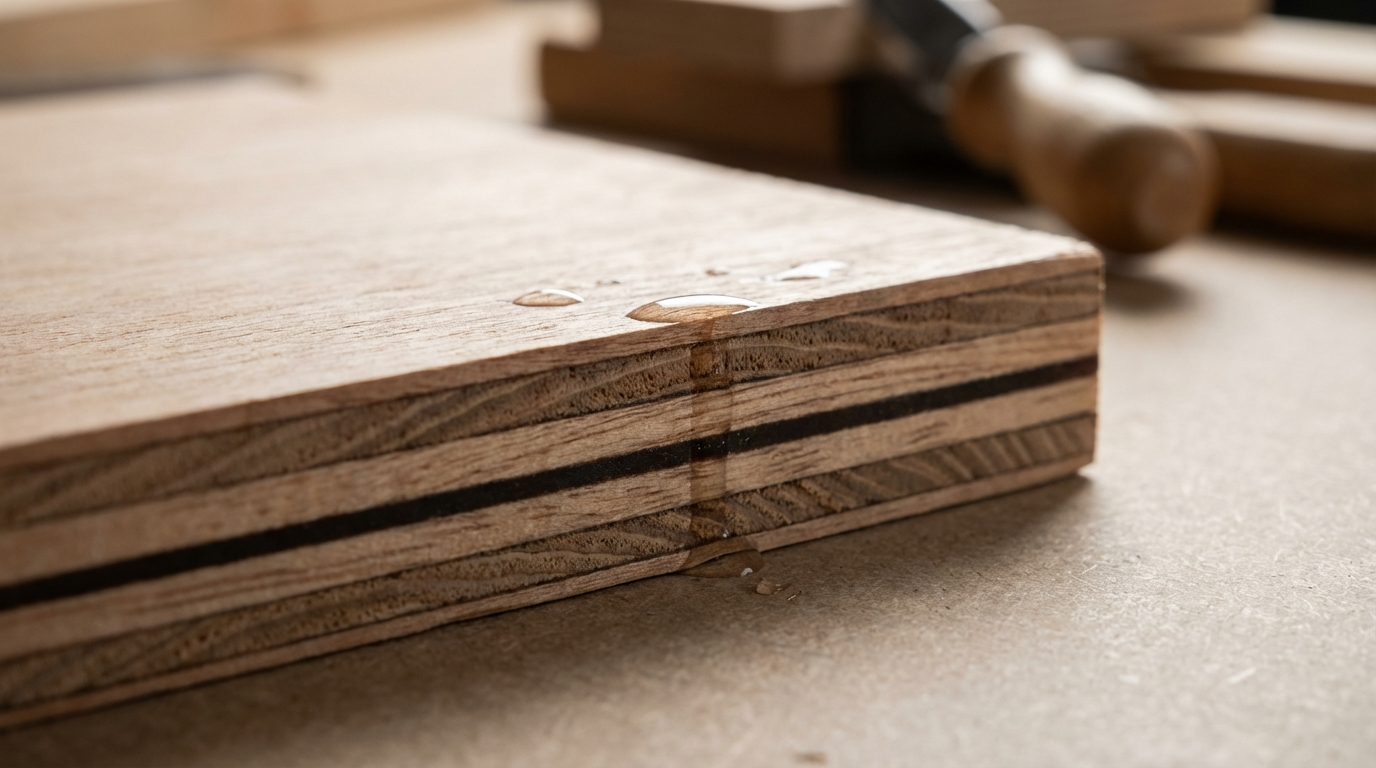
Even BWR plywood absorbs moisture through exposed edges. Failure to seal edges with edge-banding, PU sealant, or primer before lamination causes swelling in kitchen and bathroom applications.
6. Overlooking Carpenter Skill Requirements
BWR plywood requires proper handling during cutting and installation. Carpenters unfamiliar with quality plywood may over-tighten screws (causing cracking) or fail to pre-drill holes. Specify experienced modular furniture carpenters for best results.
Quick Inspection Checks
- Tap Test: Hollow sounds indicate voids in core layers—reject such sheets
- Bend Test: A 6mm sheet should flex slightly without cracking sounds
- Visual Inspection: Look for uniform colour across the core when viewed from the edge
- Scratch Test: Surface should resist light fingernail scratches
- Water Drop Test: A water drop should bead up, not immediately absorb
BWR Plywood Price Guide in India
Plywood pricing in India varies based on thickness, brand tier, city, and market conditions. The following ranges provide a realistic framework for budgeting.
Price Range by Thickness
| Thickness | Economy Brands (₹/sq ft) | Mid-Tier Brands (₹/sq ft) | Premium Brands (₹/sq ft) | Common Application |
|---|---|---|---|---|
| 6mm | ₹35–45 | ₹50–60 | ₹65–80 | Back panels, partitions |
| 9mm | ₹45–55 | ₹60–75 | ₹80–100 | Light shelving |
| 12mm | ₹55–70 | ₹75–95 | ₹100–125 | Cabinet shelves, internal work |
| 18/19mm | ₹70–90 | ₹95–120 | ₹125–160 | Cabinet carcass, doors |
Important assumptions: Prices are indicative for metro cities (Delhi, Mumbai, Bangalore, Chennai, Kolkata) and may vary 5–10% lower in Tier-2/3 cities. Prices include GST. Sheet size assumed is 8×4 feet. Actual prices depend on local dealer margins and order volume.
Factors Affecting BWR Plywood Pricing
Timber species like Gurjan, Eucalyptus, and Neem influence core pricing. With PAN-India distribution, local delivery costs can alter landed pricing. Factory-calibrated plywood costs more, but saves labour during fit-out. ISI, termite treatment, and boiling waterproof testing add value and cost.
- Core Wood Species: Gurjan and hardwood cores cost more than eucalyptus or poplar
- Calibration: Pre-calibrated sheets (uniform thickness) command 10–15% premium
- Brand Premium: National brands charge 15–30% more than regional manufacturers
- Termite Treatment: VPI or preservative-treated sheets cost extra
- Transport: Northern India cities pay more for South Indian manufactured plywood and vice versa
Budget vs Premium: What Makes Sense?
For kitchen and bathroom applications where the plywood needs to last 10–15 years, investing in mid-tier or premium BWR plywood typically offers better value. The cost difference of ₹20–40 per sq ft translates to roughly ₹3,000–6,000 extra on a typical modular kitchen, but prevents potential replacement costs of ₹50,000+ if cheaper plywood fails within 5 years.
For dry-area furniture or temporary installations, economy-tier BWR plywood offers adequate performance at lower cost.
Frequently Asked Questions
What is the full form of BWR plywood?
BWR plywood full form is Boiling Water Resistant plywood. BWR (Boiling Water Resistant) plywood is a type of plywood designed to withstand high levels of moisture and heat. The name refers to the standardised boiling water test used to evaluate the adhesive bond strength. Unlike BWP (Boiling Water Proof) plywood which is fully waterproof, BWR plywood offers resistance to moisture and occasional water exposure but is not meant for prolonged submersion. It conforms to IS 303 standards set by the Bureau of Indian Standards.
Which is better BWR or BWP plywood?
BWP plywood is generally more durable than BWR plywood due to its higher water resistance and stronger adhesive properties. BWP plywood is ideal for exterior applications or areas prone to moisture, while BWR plywood is suitable for interior applications. The choice depends on your specific use case—for kitchen cabinets and bathroom vanities with normal exposure, BWR is cost-effective and adequate. For under-sink storage, outdoor furniture, or coastal humid conditions, BWP is the better investment despite the 20–40% price premium.
Is BWR plywood good for kitchen cabinets?
BWR plywood is resistant to short-term water exposure, making it ideal for kitchen cabinets. Good quality boiling water resistant (BWR) grade plywood is a good option for kitchen cabinets and tables, as long as you coat them with waterproof paint and keep them dry as much as possible. For most kitchen cabinet applications—wall cabinets, pantry units, and base cabinets away from the sink—BWR plywood performs excellently. Use 18mm thickness for carcasses and 12mm for internal shelves. However, for cabinets directly under the sink, consider upgrading to BWP for added protection against leaks.
Can BWR plywood be used in bathrooms?
BWR plywood is suitable for indoor use, including kitchens and bathrooms, where moisture is a concern. It is suitable for bathrooms where there is high humidity, but BWP plywood is a better choice for extreme moisture conditions. In Indian bathrooms where wet and dry areas often overlap, BWR plywood works well for vanity units, wall cabinets, and mirror frames when properly sealed with laminates or edge banding. Avoid using it in enclosed shower areas or directly adjacent to bucket-bathing zones where constant splashing occurs.
What is BWR plywood price in India?
The BWR plywood price per square feet ranges from Rs. 51 per sq. ft. to Rs. 131 per sq. ft., depending on the thickness of the plywood. Another estimate suggests BWR Grade plywood costs ₹95 – ₹125 per sq. ft. These prices vary based on brand (economy, mid-tier, or premium), thickness (6mm to 19mm), core wood species, and city location. Metro cities typically have slightly higher prices than Tier-2 cities due to dealer margins and logistics costs.
How to check BWR plywood quality?
To verify BWR plywood quality, first look for the IS 303 ISI stamp directly on the plywood sheet surface—not just the wrapper. The ply face should be smooth, without undulations and not bent. All sheets should be of uniform thickness. More the weight, generally better the ply. The gluing is of good quality if the core layers are in straight line and there are minimum voids. Perform a tap test to check for hollow sounds indicating internal voids, and examine the core from the sheet edge for consistent colour and density.
What is the difference between IS 303 and IS 710 plywood?
As per Indian standards, IS 303 plywood specification stands for Moisture resistant and Boiling Water Resistant grades of plywood. IS 710 specification, on the other hand, stands for marine-grade plywood. Marine grade plywood is much stronger than both MR and BWR grade plywood and has superior waterproof quality. IS 303 covers general-purpose plywood for interior and semi-exterior applications, while IS 710 covers marine-grade plywood designed for boats, ships, and applications requiring complete waterproofing under prolonged submersion.
Is BWR plywood termite resistant?
BWR is superior to MR in strength, durability and is termite and borer proof. The core layer is treated with various toxicant chemicals using VPI technology that makes BWR a termite proof plywood. However, not all BWR plywood is equally treated—look for specific "termite-treated" or "borer-treated" markings on the sheet. This is especially important in regions with known termite infestations like parts of Karnataka, Andhra Pradesh, Tamil Nadu, and West Bengal where untreated plywood can be attacked within 2–3 years.
Disclaimer: This content is provided for general informational purposes based on industry practices and publicly available information. Product specifications, standards, prices, and availability may vary by manufacturer, region, and time. Readers should independently verify details with manufacturers, dealers, or qualified professionals before making purchase or construction decisions.Want Plywood Suggestions?
Share a few details and a Apple Ply specialist will suggest suitable brands and connect you to responsive dealers.