BWP Plywood: Full Form, Meaning & IS 710 Grade Explained
BWP plywood full form is Boiling Water Proof. Learn IS 710 standards, testing, price & best uses for kitchens, bathrooms & exteriors.
Quick Answer
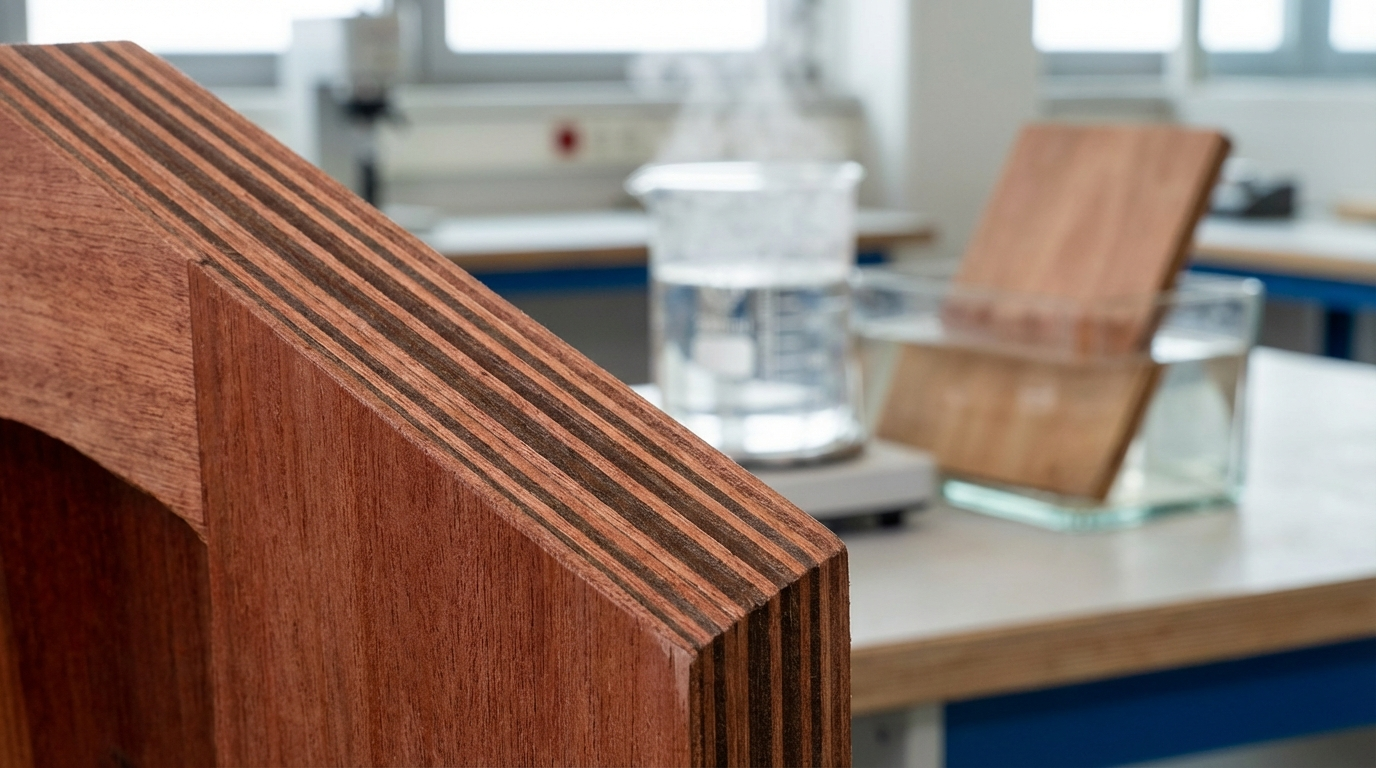
BWP plywood full form is Boiling Water Proof. This stands for "Boiling Water Proof". IS 710 is a grading acronym for plywood set by the Bureau of Indian Standards. The 'IS' means "Indian Standard," and the number "710" stands for the specific standard code for BWP plywood. This marine-grade plywood is engineered to withstand prolonged water exposure, making it the preferred choice for kitchens, bathrooms, and exterior applications across India.
At a Glance
- Full Form: BWP = Boiling Water Proof
- BIS Standard: IS 710:2010 (Marine Plywood Specification)
- Test Requirement: Must withstand 72 hours in boiling water and six cycles of 8 hours boiling plus 16 hours drying at 65°C
- Water Resistance: Unparalleled resistance to water and moisture without quality loss in wet environments
- Best Applications: Kitchens, bathrooms, marine use, exterior furniture
- Price Range: 18mm BWP plywood typically ranges between ₹130 to ₹160 per square foot
What is BWP Plywood? IS 710 Grade Explained
710 Plywood refers to ISI:710 certification, a standard defined by the Bureau of Indian Standards (BIS) for Boiling Waterproof (BWP) grade plywood. It indicates the highest level of waterproofing, durability, and adhesive strength available in plywood today.
This Indian Standard was adopted by the Bureau of Indian Standards after the draft was finalized by the Wood and Other Lignocellulosic Products Sectional Committee. Plywood used in construction, repair and maintenance of marine and river craft is required to withstand rigorous conditions involving changes in temperature, humidity and alternate wetting and drying.
How BWP Plywood is Manufactured
This plywood is produced using extremely high-quality hardwood veneers that are glued with waterproof adhesive. The manufacturing process involves several critical steps that differentiate it from regular plywood:
- Selection of premium hardwood veneers ensures durability, while bonding with Phenol Formaldehyde Resin ensures strong adhesion and waterproof properties.
- The plywood is hot-pressed at high temperatures and pressure to strengthen its layers, and undergoes anti-termite and anti-borer treatments to enhance its lifespan.
- Phenol resin is one of the adhesives used to glue veneer sheets together under high pressure and high temperature. This adhesive completely blocks the pores and gaps in the plywood and prevents the entry of water inside it.
In the construction of marine plywood, undiluted resin is utilized to bond the layers of veneer. This is a key distinction from BWR plywood where extended resins may be used, reducing waterproofing capacity. In practical Indian market terms, the use of unextended phenolic resin is what allows BWP plywood to command a premium price and deliver superior performance in wet conditions.
BWP vs BWR vs MR Plywood: Key Differences
Though there are different categories under which plywood can be categorised, the most widely accepted classification of plywood is according to its water resistance capacity. According to the Indian grading system, plywood is classified under 3 categories: moisture resistant/water resistant or MR Grade; boiling water-resistant or BWR Grade plywood; and boiling water-proof grade or BWP Grade plywood.
Understanding Each Grade
MR (Moisture Resistant) Plywood: MR stands for Moisture Resistant, but don't be misled. It means that the plywood can resist humidity and dampness, but it is NOT waterproof. MR plywood is also referred to as Commercial Plywood and is best suited for indoor applications where moisture exposure is minimal.
BWR (Boiling Water Resistant) Plywood: BWR stands for Boiling Water Resistant. This type of plywood is treated with phenolic resins, making it highly water-resistant. Unlike MR plywood, BWR plywood can withstand direct water contact for short periods. It's often used in areas exposed to moisture, such as kitchens and bathrooms.
BWP (Boiling Water Proof) Plywood: BWP stands for Boiling Waterproof, and as the name suggests, it is 100% waterproof plywood. It is designed to endure complete water immersion for long periods. This makes BWP plywood the most durable and water-resistant of all three types.
| Parameter | MR Grade (IS 303) | BWR Grade (IS 303) | BWP Grade (IS 710) |
|---|---|---|---|
| Full Form | Moisture Resistant | Boiling Water Resistant | Boiling Water Proof |
| IS Standard | IS 303 | IS 303 | IS 710 |
| Water Resistance | Humidity only | Short-term water exposure | Prolonged water immersion |
| Boiling Test | Not applicable | 8 hours | 72 hours |
| Adhesive Used | Urea Formaldehyde | Phenol Formaldehyde (extended) | Phenol Formaldehyde (unextended) |
| Best For | Dry interiors, wardrobes | Kitchens, moderate moisture areas | Bathrooms, marine, exteriors |
| Price Range (18mm) | ₹65–90 per sq ft | ₹90–120 per sq ft | ₹130–170 per sq ft |
| Lifespan in Wet Areas | 3–5 years | 8–12 years | 15–25+ years |
IS 710 Testing Standards and Certification
To be designated as IS-710, the plywood must undergo thorough testing to assess whether it is water resistant, durable, and meets the overall quality specifications. If plywood is classified as "IS-710", it is an assurance of its suitability for applications in water-heavy settings.
The 72-Hour Boiling Water Test
Sainik 710 from the house of CenturyPly passes the 72 hours boiling water test under specified laboratory conditions. This is the toughest test to prove the waterproof capacity of plywood.
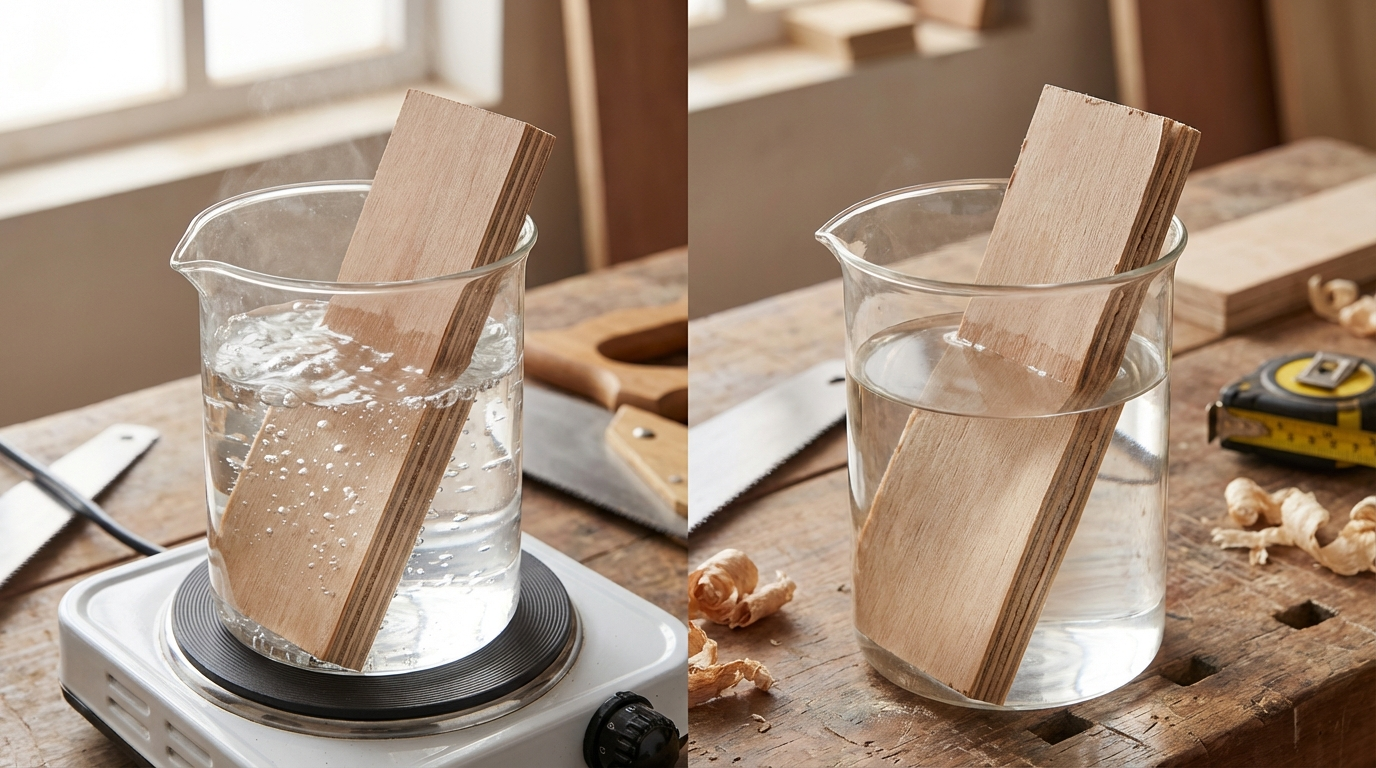
Cut a trial of small size from the plywood sheet. Submerge it in boiling water for an uninterrupted duration of 72 hours. Test for weakening or delamination. Actual BWP plywood does not weaken, with no layer splitting or rot.
Additional Testing Parameters
A sample of plywood is submerged in boiling water for several hours. The sample is then tested for delamination (separation of layers). IS:710-certified marine plywood must pass this test without visible damage or delamination.
Beyond the boiling water test, IS 710 compliant plywood undergoes:
- Flexural strength testing assesses the plywood's ability to withstand bending forces. A sample is placed under a bending force, measuring its resistance and elasticity. Modulus of Rupture (MOR) and Modulus of Elasticity (MOE) are calculated.
- Glue bond strength testing evaluates the adhesive strength between layers, which is crucial for durability. Samples are subjected to both wet and dry conditions, then tested for layer separation.
How to Verify IS 710 Certification
Look for the ISI Mark as a conformity mark to ascertain compliance with IS:710, along with the manufacturer's information including name, logo, and identifying details. The CML Number is a seven-digit number unique to every manufacturer, which can be checked on the BIS website.
In the Indian market, many unbranded plywood sheets are falsely marketed as BWP grade. Manufacturers all over India have devised a new way of fooling customers – they dip their MR ply in dark colour which gives it a look of BWP ply and then sell it at a much higher rate under the name of BWP Grade ply. The only way to test it is to take a sample, put it in boiling water in a pressure cooker and wait for 7 whistles. Post that if the core layers split up, its not a BWP grade ply.
Best Applications for BWP Plywood in India
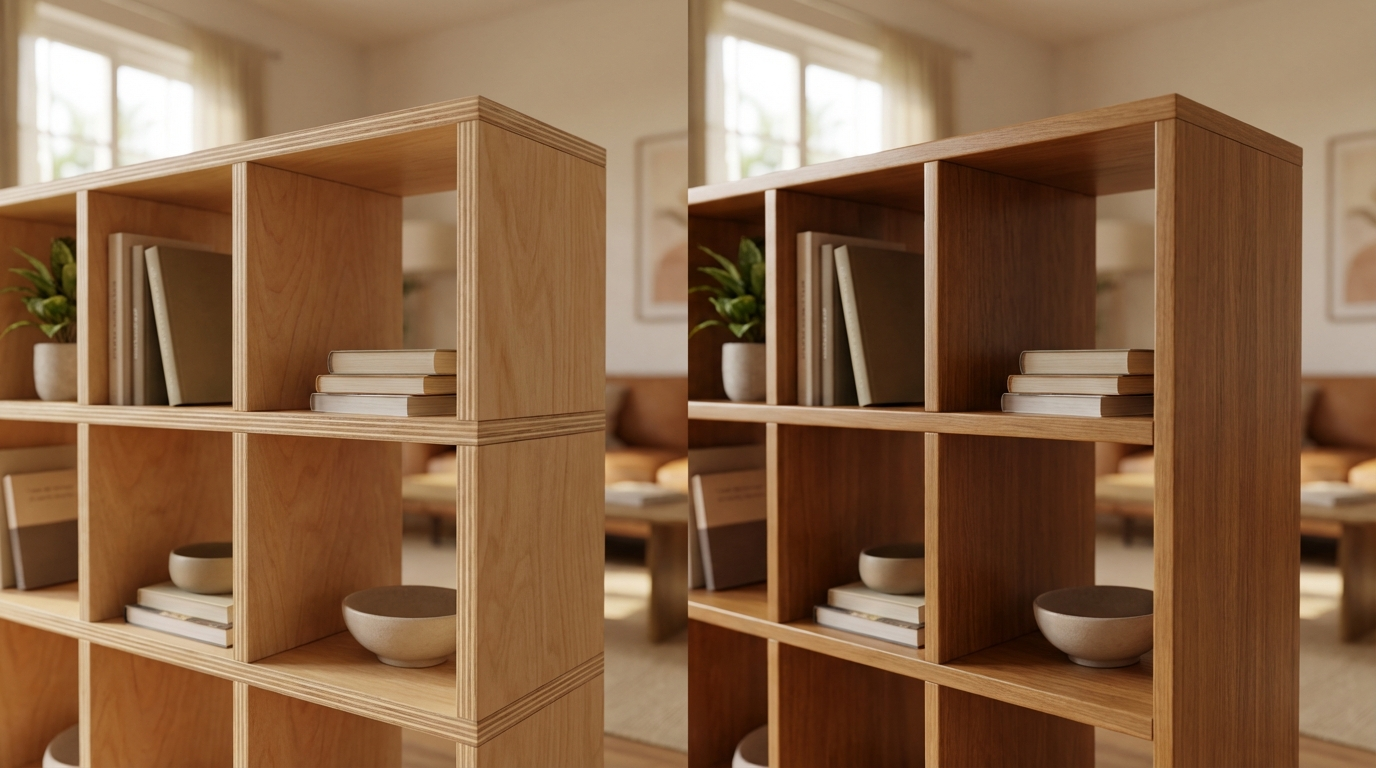
This makes building shelves and cabinets very useful in kitchens and bathrooms. The choice of BWP plywood becomes particularly important in Indian conditions where monsoon humidity, coastal exposure, and temperature variations create challenging environments for wood-based materials.
Kitchen Applications
Due to its high water-resisting property, 710 grade plywood is best suited for applications that are likely to get wet often for a prolonged period, such as bathroom cabinets, kitchen cabinets, etc. In modular kitchens, BWP plywood is ideal for:
- Base cabinets and sink units (constant water exposure)
- Under-counter storage
- Areas near dishwashers and water points
- Kitchen islands with integrated sinks
Bangalore climate consideration: High humidity during monsoon can cause thin plywood below 9mm to warp if not properly sealed. Use minimum 9mm for wet-prone areas, 12mm minimum for modular kitchens.
Bathroom and Wet Area Applications
Areas under the sink are exposed to water leakage, and bathrooms face heavy moisture. BWP plywood can withstand long-term water exposure, making it the best choice. Specific bathroom applications include:
- Vanity units and wash basin cabinets
- Storage units near shower areas
- False ceiling frames in bathrooms
- Loft storage in laundry areas
Marine and Exterior Applications
This type of plywood is commonly employed in the fabrication of ships and boats, functioning as an exterior-grade material designed to endure severe weather conditions. Beyond marine use, BWP plywood works well for:
- Balcony furniture and seating
- Outdoor kitchen cabinetry
- Garden furniture in semi-covered areas
- Commercial signage requiring weather resistance
Regional Considerations for Indian Buyers
Coastal areas: Homes near the coast experience high humidity, which can damage MR and BWR plywood. BWP plywood provides long-term protection against moisture.
In practical terms across India, BWP plywood becomes essential in:
- Coastal cities (Mumbai, Chennai, Kochi): Year-round humidity above 70%
- Monsoon-heavy regions: Extended wet seasons affecting indoor humidity
- Flood-prone areas: Protection against occasional water ingress
How to Choose the Right BWP Plywood
Selecting BWP plywood requires understanding both technical specifications and practical Indian market realities. Many dealers push higher grades for simple applications where they're unnecessary, while others substitute lower grades to maximize margins.
Decision Framework
It is very important to understand the difference between BWR and BWP plywood, especially while selecting the right material for your project. BWR can tolerate a bit of water and humidity but not continuous exposure to water.
Ask yourself these questions before deciding:
- Will the furniture have direct water contact? (Yes = BWP mandatory)
- Is the installation in a high-humidity zone? (Above 70% RH = consider BWP)
- What is the expected furniture lifespan? (10+ years = BWP justified)
- Is CNC machining required? (If yes, choose calibrated BWP sheets)
Buyer Checklist for BWP Plywood
- Best quality is ISI-certified to maintain the highest quality. IS: 303 refers to commercial or MR-grade plywood, while IS: 710 refers to marine or waterproof plywood.
- Always check for the CML number and the ISI logo. The CML numbers of plywood manufacturers facilitate their identification.
- Verify uniform thickness across the sheet (use a vernier caliper at multiple points)
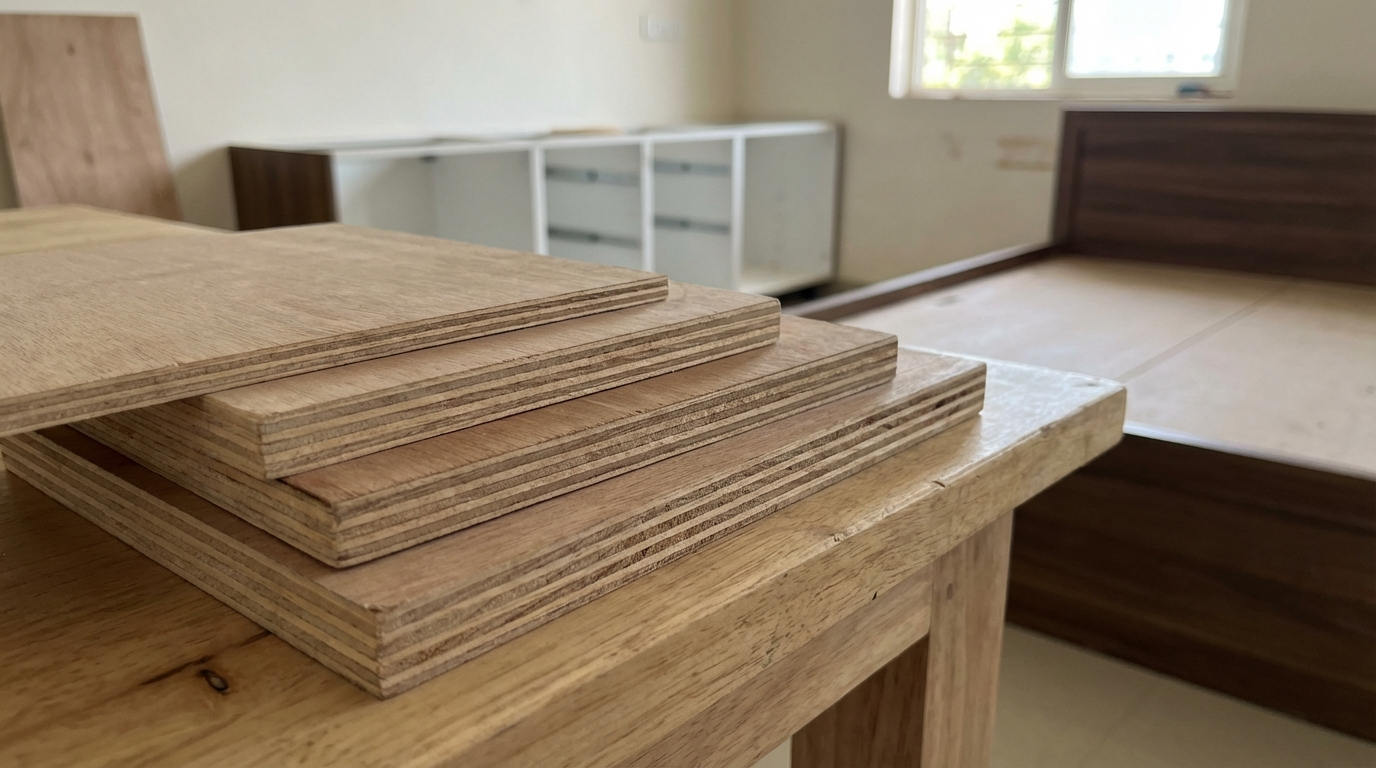
- Check the side profile of the ply, the edges. The layers on the side profile of plywood should be running straight. Since plywood is an engineered wood panel made by pressing layers of thin wood veneers together, it's the construction of these layers which determines the quality.
- Must have gap-free, evenly spaced hardwood veneers. Even thickness in layers indicates careful manufacture.
- Request test certificates from the dealer, particularly for bulk purchases
- Buy from authorized brand dealers or reputed plywood depots
When NOT to Choose BWP Plywood
BWP plywood is not always the right choice. Avoid unnecessary spending in these scenarios:
- Dry bedroom wardrobes: MR or BWR grade is sufficient
- Living room TV units: No moisture exposure, MR grade works
- Office partitions: Interior-grade plywood adequate
- Temporary constructions: Commercial plywood suffices
- In dry, indoor conditions, MR plywood can last 8 to 10 years, sometimes more. Its durability drops when used in areas with moisture.
Common Mistakes to Avoid When Buying BWP Plywood
Indian plywood markets are notorious for quality inconsistencies and misleading claims. Understanding common pitfalls helps you avoid costly errors.
Mistake 1: Trusting Only the Dark Color
Manufacturers all over India have devised a new way of fooling customers – they dip their MR ply in dark colour which gives it a look of BWP ply and then sell it at a much higher rate. The dark phenolic coating is easily faked. Always verify with ISI marking and CML numbers rather than relying on appearance alone.
Mistake 2: Ignoring Thickness Variations
The thickness of plywood should be even across the whole sheet. If the thickness varies, it can make the plywood weaker and look uneven when used in furniture or flooring. Uneven thickness is a sign that the plywood was not made well.
In the Indian market, an 18mm sheet might actually measure anywhere from 17mm to 19mm. For modular kitchens with CNC machining, this variation causes fitting issues. Always specify calibrated sheets for precision work.
Mistake 3: Not Testing Before Bulk Purchase
Always purchase from a reputed dealer and ask for a test certificate. For large projects, request a sample sheet and perform these quick checks:
- The performance of any ply is predicated on its nail holding capability. A well bonded ply would never split or crack easily when a nail or screw is hammered into it. To check this, drive a nail from the side into the ply. If the layers split or crack, you should probably look for a better ply.
- For the boiling water test, take a small piece of plywood and boil it in warm water for 20 to 30 minutes. If plywood is high quality then it is not separated into layers but low-quality plywood will start showing separation quickly.
Mistake 4: Confusing 18mm and 19mm Trade Sizes
In practical Indian market terms, "18mm" and "19mm" are often used interchangeably by dealers. The actual difference relates to calibration and pressing. Premium brands typically offer true 19mm calibrated sheets, while budget options may be closer to 17.5mm. Always measure and specify requirements clearly.
Mistake 5: Overlooking Termite Treatment
Termites can be a big problem for wood and plywood. Some types of plywood are treated with chemicals to resist termites, which makes them a better choice for long-lasting use, especially in places where termites are common. Even BWP grade doesn't automatically mean termite-proof. Verify that the plywood carries separate borer and termite treatment certification.
Quick Inspection Checks at the Dealer
- Have the seller cut a piece from a sample sheet to see if the core lines visible on the outside are also congruent inside. There may be some core gaps and overlapping involved and that's okay, but if there are more than 2-3 core gaps and overlappings, you should probably abort.
- Flex the sheet slightly—quality BWP should have minimal flex and spring back
- Check for visible knots, voids, or repairs in the face veneer
- Smell test: strong chemical odors may indicate excess formaldehyde
BWP Plywood Price Guide for India
Various factors determine the BWP plywood price in India. Thickness is key: the most common thicknesses are 12mm, 18mm, and 19mm, with 18mm BWP plywood price and 19mm BWP plywood price being higher than thinner variants.
Price Ranges by Thickness
12mm BWP plywood price: This is commonly used for lightweight applications, and its price can range between ₹90 to ₹120 per square foot.
18mm BWP plywood price: A thicker variant suitable for heavy-duty furniture, the 18mm BWP plywood price typically ranges between ₹130 to ₹160 per square foot.
19mm BWP plywood price: Slightly thicker than 18mm, 19mm BWP plywood price is often found in the ₹140 to ₹170 per square foot range.
Regional Price Variations
BWP plywood price in Bangalore: Bangalore typically sees prices in the range of ₹120 to ₹160 per square foot for standard thicknesses.
BWP plywood price in Chennai: In Chennai, you might find BWP plywood priced between ₹115 to ₹155 per square foot.
BWP plywood price in Kolkata: In Kolkata, BWP plywood can be slightly more affordable, with prices ranging between ₹110 to ₹150 per square foot. Regional factors such as proximity to manufacturing hubs and transportation costs affect these variations.
| Thickness | Budget Brand (₹/sq ft) | Mid-Tier Brand (₹/sq ft) | Premium Brand (₹/sq ft) | Best For |
|---|---|---|---|---|
| 6mm | ₹45–55 | ₹55–70 | ₹70–90 | Back panels, lining |
| 9mm | ₹65–80 | ₹80–100 | ₹100–120 | Light shelving |
| 12mm | ₹90–105 | ₹105–125 | ₹125–150 | Cabinet shelves |
| 16mm | ₹110–130 | ₹130–150 | ₹150–175 | Medium furniture |
| 18mm | ₹130–150 | ₹150–170 | ₹170–200 | Kitchen carcass |
| 19mm | ₹140–160 | ₹160–185 | ₹185–220 | Heavy-duty furniture |
| 25mm | ₹170–200 | ₹200–240 | ₹240–280 | Countertops, tabletops |
Note: Prices are indicative for metro cities (Jan 2026) and include GST. Tier-2/Tier-3 cities may see 5–15% variation based on transport costs and dealer margins.
What Causes Price Variation
Raw Wood Costs: Timber species like Gurjan, Eucalyptus, and Neem influence core pricing. Logistics and Fuel Charges: With PAN-India distribution, local delivery costs can alter landed pricing. Sheet Calibration and Finishing: Factory-calibrated plywood costs more, but saves labour during fit-out. Certifications: ISI, termite treatment, and boiling waterproof testing add value — and cost.
Cost-wise too, there's 10% to 20% difference. BWP is costlier than BWR wood. BWP plywood price is generally a notch higher than BWR plywood price.
Carpenter's Perspective on BWP Plywood
From a working carpenter's standpoint, BWP plywood offers both advantages and challenges that homeowners should understand before specifying materials.
Working Characteristics
710 BWP Marine Grade Plywood has a high screw holding capacity. Carpenters generally prefer BWP plywood for quality work because:
- Denser construction holds screws and hinges securely
- Less prone to edge chipping during cutting
- Better surface for laminate and veneer application
- Consistent thickness in calibrated sheets reduces fitting adjustments
Edge Banding Realities
In practical Indian carpentry, edge banding on BWP plywood requires attention. The phenolic resin content makes adhesion slightly different from MR grade. Experienced carpenters know to:
- Use higher-quality edge banding adhesive
- Ensure proper surface preparation before banding
- Apply slightly more heat during application
- Allow adequate curing time before handling
CNC Machining Compatibility
For modular kitchen and furniture manufacturers using CNC routers, calibrated BWP plywood is essential. Non-calibrated sheets lead to:
- Inconsistent dado joints
- Poor alignment in assembled cabinets
- Rework and material wastage
- Customer complaints about fit and finish
Always specify "calibrated" when ordering BWP plywood for precision CNC work. The additional cost is typically 8–12% but saves significant labor and rework costs.
Frequently Asked Questions
What is the full form of BWP plywood?
BWP stands for "Boiling Water Proof." BWP signifies that the plywood is marine grade, unlike conventional plywood sheets. This specialized grade plywood gives unparalleled resistance to water and moisture and doesn't suffer any quality loss in wet environments. The term indicates that the plywood can survive prolonged immersion in boiling water without delaminating—a test far more rigorous than normal moisture exposure. In the Indian market, BWP is sometimes also called marine-grade plywood, though technically IS 710 is the marine plywood specification.
Which is better: BWP or BWR plywood for kitchen?
BWR plywood can handle moisture like steam or occasional spills. BWP plywood, on the other hand, is fully waterproof. For kitchen applications, the choice depends on the specific location. The use of BWP plywood is very much recommended for heavy-duty applications in moisture-rich environments, such as bathrooms and kitchens. For sink cabinets and areas with direct water exposure, BWP is the safer choice. For upper cabinets and areas with only steam exposure, BWR may suffice. In humid coastal cities, BWP across all kitchen furniture is advisable for long-term durability.
Is BWP plywood good for bathroom vanity?
Unlike MR grade plywood, Century Sainik 710 BWP can withstand direct water contact, making it ideal for kitchen sinks, bathroom areas, and coastal applications. BWP plywood is excellent for bathroom vanities because bathrooms experience high humidity, direct water splashes, and steam from hot showers. BWP or boiling waterproof plywood is 100% waterproof plywood. BWP plywood doesn't deteriorate due to the attack of water. For bathroom applications, ensure proper lamination and edge sealing to maximize the plywood's inherent water resistance.
What is the IS 710 standard for plywood?
The standard on marine plywood was first published in 1957. The method of manufacture of marine plywood has been specifically stated in the standard so that the resulting plywood is capable of withstanding the rigorous conditions which marine plywood may have to withstand. IS 710:2010 is the current Bureau of Indian Standards specification for marine plywood. The product IS 710:2010 is titled Marine Plywood. It specifies requirements for veneers, adhesives, construction, tolerances, and testing methods. Plywood must pass the 72-hour boiling water test and other quality parameters to earn IS 710 certification.
How to test if plywood is genuine BWP grade?
Waterproof Test: Submerge a sample in boiling water for 72 hours to check for delamination. Look for Branding and Labels: Reputed brands print their logo and specifications on every sheet. For a quick dealer-level test, take a sample and submerge in boiling water for 8 hours or in a pressure cooker for 1 whistle. Cool down by submerging in normal temperature water. If the ply layers delaminate, it's not BWR Grade and vice versa. For BWP verification, the plywood should survive the pressure cooker test for 7 whistles without any layer separation.
What is the price of 18mm BWP plywood in India?
18mm BWP plywood price: A thicker variant suitable for heavy-duty furniture, the 18mm BWP plywood price typically ranges between ₹130 to ₹160 per square foot. Prices vary based on brand tier, city location, and calibration. Premium BWP Marine Grade ranges from Rs. 1,525 to Rs. 2,252 per sheet. Available brands include Century (Sainik & Club Prime), Greenply (Ecotec & Gold). For budget projects in Tier-2 cities, expect the lower end of the range, while premium calibrated sheets in metros command higher prices.
Can BWP plywood be used outdoors in India?
710 plywood exhibits remarkable resilience to diverse weather conditions. While ordinary plywood may succumb to wear and tear over time, this plywood maintains its structural integrity for years. BWP plywood is better suited for the outdoors. It holds up well against rain, heat, and changing weather. However, for truly exterior applications in Indian conditions, the plywood should be protected with appropriate finishes, sealed edges, and possibly an additional weatherproof coating. Direct UV exposure without protection will eventually degrade even BWP plywood.
How long does BWP plywood last compared to regular plywood?
BWP plywood is the most long lasting plywood available in the market today! With proper installation and maintenance, BWP plywood furniture can last 15–25 years even in moisture-prone areas. In dry, indoor conditions, MR plywood can last 8 to 10 years, sometimes more. Its durability drops when used in areas with moisture. The key difference is that BWP maintains structural integrity in wet conditions where MR and BWR grades would delaminate within 3–5 years. For kitchen and bathroom applications where water exposure is inevitable, BWP's longevity justifies its premium cost.
Disclaimer: This content is provided for general informational purposes based on industry practices and publicly available information. Product specifications, standards, prices, and availability may vary by manufacturer, region, and time. Readers should independently verify details with manufacturers, dealers, or qualified professionals before making purchase or construction decisions.Want Plywood Suggestions?
Share a few details and a Apple Ply specialist will suggest suitable brands and connect you to responsive dealers.