Best Laminate Brands in India: Top Companies Ranked
Ranking of best laminate brands in India for 2026. Compare top companies by design range, quality, price & warranty for your project.
Quick Answer
The best laminate brands in India for 2026 include Greenlam, Merino, Century Laminates, Formica, Royale Touche, Sundek, Virgo, and Stylam—each offering distinct strengths in design range, durability, price positioning, and dealer availability across Indian markets.
At a Glance:
- Greenlam and Merino lead the premium segment with 400+ design options each
- Century Laminates offers strong value with advanced scratch-resistant technology
- Formica commands heritage trust but at international pricing
- Regional brands like Sundek and Virgo provide cost-effective alternatives
- Price ranges span ₹80–₹350 per sq ft depending on brand tier and finish type
- Warranty periods typically range from 1 to 7 years across major brands
Understanding Laminate Brands in the Indian Market
Laminate brands in India operate across distinctly different market tiers, and understanding this hierarchy is essential before making purchase decisions. The Indian laminate industry has matured significantly over the past decade, with domestic manufacturers now matching international quality standards while maintaining price competitiveness that imported brands cannot offer.
The market broadly divides into three segments: premium national brands with pan-India presence, mid-tier brands with strong regional distribution, and economy-segment manufacturers serving price-sensitive projects. Premium brands invest heavily in design innovation, maintaining dedicated R&D teams that release new collections annually. These brands typically operate manufacturing facilities certified to international standards, with testing protocols for scratch resistance, chemical resistance, and UV stability.
Why Brand Selection Matters for Your Project
Choosing the right laminate brand impacts far more than just aesthetics. In practical Indian conditions, a quality brand ensures consistent thickness across sheets—critical for CNC machining in modular kitchens where even 0.2mm variation causes fitting issues. Premium brands maintain stricter quality control, reducing the rejection rate that carpenters face when working with inconsistent material.
Brand reputation also affects post-installation performance. In high-humidity coastal cities like Mumbai, Chennai, or Kolkata, cheaper laminates often show edge lifting within 18–24 months. Established brands formulate their adhesive layers specifically for Indian humidity levels, typically targeting 60–80% RH tolerance compared to 40–50% RH in European formulations.
The Dealer Network Reality
In India, laminate purchases happen predominantly through dealer networks rather than direct brand channels. Major brands like Greenlam operate through 40,000+ dealer and retailer touchpoints, ensuring availability even in Tier-3 cities. Smaller brands may offer attractive pricing but leave you dependent on limited dealers who may not stock full design ranges or carry adequate inventory for large projects.
Top Laminate Brands in India Ranked by Category
Rather than presenting a simplistic numerical ranking, understanding which brands excel in specific categories helps match your project requirements with the right manufacturer. Each brand has carved distinct positioning through years of market presence and product development.
Premium Segment Leaders
Greenlam Industries stands among the top three laminate manufacturers globally, operating five manufacturing facilities across India in Behror, Nalagarh, Prantij, Tindivanam, and Naidupeta. Their production capacity exceeds 24 million sheets annually, ensuring consistent supply across their dealer network. Greenlam holds certifications including FSC, PEFC, ISO 14001, Greenguard, and CE marking—credentials that matter for commercial projects requiring compliance documentation. Their design portfolio exceeds 450 options across HPL, compact laminates, digital prints, and specialty variants like anti-fingerprint and fire-retardant grades.
Merino Industries matches Greenlam in design variety and quality perception, particularly strong in high-gloss and textured finishes. Merino's distribution network penetrates well into North and West India, with particularly strong dealer relationships in Delhi-NCR, Gujarat, and Maharashtra markets. Their price positioning sits marginally above Century but below imported alternatives.
Value-Premium Segment
Century Laminates (part of Century Plyboards) leverages its parent company's massive distribution infrastructure, making it accessible across India including smaller towns where other premium brands have limited presence. Century focuses on practical durability features—their laminates commonly incorporate anti-bacterial and scratch-resistant technologies at price points 10–15% below Greenlam and Merino.
Royale Touche has built strong recognition in metallic finishes and premium textures, carving a niche in the designer segment. Their showroom-focused retail model differs from traditional dealer distribution, making them more accessible in metros but harder to find in smaller cities.
Regional and Economy Brands
Sundek operates primarily in South Indian markets with competitive pricing and reasonable quality consistency. Virgo Laminates serves the economy segment effectively, popular among carpenters executing budget projects where cost matters more than design exclusivity. Stylam Industries has grown steadily with focus on export markets, bringing international quality standards to domestic offerings.
Comparison Table: Top Laminate Brands in India
| Brand Name | Known For | Price Range (₹/sq ft) | Design Options | Best For | Availability |
|---|---|---|---|---|---|
| Greenlam | Global standards, eco-certifications | ₹110–₹280 | 450+ | Premium residential, commercial projects | Pan-India, 40,000+ touchpoints |
| Merino | Premium finishes, texture variety | ₹120–₹300 | 400+ | High-end interiors, feature walls | Strong in North/West India |
| Century Laminates | Durability technology, value pricing | ₹100–₹240 | 350+ | Kitchens, high-traffic furniture | Excellent pan-India reach |
| Formica | Heritage brand, international quality | ₹180–₹350 | 300+ | Premium commercial, brand-conscious buyers | Limited to metros, premium dealers |
| Royale Touche | Designer finishes, metallic options | ₹130–₹320 | 250+ | Boutique interiors, accent surfaces | Metro-focused showrooms |
| Sundek | Regional value, consistent quality | ₹80–₹180 | 200+ | Budget-conscious South Indian projects | Strong in South India |
| Virgo | Economy pricing, basic applications | ₹70–₹150 | 150+ | Rental properties, basic furniture | Dealer network in North India |
| Stylam | Export quality, modern designs | ₹100–₹220 | 280+ | Contemporary interiors, commercial fit-outs | Growing pan-India presence |
Types of Laminates Offered by Top Brands
Understanding laminate types helps you evaluate brands based on their portfolio completeness. Premium brands differentiate themselves by offering specialized variants that economy brands cannot manufacture due to technology and certification requirements.
High Pressure Laminates (HPL)
HPL remains the standard for furniture and cabinet surfaces, manufactured by pressing multiple kraft paper layers with decorative paper under high temperature and pressure. All major Indian brands produce HPL, but quality varies in resin formulation and pressing consistency. Premium brands maintain surface hardness ratings exceeding 350 Barcol, while economy brands may deliver 280–320 Barcol—noticeable in scratch resistance over time.
Compact Laminates
Thick, self-supporting laminates used for toilet partitions, laboratory countertops, and exterior cladding require specialized manufacturing capability. Greenlam, Merino, and Stylam produce compact laminates meeting international standards, while most regional brands lack this category entirely. For commercial projects requiring compact grades, brand choice narrows significantly.
Specialty Variants
Anti-fingerprint (AFX) laminates from Greenlam address the smudge problem on dark surfaces—particularly relevant for modular kitchens with island counters. Fire-retardant grades certified to BS EN standards become mandatory for commercial projects, available primarily from Greenlam, Merino, and Formica. Digital or custom-printed laminates allow personalized designs, offered by premium brands with minimum order quantities typically starting at 50–100 sheets.
Finish Types Across Brands
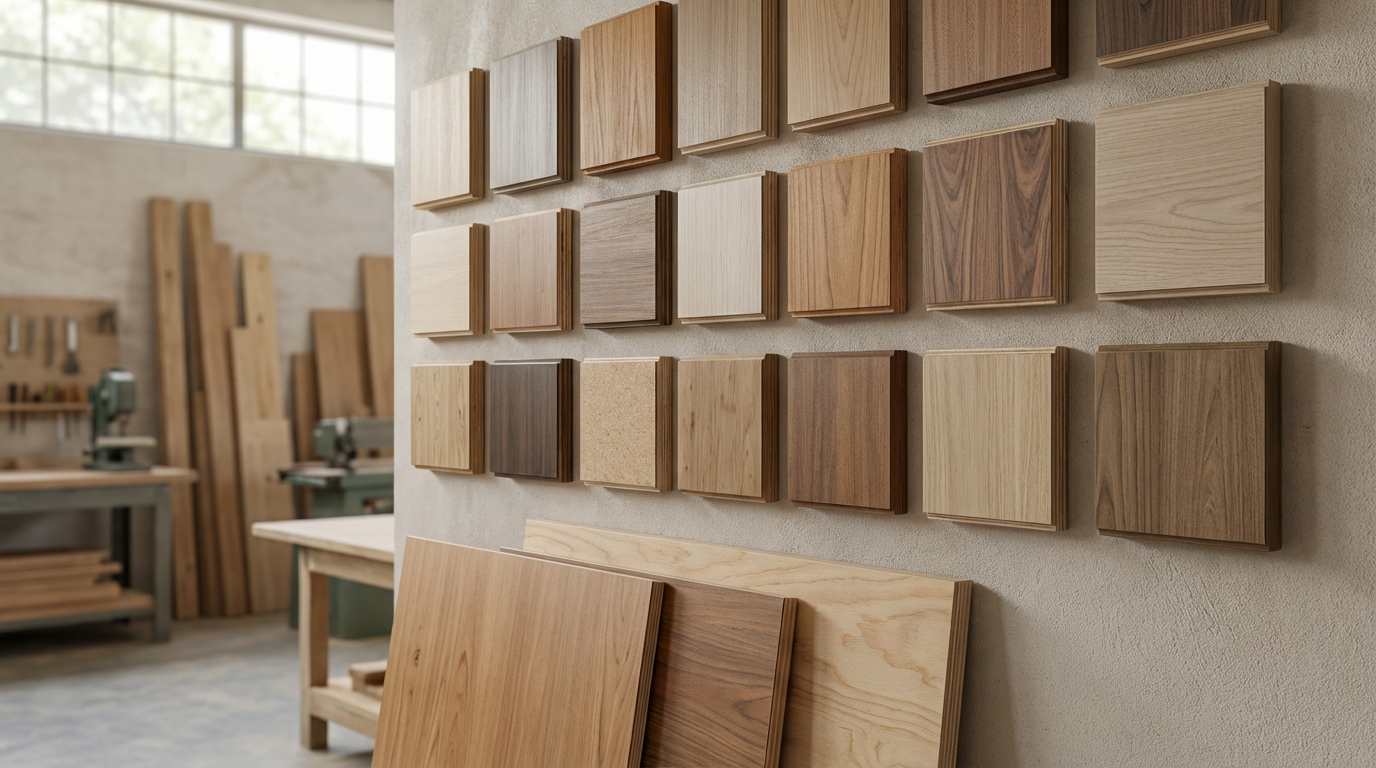
High-gloss finishes command premium pricing (₹150–₹350 per sq ft) and require careful handling during installation—minor scratches become highly visible. Matte and suede finishes hide imperfections better while delivering contemporary aesthetics. Textured finishes replicating wood grain or stone patterns vary significantly in realism between brands; premium manufacturers use synchronized texturing where surface texture aligns with printed patterns.
How to Choose the Right Laminate Brand
Brand selection requires matching your specific requirements against manufacturer strengths rather than simply choosing the most expensive option. A systematic evaluation framework prevents both overspending and quality compromises.
Decision Framework by Project Type
For premium residential projects (budget ₹15 lakhs+ for interiors), Greenlam and Merino justify their pricing through design exclusivity, consistent quality, and responsive warranty support. Mid-budget residential projects find optimal value in Century Laminates—comparable durability at 15–20% lower cost. Rental properties and budget projects can safely use Virgo or Sundek for non-critical surfaces while reserving premium brands for kitchen and bathroom applications where moisture resistance matters.
Buyer Checklist Before Finalizing a Brand
- Dealer proximity: Confirm at least 2–3 dealers stock your chosen brand within reasonable distance for replacements
- Design availability: Visit showrooms physically—online catalogs may show discontinued patterns
- Thickness consistency: Request sample sheets and measure with calipers at multiple points
- Warranty documentation: Obtain written warranty terms specifying coverage conditions
- Batch matching: Ensure all sheets for your project come from single batch to avoid shade variations
- Edge quality: Check for chips, micro-cracks, or delamination along sheet edges before acceptance
- Certification verification: For commercial projects, request test certificates matching delivered lot numbers
When NOT to Choose Premium Brands
Premium brands represent unnecessary spending for temporary installations, behind-cabinet applications invisible after installation, and rental properties where tenant wear will occur regardless of material quality. Economy brands adequately serve utility furniture, storage room shelving, and back panels. However, never compromise on kitchen cabinet fronts, bathroom vanities, or high-traffic wardrobes where laminate failure creates replacement costs exceeding initial savings.
Common Mistakes When Choosing Laminate Brands
Years of market observation reveal patterns in buyer errors that lead to project disappointments. Avoiding these mistakes saves both money and frustration during interior execution.
Prioritizing Price Over Availability
Choosing an obscure brand offering 20% lower pricing often backfires when additional sheets become unavailable mid-project. Shade variations between batches force complete panel replacements. Major brands maintain dealer inventory ensuring consistent supply—a practical advantage often invisible during initial cost comparison.
Ignoring Regional Humidity Factors
Mumbai, Chennai, and Kolkata buyers require laminates formulated for 70–80% RH conditions. Economy brands manufactured primarily for Northern Indian markets use adhesive formulations targeting 50–60% RH, leading to edge lifting within 2–3 monsoon seasons in coastal cities. Premium brands explicitly rate their products for humidity tolerance—verify this specification before purchasing.
Trusting Carpenter Brand Recommendations Blindly
Carpenters frequently recommend brands offering them higher dealer margins rather than best value for clients. Request reasoning behind recommendations and independently verify pricing across 2–3 dealers. Legitimate recommendations focus on workability and consistent quality; margin-driven suggestions often cite vague "better quality" claims without specifics.
Quick Inspection Checks Before Purchase
- Bend test: Quality laminate shows no micro-cracking when flexed gently
- Surface scratch test: Run fingernail firmly across surface—quality HPL resists marking
- Edge inspection: Examine all four edges for separation or bubbling indicating manufacturing defects
- Batch code verification: Ensure all sheets carry identical batch markings for color consistency
- Thickness measurement: Use calipers at four corners and center—variation beyond 0.05mm indicates poor quality control
Overlooking Transport and Storage Damage
Laminate sheets damage easily during transport—corner chips, scratches, and moisture absorption reduce usable surface area. Insist on proper packaging, store sheets flat in covered areas away from direct sunlight, and inspect delivery before acceptance. Damaged sheets become your responsibility once signed for, regardless of brand warranty.
Laminate Brand Price Guide for India
Price variations across brands reflect manufacturing quality, design development investment, certification costs, and distribution network margins. Understanding these factors prevents both overpaying and quality compromises.
Price Comparison by Brand Tier
| Brand Tier | Price Range (₹/sq ft) | Typical Thickness | Key Brands | Quality Indicators |
|---|---|---|---|---|
| Premium | ₹150–₹350 | 0.8mm–1.5mm | Greenlam, Merino, Formica | International certifications, 5–7 year warranty |
| Mid-Premium | ₹100–₹180 | 0.8mm–1.0mm | Century, Royale Touche, Stylam | National certifications, 3–5 year warranty |
| Value | ₹70–₹120 | 0.7mm–0.8mm | Sundek, Virgo, regional brands | Basic ISI marking, 1–2 year warranty |
| Economy | ₹50–₹80 | 0.6mm–0.7mm | Local/unbranded | Inconsistent quality, limited warranty |
Factors Affecting Brand Pricing
Finish type creates the largest price variation within any brand. High-gloss variants cost 40–60% more than matte equivalents in the same design. Textured finishes with synchronized patterns (texture matching print) command 25–35% premiums over flat textures.
Sheet size impacts per-square-foot economics. Standard 8×4 feet sheets suit most residential applications, while 10×4 feet sheets reduce waste on large surfaces but require careful transport and handling. Premium brands offer both sizes; economy brands typically stock only standard dimensions.
Metro vs non-metro pricing varies by 8–15% due to transport costs and dealer margins. Mumbai and Delhi dealers operate on thinner margins due to competition, while Tier-2 cities see higher markups from limited dealer options. Budget additional 5–10% for remote locations requiring special logistics.
Hidden Costs to Factor
GST at 18% applies uniformly across brands. Cutting charges for custom sizes range from ₹15–₹30 per cut depending on dealer. Edge banding using matching ABS tape costs ₹8–₹15 per running foot—factor this for all exposed laminate edges. Quality adhesive (Fevicol or equivalent) for laminate application costs ₹80–₹120 per kg, with consumption varying by surface porosity.
Regional Considerations for Brand Selection
India's diverse climate zones and regional market dynamics significantly influence optimal brand choices. A brand performing excellently in Delhi may disappoint in Chennai, not due to inherent quality but environmental mismatch.
Coastal and High-Humidity Regions
Mumbai, Chennai, Kolkata, Kerala, and coastal Karnataka require laminates specifically formulated for sustained humidity exposure. Greenlam and Merino explicitly engineer products for these conditions, with adhesive formulations tested at 80%+ RH levels. Century Laminates performs adequately in these regions, while economy brands frequently fail within 2–3 years through edge swelling and surface bubbling.
Northern Plains and Dry Climate Zones
Delhi-NCR, Rajasthan, and Punjab experience extreme temperature variations—summers exceeding 45°C followed by winters below 5°C. This thermal cycling stresses laminate adhesion differently than humidity. Most brands perform adequately here, making this region ideal for value-tier selections where humidity concerns don't justify premium pricing.
Dealer Network Strength by Region
Greenlam maintains strongest distribution across India, particularly effective in South and West regions. Merino dominates North and West India dealer networks. Century leverages its plywood distribution for exceptional Tier-2 and Tier-3 city coverage. Regional brands like Sundek work best within their established territories where dealer relationships ensure reliable supply and warranty support.
Frequently Asked Questions
What is the full form of HPL in laminates?
HPL stands for High Pressure Laminate, referring to the manufacturing process where multiple layers of kraft paper saturated with phenolic resin are pressed together with a decorative surface layer under high temperature (140–150°C) and pressure (70–100 kg/cm²). This process creates a dense, durable surface material significantly harder and more resistant than low-pressure laminates. All major Indian brands including Greenlam, Merino, and Century manufacture HPL for furniture and cabinet applications.
Which is better: Greenlam or Merino laminates?
Both brands deliver comparable quality at similar price points, making the choice dependent on specific requirements. Greenlam holds stronger international certifications (Greenguard, CE, NSF) relevant for commercial projects requiring compliance documentation. Merino offers slightly wider texture variety and maintains marginally better dealer support in North India. For residential applications, either brand performs excellently—select based on preferred designs available at your local dealer rather than perceived brand superiority.
Is Century laminate good for kitchen cabinets?
Century laminates perform well for kitchen cabinet applications, offering anti-bacterial and scratch-resistant properties specifically suited for cooking environments. Their moisture resistance meets requirements for standard kitchen humidity levels, though coastal city installations should consider premium-tier options. Century's price advantage of 15–20% below Greenlam and Merino makes it a practical choice for budget-conscious kitchen projects without significant quality compromise on cabinet fronts and door surfaces.
What is the laminate price per square foot in India?
Laminate prices in India range from ₹50 to ₹350 per square foot depending on brand tier, finish type, and thickness. Economy brands start around ₹50–₹80, value-tier brands range ₹80–₹120, mid-premium brands cover ₹100–₹180, and premium brands span ₹150–₹350 per square foot. High-gloss finishes command the highest prices within any brand. Prices quoted assume metro city dealer rates; add 8–15% for Tier-2 and Tier-3 city purchases due to higher dealer margins and transport costs.
How to check laminate quality before buying?
Quality verification involves visual and physical checks: examine all four edges for delamination or chipping, flex the sheet gently to detect micro-cracking, scratch the surface firmly with a fingernail to test hardness, and measure thickness at multiple points using calipers—variation beyond 0.05mm indicates poor manufacturing. Check batch codes match across all sheets for color consistency, verify the brand hologram or marking appears authentic, and request test certificates for commercial projects requiring documentation.
Which laminate brand is best for modular kitchens?
For modular kitchens requiring CNC machining, Greenlam and Merino provide the thickness consistency essential for precision cutting. Century Laminates offers a cost-effective alternative for semi-modular designs. The critical factor is thickness uniformity—variations cause fitting issues in pre-fabricated cabinet systems. Avoid economy brands for modular applications regardless of cost savings, as inconsistent material creates assembly problems that increase labor costs and reduce finished quality.
Do laminate brands offer warranty in India?
Major Indian laminate brands provide written warranties ranging from 1 to 7 years depending on product variant and brand tier. Greenlam and Merino typically offer 5–7 year coverage on premium lines, Century provides 3–5 year warranty, and value-tier brands offer 1–2 year limited warranty. Coverage conditions vary—most warranties exclude damage from improper installation, excessive moisture exposure, or use beyond rated applications. Obtain written warranty documentation before purchase and verify conditions apply to your specific use case.
Are Indian laminate brands better than imported options?
Premium Indian brands like Greenlam and Merino now match international quality standards while offering significant price advantages—typically 30–50% lower than equivalent imported grades. Indian manufacturers formulate products specifically for local humidity and temperature conditions, often outperforming European laminates in coastal Indian environments. Imported brands like Formica justify their premium only for specific design exclusivity or brand perception requirements; for functional performance, domestic premium brands deliver equivalent durability at substantially lower cost.
Disclaimer: This content is provided for general informational purposes based on industry practices and publicly available information. Product specifications, standards, prices, and availability may vary by manufacturer, region, and time. Readers should independently verify details with manufacturers, dealers, or qualified professionals before making purchase or construction decisions.Want Plywood Suggestions?
Share a few details and a Apple Ply specialist will suggest suitable brands and connect you to responsive dealers.