Which Plywood is Best for Your Home? Complete Selection Guide
Find the best plywood for your needs - compare BWP, BWR, MR & marine grades. Expert guide for furniture, kitchen, bathroom & outdoor use.
Quick Answer
The best plywood for your home depends entirely on where you'll use it—BWR (Boiling Water Resistant) plywood is the most versatile choice for Indian homes, offering the right balance of moisture resistance and cost for kitchens, wardrobes, and general furniture. For bathrooms and high-humidity coastal areas, BWP (Boiling Water Proof) or Marine grade is essential, while MR (Moisture Resistant) plywood works perfectly fine for dry interior spaces like bedrooms and living rooms.
At a Glance
- MR Plywood: Best for dry interiors—bedrooms, wardrobes in non-humid zones, TV units
- BWR Plywood: Ideal all-rounder for kitchens, semi-humid areas, modular furniture across most Indian cities
- BWP Plywood: Essential for bathrooms, under-sink cabinets, and persistent moisture exposure
- Marine Plywood: Required for outdoor structures, coastal homes, and areas with direct water contact
- Price range in India: ₹65–₹210 per sq ft depending on grade and brand tier
- Always verify: ISI certification stamp (IS:303 for MR/BWR, IS:710 for BWP/Marine) on every sheet
Which Plywood is Best: Understanding Plywood Grades in India
Plywood grades in India are classified primarily by their resistance to moisture and water exposure. This isn't just a technical specification—it directly determines how long your furniture will last and whether it will warp, swell, or delaminate over time. The grading system was established by the Bureau of Indian Standards (BIS) and remains the most reliable way to assess plywood quality.
The adhesive used between the wood veneers is what differentiates one grade from another. MR grade plywood uses urea-formaldehyde resin, which can handle normal indoor humidity but breaks down with prolonged water exposure. BWR and BWP grades use phenol-formaldehyde resin, which creates a much stronger, more water-resistant bond. Marine plywood takes this further with superior hardwood veneers and marine-grade phenolic bonding.
Why Grade Selection Matters More in India
India's climate presents unique challenges that many homeowners underestimate. Cities like Mumbai, Chennai, Kolkata, and Kochi experience relative humidity levels exceeding 80% during monsoon months. Even interior furniture in these regions faces moisture stress that would be considered extreme by global standards. A wardrobe made with the wrong plywood grade in coastal Chennai will show signs of swelling and veneer separation within 2–3 years—something the same furniture in dry Jodhpur might never experience.
Additionally, Indian construction practices often expose plywood to higher moisture levels during installation itself. Fresh plastering, incomplete waterproofing, and rushed timelines mean your new kitchen cabinets might face significant humidity before your home is even fully dry. Choosing the right grade builds in a safety margin against these real-world conditions.
Types of Plywood: MR, BWR, BWP, and Marine Explained
MR Grade Plywood (Moisture Resistant)
MR plywood is the entry point in the quality spectrum and is designed for interior applications where direct water contact is unlikely. The urea-formaldehyde adhesive provides adequate protection against normal ambient humidity but cannot withstand water immersion or prolonged dampness. In practical Indian terms, MR plywood is best suited for bedroom wardrobes, study tables, living room shelving, TV units, and overhead storage in dry zones.
The IS:303 standard governs MR plywood manufacturing in India. When purchasing, look for this marking stamped directly on the sheet—not just on packaging that can be swapped. MR plywood typically costs 25–35% less than BWR grade, making it an economical choice when moisture risk is genuinely low.
BWR Grade Plywood (Boiling Water Resistant)
BWR plywood represents the sweet spot for most Indian home applications. The phenol-formaldehyde bonding can withstand boiling water exposure for 6–8 hours in laboratory tests, which translates to excellent real-world performance in kitchens, dining areas, and rooms with air conditioning (which creates condensation cycles). This grade handles the moisture stress of Indian monsoons without the premium cost of fully waterproof options.
BWR plywood is also manufactured under IS:303 specifications but with stricter adhesive requirements. It's the most commonly recommended grade for modular kitchen cabinets, bathroom vanity units (in dry zones), children's room furniture, and any furniture placed against external walls where dampness can seep through.
BWP Grade Plywood (Boiling Water Proof)
BWP plywood uses high-quality phenolic resin that creates permanent waterproof bonding between veneers. Unlike BWR, which resists water, BWP can handle continuous water exposure without structural degradation. This grade conforms to IS:710, a more stringent standard specifically designed for waterproof applications. The price premium over BWR typically ranges from 30–50%, but for wet-zone applications, this investment prevents costly failures.
Typical applications include under-sink kitchen cabinets, bathroom storage units, balcony furniture, and any furniture in homes located within 5 km of coastlines where salt-laden humidity accelerates material breakdown.
Marine Grade Plywood
Marine plywood sits at the top of the quality hierarchy. Beyond the IS:710 waterproof adhesive standard, marine grade requires superior hardwood veneers with minimal core gaps, higher density construction, and additional treatments against fungal attack. This plywood was originally developed for boat and ship construction where submersion and extreme conditions are normal.
For residential use, marine plywood is typically specified for outdoor pergolas, garden furniture, bathroom interiors in high-end homes, swimming pool areas, and homes in extremely humid coastal zones like Kerala's backwater regions or the Andaman Islands.
Complete Plywood Grade Comparison
| Feature | MR Plywood | BWR Plywood | BWP Plywood | Marine Plywood |
|---|---|---|---|---|
| Full Form | Moisture Resistant | Boiling Water Resistant | Boiling Water Proof | Marine Grade |
| ISI Standard | IS:303 | IS:303 | IS:710 | IS:710 |
| Adhesive Type | Urea-formaldehyde | Phenol-formaldehyde | High-grade phenolic | Marine-grade phenolic |
| Water Resistance | Low (humidity only) | Moderate (6–8 hours) | High (continuous) | Very High (submersion) |
| Price Range (18mm, per sq ft) | ₹65–₹90 | ₹95–₹125 | ₹130–₹180 | ₹150–₹210 |
| Best For | Dry interiors | Kitchens, general furniture | Bathrooms, wet zones | Outdoor, coastal areas |
| Termite Treatment | Optional | Usually included | Standard | Standard + anti-fungal |
| Typical Warranty | 5–7 years | 10–15 years | 15–20 years | Lifetime (branded) |
How to Choose the Right Plywood for Different Areas
Selecting plywood isn't a one-size-fits-all decision. Each area of your home has different exposure levels and performance requirements. Here's a systematic approach to making the right choice.
Room-by-Room Selection Guide
Kitchen: BWR grade is the minimum requirement for kitchen cabinets. The combination of cooking steam, water splashes near sinks, and temperature fluctuations creates a demanding environment. For under-sink cabinets specifically, upgrade to BWP grade since leaks (even minor ones) are common over a kitchen's lifespan. Modular kitchen manufacturers typically use BWR as standard, but always verify before signing contracts.
Bathroom: BWP or Marine grade is non-negotiable for bathroom furniture. Even with good ventilation, bathrooms experience daily humidity spikes that will eventually destroy MR or even BWR plywood. Many homeowners learn this lesson expensively when vanity cabinets start swelling within 3–4 years of installation.
Bedroom: MR grade is sufficient for wardrobes and bedroom furniture in most Indian cities. The exception is wardrobes placed against external walls in humid climates—these should use BWR grade as a precaution against seepage and condensation.
Living Room: MR grade works well for TV units, bookshelves, and display cabinets. These areas rarely face moisture stress unless you're in an extremely humid coastal location.
Decision Checklist Before Buying
- Identify the humidity level of your city (coastal/humid vs inland/dry)
- Map each furniture piece to its specific room and moisture exposure
- Check if the room has external walls that could transmit dampness
- Consider air conditioning usage (creates condensation cycles)
- Factor in your home's age—older buildings often have compromised waterproofing
- Verify ISI certification matches the grade claimed
- Ask for brand stamping on each sheet, not just the top sheet
When NOT to Choose Each Grade
Don't use MR plywood: In kitchens, bathrooms, balconies, or any area near plumbing. Also avoid in homes located in high-humidity zones like coastal cities, regardless of room type.
Don't use BWR plywood: For bathroom interiors, outdoor furniture, or areas with direct water contact. BWR resists moisture but isn't designed for continuous water exposure.
Don't use BWP/Marine plywood: For dry interior furniture when budget is a constraint. The premium cost provides no benefit in genuinely dry conditions—you're paying for protection you won't use.
Common Mistakes to Avoid When Buying Plywood
Mistake 1: Trusting Verbal Assurances Over Physical Verification
Many buyers accept dealer claims about plywood grade without checking the actual ISI stamp on the sheet. Unscrupulous dealers sometimes sell MR plywood as BWR by simply changing the top sheet of a bundle. Always inspect the stamping on multiple sheets within the same lot, not just the visible one.
Mistake 2: Ignoring Thickness Discrepancies
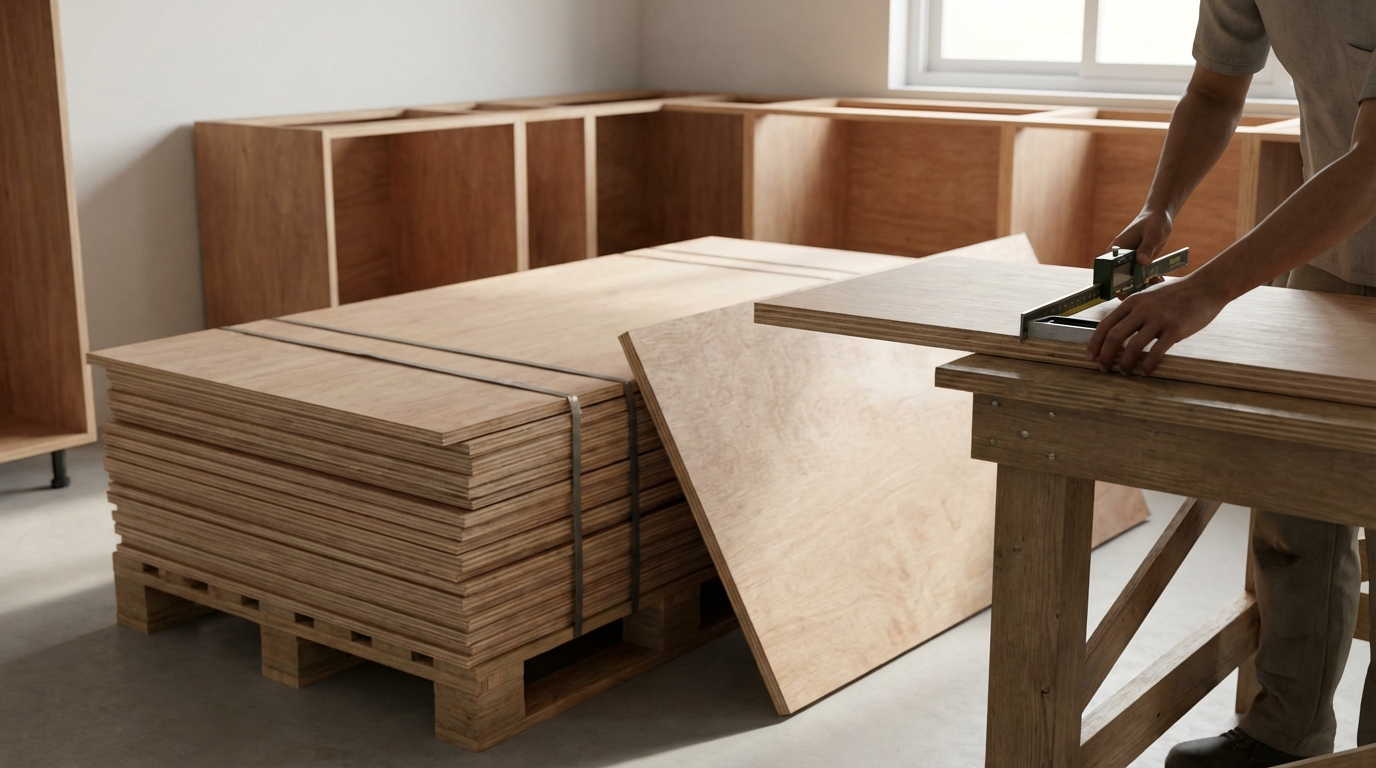
Indian plywood trade sizes can be confusing. What's sold as "18mm" might actually measure 17mm or even 16.5mm. This matters because thinner plywood has lower screw-holding strength and structural stability. Carry a digital caliper to verify thickness, especially for cabinet shutters and wardrobe panels where hardware mounting is critical.
Mistake 3: Choosing Based on Price Alone
The cheapest plywood is rarely the most economical over a 10–15 year furniture lifespan. A wardrobe made with substandard plywood that needs replacement in 5 years costs more than one made with quality plywood lasting 15 years. Calculate cost-per-year-of-use rather than upfront cost alone.
Mistake 4: Using the Same Grade Throughout the Home
Some homeowners or contractors use BWR or even MR plywood universally to simplify ordering. This either results in overspending on dry areas or under-specifying wet zones. The few hundred rupees saved by using MR in a bathroom vanity often results in thousands spent on premature replacement.
Mistake 5: Neglecting Calibration for Modular Furniture
Uncalibrated plywood has thickness variations across its surface, which creates problems with laminate adhesion and CNC machining. For modular kitchen shutters and wardrobe doors, always specify calibrated plywood—the price premium of ₹10–15 per sq ft prevents finishing defects that look terrible and can't be fixed.
Quick Inspection Checks at the Dealer
- ISI stamp verification: Look for IS:303 or IS:710 stamped directly on the plywood surface
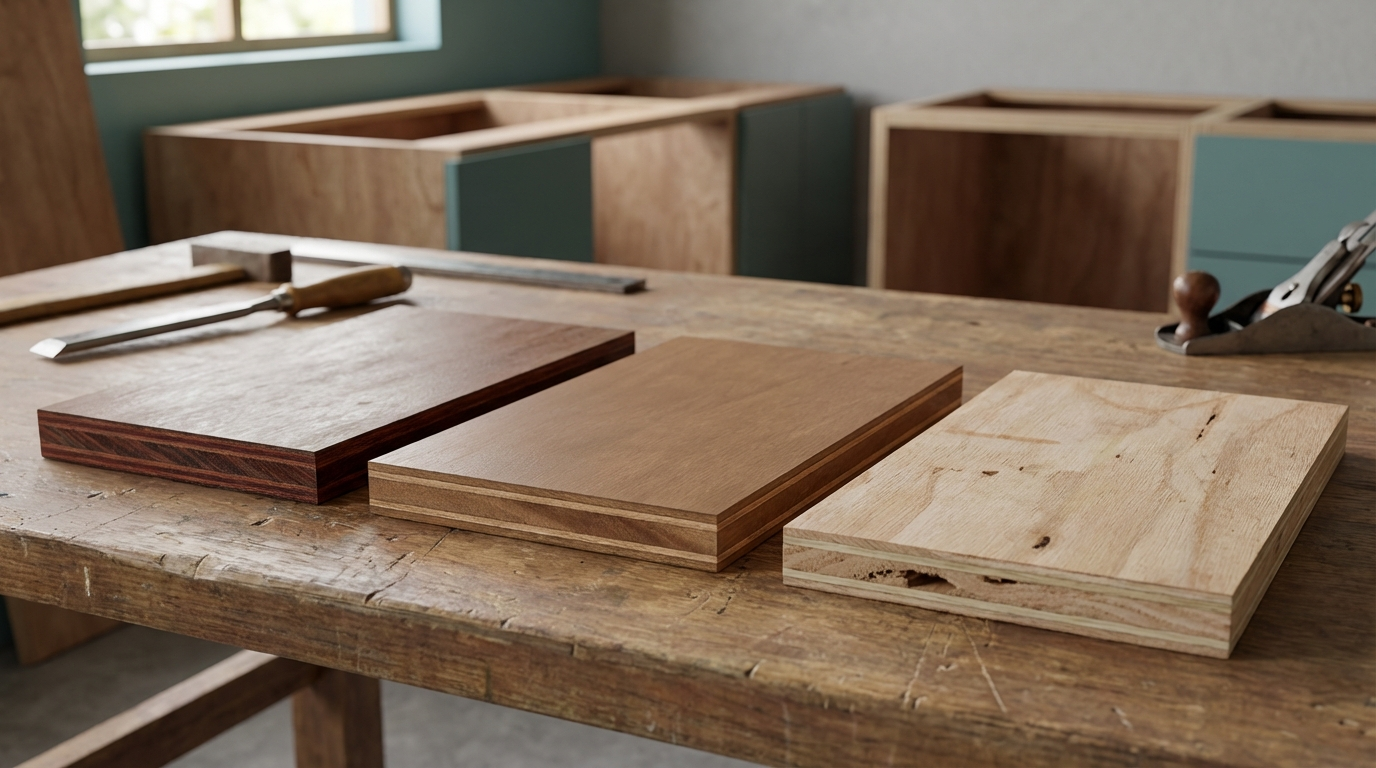
- Core inspection: Check the edge for gaps, voids, or overlapping veneers in the core layers
- Flatness test: Lay the sheet on a flat surface—any warping or twist indicates poor manufacturing
- Weight check: Higher density (heavier) plywood generally indicates better quality hardwood veneers
- Surface smoothness: Run your hand across the face—roughness indicates poor sanding that will affect laminate bonding
Plywood Price Guide for Indian Buyers
Plywood pricing in India varies significantly based on grade, thickness, brand tier, and geographic location. Understanding these variables helps you budget accurately and identify suspiciously low pricing that often indicates compromised quality.
Price Ranges by Grade and Thickness
| Grade | 12mm (per sq ft) | 18mm (per sq ft) | 19mm (per sq ft) | 25mm (per sq ft) |
|---|---|---|---|---|
| MR Plywood | ₹45–₹60 | ₹65–₹90 | ₹70–₹95 | ₹85–₹110 |
| BWR Plywood | ₹65–₹85 | ₹95–₹125 | ₹100–₹130 | ₹120–₹155 |
| BWP Plywood | ₹90–₹120 | ₹130–₹180 | ₹140–₹190 | ₹165–₹220 |
| Marine Plywood | ₹100–₹140 | ₹150–₹210 | ₹160–₹220 | ₹190–₹260 |
Note: Prices reflect mid-2025 market rates for branded ISI-certified plywood in Tier-1 cities. Tier-2/Tier-3 cities may see 5–10% higher prices due to transport costs. Local unbranded options may be 20–30% cheaper but carry quality risks.
What Causes Price Variation
Brand tier: Premium brands like Greenply, Century, and similar command 15–25% premiums over regional brands due to stricter quality control, better raw materials, and warranty backing.
Core wood species: Hardwood core (like Gurjan or Eucalyptus) costs more than softwood alternatives but provides better screw-holding and durability.
Calibration: Calibrated plywood costs ₹10–20 more per sq ft than uncalibrated but is essential for modular furniture applications.
Termite treatment: Factory-treated plywood includes anti-termite and anti-borer chemicals, adding ₹5–10 per sq ft but providing valuable protection in termite-prone regions.
GST and transport: The 18% GST on plywood is standard, but transport from manufacturing hubs (primarily Gujarat, Kerala, and the Northeast) adds significantly to prices in distant locations.
Budget vs Premium: Which Makes Sense?
For high-visibility furniture like wardrobes and kitchen cabinets, premium branded plywood is typically worth the extra cost. The combination of better finish, consistent quality, and warranty protection justifies a 20–25% premium. For concealed applications like internal framework, partition backs, or loft flooring, mid-tier regional brands offer good value without visible quality compromises.
Regional Considerations for Indian Homeowners
Coastal and High-Humidity Zones
Cities like Mumbai, Chennai, Kochi, Visakhapatnam, and Kolkata experience extended periods of 75–90% relative humidity. In these regions, upgrading one grade level from the standard recommendation is prudent. Use BWR where you'd normally use MR, and BWP where you'd normally use BWR. Marine plywood for bathroom furniture is a smart long-term investment despite the higher cost.
Coastal homes within 2–3 km of the sea face additional stress from salt-laden air, which accelerates corrosion of hardware and degradation of adhesives. Specifying marine-grade plywood with stainless steel hardware is standard practice for discerning homeowners in these locations.
Dry Inland Regions
Cities like Jaipur, Jodhpur, Nagpur, and parts of central India have low average humidity, sometimes dropping below 30% in peak summer. MR plywood performs well in most applications here, though kitchens and bathrooms still warrant BWR/BWP grades due to direct water exposure. The cost savings from using MR in dry zones can be substantial over a full home interior project.
Monsoon-Affected Areas
Even dry cities experience humidity spikes during monsoon months. In areas with heavy monsoon rainfall but dry winters (like parts of Maharashtra and Gujarat), BWR grade provides a necessary safety margin. Homes under construction during monsoon face elevated risks, as fresh plywood absorbs moisture from incompletely dried walls.
Carpenter's Perspective: Working with Different Grades
Experienced carpenters often have strong preferences about plywood grades based on workability factors that specifications don't capture. BWR and BWP plywood from reputed brands typically machine better—cleaner cuts, less splintering, and smoother edges. This translates to better-finished furniture and less time spent on edge treatment.
Screw-holding strength varies significantly across grades and brands. Cheaper plywood often has lower-density cores that strip easily, especially with repeated hardware adjustments during installation. For hinge-heavy applications like wardrobe doors and kitchen shutters, this difference matters enormously for long-term function.
Edge-banding adhesion is another practical consideration. Calibrated plywood with consistent thickness accepts edge banding more uniformly, while uncalibrated sheets create visible thickness variations along edges. This is why modular kitchen manufacturers insist on calibrated plywood—it's not marketing but a genuine manufacturing requirement.
Frequently Asked Questions
What is the full form of BWR and BWP plywood?
BWR stands for Boiling Water Resistant plywood, which can withstand boiling water immersion for 6–8 hours without delamination. BWP stands for Boiling Water Proof plywood, designed for continuous water exposure. Both use phenol-formaldehyde adhesives, but BWP uses higher-grade formulations and better veneer selection. These terms describe adhesive performance under standardized laboratory tests, which correlates to real-world moisture resistance in Indian conditions.
Which plywood is best for kitchen cabinets in India?
BWR plywood is the recommended minimum for kitchen cabinets in most Indian cities. It handles cooking steam, occasional splashes, and monsoon humidity effectively. For under-sink cabinets specifically, upgrade to BWP grade since these areas face direct water exposure from potential leaks. In coastal cities with very high humidity, using BWP throughout the kitchen provides additional protection worth the 30–40% price premium over BWR.
Is MR plywood waterproof?
No, MR plywood is not waterproof—it's only moisture resistant. The urea-formaldehyde adhesive can handle normal indoor humidity levels but will fail with direct water contact or prolonged dampness. MR plywood is suitable for dry interior applications like bedroom furniture, living room units, and overhead storage in non-humid zones. Using MR plywood in kitchens, bathrooms, or balconies is a common mistake that leads to premature furniture failure.
What is the price difference between BWR and BWP plywood?
BWP plywood typically costs 30–50% more than BWR plywood of the same thickness and brand tier. For 18mm thickness, BWR ranges from ₹95–125 per sq ft while BWP ranges from ₹130–180 per sq ft in Tier-1 cities. This premium reflects the superior adhesive quality, better veneer selection, and more stringent manufacturing standards required for IS:710 certification. The price difference is justified for wet-zone applications but unnecessary for dry interiors.
How to check plywood quality before buying?
Verify the ISI certification stamp (IS:303 or IS:710) directly on the plywood surface, not just packaging. Inspect the core from the edge for voids, gaps, or overlapping layers. Check flatness by laying the sheet on level ground—any warping indicates poor quality. Use a caliper to verify actual thickness matches stated size. Heavier plywood generally indicates denser, higher-quality hardwood veneers. Finally, buy from authorized dealers who can provide GST invoices and warranty documentation.
Which is better: Marine plywood or BWP plywood?
Marine plywood is the superior product, offering better veneer quality, higher density, and additional anti-fungal treatment beyond BWP's waterproofing. However, for most residential applications, BWP plywood provides sufficient protection at 15–25% lower cost. Marine plywood is worth specifying for outdoor furniture, swimming pool areas, coastal homes, and bathroom interiors in high-end projects where maximum durability is required. For standard bathroom vanities, BWP grade is perfectly adequate.
Can BWR plywood be used in bathrooms?
BWR plywood can be used for bathroom furniture in dry zones—areas not directly exposed to water spray, such as storage units away from the shower area or above-counter cabinets. However, for vanities, under-sink storage, or any furniture near wet zones, BWP or Marine grade is strongly recommended. Bathrooms experience daily humidity cycles that exceed BWR's design parameters over time, leading to gradual degradation even without direct water contact.
What thickness of plywood is best for wardrobes?
For wardrobe construction, 18mm plywood is standard for side panels, shutters, and base units. Shelves can use 16mm or 18mm depending on expected load—use 18mm for shelves holding heavy items. Back panels typically use 6mm plywood since they bear no structural load. Drawer panels use 12mm for sides and 6mm for bottoms. Premium wardrobes sometimes specify 19mm for enhanced screw-holding and rigidity, though 18mm is adequate for most residential applications with proper hardware selection.
Disclaimer: This content is provided for general informational purposes based on industry practices and publicly available information. Product specifications, standards, prices, and availability may vary by manufacturer, region, and time. Readers should independently verify details with manufacturers, dealers, or qualified professionals before making purchase or construction decisions.
Want Plywood Suggestions?
Share a few details and a Apple Ply specialist will suggest suitable brands and connect you to responsive dealers.