Laminate Sheet Price in India 2026: Complete Rate Guide
Current laminate sheet prices in India for 2026. Compare rates by brand, type, size & finish for kitchen cabinets & furniture.
Quick Answer
Laminate sheet price in India for 2026 typically ranges from ₹300 to ₹5,500 per 8×4 feet sheet, depending on the type, brand, thickness, and finish. The laminate cost per square foot lies between ₹56.25 per sq.ft. (high gloss laminate sheets price) to ₹350 per sq.ft. (PVC laminate cost). Standard 0.8mm decorative laminates are the most commonly purchased, while premium options like acrylic, PVC, and HPL laminates command higher prices.
Laminate Sheet Price 2026: At a Glance
- Standard 0.8mm decorative laminate: ₹300–₹900 per 8×4 sheet
- 1mm HPL (High Pressure Laminate): ₹700–₹1,500 per 8×4 sheet
- Acrylic laminate sheet: ₹2,300–₹5,500 per 8×4 sheet
- PVC laminate sheet: ₹1,200–₹3,000 per 8×4 sheet
- Liner/interior finish laminate: ₹300–₹450 per 8×4 sheet
- Prices vary by brand tier, city, finish type, and dealer margins
Laminate Sheets Explained: What Indian Buyers Need to Know
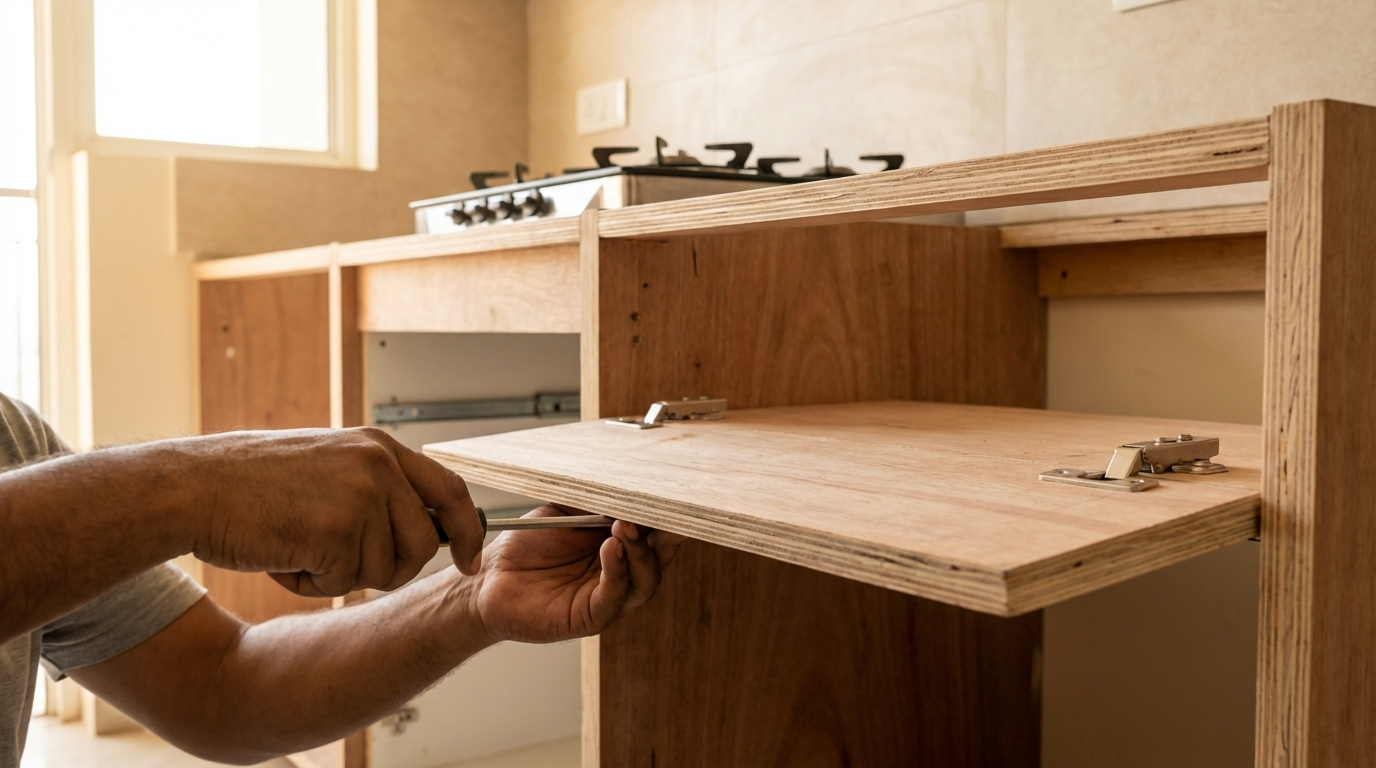
Decorative laminates (often called "Sunmica") are essential for modern interiors. Used on kitchen cabinets, wardrobes, doors, and office furniture, they provide style, protection, and durability. In the Indian market, laminates have become the default surfacing choice for modular kitchens, wardrobes, and furniture because they offer an affordable way to achieve premium aesthetics without the cost of solid wood or veneers.
Laminate sheets are created by glueing two or more layers of materials together, like paper and wood. Laminate can enhance the aesthetics of different types of surfaces like walls, cabinets and furniture. They also provide durability and strength to these surfaces.
How Laminates Are Made
The manufacturing process involves saturating decorative paper with melamine or phenolic resins, then pressing these layers under high heat and pressure. HPL is made from multiple layers — surface papers treated with melamine resin and core kraft papers treated with phenolic resin. These are fused together under high temperature and pressure to become a thermoset laminate sheet, which is then applied to a substrate, like medium density fiberboard (MDF).
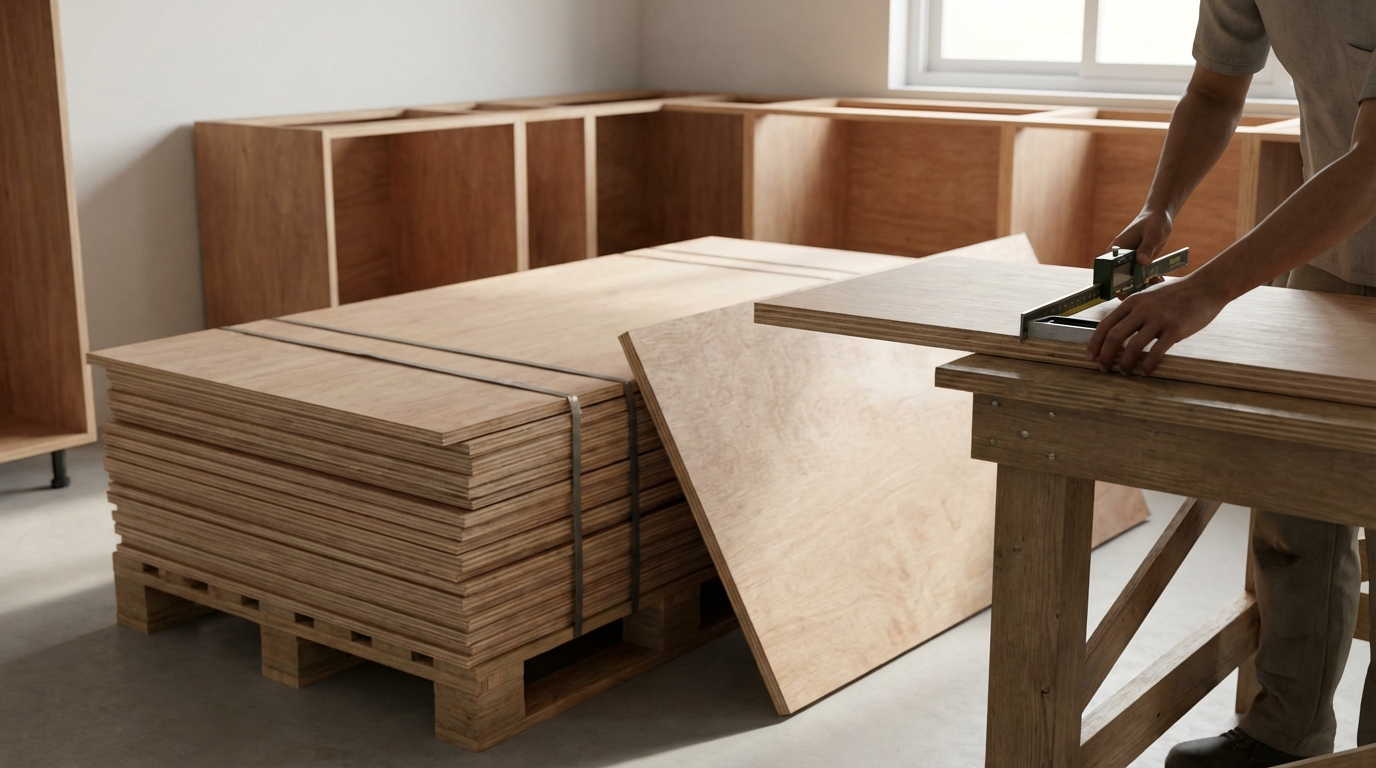
This layered construction makes laminates resistant to scratches, stains, and moderate moisture—critical properties for Indian kitchens where humidity and cooking spillage are everyday realities. In practical Indian market terms, most carpenters and modular kitchen fabricators work with standard 8×4 feet sheets, which cover approximately 32 square feet per sheet.
Types of Laminate Sheets Available in India
Understanding laminate types is crucial for making the right purchase decision. Each type serves different applications and comes at distinct price points.
High Pressure Laminate (HPL)
Considered one of the most durable surface materials, high-pressure laminate (HPL) is made to last. With integrity rooted in its manufacturing, high-pressure laminate comprises between six and eight layers of resin-infused kraft paper bonded together under intense heat and pressure (1,000-1,500 psi of pressure at 280-320 ℉). HPL's multi-layer composition generates category-best scratch resistance, wear resistance and impact resistance. Additionally, HPL is easy to clean and can be postformed to add flexibility in design.
Low Pressure Laminate (LPL/Melamine)
In many respects, low-pressure laminate (LPL) is the polar opposite of HPL. LPL (also known as direct-pressure laminate and melamine board), represents one or two layers of decorative kraft paper that's pressed onto a substrate, such as particleboard, at much lower pressures and temperatures (29-435 psi at 335-375 ℉). Requiring fewer materials and less effort to manufacture, LPL is the more cost-effective laminate option. Without the same level of durability and strength as HPL, LPL is made for low-impact applications, often used on vertical surfaces.
Acrylic Laminate
Acrylic laminates offer a combination of aesthetic appeal and practical functionality that makes them an excellent choice for kitchen surfaces. Their durability, ease of maintenance, and resistance to moisture make them well-suited to the demands of a busy kitchen, while their glossy finish and color variety allow for a customized look that can elevate the overall design of your home. Our sheets come in 1.5mm thickness and boast remarkable features such as 6H Anti-Scratch, Termite & Borer Free, Lightweight, UV Resistant, Highly Durable, and Water-Resistant.
PVC Laminate
A PVC laminated sheet is a thin sheet with PVC lamination over them. It is available in several textures like glossy finish matte metal ultra-gloss & suede finish with thickness ranging from 0.7 mm up to 12 mm. A PVC laminated sheet is widely used indoors & outdoors for decoration flooring & wall cladding purposes. It is an integral part of interior designing of kitchen bedrooms & wardrobe.
Liner Laminate
Liner laminates are the ones used as an overlay on the inner side of a furniture item. These laminate sheets are used as an alternative to painting such surfaces. They not only give a more finished look but also provide enough protection from fungus, borer, and termite attacks. Liner laminate sheets are thinner as compared to other types of laminate sheets, which makes them suitable for this use.
Laminate Sheet Price Comparison Table 2026
| Laminate Type | Thickness | Price Range (₹/8×4 Sheet) | Price Range (₹/Sq Ft) | Best For |
|---|---|---|---|---|
| Liner/Interior Laminate | 0.7mm | ₹300–₹450 | ₹10–₹15 | Wardrobe interiors, cabinet backs |
| Standard Decorative (Matte) | 0.8mm | ₹350–₹600 | ₹11–₹19 | Bedroom furniture, general cabinets |
| Standard Decorative (Gloss) | 0.8mm | ₹500–₹900 | ₹16–₹28 | Living room furniture, TV units |
| HPL (High Pressure Laminate) | 1mm | ₹700–₹1,500 | ₹22–₹47 | Kitchen cabinets, commercial spaces |
| Compact Laminate | 2–12mm | ₹2,000–₹6,000 | ₹65–₹190 | Toilet partitions, lab surfaces |
| PVC Laminate | 1.25–1.5mm | ₹1,200–₹3,000 | ₹40–₹95 | Moisture-prone areas, bathrooms |
| Acrylic Laminate | 1.35–1.5mm | ₹2,300–₹5,500 | ₹72–₹175 | Premium kitchens, designer furniture |
| Fire Retardant Laminate | 0.8–1mm | ₹900–₹1,800 | ₹28–₹56 | Hospitals, hotels, commercial |
Note: Prices are indicative for metro cities (Delhi, Mumbai, Bangalore, Chennai) with mid-tier brand positioning. Tier-2/Tier-3 cities may see 5–15% higher prices due to transport costs. Premium brands command 20–40% higher rates.
Laminate Sheet Price in India: Brand-wise Positioning
Understanding brand positioning helps explain why you might see a ₹10–₹25 per sq ft difference between seemingly similar products. Greenlam Industries is a special name. It stands as an eminent and reliable name within the Indian decorative laminate industry. Since its establishment in 1993, Greenlam has become a very well-known name.
Premium Tier Brands
Brands like Greenlam, Merino, and Formica occupy the premium segment. Greenlam offers world-class laminate sheets in myriads of textures, colors and designs. An ideal solution for both residential and commercial spaces, their laminate sheets come with a number of distinct properties such as antibacterial, fire retardant, scratch and impact resistance. Merino Laminates has consistently held a pioneering position in India's laminate industry. It has been so since its establishment in 1981. Expect to pay 25–40% above market average for these brands.
Mid-Tier Brands
Century Laminates is an integral division of Century Plyboards (India) Ltd. It commands a prominent position within the realm of decorative laminates. The brand is distinguished by a relentless pursuit of quality and innovation. Century Laminates boasts a versatile portfolio. Other mid-tier brands include Virgo, Stylam, and Royale Touche. These offer good balance of quality and value, typically priced at market average or 10–15% above.
Economy Tier Brands
Regional and local brands dominate this segment, offering 15–30% savings compared to national brands. These are suitable for rental properties, temporary installations, or budget-conscious projects where premium aesthetics are not the priority.
How to Choose the Right Laminate Sheet
Selecting laminate involves balancing application needs, budget constraints, and long-term durability expectations. Here's a practical decision framework for Indian buyers.
Decision Criteria for Laminate Selection
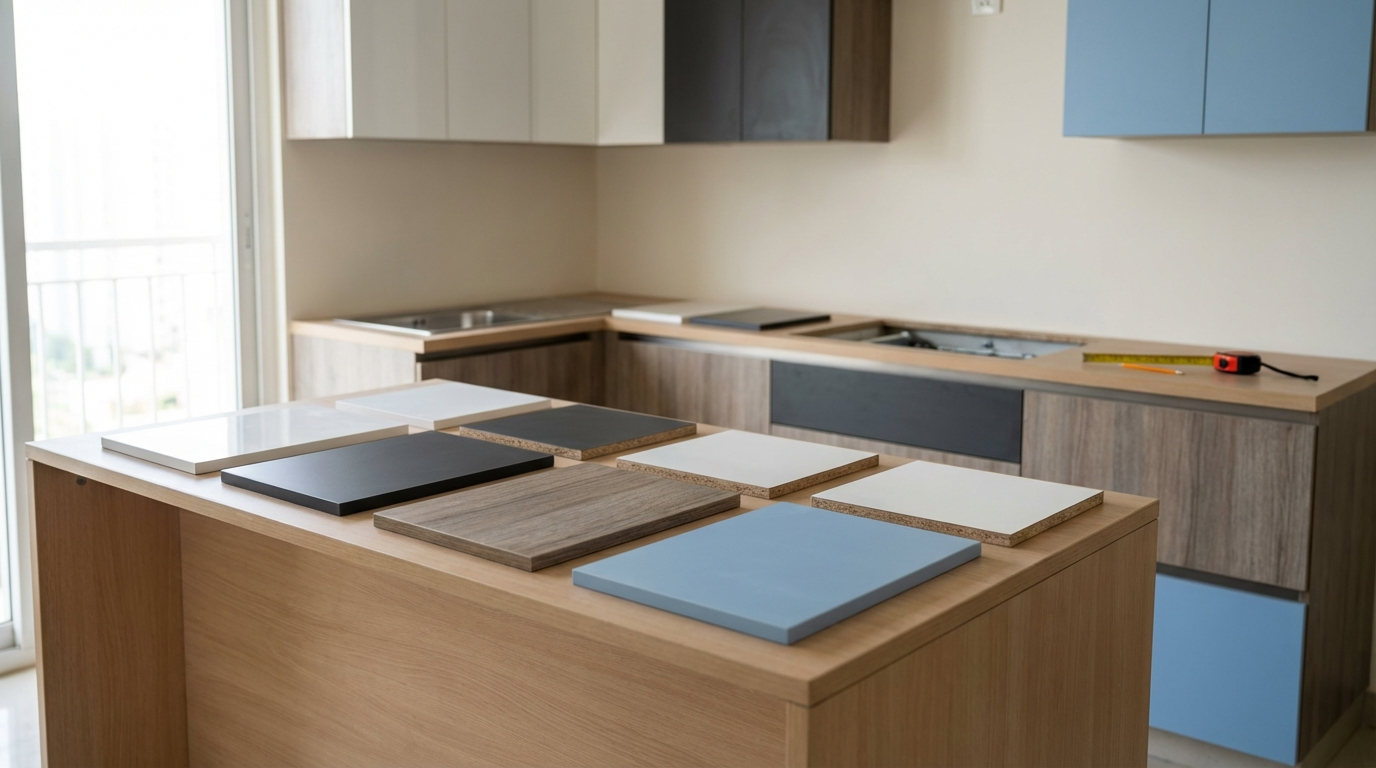
Finish & Style – Decide between matte, gloss, woodgrain or solid colors. Performance Needs – Kitchens and labs may need fire or antibacterial laminates. Thickness – Most interior use uses 0.8–1 mm; heavy-use areas may require 1.2 mm+.
Buyer Checklist
- Application area: Kitchen (needs HPL or water-resistant), bedroom furniture (standard 0.8mm works), bathroom vanity (PVC or acrylic)
- Traffic intensity: High-use surfaces need scratch-resistant options
- Moisture exposure: Coastal cities and humid regions need water-resistant variants
- Finish preference: Matte hides fingerprints; gloss shows every mark but looks premium
- Budget per sheet: Calculate total sheets needed before comparing unit prices
- Edge banding requirements: Match laminate with compatible edge strips
- Substrate compatibility: Ensure your plywood/MDF grade suits the chosen laminate
When NOT to Choose Budget Laminates
Avoid economy-grade laminates in these scenarios:
- Kitchen shutters: Daily moisture, heat, and handling wear down cheap laminates within 2–3 years
- Dining tables: Hot vessels and frequent cleaning damage low-grade surfaces
- Office reception areas: First impressions matter; peeling laminates look unprofessional
- Coastal properties: Salt air accelerates degradation of inferior adhesives
- Commercial kitchens: Health code compliance often requires specific laminate grades
Common Mistakes to Avoid When Buying Laminates
Indian buyers frequently make errors that lead to wasted money, project delays, or premature laminate failure. Here are the critical pitfalls to avoid.
Mistake 1: Ignoring Thickness Specifications
A 0.8mm laminate looks nearly identical to a 1mm variant in samples, but the durability difference is significant. For kitchen and high-traffic applications, always specify minimum 0.8mm for vertical surfaces and 1mm for horizontal/countertop-adjacent areas.
Mistake 2: Not Accounting for Edge Banding
Edge banding or sealing improves moisture resistance and prevents swelling at cut edges over time. Many buyers budget only for sheet laminates and forget that matching edge bands add ₹15–₹40 per running meter to costs. Without proper edge sealing, plywood cores absorb moisture and swell.
Mistake 3: Choosing Based on Showroom Lighting
Laminate samples look different under dealer showroom LEDs versus your actual home lighting. Always take samples home and view under natural light and your room's artificial lighting before confirming.
Mistake 4: Mismatching Adhesive Quality
Laminate sheet + adhesive + labor (varies): often adds ₹40–₹90/sq ft depending on laminate brand + labor. Using cheap adhesive with premium laminate is like fitting low-grade tyres on a premium car. Delamination becomes inevitable within 18–24 months, especially in humid conditions.
Mistake 5: Not Checking Actual Sheet Dimensions
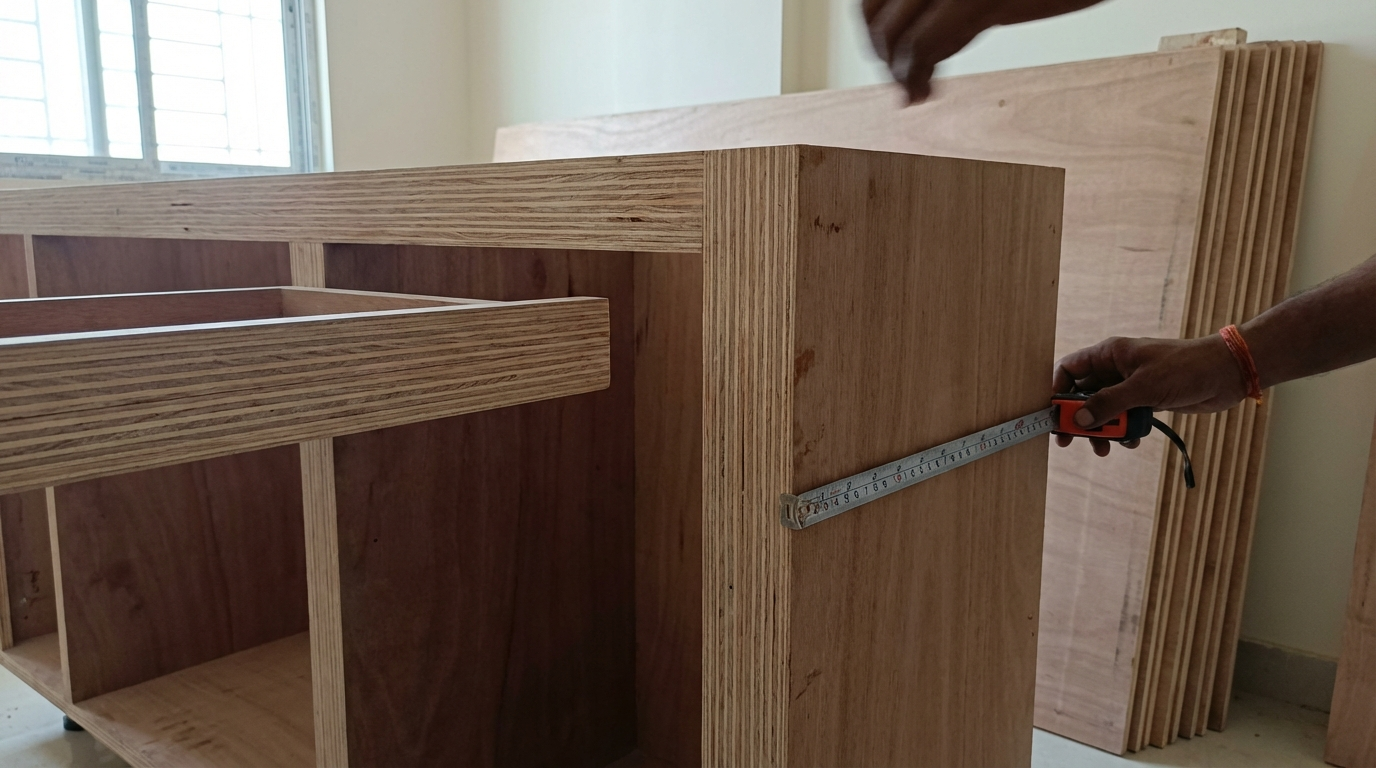
Century Laminates are available in standard sheet sizes, with the most common being 8 feet x 4 feet. They offer laminate sheets in various thicknesses, typically 1mm, to suit different applications. Some economy brands sell slightly undersized sheets (7.9 × 3.9 ft instead of full 8 × 4 ft). This small difference adds up significantly in large projects.
Quick Inspection Checks
- Surface uniformity: Run your palm across the sheet—any bumps or depressions indicate manufacturing defects
- Core check: Look at sheet edges for consistent color and density—dark patches suggest resin distribution issues
- Flexibility test: Gently flex a corner—excessive brittleness suggests poor quality or expired stock
- Brand markings: Genuine sheets carry brand stamps on the backing—missing stamps may indicate B-grade or seconds
Price Guide: What Causes Laminate Sheet Price Variation?
Understanding price drivers helps you evaluate whether a quote is reasonable or inflated.
Manufacturing Quality
Premium brands invest in consistent resin distribution, precise temperature control, and quality paper. This translates to uniform appearance, better scratch resistance, and longer life—but costs 20–40% more.
Finish Complexity
Textured finishes like synchronised wood grain, fluted patterns, and metallic effects require additional processing steps. A textured wood-grain laminate typically costs 15–25% more than a plain solid color in the same thickness.
Special Properties
These types of laminates have higher strength and are more resistant to wear and tear. Thus, they include high-performance ones which are fire retardant, antibacterial and chemical resistant for application in hospitals and other industries. Fire-retardant, antibacterial, and anti-fingerprint laminates carry premium pricing due to specialized manufacturing and certifications.
Regional Factors
Transport, distributor density, and local competition decide the final quote. If you're budgeting for a big project across cities, apply a multiplier rather than arguing over small per sq ft variance. Metro cities like Mumbai, Delhi, and Bangalore typically have 5–10% lower prices than Tier-2 cities due to dealer competition and logistics efficiency. Remote areas face significant freight markup.
GST Impact
Laminates attract 18% GST. Always clarify whether quoted prices are GST-inclusive or exclusive—this 18% can significantly impact your budget calculations.
Frequently Asked Questions
What is the full form of HPL laminate?
HPL stands for High Pressure Laminate. Considered one of the most durable surface materials, high-pressure laminate (HPL) is made to last. With integrity rooted in its manufacturing, high-pressure laminate comprises between six and eight layers of resin-infused kraft paper bonded together under intense heat and pressure (1,000-1,500 psi of pressure at 280-320 ℉). The core is later covered with its decorative pattern and coated with a clear protective overlay. The "high pressure" refers to the manufacturing process that makes HPL significantly more durable than low-pressure alternatives like melamine or thermally fused laminates.
Which is better: acrylic laminate or PVC laminate?
The choice depends on your specific requirements. Acrylic sheets come in 1.5mm thickness and boast remarkable features such as 6H Anti-Scratch, Termite & Borer Free, Lightweight, UV Resistant, Highly Durable, and Water-Resistant. Made from 100% Pure Acrylic, these surfaces are ideal for both residential and commercial projects. Acrylic offers superior scratch resistance (6H hardness) and a premium high-gloss finish but costs ₹2,300–₹5,500 per sheet. PVC is more economical at ₹1,200–₹3,000 per sheet and offers excellent waterproofing but has slightly lower scratch resistance. For premium kitchens, acrylic is preferred; for bathrooms and budget projects, PVC works well.
Is laminate good for kitchen cabinets in India?
Yes, laminate is the most popular choice for kitchen cabinets in India. Whether it's scratches, heat, moisture, or even impact, HPL can handle it all. This makes them perfect for high-traffic areas like kitchens, bathrooms, and commercial spaces where surfaces need to endure daily use. For Indian kitchens with their humidity, cooking oils, and frequent cleaning, HPL or acrylic laminates are recommended over standard decorative laminates. The key is choosing the right grade—minimum 0.8mm thickness for shutters and 1mm for areas near cooktops and sinks.
What is the price of 8×4 laminate sheet in India?
Standard 8×4 feet laminate sheet prices in India range widely based on type and brand. Laminated Sheet - 0.8 Mm Thickness ranges from ₹342–₹418/Sheet, while Laminated Sheets - 8X4 Size, 0.8Mm Thickness, Mate Finish for Wardrobe/Cupboard Exteriors range from ₹747–₹913/Sheet. For premium segments, Acrylic Laminate, Plain Colors range from ₹2,340–₹2,860/Sheet while Acrylic Laminate Sheet - 1.5Mm, Anti-Scratch ranges from ₹4,050–₹4,950/Sheet. Budget around ₹400–₹800 for standard quality and ₹1,000–₹3,000 for premium options per 8×4 sheet.
How to check laminate sheet quality before buying?
Quality verification involves visual inspection and physical tests. Check for consistent color across the sheet—variations indicate poor manufacturing. Feel the surface for uniform texture without bumps or depressions. Look at the sheet edges for consistent density and color in the core layers. Authentic branded laminates carry manufacturer stamps on the backing. Always confirm the invoice description, check brand markings, confirm application suitability, and compare the quote with market ranges. If the quote is dramatically lower than average, verify the grade.
What is the difference between Sunmica and laminate?
Decorative laminates (often called "Sunmica") are essential for modern interiors. In the Indian market, "Sunmica" is actually a brand name that has become a generic term for all decorative laminates—similar to how "Xerox" is used for photocopying. Technically, Sunmica was one of the first laminate brands in India, and the name stuck. All Sunmica is laminate, but not all laminates are Sunmica brand. When dealers use the term, they typically mean standard 0.8mm decorative laminates.
How long do laminate sheets last on furniture?
Most branded decorative laminates come with a warranty of up to 10 years. In practical Indian conditions, quality laminates from reputed brands last 8–15 years on furniture with normal use. Kitchen cabinets see shorter lifespan (6–10 years) due to heat, moisture, and constant handling. Proper edge sealing, quality adhesive, and avoiding direct heat exposure significantly extend laminate life. Economy-grade laminates may show wear within 3–5 years, especially in high-humidity regions or monsoon-prone areas.
Which laminate finish is best for modular kitchen?
For modular kitchens, matte or suede finishes are generally more practical than high-gloss. While glossy finishes look stunning in showrooms, they show fingerprints, water spots, and scratches prominently in daily kitchen use. HPL laminates typically offer more design versatility. Textured wood-grain or solid matte finishes hide minor imperfections and are easier to maintain. For premium kitchens where aesthetics are paramount and regular cleaning is ensured, acrylic or high-gloss HPL works well. Consider anti-fingerprint finishes if you prefer gloss but want reduced maintenance.
Disclaimer: This content is provided for general informational purposes based on industry practices and publicly available information. Product specifications, standards, prices, and availability may vary by manufacturer, region, and time. Readers should independently verify details with manufacturers, dealers, or qualified professionals before making purchase or construction decisions.Want Plywood Suggestions?
Share a few details and a Apple Ply specialist will suggest suitable brands and connect you to responsive dealers.